Links & Quotes

link quote

Some good reading & watching from today…

“Remember that desires after God will not change you so as to save you. You must find Christ. Remember that to say, ‘I will arise’ is not enough, nor even to arise; you must never rest till your Father has given you the kiss, till He has put on you the best robe. I am afraid lest you should rest satisfied and say, ‘I am in a bad state; the minister tells me that many are brought to such a state before they are saved. I will stop here.’ My dear friend, it is a good state to pass through, but it is a bad state to rest in. I pray you never be content with a sense of sin, never be satisfied with merely knowing that you are not what you ought to be. It never cures the fever for a man to know he has it; his knowledge is in some degree a good sign, for it proves that the fever has not yet driven him to delirium; but it never gives a man perfect health to know that he is sick. It is a good thing for him to know it, for he will not otherwise send for the physician; but unless it leads to that, he will die whether he feels himself to be sick or not.” —Charles Spurgeon

“We live at a fever pitch, and whether we are erecting buildings, laying highways, promoting athletic events, celebrating special days or welcoming returning heroes we always do it with an exaggerated flourish. Our building will be taller, our highway broader, our athletic contest more colorful, our celebration more elaborate and more expensive than would be true anywhere else on earth. We walk faster, drive faster, earn more, spend more and run higher blood pressure than any other people in the world. In only one field of human interest are we slow and apathetic: that is the field of personal religion. There for some strange reason our enthusiasm lags. Church people habitually approach the matter of their personal relation to God in a dull, half-hearted way which is altogether out of keeping with their general temperament and wholly inconsistent with the importance of the subject.” —A.W. Tozer

[VIDEO] John Maxwell says, if you don’t have a hero, be a hero for yourself.

“When the threat of death becomes a door to paradise the final barrier to temporal risk is broken. When a Christian says from the heart, ‘To live is Christ and to die is gain,’ he is free to love no matter what. Some forms of radical Islam may entice martyr-murderers with similar dreams, but Christian hope is the power to love, not kill. Christian hope produces life-givers, not life-takers. The crucified Christ calls His people to live and die for their enemies, as He did. The only risks permitted by Christ are the perils of love. ‘Love your enemies, do good to those who hate you, bless those who curse you, pray for those who abuse you’ (Luke 6:27-28).” —John Piper
Links & Quotes

link quote

Some good reading and watching from today…

“Too much of our Christian witnessing is unconvincing because we have not been convinced. We are ineffectual because we have not yet capitulated to the Lord from glory.” —A.W. Tozer

“Everyone feels benevolent if nothing happens to be annoying him at the moment. Thus a man easily comes to console himself for all his other vices by a conviction that ‘his heart’s in the right place’ and ‘he wouldn’t hurt a fly,’ though in fact he has never made the slightest sacrifice for a fellow creature. We think we are kind when we are only happy: it is not so easy, on the same grounds, to imagine oneself temperate, chaste, or humble.” —C.S. Lewis

“So think this way. Not: I must have faith and love so as to be worth God’s favor; but rather: God’s favor is free and it is infinitely worth trusting. Walking worthy of that favor means walking by faith because faith is the one thing that agrees with (and fits) our bankruptcy and God’s infinite worth.” —John Piper

“We are mistaken when we look forward to death; the major portion of death has already passed. Whatever years light behind us are already in death’s hand.” —Seneca

An interesting discovery about a Neanderthal skeleton.

[VIDEO] Ken Davis is hilarious! Check out his take on frog-faced Christians.

Links & Quotes

link quote

Some good reading from today…

“There are no unsacred places; there are only sacred places and desecrated places.” —Wendell Berry

“It may be that when we no longer know which way to go that we have come to our real journey. The mind that is not baffled is not employed. The impeded stream is the one that sings.” —Wendell Berry

“Wherefore seeing that all Christians know that the death of the religious beggar amongst the dogs, licking his sores, was better than the death of the wicked rich man in all his silks and purples, what power hath the horror of any kind of death to affright their souls that have led a virtuous life?” —Augustine

Parents & teachers should especially check out Tim Elmore’s post: 5 Ways To Cure The “Cool Kid” Curse. In this post he mentions his book Artificial Maturity; click here to read my review of this outstanding resource.

“We have thus plainly before us the principle, that our Lord in His infinite wisdom and superabundant love, sets so high a value upon His people’s faith, that He will not screen them from those trials by which faith is strengthened.” —Charles Spurgeon

Checkmate

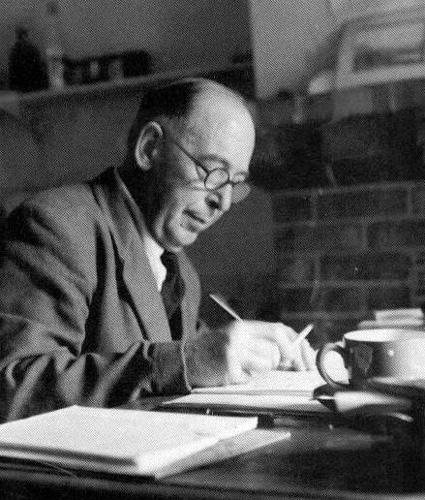
C.S. LewisI recently re-read C.S. Lewis’ book Miracles (you can read my full book review by clicking here). As you may have noticed, after reading and reviewing books on this blog, I also like to share some quotes that caught my attention. Doing this with Lewis is difficult, because in order to get the context of a particular quote, I think I would have to cite almost a full page or more. So over the next few weeks I plan to share some quotes from Miracles that require not as much context, or I will provide a bit of background to set the stage.

Lewis called the Incarnation of Jesus the grandest miracle of all. Here he discusses how God didn’t have to scramble to create an alternative plan because satan tempted Adam and Eve to sin, and thus need a Savior, but that God used satan’s own strong point to defeat him.

“So much for the sense in which human Death the result of sin and the triumph of satan. But it is also the means of redemption from sin, God’s medicine for Man and His weapon against satan. In a general way it is not difficult to understand how the same thing can be a masterstroke on the part of one combatant and also the very means whereby the superior combatant defeats him. Every good general, every good chess player, takes what is precisely the strong point of his opponent’s plan and makes it the pivot of his own plan. Take that castle of mine if you insist. It was not my original intention that you should—indeed, I thought you would have had more sense. But take it by all means. For now I move thus … and thus… and it is mate in three moves. Something like this must be supposed to have happened about Death. … Jesus tasted death on behalf of all others. He is the representative ‘Die-er’ of the universe: and for that very reason the Resurrection and the Life. Or conversely, because He truly lives, He truly dies, for that is the very pattern of reality. Because the higher can descend into the lower He who from all eternity has been incessantly plunging Himself in the blessed death of self-surrender to the Father can also most fully descend into the horrible and (for us) involuntary death of the body.”

 For other quotes from this book see Miracle Or “Cheating”?Miracles And NatureChristianity And PantheismCorrecting The PantheistAbsolute FactThe Central Miracle, and The Miracle of Freewill.

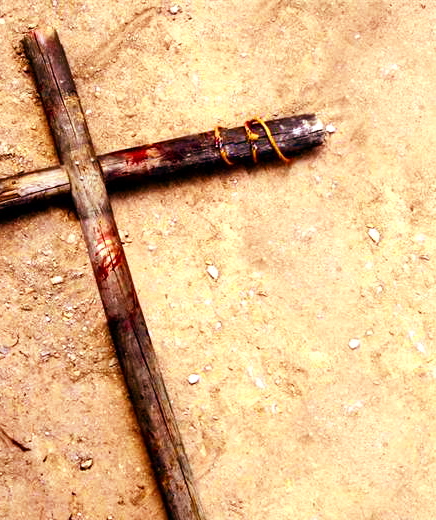
The Horrors Of Crucifixion

Good FridayWilliam Barclay, in his commentary on the Gospel of John, wrote graphically about the horrors of crucifixion—

   There was no more terrible death than death by crucifixion. Even the Romans themselves regarded it with a shudder of horror. Cicero declared that it was “the most cruel and horrifying death.” Tacitus said that it was a “despicable death.” It was originally a Persian method of execution. It may have been used because, to the Persians, the earth was sacred, and they wished to avoid defiling it with the body of an evil-doer. So they nailed him to a cross and left him to die there, looking to the vultures and the carrion crows to complete the work. The Carthaginians took over crucifixion from the Persians; and the Romans learned it from the Carthaginians.

   Crucifixion was never used as a method of execution in the homeland, but only in the provinces, and there only in the case of slaves. It was unthinkable that a Roman citizen should die such a death. Cicero says: “It is a crime for a Roman citizen to be bound; it is a worse crime for him to be beaten; it is well nigh parricide for him to be killed; what am I to say if he be killed on a cross? A nefarious action such as that is incapable of description by any word, for there is none fit to describe it.” It was that death, the most dreaded in the ancient world, the death of slaves and criminals, that Jesus died.

   The routine of crucifixion was always the same. When the case had been heard and the criminal condemned, the judge uttered the fateful sentence: Ibis ad crucem, “You will go to the cross.” The verdict was carried out there and then. The condemned man was placed in the centre of a quaternion, a company of four Roman soldiers. His own cross was placed upon his shoulders. Scourging always preceded crucifixion and it is to be remembered how terrible scourging was. Often the criminal had to be lashed and goaded along the road, to keep him on his feet, as he staggered to the place of crucifixion. Before him walked an officer with a placard on which was written the crime for which he was to die and he was led through as many streets as possible on the way to execution. There was a double reason for that. There was the grim reason that as many as possible should see and take warning from his fate. But there was a merciful reason. The placard was carried before the condemned man and the long route was chosen, so that if anyone could still bear witness in his favor, he might come forward and do so. In such a case, the procession was halted and the case retried. (emphasis added)

Always remember that Jesus willingly went through this for you and me.

Surely He took up our pain
    and bore our suffering,
yet we considered Him punished by God,
    stricken by Him, and afflicted.
But He was pierced for our transgressions,
    He was crushed for our iniquities;
the punishment that brought us peace was on Him,
    and by His wounds we are healed. (Isaiah 53:4-5, emphasis added)

Overcoming The Biggest Fears

Death is defeatedDid you know among Americans the fear of death is only #2 on the list? Yep, 68% of people list this as their top fear. What could be more fearful than death?! Believe it or not, the #1 fear—listed by 74% of people—is public speaking! (Followed in a distant third place by the fear of spiders by only 30% of people).

Why would people fear speaking more than death? Maybe because they don’t think they have anything to say.

But if you almost died, or had a near-death experience, or even temporarily crossed over to the other side, don’t you think you’d have a story to tell? And don’t you think lots of people would want to hear your story? And wouldn’t you want to tell it to as many people as you could?

In other words, if you could stare down death and come back from the brink, you would not only overcome your fear of death, but your fear of public speaking too!

In John 11 there is the story of a man who not only had a near-death experience, but he actually died. In fact, he was dead for over four days! Lazarus was a part of a family that loved Jesus, and the Bible says that Jesus loved them dearly too.

Prior to this account of Lazarus’ death, there is no mention in Scripture of him speaking at all. He was clearly one who suffered from the fear of public speaking, and quite possibly the fear of death too. But after Jesus raised him from the dead, the Bible says large crowds came to Lazarus’ hometown of Bethany to hear his amazing back-from-the-dead story. And not only that, they began to put their faith in Jesus because of his story! (see John 12:9-11).

We have a back-from-the-dead story to tell too. All of us have sinned against God (Romans 3:23), and because of that we are under a death sentence for our sins (Romans 6:23). But when we put our faith in what Jesus did on the Cross for us, and we ask God to forgive us of our sins, we have been brought back to life!

We have looked death square in the eyes and laughed!

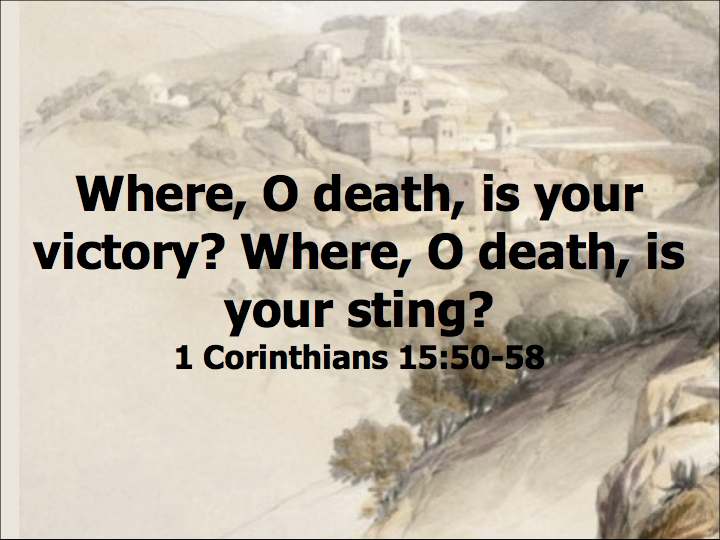
Death is swallowed up in victory. O death, where is your victory? O death, where is your sting? (1 Corinthians 15:54-55)

Now our darkest valleys—even our valleys of death—have no fear for us. The Lord is our Shepherd … His goodness and mercy follow us all the days of our lives AND we shall dwell in the house of the Lord forever!

Not only should you not fear death, you shouldn’t fear public speaking. If you have been forgiven of your sins, you have a back-from-the-dead story to tell.

People need to hear your story! Why? Because they’re scared of death! So tell them about the love of a Savior that rescued you from death.

I invite you to join me next Sunday as we continue to celebrate Jesus Christ’s victory over death!

Thursdays With Oswald−Remorse Is Hell On Earth

This is a weekly series with things I’m reading and pondering from Oswald Chambers. You can read the original seed thought here, or type “Thursdays With Oswald” in the search box to read more entries.

Oswald ChambersRemorse Is Hell On Earth

     Never mistake remorse for repentance; remorse simply puts a man in hell while he is on earth, it carries no remedial quality with it at all, nothing that betters a man.

From Conformed To His Image

I meet people all the time who are sorry for the wrong things they’ve done, and perpetually beat themselves up over those sins. As Chambers says, their remorse has created a hell on earth and it doesn’t do a single thing to help them.

Even a great man like the Apostle Paul felt the hell-on-earth trap of remorse. “I know what the wrong thing is and I don’t want to do it, but I give in and do it anyhow. I say I’m not going to do it again, but I do it again. Oh, what a wretched man I am! (see Romans 7:15-24). That’s where remorse leaves us, and the devil uses that feeling of remorse to condemn us and to imprison us in his hell on earth.

Repentance, on the other hand, is feeling bad for the sin and also asking God to forgive us through the work Jesus Christ did on the Cross—Thanks be to God, who delivers me through Jesus Christ our Lord! (Romans 7:25). As a result of this repentance and forgiveness Paul can then conclude…

So now there is NO CONDEMNATION for those who belong to Christ Jesus. And because you belong to Him, the power of the life-giving Spirit has freed you from the power of sin that leads to death. (Romans 8:1-2)

Remorse imprisons. Repentance and forgiveness are the only things that free us!

Thursdays With Oswald—Anarchy!

This is a weekly series with things I’m reading and pondering from Oswald Chambers. You can read the original seed thought here, or type “Thursdays With Oswald” in the search box to read more entries.

Oswald Chambers

Anarchy! 

     Every other view of sin, saving the Bible view, looks on sin as a disease, a weakness, a blunder, an infirmity; the Bible revelation shows sin to be an anarchy, not a missing of the mark merely, but a refusal to aim at the mark. 

From Christian Disciplines

Pulling no punches, Oswald Chambers calls sin exactly what it is: anarchy against God.

Sin is not something we can cure or tame; it’s not something we can inoculate ourselves against. Sin must be put to death! We cannot do this. Only Christ can put sin to death, so we must surrender to Him.

The Bible uses the word Atonement. I like to think of it this way: at one-ment with Jesus. I can only be forgiven and free of sin if I am at one-ment with the only One who can kill sin: my Savior Jesus Christ.

Have you completely surrendered to Jesus? You cannot fight off sin on your own. Until you surrender to Christ, you will remain in open rebellion—anarchy!—against God. Don’t wait another day, surrender to Christ now.

Thursdays With Oswald—Eternal Life Now

This is a weekly series with things I’m reading and pondering from Oswald Chambers. You can read the original seed thought here, or type “Thursdays With Oswald” in the search box to read more entries.

Oswald Chambers

Eternal Life Now

   But to the soul alone with God the secret is known and made real, and already a Paradise has begun that presages a grander and a greater blessedness than has entered into the heart of man to imagine.

From Christian Disciplines

Far too many Christians think of Christ’s promise of “eternal life” to mean something we get later, as in after we die. They falsely think that they have to just hang on during this life to finally get eternal life, if only they’ve hung on long enough.

That’s not at all what Jesus meant! 

The Gospels record Jesus talking in present tense about being Life and having His fullness of life flow through us. He talks about the oneness we can have with the Father, just has He has, right now. He tells us the Holy Spirit will be a constant companion to us, revealing more and more of God’s mind to us about this present eternal life.

Don’t wait until after death to live in eternal life; live in it right now … today!

God Answers Prayer

God Answers Prayer“It was to save lives that God sent me ahead of you. … It was not you who sent me here, but God” (Genesis 45:5, 8). This is what Joseph said to his brothers that beat him up, threw him in a pit, sold him to some slave traders, and then went back and told a big, fat lie to their father Jacob about Joseph being killed by a wild animal.

When the brothers threw Joseph in that pit and were bartering with the slave traders, the Bible says that Joseph pleaded for his life. I have a hunch that Joseph pleaded with God too. But God didn’t answer that prayer.

When Joseph was falsely accused of molesting an official’s wife and thrown into prison, Joseph probably prayed for God to get him out of prison now! But God didn’t answer that prayer. 

I’m sure Joseph’s father Jacob was praying that somehow Joseph would be returned to him. That maybe he wasn’t really dead after all. How long did Jacob pray that prayer? A year? Five years? Twenty years? But God didn’t answer that prayer.

When the devastating famine hit Canaan, I’ll bet Joseph’s brothers prayed that God would bless their crops and livestock and save them from the famine. But God didn’t answer that prayer. 

Aha!! But God DID answer all of those prayers. 

Not in the timing they wanted, but in His perfect timing “to save your lives by a great deliverance” (Genesis 45:7).

Are you praying hard for something? How long have you been praying? Keep at it…

GOD ANSWERS PRAYER PERFECTLY!