13 Quotes From “Dear Abba”

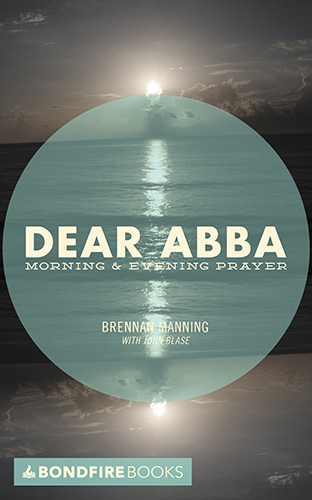
Dear AbbaDear Abba is an intimate book of prayer and personal reflection; it’s thought-provoking and emotionally-moving. You can read my full book review by clicking here. Below are some of the quotes and prayers I found especially meaningful.

“Dear Abba, I’ve come to the place where I’m letting You love me more each day, but I still struggle with letting You like me.” 

“It would be comical if it wasn’t so sad: all of our desires to make ourselves worthy of this world but unfit for the world to come.”

“Peace and joy go a-begging when the heart of a Christian pants for one sign after another of God’s merciful love. Nothing is taken for granted, and nothing is received with gratitude.”

“I feel like the psalmist tonight—downcast. I was upcast, bright, enjoying the warmth of the day and then suddenly my joy was pickpocketed. It was a small thing, a minor misunderstanding that I could have let roll off like water, but I held on to it and nursed it awhile, and like sin always does, it grew. Now I find my mind completely disturbed, anxious, angry, and my imagination is conjuring up all sorts of somebody-done-me-wrong songs. Why do I not trust You? After so many demonstrations of Your infinitely tender hand, why do I not trust You?”

“Sin does not magnify the suffering of man’s plight; instead, it mitigates it. When I sin, I seek an escape from my humanity. I used to say to myself, ‘Well, you’re only human!’ But sin does not make me human; it compromises my humanity. The philandering husband with his mistress on business trips, the chemically addicted, the thieves who build ivory towers out of stolen money, the sensation-seekers and power brokers who seek substitutes. They do not drink the poverty of the human situation down to the last drop. They dare not stare it full in the face.” 

Yet. Those three letters stop me in my rutted tracks of besetting sins. For You were tempted as I am, yet You did not sin. The humbling point is that on a scale from 1 to 10, I usually give in when the heat reaches 3 or 4, yet You experienced the 10—the full-in-the-face of temptation—and did not give in. You are the friend of sinners, yet You are also the Great High Priest who invites us to come with confidence to Your throne and receive both our daily bread and extra rations for emergencies.”

“To practice poverty of spirit calls us not to take offense or be supersensitive to criticism.

“When the gift of a humble heart is granted, we are more accepting of ourselves and less critical of others. … For the humble person there is a constant awareness of his or her own weakness, insufficiency, and desperate need for God.”

“My friends in Christ, the simple truth is that the Christian Church in America is divided by doctrine, history, and day-to-day living. We have come a long sad journey from the first century, when pagans exclaimed with awe and wonder, ‘See how these Christians love one another!’” 

“Christ’s breakthrough into new life on Easter morning unfettered Him from the space-time limitations of existence in the flesh and empowered Him to touch not only Nepal, but New Orleans, not only Matthew and Magdalene, but me. The Lion of Judah in His present risenness pursues, tracks, and stalks us here and now.”

“I realized today that there is a third character who goes up to the temple to pray: the pharisaic tax collector—a ragamuffin who knows she’s a ragamuffin and wants to make sure everyone else knows she’s a ragamuffin. So she ends up using her sinner status not to cry out for mercy to You, but rather to seek out the attention of others as one who is real and authentic, when in reality she is nothing more than hubris in thrift-shop fashions. I realized this today because I looked in the mirror. God, be merciful to me.” 

“The tendency to continually berate ourselves for real or imaginary failures, to belittle ourselves and underestimate our worth, to dwell exclusively on our dishonesty, self-centeredness, and lack of personal discipline, is the influence of our negative self-esteem. Reinforced by the critical feedback of our peers and the reproofs and humiliations of our community, we seem radically incapable of accepting, forgiving, or loving ourselves.”

“If nobody remembers my name or the works of my hands, if everything that I’ve worked so hard to build over the years crumbles into insignificance, if I lose my health and my wits and even, heaven forbid, my memory, You are still my refuge and strength.” 

Come Holy Spirit

Come Holy Spirit [web]The Bible is so full of the amazing promises that come when we allow the Holy Spirit to move in our lives. Things like…

  • Anointing for service
  • Empowerment for telling other about Jesus
  • Answering those who criticize the gospel
  • Praying more intimately
  • Wisdom
  • Growing in Christlike character
  • Insight into difficult situations
  • Discernment
  • Creativity where there was stagnation
  • And on and on and on

With all of the blessings that come with the Holy Spirit’s move in our lives, why wouldn’t we pray more frequently, “Come Holy Spirit”?

Beginning this Sunday I will be talking about some of the roles the Holy Spirit plays in the lives of Christians. I hope you can join me each week at Calvary Assembly of God.

11 Quotes From “Visioneering”

VisioneeringIf you’ve got a big dream to pursue, Visioneering by Andy Stanley could be a big help. You can read my full book review by clicking here. Below are 11 quotes from this book which especially caught my eye.

“As Christians, we do not have a right to take our talents, abilities, experiences, opportunities, and education and run off in any direction we please. We lost that right at Calvary. …At the same time, we have no right to live visionless lives either. If God—think about it—if God has a vision for what you are to do with your allotment of years, you had better get in on it. What a tragedy to miss it. Missing out on God’s plan for our lives must be the greatest tragedy this side of eternity.” 

“What could be and should be can’t be until God is ready for it to be.”

“Three important things are taking place while we wait: (1)The vision matures in us; (2) We mature in preparation for the vision; (3) God is at work behind the scenes preparing the way.”

“Prayer is critical to vision development. Here’s why: We see what we are looking for; we often miss what we don’t expect to see. …Prayer keeps us looking. Prayer keeps the burden fresh. It keeps our eyes and hearts in an expectant mode. Prayer doesn’t force God’s hand. But it keeps us on the lookout for His intervention. Prayer sensitizes us to subtle changes in the landscape of our circumstances.”

“God is using your circumstances to prepare you to accomplish His vision for your life. Your present circumstances are part of the vision. You are not wasting your time. You are not spinning your wheels. You are not wandering in the wilderness. If you are ‘seeking first’ His kingdom where you are, then where you are is where He has positioned you. And He has positioned you there with a purpose in mind.” 

“An agonizingly important principle: what always precedes how. You will know what God has put in your heart to do before you know how He intends to bring it about. …How is never a problem for God. It is usually a big problem for us. But how is God’s specialty.”

“I think it is safe to assume that most Christians are not attempting anything that requires God’s intervention. They are not looking for God to do anything special. They are not aware that they need Him to do anything special. They are trusting that He will step in once they breathe their last breath. But other than that, they live as if they have everything under control. If you want to know how you score on this issue, listen to your prayers and prayer requests. What do you pray for? What are the things you find yourself praying for night after night? Those are your passions. Those are the things that matter most to you. Pretty scary, huh? A little embarrassing? Somewhat self-centered? What was your response the last time someone asked you for a prayer request? Did you have to think for a moment? Was your response kind of … well … less than inspiring? Or did your eyes light up as you thought about that thing, that person, that ministry you were trusting God for? Other than Heaven, and possibly your health, what are you consciously depending on God to do?” 

“This world is filled with people who stopped one question short of finding an avenue that would allow them to pursue their vision. Don’t let the discouragement of a few slammed doors cause you to walk away from the vision God has birthed in your heart. Investigate. Look around. Think outside the lines. Few destinations have only one point of access. The same is true of your vision. If your initial approach is blocked, look for alternatives. Don’t give up too quickly. You may be one question away from discovering the key that will unlock the door that stands between you and God’s vision for your life. God will use this period of investigation to confirm, sharpen, and, sometimes, redirect your vision.”

“When a man or woman is willing to give up something valuable for a God-ordained vision, God looks upon it as worship.” 

“Our natural response to criticism is to defend ourselves. This is especially true when our vision is under attack. We are tempted to begin a dialogue with our critics or with those who are parroting their criticism. Consequently, we waste energy and thought trying to answer questions for people who are often not really interested in answers. Without realizing it, our focus begins to shift. Instead of being vision centered, we slowly become critic centered.”

“You have a destiny to fulfill. God has placed before you opportunities and responsibilities that are brimming with divine significance. He has given you gifts, talents, and relationships that are waiting to be exploited on behalf of His kingdom.”

Visioneering (book review)

VisioneeringWhat a great word! Visioneering: A blueprint for developing and maintaing personal vision by Andy Stanley is how God want to use you to help engineer the vision He has birthed in you.

Andy Stanley is an author that I thoroughly enjoy reading. His wisdom is profoundly practical, which means he uncovers things I never would have seen, but does it in a way that I can immediately apply. Visioneering uses the story of Nehemiah in the Bible as the template to guide us through the steps necessary to see a God-breathed vision become a reality.

Andy uncovers in the life of Nehemiah the things that are universal to anyone who has a burning desire to see things around them taken to a higher level. Things like: second-guessing whether God actually spoke that particular vision, the first steps to take, how to handle criticism, pulling together a team to work together on fulfilling the vision, handling setbacks, keeping all of the team members aligned behind the vision, and what the ultimate purpose of a God-given vision really is.

Each chapter concludes with some thought-provoking questions, and a place to record your answers to those questions. These guides help put “feet” to the concepts shared in each chapter.

After reading Visioneering you will be more energized and equipped to do the great things God is calling you to do.

I am a Multnomah book reviewer.

Check out some quotes from this book here.

How To Avoid Getting A Big Head

John Wesley said that harsh words spoken to us actually provide a helpful balance:

“Who could bear honor and good report, were it not balanced by dishonor?”

In other words, if the only things said to you are words of praise, it’s awfully hard to keep from getting a big head! So when the painful words come, it is important to evaluate them, but also recognize that they might be just the medicine you need to reduce ego swelling. 

Dealing With Anonymous

Listen to the podcast of this post by clicking on the player below, and you can also subscribe on AppleSpotify, or Audible. 

I have never met Mr. Anonymous, but I sure would like to!

It appears to me that Mr. Anonymous is one of the wisest people in the world. He has an expert opinion about everything. And apparently he’s never wrong and never at fault for anything.

Have you ever received a letter or an email from Mr. or Mrs. Anonymous?

How do you respond when you get one of these letters? Does it make you angry? Defensive? Depressed? Do you feel like you need to defend yourself against this so-called expert?

Personally, I think Mr. Anonymous is a coward, so I choose not to respond to anything that he says. Although that’s easy to say because I don’t even know who he is! So even if I did have something to say I would have no one to say it to.

Anyway you look at it, it’s frustrating!!

Here’s how King Hezekiah in the Bible chose to respond to a letter. Although the letter was not anonymous, the principle is still very good for us today:

Hezekiah received the letter from the messengers and read it. Then he went up to the temple of the Lord and spread it out before the Lord, and Hezekiah prayed to the Lord: “Give ear, O Lord, and hear; open Your eyes, O Lord, and see; listen to the words [he] has sent to insult the living God.” (2 Kings 19:14-16)

God knows who Mr. Anonymous is! And He is the only one who can justify you in Mr. Anonymous’ eyes.

So the next time you receive a letter from Mr. Anonymous, read it and allow God to show you anything in there that may be true. Then lay the letter before the Lord, and let God take it from there!

UPDATE: I discuss the bites of critics and criticism in my book When Sheep Bite.

►► Would you please prayerfully consider supporting this ministry? My Patreon supporters get behind-the-scenes access to exclusive materials. ◀︎◀︎

What Is Valid Criticism?

Okay, I’ll need some help on this one.

Solomon, the wisest king ever, said in Proverbs 25:12:

To one who listens, valid criticism is like a gold earring or other gold jewelry. (New Living Translation)

I don’t really like criticism of any kind, but it says it right there in the Bible that valid criticism is good for me. So what is “valid criticism”? Look at this same verse in two other versions:

Like an earring of gold or an ornament of fine gold is a wise man’s rebuke to a listening ear. (NIV)

A wise friend’s timely reprimand is like a gold ring slipped on your finger. (The Message)

I’ll start…

Valid criticism comes from someone with wisdom and experience in the area they are critiquing.

Valid criticism is intended to help me get better.

Valid criticism comes in measured, well-thought-out words.

Now it’s your turn. In the comments below, please share with us how you define “valid criticism.”

Also check out 20 Helpful Thoughts On Criticism for some insights from other wise people.

Are You A Trustworthy “Enemy”?

Sticks and stones may break my bones but words will never hurt me, right? Wrong—words hurt!

At times you may think, “Well, I may have deserved that one.” Perhaps you did or said something inappropriate, and the other person responded out of their anger or frustration or embarrassment. But what about when you’ve done nothing wrong? Those sharp, wounding words seem to come out of the clear blue, from someone you never would have expected to be so hateful—angry, spiteful words deliberately hurled at you like stones.

David was forced to hide in Philistine territory to get away from Israelite King Saul. This was smart on David’s part because the Philistines had been ancient enemies of the Israelites, so Saul would never cross into Philistine territory to look for David. David asked King Achish for refuge in his territory, and Achish gave him the city of Ziklag in which to settle.

There’s a cliché that says, “The enemy of my enemy is my friend.” Achish was Saul’s enemy, so David could have assumed that Achish was his friend (the enemy of David’s enemy).

But here’s the important point—David didn’t consider Saul his enemy. Saul may have thought David was his enemy, but David didn’t reciprocate. David didn’t treat Saul as an enemy, but neither did David treat Achish as a friend.

Yet the Bible records an amazing statement: Achish trusted David (1 Samuel 27:12). Neither Saul nor Achish could ever claim that David slandered them, maligned their character, or did them any harm at all.

How could David do this? How could he keep from lashing out at the one who hurled insults at him (Saul) or the one who was his ancient foe (Achish)? David asked God to help him—

Fierce men conspire against me for no offence or sin of mine, O Lord.
I have done no wrong, yet they are ready to attack me.
Arise to help me; look on my plight!
(Psalm 59:3-4)

I see three great life applications when you are wrongly attacked or slandered:

  1. Don’t treat those who criticize and slander you as an enemy.
  2. Don’t find the enemy of your enemy and call him a friend.
  3. Do acknowledge your hurts and take them to God.

You don’t have to befriend your foes, but neither do you need to lash out at those who are falsely attacking you. Let God arise to help you, and may even your enemies find you trustworthy!