What Godly Leaders Do

Listen to the podcast of this post by clicking on the player below, and you can also subscribe on AppleSpotify, or Audible. 

As Paul is coming to the close of his letter to the believers in Rome, he writes these beautiful words, “I myself am convinced, my brothers and sisters, that you yourselves are full of goodness, filled with knowledge and competent to instruct one another” (Romans 15:14). 

(Check out all of the Scriptures in this post by clicking here.)

I love the high esteem Paul has for the Christians in Rome. He’s not looking for what’s wrong with them, but for what’s praiseworthy in them. 

A mark of a godly leader is one who is always looking for the best in the people around him. 

Leaders see the best in people—even if the people don’t see it in themselves yet. (Check out this short video.) 

Leaders point out the specific qualities they see in their people—virtues like goodness, knowledge, and competence. 

Leaders continue to sharpen their people, challenging them to excel even more. “Yet I have written you quite boldly on some points to remind you of them again” (v. 15). 

Leaders enjoy spending time with their people and are refreshed by them. 

   But now that there is no more place for me to work in these regions, and since I have been longing for many years to visit you, I plan to do so when I go to Spain. I hope to see you while passing through and to have you assist me on my journey there, after I have enjoyed your company for a while. … So that I may come to you with joy, by God’s will, and in your company be refreshed (vv. 23-24, 32). 

Leaders pray for their people and ask their people to pray for them. “I urge you, brothers and sisters, by our Lord Jesus Christ and by the love of the Spirit, to join me in my struggle by praying to God for me. Pray that I may be kept safe from the unbelievers in Judea and that the contribution I take to Jerusalem may be favorably received by the Lord’s people there” (vv. 30-31; see Paul’s prayer for them in 16:25-27). 

Leaders publicly compliment their people (16:1-15). 

And leaders protect and empower their people. “I urge you, brothers and sisters, to watch out for those who cause divisions and put obstacles in your way that are contrary to the teaching you have learned. Keep away from them. … The God of peace will soon crush satan under your feet. The grace of our Lord Jesus be with you” (16:17, 20). 

I want to be this kind of leader. In order to do that, I need the help of the Holy Spirit. I must listen to His voice in order to make the changes I need to make so that I may lead in the most Christ-glorifying way possible, and help those around me live even more in their God-given gift zone.

This is part 85 in my series on godly leadership. You can check out all of my posts in this series by clicking here.

►► Would you please prayerfully consider supporting this ministry? My Patreon supporters get behind-the-scenes access to exclusive materials. ◀︎◀︎

Beware Of The Sneaky Bite

Listen to the podcast of this post by clicking on the player below, and you can also subscribe on AppleSpotify, or Audible. 

Check out a couple of ways I could greet you in this post:

  1. It’s great to see all of you today. I am really glad you stopped by my blog. 
  2. In fact, no one is as astute as you are. No one digs into the Scripture the way you do. There is no one else in the world that I would want visiting my blog today. 

What did I just do? I went from genuinely complimenting you to flattering you. I bit you. Flattery is a sneaky bite that we need to be aware of. 

A compliment is simply defined as an expression of praise or admiration. 

Flattery, on the other hand, crosses the line. It’s defined as trying to please someone by excessive or insincere praise. The reason why I call flattery a bite is because the flatterer is only thinking about himself, not about you. 

Flatterers are trying to get something for themselves. See how the rich young man tried to do this by flattering Jesus in Mark 10:17. The Amplified Bible brings out the man’s flattery more clearly: Teacher, You are essentially and perfectly morally good. 

(You can read all of the Scriptures I reference in this post by clicking here.)

This man was looking for the secret formula that would get him into Heaven, so he wasn’t complimenting Jesus but flattering Him to get a favorable answer. 

Jude described these pseudo-religious people as ones who “flatter others for their own advantage” (Jude 1:16). The NKJV says they use “great swelling words.” Peter describes these same kinds of people as speaking “great swelling words of emptiness” (2 Peter 2:18). 

Flatterers are trying to trip you up so they are recognized as your superior. Once again, we can see how tricksters tried this tactic on Jesus in Mark 12:14. We know they are insincere because of the background information Mark gives us in vv. 12-13. 

David described flatterers in Psalm 12:1-3. The AMPC says they talk “with flattering lips and double heart” and The Message paraphrases it, “Lies slide off their oily lips. They doubletalk with forked tongues” (v. 2). 

Solomon warns us of the net they are setting for us: Those who flatter their neighbors are spreading nets for their feet (Proverbs 29:5). 

Flatterers are trying to cover up their own sinfulness. David again diagnoses this in Psalm 36:1-4. This also means that sometimes we can flatter ourselves to avoid dealing with our own sin. 

It’s natural to want to hear a compliment, but we need supernatural discernment to protect ourselves from the sneaky bite of flattery. 

Look how Jesus did this in Mark 10:17-18. Remember the Amplified Bible that laid it on so thick? Jesus responded correctly: “There is no one essentially and perfectly morally good—except God alone” (v. 18). If we are going to do any comparing at all, let’s compare ourselves to our perfect God and Savior. Remember, we have done a self-check (Psalm 26:2) so we know what’s really there! 

Swallowing this flattery only fuels the pride inside us. C.S. Lewis warned, “It was through Pride that the devil became the devil; it is the complete anti-God state of mind. … Pride is a spiritual cancer: it eats up the very possibility of love, or contentment, or even common sense.” 

Look at the other example from Jesus in Mark 12:12-15. When Jesus sensed their flattery, He called it what it was: hypocrisy! 

What we all need instead is God-fearing friends who speak the truth in love (Proverbs 27:6, 9). 

Flattery makes you feel like you’re on top of the world. Flattery makes you forget the things the Holy Spirit has revealed to you that needs work. But Jesus asked, “What do you benefit if you gain the whole world but lose your own soul?” (Mark 8:36 NLT). 

The sincerest compliment we should all be living to hear is, “Well done, good and faithful servant! Enter into your Master’s happiness forever and ever!” No other voice matters! 

Check out the other messages in this series called When Sheep Bite Sheep by clicking here. And if you are a pastor, check out my book When Sheep Bite. 

►► Would you please prayerfully consider supporting this ministry? My Patreon supporters get behind-the-scenes access to exclusive materials. ◀︎◀︎
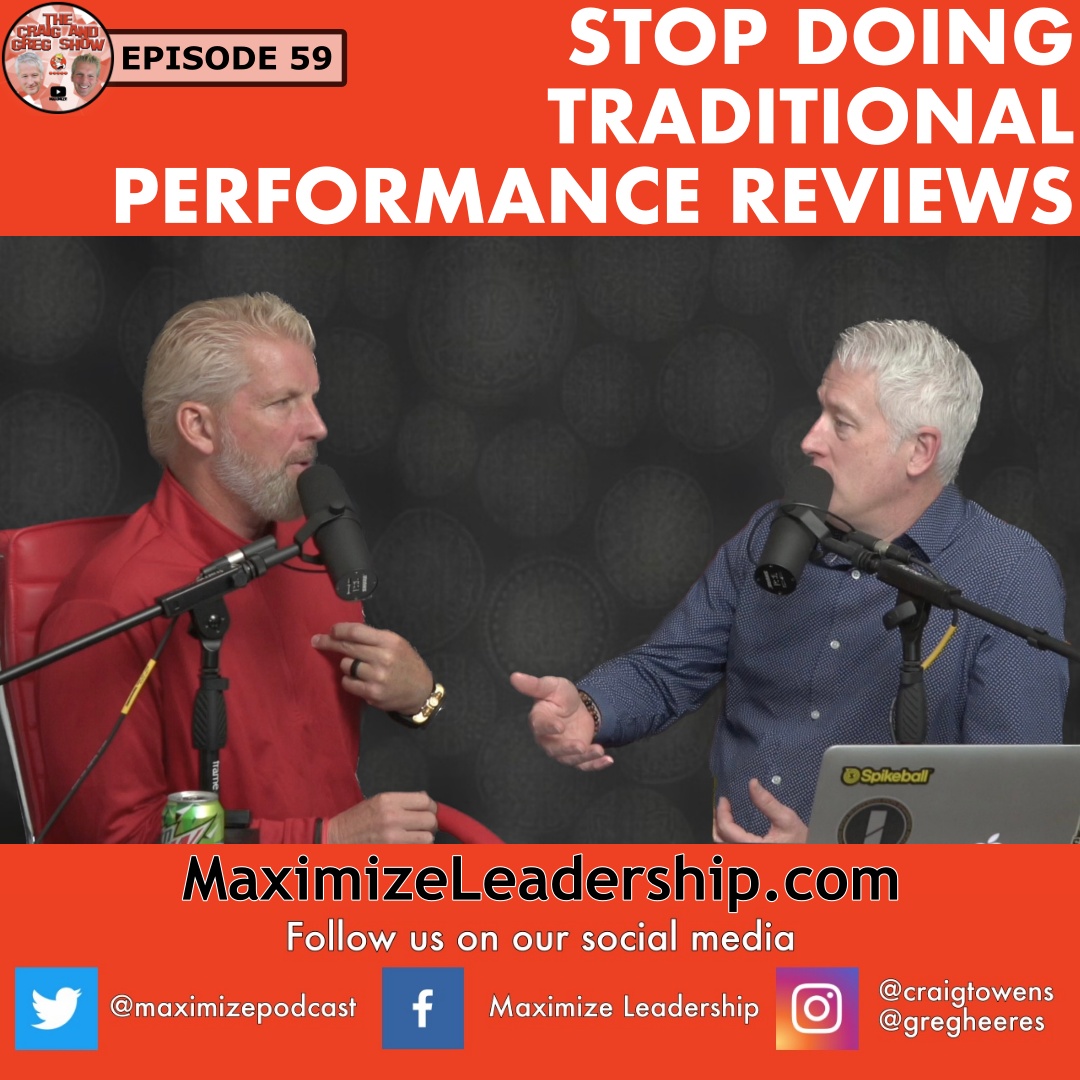
The Craig And Greg Show: Stop Doing Traditional Performance Reviews

Listen to the audio-only version of this podcast by clicking on the player below, or scroll down to watch the video.

Performance reviews are a great tool to help leaders measure and celebrate the growth of their team, but the standard model of quarterly and yearly reviews is a terrible way to go about it. In this episode, Greg and I suggest a different approach to reviews that relies on frequent coaching and giving your team “the answers to the test” to set them up to succeed.

  • [0:15] We all have “have to” and “get to” leadership tasks in our organization, but we think performance reviews never should be in the have to” category. 
  • [1:29] Performance review times are a great time to unleash potential in our teammates.
  • [2:44] Greg shares how his daughter’s school does this well and how an organization he worked with did this poorly.
  • [4:02] I teach leadership principles to a group of young men called “Guys With Ties,” and I always have them focus on future growth.
  • [5:22] Leaders can only do effective reviews by having regular interactions with their teammates.
  • [7:00] We suggest a better way to give out compliments and corrections.
  • [8:35] Three key elements in performance reviews: (1) honesty, (2) timeliness, (3) looking forward.
  • [10:54] How do we handle situations where the review doesn’t match the projected employee bonus?
  • [12:55] Many of our teammates have probably had a bad experience with a previous performance review, so we need to address that upfront.
  • [13:16] Accountability is a heavy word but it is a vital growth piece.
  • [15:23] What happens when leaders are tired?
  • [17:27] What does it say to our teammates if we’re always too busy to schedule a time for a performance review?
  • [21:13] The culture we need to foster in our organization is an “improvement culture.”

Check out this episode and subscribe on YouTube so you can watch all of the upcoming episodes. You can also listen to our podcast on Spotify and Apple.

The Craig And Greg Show: Live An Honor-Filled Life

Listen to the audio-only version of this podcast by clicking on the player below, or scroll down to watch the video.

On this episode of “The Craig And Greg Show” we talk about: 

  • [0:45] Honor should be an everyday practice
  • [2:05] Greg’s pet peeve for leaders
  • [2:45] Advice from my grandpa
  • [3:20] Leaders look for ways to honor those around them
  • [3:48] Can you honor too much?
  • [4:29] How can we honor our parents and grandparents?
  • [5:13] Greg has a book releasing soon called Sage Advice 
  • [9:44] Greg explains that application is the real compliment
  • [10:36] Honor starts with noticing others and then expressing what was noticed
  • [11:49] Honoring calls out great potential in others
  • [12:32] What does it mean to “trust the person with a limp”?
  • [14:15] Honor is for people who gave, not for people who received
  • [15:28] Why is hard for leaders to acknowledge the success of others?
  • [16:27] Leaders need to looking around for opportunities to honor others
  • [17:11] Hand out compliments publicly for maximum effect
  • [17:55] Leaders receive honor by first honoring others
  • [19:45] Our leadership challenge to you 

Check out this episode and subscribe on YouTube so you can watch all of the upcoming episodes. You can also listen to our podcast on Spotify and Apple.

You Get What You Ask For

On a recent episode of our leadership podcast, Greg Heeres and I were discussing how easy it is for people to slip into a complaining attitude. One of the things I point out is that if we ask for compliments instead of complaints, we can begin to change the culture of our organization. 

Check out all of The Craig And Greg Show episodes on our YouTube channel.

Proper Correction

Listen to the podcast of this post by clicking on the player below, and you can also subscribe on AppleSpotify, or Audible.

…to the church of the Thessalonians (2 Thessalonians 1:1). 

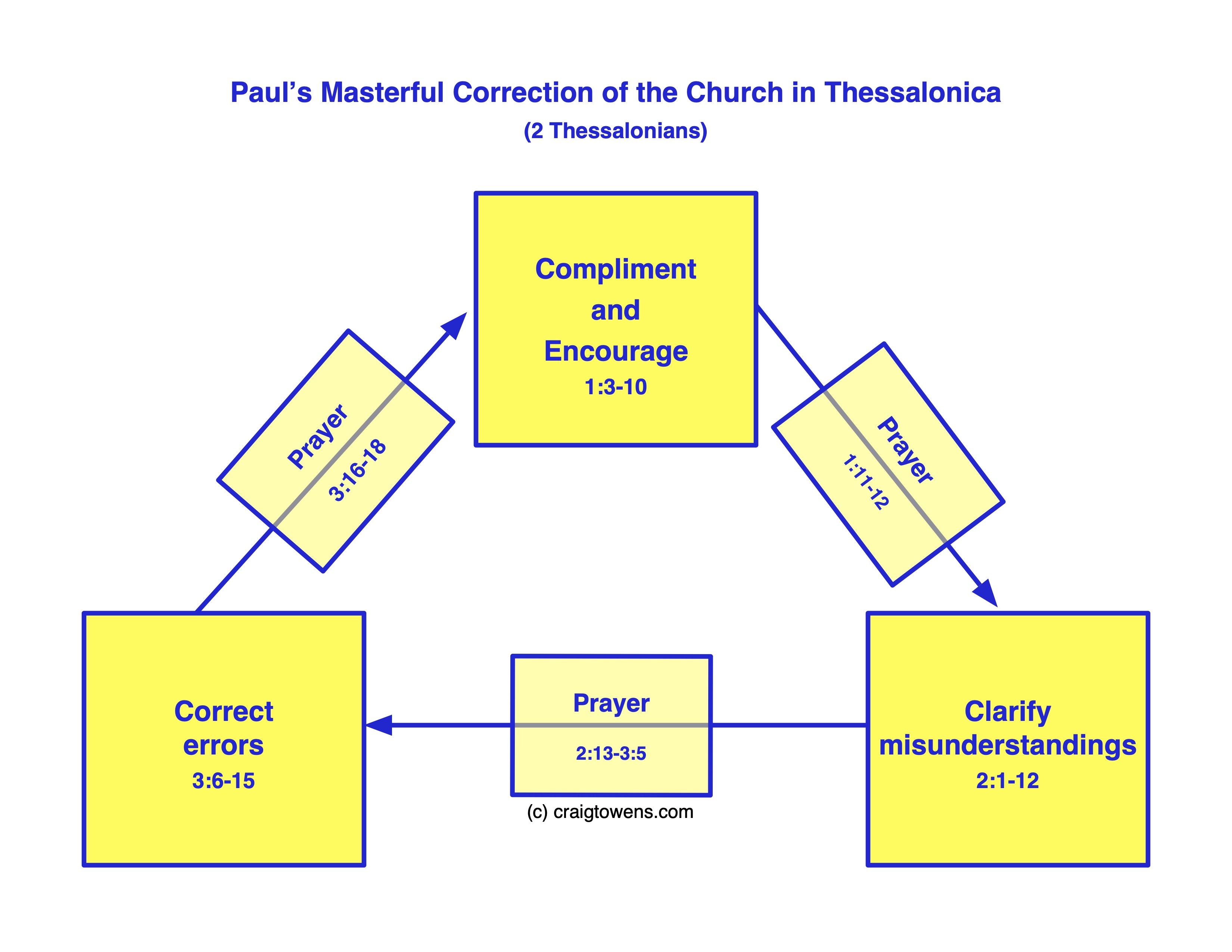
This short letter from the apostle Paul to the church in Thessalonica is a masterpiece on how to correctly correct fellow Christian brothers and sisters. 

The entire letter follows this pattern: 3 Cs surrounded by prayer—

  1. Compliment
  2. Prayer
  3. Clarify
  4. Prayer
  5. Correct
  6. Prayer

(And then repeat, if necessary.) 

You can download the PDF of this flow chart → Paul’s correction of the Thessalonicans

(1) Compliment and encouragement—“We are bound to thank God always for you…because your faith grows exceedingly” (1:3). Paul complimented their love for each other, their patience and endurance in persecution, and their future glorification. He encouraged them that Jesus IS coming, and He will deal with their persecutors and take the righteous into glory with Him (1:3-10). 

(2) Prayer—And then he prays for them to be equipped to endure to the end and finish well (1:11-12). 

(3) Clarify misunderstandings—“Let no one deceive you by any means” (2:3). Paul reminds them of what he taught them about the end times and the Second Coming of Christ, clarifying that watchful Christians will by no means miss out on the signs (2:1-12). 

(4) Prayer—Paul again praises their acceptance of the gospel and launches into another prayer for them to finish well (2:13-3:5). 

(5) Correct errors of understanding—“But we command you” (3:6). There were those who were departing from the faith, growing slack in their work ethic, being disorderly, and meddling as busybodies. Paul said, “We command and exhort through our Lord Jesus Christ” that you knock it off! He even told the church to “not keep company” with such people (3:6-15). 

(6) Prayer—Finally, Paul closes with a prayer for God’s peace to be with his brothers and sisters (3:16-18). 

This is such a masterful pattern for all of us in church ministry to follow! 

If you are in a leadership role, I hope your ongoing prayer would be the same as mine: “Holy Spirit, in all my interactions with my fellow saints, remind me of this godly, practical plan for confrontation, and help me to live it out for God’s glory. In Jesus’ name, amen.” 

P.S. You can also learn a lesson from the way the prophet Samuel handled correction in this post.

►► Would you please prayerfully consider supporting this ministry? My Patreon supporters get behind-the-scenes access to exclusive materials. ◀︎◀︎

10 Marriage Tips For Guys

Listen to the podcast of this post by clicking on the player below, and you can also subscribe on AppleSpotify, or Audible.

Guys, here’s how to add heat to your marriage (regardless of its current temperature)—

  1. Let the Holy Spirit continue to develop His fruit in you—this is the only way to become a truly exceptional lover.
  2. Pray for your wife, and pray with your wife.
  3. Say “I love you” every day. 
  4. Learn her love language and speak it regularly. 
  5. Hold her hand. 
  6. Compliment her privately—not just for how she looks or what she does, but for who she is. 
  7. Praise her publicly in front of her friends, family, and coworkers.
  8. Find ways to assure her that she is your #1 priority. Every single day.
  9. Take her out on a date that you have planned. 
  10. Repeat steps 1-9.

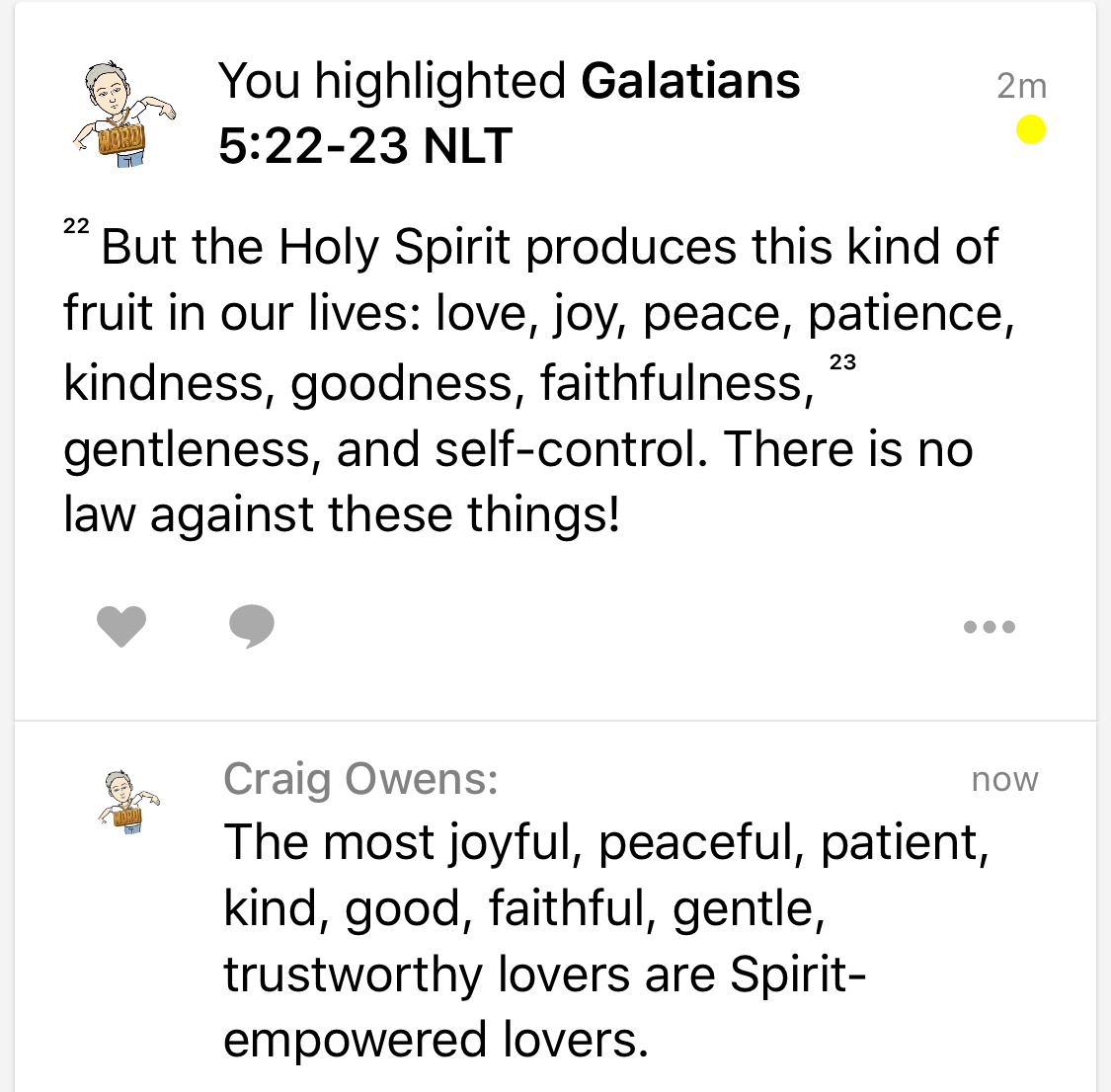
“The most joyful, peaceful, patient, kind, good, faithful, gentle, trustworthy lovers are Spirit-empowered lovers.” —Craig T. Owens

►► Would you please prayerfully consider supporting this ministry? My Patreon supporters get behind-the-scenes access to exclusive materials, like this recent video where I explain how God reveals previously-unknown truths to us. Become a supporter today and get instant access to everything I have already shared with my supporters. ◀︎◀︎

Look For What’s Right

Cedar Springs PostI wrote a letter to the editor of The Cedar Springs Post in advance of this upcoming election.

Dear Editor:

It’s a simple fact: You find what you’re looking for. If you are looking for bad news, you will find something to criticize; if you are looking for good news, you will find something to compliment.

In this election cycle, I hear and read far too many candidates that are looking for the things that are wrong. Electing those candidates perpetuates bad news. Is everything perfect in Cedar Springs? In Michigan? In the United States? Of course not. But there is a lot that is right. I’m much more interested in focusing on those things.

The way to move our city, our state, and our country forward is to support those candidates that are focused on our strengths—on what’s right in our communities—and electing them into positions where they can help our strengths overcome our weaknesses.

Send a message this election cycle: Vote for the candidates that are looking for what’s good and right and strong.

Sincerely,

Craig T. Owens, City of Cedar Springs

Gratitude Cancels Anxiety

Gratitude cancels anxietyThe wise King Solomon said, “Anxiety in a man’s heart weighs him down…” (Proverbs 12:25). And now medical science proves it.

There’s the physical weight of anxiety:

  • Digestion of food is hindered
  • Sleep is disrupted
  • Short-term memory is hampered
  • Immune system is depressed
  • Heart disease risks are elevated
  • Not to mention the emotional and relational weights of anxiety

But do you know what brings an almost immediate bounce-back from these conditions? Feeling and expressing gratitude.

The feelings of gratitude…

  • Release endorphins (the feel-good hormone)
  • Make good memories easier to recall
  • Strengthen relationships
  • Improve overall physical health

The verse I quoted earlier from Proverbs was only the first half of the verse. The full verse says, “Anxiety in a man’s heart weighs him down, but a good word makes him glad.” Science tells us that it doesn’t matter if those good words are words others say to us, or words we say to ourselves, or words we say to others. Our bodies cannot tell the difference, so any grateful/thankful/positive words cancel out the heaviness of anxiety!

Try it! Keep a gratitude journal … write a letter to someone you haven’t properly thanked for their investment in your life … make it a point to compliment others … speak more positively to yourself. Those grateful words are not only the antidote to the anxiety weighing you down now but also the inoculation against future anxiety. 

We’ll be looking at more benefits of gratitude next week, as we continue our series A Grateful Heart Is A Strong Heart. Please join me!

Nicest Of Compliments

On Sunday my amazing church took some time to express their appreciation to me. It was very humbling and gratifying to hear how God has allowed me to invest in the lives of such wonderful people.

After the service, I was munching on some cake and talking with some folks. I approached one lady in our church to ask about a situation in her life. It turns out that the situation I was asking about was one of those “tip of the iceberg” things. She then proceeded to unload all of the frustrations she’s been carrying around over the past couple of weeks.

It was nice hearing the kind words of my congregations, but this lady’s rant (that was her word for it) was one of the nicest compliments!

Why do I say this? Because she felt comfortable enough to lose the mask, drop the pose, and be real!

Read the Psalms and you will see how many times the psalmists let loose in God’s presence. They tell God how difficult things have been, how many bad guys are out to get them, and how rotten they feel. They unload all of these raw emotions in His presence, and that is the first step toward receiving God’s healing.

In the New Testament, Christians are encouraged to bear one another’s burdens, but that’s awfully hard to do if we keep our burdens to ourselves.

Church should be the safest place for us to unload the burdens we are carrying! That’s why I felt like I received such an amazing compliment when this precious lady felt secure enough to share what was really going on.

I pray that you have a church or Christian friends with whom you can unload your over-taxing burdens. And I pray that you can be the church where others feel safe enough to trust you with their burdens.