Charles Spurgeon – Resolve to Keep Close to Christ

Bentley's avatarThe Old Guys

Spurgeon

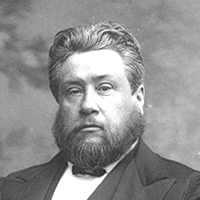
There is yet another stone wall which I will mention, namely, firmness of character. Our holy faith teaches a man to be decided in the cause of Christ, and to be resolute in getting rid of evil habits. “If thine eye offend thee”—wear a shade? No; “pluck it out.” “If thine arm offend thee”—hang it in a sling? No; “cut it off, and cast it from thee” True religion is very thorough in what it recommends. It says to us, “touch not the unclean thing.” But many persons are so idle in the ways of God that they have no mind of their own: evil companions tempt them, and they cannot say, “No.” They need a stone wall made up of noes. Here are the stones, “no, no, NO.” Dare to be singular. Resolve to keep close to Christ. Make a stern determination to permit nothing in your life…

View original post 88 more words

Theism Or Christianity?

J. Warner WallaceThis short 3-minute video is well worth your time, as J. Warner Wallace helps us understand how a sound, theistic apologetic actually points to the Jesus in which Christians believe.

10 Quotes On The Difference Between Christianity And Islam

Nabeel Qureshi wrote a couple of outstanding books to help those in the West better understand Islam (Seeking Allah, Finding Jesus and Answering Jihad).

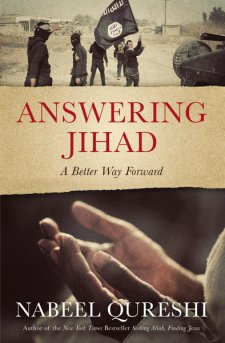
Answering JihadIn Answering Jihad, Nabeel invests several chapters in looking at the differences between Christianity as displayed in the Bible and Islam as displayed in the Quran. Here are some of the more noteworthy quotes I pulled from this book. The references in parenthesis in these quotes are references to a chapter and verse in the Quran.

“Christians believe Jesus is God, but the Quran is so opposed to this belief that it condemns Jesus worshipers to hell (5:72).”

“According to Jesus, God is our Father, yet the Quran very specifically denies that God is a father (112:1-4).”

“Islam roundly condemns worship of the Trinity (5:73), establishing in contrast its own core principle of Tawhid, the absolute oneness of God. Tawhid emphatically denies the Trinity, so much so that it is safe to say the doctrine of God in Islam is antithetical to the doctrine of God and Christianity. … The Trinity teaches that God is not a person, but three Persons: Father, Son, and Spirit. To assert that the God of Islam is the same person as the God of Christianity becomes almost nonsensical at this point, as the Christian God is tripersonal, two persons of Islam specifically denies in the Quran.”

“The Trinity is an elaboration of Jewish theology, not a rejection. By contrast, Tawhid is a categorical rejection of the Trinity, Jesus’ deity, and the Fatherhood of God, doctrines that are grounded in the pages of the New Testament and firmly established centuries before the advent of Islam. The earliest Christians were all Jews, incorporating their encounter with Jesus into their Jewish theology. Nothing of the sort is true of Muhammad, who was neither a Jew nor a Christian. Islam did not elaborate on the Trinity but rejected and replaced it.”

“Christians worship the triune God: a Father Who loves unconditionally, a Son Who incarnates and Who is willing to die for us so that we may be forgiven, and an immanent Holy Spirit Who lives in us. This is not who the Muslim God is, and it is not what the Muslim God does. Truly, Tawhid is antithetical to the Trinity, fundamentally incompatible and only similar superficially and semantically. Muslims and Christians do not worship the same God.”

“The warfare the Quran commands is not due to any evil action, but rather due to the beliefs of non-Muslims, such as the Christian belief that Jesus is the Son of God (9:29, 30).”

“Warfare in the Old Testament is not about subjugating inferior peoples. Yahweh does not promise the Jews that they are the best of people and that their enemies are less than they are. He makes this quite clear in Deuteronomy 9:4-6. … The Quran, by contrast, envisions Muslims as the best people: ‘You are the best of all people, evolved for mankind’ (3:110). It teaches that Jews and Christians who do not convert to Islam are the worst of all creation: ‘Those who do not believe [in Islam] from among the Jews and Christians and the idolaters will go to hell. They are the worst of creatures’ (98:6; see 98:1-5 for context). This is why the Quran in 9:33 commands Muslims to fight Jews and Christians, so that Allah may cause Islam ‘to prevail over all religions.’”

“Muhammad’s life moved from peaceful to violent in a crescendo, reflecting the trajectory of the Quran, and he died just after conquering the Arabian Peninsula. His words in the canonical collections were, ‘I have been ordered by Allah to fight against the people until they testify that none has the right to be worshiped but Allah and that Muhammad is Allah’s messenger. … [O]nly then will they save their lives and property from me’ (Sahih Bukhara 1.2.25). Muslims are commanded to follow Muhammad’s example, and his example was jihad.

“By contrast, the stories in the Old Testament do not enjoin Jews or Christians to fight today. Though commands to fight are recorded in the text, no Jew or Christian is commanded to memorialize these battles as ongoing conduct. They were a part of the history of Israel, certainly, not a mandate or continuing command going forward.”

“Violence has a very different place in Islam and Christianity’s theological frameworks. The final marching order of Islam is jihad. The final marching orders of Christians are grace and love.”

But I especially love this thought from Nabeel: “One can both love Muslims and insist that the God they worship is not the same as the Christian God.” Amen!

Other quotes from Answering Jihad are here and here.

Additional quotes from Seeking Allah, Finding Jesus are here.

8 Quotes From “The Mathematical Proof For Christianity”

The Mathematical Proof For ChristianityDan Delzell uses not only math, but many other sciences as well to give some great conversation-starters. Check out my full review of his book by clicking here.

“I live in Nebraska where I serve as a pastor. Imagine someone covering this entire state in silver dollars 6 feet deep. Then mark one coin and bury it anywhere across the state. Next, blindfold a man and have him choose one coin. The odds that he would choose the marked coin are the same odds as getting 8 prophecies all fulfilled in one man. God fulfilled about 300 prophecies in the Person of Jesus Christ. … There is no way one man could have fulfilled all 8 of these prophecies unless God was making it happen. Who else controls history? Who else could give us such irrefutable proof for Christianity? The odds are one in one hundred quadrillion. Here is what that number looks like: 1 in 100,000,000,000,000,000. (This mathematical proof was calculated by Professor Peter Stoner.)”

“What if jurors were presented with 300 pieces of evidence that all pointed to the same person, just like the 300 biblical prophecies all point to Christ. And so you see, you really can come face to face with reality, logic, reason, facts, evidence, and mathematical certainty before you decide whether to accept or reject the Bible.”

“The excessive skepticism shown toward the Bible by important historical schools of the eighteenth and nineteenth centuries, certain phases of which still appear periodically, has been progressively discredited. Discovery after discovery has established the accuracy of innumerable details, and has brought increased recognition to the value of the Bible as a source of history.” —William Albright, biblical and archeological scholar who mastered more than 26 ancient and modern languages 

“The order is for Christianity is: (1) Evidence; (2) Faith; and then (3) Assurance. Christianity stands upon evidence. It is personally received through faith that Jesus died for your sins on the Cross. It brings comforting assurance to those who have stepped out in faith to trust Christ. You will never have the assurance of salvation until you take a step of faith based on the evidence.”

“Jesus didn’t come here to merely provide man with one more option.”

“It may be stated categorically that no archeological discovery has ever controverted a single biblical reference. Scores of archeological findings have been made which confirm in clear outline or in exact detail historical statements in the Bible.” —Nelson Glueck, Jewish archeologist

“Archeological work has unquestionably strengthened confidence in the reliability of the scriptural record.” —Millar Burrows, University of Yale archeologist

“In addressing the manuscript evidence for the New Testament, John Warwick Montgomery correctly states that ‘to be skeptical of the resultant text of the New Testament books is to allow all of classical antiquity to slip into obscurity, for no documents of the ancient period are as well attested bibliographically as the New Testament.’”

The Mathematical Proof For Christianity (book review)

The Mathematical Proof For ChristianityThe Mathematical Proof For Christianity by Dan Delzell is really just one part of the big picture he presents. Dan uses mathematics, archeology, textual examination, logic, and sound semantics to present a compelling case for the authenticity of Scripture, and the Deity of Jesus Christ. But Dan is quick to add, “Mathematical proof for Christianity is powerful. But without faith in Christ, all the proof in the world won’t save your soul and bring you to heaven one day.”

If you are already a Christian, this book will do much to help you “be prepared to give an answer” (1 Peter 3:15) to seekers and skeptics. But I think the greatest value of this book would be as a conversation-starter with those who are seekers and skeptics. Giving them a copy of this book to read along with you will be a great way to have a meaningful conversation about your faith in Jesus. The subtitle of this book is “along with other reasons to believe,” and Dan does give many, many reasons.

No book written by a man will convince anyone to place their faith in Jesus (only the Bible can truly do that), but The Mathematical Proof is well-grounded in Scripture to help you use it as an effective tool in sharing your faith.

Check it out!

10 Quotes From C.S. Lewis

C.S. Lewis(When is it ever not a good day to share C.S. Lewis quotes?!)

“There is either a warning or an encouragement here for every one of us. If you are a nice person—if virtue comes easily to you—beware! Much is expected from those to whom much is given. If you mistake for your own merits what are really God’s gifts to you through nature, and if you are contented with simply being nice, you are still a rebel: and all those gifts will only make your fall more terrible, your corruption more complicated, your bad example more disastrous. The devil was an archangel once; his natural gifts were as far above yours as yours are above those of a chimpanzee.” —C.S. Lewis 

“The monstrosity of sexual intercourse outside marriage is that those who indulge in it are trying to isolate one kind of union (the sexual) from all the other kinds of union which were intended to go along with it and make up the total union. …You must not isolate that pleasure and try to get it by itself, any more than you ought to try to get the pleasures of taste without swallowing and digesting, by chewing things and spitting them out again.” —C.S. Lewis

“On the contrary, those who are seriously attempting chastity are more conscious, and soon know a great deal more about their own sexuality than anyone else. They come to know their desires as Wellington knew Napoleon, or as Sherlock Holmes knew Moriarty; as a rat-catcher knows rats or a plumber knows about leaky pipes. Virtue—even attempted virtue—brings light; indulgence brings fog.” —C.S. Lewis

“For there are two things inside me, competing with the human self which I must try to become. They are the Animal self, and the Diabolical self. The Diabolical self is the worse of the two. That is why a cold, self-righteous prig who goes regularly to church may be far nearer to hell than a prostitute. But, of  course, it is better to be neither.” —C.S. Lewis

 “A great deal of our anxiety to make excuses comes from not really believing in it, from thinking that God will not take us to Himself again unless he is satisfied that some sort of case can be made out in our favor. But that would not be forgiveness at all. Real forgiveness means looking steadily at the sin, the sin that is left over without any excuse, after all allowances have been made, and seeing it in all its horror, dirt, meanness, and malice, and nevertheless being wholly reconciled to the man who has done it. That, and only that, is forgiveness, and that we can always have from God if we ask for it.” —C.S. Lewis 

“To be a Christian means to forgive the inexcusable, because God has forgiven the inexcusable in you.” —C.S. Lewis

“The human lives in time but our enemy destines them to eternity. He therefore, I believe, wants them to attend chiefly to two things, to eternity itself, and to that point of time which they call the Present. For the Present is the point at which time touches eternity. Of the present moment, and of it only, humans have an experience analogous to the experience which our Enemy has of reality as a whole; in it alone freedom and actuality are offered them. He would therefore have them continually concerned either with eternity (which means being concerned with Him) or with the Present—either meditating on their eternal union with, or separation from, Himself, or else obeying the present voice of conscience, bearing the present cross, receiving the present grace, giving thanks for the present pleasure.” —C.S. Lewis

“War creates no absolutely new situation; it simply aggravates the permanent human situation so that we can no longer ignore it.” —C.S. Lewis

“The rescue of drowning men is, then, a duty worth dying for, but not worth living for.” —C.S. Lewis

“Christianity does not simply replace our natural life and substitute a new one; it is rather a new organization which exploits, to its own supernatural ends, these natural materials.” —C.S. Lewis

The Importance Of Good Theology

Brandon D. Smith“Theology is about love—of God and neighbor. We worship rightly so we can share the gospel rightly. We want to know God rightly, and we want to tell others about him rightly. … It’s not loving to lead people into a false relationship with a false god, so we shouldn’t take our theology lightly.

“Good theology is the system of roots that keeps our tree of faith vibrant and alive. It keeps us grounded and centered, yet growing. When we are rooted, we won’t remain stagnant. And neither will those around us.

“Forging and sharpening a good theology is valuable, for the worship of God and the mission to others.” —Brandon D. Smith

10 More Quotes From “Answering Jihad”

Answering JihadNabeel Qureshi has given us a very timely book in Answering Jihad. He cuts through the confusion and misinformation to give us an informed, clear look at the teachings of Islam in regard to jihad.

I already shared one set of quotes from this book (which you can read here). Here is the next set of quotes I found eye-opening.

“At the risk of over-generalizing, this common understanding of Islam boils down to this: True obedience to Allah will result in Muslim dominance.”

“I have heard many people, frustrated by the increasing frequency and scale of Islamist terrorism, suggest that Islam needs a reformation. What they may not realize is that radical Islam is the Islamic reformation. This might sound shocking, but consider: Just as the Protestant Reformation was an attempt to raze centuries of Catholic tradition and return to the canonical texts, so radical Islam is an attempt to raze centuries of traditions of various schools of Islamic thought and return to the canonical texts of the Quran and Muhammad’s life.”

“Violent expressions of Islam adhere more consistently and more literally to the foundational texts of the Islamic faith, the Quran and the hadith. Peaceful versions of Islam must reinvent traditions from Muhammad’s life in order to be internally consistent, or they must ignore them outright.”

“Instead of fearing Muslim immigrants, we should embrace them and be the element of change we wish to see. … I suggest friendship rather than fear has a better way forward.”

“Christians believe Jesus is God, but the Quran is so opposed to this belief that it condemns Jesus worshipers to hell (5:72).”

“According to Jesus, God is our Father, yet the Quran very specifically denies that God is a father (112:1-4).”

“Islam roundly condemns worship of the Trinity (5:73), establishing in contrast its own core principle of Tawhid, the absolute oneness of God. Tawhid emphatically denies the Trinity, so much so that it is safe to say the doctrine of God in Islam is antithetical to the doctrine of God and Christianity. … The Trinity teaches that God is not a person, but three Persons: Father, Son, and Spirit. To assert that the God of Islam is the same person as the God of Christianity becomes almost nonsensical at this point, as the Christian God is tripersonal, two persons of Islam specifically denies in the Quran.”

“One can both love Muslims and insist that the God they worship is not the same as the Christian God.”

“In the Christian worldview, the exemplar for followers of God is no mere man but God Himself. Since God cares for those who are His enemies, even blessing them with rain, Christians ought to love their enemies and pray for those who persecute them, so that they can follow God’s example. This contrasts with the teaching of the Quran, where Allah tells Muslims, ‘O you who believe! Do not take my enemies or your enemies as allies, offering them your friendship when they do not believe’ (60:1). Of course, that is not to condemn the Quran, as it is counterintuitive to love one’s enemy. The Christian command may make little earthly sense, but it is the explicit teaching of Jesus.” 

“Even though Muslims are often raised with the teaching that ‘Islam is the religion of peace,’ when they study the texts for themselves, they are faced with the reality that Muhammad in the Quran calls for jihad. They will stand at the crossroads for only so long before they choose what path they will take—apostasy, apathy, or radicalization. As Muslims make that choice, it would benefit the whole world if they did not make it alone, or worse, with radical recruiters. We need to show compassion for Muslims and befriend them.”

Be sure to check out my review of Answering Jihad, and then pick up a copy for yourself.

11 Quotes From “Answering Jihad”

Answering JihadAnswering Jihad by Nabeel Qureshi is an excellent resource to get clarity on all of the terms floating around about Islam, Muslims, and the use of jihad. You can read my full book review by clicking here.

Below are the first set of quotes from this book that I’d like to share with you. Unless otherwise noted, all the quotes are from Nabeel Qureshi.

“There is a great deal of violence in Islam, even in the very foundations of the faith, and it is not all defensive. Quite to the contrary, if the traditions about the prophet of Islam are in any way reliable, then Islam glorifies violent jihad arguably more than any other action a Muslim can take.”

“As Islam is practiced in a way that calls Muslims to return to its foundations, violence will follow.”

“Islam is not Muslims, and Muslims are not Islam. Though Muslims are adherents of Islam, and Islam is the worldview of Muslims, the two are not the same, as many uncritically believe. … Islam is not Muslims, and one can criticize Islam while affirming and loving Muslims.” 

“Islam was first called ‘the religion of peace’ as late as 1930, and the title of a book published In India. … The phrase was slow to take off, but by the 1970s it was appearing more and more frequently in the writings of Muslims for western audiences.” —Mark Durie, a research scholar of linguistics and Islam at Melbourne School of Theology, in an article for the Independent Journal

“The Quran never says, ‘Islam is the religion of peace,’ nor do the traditions of Muhammad.”

“To contend that the word Islam signifies peace in the absence of violence is incorrect. Islam signifies a peace after violence, or under the threat of it. According to Islamic tradition, that is how Muhammad himself used the word. His warning to neighboring tribes is famous: Aslim taslam, ‘If you surrender, you will have peace.’ It was a play on words, as aslim also connotes becoming Muslim: ‘If you convert, you will have safety through surrender.’”

“The vast majority of Muslims inherit their understanding of Islam and have not investigated the foundations of Islam for themselves. If they were raised in the West and taught that Islam is the religion of peace, as I was, then their first foray into the foundations might be somewhat of a shock, and they will probably soon find themselves either in a defensive position or grappling with significant cognitive dissonance.”

“Since there are thousands of verses in the Quran and hundreds of thousands of hadith, it is expected that only trained Muslim jurists can engage in determining what sharia teachers. The jurist must give primacy to the Quran, then consider the actions (sunnah) and sayings (hadith) of Muhammad, followed by reviewing the consensus of Islamic scholars, or ijma, before using his own reasoning (qiyas). By following these four steps, a Muslim jurist can make a decision, or fatwa, about what sharia teaches on a given matter. The ultimate goal is to apply the teachings of sharia to Muslim life, and that is called fiqh.”

“As is probably clear by now, at no point was the average Muslim expected to read the Quran to decide upon correct Islamic practices by himself or herself. Not only is Islam not a faith that upholds the sufficiency of scripture alone, the complexity of its foundations virtually necessitates a reliance on jurists and scholars for proper practice.”

“Islam was not in fact ‘spread by the sword’—conversion was not forced on the occupants of conquered territories—but the conquests created the necessary preconditions for the spread of Islam. With only a few exceptions… Islam has become the majority faith only in territories that were conquered by force. Thus, the conquests and the doctrine that motivated these conquests—jihad—were crucial to the development of Islam.” —David Cook

“I ask your pardon, but I really do feel that the Christian teaching of loving one’s enemies, even in the face of death, might perhaps be the most powerful answer to jihad at our disposal today. Not only does it allow us to counter jihad, it also enables us to treat Muslims with the utmost dignity: as image bearers of God.” 

Stay tuned for more quotes from Answering Jihad

Thursdays With Oswald—Why Does God Bring Clouds?

Oswald ChambersThis is a weekly series with things I’m reading and pondering from Oswald Chambers. You can read the original seed thought here, or type “Thursdays With Oswald” in the search box to read more entries.

Why Does God Bring Clouds?

     It is not true to say that God wants to teach us something in our trials. In every cloud He brings, God wants us to un-learn something. God’s purpose in the cloud is to simplify our belief until our relationship to Him is exactly that of a child. God uses every cloud which comes in our physical life, in our moral or spiritual life, or in our circumstances, to bring us nearer to Him, until we come to the place where our Lord Jesus Christ lived, and we do not allow our hearts to be troubled. 

     Christianity does not add to our difficulties, it brings them to a focus, and in the difficulties we find Jesus Himself. We must get out of the habit of misinterpreting God by saying He wants to teach us something, it is not a New Testament idea, but an idea that is as unlike the God whom Jesus revealed as could be. God is all the time bringing us to the place where we un-learn things. … In everything that happens we should be un-learning that which keeps us from a simple relationship to God. … 

     There are no such things as “calamities” or “accidents” to God’s children—“all things work together for good.” 

From God’s Workmanship

Futurist Alvin Toffler wrote that the illiterate of this age are those who cannot learn, unlearn, and relearn. God wants to do the same thing for us. God doesn’t want us to be spiritually illiterate, so there are times to learn and times to un-learn.

The next time you are going through some clouds in your spiritual walk, pause to ask the Holy Spirit, “What do I need to un-learn from this?” And then follow through on what He shows you.