Poetry Saturday—Wits’ End Corner

Wits' endAre you standing at “Wits’ End Corner,” 
   Christian, with troubled brow? 
Are you thinking of what is before you, 
   And all you are bearing now?
Does all the world seem against you, 
   And you in the battle alone?
Remember—at “Wits’ End Corner” 
   Is where God’s power is shown.

Are you standing at “Wits’ End Corner” 
   Blinded with wearying pain,
Feeling you cannot endure it, 
   You cannot bear the strain,
Bruised through the constant suffering 
   Dizzy and dazed, and numb?
Remember—at “Wits’ End Corner” 
   Is where Jesus loves to come.

Are you standing at “Wits’ End Corner” 
   Your work before you spread.
Or lying begun, unfinished, 
   And pressing on heart and head,
Longing for strength to do it, 
   Stretching out trembling hands
Remember—at “Wits’ End Corner” 
   The Burden-Bearer stands.

Are you standing at “Wits’ End Corner”? 
   Then you’re just in the very spot
To learn the wondrous resources 
   Of Him who faileth not!
No doubt to a brighter pathway 
   Your footsteps will soon be moved,
But only at “Wits’ End Corner” 
Is the “God who is able” proved. —Antoinette Wilson

Thursdays With Oswald—Christ’s Temptations And Ours

Oswald ChambersThis is a weekly series with things I’m reading and pondering from Oswald Chambers. You can read the original seed thought here, or type “Thursdays With Oswald” in the search box to read more entries.

Christ’s Temptations And Ours

     The first temptation of Our Lord comes to us on this line—“Be sensible, You are here for the service of men, and surely it is the most practical thing to feed them and satisfy their needs.” The clamor abroad today is all on this line, “Put man’s needs first; never mind about the first commandment, the second commandment is the all-important one” (see Mark 12:29-31). … The insistent demand in the world today to put men’s needs before God’s will is the outcome of the reasoning of human wits and wisdom…. So long as our wits and human solutions are on the throne, to satisfy the needs of men is ostensibly the grandest thing to do. … 

     Our Lord was then asked to compromise: “You will become the King of men and the Savior of the world by judicious compromise; build Your kingdom on broad-minded lines; be judicious, You know there is evil in the world; then use it wisely, and don’t be so intense against sin; don’t talk about the devil and hell; don’t be so extreme and say a man needs to be born from above. Tolerate my rule of the world, call things ‘necessary evils’; tell man sin is not anarchy, but a disease; fall down and worship me and my way of looking at things, and I will withdraw and the whole world will be Yours.” … Will the Church that bows down and compromises succeed? Of course it will; it is the very thing that the natural man wants. … 

     satan tried to put Jesus Christ on the way to becoming King of the world and Savior of men in a way other than that pre-determined by God. The devil does not tempt us to do wrong things; he tries to make us lose what God has put into us by regeneration, the possibility of being of value to God. When we are born from above the central citadel of the devil’s attack is the same in us as it was in Our Lord—to do God’s will in our own way. … 

     Every temptation of satan will certainly seem right to us unless we have the Spirit of God. Fellowship with our Lord is the only way to detect them as being wrong. 

From The Psychology Of Redemption

Wow! Lots to contemplate here!

What do you think about the temptation of Jesus? Have you seen the same sort of temptations come your way?

One more thought from Chambers: “Temptation must come, and we do not know what it is until we meet it. When we do meet it, we must not debate with God, but stand absolutely true to Him no matter what it costs us personally, and we will find that the onslaught will leave us with higher and purer affinities than before.

10 Quotes From C.S. Lewis

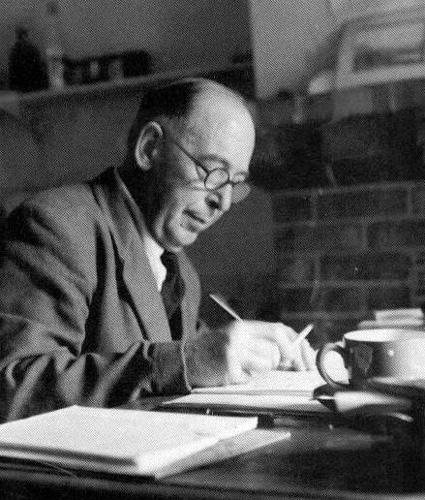
C.S. Lewis(When is it ever not a good day to share C.S. Lewis quotes?!)

“There is either a warning or an encouragement here for every one of us. If you are a nice person—if virtue comes easily to you—beware! Much is expected from those to whom much is given. If you mistake for your own merits what are really God’s gifts to you through nature, and if you are contented with simply being nice, you are still a rebel: and all those gifts will only make your fall more terrible, your corruption more complicated, your bad example more disastrous. The devil was an archangel once; his natural gifts were as far above yours as yours are above those of a chimpanzee.” —C.S. Lewis 

“The monstrosity of sexual intercourse outside marriage is that those who indulge in it are trying to isolate one kind of union (the sexual) from all the other kinds of union which were intended to go along with it and make up the total union. …You must not isolate that pleasure and try to get it by itself, any more than you ought to try to get the pleasures of taste without swallowing and digesting, by chewing things and spitting them out again.” —C.S. Lewis

“On the contrary, those who are seriously attempting chastity are more conscious, and soon know a great deal more about their own sexuality than anyone else. They come to know their desires as Wellington knew Napoleon, or as Sherlock Holmes knew Moriarty; as a rat-catcher knows rats or a plumber knows about leaky pipes. Virtue—even attempted virtue—brings light; indulgence brings fog.” —C.S. Lewis

“For there are two things inside me, competing with the human self which I must try to become. They are the Animal self, and the Diabolical self. The Diabolical self is the worse of the two. That is why a cold, self-righteous prig who goes regularly to church may be far nearer to hell than a prostitute. But, of  course, it is better to be neither.” —C.S. Lewis

 “A great deal of our anxiety to make excuses comes from not really believing in it, from thinking that God will not take us to Himself again unless he is satisfied that some sort of case can be made out in our favor. But that would not be forgiveness at all. Real forgiveness means looking steadily at the sin, the sin that is left over without any excuse, after all allowances have been made, and seeing it in all its horror, dirt, meanness, and malice, and nevertheless being wholly reconciled to the man who has done it. That, and only that, is forgiveness, and that we can always have from God if we ask for it.” —C.S. Lewis 

“To be a Christian means to forgive the inexcusable, because God has forgiven the inexcusable in you.” —C.S. Lewis

“The human lives in time but our enemy destines them to eternity. He therefore, I believe, wants them to attend chiefly to two things, to eternity itself, and to that point of time which they call the Present. For the Present is the point at which time touches eternity. Of the present moment, and of it only, humans have an experience analogous to the experience which our Enemy has of reality as a whole; in it alone freedom and actuality are offered them. He would therefore have them continually concerned either with eternity (which means being concerned with Him) or with the Present—either meditating on their eternal union with, or separation from, Himself, or else obeying the present voice of conscience, bearing the present cross, receiving the present grace, giving thanks for the present pleasure.” —C.S. Lewis

“War creates no absolutely new situation; it simply aggravates the permanent human situation so that we can no longer ignore it.” —C.S. Lewis

“The rescue of drowning men is, then, a duty worth dying for, but not worth living for.” —C.S. Lewis

“Christianity does not simply replace our natural life and substitute a new one; it is rather a new organization which exploits, to its own supernatural ends, these natural materials.” —C.S. Lewis

Thursdays With Oswald—My God-Given Vocation

Oswald ChambersThis is a weekly series with things I’m reading and pondering from Oswald Chambers. You can read the original seed thought here, or type “Thursdays With Oswald” in the search box to read more entries.

My God-Given Vocation

     The vocation of our Lord had accepted was that of sin-bearer, not of dominating world-lord. satan’s aim was to get Him to fulfill His vocation on another line, “There is no need to die for sin, You can fulfill Your vocation by a ‘short cut’ and evade the Cross.” Our Lord came here for one purpose only—to bear away the sin of the world in His own Person on the Cross. He came to redeem man, not to set them a wonderful example. … 

     Have we accepted that kind of vocation, or are we only concerned that we get deep conscious communion with God? The acceptance of the saint for himself is that he is concerned about nothing at all saving this one thing, “that I might finish my course with joy,” not happiness. Joy is the result of the perfect fulfillment of what a man is created for. Happiness depends on things that happen, and may sometimes be an insult. It is continually necessary to revert to what the New Testament asks us to accept about ourselves. 

     Have we received to this ministry from Jesus, “As Thou hast sent Me into the world, even so have I also sent them into the world”? How did the Father send Him? “For I came down from heaven, not to do Mine own will, but the will of Him that sent Me.” The first obedience of Jesus was to the will of His Father, not to the needs of men. Then our first accepted vocation is not to help men, but to obey God, and when we accept that vocation we enter into relationship with the despised and the neglected. 

From The Psychology Of Redemption

Do I sometimes wish God would give me a “bigger ministry”? Or that He would use me in more visible ways? Am I looking for applause or recognition?

Jesus prayed, “Not My will, but Yours be done.” And He taught us to pray, “Your kingdom come, Your will be done.”

If I truly accept the vocation God has given me, I will see that it is the same vocation He gave Jesus: to go to the “despised and neglected,” and in the process to be despised and rejected by the world, just as Jesus was. But I’m not looking for the applause of men; I just want to obey God regardless of the personal cost. This is my God-given vocation.

Answering Jihad (book review)

Answering JihadMilitant Islam … Jihad … Religion of peace … ISIS … Islamic terrorism. These phrases dominate the news stories and the water-cooler conversations, but do we really know what they mean? Nabeel Qureshi does. He was born to devout Muslim parents, trained in the Quran, and ready to follow in his parents’ footsteps. But along the way, Nabeel became a Christian. Knowing both the Muslim and Christian angles of these topics, Dr. Qureshi can capably help us Westerners in Answering Jihad.

(By the way, if you haven’t read Nabeel’s account of how he became a Christian, you really should read Seeking Allah, Finding Jesus.)

Answering Jihad is presented to us in the form of answers to 18 of the most-asked questions about how jihad is really perceived in the Muslim community. As he did in his biography, Nabeel presents this information in a way Western minds can grasp. He introduces key points of history that surround Muhammed, explains Islamic terms, and quotes relevant passages from the Quran and other Muslim scholars. I think you will find, as I did, so much more clarity than the sound bytes thrown around on news sources and on social media.

Nabeel concludes his book by telling us that there is a better way forward than the “either-or” extremes that are usually proposed. He explains it this way—

“If we avoid the truth about jihad, we leave the door open for innocent people to be killed in attacks like Paris and San Bernardino. If we lack compassion, we close the door to innocent people who need refuge from places like Syria and Somalia. … Even though Muslims are often raised with the teaching that ‘Islam is the religion of peace,’ when they study the texts for themselves, they are faced with the reality that Mohammed and the Quran call for jihad. They will stand at the crossroads for only so long before they choose what path they will take—apostasy, apathy, or radicalization. As Muslims make that choice, it would benefit the whole world if they did not make it alone, or worse, with radical recruiters. We need to show compassion for Muslims and befriend them.”

Well said! And with the information in Answering Jihad, you can be ready to befriend your Muslim neighbors on their journey.

I am a Zondervan book reviewer.

Thursdays With Oswald—Why Does God Bring Clouds?

Oswald ChambersThis is a weekly series with things I’m reading and pondering from Oswald Chambers. You can read the original seed thought here, or type “Thursdays With Oswald” in the search box to read more entries.

Why Does God Bring Clouds?

     It is not true to say that God wants to teach us something in our trials. In every cloud He brings, God wants us to un-learn something. God’s purpose in the cloud is to simplify our belief until our relationship to Him is exactly that of a child. God uses every cloud which comes in our physical life, in our moral or spiritual life, or in our circumstances, to bring us nearer to Him, until we come to the place where our Lord Jesus Christ lived, and we do not allow our hearts to be troubled. 

     Christianity does not add to our difficulties, it brings them to a focus, and in the difficulties we find Jesus Himself. We must get out of the habit of misinterpreting God by saying He wants to teach us something, it is not a New Testament idea, but an idea that is as unlike the God whom Jesus revealed as could be. God is all the time bringing us to the place where we un-learn things. … In everything that happens we should be un-learning that which keeps us from a simple relationship to God. … 

     There are no such things as “calamities” or “accidents” to God’s children—“all things work together for good.” 

From God’s Workmanship

Futurist Alvin Toffler wrote that the illiterate of this age are those who cannot learn, unlearn, and relearn. God wants to do the same thing for us. God doesn’t want us to be spiritually illiterate, so there are times to learn and times to un-learn.

The next time you are going through some clouds in your spiritual walk, pause to ask the Holy Spirit, “What do I need to un-learn from this?” And then follow through on what He shows you.

Thursdays With Oswald—The New Life In Me

Oswald ChambersThis is a weekly series with things I’m reading and pondering from Oswald Chambers. You can read the original seed thought here, or type “Thursdays With Oswald” in the search box to read more entries.

The New Life In Me

     Oswald Chambers points out several things which affirms that one has experienced the new birth of salvation.

     “If Christ is formed in us, the great characteristic is that we know Him and perceive Him for ourselves. We do not need anyone to tell us about Him now, He is our Lord and Master.” 

     “Where do we go in a crisis? If we are born from above and Jesus Christ is Lord and Master, we will go direct as a homing pigeon to Him.” 

     “When Christ is formed in us, we are a satisfaction to our Lord and Master wherever He places us. The point of importance is to know that we are just exactly where He has engineered our circumstances. There is no ‘foreign field’ to our Lord.” 

     “Another evidence of new birth is that we see the rule of God. We no longer see the haphazard of chance for fate, but by the experience of new birth we are in able to see the rule of God everywhere. … We all see the common occurrences of our daily life, but who amongst us can perceive the arm of the Lord behind them? The saint recognizes in all the ordinary circumstances of his life the hand of God and the rule of God, and Jesus says we cannot do that unless we are born from above. … Nothing happens by chance to a saint, no matter how haphazard it seems. It is the order of God.” 

     “Do we seek to stop sinning, or have we stopped sinning? We are always inclined to make theoretical what God makes practical. Learned divines and others talk about the sin question, and make it a doctrinal matter of dispute. In the Bible it is never, Should a Christian sin? The Bible puts it emphatically: A Christian must not sin. … 

     “When we are born into the new realm the life of God is born in us, and the life of God in us cannot sin (1 John 3:9). That does not mean that we cannot sin; it means that if we obey the life of God in us, we need not sin. God never takes away our power to disobey; if He did, our obedience would be of no value, for we should cease to be morally responsible. By regeneration God puts in us the power not to sin.” 

From The Psychology Of Redemption

As you read through this list, what do you think? Are you trying to be a Christian, or are you letting this new birth simply do its work in you?

Stand Firm!

C.H. Spurgeon“‘Stand firm and you will see the deliverance the Lord will bring you today’ (Exodus 14:13). This verse contains God’s command to me as a believer for those times when I am confronted with dire circumstances and extraordinary difficulties. What am I to do when I cannot retreat or go forward and my way is blocked to the right into the left? The Master’s word to me is, ‘Stand firm.’ And the best thing I can do at these times is to listen only to my Master’s word, for others will come to me with their suggestions and evil advice.

Despair will come, whispering, ‘Give up—lie down and die.’ …

Cowardice will come and say, ‘You must retreat to the world’s way of acting. It is too difficult for you to continue living the part of a Christian. Abandon your principles.’ …

Impatience will come, crying, ‘Get up and do something! To “stand firm” and wait is sheer idleness.’ …

Arrogance will come, boasting, ‘If the sea is blocking your way, march right into it and expect a miracle.’ …

“‘Stand firm.’ I must maintain the posture of one who stands ready for action, expecting further orders, and cheerfully and patiently awaiting the Director’s voice. It will not be long until God will say to me, as distinctly as He told Moses to tell the children of Israel, ‘Move on’ (Exodus 14:15).” —Charles Spurgeon

11 Quotes From “The Duty Of Pastors”

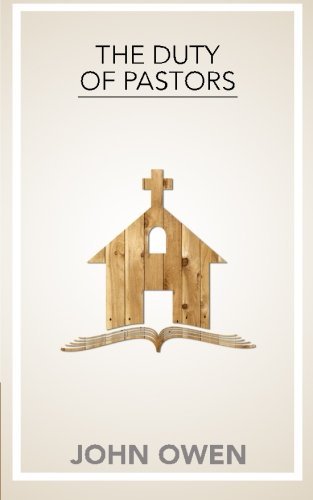
The Duty Of PastorsJohn Owen has some fascinating insights on pastors and ministers (hint: they’re not the same thing) in his book The Duty Of Pastors. Here are some of the quotes I liked from this book. Remember this book was written in the 17th-century, so don’t let the Old English keep you from discovering the rich truths in these passages.

“Why should any speak where the Holy Ghost is silent? … Where things are obscured, it is a safer way to prove the practice of men by God’s precept, charitably supposing them to have been obedient, than to wrest the divine rule to their observation, knowing how prone men are to deify themselves by mixing their inventions with the worship of God.”

“The lights which God maketh are sufficient to rule the seasons for which they are ordained. As, in creating of the world, God ‘made two great lights, the greater light to rule the day, and the lesser light to rule the night;’ so, in the erection of the new world of His church, He set up two great lights, the lesser light of the Old Testament to guide the night, the dark space of time under the law, and the greater light of the New Testament to rule the glorious day of the gospel. And these two lights do sufficiently enlighten every man that cometh into this new world. There is no need of the false fire of tradition where God sets up such glorious lights.”

“All faithful ministers of the gospel, inasmuch as they are ingrafted into Christ and are true believers, may, as all other true Christians, be called priests; but this inasmuch as they are members of Christ, not ministers of the gospel. It respecteth their persons, not their function, or not them as such.”

“Thus, this metaphorical appellation of priests is, in the first place an intimation of that transcendent privilege of grace and favour which Jesus Christ hath purchased for everyone that is sanctified with the blood of the covenant.”

“Not to lose myself and reader in this digression, the sum is, the unspeakable blessings which the priesthood of Christ hath obtained for us are a strong obligation for the duty of praise and thanksgiving; of which that in some measure we may discharge ourselves, He hath furnished us with sacrifices of that kind to be offered unto God.” 

“That the name of priests is nowhere in the Scripture attributed peculiarly and distinctively to the ministers of the gospel as such. … And yet, when Christ ascended on high, He gave some to be prophets, for the edification of His body, Eph. iv. 11; none, as we find, to be priests. Priests, then (like prelates), are a sort of church-officers whom Christ never appointed.”

“Never fear the equity of what God sets thee upon. No excuses of disability or any other impediment ought to take place; the Lord can and will supply all such defects.”

“God never sendeth any but whom He doth so extraordinarily and immediately call and ordain for that purpose; and that this may be manifested unto others, He always accompanieth them with His own almighty power, in the working of such miracles as may make them be believed, for the very works’ sake which God by them doth effect.”

“We do not read of any such miracles wrought by the prophet Amos, and yet he stands upon his extraordinary immediate vocation, ‘I was no prophet, neither was I a prophet’s son, but the Lord took me,’ etc. It sufficeth, then, that they be furnished with a supernatural power, either in, 1. Discerning; 2. Speaking; or 3. Working. … The sum is, that seeing such men pretend that their revelations and miracles are from heaven, let us search whether the doctrine they seek to confirm by them be from heaven or no.”

“There is a general obligation on all Christians to promote the conversion and instruction of sinners, and men erring from the right way.”

“For a public, formal, ministerial teaching, two things are required in the teacher: first, Gifts from God; secondly, Authority from the church (I speak now of ordinary cases). He that wants either is no true pastor.”

Be sure to check out my review of The Duty Of Pastors by clicking here.

The Duty Of Pastors (book review)

The Duty Of PastorsJohn Owen is one of the influential and powerful voices of the Puritans from the mid-17th century. One of the things that makes him influential is the source of his wisdom: Everything he writes is thoroughly grounded in Scripture. This is especially true for his book The Duty Of Pastors.

Originally this book was entitled The Duty Of Pastors and People Distinguished. As you might be able to tell from this original title, Owen lays out from Scripture the roles of ministers and pastors. These two titles and roles are distinct, although many people want to lump them together. Owen points out that any one who is a Christian can minister to people (and thus be called a “minister”), but there are special God-appointed roles for those called “pastors.”

Owen writes, “The first and principal duty of a pastor is to feed the flock by diligent preaching of the Word.” Indeed, this is one of the main thing which distinguishes pastors from ministers.

Owen also takes to task those in religious circles who would put artificial (in other words, things not commanded in Scripture) barriers for people to answer God’s call to the pastorate.

This is not a very long book, but given that fact that it is older, it is a bit of a challenging read. But for anyone who is interested in the roles of pastors and ministers, or for anyone who wants to know how to support their pastors, The Duty Of Pastors is well worth your time and effort.