Pentecost Sunday

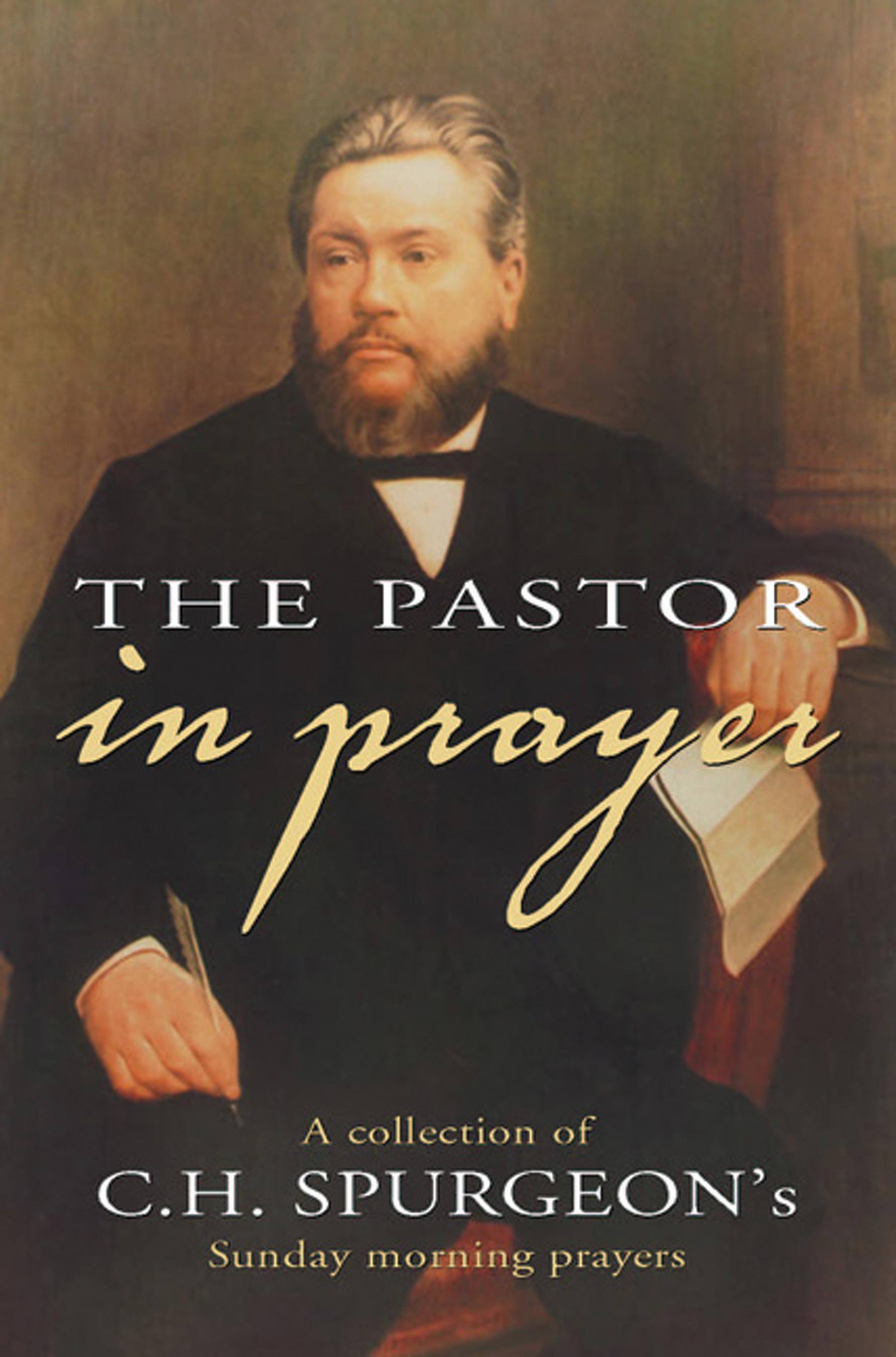
For Pentecost Sunday, I think these words from Charles Spurgeon are vital for us to hear again…

“The Holy Spirit’sC.H. Spurgeon power was gloriously manifested in and after Pentecost. He remains at this hour the present Immanuel—God with us, dwelling in and with His people, quickening, guiding, and ruling in their midst. Is His presence recognized as it ought to be? We cannot control His working; He is most sovereign in all His operations, but are we sufficiently anxious to obtain His help, or sufficiently watchful lest we provoke Him to withdraw His aid? Without Him we can do nothing, but by His almighty energy the most extraordinary results can be produced…. The Holy Ghost is no temporary gift, He abides with the saints. We have but to seek Him aright, and He will be found of us.” —Charles Spurgeon

Stand Firm!

C.H. Spurgeon“‘Stand firm and you will see the deliverance the Lord will bring you today’ (Exodus 14:13). This verse contains God’s command to me as a believer for those times when I am confronted with dire circumstances and extraordinary difficulties. What am I to do when I cannot retreat or go forward and my way is blocked to the right into the left? The Master’s word to me is, ‘Stand firm.’ And the best thing I can do at these times is to listen only to my Master’s word, for others will come to me with their suggestions and evil advice.

Despair will come, whispering, ‘Give up—lie down and die.’ …

Cowardice will come and say, ‘You must retreat to the world’s way of acting. It is too difficult for you to continue living the part of a Christian. Abandon your principles.’ …

Impatience will come, crying, ‘Get up and do something! To “stand firm” and wait is sheer idleness.’ …

Arrogance will come, boasting, ‘If the sea is blocking your way, march right into it and expect a miracle.’ …

“‘Stand firm.’ I must maintain the posture of one who stands ready for action, expecting further orders, and cheerfully and patiently awaiting the Director’s voice. It will not be long until God will say to me, as distinctly as He told Moses to tell the children of Israel, ‘Move on’ (Exodus 14:15).” —Charles Spurgeon

Charles Spurgeon On Difficulties

C.H. Spurgeon“O tested soul, perhaps the Lord is sending you through this trial to develop your gifts. You have some gifts that would never have been discovered if not for trials. Do you not know that your faith never appears as great in the warm summer weather as it does during a cold winter? … Afflictions are often the dark settings God uses to mount the jewels of His children’s gifts, causing them to shine even brighter. …

“For how can you know if you have faith, until your faith is exercised? You can depend upon the fact that God often sends trials so our gifts maybe discovered and so we may be certain of their existence. And there is more than just discovering our gifts—we experience real growth in grace as another result of our trials being sanctified by Him.

“God trains His soldiers not in tents of ease and luxury but by causing them to endure lengthy marches and difficult service. He makes them wade across streams, swim through rivers, climb mountains, and walk many tiring miles with heavy backpacks.

“Dear Christian, could this not account for the troubles you are now experiencing? Could this not be the reason He is dealing with you?” —Charles Spurgeon

Use Your Body To Honor God

C.H. Spurgeon“God paid a great price for you. So use your body to honor God [1 Corinthians 6:20]. You young men who come to London amidst its vices, shun everything that is akin to lewdness or leads on to unchasity, for your bodies were bought with your Lord’s lifeblood, and they are not yours to trifle with. Shun the strange woman, her company, her wine, her glances, her house, her songs, her resorts. Your bodies are not yours to injure by self-indulgence of any sort. Keep them pure and chaste for that heavenly Bridegroom who has bought them with His blood. And then your soul is bought too.

“I was obliged to mention the body, because it is mentioned here, and it is so needful it should be kept pure. But keep the soul pure. Christ has not bought these eyes that they should read novels calculated to lead me into vanity and vice, such as are published nowadays. Christ has not bought this brain of mine that I may revel in the perusal of works of blasphemy and filthiness. He has not given me a mind that I may drag it through the mire with the hope of washing it clean again.…

“Your whole manhood belongs to God if you are a Christian. Every faculty, every natural power, every talent, every possibility of your being, every capacity of your spirit.… It is all bought with blood. Therefore keep the whole for Jesus, for it belongs to Him.”

—Charles Spurgeon

3 Quotes About Bible Studies

New Bible study toolsYesterday I shared 7 must-have Bible study tools. Here are three powerful quotes on how and why we should make studying our Bibles an ongoing, lifelong pursuit.

“Search the Scriptures. Do not merely read them—search them; look up the parallel passages; collate them; try to get the meaning of the Spirit upon any one truth by looking to all the texts which refer to it. Read the Bible consecutively: do not merely read a verse here and there—that is not fair.” —Charles Spurgeon

“One cannot simply read the Bible, like other books. One must be prepared really to enquire of it. Only thus will it reveal itself. Only if we expect from it the ultimate answer, shall we receive it.” —Dietrich Bonhoeffer

“Let us resolve to read the Bible more and more every year we live. Let us try to get it rooted in our memories, and engraved into our hearts. … Let us resolve to be more watchful over our Bible reading every year that we live. Let us be jealously careful about the time we give to it, and the manner that time is spent. Let us be aware of omitting our daily reading without sufficient cause. Let us not be gaping, and yawning and dozing over our book, while we read. … Let us be very careful that we never exalt any minister, or sermon, or book, or tract, or friend above the Word. Cursed be that book, or tract, or human counsel, which creeps in between us and the Bible, and hides the Bible from our eyes! … Let us resolve to talk more to believers about the Bible when we meet them. Sorry to say, the conversation of Christians, when they do meet, is often sadly unprofitable! How many frivolous, and trifling, and uncharitable things are said! Let us bring out the Bible more, and it will help to drive the devil away, and keep our hearts in tune.” —J.C. Ryle

Christian Behavior (book review)

Christian BehaviorCharles Spurgeon said of John Bunyan, “Read anything of his, and you will see that it is almost like reading the Bible itself. He had read it till his very soul was saturated with Scripture…. Prick him anywhere—his blood is Bibline, the very essence of the Bible flows from him. He cannot speak without quoting a text, for his very soul is full of the Word of God. I commend his example to you, beloved.” This is so true of Bunyan’s short treatise Christian Behavior

Bunyan wanted Christians to behave like, well, Christians! He wrote, “They which have believed in God should be careful to maintain good works.” He was quick to point out that good works don’t purchase salvation, but that Christian good works should be evidence of a person’s salvation.

His main text for this book comes from Titus 3:7-8. Of this passage he says,

“From this Scripture, therefore, I do gather these things observable: First, that good works do to flow from faith. Second, that everyone that believeth should be careful that their works be good. Third, that every believer should not only be careful that their works be good, and for the present do them, but should also be careful to maintain them. That is, they should carefully study to keep in a constant course of good works. Fourth, and lastly, that the best way to provoke both ourselves and others to this work, is to be often affirming to others the doctrine of justification by grace, and to believe it ourselves.”

Bunyan talks to husbands and wives, mothers and fathers, children, employers and employees, to challenge them to maintain those good works that would show others the admirable qualities of the Christian life. Even though Christian Behavior was written over 300 years ago, it’s message is as timeless as the Bible on which all of Bunyan’s thoughts were based.

Links & Quotes

link quote

“Ah, what a thing is prayer! The simplest form of speech—such as even a child could utter—yet the highest and divinest of all utterances; such as the Holy Spirit alone can enable us to give fourth.” —Horatius Bonar

“When God feels distant, remember the Christmas story. When you feel alone, unloved, or unlovable, remember that God loves you. And He travelled a great distance to be close to you. Why? Because He loves to be with the ones He loves!” —Max Lucado

“Do you ever take a moment to pray but feel like you stumble out of the gate? Do you have trouble finding the words when it comes time to bow your head? Remember, the One who hears your prayers is your Daddy. You don’t need to wow him with eloquence. Jesus downplayed the importance of words in prayers. We tend to do the opposite. The more words the better. The better words the better. … Just as a happy child cannot mis-hug, the sincere heart cannot mis-pray.” —Max Lucado

J.Warner Wallace answers a good question: Why doesn’t the birth record of Jesus appear in every Gospel?

Dan Reiland has some good words for those in leadership positions in ministry.

Far too many school administrators and teachers think they are limited by the so-called “separation of church and state.” Here’s a post from Eric Buehrer you should share with any of your friends who work in the public school system.

John Stonestreet says, “Remember when people laughed about ‘death panels’?” Check out Who decides to end a life?

Frank Turek asks, “How do we fix a world filled with murder, rape, betrayal, adultery, fraud, theft, sexual exploitation, pornography, bullying, abortion, terrorism, cheating, lying, child abuse, racism, assault, drugs, robbery, and countless other evils?” He says we may not like the answer.

8 Quotes Worth Studying From “Proverbs”

ProverbsIn my review of Proverbs by Charles Bridges (which you can read by clicking here), I noted how he weaved the principles in the biblical book of Proverbs into the teaching that occurs throughout the Scripture. In others words, he showed that the wisdom in Proverbs wasn’t just a “stand-alone” wisdom, but integrated into the whole.

In the quotes I’m sharing today, I trust you will get a glimpse of what I mean. The reference in brackets before the quote indicate the Proverb to which Bridges is commenting. I have also linked all of the Scripture references to my friends at Bible Gateway, so you can look them up easily (and I encourage you to do so!).

[Proverbs 1:10-16] “If the temptation prevail, charge it not on God; no—nor on the devil. As the worst he can do, he can only tempt, he cannot force us, to sin. When he has plied us with his utmost power, and most subtle artifice, it is at the choice of our own will, whether we yield or no (see James 1:13-15). The habitual resistance of the will clears us of responsibility (cp. Romans 7:14-17, 19-20, 23). The consent, even if it be not carried out into the act, lays the responsibility at our own door.”

[Proverbs 2:10-11] “The forsaken sin only makes way for some more plausible, but not less deadly passion. The heart, cast into the mold of the Gospel, is the only cover from those snares within and without (Romans 6:17, 18; 2 Corinthians 3:18), which so imperceptibly, yet so fatally, estrange us from God. Never, till the vital principle is implanted, is their mischief discerned. Never, till then, does the heart find its proper object, its true resting-place.”

[Proverbs 3:5-6] “Take one step at a time, every step under Divine warrant and direction (cp. Ezekiel 18:21-23; Nehemiah 1:11). Ever plan for yourself in simple dependence on God. It is nothing less than self-idolatry to conceive that we can carry on even the ordinary matters of the day without His counsel. He loves to be consulted. Therefore, take all thy difficulties to be resolved by Him. Be in the habit of going to Him in the first place—before self-will, self-pleasing, self-wisdom, human friends, convenience, expediency. Before any of these have been consulted, go to God at once. Consider no circumstances too clear to need His direction. In all thy ways, small as well as great; in all thy concerns, personal or relative, temporal or eternal, let Him be supreme.”

[Proverbs 3:11-12] “Faith understands the reasons of the discipline (1 Peter 1:6, 7); acknowledges it as a part of His gracious providence (Deuteronomy 8:2, 15, 16), and the provision of His everlasting covenant (Psalm 89:30-32); waits to see the end of the Lord (James 5:11); and meanwhile draws its main support from the seal of adoption.”

[Proverbs 4:14-17] “To pray not to be led into temptation; yet not to watch, that we enter not into it (Matthew 6:13; 26:41)—is practically to contradict our prayers; to mock our God, by asking for what we do not heartily wish.”

[Proverbs 11:18-19] “Righteousness is the seed; happiness is the harvest. The reward indeed is not from cause, but of consequence; not of debt, but of grace depending upon a free promise; mercifully yet surely linked with Christian perseverance (Ecclesiastes 11:6; Hosea 10:12; 1 Corinthians 15:58; Galatians 6:7, 8).”

[Proverbs 17:22] “If then, Christian, you believe the Gospel to be ‘glad tidings’ (Luke 1:19; 8:1), show that you believe it, by lighting up your face with a smile.”

[Proverbs 28:13] “The love of sin struggles with the power of conscience. The door of access to God is barred (Psalm 66:18). Christian confidence is clouded (Psalm 32:3, 4); and, unless Sovereign mercy interpose, it must end in the sting of ‘the never-dying worm’ (Isaiah 66:24; Mark 9:44-48). The covering of the disease precludes the possibility of the cure. Only the penitent confessor can be the pardoned sinner.”

“The best work on the Proverbs. While explaining the passage in hand, he sets other portions of the Word in new lights.” —C.H. Spurgeon, commenting on this book

William Tyndale & Charles Spurgeon On Sacred Words And Deeds

William TyndaleThis morning in my message, we looked at the example of William Tyndale.

William Tyndale believed the Bible should be read by all (not just by the “enlightened” clergy), and he undertook the process of translating the Hebrew and Greek into English. In the preface to the first five books of the Old Testament, he wrote, “I had perceived by experience, how that it was impossible to stablish the lay people in any truth, except the Scripture were plainly laid before their eyes in their mother tongue, that they might see the process, order, and meaning of the text.”

  • The clergy tried to intimidate Tyndale into stopping his work, but he said, “I defy the Pope and all his laws. If God spare my life, ere many years I will cause a boy that driveth the plough to know more of the Scripture, than he doust.”
  • Eventually he was put on trial for heresy, where he was also accused of trying to profit from his work. He replied, “I call God to record against the day we shall appear before our Lord Jesus, that I never altered one syllable of God’s Word against my conscience, nor would do this day, if all that is in earth, whether it be honor, pleasure, or riches, might be given me.”
  • Ultimately Tyndale was strangled to death, and then burned at the stake. But his dying words were, “Lord, open the eyes of the king.”

William Tyndale was notable in his struggle to break down the unbiblical clergy/laity (or sacred/secular) divide. Another great man who addressed this topic over 300 years after the death of Tyndale was Charles Spurgeon—

C.H. Spurgeon“To a man who lives unto God nothing is secular, everything is sacred. He puts on his workday garment and it is a vestment to Him. He sits down to his meal and it is a sacrament. He goes forth to his labor, and therein exercises the office of the priesthood. His breath is incense and his life a sacrifice. He sleeps on the bosom of God, and lives and moves in the divine presence. …The Lord hath cleansed your houses, He has cleansed your bed chambers, your tables, your shops, He has made the bells upon your horses holiness to the Lord, He has made the common pots and pans of your kitchens to be as the bowls before the altar, if you know what you are and live according to your high calling. You housemaids, you cooks, you nurses, you ploughmen, you housewives, you traders, you sailors, your labor is holy if you serve the Lord Christ in it, by living unto Him as you ought to live. The sacred has absorbed the secular.”

Links & Quotes

link quote

“Scripture is about God, God is love, therefore, if you want to learn the Scriptures, look to learn love.” —T.M. Moore

“It is remarkable that the persons in positions of power who wrote most of Israel’s Wisdom Literature did not present the poor as immoral or second-class, but as neighbors in need of mercy. On the other hand, there is never an indication that the needy are necessarily more pious; after all, poverty was never presented as an ideal of Israelite society (Deuteronomy 15:4).” —Archeological Study Bible

“Where would you have been but for grace? To repeat the old saying of John Bradford, when he saw a cartful of men going off to Tyburn to be hanged, ‘There goes John Bradford but for the grace of God.’ When you see the swearer in the street, or the drunkard rolling home at night, there are you, there am I, but for the grace of God. Who am I? What should I have been if the Lord, in mercy, had not stopped me in my mad career?” —Charles Spurgeon

[VIDEO] I hadn’t thought of it this way before, but John Maxwell says there is a healthy and unhealthy way of being defensive—