Bible Reading (book review)

BibleJ.C. Ryle wrote 100+ years ago, but his words still resonate with me as though they were written yesterday. In his book Bible Reading, J.C. Ryle makes a strong case for a renewed passion for every one to step up their time in reading, meditating upon, and living out Scripture.

Chapter after chapter Ryle asks, “I charge you, I entreat you to give me an honest answer. What are you doing with the Bible? Do you read it? How do you read it?” And chapter after chapter he continues to give us fewer excuses for not reading the Bible, and more persuasion to read Scripture in a more meaningful way.

The opening words of this book are about as simple and as profound as anything any one could say about God’s Word: “Next to praying there is nothing so important in practical religion as Bible reading.”

What are you doing with the Bible? Do you read it? How do you read it? This book will help you answer these vital questions.

The Quick-Start Guide To The Whole Bible (book review)

Quick-Start GuideZig Ziglar once quipped, “Every day I read the newspaper and I read my Bible. That way I know what both sides are up to!” I couldn’t agree more. Everything I read gets filtered through the Bible, but the Bible is a huge volume and one could lose sight of the big picture while trying to read through it. This is where The Quick-Start Guide To The Whole Bible by Drs. William Marty and Boyd Seevers become a valuable resource.

The book is laid out in the same order as the 66 books of the Bible, and each chapter follows the same sequence. For each book you will learn (1) the setting, (2) the summary, and (3) the significance. With each chapter only being a few pages long, it’s a great introduction before reading a book of the Bible.

In the setting you will be reminded of the events occurring in history at the time of the book, which helps give perspective to what you will be reading in the Bible. In the summary you will notice the overarching themes to look for while you read. And in the significance you will discover how this book of the Bible fits into the overall big picture of the whole of Scripture.

Keep this book close to your Bible, and read the corresponding chapter before you begin reading a new book in your Bible. I think you will get so much more out of your Bible reading time by doing this.

I am a Bethany House book reviewer.

15 Tips To Give Healthy Praise To Our Kids

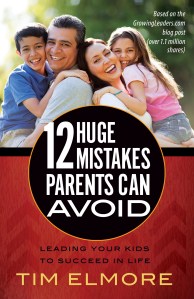
12 Huge MistakesOne of the parental mistakes Tim Elmore highlights in his newest book 12 Huge Mistakes Parents Can Avoid is praising the wrong things. He writes—

“We live in a world of hyperbole. We think we must exaggerate to be heard. So we use words like awesome or excellent when our kids have done merely what is expected of them. We offer huge praise for minimal effort. As our children grow older, matching the affirmation with the effort becomes especially important. Not too little, but not too much. This is how trust is built, and it’s why kids continue to listen to their parents during teen years.” 

Dr. Elmore is not saying that we shouldn’t praise our kids, but that we should do it more intelligently, by making sure we are praising the right things. He offers this list for healthy, profitable praise for kids:

  1. Praise them for effort, not for their intelligence or beauty. 
  2. Reward character virtues (such as honesty) more than performance. 
  3. Teach them to enjoy the process as much as the product. 
  4. Make sure the size and content of your praise matches their effort. 
  5. Be sure your affirmation is sincere, thoughtful, and genuine. 
  6. Empower them by helping them own a personal set of values to live by. 
  7. Identify and affirm unique features that differentiate your kids. 
  8. Provide experiences for them to discover and build their primary strengths. 
  9. Furnish a platform for them to serve others using their strengths and gifts. 
  10. Tell them you enjoy watching them perform regardless of the outcome. 
  11. The younger they are, the more immediate your feedback for them must be. 
  12. Equip them to take risks and learned that failure is okay as long as they tried. 
  13. Build a secure home for them but one that does not revolve around them. 
  14. When in doubt, always praise what is in their control. 
  15. Clarify your unconditional love for them regardless of their performance.

If you would like to read my full book review of 12 Huge Mistakes, click here.

To read some other quotes I shared from this book, click here.

12 Quotes From “12 Huge Mistakes Parents Can Avoid”

12 Huge MistakesI highlighted a lot in Tim Elmore’s newest book 12 Huge Mistakes Parents Can Avoid … a lot! This is book that every parent (or grandparent) should read because it’s never too late to invest the best in our (grand)children. You can read my full book review of this must-read book by clicking here. Below are just a few of the quotes I highlighted in this book.

“I believe we have under-challenged kids with meaningful work to accomplish. We have overwhelmed them with tests, recitals, and practices, and kids report being stressed-out by these activities. But they are essentially virtual activities. Adults often don’t give significant work to students—work that is relevant to life and could actually improve the world if the kids rose to the challenge. We just don’t have many expectations of our kids today.” 

“Every parent and teacher wants to see their kids succeed in school, in sports, and in life, but making it impossible to fail isn’t the answer. Removing failure, in fact, is a terrific way to stunt maturity. … As parents, we’ve given them lots of possessions but not much perspective. As educators, we’ve given them plenty of schools but not plenty of skills. As coaches, we’ve taught them how to win games but not how to win in life. As youth workers, we provide lots of explanations but not enough experiences. As employers, we’ve mentored them in profit and loss but haven’t shown them how to profit from loss.”

“Truth be told, when kids have heard they are excellent without working hard or truly adding value to a team, the praise rings hollow to them. Our affirmation must match their performance.”  

“When people—especially young people—know they are free to try something and fail, their performance usually improves. It brings out the best in them. But if they are preoccupied with trying not to fail, they become paralyzed:

  • Failure can create resilience.
  • Failure can force us to evaluate.
  • Failure can motivate us to better performance.
  • Failure prompts creativity and discovery.
  • Failure can develop maturity.”

“Our constant caving begins to foster a constant craving in them. They want clarity. With boundaries unclear, they need more direct attention from Mom or Dad. Unwittingly, we actually breed insecurity and instability in our kids. This may sound strange, but consistency may be your best friend as a parent because it aids in your authority and in your child’s development.” 

“Removing the consequences takes one of two roads. We either excuse their behavior and remove negative outcomes, or we actually step in and pay the consequence for them. When we do this, we frequently relieve the stress. We bring immediate peace to the situation, so we get addicted to this pattern. Unfortunately, we don’t see the long-term problems we are causing. Removing the consequences from our children’s lives brings short-term tranquility but long-term trouble.”

“‘You can do anything you want.’ I recognize why we say this, but as our kids grow older, we must help them to see what we really meant. … We really meant, if they set their mind to do something, they’ll be amazed at what they can pull off. The catch is, it needs to be something with in their gift area. They cannot simply make up a dream or copy a friend’s dream and call it theirs. Dreams should be attached to strengths.” 

“We have created a world of conveniences, filled with smart phones, microwaves, Internet shopping, and online banking. The subtle message is that struggles are to be avoided. We want as much convenience as possible. In fact, we feel entitled to it. But we failed to see that when we remove the struggles from our children’s lives, we begin to render them helpless. They don’t have the opportunity to develop the life skills they’ll need later on. Further, when we step in to control their levels of struggle, they don’t learn how to be in control or under control themselves. In fact, all they learn is how to be controlled.”

“Ironically, the things young people want to avoid are necessary for them to mature authentically. Slow, hard, boring, risky, laborious… these are the very challenges that prepare me to become a good man, a good husband, a good father, a good employee, a good employer. Many life skills that once naturally developed in us now atrophy in today’s culture. So we must be far more intentional about leading our kids into opportunities to build these skills.” 

“When we affirm looks or clothing—external matters instead of internal virtues—kids values become skewed. Remember, what gets rewarded gets repeated. Without realizing it, we are reinforcing cosmetic features—usually features that are not in their control. … We should be doing just the opposite. We must affirm effort and behavior, which are in their control, instead of characteristics that are out of their control. If we do this, we begin to foster a growth mindset instead of a fixed mindset.”

“We mistake hurtful with harmful. Many times, hurting helps us. In fact, removing the hurt may be harmful. … When we hurt, we can learn important truths about ourselves and about others, truth that will be beneficial later in our lives. … We confuse disturbance with damage. We hate being disturbed. Our days are so full, we often hope and pray we won’t face any unexpected disturbances as we pursue our goals. The fact is, however, that on our way to those goals, we fall into unhealthy ruts. Interruptions force us out of those ruts. Interruptions are not damaging at all. They are the very items that save us from our tunnel vision. We need to be disturbed from time to time. Interruptions are wake-up calls that rouse us from our apathy or complacency.” 

“I know you think kids are tired of you talking about the good old days. But I’ve found most kids love hearing stories of how we adults struggled to learn the same life skills when we were young. It’s all part of growing up.”

12 Huge Mistakes Parents Can Avoid (book review)

12 Huge MistakesI read a lot of books, but very few of them get a “must read” designation from me. For parents and teachers, 12 Huge Mistakes Parents Can Avoid by Dr. Tim Elmore fully earns my must-read label.

The future of our schools, our businesses, our communities and our country is being determined right now in our homes and in our schools. The way we raise our kids now will have far-reaching implications for all of us. Dr. Elmore has such a great way of speaking to the leadership issues of our young people, that I cannot urge you strongly enough to read this book.

Real quickly, the 12 huge mistakes that parents and teachers need to avoid are:

  • We Won’t Let Them Fail
  • We Project Our Lives On Them
  • We Prioritize Being Happy
  • We Are Inconsistent
  • We Remove The Consequences
  • We Lie About Their Potential And Don’t Explore Their True Potential
  • We Won’t Let Them Struggle Or Fight
  • We Give Them What They Should Earn
  • We Praise The Wrong Things
  • We Value Removing All Pain
  • We Do It For Them
  • We Prepare The Path For The Child Instead Of The Child For The Path

The book opens with a simple parenting quiz that will allow assess where you are in these 12 areas. Then you can turn to the chapter on which you scored the highest in the “overfunctioning parent” scale, and deal with that issue first. Each chapter is jam-packed with practical tips to correct that particular mistake.

Dr. Elmore describes the purpose behind his book this way—“Here’s the bottom line. I believe we need to face some new issues as parents. We must define what kids need from us to mature in a healthy way. We must figure out what hinders their growth and what equips them to be great adults. We must become both nurturers and trainers, knowing that we are not raising children, but future adults. I offer this book as a reference guide as you face your toughest challenges and attempt to get kids ready for life as they leave your home or school. Here’s to correcting our mistakes along the way—for their sake.”

Parents and teachers, go get this book!

Links & Quotes

link quote

Some good reading from today…

I was totally blown away when I saw this morning that BibleGateway featured my chart The Kings & Prophets Of Judah & Israel!

[INFOGRAPHIC] 22 Surprising Facts About Sleep from the Cleveland Clinic. Here’s a great book resource: Sleep: It Does A Family Good.

Very powerful: An open letter to my friends struggling with eating disorders.

“In times of extraordinary crisis ordinary measures will not suffice. The world lives in such a time of crisis. Christians alone are in a position to rescue the perishing. We dare not settle down to try to live as if things were ‘normal.’ Nothing is normal while sin and lust and death roam the world, pouncing upon one and another till the whole population has been destroyed.” —A.W. Tozer

“I want you to know how to study theology in the right way. I have practiced this method myself. … The method of which I am speaking is the one which the holy king David teaches in Psalm 119. … Here you will find three rules. They are frequently proposed throughout the psalm and run thus: Oratio, meditatio, tentatio [prayer, meditation, trial]. …

“You should completely despair of your own sense and reason, for by these you will not attain the goal. … Rather kneel down in your private little room and with sincere humility and earnestness pray God through His dear son, graciously to grant you His Holy Spirit to enlighten and guide you and give you understanding. [Psalm 119:18, 27, 33, 34-37]. …

“Second, you should meditate. This means that not only in your heart but also externally you should constantly handle and compare, read and reread the Word as preached and the very words as written in Scripture, diligently noting and meditating on what the Holy Spirit means. … Therefore, you observe how in this psalm David always says that he will speak, think, talk, hear, read, day and night and constantly—but about nothing else than God’s Word and Commandments. For God wants to give you His Spirit only through the external Word. [119:11, 15, 48, 24, 47, 93, 97] …

“Third, there is the tentatio, the trial. This is the touchstone. It teaches you not only to know and understand, but also to experience how right, how true, how sweet, how lovely, how mighty, how comforting God’s Word is: it is wisdom supreme. This is why you observe that, in the psalm indicated, David so often complains of all sorts of enemies. … For as soon as God’s Word becomes known through you, the devil will afflict you, will make a real [theologian] of you.” [119: 67-68, 71] —Martin Luther, on the 119th Psalm

C.S. Lewis At War (audio drama review)

C.S. Lewis At WarWow, C.S. Lewis At War by Focus On The Family’s Radio Theatre has so much to like! I recently read C.S. Lewis In A Time Of War (you can read my review of this book by clicking here), so this audio drama was the perfect companion to the book.

If you’re anything like me, you might find that when a book is dramatized in a movie or an audio format, you say something like, “That wasn’t how I read that book.” But once again FOTF’s Radio Theatre stays so true to the intent of the story that it’s hard to find any places they departed from the book, the man, or the history of the time. In fact, I’d say the opposite: this dramatization actually brought out some details that the book form couldn’t address as fully.

If you like C.S. Lewis, old-time-radio broadcasts, history, or just a really well-told story, I think you will enjoy C.S. Lewis At War.

Links & Quotes

link quote

Some good reading from today…

“There are no unsacred places; there are only sacred places and desecrated places.” —Wendell Berry

“It may be that when we no longer know which way to go that we have come to our real journey. The mind that is not baffled is not employed. The impeded stream is the one that sings.” —Wendell Berry

“Wherefore seeing that all Christians know that the death of the religious beggar amongst the dogs, licking his sores, was better than the death of the wicked rich man in all his silks and purples, what power hath the horror of any kind of death to affright their souls that have led a virtuous life?” —Augustine

Parents & teachers should especially check out Tim Elmore’s post: 5 Ways To Cure The “Cool Kid” Curse. In this post he mentions his book Artificial Maturity; click here to read my review of this outstanding resource.

“We have thus plainly before us the principle, that our Lord in His infinite wisdom and superabundant love, sets so high a value upon His people’s faith, that He will not screen them from those trials by which faith is strengthened.” —Charles Spurgeon

The Law & The Gospel

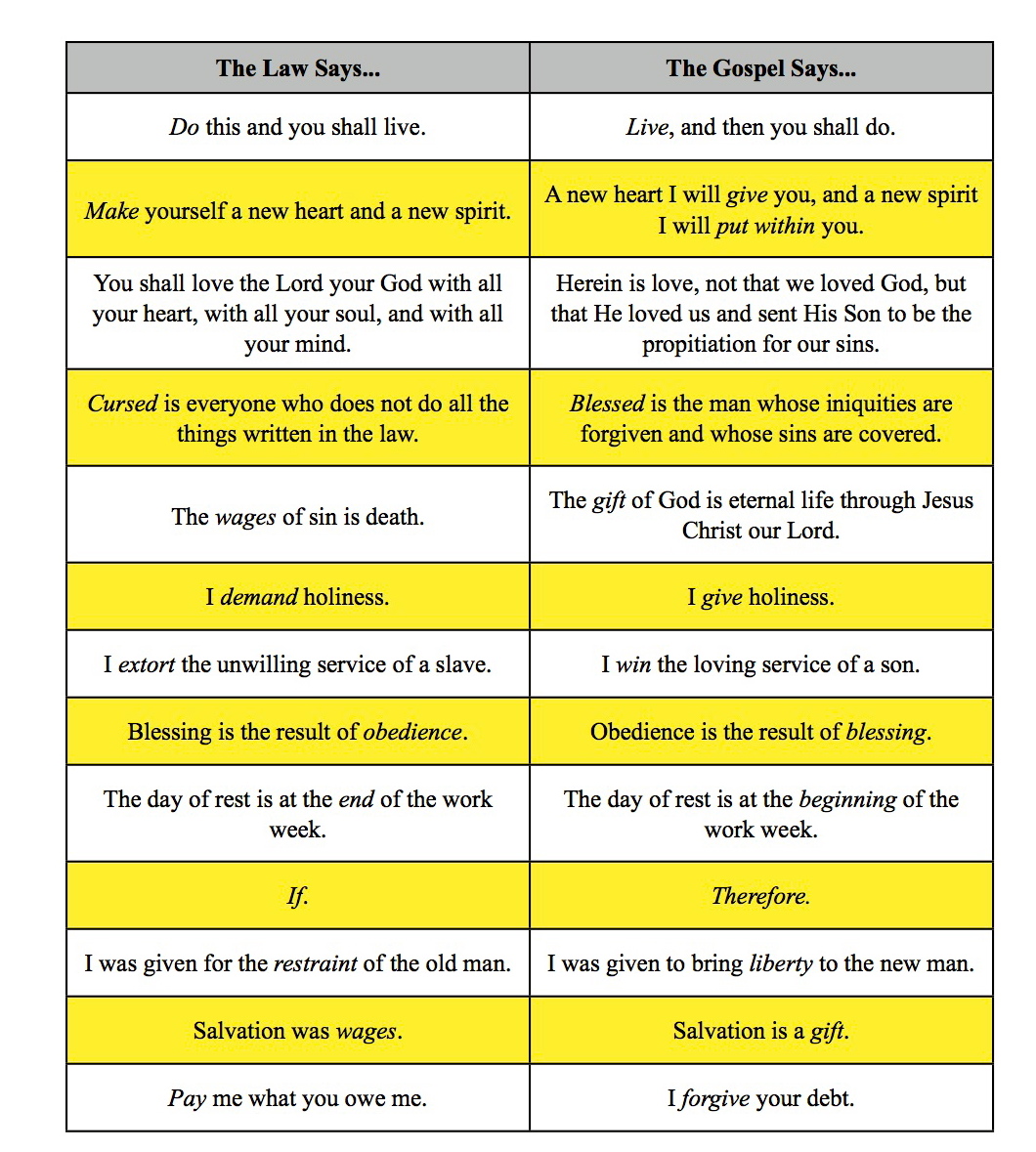
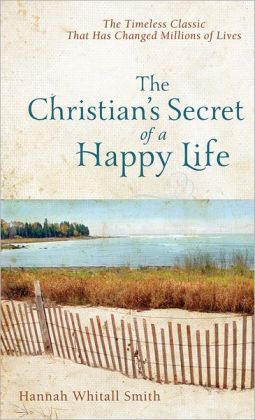
Hannah Whitall Smith, in her book The Christian’s Secret Of A Happy Life, contrasts living under the law and living under the gospel. She says, “It is a fact beyond question that there are two kinds of Christian experience, one of which is an experience of bondage, and the other an experience of liberty. In the first case the soul is controlled by a stern sense of duty, and obeys the law of God, either from fear of punishment or from expectation of wages. In the other case the controlling power is an inward life-principle that works out, by the force of its own motions or instincts, the will of the Divine Life-giver, without fear of punishment or hope of reward. In the first the Christian is a servant, and works for hire; in the second he is a son, and works for love. … The following contrasts may help some to understand the difference between these two kinds of religion, and may also enable them to discover where the secret of their own experience of legal bondage lies:” 

The Law & The GospelTo download a PDF version of this chart click here → The Law & The Gospel ←

To read my book review of The Christian’s Secret, click here.

To read some quotes from this book, click here.


8 Quotes From “The Christian’s Secret Of A Happy Life”

The Christian's SecretSometimes people slap the label “timeless classic” on a book just because it’s old. But in the case of The Christian’s Secret Of A Happy Life by Hannah Whitall Smith, the label is well-deserved. The thoughts she shares are so biblically-grounded that they truly are timeless. You can read my full book review by clicking here. I highlighted way too many things to share them all, but here are a few quotes that I especially liked.

“You have been forced to settle down to the conviction, that the best you can expect from your religion is a life of alternate failure and victory, one hour sinning, and the next repenting, and then beginning again, only to fail again, and again to repent. … Can we dream that the Savior, who was wounded for our transgressions and bruised for our iniquities, could possibly see of the travail of His soul and be satisfied in such Christian lives as fill the Church today? … Can we, for a moment, suppose that the holy God, who hates sin in the sinner, is willing to tolerate it in the Christian, and that He has even arranged the plan of salvation in such a way as to make it impossible for those who are saved from the guilt of sin to find deliverance from its power?” 

“Positive transformation is to take place. So at least the Bible teaches. Now, somebody must do this. Either we must do it for ourselves, or another must do it for us. We have most of us tried to do it for ourselves at first, and have grievously failed; then we discover, from the Scriptures and from our own experience, that it is something we are unable to do, but that the Lord Jesus Christ has come on purpose to do it, and that He will do it for all who put themselves wholly into His hands and trust Him without reserve. … The Lord’s part is to do the thing entrusted to Him. He disciplines and trains by inward exercises and outward providences. He brings to bear upon us all the refining and purifying resources of His wisdom and His love. He makes everything in our lives and circumstances subservient to the one great purpose of causing us to grow in grace, and of conforming us, day by day and hour by hour, to the image of Christ.”

“Sanctification is both a step of faith, and a process of works. It is a step of surrender and trust on our part, and it is a process of development on God’s part. By a step of faith we get into Christ; by a process we are made to ‘grow up into Him in all things.’ By a step of faith we put ourselves into the hands of the Divine Potter; by a gradual process He makes us into a vessel unto His own honor, meet for His use, and prepared to every good work. … The maturity of a Christian experience cannot be reached in a moment, but is the result of the work of God’s Holy Spirit, who, by His energizing and transforming power, causes us to grow up into Christ in all things. And we cannot hope to reach this maturity in any way other than by yielding ourselves up, utterly and willingly, to His mighty working.” 

“Just as we reconcile the statements concerning a saw in a carpenter’s shop when we say, at one moment, that the saw has sawn asunder a log, and the next moment declare that the carpenter has done it. The saw is the instrument used; the power that uses it is the carpenter’s. And so we, yielding ourselves unto God, and our members as instruments of righteousness unto Him, find that He works in us to will and to do of His good pleasure, and we can say with Paul, ‘I labored; yet not I, but the grace of God which was with me.’ … Just as the potter, however skillful, cannot make a beautiful vessel out of a lump of clay that is never put into his hands, so neither can God make out of me a vessel unto His honor unless I put myself into His hands.”:

“Most Christians are like a man who was toiling along the road, bending under a heavy burden, when a wagon overtook him, and the driver kindly offered to help him on his journey. He joyfully accepted the offer but when seated in the wagon, continued to bend beneath his burden, which he still kept on his shoulders. ‘Why do you not lay down your burden?’ asked the kind-hearted driver. ‘Oh!’ replied the man, ‘I feel that it is almost too much to ask you to carry me, and I could not think of letting you carry my burden too.’ And so Christians, who have given themselves into the care and keeping of the Lord Jesus still continue to bend beneath the weight of their burdens, and often go weary and heavy-laden throughout the whole length of their journey. … It is generally much less difficult for us to commit the keeping of our future to the Lord than it is to commit our present. We know we are helpless as regards the future, but we feel as if the present is in our own hands, and must be carried on our own shoulders; and most of us have an unconfessed idea that it is a great deal to ask the Lord to carry ourselves, and that we cannot think of asking Him to carry our burdens too.”

“He is our Father, and He loves us, and He knows just what is best, and therefore, of course, His will is the very most blessed thing that can come to us under any circumstances. I do not understand how it is that the eyes of so many Christians have been blinded to this fact. But it really would seem as if God’s own children were more afraid of His will than of anything else in life—His lovely, lovable will, which only means loving-kindnesses and tender mercies, and blessings unspeakable to their souls!”

“You have trusted Him as your dying Savior; now trust Him as your living Savior. Just as much as He came to deliver you from future punishment did He also come to deliver you from present bondage. Just as truly as He came to bear your stripes for you has He come to live your life for you.” 

“The one chief temptation that meets the soul at this juncture is the same that assaults it all along the pathway, at every step of its progress; namely, the question as to feelings. We cannot believe we are consecrated until we feel that we are: and because we do not feel that God has taken us in hand, we cannot believe that He has. As usual, we put feeling first, and faith second, and the fact last of all. No, God’s invariable rule in everything is, fact first, faith second, and feeling last of all; and it is striving against the inevitable when we seek to change this order.”