Josh McDowell is an amazing apologist! He has a tremendous knack for being able to “put the cookies on the bottom shelf.” By that I mean that he can make complex topics accessible to a wider audience than most authors. In Did The Resurrection Happen … Really? he and Dave Sterrett do just that with some great arguments for and against the death and resurrection of Jesus Christ.
This book is classified as fiction, because fictional characters are having a discussion at a fictional university about the deep subjects of life and death, and life after death. Although the characters are fictional, the questions being discussed are real, and the sources quoted in defense of each side of the argument are all non-fictional.
McDowell and Sterrett (who are Christian apologists) don’t dumb-down the arguments against the claims of an actual physical death and an actual physical resurrection. They quote from some of the most well-known proponents of these arguments, and then thoughtfully and persuasively rebut those claims.
Because this book is written in a conversational style, it bring the reader right into the coffee chats of the characters. It also helps the reader see how he/she could have a similar dialogue with others who question the biblical account of the crucifixion and resurrection of Jesus Christ.
The book is well footnoted, so curious readers can dig deeper and research further. But don’t let this fact lead you to believe that this is a heady, academic book. As I mentioned earlier, McDowell and Sterrett definitely make these concepts accessible to a wide audience.
This would be an excellent book to read if you have friends who are skeptical to the biblical account. It would also be a very good resource for those preparing to attend a university where the faculty might be more antagonistic toward the biblical worldview. In any case, it was a very enjoyable and educational book.
Listen to the podcast of this post by clicking on the player below, and you can also subscribe on Apple, Spotify, or Audible.
Could it really be this simple? Could it be that Jesus died and rose again just like the Bible says? Or does it need to be more complicated than that? Are there other theories that seem to fit the facts?
At the feast of Pentecost where Jewish people from all over the world convened in Jerusalem just 50 days after the resurrection of Jesus, Peter stood up to address them:
He began, “Fellow Jews and all of you who live in Jerusalem…” (Acts 2:14). He addressed both local residents and guests from faraway lands.
Peter began by saying, “Jesus of Nazareth was a Man accredited by God to you by miracles, wonders and signs, which God did among you, as you yourselves know” (v. 22). No one shouted Peter down or disputed this claim. Quite possibly because there were those in this audience who had personally seen or experienced one of Jesus’ miracles.
The he announced, “God has raised this Jesus to life, and we are all witnesses of the fact” (v. 32). Anyone could have easily refuted this claim because the tomb of Jesus was within walking distance of where they were standing, and yet no one disputed this claim.
A short time later, after healing a lame man outside of the temple, Peter and John were hauled before the Sanhedrin (the rulers and elders of the people [Acts 4:8]). This was the very group who had convinced the Roman governor Pontius Pilate to have Jesus crucified.
They addresses this group by saying, “It is by the name of Jesus Christ of Nazareth, Whom you crucified but Whom God raised from the dead, that this man stands before you healed” (v. 10). Once again, they didn’t dispute this, but they just told them to stop preaching in this name of Jesus (v. 17).
Paul was a devout member of this Jewish religious leadership until he had a personal encounter with Jesus. It became awfully difficult for Paul to argue that Jesus was dead, when he had personally seen Him and talked with Him!
Paul’s former colleagues had him arrested to stand trial before the Romans. The Roman governor Festus noted that the claims of the Jews against Paul were “about a dead man named Jesus Who Paul claimed was alive” (Acts 25:19). This is nearly 30 years after the resurrection of Jesus occurred. King Agrippa didn’t scoff this off. In fact, Paul said he was glad to talk to the king since “the king is familiar with these things…. I am convinced that none of this has escaped his notice, because it was not done in a corner” (Acts 26:26). Again, Agrippa didn’t dispute the claim of Jesus’ resurrection, but simply accused Paul of trying to convert him to Christianity.
There is something in our hearts that wants the resurrection to be true.
We don’t want to work all our lives for nothing.
We don’t want to invest in a relationship, only to have that end when the other person dies.
We want there to be something more. We want there to be something that makes sense of the world.
Only the resurrection of Jesus the Christ helps us make sense of life. Only His resurrection gives us lasting hope.
An old song by the band Kansas says:
Deep within the hardest heart
There is something there that knows
There’s a hunger life can never fill
Til you face the One Who rose
There were two followers of Jesus who were out for a walk on the evening of the day of the resurrection. They, too, were trying to figure out if the news reports they heard about Jesus’ resurrection was fact or fiction. Jesus met them on the road (although they didn’t recognize Him) and He walked and talked with them. He explained how all of the things in the Bible pointed to these facts: a Savior would come, a Savior would die, and a Savior would be raised to life again. As Jesus sat down to eat with them, they recognized Who He was, and then He disappeared from their sight. As they hurried back to tell the other disciples, they said, “Didn’t our hearts burn within us as He talked” (Luke 24:32).
Does it take faith to believe the biblical resurrection story? Yes!
Does it take faith to believe the conspiracy theories? Yes!
But I believe that not only is the resurrection account more plausible, but it’s more satisfying too. The resurrection of Jesus rings true because IT IS TRUE, and because you were created by God to believe this truth so you could be in a relationship with Him forever.
Earlier this week I reviewed Questions Christians Hope No One Will Ask Them (you can read my review here).
I wanted to share some of my favorite quotes from this book:
“When we fail to answer someone’s questions and objections, we become just one more excuse for them to disbelieve.”—Walter Martin
“I cannot believe that our existence in this universe is a mere quirk of fate. … We are truly meant to be here.” —Paul Davies, a physicist, cosmologist, and atheist
“Consider what you’d need for a protein molecule to form by chance. First, you need the right bonds between the amino acids. Second, amino acids come in right-handed and left-handed versions, and you’ve got to get only left-handed ones. Third, the amino acids must link up in a specified sequence, like letters in a sentence. Run the odds of these things falling into place on their own and you find that the probabilities of forming a rather short functional protein at random would be one chance in a hundred thousand trillion trillion trillion trillion trillion trillion trillion trillion trillion trillion. That’s a ten with 125 zeroes after it! And that would only be one protein molecule—a minimally complex cell would need between three hundred and five hundred protein molecules. … To suggest chance against those odds is really to invoke a naturalistic miracle.” —Stephen Meyer, a Cambridge-trained philosopher of science
“Here’s the key point to remember: there never was a time when the earliest community of followers of Jesus did not regard Him as far, far more than a good teacher.” —Mark Mittelberg
“If a good God made the world, why has it gone wrong? … My argument against God was that the universe seemed so cruel and unjust. But how had I got this idea of just and unjust? A man does not call a line crooked unless he has some idea of a straight line. What was I comparing this universe with when I called it unjust? If the whole show was bad and senseless from A to Z, so to speak, why did I, who was supposed to be part of the show, find myself in such violent reaction against it? … Thus in the very act of trying to prove that God did not exist—in other words, that the whole of reality was senseless—I found I was forced to assume that one part of reality—namely my idea of justice—was full of sense. Consequently, atheism turns out to be too simple. If the whole universe has no meaning, we should never have found out that it has no meaning: just as, if there were no light in the universe and therefore no creatures with eyes, we should never know it was dark. Dark would be without meaning.” —C.S. Lewis
Apologetics is not the right way to ask forgiveness. Apologetics is the art and science of defending what you believe. One of the most accessible apologists we have is Mark Mittelberg and his very helpful book Questions Christians Hope No One Will Ask.
I have taken a passage from the Bible as my guideline for defending the Christian faith. The Apostle Peter wrote:
But in your hearts set apart Christ as Lord. Always be prepared to give an answer to everyone who asks you to give the reason for the hope that you have. But do this with gentleness and respect, keeping a clear conscience, so that those who speak maliciously against your good behavior in Christ may be ashamed of their slander. (1 Peter 3:15-16)
Focus on Christ … Be prepared to answer … Answer gently and respectfully. In this book, Mark Mittelberg arms Christians with information to help them do just that. He doesn’t shy away from the tough questions like the apparent disharmony between Science and the Bible, or God’s existence, or Christ’s divinity. All of these he addresses using Scripture, philosophy, science, and logic. Mittelberg frequently quotes both Christian and atheist apologists to help make his point. And he does so very winsomely.
Each chapter is designed as sort of a lecture and lab. Mittelberg teaches, and then he walks through some possible conversations and objections an atheist or non-Christian may have about Christian’s beliefs. s
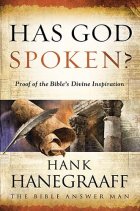
The Bible has quite a bit to say about apologetics — defending what you believe. Paul tells Christians to study God’s Word so that we won’t be ashamed of it, and Peter tells Christians to always be prepared to answer anyone who questions our faith in Christ. But how do we know the Bible is true? Hank Hanegraaff’s latest book, Has God Spoken?, is an excellent resource to help you answer that question.
You may know Hank as host of the Bible Answer Man, and have come to appreciate his wit and wisdom. In Has God Spoken? you will be well-armed to answer any critics who claim that the Bible is not all that Christians claim it to be.
And I love the format that Hank uses to share all of his wisdom. Just like musicians learned their musical notes through such statements as, “Every Good Boy Deserves Fudge,” Hank uses a variety of acrostics to make his evidence so easy to recall. In addition, this book is fully documented, with nearly 100 pages of endnotes, so you can dig a little deeper into the evidence and proofs that he presents.
The puritan pastor Thomas Watson wrote, “The Bible is a rock of diamonds, a chain of pearls, the sword of the Spirit; a chain by which the Christian sails to eternity; the map by which he daily walks; the sundial by which he sets his life; the balance by which he weighs his actions.” But if someone ever doubts the accuracy, inspiration and inerrancy of the Bible, he will never know the treasures and life resources within its pages. That’s why this book is so valuable, and I highly recommend it to both Bible believers and Bible skeptics.
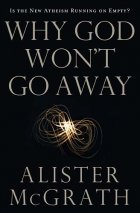
Allister McGrath is a genius at pointing out the flaws in the arguments that atheists use. So if you would like to know how to pick apart the theories of the leading atheists of our age, Why God Won’t Go Away: Is The New Atheism Running On Empty is just the book for you.
One of the things I appreciate about Dr. McGrath is his humble attitude. He is an extremely learned man, and could probably not only win a debate, but emotionally crush his debating partner in the process. Instead, you can sense the love and humility underlying all of his arguments. But make no mistake: his love in no way diminishes the sheer force of his intellectual prowess.
Why God Won’t Go Away gives the reader some valuable insights into the “four horsemen” of the New Atheism movement: Richard Dawkins, Christopher Hitchens, Sam Harris and Daniel Dennett. Then Dr. McGrath systematically breaks-down their arguments using reason, science, history and fact. Although he points out the intimidation and ridicule that the New Atheists seem to resort to, Alister McGrath never even hints at a Christian using these tactics.
Another thing I appreciate about this book, is that there is enough information here to help the reader learn how to defend themselves against the arguments of an atheist friend, but the topics aren’t so complicated that it requires an advanced college degree to grasp.
I thoroughly enjoyed reading this book, and I think you will too.
Dichotomy is a big word that means two parts that are opposed to each other. But it also means that they were once joined together—they were once in unity. Much like the first Christians: when people looked at them they saw Jesus; when they heard them speak they heard Jesus; when they watched their lives they saw the life of Jesus.
Christ and Christian were the same unified picture.
Today this is, sadly, far from the truth. People have a lot of wonderful things to say about Jesus, and a lot of nasty things to say about Christians. An unfortunate, and unnecessary, dichotomy exists.
I read an editorial from Ricky Gervais, a self-proclaimed atheist, entitled “Why I’m A Good Christian.” You can read his full editorial in the Wall Street Journal here, but for me this was the key passage:
I am of course not a good Christian in the sense that I believe that Jesus was half man, half God, but I do believe I am a good Christian compared to a lot of Christians.
It’s not that I don’t believe that the teachings of Jesus wouldn’t make this a better world if they were followed. It’s just that they are rarely followed.
Gandhi summed it up really. He said, “I like your Christ, I do not like your Christians. Your Christians are so unlike your Christ.”
I have always felt this way, even when I believed in God, and in a weird way I feel I am still a pretty good “Christian” who doesn’t believe in God.
I think the way back from this dichotomy is two-fold:
(1) Christ-followers need to make an intentional effort to act more Christ-like.
(2) We Christians need to be more thoughtful in our responses to people like Ricky Gervais. I like the pattern Peter recommends—
Honor Christ and let Him be the Lord of your life[our motivation for action]. Always be ready to give an answer when someone asks you about your hope[“hope,” not theology, not bad behavior]. Give a kind and respectful answer and keep your conscience clear[there is zero justification for a Christian to give a crass, disrespectful, or sarcastic answer]. This way you will make people ashamed for saying bad things about your good conduct as a follower of Christ[good conduct = we live, talk, and act like Jesus].
C’mon, followers of Christ,let’s close this dichotomy between us and Jesus!
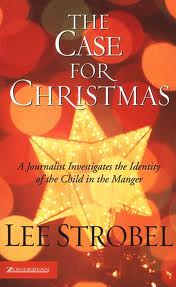
Virgin birth? The accuracy of the biblical account? God in flesh? These are all intriguing questions that crop up especially around the Christmas season, which is why The Case For Christmas by Lee Strobel is a timely read.
Lee Strobel investigates the fantastic claims that Christians make about the birth of Jesus Christ with all of the cool-headed dispassion of a newspaper journalist. Beginning with his own skepticism about the miracle of the virgin birth of Christ, Mr. Strobel seeks out the sharpest minds who have thoroughly researched the key areas surrounding this subject. In a book that reads a little like a detective story, we get to sit in on some of the fascinating interviews Mr. Strobel conducted for this book.
Whether you are an atheist, a doubter, or a wholehearted believer, there is much to ponder in The Case For Christmas. At only 96-pages long, you can read this book prior to Christmas Day, and gain a better appreciation for the true meaning behind CHRISTmas.
I know it’s very hard for a finite human mind to grasp an infinite concept like this. However in my studies I have found some really bad theology posted on the web. I realize as soon as I say, “It’s like this…” that I’ve already diminished the majesty of God coming to earth in human form, because Christ’s virgin birth, sinless life, sacrificial death and resurrection is nothing like anything we can comprehend. But still, I need to find a way to capture it and explain it to our students.
C.S. Lewis wrote about the need for good philosophy to address bad philosophy. I’m adapting his quote in this instance to say,
“Good [theology] must exist, if for no other reason, because bad [theology] needs to be answered.”
Prayerfully my good theology can answer the bad theology that I’ve been seeing.
Theology is a compound word: Theos (God) + Logos (wisdom, revelation, thought). I’ve been praying that God will give me greater revelation about Him. And I’m grateful that the Holy Spirit has given me some like analogies to use. But I’m still blown away by how unlike anything we’ve ever known was the coming of Jesus to earth. It is truly the grandest of all miracles.



 Josh McDowell is an amazing apologist! He has a tremendous knack for being able to “put the cookies on the bottom shelf.” By that I mean that he can make complex topics accessible to a wider audience than most authors. In Did The Resurrection Happen … Really? he and Dave Sterrett do just that with some great arguments for and against the death and resurrection of Jesus Christ.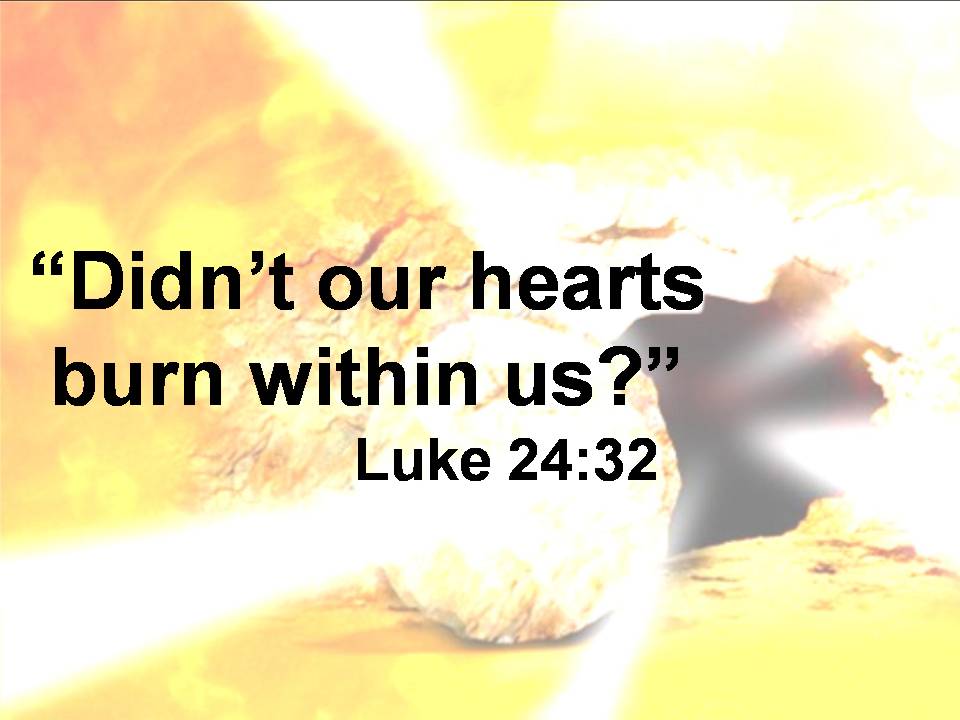





 Craig T. Owens