Here Comes Trouble!

Do you see it on the horizon? Storm clouds building, blowing in fast; wind picking up; something ominous in the air. Here comes trouble!

Jesus certainly did as He talked with His followers just before His arrest and crucifixion. Just before the storm hit, here’s what He said…

I have told you these things, so that in Me you may have peace. In this world you will have trouble. But take heart! I have overcome the world. (John 16:33)

I find something reassuring about Jesus telling me that I will have trouble. Not that trouble is enjoyable (at all!). But what is enjoyable is knowing that He knows. Nothing takes Jesus by surprise!

Jesus said that I would find my peace when I remain IN Him. When I see trouble coming, my natural tendency is to start doing things for myself. I start making plans, giving orders, gathering resources, hunkering down in my foxhole. In reality, all this does nothing but increase my level of anxiety!

Jesus has overcome. So when I stay IN Him, I overcome too.

Here’s what I’ve learned about how to stay IN Him…

  • Stay in the Word every day, but especially when I see trouble coming.
  • Stay in prayer; in fact, I should increase my prayer times.
  • Stay in worship because I don’t want to focus on the storm, but on the Overcomer.
  • Stay in contact with my friends and ask them to join me in prayer.

Check out this prayer David penned when he saw trouble coming. It’s still a great prayer for you and me today:

Keep me safe, O God, for IN You I take refuge. I said to the Lord, “You are my Lord; apart from You I have no good thing.” Therefore my heart is glad and my tongue rejoices; my body also will rest secure. You have made known to me the path of life; You will fill me with joy IN your presence, with eternal pleasures at Your right hand. (Psalm 16:1, 2, 9, 11)

Battling Depression

Have you ever been depressed? I have. I know all too well how depression robbed me of sleep, sapped joy from my day, kept me from smiling and on the verge of tears all the time, made sunny days seem cloudy, caused me to sigh all the time and lose interest in the things that used to bring me pleasure, and brought such a sense of loneliness and isolation.

Did you know that Jesus felt the crushing load of depression too? As He was praying in the Garden of Gethsemane just before His arrest, listen to these words—

  • He began to be sorrowful and troubled
  • He became anguished and distressed
  • He began to show grief and distress of mind and was deeply depressed
  • He said to them, “My soul is overwhelmed with sorrow to the point of death”
  • He prayed more fervently, and He was in such agony of spirit that His sweat fell to the ground like great drops of blood
  • “Abba, Father,” He cried out, “everything is possible for You. Please take this cup of suffering away from Me. Yet I want Your will to be done, not Mine.” (see Matthew 26:37-38; Mark 14:36; Luke 22:44)

The writer of Hebrews wrote this about Jesus—

While Jesus was here on earth, He offered prayers and pleadings, with a loud cry and tears, to the One who could rescue Him from death. And God heard His prayers because of His deep reverence for God. Even though Jesus was God’s Son, He learned obedience from the things He suffered. In this way, God qualified Him as a perfect High Priest, and He became the source of eternal salvation for all those who obey Him. (Hebrews 5:7-9)

We learn something in suffering that we can’t learn any other way. Jesus learned how to experience all of the grief, anxiety, and depression that you and I will ever feel. And that is what qualifies Him to be a perfect High Priest for us.

Our part is to pray. Time and time and time again, not only did Jesus pray, but He encouraged His disciples to pray as well. As you continue to pray, Jesus is your High Priest praying for you. Only He truly knows how to translate the cry of your heart into a language Abba Father can understand.

In all their troubles, He was troubled, too. He didn’t send someone else to help them. He did it Himself, in person. (Isaiah 63:9)

If you’ve missed any of the messages in this series called Where’s God, please check them all out by clicking here.

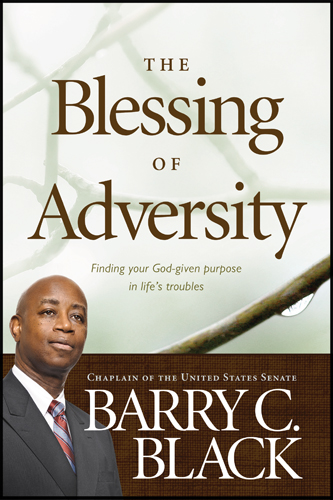
The Blessing Of Adversity (book review)

Barry C. Black has lived a full life, and that fullness has been poured into his timely book The Blessing Of Adversity: Finding your God-given purpose in life’s troubles.

A quick show of hands: how many of you have experienced trouble lately? How many of you are experiencing it right now? If you raised your hand in either category, this book could be quite helpful to you.

The Blessing Of Adversity is arranged into 23 chapters, but each chapter is broken down into several “mini chapters.” By that I mean that Chaplain Clark gives us several different ways of viewing the same topic of how to respond to adversity. He might tell you a personal story from his boyhood or his 23-year military career; or perhaps he’ll give you a modern-day example from his current ministry as chaplain to the U.S. Senate; or maybe a story from the pages of history; or a well-timed quote. Whatever his method, he always connects it with an encouraging word from the Bible to help the reader correctly process the times of adversity we all must pass through.

I found this book to be highly practical, and immediately applicable to my life. And for those of you who didn’t raise your hand earlier, there are a couple of chapters for you on how to prepare for the future adversity you are bound to face. This book would work very well as either an individual or small group Bible study.

I am a Tyndale book reviewer.

Don’t Fake It

Listen to the podcast of this post by clicking on the player below, and you can also subscribe on AppleSpotify, or Audible.

Have you ever had someone tell you, “Fake it until you make it”? In other words, you may not feel happy, but just start smiling and soon you will feel happy. Sadly, I’ve heard this type of so-called wisdom given by Christians to other Christians. Phrases like…

  • Don’t let anyone know that you feel scared, doubtful, or angry.
  • Never let ‘em see you sweat.
  • Even if you’re down, put on a happy face.

Turns out that this is not only bad advice, but harmful advice too. A study done by Michigan State University found:

     “Pretending to smile when you’re feeling bad makes you feel worse and be less productive. … [You] can’t just fake a smile and expect to feel good about it or negative feelings intensify.”

If you’re a follower of Jesus Christ, you should never fake it. Take a quick glance through the Psalms and you’ll see raw, real emotions: anger … depression … anxiety … vengeance … sadness … envy … spite … and many others. 

Here’s the deal: You may wear a {fake} smile on the outside, but God knows the {real} emotions in your heart. You’re not fooling Him. And, as it’s been revealed in this study, you’re not fooling anyone else either.

So go ahead and vent those negative emotions when you’re alone with God. Tell Him how you really feel (He already knows, but it’s good for you to hear you say it). And then let the Holy Spirit show you how to deal with those emotions in a healthy way.

Don’t bottle it up—don’t fake-it-until-you-make-it—be real and let God heal you.

UPDATE: I talk a lot about dealing with our strong, negative emotions in my book When Sheep Bite.

►► Would you please prayerfully consider supporting this ministry? My Patreon supporters get behind-the-scenes access to exclusive materials. ◀︎◀︎

The Doctor & The Pastor—Part II

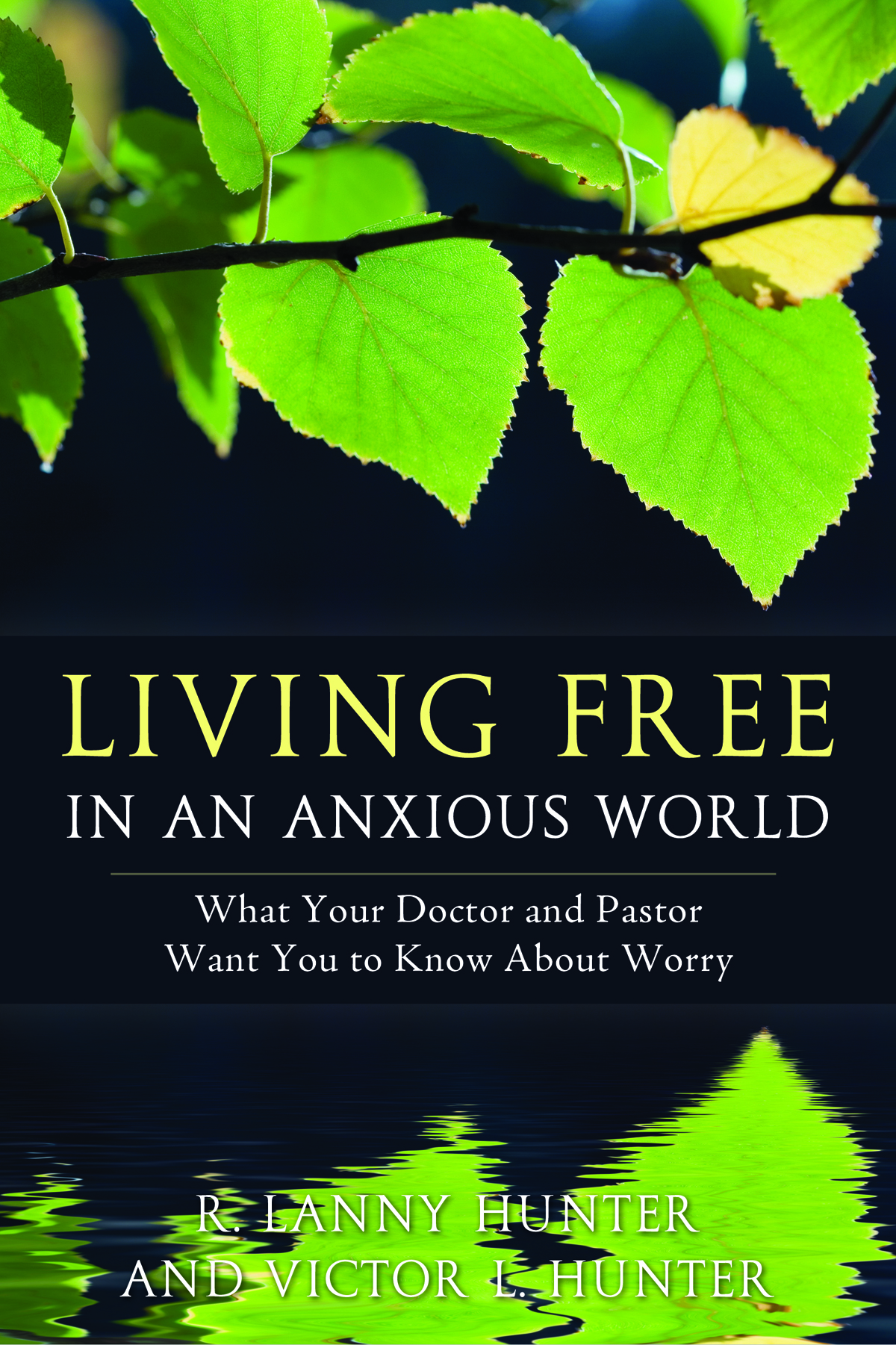
Friends, I recently reviewed the manuscript for a new book Living Free In An Anxious World. This is an essential book for pastors, Christian counselors, psychologists, and medical doctors which deals with a problem that is only expanding: worry, stress, anxiety. Stay tuned to this blog for a chance to win a free copy in just a couple of weeks.

In the meantime, I am absolutely thrilled that the co-authors of Living Free In An Anxious World have agreed to write to my blog readers! Today is the second installment from Dr. Lanny Hunter. (If you missed Part I from Victor Hunter, you can check it out here.)

Guest Author: Dr. R. Lanny Hunter

In my profession as a dermatologist, it’s fair to say that most of my patients come to see me because they are worried. Patients may have developed a rash that worries them. What is it? Is it contagious? Is it serious? Will it scar? What will people think? Can I get rid of it?

Patients may have developed a skin growth, a lump, a sore that won’t heal, a place that is changing color, causing pain, or bleeding. Again, they are worried. Is it cancer? Is it life-threatening? Can it be cured? If I do make a diagnosis of cancer, their anxiety escalates. Will I die? How long do I have to live? How will it be treated? What should I tell my spouse? My family?

Beyond questions of diagnosis, treatment, and questions of severity of illness, many worry about medical costs. How much will it cost? Will my insurance pay for it? They may confide that their insurance has a very high deductible, or that they have no insurance at all, or that they live only on Social Security and Medicare. Will treatment bankrupt them?

In the course of consultation, medical care, and surgery, patients reveal more than their medical worries. They confide their life disappointments—marriage problems, work conflicts, children in trouble, personal and vocational failures, criminal escapades.

Patients with worry and anxiety are my life’s work. To that end, I use all of the interpersonal skills, psychological insights, religious convictions, and medical skills that I have acquired through training and experience. I must listen compassionately and constructively, and be armed with the latest medical techniques in treating disease. I must be cognizant of my limitations in skill and time. I may need to refer a patient to a psychologist, psychiatrist, pastor, priest, social worker, or another physician. I must always remember that I’m not treating the skin. I’m treating the whole person.

With that holistic approach in mind, my brother (a pastor) and I (a physician) have authored a book, Living Free in an Anxious World, which combines the insights of our two vocations to help people manage worry and anxiety in order to free them for more productive living. 

The Doctor & The Pastor—Part I

Friends, I recently reviewed the manuscript for a new book Living Free In An Anxious World. This is an essential book for pastors, Christian counselors, psychologists, and medical doctors which deals with a problem that is only expanding: worry, stress, anxiety. Stay tuned to this blog for a chance to win a free copy of this book later this month.

In the meantime, I am absolutely thrilled that the co-authors of Living Free In An Anxious World have agreed to write to my blog readers! Today is the first installment from Rev. Victor Hunter.

Guest Author: Rev. Victor L. Hunter

Whether it was the Carter family’s version in the 1930s, Woody Guthrie’s in the 40s, the Kingston Trio’s in the 50’s, Ramblin’ Jack Elliott’s in the 60s, or Devo’s in the 70s and 80s, “Worried Man Blues” has been a ubiquitous presence in the bluegrass/folk song genre of cultural music throughout the “century of anxiety.” Its words and tune have provided a common background theme playing in our minds for decades:  “It takes a worried man to sing a worried song.” Most of us, men and women, have hummed along, literally and/or figuratively, with its sentiments.

During these decades, my brother and I have listened to the song’s lyrics and contemplated the reality of worry and anxiety both personally and professionally. He’s a physician. I’m a pastor. I can say without hyperbole that there hasn’t been a week go by in nearly a half-century of preaching, pastoral care and counseling, and teaching that worry and anxiety haven’t been at the forefront of conversations with people, young and old, men and women, who have said to me, “I need to talk with you about something.”

This is so because anxiety is part of what it means to be human beings. It’s part of our biological makeup and spiritual reality. It is essential to our survival, as well as being a core theological question. It can also be devastatingly paralyzing, keeping people from living free, living life fully alive.

During the past four decades, the doctor and the pastor, the brothers, have been in conversation about our disciplines of science and theology and our professions in medicine and religion. We have become increasingly sensitive to the many issues that meet at the intersection of biology and theology. It’s about being human before God. We share in Living Free in an Anxious World this conversation and our passion for a holistic understanding of our humanity in light of faith and science . . . as well as our hope for the healing and redemption of our lives. We affirm that while anxiety and worry are unavoidable, they can be our teachers rather than our masters. Our goal is to provide realistic, practical, and helpful guidance in understanding worry and facing our fears that we might travel the road of freedom and grace.

Check out the guest post from Dr. R. Lanny Hunter by clicking here

Uncomfortably Quiet

Yesterday we dove into part two of our series The Stranglehold Of Worry by looking at anxiety. The medical dictionary defines anxiety as “worry compound by our own self-doubts about our ability to cope with worry.” Wow, talk about a double whammy!

You’re already worrying about something, and then you worry about what you’re worrying about!

Or for many people, anxiety boils down to worrying about what others are thinking about what you’re worrying about.

There’s a story in Luke 10 where Dr. Luke notices Martha’s anxiety. She is trying to be the best hostess she can for Jesus and His disciples, but it has gone beyond that. She is worrying about what Jesus thinks about her hospitality. She’s tied up in knots. What makes it even worse for Martha is that her sister (who was helping Martha get everything ready for the meal) is sitting at Jesus’ feet listening to Him speak.

Jesus tells Martha, “You are all worked up over trying to make a good impression. You are worried and upset. Look at Mary: she’s sitting quietly and listening to Me.”

Sitting quietly…

We don’t do that very well, do we? Our lives are bombarded with noise. In fact, when Jesus tells Martha she is worried, the Greek word means overly-busy. That’s how too many of us try to cope with worry, but the noise and busyness just lead to more anxiety.

We closed our service on Sunday in a very unusual, very uncomfortable way. We were silent. No music, no singing, no closing prayer. Just sitting silently at Jesus’ feet and listening to Him. It was uncomfortable but so beneficial.

Listen to King David:

I’ve cultivated a quiet heart. Like a baby content in its mother’s arms, my soul is a baby content.

It might be uncomfortable, but it is just what the Lover of your soul ordered. Find some time to switch off the radio, leave the mp3 player and cell phone behind, and get someplace where you can just sit quietly at Jesus’ feet and hear the loving words He has to say to you.

Living Free In An Anxious World (book review)

When I say that more people today are worried, or stressed-out, or suffering from anxiety attacks, I’m not saying anything that you don’t already know. But in Living Free In An Anxious World authors R. Lanny Hunter and Victor L. Hunter give us a whole new way of looking at worry and anxiety.

Many times I’m frustrated by some author’s one-size-fits-all approach to dealing with worry and anxiety. The fact is, we are complicated and we are individuals. But more than that, many authors tend to focus on just one part of the human, when in fact we are a three-part being. There is a physical component, an emotional/mental component, and a spiritual component.

The Hunter brothers are well trained to address the effects of worry in all its forms, as one brother is a medical doctor and the other is a pastor who received specialized training in both religion and psychiatry. They both bring their specialties to this book in a way that I found both informative and comforting.

One of the first concepts they address is that the key is to not eliminate worry from our lives. That, they say, is impossible. The goal is to not worry in a self-destructive way. Right from the first chapter, I found myself buying into their insights which were so real and applicable.

The Hunter brothers explore the biblical, scientific, and even philosophic origins of worry, and provide very real solutions for even a layman like me. This book wasn’t “over my head” nor did it over-simply the very real and challenging task of dealing with worry the right way.

Since 6.5 million Americans suffer from general anxiety disorder every year, chances are good that you are going to have to confront worry in your life or in the life of a loved one. So I highly recommend this book to you.

I am an Abilene Christian University Press book reviewer.

Worry Unlearned

We started a new series yesterday called The Stranglehold Of Worry. The word worry originated with shepherds. When a wild dog or a wolf had killed a sheep by grabbing it by its throat and choking it to death, the shepherds said that sheep had been worried to death.

In modern times, researchers at Purdue University found that worrying can chop 16 years off of someone’s life. Not only does worry rob your life of years, but it can also rob your years of life.

What exactly is worry? Fear is our natural response to real threats, like a car heading toward you in your lane of traffic. Worry is our response to perceived threats (to unseen things), like the car that may head toward your kids’ car when they are driving.

Get this clear: worry is being fearful of the unseen.

Compare that to the Bible’s definition of faithNow faith is being sure of what we hope for and certain of what we do not see. Worry and faith both operate in the unseen dimension.

Fear is innate, but worry is learned.

Faith is worry unlearned.

Worry tells your brain a story about bad things that may happen.

Faith tells your brain a story about good things that should happen. Based on what you’ve already experienced of God’s power, what you’ve already seen in God’s provision, or what you already know of God’s promises, your faith in God can help you unlearn your worry.

The prophet Jeremiah tended to be a worrywart. Maybe that’s why he’s been called the “weeping prophet.” But in the middle of his worrying, he unlearns his worry by using his faith to tell a different story about God’s provision, power, and promises:

I well remember [the bad things], and my soul is downcast within me. Yet this I call to mind and therefore I have hope: Because of the LORD’s great love we are not consumed, for His compassions never fail. They are new every morning; great is Your faithfulness. I say to myself, “The LORD is my portion; therefore I will wait for Him.”

Did you notice that Jeremiah talked to himself? He wrote, “I say to myself.” If you have a tendency to worry, it’s time to start talking to yourself and telling yourself a different story. Instead of being fearful of the bad things you cannot see, why not be hopeful of the good things of God you can see?

Let your faith in God help you unlearn your worry. You can overcome worry and anxiety by telling yourself a new faith-filled, hope-oriented story. You can recall God’s faithfulness in the past, and apply it to your current circumstance.

What stories are you telling yourself today? Share with others how you overcame, or are in the process of overcoming worry now. Your faith story will help others overcome and unlearn their worry too.

Help! I’m Being Strangled!

I’m kicking off a new series at Calvary Assembly of God on Sunday about breaking the stranglehold of worry. The origin of worry comes from a word that means choking, strangling, hard to breathe. And isn’t that exactly what worry feels like?

I’m sure that none of you ever struggle with worry (he wrote sarcastically!). But if you know any “friends” who may benefit from an honest look at both the origins of worry and how to gain freedom from worry, please send them our way over the next few Sundays.

They will be so glad that you did!