12 Quotes From “From This Day Forward”

From This Day ForwardCraig & Amy Groeschel wrote a great book for anyone who wants to have a great marriage. Whether you’re single, in a struggling marriage, or in a great marriage, there are some great principles to learn in From This Day Forward. You can read my book review by clicking here. Below are a few quotes I especially liked.

“Healthy couples fight for resolution. Unhealthy couples fight for personal victory.”

“Even when you don’t agree with the other person, you can still validate their feelings.”

“One of the best ways you and your spouse can become slow to anger is by communicating regularly and honestly when you’re not facing conflict.”

“You have only one enemy, and it’s not your spouse. Get focused on that. Your enemy is a thief who’s trying to steal your joy, kill your love, and destroy your marriage. The good news is you don’t have to fight fair with that guy. No, with him, you’re actually going to fight to win. You’re going to fight for your marriage, and you’re going to fight for victory. One of the very best ways you can do that is to learn to fight fair with your spouse—for resolution, for restoration.”

“Don’t fight to win. You both should fight to lose the conflict and gain a closer relationship. Don’t fight each other; fight together to see the relationship restored. Redefine winning to mean that at the end of every fight, you’re closer to each other then you were when you started. That’s winning! And that’s what it really means to fight fair.” —Amy Groeschel

“When you’re married, fun is not a luxury; it’s a requirement. … Without romance, without adventure, without physical intimacy—without fun—marriage is reduced to a simple business arrangement. You’re like partners in a company, two roommates who split expenses like rent and food, yet living entirely different lives.”

“Guys, be intentional about pursuing happiness together with her because she’s God’s ‘reward’ in your life [Ecclesiastes 9:9].”

“Generally speaking, I don’t think anyone would argue that most men tend to desire physical intimacy more frequently than women do. So ladies, you need to understand that when you turn off that faucet and things start to go dry, for your husband, that’s a crisis. It’s the equivalent of the distress you feel when there’s silence, when there’s no emotional intimacy between you. It’s a crisis. One of the most important ways you can demonstrate love to each other is by renewing your spiritual commitment to one another through acts of physical love. Sex is spiritual. It’s two people becoming one in an alliance of intimacy. It’s a blessing from God, a way that you can genuinely serve one another. … One of the greatest things you can do for each other is to engage in frequent, creative, spiritual lovemaking. It is a gift from God that honors Him by renewing your spiritual covenant to one another.”

“Revelation 2:5 says, ‘Consider how far you have fallen! Repent and do the things you did at first.’ If you want what you once had, start doing what you once did. You got married because you had fun. Start having fun again.”

“Physical intimacy is directly related to your process of growing together, and it can be a good indicator of how healthy your relationship is—or isn’t. In fact, if physical intimacy has been a problem lately in your marriage, I’d be willing to bet that you’ve neglected being emotionally connected in other ways.” —Amy Groeschel

“By the time they reach the sin of adultery, they will have already crossed dozens of other sin lines. Sin doesn’t begin on the outside. It begins in the heart. You see something (or someone) attractive, and you allow them to capture your attention. ‘Mmm, they look good.’ That’s lust. And lust is a sin. Maybe you even take some action—just not full-blown adultery. ‘A body as hot as yours want to come with a warning label!’ Implying to someone else that you’re available when you’re not is called flirting. And it’s a sin. Maybe you don’t take any action. You just see something you want, and you let your thoughts wander after it. ‘Yowza! I’d like to take that home.’ That’s not taking every thought captive to make it obedient to Christ (2 Corinthians 10:5). That’s fantasizing, and it’s a sin. These things are problematic because they draw the line in the wrong place.”

“You probably learned that while it may be true that, at least while you’re dating, opposites attract—once you get married, opposites attack! … One way you can return to opposites attracting instead of attacking is by accepting your spouse for who they are, not who you want them to be. … Being opposites isn’t a bad thing. In fact, the truth is, if you’re married to someone who’s just like you, one of you is unnecessary. God knew exactly what He was doing when He brought you two opposites together. The only way iron can sharpen iron is if your differences are constantly rubbing against each other (Proverbs 27:17). … The challenge is that we settle into a mindset and become convinced that our differences are always going to cause conflict. But that doesn’t have to be true. Just because your spouse does things differently than you doesn’t mean that it has to be a problem. It’s just… well, different. If you refused to except your differences as the positives they are, you may find yourself sometimes trying to keep things from your spouse.”

Links & Quotes

link quote

Some good reading from today…

“As long as you set yourself up as a little god to which you must be loyal there will be those who will delight to offer affront to your idol. How then can you hope to have inward peace? … Such a burden as this is not necessary to bear. Jesus calls us to His rest, and meekness is His method. The meek man cares not at all who is greater than he, for he has long ago decided that the esteem of the world is not worth the effort.” —A.W. Tozer

[PHOTOS] Some great photographs from the scientific world.

Dave Barringer has a great post about marriage and adultery: Affairs And Fruit.

[PHOTOS] Today marks the 73rd anniversary of Franklin D. Roosevelt’s “day of infamy” speech. Here are some memorable photos remembering that horrific day.

“It will not bother me in the hour of death to reflect that I have been ‘had for a sucker’ by any number of impostors: but it would be a torment to know that one had refused even one person in need. After all, the parable of the sheep and goats [Matthew 25:31-46] makes our duty perfectly plain, doesn’t it? Another thing that annoys me is when people say ‘Why did you give that man money? He’ll probably go and drink it.’ My reply is ‘But if I’d kept [it] I should probably have drunk it.’” —C.S. Lewis

7 Ways To Avoid Becoming An Adulterer

DisciplineGod said quite simple, “You shall not commit adultery” (Exodus 20:14; Deuteronomy 5:18). This entire verse is just one word in the Hebrew language—na’aph—but it packs quite a punch.

Na’aph has two dimensions to it: physical and spiritual. Physically it prohibits sexual relations between a married person and someone not their spouse. Closely related to adultery is fornication, which is unmarried people engaging in sexual activity outside the covenant of marriage. Spiritually na’aph prohibits worship of anything other than Jehovah God.

This means that an inappropriate intimate relationship on the physical level affects our spiritual relationship with God, and vice versa. That is why immoral sexual acts are almost always incorporated into the worship of false gods. But which came first? Did someone leave behind God’s design for sexuality and begin a downward slide away from Him, or did someone’s heart stray from God and the evidence was the illicit sexual acts? It starts when we leave God’s love behind (see Romans 1:21-32).

Adultery and fornication are fueled by lust. Lust is rooted in selfishness. And by it’s very definition, selfishness kills love. Adulterers and fornicators cannot truly love each other; they are only using each other to satisfy their own selfish cravings, and in so doing, they are actually abusing each other.

So here are 7 ways to avoid becoming an adulterer:

  1. Love God passionately—Mark 12:30.
  2. If you’re married, invest in your marriage—emotionally, physically, mentally, spiritually.
  3. If you’re single, develop discipline. I define discipline as choosing what you want most over what you want now.
  4. Guard your eyes—Job 31:1.
  5. Avoid tempting places—Proverbs 5:8.
  6. Fill your mind with God’s Word—Proverbs 6:20-24.
  7. Have an accountability friend—Proverbs 7:6-9.

Any sexual relationship outside of God’s prescription—one man married to one woman for life—short-circuits God’s design, so it can never fully satisfy. Adultery and fornication break God’s heart because of the damage it does to our relationship with Him and to our relationships with each other.

If you have missed any of the messages in our series The Love In The Law, you can find them all by clicking here.

Links & Quotes

link quote

Some good reading & watching from today…

“The amount of loafing practiced by the average Christian in spiritual things would ruin a concert pianist if he allowed himself to do the same thing in the field of music. The idle puttering around that we see in church circles would end the career of a big league pitcher in one week. No scientist could solve his exacting problem if he took as little interest in it as the rank and file of Christians take in the art of being holy. The nation whose soldiers were as soft and undisciplined as the soldiers of the churches would be conquered by the first enemy that attacked it. Triumphs are not won by men in easy chairs. Success is costly.” —A.W. Tozer

Ron Edmondson shares 7 ways I protect my ministry and marriage from an affair. Good reading even for those not in the pastorate.

“Great art Thou, O Lord, and greatly to be praised; great is Thy power, and of Thy wisdom there is no end. And man, being a part of Thy creation, desires to praise Thee,—man, who bears about with him his mortality, the witness of his sin, even the witness that Thou ‘resistest the proud,’—yet man, this part of Thy creation, desires to praise Thee. Thou movest us to delight in praising Thee; for Thou hast formed us for Thyself, and our hearts are restless till they find rest in Thee.” —Augustine

[VIDEO] “Prayer is a statement about my dependence on God.” Check out this quick video from John Maxwell on prayer.

Inconceivable

InconceivableThe “therefores” in Scripture always intrigue me. They are a signal that there is a natural conclusion to the words that just came before the therefore, so it’s important to look at both sides.

The prophet Hosea opens his book with these words: “…the land is guilty of the vilest adultery in departing from the Lord” (Hosea 1:2). The picture is painted of God’s people acting like a wife that has not only abandoned her husband, but turned to prostitution as well. So the list of things that follow God’s therefore are what we might expect—

  • I will block your path
  • I will take away My grain
  • I will take back My wool
  • I will expose your lewdness
  • I will stop your celebrations
  • I will ruin your vineyards
  • I will punish you (Hosea 2:6-13)

Then here is what I find almost inconceivable: the very next word of the very next verse is therefore again, and God says things that, in my mind, are completely unexpected—

  • I will allure you and speak tenderly to you
  • I will restore our marriage
  • I will remove your stains
  • I will obliterate the past
  • I will betroth you to Me forever
  • I will answer your prayers
  • I will restore your crops
  • I will establish you forever
  • I will cancel your divorce
  • I will call you Mine (2:14-23)

This kind of love is mind-blowingly incomprehensible to me. It is so unexpected, so lavish, so overwhelming! This is absolutely the last thing I would have expected God to say, and yet His love is furious and relentless and boundless!

How could I ever slight such a love?!

Links & Quotes

link quote

Some good reading & watching from today…

“James has in his mind a picture of people who use prayer to try to get from God something they desire more than God [James 4:2-4]. He calls these people—men and women—‘adulteresses.’ Why? Because in his mind God is like our Husband who is jealous to be our highest delight. If we then try to make prayer a means of getting from Him something we want more then we want Him, we are like a wife who asks her husband for money to visit another lover.” —John Piper

“The greatest outward troubles and calamities that we meet with…must needs appear very little things to the misery which we have deserved.” —Jonathan Edwards

“Our Enemy is a hedonist at heart. All those fasts and vigils and stakes and crosses are only a facade. Or only like foam on the sea shore. Out at sea, out in His sea, there is pleasure, and more pleasure. He makes no secret of it; at His right hand are ‘pleasures for evermore.’ Ugh! Don’t think He has the least inkling of that high and austere mystery to which we rise in the Miserific Vision. He’s vulgar, Wormwood. He has a bourgeois mind. He has filled His world full of pleasures. There are things for humans to do all day long without His minding in the least—sleeping, washing, eating, drinking, making love, playing, praying, working. Everything has to be twisted before it’s any use to us. We fight under cruel disadvantages. Nothing is naturally on our side.” —C.S. Lewis, Screwtape writing to Wormwood in The Screwtape Letters. (In case you didn’t know, The Screwtape Letters are letters from an older demon [Screwtape] to his young apprentice demon [Wormwood]. So the “Enemy” in their correspondence is God.) 

Since I just reviewed Beyond IQ, I have been reading more about the workings of the human brain. This post—How To Rewire Your Brain For Greater Happiness—is interesting. Even though they are quoting scientific findings, everything they have “discovered” was already in the Bible!

Philip Nation has a great list of how God reveals Himself in every book of the Bible.

I love John Piper’s latest project called Look At The Book, which shows Piper teaching the Scripture. Check out this video—

Maintain Sexual Discretion

Sexual discretionI’m always saddened when I hear of Christians who stumble in sexual sin. Whether it’s a real relationship with someone not their spouse or a virtual relationship with pornography, the pain and consequences are heart-wrenching.

King Solomon offers some sage advice to help us have victory in this area, which is summed up in just two words: maintain discretion (Proverbs 5:2). These are among his opening words before he describes the sweeter-than-honey, smoother-than-oil allure of sexual temptation.

This phrase—maintain discretion—emphasizes a strategy that is designed and thought-out prior to the moment of temptation: “maintain” means to keep close at hand and ready to use. This is the complete opposite of deciding in the moment. “The Moment” is usually emotionally-charged, intellectually-lacking, and comes at the most inopportune time when you’re at your most vulnerable point.

Solomon says to have a plan in place ahead of time to “keep to a path far from her, do not go near the door of her house” (v. 8).

An even better plan is to make the relationship with your spouse (or future spouse) something so exciting and fulfilling (vv. 15-19) that any momentary temptation appears puny, shallow, and even abhorrent by contrast.

Wisdom is helpful in “the moment,” but it’s even more effective in keeping you away from “the moment.” You don’t have to be a victim of sexual sin, you CAN maintain discretion.

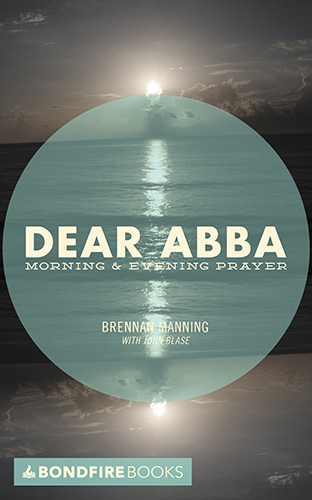
13 Quotes From “Dear Abba”

Dear AbbaDear Abba is an intimate book of prayer and personal reflection; it’s thought-provoking and emotionally-moving. You can read my full book review by clicking here. Below are some of the quotes and prayers I found especially meaningful.

“Dear Abba, I’ve come to the place where I’m letting You love me more each day, but I still struggle with letting You like me.” 

“It would be comical if it wasn’t so sad: all of our desires to make ourselves worthy of this world but unfit for the world to come.”

“Peace and joy go a-begging when the heart of a Christian pants for one sign after another of God’s merciful love. Nothing is taken for granted, and nothing is received with gratitude.”

“I feel like the psalmist tonight—downcast. I was upcast, bright, enjoying the warmth of the day and then suddenly my joy was pickpocketed. It was a small thing, a minor misunderstanding that I could have let roll off like water, but I held on to it and nursed it awhile, and like sin always does, it grew. Now I find my mind completely disturbed, anxious, angry, and my imagination is conjuring up all sorts of somebody-done-me-wrong songs. Why do I not trust You? After so many demonstrations of Your infinitely tender hand, why do I not trust You?”

“Sin does not magnify the suffering of man’s plight; instead, it mitigates it. When I sin, I seek an escape from my humanity. I used to say to myself, ‘Well, you’re only human!’ But sin does not make me human; it compromises my humanity. The philandering husband with his mistress on business trips, the chemically addicted, the thieves who build ivory towers out of stolen money, the sensation-seekers and power brokers who seek substitutes. They do not drink the poverty of the human situation down to the last drop. They dare not stare it full in the face.” 

Yet. Those three letters stop me in my rutted tracks of besetting sins. For You were tempted as I am, yet You did not sin. The humbling point is that on a scale from 1 to 10, I usually give in when the heat reaches 3 or 4, yet You experienced the 10—the full-in-the-face of temptation—and did not give in. You are the friend of sinners, yet You are also the Great High Priest who invites us to come with confidence to Your throne and receive both our daily bread and extra rations for emergencies.”

“To practice poverty of spirit calls us not to take offense or be supersensitive to criticism.

“When the gift of a humble heart is granted, we are more accepting of ourselves and less critical of others. … For the humble person there is a constant awareness of his or her own weakness, insufficiency, and desperate need for God.”

“My friends in Christ, the simple truth is that the Christian Church in America is divided by doctrine, history, and day-to-day living. We have come a long sad journey from the first century, when pagans exclaimed with awe and wonder, ‘See how these Christians love one another!’” 

“Christ’s breakthrough into new life on Easter morning unfettered Him from the space-time limitations of existence in the flesh and empowered Him to touch not only Nepal, but New Orleans, not only Matthew and Magdalene, but me. The Lion of Judah in His present risenness pursues, tracks, and stalks us here and now.”

“I realized today that there is a third character who goes up to the temple to pray: the pharisaic tax collector—a ragamuffin who knows she’s a ragamuffin and wants to make sure everyone else knows she’s a ragamuffin. So she ends up using her sinner status not to cry out for mercy to You, but rather to seek out the attention of others as one who is real and authentic, when in reality she is nothing more than hubris in thrift-shop fashions. I realized this today because I looked in the mirror. God, be merciful to me.” 

“The tendency to continually berate ourselves for real or imaginary failures, to belittle ourselves and underestimate our worth, to dwell exclusively on our dishonesty, self-centeredness, and lack of personal discipline, is the influence of our negative self-esteem. Reinforced by the critical feedback of our peers and the reproofs and humiliations of our community, we seem radically incapable of accepting, forgiving, or loving ourselves.”

“If nobody remembers my name or the works of my hands, if everything that I’ve worked so hard to build over the years crumbles into insignificance, if I lose my health and my wits and even, heaven forbid, my memory, You are still my refuge and strength.” 

Flight Is Your Best Fight

Listen to the podcast of this post by clicking on the player below, and you can also subscribe on AppleSpotify, or Audible. 

He was ripped and he was handsome. She was lonely and she was hungry. He followed God and she gave lip-service to the numerous gods of Egypt. He was Joseph and she was Potiphar’s wife. He was in charge of all of Potiphar’s household and she was attracted to that power.

A pretty heady place for Joseph to be. Think about it, guys, how would you feel? You’re good looking, successful, and the object of some babe’s desire. What are you going to do with all of that?

Do you know what Joseph did? He ignored her to the point of almost being rude:

And though she spoke to Joseph day after day, he refused to go to bed with her or even be with her.

Or even be with her is a rude phrase. It means she was doing everything she could think of to bring him to her, and he was thwarting her at every turn:

  • She walked into a room; he walked out.
  • She planned her path to run into him; he went out of his way to change his route.
  • She smiled; he kept a straight-faced.
  • She flirted; he ignored.
  • She was persistent; he was consistent.

There are many temptations the Bible tells us to fight. But there are two that we’re advised to flee: idolatry and sexual immorality.

Joseph chose fleeing over fighting.

Solomon said, “When you know what that sort of woman is up to, don’t even walk down her street.”

Talk to Wisdom as to a sister. Treat Insight as your companion. They’ll be with you to fend off the Temptress—that smooth-talking, honey-tongued Seductress.

Jesus said, “Don’t even entertain any thoughts about that kind of woman.”

From this type of temptation, your best fight is flight.

Guys, be like Joseph: stay away, take a different path, don’t smile at the flirty jokes, don’t hang out at her desk, don’t treat her politely. RUN AWAY.

Flight is your best fight against sexual temptation.

►► Would you please prayerfully consider supporting this ministry? My Patreon supporters get behind-the-scenes access to exclusive materials. ◀︎◀︎

One Of The Most Unusual Stories

There is one of the most unusual stories inserted in Genesis 38. I say “inserted” because it almost seems out of place. In chapter 37, Joseph’s brothers have just sold him into slavery and convinced their Dad that a wild animal killed him. In chapter 39, we pick up Joseph’s story again as he arrives in Egypt.

Genesis 38 has a story that doesn’t fit in Joseph’s story. It’s sort of a giant parenthesis. Not only that, it’s a story of mistake after error after mess up after bad judgment after more mistakes.

Judah, an older brother of Joseph, came up with the idea of selling him instead of killing him. Perhaps being around his co-conspirators was too difficult for him, so Judah left town.

  • Mistake #1: not dealing with his guilt and sin, but running away from it.

Judah married a Canaanite woman.

  • Mistake #2: inter-marrying with a non-God-fearing culture.

Judah gave his son Er in marriage to Tamar.

  • Mistake #3: allowing his son to inter-marry with the Canaanites too.

Er sinned. The Bible doesn’t say what it was, but it was so offensive that God put him to death.

  • Mistake #4: sin against God.

Onan (Judah’s second son) sinned. He had a familial responsibility to his brother and sister-in-law’s family line, but he snubbed them both.

  • Mistake #5: more sin against God.
  • Mistake #6: disregard for family.

Judah promised Shelah (his third son) to Tamar. But he procrastinated in following through on that because he thought Tamar was a black widow.

  • Mistake #7: deception.

Tamar disguised herself as a prostitute and waited along the road for Judah.

  • Mistake #8: more deception.

Judah slept with his daughter-in-law Tamar (yuck!), thinking she was a prostitute.

  • Mistake #9: fornication.
  • Mistake #10: incest.

Tamar became pregnant, and Judah wanted to have her publically punished for her infidelity.

  • Mistake #11: hypocrisy.

That’s a whole lot of sin and error and lapses in judgment and mistakes for just one family. What a mess this family had become! So, why in the world is this story inserted here? Because Tamar had twins: Perez and Zerah. In listing the royal, kingly genealogy of Jesus, Matthew writes

A record of the genealogy of Jesus Christ the son of David, the son of Abraham:
Abraham was the father of Isaac, Isaac the father of Jacob, Jacob the father of Judah and his brothers, Judah the father of Perez and Zerah, whose mother was Tamar.

Perez is listed in the genealogy of Jesus. God took all of those mistakes and made something great come from it!

It doesn’t matter how many mistakes you’ve made. It doesn’t matter how many times you think you’ve blown it. It doesn’t matter how many lapses in judgment you’ve had. God still has a plan for you. He wants to do something great through you. Will you let Him?