Full Tank

The other day a friend of mine wrote on Facebook that he was shopping with his daughter. He half-jokingly added, “I think that is her love language!” I say half-jokingly because I think the time with Daddy was speaking volumes to his daughter.

Spending time shopping with Dad was filling her love tank!

Have you ever felt like one of your relationships was in a rut? Or maybe even in a rut with ends in it (also known as a grave!)? Do you ever feel like the other person just doesn’t get you? Have you ever been frustrated that the other person doesn’t understand all that you are doing for him/her?

My guess is that you are speaking different love languages.

Dr. Gary Chapman wrote an amazing book called The Five Love Languages. In his book, he lays out five “languages” that we use to communicate our love to one another:

  • Words of affirmation
  • Quality time
  • Gifts
  • Acts of service
  • Physical touch

When you and I communicate, we naturally communicate in a way that is most comfortable to us. We communicate in our primary love language. But if the other person in the relationship has a different love language, no matter how much you love them, you are simply not getting through effectively. You are leaving the other person with a near-empty love tank.

I would suggest you start by taking a brief love language assessment (download the free PDF here → 5 Love Languages assessment) to determine YOUR OWN love language first. This is the language you will feel most comfortable using. Second, you need to learn the love languages of OTHERS CLOSE TO YOU so you can change your love dialect.

In the great love chapter in the Bible, the apostle Paul says this, “When I was a child, I spoke and thought and reasoned as a child. But when I grew up, I put away childish things” (v. 11, New Living Translation). Our love—and the way we express it to others—should always be growing up. If you are trying to communicate your love to someone special in the same ways (the same “languages”) you’ve always used, there’s a good chance your love is being viewed as childish.

As you mature in your expressions of love — as you speak the other person’s love language — you will begin to fill their love tank. Guess what happens next? Out of a full love tank, the other person is motivated to begin to speak your love language, to fill your tank. It can become so much fun to love with a full tank! Because when the other person’s love tank is full, almost any love language will work for them—wow, what a blast!

For married couples, YouVersion has an excellent reading plan that teaches specifically how the love languages operate in the context of your marriage.

UPDATE… my friend Greg Heeres and I host a leadership podcast on YouTube. Recently, we discussed the value of leaders learning and speaking the love languages of their teammates.
Are You Out Of Your Mind?

I love this thinking thought from James William Fulbright—

“We must dare to think ‘unthinkable’ thoughts. We must learn to explore all the options and possibilities that confront us in a complex and rapidly changing world. We must learn to welcome and not to fear the voices of dissent. We must dare to think about ‘unthinkable things’ because when things become unthinkable, thinking stops and action becomes mindless.”

After you have identified the negative thoughts and you have started thinking creatively, you have to be able to take it further. You have to be able to think unthinkable things.

Too many times we don’t let our minds begin to go into “unknown” places, so we look at everything through the lens of what we’ve experienced in the past. Our thoughts are “in our minds.” When Albert Einstein began to propose that there were more dimensions to our universe than scientists had previously thought, people had a hard time following his reasoning. Even those in the scientific community thought he was “out of his mind.”

One of Einstein’s favorite books was called Flatland. In this book, Square lives in the two-dimensional world that Sphere came to visit. Because Square’s world only has length and width (no height), he can only see the part of Sphere that was on his level. As Sphere moves through Flatland, Square can see different parts of him, but he can never see all of him at the same time. If Sphere moves above Flatland, Square can still hear his voice but cannot see his shape.

So, too, with us. Many times we only perceive what moves through the “line of sight” we have previously experienced. We are—so to speak—in our minds.

But look what God has in store for you—

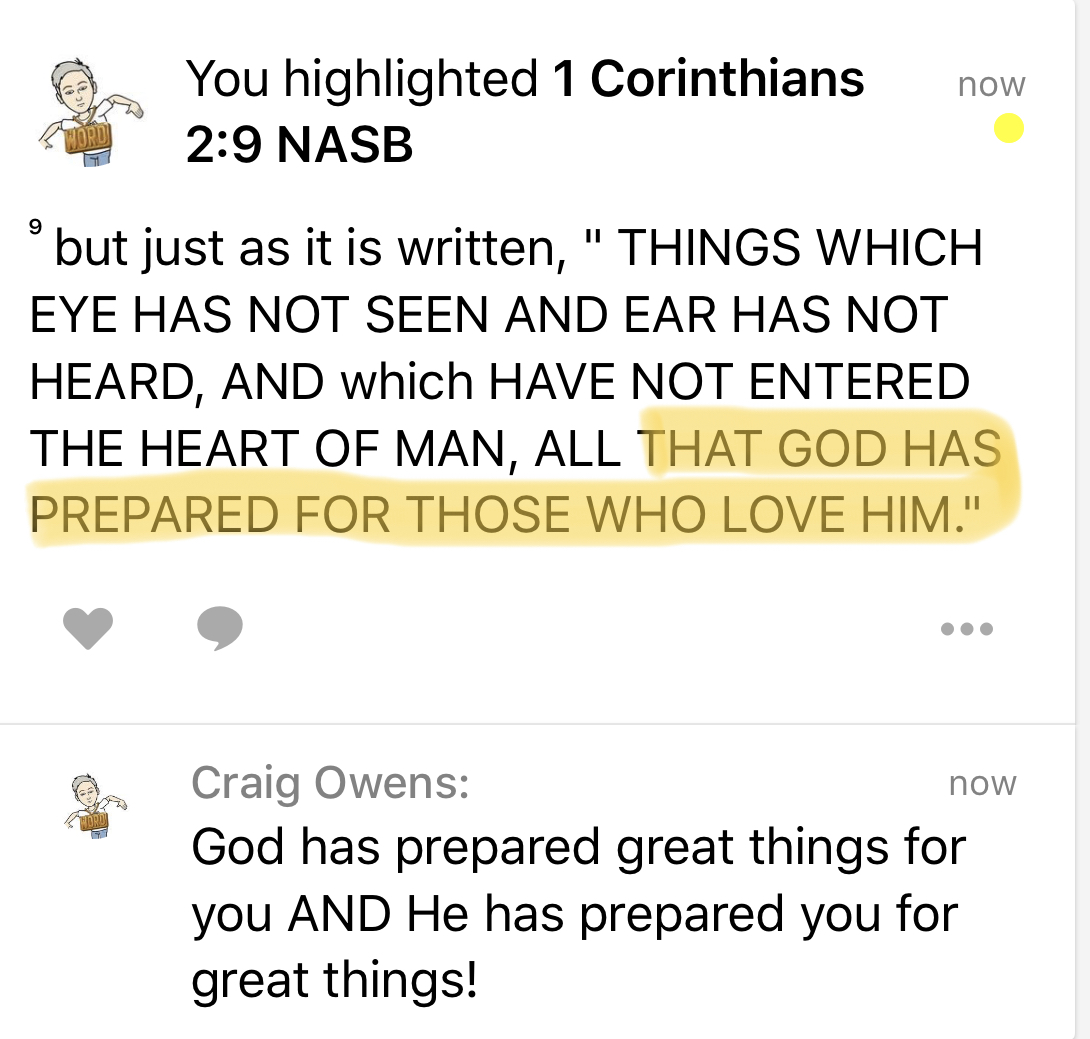
No eye has seen, no ear has heard, and no mind has imagined what God has prepared for those who love Him. (1 Corinthians 2:9 NLT)

So here’s how Scripture teaches us to pray—

I pray that from His glorious, unlimited resources He will empower you with inner strength through His Spirit. Then Christ will make His home in your hearts as you trust in Him. Your roots will grow down into God’s love and keep you strong. And may you have the power to understand, as all God’s people should, how wide, how long, how high, and how deep His love is. May you experience the love of Christ, though it is too great to understand fully. Then you will be made complete with all the fullness of life and power that comes from God. Now all glory to God, who is able, through His mighty power at work within us, to accomplish infinitely more than we might ask or think.(Ephesians 3:16-20 NLT)

God wants to do infinitely more than you can ask or think. He wants to show you new dimensions of His greatness and His love—notice that Paul goes out of his way to list four dimensions (wide, long, high, deep) even though we live in a three-dimensional world.

Here’s the question: are you OUT of your mind or IN your mind? In other words, are you only looking for things that you know can happen, or are you believing God for things that are completely OUT OF YOUR MIND?

Sharper Thinking

Yesterday I was challenged to do a lot of thinking. To think about things I’ve not considered before, and to think about things I have considered before but from a different perspective.

Yesterday a fellow pastor convened a Pastor’s Leadership Thinking Lab. The purpose was to use Warren Bullock’s book When The Spirit Speaks as a springboard to talk about the vocal gifts of the Holy Spirit in operation in our church services (see 1 Corinthians 12-14). At the outset, we all reaffirmed our unwavering commitment to our fellowship’s fundamental truths—those were non-negotiable. The challenge was to think about and discuss the practicalities of the how’s in our church services.

It was a bit intimidating being in the room with such smart people. These are guys with way more education and experience than me—guys who have had the privilege of studying and discussing this topic with some of the greatest Pentecostal thinkers of our generation. I felt a little out of place. In fact, during the lunch break, one of my friends commented, “Have you ever felt like that in a roomful of tuxedos you’re the one brown shoe?” My feelings exactly.

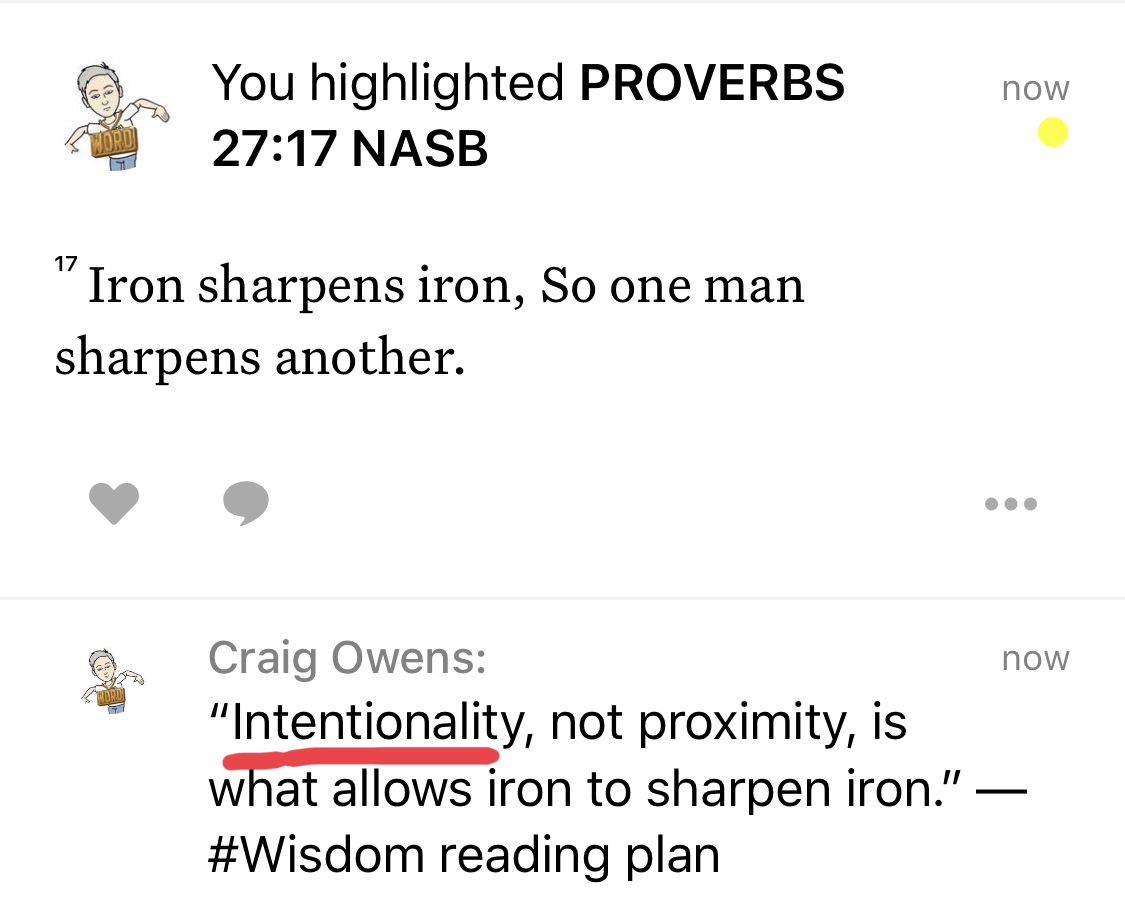
But King Solomon wrote, “As iron sharpens iron, so one man sharpens another” (Proverbs 27:17). The iron of my colleagues definitely sharpened me yesterday.

I also like what John Maxwell said, “Some of my best thinking has been done by others.” In other words, these really smart guys have thought about some things in ways I haven’t; they’ve been exposed to some great thinkers that I haven’t; they’ve experienced some things that I haven’t. But spending the day with them was like getting that education they received, having those conversations with great thinkers they had, and experiencing those things they experienced.

Did I agree with everything that was shared? No.

Was I challenged to think differently? Yes.

F. Scott Fitzgerald wrote, “The truest test of a first-rate mind is the ability to hold two contradictory ideas at the same time, and still retain the ability to function.”

If you really want to sharpen your thinking, get around some people smarter than you. Spend time with people who see things differently than you. But most of all, make sure these folks are one in purpose with you. All of the guys in this Lab shared the same passion to see God glorified and people drawn into a deeper relationship with Jesus. That’s what made yesterday so rewarding for me.

Do you have some “iron” friends in your life that are sharpening your thinking?


How Far?

How far are you willing to go to make sure someone learns something from you?

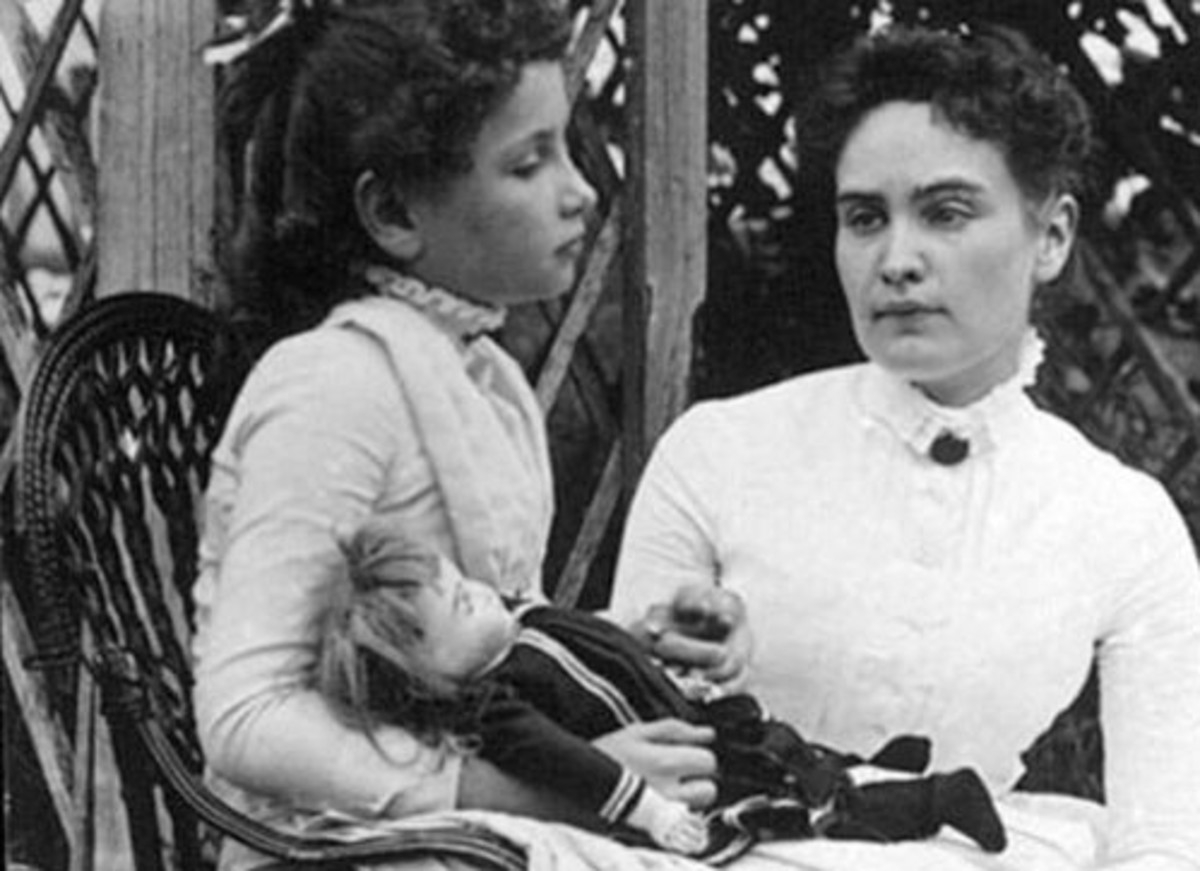
I’m reading a biography about Helen Keller and her teacher Annie Sullivan. As you may have heard before, Annie taught Helen how to communicate using her hands and fingers to spell out words. But after Helen heard about a deaf-blind student in Norway who was learning to speak audibly, Helen was determined to speak this way as well.

How do you teach someone who is deaf how consonants, vowels, blends, and words are supposed to sound? Eventually, Helen could “listen” to someone speak by placing her middle finger on the speaker’s nose, her index finger on their lips, and her thumb on their throat.

To get to this point of “listening” Helen had to know how sounds and words were formed with the lips and tongue. Initially, Annie would place Helen’s fingertips on her lips as she made sounds, but that only works so far. One of Helen’s cousins wrote, “Many times it was necessary for Helen to put her sensitive fingers in Teacher’s [Annie’s] mouth, sometimes far down her throat, until Teacher would be nauseated, but nothing was too hard, so Helen was benefited.”

Nothing was too hard.” Not even being gagged by an eager pupil! What amazing dedication!

So how far are you willing to go to help someone learn something valuable? Can you find a new way to say it? Are you willing to humble yourself to make yourself heard? Will you find a new way to communicate? A way that’s outside of your comfort zone? Can you communicate without even using words?

The Apostle Paul communicated the good news about Jesus this way: “I’ve become just about every sort of servant there is in my attempts to lead those I meet into a God-saved life. I did all this because of the Message. I didn’t just want to talk about it; I wanted to be in on it!” (1 Corinthians 9-:22-23, The Message)

How far are you willing to go to make sure someone hears the good news of Jesus from you?

More Today?

I have shared before how I often wake up with a particular song on my mind. This morning it was a 1969 classic that I added to my iPod a few weeks ago: “More Today Than Yesterday” by The Spiral Starecase. (Go ahead and listen to the song while you read on.)

So as I was attempting to wake up Betsy, I sang part of the chorus to her. “I love you more today than yesterday. But not as much as tomorrow.” Which got me thinking: How do I do this?

Betsy and I have been “an item” for 8,935 days. I thought I loved her tons yesterday, so how do I love her more today than yesterday? Let me take a couple of cues from the song:

“I’ll be spending time with you”—the greater the quantity of time I spend with her the more likely I’ll have quality time with her.

“Everyday’s a new day in love with you”—love keeps no record of wrongs. If I’m holding grudges against her or beating myself up over mistakes I made, I’m keeping a record. Forgiveness is the key to wiping the slate clean so I can love her more today than yesterday.

“With each day comes a new way of loving you”—there’s a reason why the apostle Paul talks about “growing up” in the great love chapter of 1 Corinthians 13. My love should be maturing and growing up every day. So today I should be able to love Betsy in a more mature way.

“I thank the Lord for love like ours that grows ever stronger”—as my relationship with Jesus becomes more intimate I will learn how to love Betsy more today than yesterday. As C.S. Lewis put it, “When I have learned to love God better than my earthly dearest, I shall love my earthly dearest better than I do now.”

What special relationships do you have? Do you love that earthly dearest more today than yesterday? With quality time, forgiveness, maturity, and a closer relationship with Jesus, you can truly love that special someone more today than yesterday. Give it a try!

Every day’s a new day, every time I love you.

Every way’s a new way, every time I love you!

The Not-So-Little Stuff

Listen to the podcast of this post by clicking on the player below, and you can also subscribe on AppleSpotify, or Audible.

My youngest son showed up at the dinner table one evening with a swollen left eyelid. I looked at it a little more closely and could see what looked to be a bug bite in the corner of his eye.

“No big deal,” I thought. “It’s just a mosquito bite. Happens all the time in Michigan.” (After all the mosquito is slated to become our new state bird!)

But when he woke up the next morning, his left eye was only open a slit. By the time I got him to the urgent care, his eyelid was a deep pink color and he was feeling very lethargic.

Guess what? It’s not such a little thing anymore!

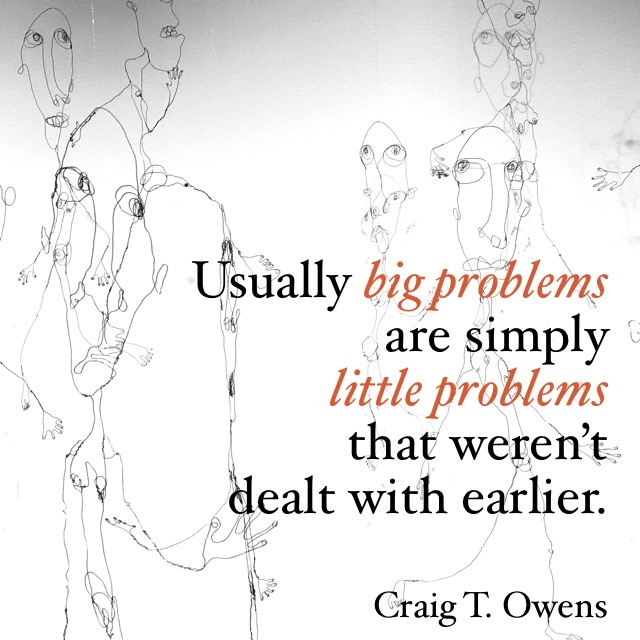
Frequently I hear people saying, “Don’t sweat the small stuff.” And I suppose to a certain extent that’s true. But typically the big stuff started off as the little stuff. Usually big problems are simply little problems that weren’t dealt with earlier.

  • Someone says, “My marriage failed last night” (big stuff). But the small warning signs had been there for months, but they weren’t taken care of.
  • Someone says, “My finances just hit rock bottom” (big stuff). But the small unnecessary purchases over time led to this moment.
  • Someone says, “I gave in to temptation” (big stuff). But the little flirting with the temptation created just the right environment for the big tumble.

Charles Simmons wrote —

“Life is made up of little things. It is very rarely that an occasion is offered for doing a great deal at once. True greatness consists in being great in the little things.”

On the flip side, rarely is a big problem presented all at one; it’s usually just the little things compounded over time.

The apostle Paul warned the church at Corinth about the little things that can blow up into the big things:

Your flip and callous arrogance in these things bothers me. You pass it off as a small thing, but it’s anything but that. Yeast, too, is a “small thing,” but it works its way through a whole batch of bread dough pretty fast. So get rid of this “yeast.” (1 Corinthians 5:6-7, The Message paraphrase)

A final thought from Paul to his protégé Timothy: “Keep a close watch on how you live” (1 Timothy 4:16 NLT). Great advice!

By the way, my son was fine after a little steroid treatment and some Benadryl, but some people never recover from their lack of attention to the little things.

Don’t let this happen to you! Watch out for the little things because you may find that they’re not so little after all!

►► Would you please prayerfully consider supporting this ministry?  My Patreon supporters get behind-the-scenes access to exclusive materials, like a 10-minute video I just shared on study tips for the poetic books of the Bible. ◀︎◀︎

Apples To Apples

As I was packing some sliced apples in school lunches I was contemplating the cliché about comparing apples-to-apples. We use this cliché when things are similar, or at least in the same category. If things are dissimilar or in different categories we might say we’re comparing apples-to-oranges.

If your life was in the “apple” category, to what other “apple” would you compare? Interesting question!

You are a unique individual. God has not made—ever—anyone like you, nor will He ever—in all of the future—make another “apple” like you. You are a one-of-a-kind, completely distinct from the 7 billion human beings on Earth right now. No one who has ever lived or ever will live is an “apple” like you.

So comparing yourself to anyone else is always an apples-to-oranges comparison.

Again I ask you to consider: to what other “apple” would you compare?

I believe the only other apple to which you can honestly and realistically compare yourself is: YOU! You can only compare yourself to the God-given potential in you. You are your own apple-to-apple comparison because no one else is in your category. God doesn’t expect you to be an Albert Einstein or a Winston Churchill or a Madam Curie—He just expects you to be you. To be the best you He created you to be.

Earnestly desire and zealously cultivate the greatest and best gifts and graces (1 Corinthians 12:31 AMP).

When you expect nothing less than your very best from yourself, you will help bring out the very best in others too. If your apples-to-apples comparison is just a you-to-you comparison, it relieves the pressure from others to compare their apple to your orange.

Look for the best in each other, and always do your best to bring it out (1 Thessalonians 5:15, The Message).

Check out these great quotes about doing your personal-apple-best

  • Doing your best is more important than being the best.” —John Wooden
  • “It was ever Alexander The Great’s nature, if he had no rival, to strive to better his best.” —Arrian
  • “From day to day I do the best I can and will continue to do so till the end.” —Abraham Lincoln
  • “One of satan’s wiliest tricks is to destroy the best by the good.” —E.M. Bounds
  • “To find the best in others, and to give of oneself; to leave the world a better place whether by a healthy child, a redeemed social condition, or a garden patch; to have lived your life with enthusiasm and to have sung with exaltation; and finally to know that one life has breathed easier because you have lived, that is to have been successful.” —Emerson

Do your personal-apple-best today, and stop comparing yourself to another’s orange. When you can do this you will find it easier to encourage others to do their personal-apple-best too.

Lessons From A Puppy

I’m learning great lessons from hanging out with my puppy Grace. Today I was observing how Grace lives in the moment—how she is fully there in whatever and wherever there is.

  • When she’s hungry, she eats.
  • When she’s full, she walks away from her dish.
  • When she’s thirsty, she drinks.
  • When she’s satisfied, she walks away from the water bowl.
  • When someone is around to play with her, she’s on full-throttle GO!
  • When she’s alone, she amuses herself.
  • When she’s tired, she takes a nap.
  • When I leave a room, she follows me.
  • When I have to go somewhere in my car, she’s right with me.
  • When I’m happy, she wags her tail.
  • When I’m upset, her tail and ears hang low.

In short, whatever there is to do, she does just that without holding anything back. And most of the time what she’s doing is based around who’s doing what around her. She’s always fully there in the moment.

I have had a quote in my files for quite some time from Dr. Richard Dobbins. I’m challenged by this thought about married love because it can easily apply to every relationship I have:

“But most of the time Christian married love comes dressed in overalls—it is practical, down-to-earth, everyday hard work. It is really thinking of the other person and doing what the other person needs and being what the other person needs when he or she needs you to be there.”

The great “love chapter” in the Bible (1 Corinthians 13) really is about being there for others … focusing on others … and then living fully in the moment for them. Check out a few verses from this chapter from The Message paraphrase:

Love never gives up.
Love cares more for others than for self.
Love doesn’t want what it doesn’t have.
Love doesn’t strut,
Doesn’t have a swelled head,
Doesn’t force itself on others,
Isn’t always “me first,”
Doesn’t fly off the handle,
Doesn’t keep score of the sins of others,
Doesn’t revel when others grovel,
Takes pleasure in the flowering of truth,
Puts up with anything,
Trusts God always,
Always looks for the best,
Never looks back,
But keeps going to the end.

I’m working on being fully there for the ones I love today. How about you?

Diet + Exercise = Healthy Growth

The right diet will start you on the road to excellent health, but to keep growing in a healthy way you will need to incorporate some regular exercise too. This is true physically, spiritually, and emotionally.

If I just eat the right foods but don’t exercise, my physical metabolism will not be stoked to the proper levels. To put it another way, a good diet may lower my LDL (bad) cholesterol, but it takes exercise to raise my HDL (good) cholesterol. I need both to be healthy.

So, too, for my heart and mind. If I hear good preaching and think good thoughts (diet), but never put those words or thoughts into action (exercise), I’m not going to grow in a well-balanced, healthy way.

Here’s a couple of things I have learned for body, spirit, and mind exercise.

Set challenging but realistic goals

  • I don’t run without a goal. (1 Corinthians 9:26 CEV)
  • “You must have long-range goals to keep from being frustrated by short-term failures.” —Charles N. Noble

Exercise a little bit when you can

  • There’s no need to jump into lengthy workouts.
  • Exercise daily in God—no spiritual flabbiness, please! Workouts in the gymnasium are useful, but a disciplined life in God is far more so, making you fit both today and forever. (1 Timothy 4:7, The Message)
  • “Let him then think of God the most he can; let him accustom himself, by degrees, to this small but holy exercise; nobody perceives it, and nothing is easier than to repeat often in the day these little internal adorations.” —Brother Lawrence, in The Practice Of The Presence Of God

Make exercise a fun habit

  • Remember that you may not feel like exercising, but you will feel better after you exercise.
  • “Life goals are reached by setting annual goals. And annual goals are reached by reaching daily goals. And daily goals are reached by doing things which may be uncomfortable at first but eventually become habits. And habits are powerful things. Habits turn actions into attitudes, and attitudes into lifestyles.” —Charlene Armitage

For a healthy body, a healthy heart, and a healthy thought life, watch the diet you consume and then exercise for maximum benefit. Feel free to share any exercise tips you have learned.

Fill ’Er Up!

Listen to the podcast of this post by clicking on the player below, and you can also subscribe on AppleSpotify, or Audible.

I sort of remember the days of full-service gas stations. My Dad would drive in and say, “Fill ’er up!” and the gas station attendant would jump into action. Filling up the gas tank, cleaning the windshield, checking the oil level, and even checking the air pressure in the tires.

But, alas, those days of full service seem to be long gone, replaced by highly-efficient, less-personal self-serve stations. And I’m not necessarily talking just about gasoline stations either.

All of our lives seem to have become more efficient and less personal. We are a more do-it-yourself, leverage-technology kind of society today. And I wonder if the result is that many people aren’t getting filled up like they used to.

There is a well-known Bible story in 2 Kings 4. A widow is facing what would amount to foreclosure today. Except this foreclosure was on her sons. Her husband, a God-fearing man, had died and left her with debts she could not pay. The practice in that society was for her sons to be “sold” to pay off the debts. These boys would have to work all day long for someone else, and whatever money they would have earned for their labors would go to the creditors.

In her desperation, the widow turned to the prophet Elisha. He asked her if she had anything of value in her house, and she replied, “Just a little oil. But not enough to pay off my debts.” The counsel Elisha gave her is applicable for our self-serve society today—

Elisha said, “Go around and ask all your neighbors for empty jars. Don’t ask for just a few” (v. 3).

Elisha asked the woman and her family to humble themselves—ask all your neighbors. Sometimes this is one of our biggest hindrances: pride which keeps us from admitting we have a need. And this was no small task because she had to ask ALL her neighbors to, “Fill ’er up!”

Elisha asked them to be persistent—don’t ask for just a few. Not just a jar here and there, but ask for every available jar to, “Fill ’er up!”

The principles in this story shouldn’t just apply to times of desperation in our lives. Because maybe if we worked on being around our neighbors and asking what needs they have, and sharing our needs as well, maybe we wouldn’t get into such desperate situations.

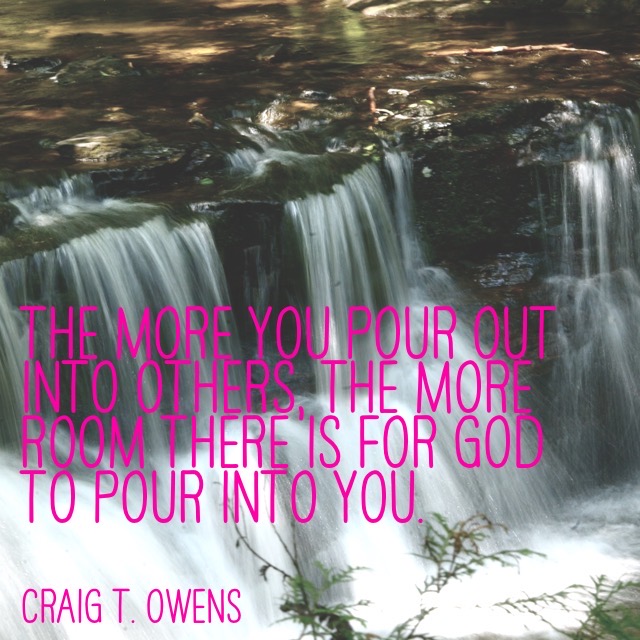
In the story in 2 Kings, the oil stopped flowing only after every available jar had been filled. If I want God to continue to pour His oil of blessing into my life, He has to have room in which to pour. That means that I need to be pouring into others’ lives as often as I can. Listen to the blessings when we, “Fill ’er up!”—

     I want you to know how delighted I am to have Stephanas, Fortunatus, and Achaicus here with me. They partially make up for your absence! They’ve refreshed me by keeping me in touch with you. (1 Corinthians 16:17-18, The Message paraphrase)

     In addition to our own encouragement, we were especially delighted to see how happy Titus was, because his spirit has been refreshed by all of you. (2 Corinthians 7:13)

     God bless Onesiphorus and his family! Many’s the time I’ve been refreshed in that house. And he wasn’t embarrassed a bit that I was in jail. The first thing he did when he got to Rome was look me up. May God on the Last Day treat him as well as he treated me. (2 Timothy 1:16-18, The Message paraphrase)

     Your love has given me much joy and comfort, my brother, for your kindness has often refreshed the hearts of God’s people. (Philemon 7 NLT)

Get around other “full” people and let them fill you up.

Seek out “empty” people and pour abundantly into them.

The more you pour out into others, the more room there is for God to pour into you.

God is always pleased when our lifestyle is one of “Fill ’er up!”

►► Would you please prayerfully consider supporting this ministry? My Patreon supporters get behind-the-scenes access to exclusive materials. ◀︎◀︎