Battling Depression

Have you ever been depressed? I have. I know all too well how depression robbed me of sleep, sapped joy from my day, kept me from smiling and on the verge of tears all the time, made sunny days seem cloudy, caused me to sigh all the time and lose interest in the things that used to bring me pleasure, and brought such a sense of loneliness and isolation.

Did you know that Jesus felt the crushing load of depression too? As He was praying in the Garden of Gethsemane just before His arrest, listen to these words—

  • He began to be sorrowful and troubled
  • He became anguished and distressed
  • He began to show grief and distress of mind and was deeply depressed
  • He said to them, “My soul is overwhelmed with sorrow to the point of death”
  • He prayed more fervently, and He was in such agony of spirit that His sweat fell to the ground like great drops of blood
  • “Abba, Father,” He cried out, “everything is possible for You. Please take this cup of suffering away from Me. Yet I want Your will to be done, not Mine.” (see Matthew 26:37-38; Mark 14:36; Luke 22:44)

The writer of Hebrews wrote this about Jesus—

While Jesus was here on earth, He offered prayers and pleadings, with a loud cry and tears, to the One who could rescue Him from death. And God heard His prayers because of His deep reverence for God. Even though Jesus was God’s Son, He learned obedience from the things He suffered. In this way, God qualified Him as a perfect High Priest, and He became the source of eternal salvation for all those who obey Him. (Hebrews 5:7-9)

We learn something in suffering that we can’t learn any other way. Jesus learned how to experience all of the grief, anxiety, and depression that you and I will ever feel. And that is what qualifies Him to be a perfect High Priest for us.

Our part is to pray. Time and time and time again, not only did Jesus pray, but He encouraged His disciples to pray as well. As you continue to pray, Jesus is your High Priest praying for you. Only He truly knows how to translate the cry of your heart into a language Abba Father can understand.

In all their troubles, He was troubled, too. He didn’t send someone else to help them. He did it Himself, in person. (Isaiah 63:9)

If you’ve missed any of the messages in this series called Where’s God, please check them all out by clicking here.


“Too Long”?

Check out these words of insight from Seth Godin:

“Too long.” You’re going to hear that more and more often.

The movie, the book, the meeting, the memo… few people will tell you that they ran short.

(Shorter, though, doesn’t mean less responsibility, less insight or less power. It means less fluff and less hiding.)

As a pastor, I laughed when I read few people will tell you that [your sermon] ran short. That is so true!

But Seth’s conclusion is right on target. In the attempt to keep our message at just the right length, we must be cautious of reducing the insight or the power. Instead, get rid of the fluff and the posturing.

Cry Before You Confront

Listen to the podcast of this post by clicking on the player below, and you can also subscribe on AppleSpotify, or Audible.

As a pastor, one of your responsibilities is to point out what may be harmful in someone’s life. We have a word for that: confrontation.

Handled correctly, confrontation can lead to restoration and newfound maturity. Handled incorrectly, and, well, let’s just say it can get very ugly!

I just heard the story of a pastor who felt like he needed to confront one of his board members. I don’t really know this pastor, nor do I know the board member; I don’t know what was said in their meeting, but I have heard about the outcome, and it got ugly.

Samuel was going to be sent by God to confront King Saul about the sin he had committed. Look at this passage:

Then the word of the Lord came to Samuel: “I am grieved that I have made Saul king, because he has turned away from Me and has not carried out My instructions.” Samuel was troubled, and he cried out to the Lord all that night. (1 Samuel 15:10-11)

Did you catch how Samuel responded? He cried out to the Lord all that night.

Perhaps if we, as pastors, cried before we confronted the results might be more healthy.

“Tears shed for self are tears of weakness, but tears shed for others are a sign of strength.” —Billy Graham

Nehemiah was another pastoral/prophetic figure that was going to confront the inhabitants of Jerusalem about their sin.

When I heard these things, I sat down and wept. For some days I mourned and fasted and prayed before the God of heaven. Then I said: …I confess the sins we Israelites, including myself and my father’s house, have committed against You. (Nehemiah 1:4-6)

Before Nehemiah confronted the sins of the people, he tearfully took a hard look at himself, and then asked for forgiveness. Jesus shared this same concept with these words:

Why do you look at the speck of sawdust in your brother’s eye and pay no attention to the plank in your own eye? How can you say to your brother, “Let me take the speck out of your eye,” when all the time there is a plank in your own eye? You hypocrite, first take the plank out of your own eye, and then you will see clearly to remove the speck from your brother’s eye. (Matthew 7:3-5)

So before you confront your brother or sister, let the Holy Spirit confront you. Then, if it’s needed, confess your sin and ask God’s forgiveness. Let the Holy Spirit remove things in your life so that you can see clearly how to lovingly confront your brother.

Cry before you confront. Cry over your sin. Cry over the sinful state of your brother or sister. Plead with the Lord for this time of confrontation to lead to restoration and maturity.

►► Would you please prayerfully consider supporting this ministry? My Patreon supporters get behind-the-scenes access to exclusive materials. ◀︎◀︎

Encouragement For Pastors

I thoroughly enjoy the daily devotional I receive in my Inbox each morning from T.M. Moore at The Colson Center For Christian Worldview.

Each morning T.M. Moore shares a verse of Scripture, a quote from a trusted author, and his application of that quote to the pastoral setting. For instance, after quoting a passage from John R.W. Stott, Moore’s thought this morning was:

“Good preachers are good learners, and not just of the Scriptures. They need to understand the times and the ways the times impact the people they are called to serve. Preachers who know their sheep well, as our Good Shepherd exemplified for us, will hear their concerns, understand their thoughts, discern their hopes and fears, and be able to preach in a way that speaks directly to their souls with transforming grace and power. Let us strive to be sons of Issachar when it comes to the ministry of God’s Word.”

UPDATE: Pastor, T.M. Moore has established his own ministry with vastly more resources for us than he had at the Colson Center. Please check out the Fellowship of Ailbe.

Thursdays With Oswald—Not Self-Conscious, But God-Conscious

This is a weekly series with things I’m reading and pondering from Oswald Chambers. You can read the original seed thought here, or type “Thursdays With Oswald” in the search box to read more entries.

Not Self-Conscious, But God-Conscious

     When I am lifted by the Atonement into oneness with God I do not lose my personal identity, my identity becomes that of conscious union with God. Man’s relationship with God in the beginning was such that the consciousness of union with Him was a delight: as soon as sin entered that went and man became self-conscious: he realized he was no longer in union with God and tried to hide himself from His presence.

From Biblical Ethics

For to me, to live is Christ… I have been crucified with Christ and I no longer live, but Christ lives in me. The life I live in the body, I live by faith in the Son of God, Who loved me and gave Himself for me. (Philippians 1:21; Galatians 2:20)

A great way to remember the meaning of the word Atonement is like this: At one-ment. Jesus paid the price for me to be at one-ment with the Father. He did not die so I could become more aware of myself, but so I could become more aware of God.

Christ’s Atonement makes me dead to me, and alive to Him; dead to trying to figure out myself, and alive to learn more of Him; dead to self-consciousness, and alive to God-consciousness.

And I would much rather be more aware of Him than I am of me!

The Means And The End

Jesus made a lot of amazing I AM statements. But there are two linked together in John 10 that I find fascinating. He said,

I am the gate … I am the good shepherd. (John 10:1-16)

The sheep have to get to the shepherd by passing through the gate.

Jesus is both the means and the end.

I come to Jesus by Him.

He draws me to Himself.

He creates the desire and He satisfies the desire.

He is the way and the goal.

He is the quest and the prize.

He is Savior (gate) and Lord (shepherd).

Jesus is the Answer for the world today
Above Him there’s no other
Jesus is the Way

He is the Answer and the Way to get to the answer!

If (Blank), Then (Blank)

Listen to the podcast of this post by clicking on the player below, and you can also subscribe on AppleSpotify, or Audible.

Let me set the stage. Jesus is explaining to some of His new followers about finding their identity in God, not in a man. He says to them,

If You hold to My teaching, you are really My disciples. Then you will know the truth, and the truth will set you free. (John 8:31-32)

Notice the order of the if-then: If you hold to my teaching, then you will know the truth.

You see, later on in this discussion Jesus says, “Do you want to know why you can’t hear what I am saying? It’s because you are not listening with an ear to obey” (see vv. 43-47).

In other words, their tendency—and ours too—is to say, “If I hear truth from You, then I will obey.”

But this attitude is pragmatic—it’s like saying, “It has to ring true with what I already know.” But the problem is, Jesus’ teachings are so counter-cultural and counterintuitive that they may never ring true with what you already know.

Instead, my attitude should be, “I will obey. No matter what You say to me, I will do it. Even if it sounds uncomfortable, I will do whatever You tell me.”

If you HOLD to my teaching, then you will KNOW the truth.

God will not speak a word I can hear and understand UNLESS I am committed to obeying every word He speaks. My attitude of obedience must come before His truth will be revealed. Let’s not get this mixed up with, “If You speak the truth, then I will obey.”

►► Would you please prayerfully consider supporting this ministry? My Patreon supporters get behind-the-scenes access to exclusive materials. ◀︎◀︎

Growing Up

Yesterday was an historic day at Calvary Assembly of God, and I’m still buzzing about it!

The Assembly of God fellowship has several classifications for churches, the highest one being “general council status.” Yesterday our membership voted unanimously to move into this category!

Here are some of the miracles of the day:

  • My predecessor, Joel Baxter and his wife Kristina, were in attendance. They live and minister in Wisconsin now, so I didn’t think they would be able to attend, but they showed up and surprised us all. Pastor Joel laid the foundation on which we can now build, and I am so grateful for him. I’m also grateful for the prayer of blessing he prayed over us.
  • Pastor Joel shared a couple of prophesies that had been spoken over this church. One is that we would be a light to northern Kent County, and the other was that ministry would flow from this church to the cities and communities surrounding us. Amen!
  • Two precious ladies in our church have been at Calvary since its beginning decades ago, and they got to be the first two signers of our general council resolution.
  • We had several people visiting for the first time that stuck around to watch this historic vote. I love the testimony that this was for them.
  • Every vote we have taken among our membership has been unanimous. Truly this is a group of people who are one in spirit and purpose.

Notice that I said that we are growing up—not grown up. I’m thrilled with where we are, but we still have a long way to go to…

…prepare God’s people for works of service, so that the body of Christ may be built up until we all reach unity in the faith and in the knowledge of the Son of God and become mature, attaining to the whole measure of the fullness of Christ. (Ephesians 4:12-13)

And in case you haven’t heard me say it lately:

I My Church!

If you live in West Michigan and don’t have a church home, I would love for you to join us next Sunday!

My Healer

In yesterday’s “Where’s God?” series, I looked at the very difficult question: Where’s God in my sickness?

The word disease has an interesting origin. In the Old French the word literally means without ease. So we could call any disease our place of dis-ease. Whether it’s in the physical, the emotional, or the spiritual part of us, we have all experienced times of dis-ease.

God did not create disease. He did not create sickness. He did not create sin. We did. When we push our physical bodies too far, when we exploit our natural resources, when we rebel against God’s design, we are opening ourselves up to dis-ease. When we experience the painful results of this, God would be perfectly justified in standing aloof from our situation.

But this is the absolute miracle of the Incarnation—

Jesus choose to step into our pain!

He choose to personally experience our dis-ease!

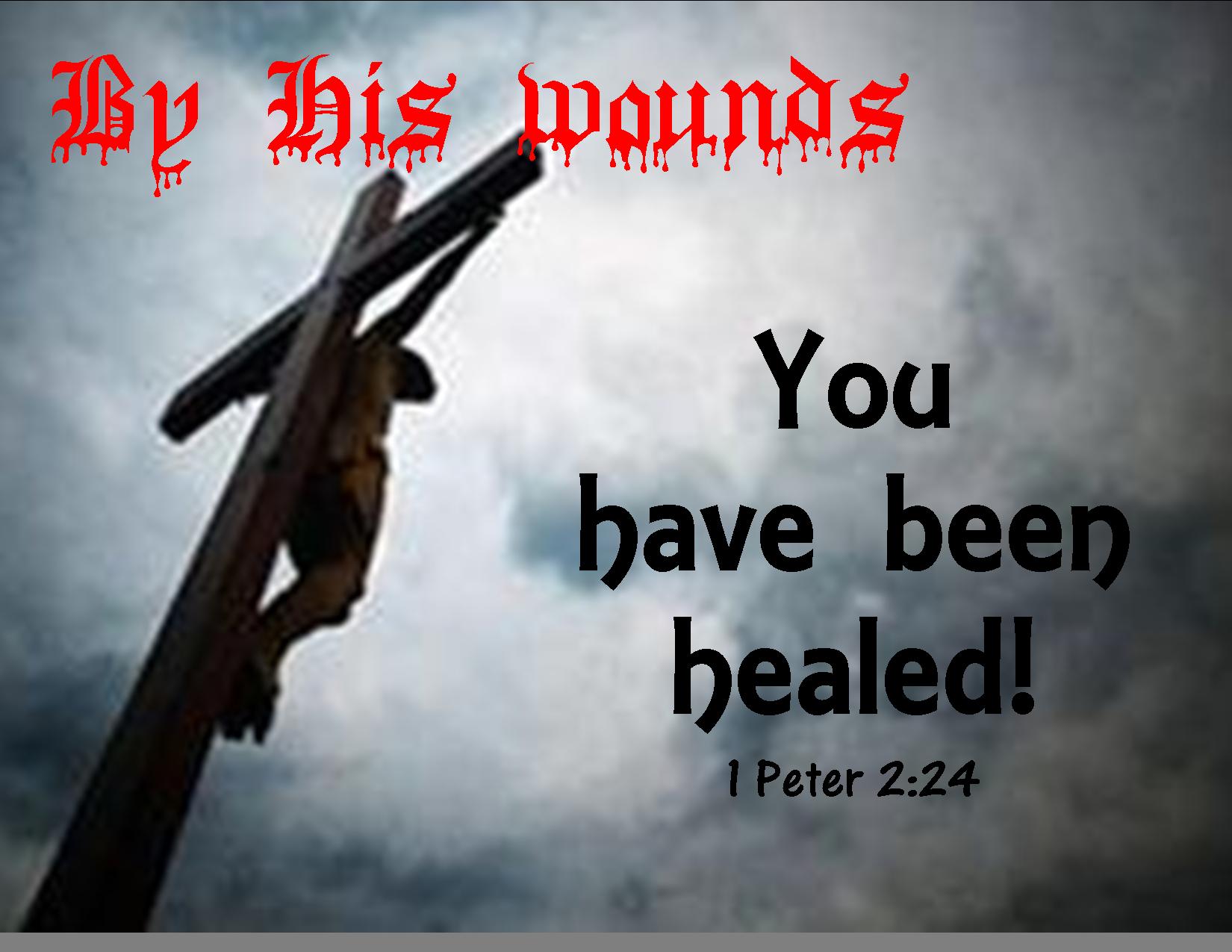
But the fact is, it was our pains He carried—our disfigurements, all the things wrong with us. We thought He brought it on Himself, that God was punishing Him for His own failures. But it was our sins that did that to Him, that ripped and tore and crushed Him—our sins! He took the punishment, and that made us whole. (Isaiah 53:4-5, The Message)

Only One who is fully Man and fully God could know our dis-ease and heal our dis-ease. Jesus is our Healer!

If you’ve missed any of the messages in this series, please check them all out by clicking here.

What’s Your Point?

As I am preparing my message for each Sunday, I have one point that I want everyone to have clear in their hearts and minds when they leave. It’s sort of my “finish line.” I say, “If they get only one thing from this message, what should it be?” This is the part where I spend quite a bit of time.

Then I read this from the Apostle Paul:

When I came to you, brothers, I did not come with eloquence or superior wisdom as I proclaimed to you the testimony about God. For I resolved to know nothing while I was with you except Jesus Christ and Him crucified. (1 Corinthians 2:1-2)

So what’s my point?

Something clever and witty?

Something that shows how eloquent I am?

Perhaps another rule to follow?

Or another application to make?

Oswald Chambers says, “To say that we are called to preach holiness or sanctification is to miss the main point. We are called to proclaim Jesus Christ….” (emphasis mine)

My point should be only this:

To help people see Jesus more clearly.

Anything less than this is to miss the point.

Anything more than this is attempting to make myself sound eloquent.