Thursdays With Oswald—God’s Honor Is At Stake

Listen to the podcast of this post by clicking on the player below, and you can also subscribe on AppleSpotify, or Audible. 

This is a weekly series with things I’m reading and pondering from Oswald Chambers. You can read the original seed thought here, or type “Thursdays With Oswald” in the search box to read more entries.

God’s Honor Is At Stake

      As long as a Christian complies with the standards of this world, the world recognizes him; but when he works from the real standard, which is God, the world cannot understand him, and consequently it either ignores or ridicules him….

      God’s honor is at stake in my eyes, in my hands and feet; His honor is at stake wherever I take my body. My body is the temple of the Holy Ghost, therefore I have to see that it is the obedient slave of the disposition Jesus Christ has put in to stand for Him.

From Biblical Psychology

God’s honor is at stake in how I live, so I must constantly allow the Holy Spirit to help me answer the questions, “How am I living?” and “How am I representing God?”

Here’s a passage of Scripture I try to keep in mind to help me answer those questions:

   But in your hearts set apart Christ as Lord. Always be prepared to give an answer to everyone who asks you to give the reason for the hope that you have. But do this with gentleness and respect, keeping a clear conscience, so that those who speak maliciously against your good behavior in Christ may be ashamed of their slander. It is better, if it is God’s will, to suffer for doing good than for doing evil. (1 Peter 3:15-17)

In light of that passage from Peter and the wise words from Oswald Chambers, these are some good questions to ask ourselves:

Remember, “God’s honor is at stake in my eyes, in my hands and feet; His honor is at stake wherever I take my body.”

May God always be honored in the way that we all live!

►► Would you please prayerfully consider supporting this ministry? My Patreon supporters get behind-the-scenes access to exclusive materials. ◀︎◀︎

Incapable Of Innocence

Incapable of innocenceThis is God’s description of ancient Israel, but it sounds a lot like modern-day America to me. God said they (we) have…

  • Broken My covenant
  • Revolted against My law
  • Rejected what is good
  • Appointed rulers without My consent
  • Made idols
  • Acted as if My laws don’t apply to you
  • Practiced a meaningless religion (see Hosea 8)

And then God asks them (us) this question—

How long will you be incapable of innocence?

God’s question triggers a bunch of additional questions…

  • What are we waiting for?
  • Why don’t we repent of our sins?
  • What’s keeping us from returning wholeheartedly to God?
  • How much longer will we remain incapable of innocence?
  • How much longer will we tempt God’s mercy?

I’m not waiting for them to change; I’ve got to change. I must recognize my sin, repent of my sin, and return wholeheartedly to God. Will you join me in this?

Hypocritical Pastors

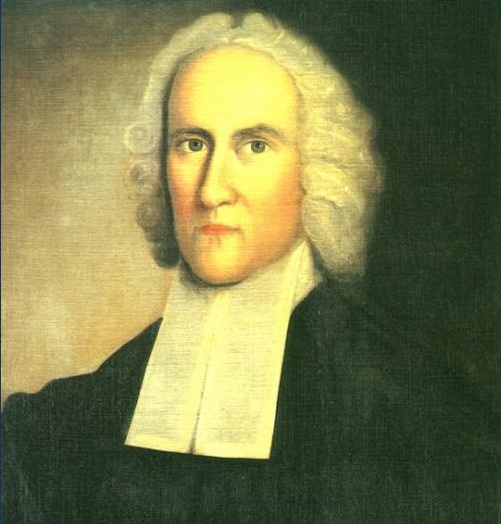
Jonathan EdwardsI was reading a passage from Jonathan Edwards’ Hypocrites Deficient in the Duty of Prayer, where Edwards warned pastors against neglecting the sacred duty of private prayer. Edwards says that pastors who spend more time praying publicly than they do privately are hypocrites.

T.M. Moore commented on this—

“So we [pastors], when we attend upon public prayers—even leading them, during morning worship—but have no prayer life of our own to speak of, practice hypocrisy of the first water. We seem to be men of prayer, but we are hardly ever calling on the Lord of glory.”

There is a simple remedy to this: Pray!

  • Pray every day
  • Pray about every thing
  • Pray in private
  • Make prayer your continual and ongoing habit

Pastors, may we always pray!

Inside Out

Listen to the podcast of this post by clicking on the player below, and you can also subscribe on AppleSpotify, or Audible.

Relationships can only grow from the inside out. Consider this passage from the book of Hebrews—

The blood of goats and bulls and the ashes of a heifer sprinkled on those who are ceremonially unclean sanctify them so that they are outwardly clean. How much more, then, will the blood of Christ, Who through the eternal Spirit offered Himself unblemished to God, cleanse our consciences from acts that lead to death, so that we may serve the living God! (Hebrews 9:13-14)

Religion is concerned about the outside—how does it look?

Relationship with Jesus is concerned about the inside—how does it work?

Religion seeks to work outside in.

Relationship works inside out.

Religion is the starting point.

Relationship is the goal.

When I first met my wife Betsy, I was attracted initially by the outward things—her physical beauty, her actions, her words. But if I only stayed at the outward level, everything would be focused on keeping up appearances. I would be worshiping the idol of physical beauty. Then as soon as I saw someone whom I perceived to have more physical beauty, I would abandon Betsy for the next attractive thing.

But Betsy’s outside was only the starting point; it drew me deeper inside into a relationship. As I got to know the real Betsy, I fell more and more in love. The inner beauty far exceeded the outward beauty. But then something amazing happened: the inner beauty enhanced her outward beauty.

The outside (religion) is only finite. The inside (relationship) is infinite.

The old religion started on the outside; Jesus Christ works from the inside. He doesn’t ask me to clean up the outside, but He cleanses my conscience so I can clean up the inside. This inner cleansing will eventually show up outside. The inner relationship beautifies and makes more meaningful the outer religion. The inner life (infinite, eternal) overwhelms the outer life (finite, temporal).

Don’t throw out religion and religious practices, but don’t use those as the only means of coming to Christ. Allow Jesus to work inside on your relationship with Him, and then the outside will become more beautiful and even more meaningful.

►► Would you please prayerfully consider supporting this ministry? My Patreon supporters get behind-the-scenes access to exclusive materials. Like this video where I explain what the Bible means when we “examine” our lives. ◀︎◀︎

Do It Again, Pastor!

Monday morning is one of my favorite times. I reflect back on the great things God did in our service the day before, and I look ahead with anticipation to what He is going to do in this next Sunday. If I look at this here-comes-Sunday-again cycle through merely human eyes, it can appear quite overwhelming. But God has called me to do this, and He energizes me by His Holy Spirit.

I love these words from Pastor James MacDonald—

“Only a pastor who preaches biblically for the glory of Jesus and the feeding of souls, week after week, can understand that pressure. It’s like finals week in college—but it happens every week. Explaining a Bible passage is child’s play compared to digging out a word from the Word about the WORD for your people.

“Can you give your best to it again, Pastor? Can you breathe on a passage of Scripture that is now unfamiliar, until it bursts into flame by the faithful ministry of the Holy Spirit in response to your hard work? Can you stoke that fire until it is bursting within you to be proclaimed as the ‘Bread of Life’?

“Yes, you can—and when you have, you will be exhausted but deeply satisfied in what God will do in and through you as a result. And you will count the days until you GET to do it again.”

Pastor, you can do it again! Doing God’s will, preaching His Word, should be your greatest joy and your greatest source of strength. This is why I don’t like to take Monday as my day off: I get so much more nourishment and refreshment from my time in God’s presence on Monday morning than I would get anywhere else.

Meanwhile [Jesus’] disciples urged Him, “Rabbi, eat something.” But He said to them, “I have food to eat that you know nothing about.” Then His disciples said to each other, “Could someone have brought Him food?”

“My food,” said Jesus, “is to do the will of Him who sent Me and to finish His work.”

(John 4:31-34)

What Does It Mean To Fear God?

Fear GodWhat does it mean to fear God? Does it mean we cower before Him? That He is utterly unapproachable? Or maybe it means we’re always looking over our shoulder wondering if God is coming after us in anger?

Let me ask the question another way:

  • Are you afraid that you won’t buy the right Christmas gift for someone?
  • Are you afraid that you’ll forget someone?
  • Are you afraid that your response won’t be right when you open a gift?
  • Are you afraid you’ll offend a family member by something you say or do?
  • Do other people’s opinion of you factor into your decisions?

If you answered “Yes” to the above questions, you have a fear problem. That is: you fear letting other people down.

I think this was the issue for Joseph in the Bible (Matthew 1:18-25). When he found out that Mary was pregnant before their marriage, Joseph carefully deliberated his response. Based on the meaning of the words had in mind and considered, and examining the way the angel told Joseph to “Fear not,” it appears that Joseph, too, lived in this same fear of letting others down.

But here’s the issue: Joseph placed greater value on people’s opinions than he did on God’s opinion. And what makes it even worse is that Joseph simply assumed what people would say about him, as he never actually asked anyone.

The angel challenged Joseph to re-evaluate his value system. To give greater weight to God’s opinion than to man’s opinion. In short, to change his fear of man to fear of God.

That’s really what it means to fear God: To give greater weight to His Word and His opinion than to anyone or anything else.

The wise king Solomon explored everything he could to find the meaning of life. He tried money, education, art, travel, women, food, power, and the like. At the end of his exploration, he came to this conclusion—

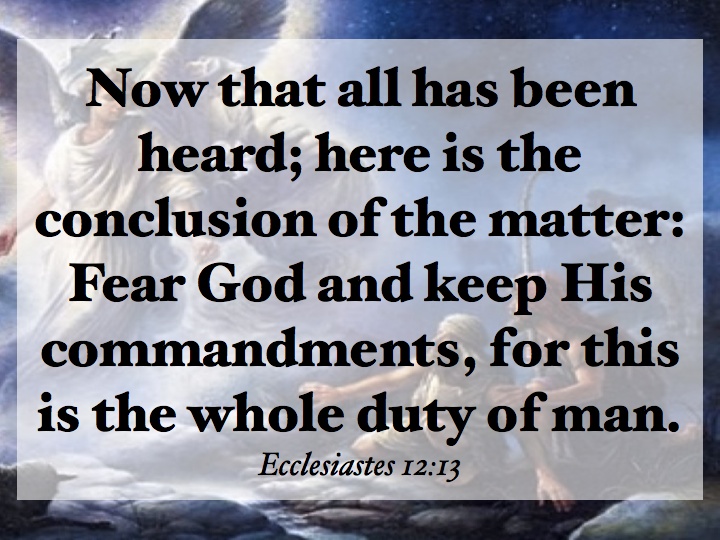
Now all has been heard; here is the conclusion of the matter: Fear God and keep His commandments, for this is the whole duty of man. (Ecclesiastes 12:13).

We should be living for the approval of an Audience of One. 

We should be longing to hear, “Well done, good and faithful servant” from our Creator. 

We should be listening only for the applause from nail-scarred Hands. 

“The remarkable thing about fearing God is that when you fear God you fear nothing else, whereas if you do not fear God you fear everything else.” —Oswald Chambers

If you have missed any of the messages in our Fear Not! series, you can find them all by clicking here.

You Need “Grey Heads”

Tim DilenaI know that all of us can benefit from an older, wiser person speaking into our lives, but I am especially concerned about pastors. Too many times pastors are seen by others as the “go-to guy” for anyone who needs help, and we pastors begin to believe that we don’t need to go to anyone else for help.

This is a dangerous attitude of pride!

Check out this short 4-minute teaching from my friend Rev. Tim Dilena about the value of “grey heads” in our lives—

My fellow pastor, humble yourself and accept the help of a wise mentor. It will not only enhance your ministry, it could literally save your ministry from crumbling.

The Heavy Responsibility of Shepherding

My dear pastor, our task is not an easy one. It is one of heavy responsibility: Caring for God’s sheep.

They are God’s sheep. They are not your sheep or my sheep. But you and I have been given the stewardship care of God’s precious lambs.

I hope these words God spoken through the prophet Ezekiel don’t describe you. But may all of us pastors take them as a sober reminder of the weightiness of our role as the under-shepherds of God’s flocks…

Then this message came to me from the Lord: “Son of man, prophesy against the shepherds, the leaders of Israel. Give them this message from the Sovereign Lord: What sorrow awaits you shepherds who feed yourselves instead of your flocks. Shouldn’t shepherds feed their sheep? You drink the milk, wear the wool, and butcher the best animals, but you let your flocks starve. You have not taken care of the weak. You have not tended the sick or bound up the injured. You have not gone looking for those who have wandered away and are lost. Instead, you have ruled them with harshness and cruelty. So My sheep have been scattered without a shepherd, and they are easy prey for any wild animal. They have wandered through all the mountains and all the hills, across the face of the earth, yet no one has gone to search for them.

“Therefore, you shepherds, hear the word of the Lord: As surely as I live, says the Sovereign Lord, you abandoned My flock and left them to be attacked by every wild animal. And though you were My shepherds, you didn’t search for My sheep when they were lost. You took care of yourselves and left the sheep to starve. Therefore, you shepherds, hear the word of the Lord. This is what the Sovereign Lord says: I now consider these shepherds My enemies, and I will hold them responsible for what has happened to My flock. I will take away their right to feed the flock, and I will stop them from feeding themselves. I will rescue My flock from their mouths; the sheep will no longer be their prey.” (Ezekiel 34:1-10)

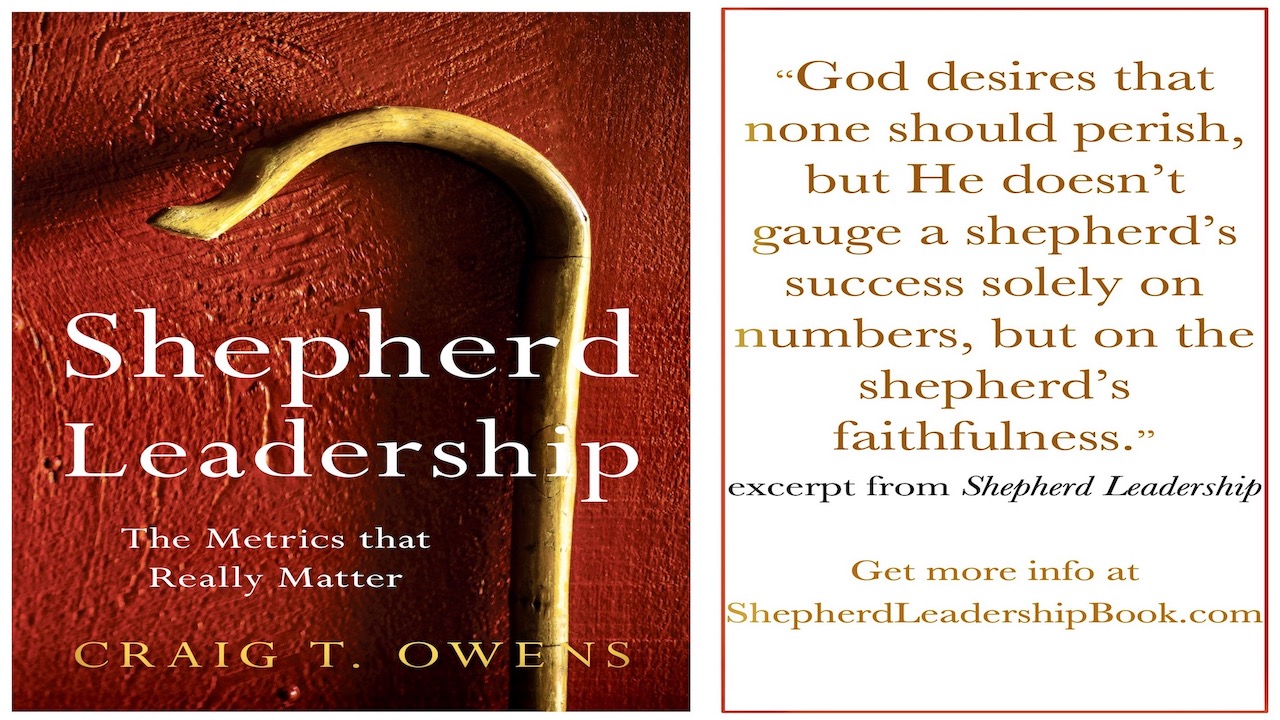
UPDATE: This post was one of the seed thoughts that went into fashioning my book Shepherd Leadership: The Metrics That Really Matter.

Thursdays With Oswald—The Etceteras

This is a weekly series with things I’m reading and pondering from Oswald Chambers. You can read the original seed thought here, or type “Thursdays With Oswald” in the search box to read more entries.

The Etceteras 

     Do you regard yourself as a highly respectable, dignified Christian? Are you religiously self-important, placing yourself where you fancy you ought to be placed, in stately surroundings? If so, you are not following Jesus Christ’s example. 

     If you cannot do ordinary things and live as nobody anywhere, you are not a saint. Jesus left Heaven and lived nowhere of any importance all His earthly life. There is a religiosity that is inspired by the devil, that gathers its skirts around it and says, “No, I cannot be in ordinary places, or in ordinary avocations; I am a servant of God.” Then you will be found nowhere but in the very commonest of common places.

     You say you are called to be a missionary, a minister, a Christian worker: you are called to be a disciple of Jesus Christ, other things are etceteras

From God’s Workmanship 

I can think of only one reasonable response to this: I need to go look in the mirror and ask the Holy Spirit to show me where I’ve been more focused on the etceteras than I have on being a disciple of Jesus Christ.

Labor Of Love

Labor of loveGod is not unjust; He will not forget your work and the love you have shown Him as you have helped His people and continue to help them. (Hebrews 6:10)

I don’t work for God’s blessings. I work for God because He has already blessed me! My labor is a labor of love and gratitude!

How do I show I love God?

I help others.

Not just once, but continually. In the next two verses the writer of Hebrews goes on to say that my labor of love should be:

  • Diligent
  • Sincere
  • For as long as I’m alive
  • Without any laziness
  • Through faith
  • With patience

No coasting. No waiting for others to serve me first. No slacking.

God has blessed me so that I can be a blessing to others. This is how I show my gratitude for the blessings of God I have been given—

HARD WORKING LOVE

For those who have been loved by God there’s no other way to live and love.