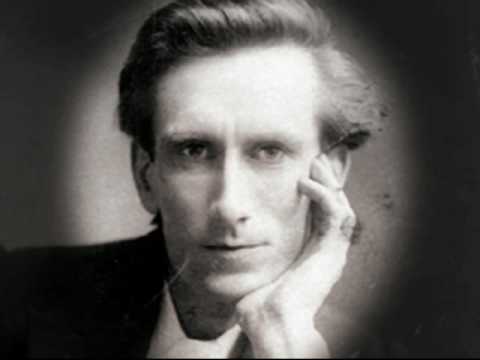
He Shall Glorify Me (book review)

He Shall Glorify MeI am continually astounded at the insight Oswald Chambers has on the Scripture and its practical applications to our lives! In He Shall Glorify Me, Chambers elaborates on the immensely important role the Holy Spirit plays in the lives of Christians.

The title of the book is taken from a statement Jesus made about the Holy Spirit: He will glorify Me because it is from Me that He will receive what He will make known to you (John 16:14). Chambers begins with the advent of the Holy Spirit, leads us through a thorough doctrine of the Spirit, and then shares practical applications for Spirit-directed living.

These were originally lectures he gave at college, then they were turned into articles for a magazine, and finally complied into a book form. As far as we know, Oswald Chambers didn’t plan for these lectures to be published as a book, so he had no say in a proposed title. But the title—He Shall Glorify Me—is perfect, as every single lecture/chapter shows us how the Holy Spirit wants to bring out of our lives only what will bring glory to Jesus.

For anyone serious about allowing the Holy Spirit to work more deeply in their lives, He Shall Glorify Me is an indispensable resource.

Growing Pains

Listen to the podcast of this post by clicking on the player below, and you can also subscribe on AppleSpotify, or Audible. 

I remember when I was a teenager having such an ache in my legs at night. I’d be laying on my bed trying to sleep, but I couldn’t get comfortable because of that dull, unrelenting ache in my legs. I’d go ask my Mom what was going on, and her reply was simple: “Those are growing pains.”

In order to grow in any area of our lives—physically, emotionally, mentally, relationally—we have to go through a certain amount of pain.

No pain, no gain.

The process is not always a lot of fun, but that’s why we have to keep our eyes on the goal. The process may not be something we like, but the end results will make the pain worth it.

For instance, you may not like dieting but you like the weight loss or lower cholesterol numbers, so you stick with it. You may not like saying, “I’m sorry, I was wrong, please forgive me” but you like the healed relationship, so you say it.

Throughout the New Testament the phrase one another is frequently used to address how members of the Body of Christ should relate to each other. God desires that all of us operate interdependently with one another. In order to get there, we must get ready for some growing pains!

In Ephesians 4:2, Paul tells us what is required to get to a place of unity and maturity in the Church:

  • Be completely humble (the King James Version says lowliness). This Greek word means not letting our thoughts rise far from the ground. In other words, we are thinking of ourselves as God thinks of us, not independently as a self-made man or woman, but viewing all of my success as God-appointed. This process toward interdependence starts in our thoughts—in our attitudes about ourselves and about others.
  • Gentle means strength under control. Gentleness says, “I could do this, but for your sake I won’t.”
  • Patient interaction (KJV: longsuffering) with others is allowing them the freedom to grow just as others allowed me the freedom to grow.
  • Bearing with one another in love. Think of a load-bearing wall in a building that is holding up the weight of the roof and walls. When we bear with one another we are helping to share the burdens.

Being humble with ourselves and gentle and patient with others is the way we go through the growing pains of bearing with one another in love. The process may not be a lot of fun, but the end result is something that glorifies God, that’s why we must stick with one another through all our growing pains.

Check out all of the other messages in our series Live Together by clicking here.

►► Would you please prayerfully consider supporting this ministry? My Patreon supporters get behind-the-scenes access to exclusive materials. ◀︎◀︎

The Domineering Pastor

I wrote to the church, but Diotrephes who loves to be first, will have nothing to do with us. (3 John 9)

The King James Versions says that Diotrephes loveth to have the preeminence. He loved his title, his position of authority, and having everything in the church flow through him.

He wanted not only to approve who spoke in the church, but even with whom church people could socialize outside of church. He wielded his positional authority like a sword and cut off people from the fellowship of the church if they didn’t join lockstep with him.

He used fear and intimidation to demand people follow him, and wouldn’t receive a loving letter from the Apostle John. To counteract any who would question him, Diotrephes engaged in gossip and character assassination of any he perceived to be a threat to his position as pastor.

For shame! 

This type of attitude has no place in the Body of Christ, especially among the pastorate! Jesus came to serve, and taught us to do likewise. Jesus didn’t snuff out the smoldering wick or stomp on the bruised reed, but ministered lovingly to all. Peter told shepherds to never use their position to lord it over others.

My fellow pastor, having the title of pastor doesn’t mean I’m the smartest person in the room, or that I have all the answers. I am one member of the Body of Christ. Each member of the Body needs all the other members of the Body. I should humbly serve, never demanding allegiance to me or blind obedience to my wishes. I should never try to hide behind my title, but be the most transparent, the most willing to admit my mistakes, and the first to forgive and to ask forgiveness.

Lord, guard my heart against the spirit of Diotrephes!!

UPDATE: This is one of the seed thoughts that went into my book Shepherd Leadership.

World Changing

John Newton

You are coming to a King,

Large petitions with you bring

For His grace and power are such

None can ever ask too much.

John Newton

Are you praying largely?

I want to pray world-changing prayers!

Thursdays With Oswald—Sanctified Specimens

This is a weekly series with things I’m reading and pondering from Oswald Chambers. You can read the original seed thought here, or type “Thursdays With Oswald” in the search box to read more entries.

Sanctified Specimens

     May God save us from the selfish meanness of a sanctified life which says, “I am saved and sanctified, look what a wonderful specimen I am.” If we are saved and sanctified we have lost sight of ourselves absolutely, self is effaced, it is not there. 

     …We are saved and sanctified for God, not to be specimens in His showroom, but for God to do with us even as He did with Jesus, makes us broken bread and poured-out wine as He chooses. 

From Bringing Sons Unto Glory

The apostle Paul said it this way, “You were bought with a price [purchased with a preciousness and paid for, made His own]. So then, honor God and bring glory to Him in your body” (1 Corinthians 6:20, AMPC). And he wrote later, “God paid a high price for you, so don’t be enslaved by the world” (1 Corinthians 7:23, NLT).

If God has changed you, don’t try to remain a specimen on the shelf, don’t posture and pose. In fact, stop thinking about how good you look because that only glorifies you.

Instead, let God by glorified as you allow Him to use you as a living, breathing example of how He can totally change someone’s life.

Life Together

Life TogetherOne of the things that stands out so clearly about the first century church is this—they really liked being around each other! Even though the early Christians faced persecution, rejection by the Jewish religious leadership, and even martyrdom, they truly enjoyed a special bond with one another.

In fact, that’s the key phrase: one another. The New Testament says they were devoted to one another, they helped one another, they prayed with one another, they confessed their sins to one another, they opened up their homes to one another, and on and on. This doesn’t mean they were without problems and personality clashes at times, but they found that one another was so much more enjoyable and productive than being on their own.

This Sunday at Calvary Assembly of God as I begin a brand new series called Enjoying Life Together With One Another. If you missed any of the messages, you can check them out here:

Holocaust Remembrance Week

Reagan quote at Holocaust MuseumOne of the more sobering times of my week in Washington, D.C., was the afternoon we spent at the Holocaust Museum. The dehumanizing atrocities perpetrated by one group of people on another group of people is almost unimaginable.

And yet there it was—all the nauseating evidence of man’s evil right before my eyes. It was so overwhelming that I had to hurry past the final exhibits.

Commander of the Allied Forces Dwight Eisenhower wrote to George C. Marshall, the chairman of the U.S. Joint Chief Of Staff—

“…the most interesting—although horrible—sight that I encountered during the trip was a visit to a German internment camp near Gotha. The things I saw beggar description. While I was touring the camp I encountered three men who had been inmates and by one ruse or another had made their escape. I interviewed them through an interpreter. The visual evidence and the verbal testimony of starvation, cruelty and bestiality were so overpowering as to leave me a bit sick. In one room, where they were piled up twenty or thirty naked men, killed by starvation, George Patton would not even enter. He said that he would get sick if he did so. I made the visit deliberately, in order to be in a position to give first-hand evidence of these things if ever, in the future, there develops a tendency to charge these allegations merely to ‘propaganda.’” (emphasis added)

A statement from President Ronald Reagan, from 1988, is etched on the wall of the Holocaust Museum—

“We who did not go their way owe them this: We must make sure that their deaths have posthumous meaning. We must make sure that from now until the end of days all humankind stares this evil in the face … and only then can we be sure that it will never arise again.” (emphasis added)

The rise to power of the Nazis was swift. Their evil was initially unopposed. Few voices spoke out, and even few were heeded. We must never allow this to happen again!

As George Santayana said, “Those who do not learn from history are doomed to repeat it.” As revolting as it is, we must learn from this lesson. You must look this evil in the face. You must allow your children to look this evil in the face. If we don’t, we will be doomed to live through these unthinkable atrocities all over again.

12 Quotes From “Altar Ego”

Altar EgoI loved reading Altar Ego (you can read my full book review by clicking here), but here are some quotes that especially caught my attention. Unless otherwise noted, these quotes are from Craig Groeschel—

“Don’t rely too much on labels, for too often they are fables.” —Charles Spurgeon

“When God helps you overcome a destructive label, He’ll often do what He did through Peter. He will take one of your greatest weaknesses and turn it into one of your greatest strengths. It has been said that our weakness is our genius—our greatest struggle often yields the greatest opportunity for our growth.”

“If you don’t know the purpose of your life, all you can do is misuse it. …Life with no purpose is life without meaning. When you don’t know the purpose of your life, everything you do is just an experiment. You just try on one thing after another, always hoping that the next shiny thing that catches your attention will finally be the one thing that makes a difference. …You are God’s masterpiece. Wouldn’t it make sense to ask God what you should do with your life? …The fact that God made you in this way tells us something else very important about your life. You have everything you need to do everything God wants you to do.”

“So are you spiritually soaring or are you crawling right now? If you feel like you’re still on the ground, then it’s time you realized that God wants you to fly. You’re not just another average, run-of-the-mill Christians barely making it. No, if you’re a Christian, then there is nothing regular about you. You must understand that you are filled with the same Spirit that raised Christ from the grave, and there’s nothing ordinary about that! You have access to the very throne of God; that’s not regular! You have authority to use the Name that is above every name, the name of Jesus Christ. There is nothing regular about you.”

“Why does generation after generation of intelligent adults make similar decisions every day? It’s simple. We allow our out-of-control, fleshly desires to overwhelm our better senses. We allow our egos, instead of our altar egos, to drive our desires. …The world offers substitutes for (or counterfeits of) real things: physical pleasures, materials things, pride in what we have and what we do. Before long, our sinful desires for the counterfeits of this world lure us into short-term decisions with long-term consequences. …So how do we move from living like the crowd? How do we overcome the cultural pull toward immediate ego gratification? We pursue God with all our hearts until His desires become our desires. …Our demanding egos become altar egos, with our selfish impatience sacrificed for something greater.”

“Integrity doesn’t come in degrees: low, medium, or high. You either have integrity or you don’t.” —Tony Dungy

“I’m convinced that the reason our culture is known worldwide as a place of dishonor is that we, as a culture, have dishonored God. All true honor is born out of a heart surrendered to the King of Kings. Psalm 22:23 says, ‘You who fear the Lord, praise Him! All you descendants of Jacob, honor Him! Revere Him, all you descendants of Israel!’ Our culture tends to treat God as common. We’re too familiar with Him. We refer to Him as ‘the Man Upstairs’ or ‘the Big Guy,’ or we say things like ‘Jesus is my homeboy.’ Jesus is not your homeboy. He is the soon-to-return, ruling, reigning King of Kings and Lord of Lords. He is the Alpha and Omega. When He returns, it will be with a sword. He is the Righteous One who shed His blood so that we would live. We have to stop treating God as common or ordinary.”

“Gratitude kills pride. Gratitude slays self-sufficiency. Gratitude crushes the spirit of entitlement. When we place our discontented egos on the altar of gratitude, we develop contented altar egos filled with thanksgiving.”

“So often fear keeps our egos front and center and in need of reassurance from other people or from our possessions or titles. But when we lay our egos on the altar of belief, our altar egos become liberated to live by faith and not by fear.”

“I believe Christians often perceive obedience to God as some test designed just to see if we’re really committed to Him. But what if it’s designed as God’s way of giving us what’s best for us?”

“Bold obedience triggers opposition. …If you’re not ready to face opposition for your obedience, you’re not ready to be used by God. When you obey God, opposition comes. Instead of smooth sailing, you may have to swim upstream in choppy water.”

“When we spend time with God, it leads to faith, which leads to boldness, which leads to results, which leads to more desire for Him, and more faith and more boldness and more glory to our Father.”

Reflections On Washington

US Capital BuildingMy oldest son is graduating from high school this year, and my wife and I wanted to take him on a special trip for spring break. So we spent the week touring Washington, D.C.

I have never visited our nation’s capital before, and after being there, I’m sorry that I didn’t make that trip earlier! I am bit of a history buff, so seeing all of the historical landmarks and learning more about the people who contributed to the success of America was amazing!

Here are a few reflections I have from my time…

I need to be more grateful. So many people have sacrifice so much for me to enjoy the freedom I could easily take for granted, if I’m not careful.

I need to study more. Our history is so rich! For me it’s fun to learn about the men and women of our past, but it’s more important than that. If we don’t learn the lessons of the past, we are doomed to repeat the same mistakes of the past.

I need to pray more. Our elected officials face an enormous challenge each and every day. Scripture is clear that prayer for those in our government commanded of us, but the Bible also says that praying for them is beneficial for us.

I need to learn more about Cedar Springs history. The great men and women of American history weren’t all born in Washington, D.C., nor did they all live or work there. I live in a community of hard-working, innovative, passionate individuals. The next Lincoln, or Jefferson, or Jay, or Webster might be right here in my community, and I want to be prepared to support them.

I need to visit Washington again soon. For three solid days we took in everything we possibly could, and we hardly scratched the surface. I can’t wait to go back to learn more!

Altar Ego (book review)

Altar EgoCraig Groeschel is an amazing communicator! Partly because he shares the truth without watering it down or over-complicating it, and partly because he is so transparent with us. Altar Ego is a practical look at how and why God wants to “altar” our perception of ourselves.

The title of the book is not a misprint: Craig persuasively makes the case that we need to bring our view of ourselves to God’s altar so He can alter how we view ourselves. In the opening pages, Craig describes it this way—

If you’ve ever felt insecure, inadequate, or insufficient, this book is for you. Chances are good that you are like most of us. You attempt to draw worth or value from the wrong places. You’re inclined to believe what others say about you over what God says about you. You say you believe one thing but privately live out of a double-standard set of beliefs. If you call yourself a Christian, you probably hope to live a life pleasing to God but often find yourself trying to please others or yourself. If you can relate, I’ve got good news. You are not yet you you are supposed to be. 

Altar Ego is divided into three sections. In the first section you will learn how God sees you; in the second section you will learn how to live altarnative values to those the culture promotes; and in the final section you will discover a newfound boldness that comes with seeing yourself as God sees you.

Because of Craig’s easy-to-read style, and his forthrightness about his own shortcomings, you will not feel like these concepts are too complicated or only reserved for those who are more spiritual than you. Even if you don’t feel “insecure, inadequate, or insufficient,” there is still a lot to learn from Altar Ego.

I am a Zondervan book reviewer.