Dads: Godly Influencers

Godly Influencer - fathers dayIt’s hard work being a Dad!

  • We have to be tough enough to kill spiders, yet tender enough to attend a princess tea party.
  • We have to bring home the bacon, yet not eat too much bacon so our cholesterol doesn’t get out of control.
  • We have to know the strategy of football, and the scoring for competitive cheerleading.
  • We have to be strong and gentle, smart and compassionate.
  • We have to climb the ladder at work, and build a solid foundation at home.
  • We have to knock down our competitors, and build up our children.

The Bible has a lot to say to encourage Dads to do all of these things, and to become the godly influencer God wants us to be in all aspect of our lives.

Please join me this Sunday as we learn from a man in the Bible who had everything to lose at work by doing things God’s way. Yet he chose God’s way and reaped some amazing results. Hope to see all the Dads this Sunday at 10:30am.

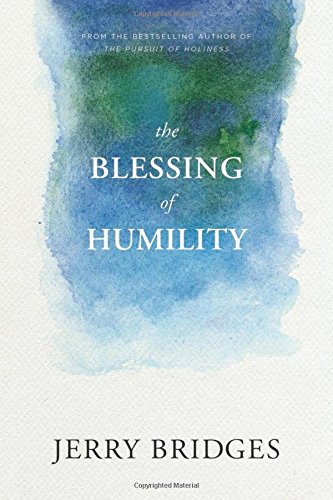
Jon Bloom On Humility

Jon Bloom“Humble people view other people as God’s marvelous image-bearers, windows to God’s glory, not as mirrors that enhance or diminish their own self-image. But this also means they aren’t absorbed by how others view them. …

“Humble people are unusually unaffected by this pressure to conform. They can be hard to categorize because they often don’t fit neatly into any cultural mold. They tend to eschew using trendy fashions or interests or social media as means of personal branding. They have preferences about those things, but they hold those preferences as ways of enjoying God’s manifold goodness rather than image-enhancers. …

“One of the things that can surprise us about truly humble people, which can sometimes be mistaken for pride, is that they can be quite offensive. Humble people, being without guile, say it like it is. And saying it like it is can sting, and even sound condemning. … But there is a qualitative difference between the offensiveness of the proud and the offensiveness of the humble. The proud offend to exalt or defend themselves and control or manipulate others. The humble offend in order to advance the truth for the glory of God and ultimate good of others. Humble offensiveness may not be popular, but it’s always loving.” —Jon Bloom

10 Quotes On The Difference Between Christianity And Islam

Nabeel Qureshi wrote a couple of outstanding books to help those in the West better understand Islam (Seeking Allah, Finding Jesus and Answering Jihad).

Answering JihadIn Answering Jihad, Nabeel invests several chapters in looking at the differences between Christianity as displayed in the Bible and Islam as displayed in the Quran. Here are some of the more noteworthy quotes I pulled from this book. The references in parenthesis in these quotes are references to a chapter and verse in the Quran.

“Christians believe Jesus is God, but the Quran is so opposed to this belief that it condemns Jesus worshipers to hell (5:72).”

“According to Jesus, God is our Father, yet the Quran very specifically denies that God is a father (112:1-4).”

“Islam roundly condemns worship of the Trinity (5:73), establishing in contrast its own core principle of Tawhid, the absolute oneness of God. Tawhid emphatically denies the Trinity, so much so that it is safe to say the doctrine of God in Islam is antithetical to the doctrine of God and Christianity. … The Trinity teaches that God is not a person, but three Persons: Father, Son, and Spirit. To assert that the God of Islam is the same person as the God of Christianity becomes almost nonsensical at this point, as the Christian God is tripersonal, two persons of Islam specifically denies in the Quran.”

“The Trinity is an elaboration of Jewish theology, not a rejection. By contrast, Tawhid is a categorical rejection of the Trinity, Jesus’ deity, and the Fatherhood of God, doctrines that are grounded in the pages of the New Testament and firmly established centuries before the advent of Islam. The earliest Christians were all Jews, incorporating their encounter with Jesus into their Jewish theology. Nothing of the sort is true of Muhammad, who was neither a Jew nor a Christian. Islam did not elaborate on the Trinity but rejected and replaced it.”

“Christians worship the triune God: a Father Who loves unconditionally, a Son Who incarnates and Who is willing to die for us so that we may be forgiven, and an immanent Holy Spirit Who lives in us. This is not who the Muslim God is, and it is not what the Muslim God does. Truly, Tawhid is antithetical to the Trinity, fundamentally incompatible and only similar superficially and semantically. Muslims and Christians do not worship the same God.”

“The warfare the Quran commands is not due to any evil action, but rather due to the beliefs of non-Muslims, such as the Christian belief that Jesus is the Son of God (9:29, 30).”

“Warfare in the Old Testament is not about subjugating inferior peoples. Yahweh does not promise the Jews that they are the best of people and that their enemies are less than they are. He makes this quite clear in Deuteronomy 9:4-6. … The Quran, by contrast, envisions Muslims as the best people: ‘You are the best of all people, evolved for mankind’ (3:110). It teaches that Jews and Christians who do not convert to Islam are the worst of all creation: ‘Those who do not believe [in Islam] from among the Jews and Christians and the idolaters will go to hell. They are the worst of creatures’ (98:6; see 98:1-5 for context). This is why the Quran in 9:33 commands Muslims to fight Jews and Christians, so that Allah may cause Islam ‘to prevail over all religions.’”

“Muhammad’s life moved from peaceful to violent in a crescendo, reflecting the trajectory of the Quran, and he died just after conquering the Arabian Peninsula. His words in the canonical collections were, ‘I have been ordered by Allah to fight against the people until they testify that none has the right to be worshiped but Allah and that Muhammad is Allah’s messenger. … [O]nly then will they save their lives and property from me’ (Sahih Bukhara 1.2.25). Muslims are commanded to follow Muhammad’s example, and his example was jihad.

“By contrast, the stories in the Old Testament do not enjoin Jews or Christians to fight today. Though commands to fight are recorded in the text, no Jew or Christian is commanded to memorialize these battles as ongoing conduct. They were a part of the history of Israel, certainly, not a mandate or continuing command going forward.”

“Violence has a very different place in Islam and Christianity’s theological frameworks. The final marching order of Islam is jihad. The final marching orders of Christians are grace and love.”

But I especially love this thought from Nabeel: “One can both love Muslims and insist that the God they worship is not the same as the Christian God.” Amen!

Other quotes from Answering Jihad are here and here.

Additional quotes from Seeking Allah, Finding Jesus are here.

5 Quotes On Love’s Endurance From “The Seven Laws Of Love”

The Seven Laws Of Love

In The Seven Laws Of Love, Dave Willis gives us some highly practical, biblically-based counsel for investing in all of our relationships. Normally when I share quotes from books, I share all of them at once, but for this book I felt like it would be good to share these quotes a bit more slowly, to give you time to read them and apply them.

The seven laws Dave identifies are:

  1. Love requires commitment (read the quotes here)
  2. Love selflessly sacrifices (read the quotes here)
  3. Love speaks truth (read the quotes here)
  4. Love conquers fear (read the quotes here)
  5. Love offers grace (read the quotes here)
  6. Love brings healing (read the quotes here)
  7. Love lives forever

From law #7, here are some quotes on how love lives forever—

“Make a deliberate decision right now to stop wasting time and start putting first things first. Give the very best of yourself to your loved ones, not the leftovers after you’ve given your best to everyone and everything else.”

“Don’t take yourselves too seriously, but don’t take your commitments too lightly. Live life with conviction and purpose, but make plenty of room for fun. Laughter should be the soundtrack of your relationships.”

“Fight for each other, but never fight against each other. In every disagreement, remember that your relationship is much more important than whatever you’re arguing about.”

“Love isn’t a story with a happy ending. Love is a story with no ending!”

“Don’t treat others the way they treat you; treat others the way God treats you.”

Check out my review of The Seven Laws Of Love by clicking here.

7 Quotes On Healing From “The Seven Laws Of Love”

The Seven Laws Of Love

In The Seven Laws Of Love, Dave Willis gives us some highly practical, biblically-based counsel for investing in all of our relationships. Normally when I share quotes from books, I share all of them at once, but for this book I felt like it would be good to share these quotes a bit more slowly, to give you time to read them and apply them.

The seven laws Dave identifies are:

  1. Love requires commitment (read the quotes here)
  2. Love selflessly sacrifices (read the quotes here)
  3. Love speaks truth (read the quotes here)
  4. Love conquers fear (read the quotes here)
  5. Love offers grace (read the quotes here)
  6. Love brings healing
  7. Love lives forever

From law #6, here are some quotes on healing—

“Love requires vulnerability, and when we feel like we’ve been in an exposed position and then experienced rejection, our defense mechanisms can actually work against us and sabotage our current relationships. We tend to militantly safeguard certain parts of ourselves in order to prevent the same kind of humiliation or rejection we have felt in the past.”

“The more you love someone, the more ability that person will have to hurt you; but until you give a person the ability to hurt you (vulnerability), you’ll never be able to truly experience love. This reality keeps some people from wholeheartedly committing to a relationship, because they’re trying to protect their hearts from being wounded again. But if were not careful, our wounds from the past can create new wounds in the present. It is a catch-22 that can keep us in perpetual dysfunction in our relationships until we become intentional about healing from the past and moving forward in a healthy way.”

“Sometimes we can subconsciously do things to make ourselves seem ugly or intimidating to drive people away, because were afraid if we let others close to us, we’ll only be hurt again. This kind of behavior might give us the illusion of power and safety that comes from isolation, but it will also hold us captive in a prison of solitude where we never experience true love. Whatever you may have done or whatever may have been done to wound you in the past, healing is possible. God wants you to live a life of love. He wants you to experience rich, meaningful relationships. He wants to bring you to a place of healing so you can experience life and love in all of its fullness.”

“Healing from a broken heart isn’t the result of mere time and effort. It comes when we put our trust in the Healer of our hearts.”

“Don’t let your love be an unspoken assumption. Make sure your loved ones know exactly how much you love them because your words and actions make it clear.”

“An encounter with Jesus always has the power to bring healing. When love is present, healing is present. It won’t always look miraculous, but it will always make a difference.”

“Sometimes God uses prayer to change the situation, and sometimes He uses prayer to change our own perspective about the situation, but either way, He’s always doing something positive through prayer.”

Check out my review of The Seven Laws Of Love by clicking here.

Watch for the last set quotes from the other laws of love explained in this book later this week.

Thursdays With Oswald—Is Jesus Worth It?

Oswald ChambersThis is a weekly series with things I’m reading and pondering from Oswald Chambers. You can read the original seed thought here, or type “Thursdays With Oswald” in the search box to read more entries.

Is Jesus Worth It? 

     With regard to all the pleasures and sciences and interests of this life, push this simple consideration, “Is this the kind of thing the Son of God is doing in the world, or is it what the prince of this world is doing?” Not, “Is it right?” but “Is it the kind of thing the Son of God would be doing in the world?” If it is not, then don’t touch it. 

     If you only give up wrong things for Jesus Christ, don’t talk any more about being in love with Him. If you want to do a thing all the time, it is no virtue not to do it! Jesus Christ takes the “want to” out of us and enables us to do in this world the things He would be doing if He were here. 

     We say, “Why shouldn’t I? It isn’t wrong!” What a sordid thing to say! When we love a person, do we only give up what is wrong for him? Love is not measured by what it gets, but by what it costs, and our relationship to Jesus Christ can never be on the line of, “Why shouldn’t I do this?” Our Lord simply says, “If any man will be My disciple, those are the conditions” (see Luke 14:26-27 and 33). Is He worth it?

From The Psychology Of Redemption

What do you think: Is Jesus worth it?

8 Quotes From “The Mathematical Proof For Christianity”

The Mathematical Proof For ChristianityDan Delzell uses not only math, but many other sciences as well to give some great conversation-starters. Check out my full review of his book by clicking here.

“I live in Nebraska where I serve as a pastor. Imagine someone covering this entire state in silver dollars 6 feet deep. Then mark one coin and bury it anywhere across the state. Next, blindfold a man and have him choose one coin. The odds that he would choose the marked coin are the same odds as getting 8 prophecies all fulfilled in one man. God fulfilled about 300 prophecies in the Person of Jesus Christ. … There is no way one man could have fulfilled all 8 of these prophecies unless God was making it happen. Who else controls history? Who else could give us such irrefutable proof for Christianity? The odds are one in one hundred quadrillion. Here is what that number looks like: 1 in 100,000,000,000,000,000. (This mathematical proof was calculated by Professor Peter Stoner.)”

“What if jurors were presented with 300 pieces of evidence that all pointed to the same person, just like the 300 biblical prophecies all point to Christ. And so you see, you really can come face to face with reality, logic, reason, facts, evidence, and mathematical certainty before you decide whether to accept or reject the Bible.”

“The excessive skepticism shown toward the Bible by important historical schools of the eighteenth and nineteenth centuries, certain phases of which still appear periodically, has been progressively discredited. Discovery after discovery has established the accuracy of innumerable details, and has brought increased recognition to the value of the Bible as a source of history.” —William Albright, biblical and archeological scholar who mastered more than 26 ancient and modern languages 

“The order is for Christianity is: (1) Evidence; (2) Faith; and then (3) Assurance. Christianity stands upon evidence. It is personally received through faith that Jesus died for your sins on the Cross. It brings comforting assurance to those who have stepped out in faith to trust Christ. You will never have the assurance of salvation until you take a step of faith based on the evidence.”

“Jesus didn’t come here to merely provide man with one more option.”

“It may be stated categorically that no archeological discovery has ever controverted a single biblical reference. Scores of archeological findings have been made which confirm in clear outline or in exact detail historical statements in the Bible.” —Nelson Glueck, Jewish archeologist

“Archeological work has unquestionably strengthened confidence in the reliability of the scriptural record.” —Millar Burrows, University of Yale archeologist

“In addressing the manuscript evidence for the New Testament, John Warwick Montgomery correctly states that ‘to be skeptical of the resultant text of the New Testament books is to allow all of classical antiquity to slip into obscurity, for no documents of the ancient period are as well attested bibliographically as the New Testament.’”

5 Quotes On Grace From “The Seven Laws Of Love”

The Seven Laws Of LoveIn The Seven Laws Of Love, Dave Willis gives us some highly practical, biblically-based counsel for investing in all of our relationships. Normally when I share quotes from books, I share all of them at once, but I felt like it would be good to share these quotes a bit more slowly, to give you time to read them and apply them.

The seven laws Dave identifies are:

  1. Love requires commitment (read the quotes here)
  2. Love selflessly sacrifices (read the quotes here)
  3. Love speaks truth (read the quotes here)
  4. Love conquers fear (read the quotes here)
  5. Love offers grace
  6. Love brings healing
  7. Love lives forever

From law #5, here are some quotes on grace—

“If we deserved forgiveness, it wouldn’t be called grace. If we can earn it, it wouldn’t be real love.”

“Jesus was the perfect embodiment of both love and truth. He never told a lie, but at the same time He was never cruel or judgmental with the truth. Every word He spoke was wrapped in love, so even when the truth hurt, He never broke anyone’s trust. Jesus not only modeled how to speak the truth in love, but He also showed us how to offer grace when trust is broken. … Jesus loved Peter enough to give him the opportunity to be forgiven and rebuild trust. That opportunity for grace wasn’t an exclusive offer for Peter; it’s an opportunity God freely extends to all of us who have broken trust (which is everybody). It’s also a command. We can’t receive God’s grace without being willing to extend grace to others.”

“Some people get stuck in a cycle of grudges and mistrust because they wrongly assume that forgiveness and trust are the same thing. It’s vital that we understand their distinctions. Forgiveness can’t be earned; it can only be given freely. That’s why it’s called grace. Trust, however, can’t be given freely; it can only be earned. When someone breaks your trust, you should give your forgiveness instantly, but give your trust slowly as it is earned through consistency of actions by whoever broke your trust. During this period of rebuilding, fight the urge to punish or retaliate. Those actions won’t do anything to promote healing, and healing always needs to be our ultimate objective. Love, after all, is a healing force. You don’t have to trust someone in order to forgive, but you do have to forgive someone in order to make trust possible again.”

“When you’ve broken trust, you must be willing to take immediate action to rebuild it. When someone has broken your trust, you must be willing to provide that person the opportunity to rebuild. Giving someone the chance to reestablish trust is one of the most loving acts you can do for someone.”

“Our responses to present difficulties will often determine our level of future opportunities.”

Check out my review of The Seven Laws Of Love by clicking here.

Watch for the last few quotes from the other laws of love over the next couple of days.

The Mathematical Proof For Christianity (book review)

The Mathematical Proof For ChristianityThe Mathematical Proof For Christianity by Dan Delzell is really just one part of the big picture he presents. Dan uses mathematics, archeology, textual examination, logic, and sound semantics to present a compelling case for the authenticity of Scripture, and the Deity of Jesus Christ. But Dan is quick to add, “Mathematical proof for Christianity is powerful. But without faith in Christ, all the proof in the world won’t save your soul and bring you to heaven one day.”

If you are already a Christian, this book will do much to help you “be prepared to give an answer” (1 Peter 3:15) to seekers and skeptics. But I think the greatest value of this book would be as a conversation-starter with those who are seekers and skeptics. Giving them a copy of this book to read along with you will be a great way to have a meaningful conversation about your faith in Jesus. The subtitle of this book is “along with other reasons to believe,” and Dan does give many, many reasons.

No book written by a man will convince anyone to place their faith in Jesus (only the Bible can truly do that), but The Mathematical Proof is well-grounded in Scripture to help you use it as an effective tool in sharing your faith.

Check it out!

Lifewalk 2016


2016 LifeWalkAlpha Family Center provides some amazing services for families in Cedar Springs. Every year on the Saturday before Father’s Day they hold their annual Lifewalk fundraiser.

I would be most appreciative if you would consider giving a financial gift to support Alpha. You can donate via PayPal by clicking on the “Donate” tab to the right of this post. I promise you that all of the money you give will go toward promoting pro-life and pro-family work in Cedar Springs.

Thank you!