Thursdays With Spurgeon—The Life-Changing Power In The Bible

This is a weekly series with things I’m reading and pondering from Charles Spurgeon. You can read the original seed thought here, or type “Thursdays With Spurgeon” in the search box to read more entries.

The Life-Changing Power In The Bible

     When the Spirit came with His divine life and quickened the entire Book to my newly enlightened soul, the inner meaning shone forth with wondrous glory. … Whatever I found to be in His Word, I received with intense joy. … Moreover, I have found that those points of my character that were most weak have been strengthened, while strong passions have been subdued, evil propensities have been kept under, and new principles have been implanted. I am changed; I am as different from what I was as a man could be who had been annihilated and had then been made over again. Nor do I claim any of the credit for this change—far from it. God has done great things for me, but He has done the same for others and is willing to do it for any soul who seeks His face through Jesus Christ and His great atoning sacrifice. …  

     An idea has long possessed the public mind that a religious man can scarcely be a wise man. It has been the custom to talk of infidels, atheists, and deists as men of deep thought and comprehensive intellect, and to tremble for the Christian controversialist as if he must surely fall by the hand of his enemy. But this is purely a mistake, for the gospel is the sum of wisdom, an epitome of knowledge, a treasure house of truth, and a revelation of mysterious secrets. In it we see how justice and mercy may be married; here we behold inexorable law entirely satisfied and sovereign love bearing away the sinner in triumph. Our meditation upon it enlarges the mind, and as it opens to our soul in successive flashes of glory, we stand astonished at the profound wisdom manifest in it.

From The Autobiography Of Charles Spurgeon 

As Spurgeon experienced, all Christians can experience. Think about this—the same Holy Spirit that inspired the written words of the Bible is the same Holy Spirit in you that can illuminate and apply the words of the Bible to your life! 

Bible-reading, Spirit-empowered Christians should be the most informed, creative, wise people you will ever meet. Not because they have studied nature, but because they are getting to know Nature’s God intimately. The Creator can open up the mysteries of creation better than any scientist or philosopher. 

But we don’t read the Bible just to know God’s Word, but we read the Bible to get to know the God revealed in the Word. He said He would reveal Himself to those who earnestly seek for Him. Ask the Holy Spirit to open your eyes, your mind, your heart as you read your Bible. 
9 Quotes From “Shepherding God’s Flock”

T.M. Moore has given pastors a phenomenal training resource in Shepherding God’s Flock. Please be sure to check out my full book review by clicking here. 

“The work of church leaders today—and especially of that class of leaders called elders, with which this study is concerned—has been shaped and conditioned more by the temper of our times than by the teaching of God’s Word.” 

“According to Paul, any church that does not have in place elders—and other leaders working with them—who are functioning as shepherds is a church that is not in order.… A church without a strong ministry of shepherding is a flock without genuine pastoral care, oversight, and equipping. It may be very active, even happy, and may be ‘growing’ in what some consider impressive ways. But without shepherding as the framework and integrating dynamic, such a church will always be something less than what God intends.” 

“Where the work of shepherding is being faithfully pursued, the gospel goes forth with power, lost sheep are located, and the flocks of God grow as He adds new souls to the fold.” 

“Where faithful shepherds are at work, the Lord’s sheep will be well fed. Both milk and the meat of the Word will be their daily diet, according to the needs and callings of each. Well-fed sheep are healthy, strong, and fruitful in their own contributions.” 

“The work of shepherding begins in relationships of mutual love and trust, spiritual friendships where sheep and shepherd know, love, and care about one another.” 

“Only when the people feel known and loved, and only when they know and love those who are called to lead them—only then will they be willing to follow where the shepherds of the church are seeking to take them.” 

“In the Christian life, people tend to live up to or achieve, not the level of their abilities, for their abilities are virtually limitless, given the presence of the indwelling Spirit of God. Rather, they tend to live up to the level of their vision—of what they see for their lives in Christ. Unless we are leading them into God’s vision for their lives, the people of God will settle for something less than the prize of the upward call of God in Christ Jesus.” 

“When temptation arises we can follow one of two courses. Either we will fall through temptation into sin, or we will grow through temptation into a higher stage of sanctification. … The shepherd’s task is twofold: first, he must help the Lord’s sheep to recognize temptation, by grounding them firmly in the law and Word of God; second, he must equip and encourage them in finding the way of escape from temptation, so that they may grow as the Lord intends.” 

“Jesus’ approach to bearing witness was thus energetic, proactive, continuous, compassionate, and pioneering. Should we expect anything less from the shepherds He has left to bring other lost sheep into His fold?”

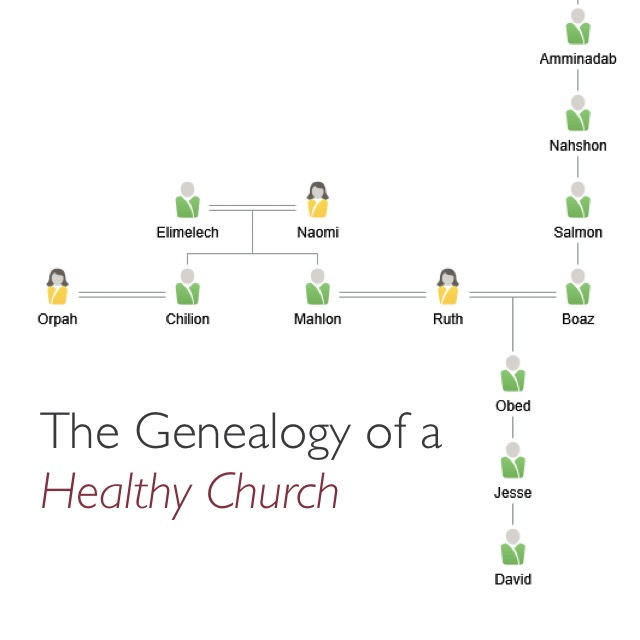
The Genealogy of a Healthy Church

And the things you have heard me say in the presence of many witnesses entrust to reliable people who will also be qualified to teach others. (2 Timothy 2:2)

Paul list four generations in this healthy church—Paul ➡️ Timothy ➡️ faithful Christians ➡️ others. 

We all have a role to play, and every role is vital in a healthy church. Are you a…

Paul: a first generation Christian that needs to start the ball rolling?

Timothy: one who needs to pass along what you have learned to the next generation?

faithful Christian: someone that is actively living out what has been taught to you?

member of the Body of Christ: one that needs to reach out to someone who isn’t a part of the Body yet?

Every single role is indispensable if the Church is going to remain healthy. If any part of this genealogy is lost, the whole Church suffers.

Shepherding God’s Flock (book review)

T.M. Moore founded the Fellowship of Ailbe, a ministry patterned after the example of the Irish Christians who kept the spread of the Gospel alive during history’s dark times. A key component of the Fellowship’s ministry is the equipping of pastors for their tasks, and Shepherding God’s Flock masterfully lays out the role of pastors like few other resources. 

Throughout the Scriptures, God uses the picture of a shepherd caring for his sheep as a consistent image of how God cares for His people, and how He desires for pastors/elders to care for those under their care as well. God has stern warnings for shepherd-leaders who misuse or abuse their positions, but He also showers His blessings on those shepherd-leaders whose hearts beat with God’s heart. David talked lovingly of the Lord being our Shepherd, Jesus called Himself the Good Shepherd, and the Apostle Peter called for elders in the church to shepherd the flock under their care. 

Shepherding God’s Flock helps pastors work through the practicalities of their shepherding role. And I do mean work through these concepts. This book is as much a workbook as it is a textbook. T.M. Moore gives valuable insights for pastors, but he intersperses penetrating discussion questions throughout his teaching. You will also need to keep your Bible handy while reading Shepherding because Moore will send you to passage after passage to undergird the principles he is teaching. 

I can’t recommend this book highly enough to both current pastors and those preparing to enter into pastoral ministry. It would probably be a good idea for lead pastors to read this book alongside their elder/deacon boards. 

As Moore notes in his closing words, “Shepherding is the work God has chosen for the care and nurture of His flocks. We’ve neglected this ministry for too long. Let us resolve to bring the work of shepherding to bear on the task of building Christ’s Church.” 

To that, I add my hearty “Amen!”

Hidden Treasure And One Valuable Pearl

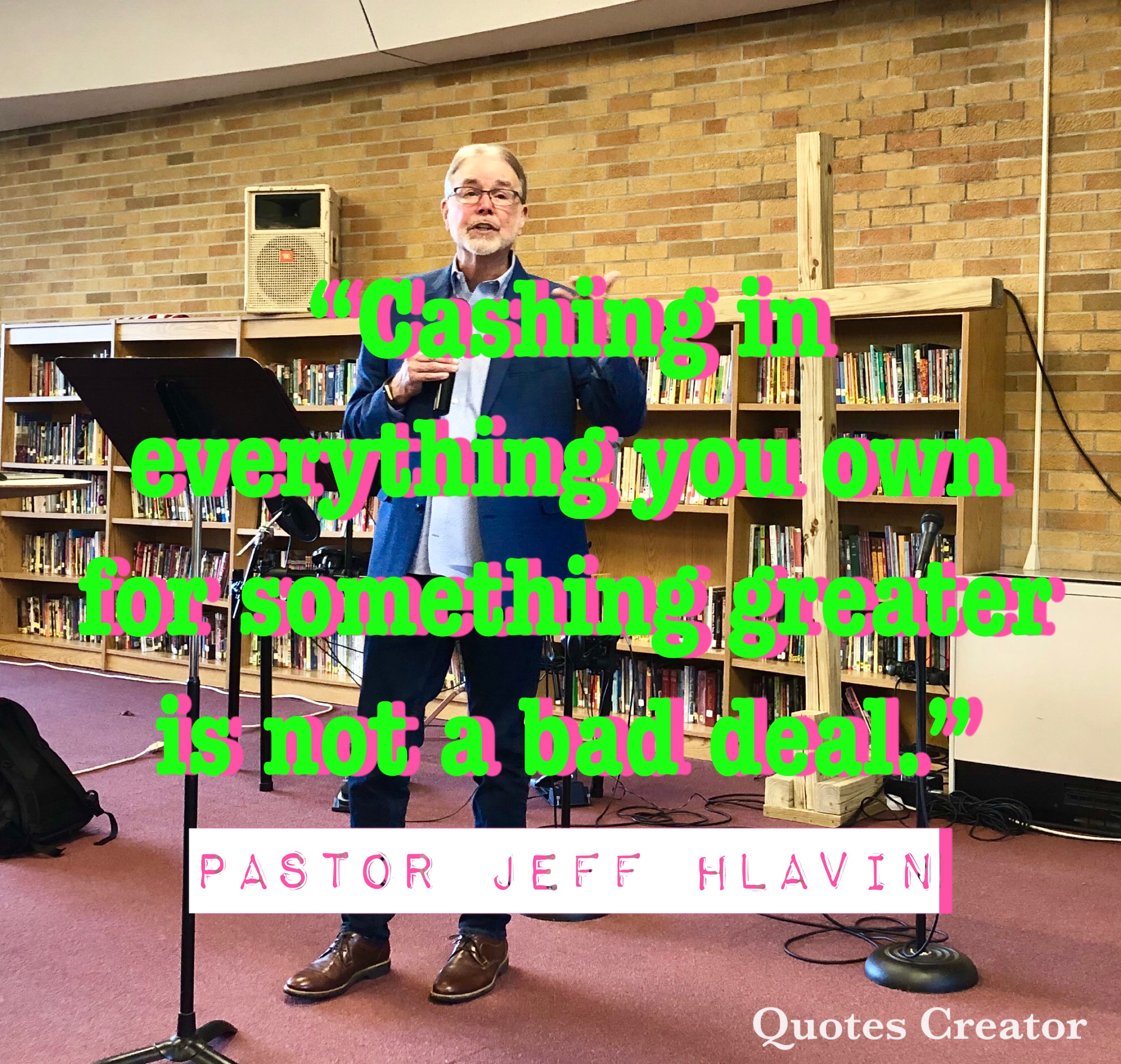
I am always blessed to sit under the ministry of Jeff Hlavin! These are some of my notes from his message Calvary Assembly of God on Sunday, but you really should watch the whole message. 

The kingdom of heaven is like a treasure hidden in the field, which a man found and hid; and from joy over it he goes and sells all that he has, and buys that field.  Again, the kingdom of heaven is like a merchant seeking fine pearls, and upon finding one pearl of great value, he went and sold all that he had, and bought it. (Matthew 13:44-46)

There are at least two possible perspectives about the meaning and the application of these two parables:

First Perspective: Jesus is the One who finds and seeks. 

The field is the world, and Jesus paid the price for the whole field/world to be His. 

Second Perspective: We are the ones doing the discovering. 

Jesus provides Himself as the Treasure of treasures. So taking up our cross to follow Him is not a morbid thing. There is overwhelming joy because of the extravagant treasure that is ours when we do so! 

1. It’s about our response to discovering His Kingdom.

2. It’s about our appropriate response to His Kingdom.

3. It’s about the whole-hearted appropriate response which the Kingdom of God requires.

4. It’s about the value of His Kingdom.

5. It’s about the primacy of His Kingdom.

Three Observations:

Both individuals are alike in that…

  1. Both of them know there is more to life than what they have. Neither one of them considers what they’re doing as a sacrifice because of what they’re gaining! 
  2. Both of them recognize what is missing when they find it.
  3. Both of them recognize that what they have found is of far more inestimable value than everything else they have.

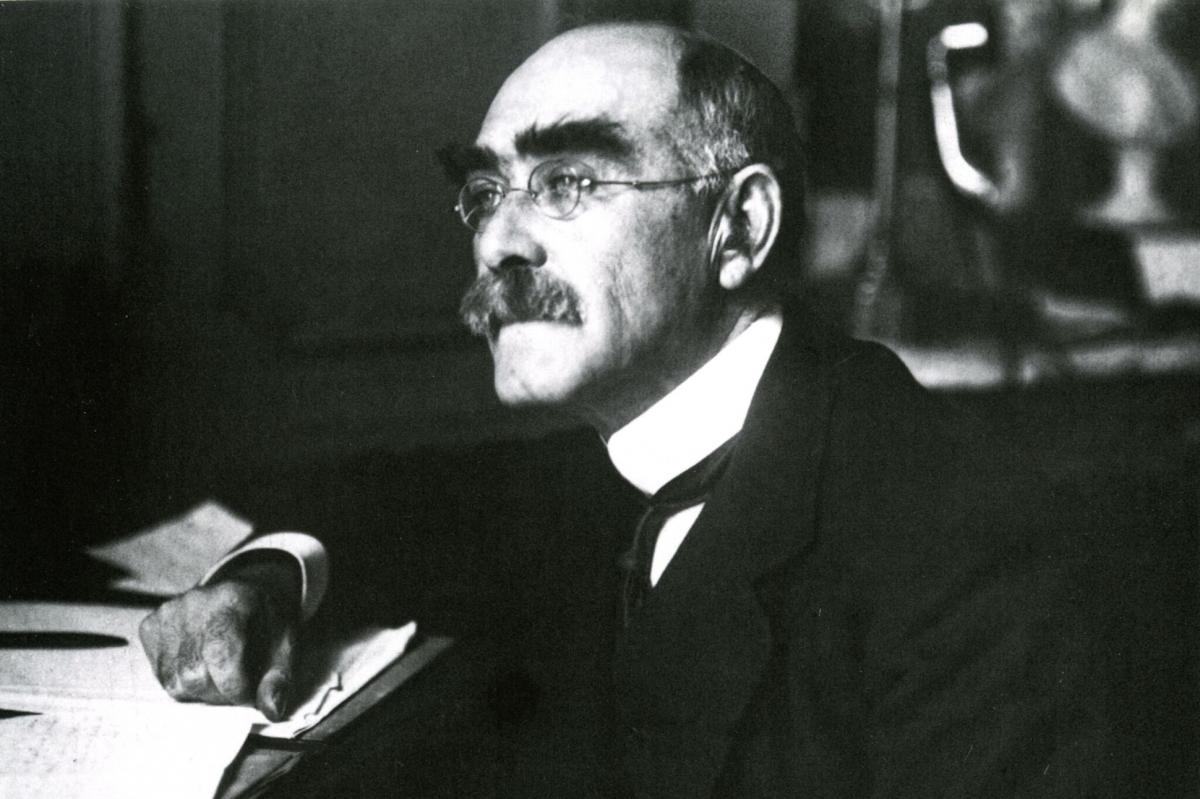
Poetry Saturday—If

If you can keep your head when all about you   
    Are losing theirs and blaming it on you,   
If you can trust yourself when all men doubt you,
    But make allowance for their doubting too;   
If you can wait and not be tired by waiting,
    Or being lied about, don’t deal in lies,
Or being hated, don’t give way to hating,
    And yet don’t look too good, nor talk too wise:

If you can dream—and not make dreams your master;   
    If you can think—and not make thoughts your aim;   
If you can meet with Triumph and Disaster
    And treat those two impostors just the same;   
If you can bear to hear the truth you’ve spoken
    Twisted by knaves to make a trap for fools,
Or watch the things you gave your life to, broken,
    And stoop and build ’em up with worn-out tools:

If you can make one heap of all your winnings
    And risk it on one turn of pitch-and-toss,
And lose, and start again at your beginnings
    And never breathe a word about your loss;
If you can force your heart and nerve and sinew
    To serve your turn long after they are gone,   
And so hold on when there is nothing in you
    Except the Will which says to them: ‘Hold on!’

If you can talk with crowds and keep your virtue,   
    Or walk with Kings—nor lose the common touch,
If neither foes nor loving friends can hurt you,
    If all men count with you, but none too much;
If you can fill the unforgiving minute
    With sixty seconds’ worth of distance run,   
Yours is the Earth and everything that’s in it,   
    And—which is more—you’ll be a Man, my son! —Rudyard Kipling