


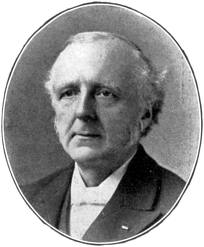
 “Think how often Jesus, during His earthly ministry, put others in a position to command Him. ‘As Jesus and His disciples were leaving Jericho,’ Jesus stopped and responded to two blind men who had called out to Him. ‘What do you want Me to do for you?’ (Matthew 20:29, 32). It was as though He said, ‘I am yours to command.’ Could we ever forget how Jesus yielded the keys to His resources to the Greek woman from Syrian Phoenicia because of her reply to Him? In effect, He told her to help herself to all that she needed (see Mark 7:24-30). What human mind can fully realize the total significance of the lofty position to which God lovingly raises His little children? He seems to be saying, ‘All My resources are at your command.’ And I will do whatever you ask in My name (John 14:13).” —F.B. Meyer
F.B. Meyer On The Access God Gives Us
June 30, 2016 — Craig T. OwensThursdays With Oswald—Thinking Like Christians
June 30, 2016 — Craig T. Owens This is a weekly series with things I’m reading and pondering from Oswald Chambers. You can read the original seed thought here, or type “Thursdays With Oswald” in the search box to read more entries.
Thinking Like Christians
The New Testament insists on an instructed mind as well as a vital experience. …
There is always a quarrel between our common sense and the revelations made in God’s Book. We must lose our soul in order to find it. We have to be born from above and receive the Holy Spirit into our spirit, and then begin to construct another soul, or way of reasoning, and to do this we must accept not only the facts that come to us through our common sense, but the facts that come by revelation. We say seeing is believing, but it is not. We must believe a thing is possible before we should believe it even though we saw it (John 20:29). …
Our beliefs will mock us unless something comes into us from God, because nothing has any power to alter us save the incoming of the life of God. The Holy Spirit is the One Who makes experimentally real in us what Jesus Christ did for us. … The great need for men and women is to receive the Holy Spirit. Our creeds teach us to believe in the Holy Spirit; the New Testament says we must receive Him (Luke 11:13). Are you powerless in your life? Then, for Christ’s sake, get at Reality! Ask God for the Holy Spirit. …
We starve our minds as Christians by not thinking, and we cannot think as Christians until we are born from above. So many of us have a good spiritual experience, but we have never thought things out on Christian lines. It is just as true that a man may live a Christian life without thinking as that a man may think a Christian life without living it. We have to learn to combine the two, and to do this we must build up our minds on these great truths.
From The Psychology Of Redemption
How are you doing at thinking AND living a Christian life? To do both, you must receive the Holy Spirit, and begin to rely on Him for both Christian thinking and living.
Bernard Of Clairvaux On Discontentment
June 29, 2016 — Craig T. Owens “It is natural for a man to desire what he reckons better than that which he has already, and be satisfied with nothing which lacks that special quality which he misses. Thus, if it is for her beauty that he loves his wife, he will cast longing eyes after a fairer woman. If he is clad in a rich garment, he will covet a costlier one; and no matter how rich he may be he will envy a man richer than himself. … No matter how many such things one has, he is always lusting after what he has not; never at peace, he sighs for new possessions. Discontented, he spends himself in fruitless toil, and finds only weariness in the evanescent and unreal pleasures of the world. In his greediness, he counts all that he has clutched as nothing in comparison with what is beyond his grasp, and loses all pleasure in his actual possessions by longing after what he has not, yet covets. … They wear themselves out in vain travail, without reaching their blessed consummation, because they delight in creatures, not in the Creator.” —Bernard of Clairvaux
20 Useful Maxims
June 29, 2016 — Craig T. Owens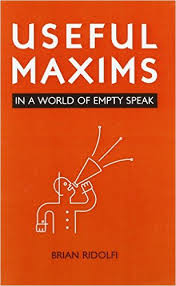 I thoroughly enjoyed reading Useful Maxims by Brian Ridolfi (check out my review of his book by clicking here). Here are 20 of Brian’s useful maxims that caught my highlighter.
- Going to church is good; going to God is better.
- Progress is not good if you are progressing in the wrong direction.
- Good demeanor does not validate bad behavior.
- Broken commandments break down integrity.
- The Bible’s meaning is not hidden from men; men hide from its meaning.
- Actions are better indicators of character than rhetoric.
- The indifferent make no difference.
- Remaining weak takes strength. It takes power not to use power.
- Great men step in when everyone else steps out.
- Moral arguments which are entirely material are entirely immaterial.
- Peacemakers and saltshakers dispense enrichment.
- A grudge will keep you deep in sludge. Points of contention are points of retention.
- Revenge is hard to reverse.
- Never put faith in people who have no faith.
- Everything goes when anything goes.
- Your sin is not just your problem.
- Parental neglect prompts government parenting.
- Where no one fears God, everyone fears man.
- The right battle is lost with the wrong weapon.
- Insecurity secures instability.
Watch for more maxims soon. Or follow me on Twitter and Tumblr to read some of Brian Ridolfi’s maxims.
T.M. Moore On Using Time
June 28, 2016 — Craig T. Owens “We measure time, from the human perspective, in various ways—seconds, minutes, days, weeks, months, years, and so forth. But these are not true quantitative measurements of some material quantity—like a half gallon jug measures a certain amount of milk. Our measures of time are more on the order of estimates (as we think of the future), experiences (with respect to the present), and records (as we think about the time that is gone by).
“All time comes from the Word of God (John 1:1-3), is sustained by the Word of God (Hebrews 1:3), and returns—like the talents in Jesus’ parable—to its Creator and true Owner (Romans 11:34-36). There is as yet no future time, and the time we’ve used up is gone forever; we cannot return to it. Every moment of your time comes fresh from the Word of God, and returns immediately to Him for His review.
“The only time we ever have is the present moment, and each of those is supplied for us, as an act of free grace, by the eternal God and His Word.” —T.M. Moore
Useful Maxims (book review)
June 28, 2016 — Craig T. OwensKing Solomon had his maxims—Wounds from a friend can be trusted, but an enemy multiplies kisses. Benjamin Franklin had his maxims—A stitch in time saves nine. And now Brian Ridolfi gives us a book of fresh Useful Maxims.
Maxims are short, catchy, and very memorable; a brief, succinct statement that captures profound wisdom in a way that’s easy to recall at the appropriate time. Parents, teachers, pastors, and coaches have all sought ways to get their message across to their young charges, and have those messages come back to the forefront of their mind at crucial moments. This is where an appropriate maxim can be so helpful.
Useful Maxims is organized in broad chapter headings, and then the individual maxims are grouped together in various sub-headings throughout each chapter. Most of them are short—He who exalts himself halts himself—but occasionally Brian shares a short parable along with its memorable meaning.
If you are involved with instructing others, and want to find a way to have your point “stick” in their memory, Useful Maxims will become an invaluable, go-to tool for your lesson plans.
The Power To Overcome Sexual Temptation
June 27, 2016 — Craig T. Owens “It’s not easy to overcome recurring sexual temptation. That’s because sexual sin is, at the most basic level, an illegitimate way of fulfilling a deep and legitimate human need: the need for love and intimacy.” —Focus On The Family
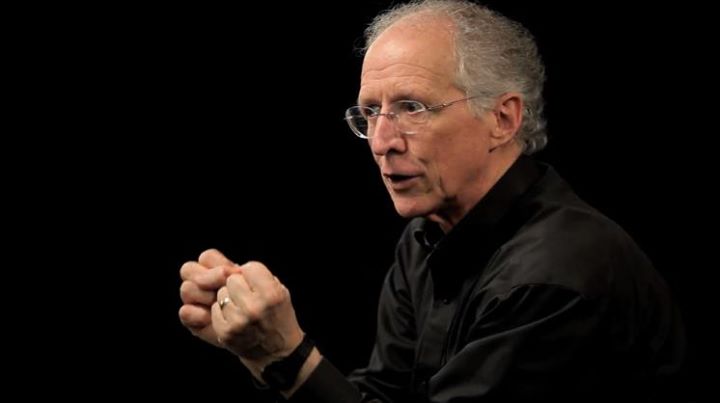 “Here is the secret of the power of faith to break the enslaving force of sinful attractions. If the heart is satisfied with all that God is for us in Jesus, the power of sin to lure us away from the wisdom of Christ is broken.” —John Piper
12 Blessings While Going Through A Valley
June 27, 2016 — Craig T. OwensListen to the podcast of this post by clicking on the player below, and you can also subscribe on Apple, Spotify, or Audible.
 Valley times come to all people. Even Christians.
The Songs Of Ascent in the Psalms imply this, since the pilgrims are ascending from a valley to the place of worship in Jerusalem. But this idea of going through a valley is especially seen in Psalm 121.
The psalmist starts by saying I lift my eyes up to the hills. He then sings that he found his help in God. This idea of help is not what we think of in today’s world. It’s not like dialing 911, reporting our need, and waiting for help to arrive. It’s not even like driving to a hospital, checking into the emergency room, and waiting for a doctor to see us.
The idea of help in the Bible is a picture of surrounding. It’s not something we have to wait to arrive, but something—or should I say Someone—Who is already right there!
In verses 4-8, the phrase watch over is used five times. This too gives us the idea of the closeness of our help. The Hebrew word translated watch over has four powerful word pictures:
- A Gardener carefully watching over his precious garden.
- A Soldier dutifully guarding a valuable treasure.
- A Watchman diligently scanning the horizon for any approaching enemies.
- A Shepherd lovingly attending to his flock.
I especially like the picture of a shepherd because of another valley reference. The opening words to Psalm 23 are, “The Lord is my Shepherd.” Then we read of 10 blessings the Good Shepherd gives His sheep while they pass through the Valley of the Shadow of Death. Our Shepherd…
- Gives us His confidence so we will fear no evil
- Reveals His close, intimate presence
- Protects us with His rod
- Guides us with His staff
- Brings comfort to our hurts
- Provides us with food
- Anoints us with His blessings
- Pours out His overflowing blessings
- Allows His goodness and love to always follow us
- Gives us the assurance of eternal life
Then adding a couple of more blessings from Psalm 121, we see He…
11. Never lets our foot slip (121:3)
12. Never sleeps or slumbers, so that we can rest securely (121:3-4)
Remember these songs of ascent are sung by those coming out of the valley. They are sung to remind us of God’s deliverance, they are also sung as encouragement to those still in the Valley.
 Jesus went through the darkest Valley anyone has ever gone through. It wasn’t just the valley of the shadow of death, He went through death, hell, and the grave. He overcame for you and me! He now walks with us in our valleys. He says to us, “I’ve been there, done that, and have the scars to prove it. I will never leave you or forsake you. I know this valley. I know how to get you out of this valley. Trust Me!”
We, too, who have been through the valleys and are now singing the song of ascent, need to sing loudly for those who are still in the valleys. We need to sing songs of assurance to them: “I have been in that same valley. I know how dark it is. But I know God watched over me and brought me safely through. Now I have a much better vantage point. And I say to you, trust Him! He is watching over you too. He will not let your foot slip. He will not sleep or slumber. He will protect you, and anoint you, and feed you, and give you His own dear presence. Don’t stop walking!”
If you’ve missed any of the messages in this series, you can access the complete list by clicking here.
 ►► Would you please prayerfully consider supporting this ministry? My Patreon supporters get behind-the-scenes access to exclusive materials, like this recent post about building trust. ◀︎◀︎
Poetry Saturday—The Time For Faith To Shine
June 25, 2016 — Craig T. Owens
6 Quotes About Understanding Sexual Sin
June 23, 2016 — Craig T. OwensEarlier this week I shared some quotes from a Focus On The Family (FOTF) reading plan I completed on YouVersion regarding the problems with pornography. Here are some additional quotes from a related FOTF reading plan called Understanding Sexual Sin.
“Sexual sin distorts the image of the Trinity mirrored in our marital relationships.”
“If our sex lives are meant to function as reflections of the image of God, it stands to reason that they should be shaped by the qualities of the Trinity. Three primary principles apply here.
1) We may never use another person as an object, sexual or otherwise. The members of the Trinity never relate to each other as objects or things to be used. Instead, they relate to one another in love, each seeking to serve and enhance the goodness and glory of the others.
2) We must keep sexual relations within the bounds of a loving and committed marriage. … This sexual embrace within the bond of marriage mirrors the nature of the relationship between the members of the Trinity as nothing else in creation can. Ideally, the marital bond is designed to be loving, permanent, exclusive, and self-giving.
3) We must respect and honor the God-designed differences between male and female. Male and female are not simply cultural constructs. They are God-created characteristics of humanity. Together, they personify the Trinitarian nature of God in a fundamental way…. The differences between male and female provide the fullest picture of the image of God in creation.”
“Biblically speaking, sexual immorality (Greek porneia) is any sexual activity that takes place outside of marriage. This includes adultery, premarital sex, and extramarital sex. Scripture teaches that both are off-limits for Christians (see 1 Corinthians 6:9; Acts 15:29; Hebrews 13:4).”
“It’s a mistake to confuse normal sexual attraction with lust. Sexual attraction is natural. … True lust involves a choice and an act of the will. To a certain extent it’s a conscious decision to pursue the desirable object instead of simply allowing it to pass by. It’s a willingness to give in to the natural impulse.”
“Pornography represents a departure from God’s design for sex in that it depersonalizes real people, strips them of their dignity, and turns them into sexual objects.”
“It is never wise to give more weight to feelings than to rational conclusions and clear biblical teachings. Feelings don’t make you who you are. Beliefs, values, and conscious commitments do.”
My most-viewed posts


 Craig T. Owens