Mammon

It’s a funny-sounding word, but it has deadly consequences!

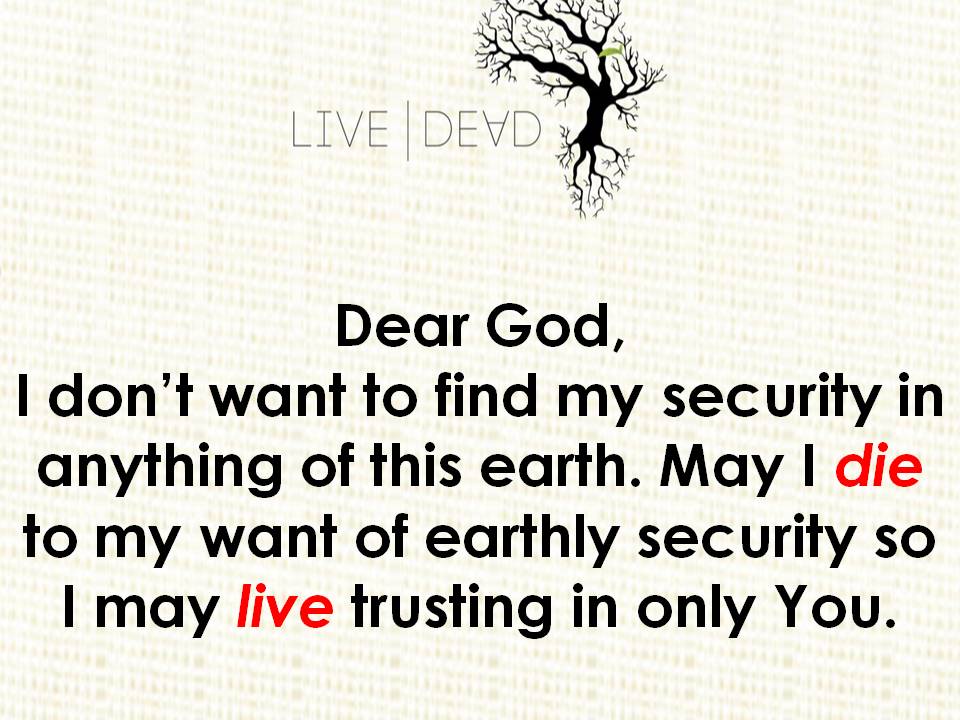
Jesus said we cannot serve both God and mammon (Luke 16:13 KJV). That word mammon had no direct translation in the English language, so the translators of the King James Version of the Bible simply did a transliteration: they took the Greek word and carried the same word into English. The translators of the New International Version did something different with this word: they made it Money, with a capital M.

The idea behind this word is placing our trust or reliance in anything except God. For us, the means of our security and basic living needs seems to be money, so Money (with a capital M) seems like an appropriate way to translate mammon.

Jesus recommended giving an offering—above and beyond our tithe—as a way to defeat the Mammon Monster. Giving our tithe is simply obedience to God’s commands. But giving our offering shows our trust in God’s provision.

Giving an offering to God is counterintuitive.

After all, less money is less than more money! If I receive money, I tend to hang on to it. I tell myself, “This might come in handy if the economy nosedives, or if something unexpected comes up.” When I start thinking this way, I start to make money Mammon, because I see money as my provider, instead of God.

What an appropriate way to wrap up our Live Dead series yesterday, as we made faith promises to God. We said, “God, I believe You will provide the amount of money I should give as an offering. And when You do provide, I promise to give it.” Placing my trust in God not only helps me to live dead to the pull of Mammon, but also Jesus promised—

Give, and it will be given to you. A good measure, pressed down, shaken together and running over, will be poured into your lap. For with the measure you use, it will be measured to you. (Luke 6:38)

I don’t give to get. I give because I trust God to provide.

P.S. By the way, all of the offerings that come in as a result of these faith promises will be going directly to missions. Calvary Assembly of God will not be keeping one cent of these faith promise offerings.

If you’ve missed any messages in our series called Live Dead, you can find them all by clicking here.

Preparing The Preacher

A friend of mine was preparing to preach his first sermon at a new church, and he was (as anyone might understand) nervous. He had all sorts of concerns: Is this the right word for this congregation? Will my thoughts make sense to them? Have I prepared enough for this message?

It was that last question that jogged my memory of a quote I had read from Oswald Chambers in his book Approved Unto God. The title of that book comes from a passage a Scripture in which preachers are told to correctly handle the Word of God as a worker that is approved unto God (2 Timothy 2:15).

Check out this pearl of wisdom:

“Keep yourself full to the brim in reading; but remember that the first great Resource is the Holy Spirit Who lays at your disposal the Word of God. The thing to prepare is not the sermon, but the preacher.” —Oswald Chambers (my emphasis)

God doesn’t need His Word prepared—it’s already perfect. But He does need to prepare me to deliver the message. He needs to remove my opinions, my preconceived ideas, my hang-ups with that particular passage, my hesitation to share it.

The Holy Spirit of God needs to prepare me. And I need to let Him do it.

It’s a heavy, awesome responsibility to be “the one” sharing God’s Word to a group of precious people. I dare not even attempt it unless I have let the Spirit prepare me first.

A Story About Choice

What an amazing story about Ryan Bomberger!

And don’t forget about October Baby opening in theaters on March 23 (you can read my review of the film here).

Thursdays With Oswald—Serving Like Christ

This is a weekly series with things I’m reading and pondering from Oswald Chambers. You can read the original seed thought here, or type “Thursdays With Oswald” in the search box to read more entries.

Am I Serving Like Christ?

The Son of Man did not come to be served, but to serve… (Matthew 20:28)

     Jesus also said, ‘Yet I am among you as the One who serves’ (Luke 22:27). Paul’s idea of service was the same as our Lord’s—‘…ourselves your bondservants for Jesus’ sake’ (2 Corinthians 4:5). We somehow have the idea that a person called to the ministry is called to be different and above other people. But according to Jesus Christ, he is called to be a ‘doormat’ for others—called to be their spiritual leader, but never their superior. Paul said, ‘I know how to be abased…’ (Philippians 4:12). Paul’s idea of service was to pour his life out to the last drop for others. And whether he received praise or blame made no difference. As long as there was one human being who did not know Jesus, Paul felt a debt of service to that person until he did come to know Him. But the chief motivation behind Paul’s service was not love for others but love for his Lord.

     …The institutional church’s idea of a servant of God is not at all like Jesus Christ’s idea. His idea is that we serve Him by being the servants of others. Jesus Christ actually ‘out-socialized’ the socialists. He said that in His kingdom the greatest one would be the servant of all (see Matthew 23:11). The real test of a saint is not one’s willingness to preach the gospel, but one’s willingness to do something like washing the disciples’ feet—that is, being willing to do those things that seem unimportant in human estimation but count as everything to God.

From My Utmost For His Highest

I cannot add anything to this brilliant observation. But I can tell you the parts that the Holy Spirit is really working in my heart:

  • “…called to be a ‘doormat’ for others—called to be their spiritual leader, but never their superior.” God, help me to keep my pride in check.
  • “The real test of a saint is not one’s willingness to preach the gospel, but one’s willingness to do something like washing the disciples’ feet.” May I never shrink back from willingly serving at the lowest level of society.

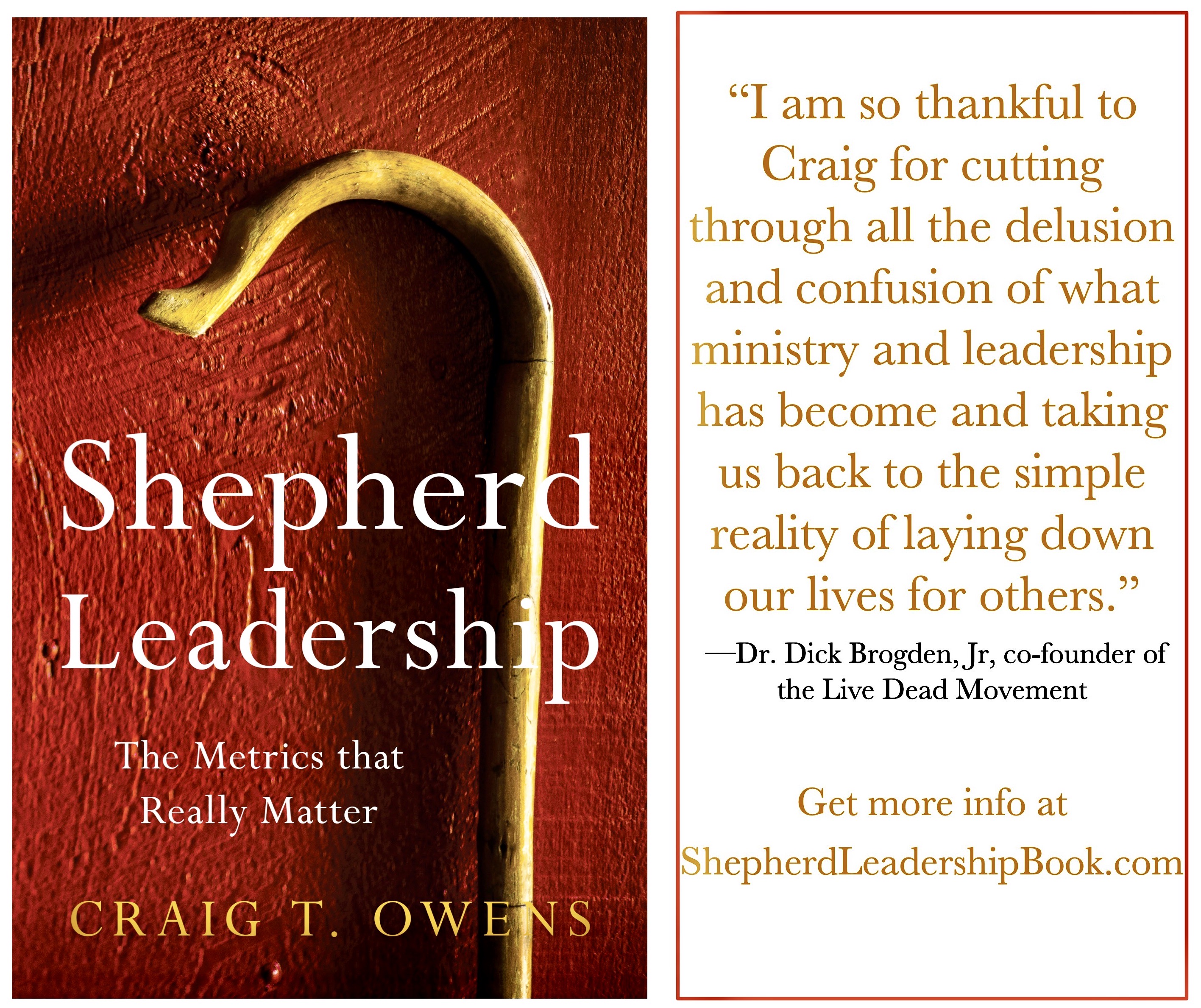
UPDATE: This idea of servant-leaders plays prominently in my book Shepherd Leadership: The Metrics That Really Matter.

God Wants Deeper Growth

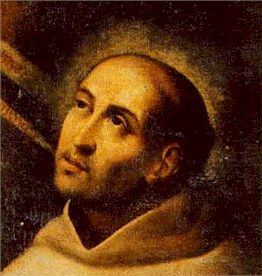
“After a soul has been converted by God, that soul is nurtured and caressed by the Spirit. Like a loving mother, God cares for and comforts the infant soul by feeding it spiritual milk. Such souls will find great delight in this stage. They will begin praying with great urgency and perseverance; they will engage in all kinds of religious activities because of the joy they experience in them. But there will come a time when God will bid them to grow deeper. He will remove the previous consolation from the soul in order to teach it virtue and prevent it from developing vice.” —John of the Cross

Not Playing It Safe

Listen to the podcast of this post by clicking on the player below, and you can also subscribe on AppleSpotify, or Audible.

Sometimes I like to think about counterfactual history. That means thinking about the “What ifs” of historical events. What if George Washington had been killed in battle? What if a congressman had voted a different way? And so on.

Here’s one I was thinking about as I read the Book of Acts: What if Paul had prayed, “God, keep me safe”?

Over the last few chapters of Acts, Paul has the opportunity to share the gospel with…

  • the Jewish Sanhedrin
  • Claudius Lysias, a Roman garrison commander
  • two Roman governors (Felix and Festus)
  • Ananias, the high priest in Israel
  • Tertullus, a noted attorney
  • King Agrippa and his wife Bernice
  • a Roman centurion named Julius
  • Publius, the chief Roman official on Malta
  • the leading Jews in Rome
  • and the Roman Caesar

That’s quite an impressive list! But here’s the deal: Paul only got to speak to these high-ranking and influential people because he was a prisoner.

Paul could have prayed for a “safe life.” He could have run away. He could have disobeyed. Instead, he was willing to let God use him anytime, anyplace, anyway.

Isn’t that really the opening line of the Lord’s Prayer? Your Kingdom come, Your will be done.

Is that what I really want?

Or do I want to play it safe?

Phillips Brooks had another thought about how we should pray:

“Do not pray for easy lives; pray to be stronger men. Do not pray for tasks equal to your powers; pray for powers equal to your tasks. Then the doing of your work shall be no miracle; but you shall be a miracle.”

I don’t want to play it safe. I want to be strong enough, obedient enough, and willing enough to let God use me anytime, anyplace, anyway. I hope you will join me in that prayer.

►► Would you please prayerfully consider supporting this ministry? My Patreon supporters get behind-the-scenes access to exclusive materials. ◀︎◀︎

The Perfection Of The Universe

Listen to the podcast of this post by clicking on the player below, and you can also subscribe on AppleSpotify, or Audible.

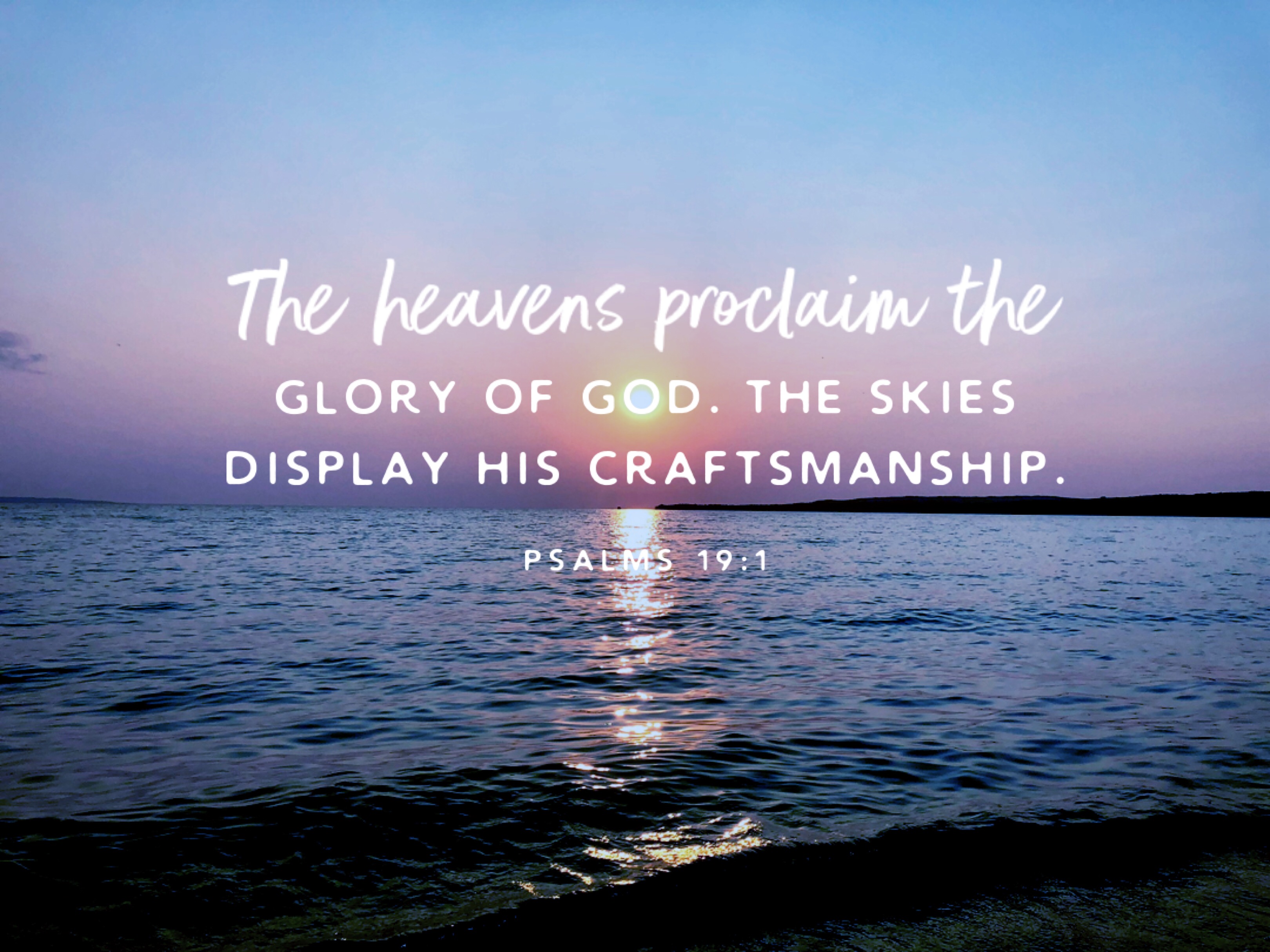
The heavens declare the glory of God; the skies proclaim the work of His hands. (Psalm 19:1)

I find it somewhat ironic that the scientists who study our universe, and constantly tell us how perfectly everything works, are the same men and women who claim that God is non-existent!

To look at the absolute intricacy of the universe … to ponder how everything works together just so … to study how the massive and the microscopic coordinate activities to create perfect balance … these things all seem to show the glory of God and the work of His hands.

How absolutely ludicrous to think that something so perfectly formed came about by accident. In fact, C.S. Lewis wrote this:

If the solar system was brought about by an accidental collision, then the appearance of organic life on this planet was also an accident, and the whole evolution of Man was an accident too. If so, then all our present thoughts are mere accidents—the accidental by-product of the movement of atoms. And this holds for the thoughts of the materialists and astronomers as well as for anyone else’s. But if their thoughts—i.e., of Materialism and Astronomy—are merely accidental by-products, why should we believe them to be true? I see no reason for believing that one accident should be able to give me a correct account of all the other accidents. It’s like expecting that the accidental shape taken by the splash when you upset a milk jug should give you a correct account of how the jug was made and why it was upset.

I have already written about God’s Big Hands, but also consider God’s amazing and perfect Creation:

  • Gravity: if the force or pull of gravity were to change by one quadrillionth of a percentage (that’s 0.00000000000001), the universe would cease to function the way it does now.
  • Electromagnetism: neutrons are 1.001 times the mass of the proton. If this weren’t so, all protons would decay into neutrons. Positive electromagnetism would be gone, leaving only negative. Again the universe would cease to function as it does now.

The more I study our universe, the more praise I give to our Creator! 

His wisdom created this amazing world in which we live, and all of His creation is joining together in contant praise. I don’t know about you, but I choose to join creation in its praise of our Creator.

►► Would you please prayerfully consider supporting this ministry? My Patreon supporters get behind-the-scenes access to exclusive materials. ◀︎◀︎

I-Have-To-Have-It Attitude

In our Live Dead series, we have been talking about different areas we need to allow to die, so that we might truly live for Christ as His disciples.

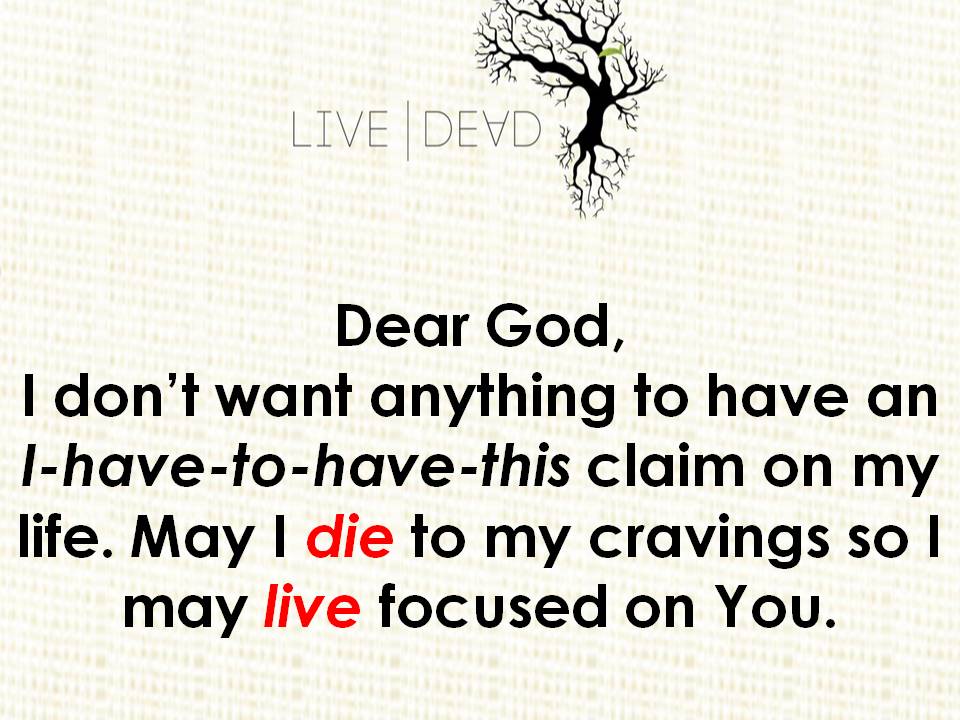
One of the things that often gets in the way of our pursuit of Christ is our cravings. This word—which the dictionary defines as a longing or an eager desire—has an interesting origin. The root word in both Latin and Old English means to lay claim to or to demand by right.

In other words, a craving is when something that was originally a want has now become a need in my mind. So I lay claim to it, saying that it’s something that is owed to me.

The Apostle Paul talks about cravings that we all had before we came to know Christ as Savior when he wrote, “All of us also lived among them at one time, gratifying the cravings of our sinful nature and following its desires and thoughts” (Ephesians 2:3).

This same Greek word shows up in Christ’s parable of the sower when He talks about the seed that falls among the weeds. These people, He explains, allow the worries of this life, the deceitfulness of wealth and the desires for other things come in and choke the Word (Mark 4:19).

Gratifying my cravings = Choking out the life of Christ in me

The problem is that this craving or desire for things other than Christ is often an unconscious habit. We have allowed them to become cravings—laying our claim to them as needs—without even realizing it.

The antidote: fasting. When we give up something, the Holy Spirit can show us if that thing has created an I-Have-To-Have-It attitude in our hearts. This spiritual discipline is hard because our bodies will rebel against having to give up “a right.” But when we press through with this discipline of fasting, God describes the results:

Then your light will break forth like the dawn, and your healing will quickly appear; then your righteousness will go before you, and the glory of the LORD will be your rear guard. Then you will call, and the LORD will answer; you will cry for help, and He will say: Here am I. (Isaiah 58:8-9)

That’s how I want to live! So I must live dead to my cravings. I can only do this when I allow a time of fasting to open my heart to hear the Holy Spirit point out all my I-Have-To-Have-It attitudes.

To check out all of the messages in our Live Dead series, please click here.

Prayer… Is The Act Of Dying

“We want to move closer to God, the source and goal of our existence, but at the same time we realize that the closer we come to God the stronger will be His demand to let go of the many ‘safe’ structures we have built around ourselves. Prayer is such a radical act because it requires us to criticize our world’s way of being in the world, to lay down our old selves and accept our new self, which is Christ. … Prayer therefore is the act of dying to all that we consider to be our own and of being born to a new existence which is not of this world.” —Henri Nouwen

Freedom Of Religion

This is not a political post. This is an urgent issue that should concern all Americans.

President Barak Obama’s Health and Human Services Secretary has issued a ruling which outlines her definition of how “Obama Care” must be implemented. In effect a single person’s decision, sanctioned by the president of the United States, has become an edict: a law that must be followed.

This is dangerous on so many levels! It violates everything our Founding Fathers tried to avoid when they wrote our Constitution. They wanted independence from a king who could make laws singlehandedly by edict. Therefore our Constitution was wisely designed with the checks-and-balances of the executive, legislative, and judicial branches all involved in every law.

This particular ruling by our HHS Secretary is dangerous. If we are silent and let this slide by unchallenged, it will lead to the undoing of our Constitution.

I don’t consider myself a political activist. And I don’t ever recall a time I have used my blog as an appeal to my readers to take any sort of political action. But we cannot remain silent on this!

One of the best websites to see the timeline of decisions, to read the HHS ruling, and to see how others are responding to this attack on our freedom is the Manhattan Declaration. Please visit this site and sign the petition. I would also encourage you to read and sign the Manhattan Declaration as well.

Do NOT remain silent on this!