Gaining Reason By Becoming Mad

An excerpt from Kahlil Gibran’s The Madman

Once there ruled in the distant city of Wirani a king who was both mighty and wise. And he was feared for his might and loved for his wisdom.

Now, in the heart of that city was a well, whose water was cool and crystalline, from which all the inhabitants drank, even the king and his courtiers; for there was no other well.

One night when all were asleep, a witch entered the city, and poured seven drops of strange liquid into the well, and said, “From this hour he who drinks this water shall become mad.”

Next morning all the inhabitants, save the king and his lord chamberlain, drank from the well and became mad, even as the witch had foretold.

And during that day the people in the narrow streets and in the market places did naught but whisper to one another, “The king is mad. Our king and his lord chamberlain have lost their reason. Surely we cannot be ruled by a mad king. We must dethrone him.”

That evening the king ordered a golden goblet to be filled from the well. And when it was brought to him he drank deeply, and gave it to his lord chamberlain to drink.

And there was great rejoicing in that distant city of Wirani, because its king and its lord chamberlain had regained their reason.

When I was in high school some of my peers from my “Christian” school were behaving in ways I thought un-Christlike. So I challenged them on their behavior. Their response was something like, “Quit being like John the Baptist—quit being so holier-than-thou. Why can’t you just go along with us?”

In other words, they were mad (in regard to biblical behavior) and they wanted me to drink from the same cup to ‘regain their reason.’

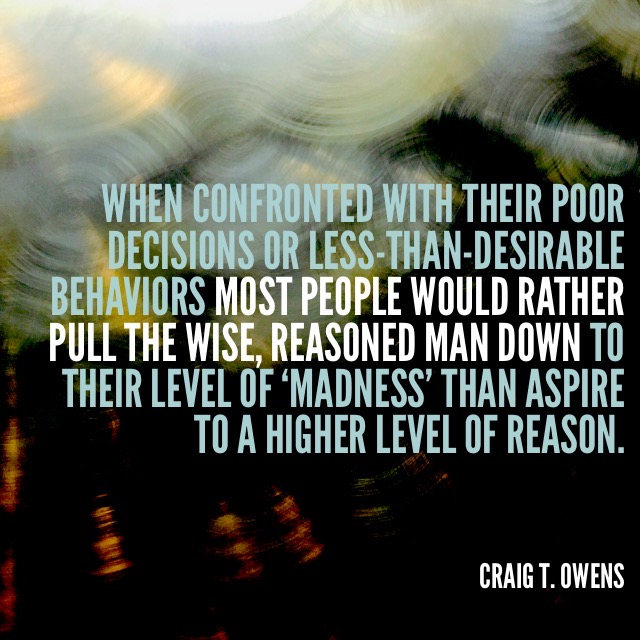
When confronted with their poor decisions or less-than-desirable behaviors most people would rather pull the wise, reasoned man down to their level of ‘madness’ than aspire to a higher level of ‘reason.’

Check out Erwin McManus’ thoughts on this, “When we live below a standard, it is simply human nature to redefine the standard as unreasonable and establish standards that our patterns are already accomplishing. We keep lowering the bar until we clear it.”

Instead, why don’t you raise your standard today? Don’t partake of the madness of others just to be accepted by them—you set the standard for decency, holiness, nobleness, self-sacrifice, self-control, and temperance!

Live right,
speak the truth,
despise exploitation,
refuse bribes,
reject violence,
avoid evil amusements.
This is how you raise your standard of living!
A safe and stable way to live.
A nourishing, satisfying way to live.
(Isaiah 33:15-16, Message)

Apples To Apples

As I was packing some sliced apples in school lunches I was contemplating the cliché about comparing apples-to-apples. We use this cliché when things are similar, or at least in the same category. If things are dissimilar or in different categories we might say we’re comparing apples-to-oranges.

If your life was in the “apple” category, to what other “apple” would you compare? Interesting question!

You are a unique individual. God has not made—ever—anyone like you, nor will He ever—in all of the future—make another “apple” like you. You are a one-of-a-kind, completely distinct from the 7 billion human beings on Earth right now. No one who has ever lived or ever will live is an “apple” like you.

So comparing yourself to anyone else is always an apples-to-oranges comparison.

Again I ask you to consider: to what other “apple” would you compare?

I believe the only other apple to which you can honestly and realistically compare yourself is: YOU! You can only compare yourself to the God-given potential in you. You are your own apple-to-apple comparison because no one else is in your category. God doesn’t expect you to be an Albert Einstein or a Winston Churchill or a Madam Curie—He just expects you to be you. To be the best you He created you to be.

Earnestly desire and zealously cultivate the greatest and best gifts and graces (1 Corinthians 12:31 AMP).

When you expect nothing less than your very best from yourself, you will help bring out the very best in others too. If your apples-to-apples comparison is just a you-to-you comparison, it relieves the pressure from others to compare their apple to your orange.

Look for the best in each other, and always do your best to bring it out (1 Thessalonians 5:15, The Message).

Check out these great quotes about doing your personal-apple-best

  • Doing your best is more important than being the best.” —John Wooden
  • “It was ever Alexander The Great’s nature, if he had no rival, to strive to better his best.” —Arrian
  • “From day to day I do the best I can and will continue to do so till the end.” —Abraham Lincoln
  • “One of satan’s wiliest tricks is to destroy the best by the good.” —E.M. Bounds
  • “To find the best in others, and to give of oneself; to leave the world a better place whether by a healthy child, a redeemed social condition, or a garden patch; to have lived your life with enthusiasm and to have sung with exaltation; and finally to know that one life has breathed easier because you have lived, that is to have been successful.” —Emerson

Do your personal-apple-best today, and stop comparing yourself to another’s orange. When you can do this you will find it easier to encourage others to do their personal-apple-best too.

Momisms

There are things that all moms say. And we’ve all heard these “momisms”—

  • Were you raised in a barn? Close the door!
  • If I’ve told you once I’ve told you a thousand times….
  • If you keep doing that your face will stick like that.
  • Eat your vegetables.
  • Drink your milk.
  • Do your homework.
  • Don’t sit so close to the TV or you’ll go blind.
  • Turn the music down or you’ll go deaf.
  • Look at me when I’m talking to you!
  • Don’t give me that look!
  • I love you!

Anita Renfroe captured some great momisms in her song that recounts everything a mom says in a 24-hour period.

But I’m wondering what your mom said that no other kids’ mom said. Use the comment section to share your favorite momisms.

Lessons From A Puppy

I’m learning great lessons from hanging out with my puppy Grace. Today I was observing how Grace lives in the moment—how she is fully there in whatever and wherever there is.

  • When she’s hungry, she eats.
  • When she’s full, she walks away from her dish.
  • When she’s thirsty, she drinks.
  • When she’s satisfied, she walks away from the water bowl.
  • When someone is around to play with her, she’s on full-throttle GO!
  • When she’s alone, she amuses herself.
  • When she’s tired, she takes a nap.
  • When I leave a room, she follows me.
  • When I have to go somewhere in my car, she’s right with me.
  • When I’m happy, she wags her tail.
  • When I’m upset, her tail and ears hang low.

In short, whatever there is to do, she does just that without holding anything back. And most of the time what she’s doing is based around who’s doing what around her. She’s always fully there in the moment.

I have had a quote in my files for quite some time from Dr. Richard Dobbins. I’m challenged by this thought about married love because it can easily apply to every relationship I have:

“But most of the time Christian married love comes dressed in overalls—it is practical, down-to-earth, everyday hard work. It is really thinking of the other person and doing what the other person needs and being what the other person needs when he or she needs you to be there.”

The great “love chapter” in the Bible (1 Corinthians 13) really is about being there for others … focusing on others … and then living fully in the moment for them. Check out a few verses from this chapter from The Message paraphrase:

Love never gives up.
Love cares more for others than for self.
Love doesn’t want what it doesn’t have.
Love doesn’t strut,
Doesn’t have a swelled head,
Doesn’t force itself on others,
Isn’t always “me first,”
Doesn’t fly off the handle,
Doesn’t keep score of the sins of others,
Doesn’t revel when others grovel,
Takes pleasure in the flowering of truth,
Puts up with anything,
Trusts God always,
Always looks for the best,
Never looks back,
But keeps going to the end.

I’m working on being fully there for the ones I love today. How about you?

When Friends Wound

Bill Hybels wrote in Axiom, “The nature of human beings is such that we tend not to drift into better behaviors. We usually have to be asked by someone to consider taking it up a level.” I have learned that this is true not only for behaviors but for crucial decisions too.

I’m in the process of contemplating some major decisions for my life. During this time I am grateful for friends that can give me their counsel and can share with me their wisdom.

I’m also grateful that they wound me.

Huh?

Yes, I am glad for friends who wound me!

The wise King Solomon wrote, “Wounds from a friend can be trusted, but an enemy multiplies kisses” (Proverbs 27:6). So true. Those who don’t care about you don’t ask the tough questions; those who care about you challenge your logic and your reasoning. Those who don’t care about you let the little things slide; those who care about you challenge you to not settle for the status quo.

The New Living Translation renders this verse, “Wounds from a sincere friend are better than many kisses from an enemy.I would much prefer to be wounded by a friend during the decision-making time, than to have lots of so-called love upfront, only to walk smack-dab into a huge problem later. Wouldn’t you? So when I have an important decision to make, I get around people who love me enough to wound me.

And not only for the big decisions, but I need sharp friends for the day-in-day-out things that will help me “take it up a level.” Solomon also said, “Become wise by walking with the wise; hang out with fools and watch your life fall to pieces” (Proverbs 13:20, The Message).

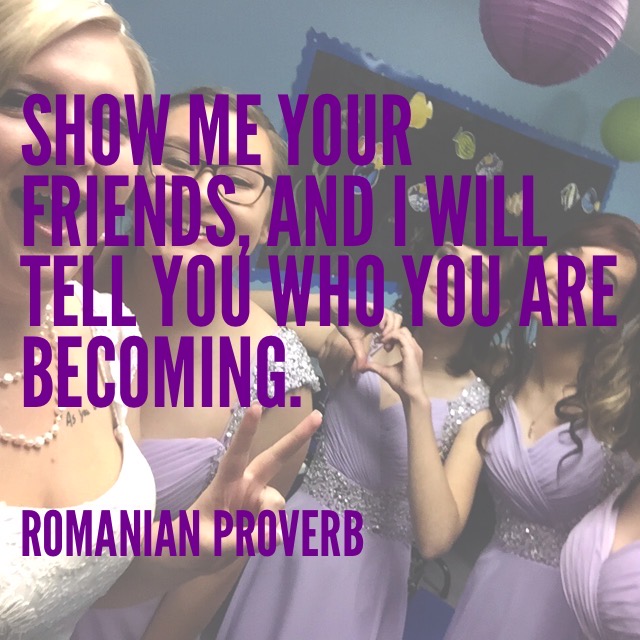
Many years ago a Romanian friend shared with me a proverb from his homeland: “Show me who your friends are and I will tell you who you are becoming.”

What does your choice in friends say about you? Do your friends love you enough to wound you? Do your friends help you take it to the next level?

Diet + Exercise = Healthy Growth

The right diet will start you on the road to excellent health, but to keep growing in a healthy way you will need to incorporate some regular exercise too. This is true physically, spiritually, and emotionally.

If I just eat the right foods but don’t exercise, my physical metabolism will not be stoked to the proper levels. To put it another way, a good diet may lower my LDL (bad) cholesterol, but it takes exercise to raise my HDL (good) cholesterol. I need both to be healthy.

So, too, for my heart and mind. If I hear good preaching and think good thoughts (diet), but never put those words or thoughts into action (exercise), I’m not going to grow in a well-balanced, healthy way.

Here’s a couple of things I have learned for body, spirit, and mind exercise.

Set challenging but realistic goals

  • I don’t run without a goal. (1 Corinthians 9:26 CEV)
  • “You must have long-range goals to keep from being frustrated by short-term failures.” —Charles N. Noble

Exercise a little bit when you can

  • There’s no need to jump into lengthy workouts.
  • Exercise daily in God—no spiritual flabbiness, please! Workouts in the gymnasium are useful, but a disciplined life in God is far more so, making you fit both today and forever. (1 Timothy 4:7, The Message)
  • “Let him then think of God the most he can; let him accustom himself, by degrees, to this small but holy exercise; nobody perceives it, and nothing is easier than to repeat often in the day these little internal adorations.” —Brother Lawrence, in The Practice Of The Presence Of God

Make exercise a fun habit

  • Remember that you may not feel like exercising, but you will feel better after you exercise.
  • “Life goals are reached by setting annual goals. And annual goals are reached by reaching daily goals. And daily goals are reached by doing things which may be uncomfortable at first but eventually become habits. And habits are powerful things. Habits turn actions into attitudes, and attitudes into lifestyles.” —Charlene Armitage

For a healthy body, a healthy heart, and a healthy thought life, watch the diet you consume and then exercise for maximum benefit. Feel free to share any exercise tips you have learned.

Heart Food

I was running from meeting to meeting, and when I got done I was hungry. So a quick stop into a gas station for a Diet Pepsi and… well, my first impulse was to grab candy or chips. It took no small amount of willpower to make myself grab a healthier alternative.

One of the top rules for healthy dieting: don’t let yourself get too hungry.

Seriously, I know it sounds backward but it works. If you eat three smaller meals with three healthy snacks in between meals you will lose weight. Why? Because keeping the good stuff in you makes the bad stuff less tempting. Try it and let me know how it works for you, but it’s been working well for me.

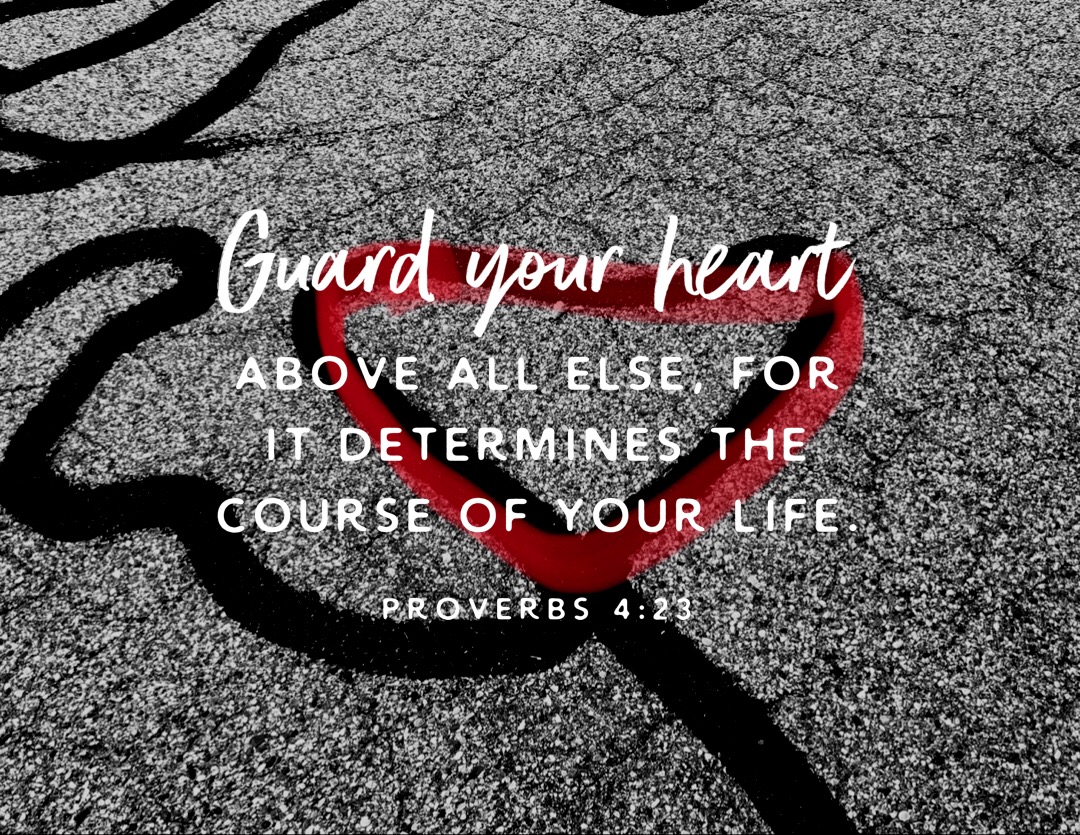
But what about “heart food” or “thought food”? The Bible says, “Guard your heart above all else, for it determines the course of your life” (Proverbs 4:23, New Living Translation).

If you don’t keep the good stuff in your heart and thoughts, the bad stuff becomes more tempting. And just like the junk food aisle in the convenience store is front-and-center, so are the “junk food headlines.” Swine flu … economic woes … earthquakes … war … these junk food headlines dominate and it’s so easy to snack on them unless you have some healthy stuff in your heart and thoughts.

Health experts say that breakfast is the most important meal of the day. What about some healthy heart/thought food each morning? How about some healthy conversation time with God: “In the morning, O LORD, You hear my voice; in the morning I lay my requests before You and wait in expectation” (Psalm 5:3).

Then you could make sure you have a healthy heart/thought diet throughout the day: “Whatever is true, whatever is noble, whatever is right, whatever is pure, whatever is lovely, whatever is admirable—if anything is excellent or praiseworthy—think about such things” (Philippians 4:8).

And then how about a healthy bedtime snack: “I set Your instructions to music and sing them as I walk this pilgrim way. I meditate on Your name all night, God, treasuring your revelation, O God” (Psalm 119:54-55, The Message).

How’s your heart/thought diet doing? Are there any changes you need to make? Best of all, how about sharing with us some heart/thought diet tips that have worked for you.

God’s Originality

Have you ever noticed all of the different ways that God reveals Himself to people? He is original with every original person.
I love looking at the Aha! moments that people have. You know, the moments when the light comes on and they understand Who God is to them?

  • When Jethro heard how God delivered Moses and the Israelites from Egypt he said, “Now I know that the true God is greater than all other gods.”
  • When Elijah raised a dead boy back to life the boy’s mother said, “Now I know that you are a man of God and that you only speak His words.”
  • When Naaman was healed of leprosy he said to Elisha, “Now I know that there is only one true God.”
  • When David recalled all the ways God has delivered him from certain disaster he sang, “Now I know that the Lord saves His anointed.”
  • When Peter was delivered from prison by an angel he said, “Now I know that God did this.”

(check out the references for these examples by clicking here)

God reveals Himself uniquely to everyone because we’re all unique originals.

“Let God be as original with other people as He is with you.” —Oswald Chambers

Here’s the problem with God’s originality: We try to make our unique experience with God a universal experience for everyone else. We think that because He did it such-and-such a way for us that everyone ought to experience it the same way.

Wrong!

Think about the deliverance from lions in the Bible. In Samson’s case, God gave him supernatural strength to kill a lion with his bare hands; Benaiah went into a pit to kill a lion with his club; Daniel never even touched the lions, and they couldn’t touch him either.

Imagine if Samson was there with Benaiah: “Hey, brother, if you’re going to go after that lion, just wait on God to give you supernatural strength. If you really had faith, you would lose that club!”

Imagine if Benaiah and Samson were giving lion-killing advice to Daniel: “My friend,” Benaiah might say, “Please use my club.” And Samson would interrupt, “How many times do I have to tell you? No clubs!” Yet in Daniel’s case, God wanted the lions alive.

Perhaps you had your “Now I know” moment after a prolonged struggle in a particular area. Your tendency would be to tell others, “Get on your knees and pray and pray and pray. Pray really hard! It might take years, but God will eventually help you breakthrough.” Perhaps God wants to deliver someone else instantly.

Perhaps your “Now I know moment” came while reading from the King James Version of the Bible. Your tendency is going to be to hand out KJVs to everyone. Perhaps God is going to speak to someone through the New Century Version.

Let God be original with you. Let Him uniquely work with others too. Don’t make your “Now I know” experience the theology which rules everyone around you.

I’m so glad God is unique with every unique individual because each of us is a one-of-a-kind original!

Poetry

Just finished a nice book of poems by Ralph Waldo Emerson and I thought I’d share a few maxims with you—

  • “To be great is to be misunderstood.”
  • “Happy is the house that shelters a friend.”
  • “Nothing great was ever achieved without enthusiasm.”
  • “A friend is a person with whom I may be sincere. Before him, I may think aloud.”
  • “Beauty without grace is the hook without the bait.”
  • “Life is not so short but there is time for courtesy.”
  • “Beware when the great God lets loose a thinker on this planet. Then all things are at risk.”
  • “No man thoroughly understands a truth until he has contended against it.”
  • “In skating over thin ice, our safety is in our speed.”

If you haven’t read any poetry lately, I encourage you to give it a try. It sounds/reads differently, but the rhythm and pace sort of sings to your mind and heart as you read it. For Americans I recommend starting out with some American poets like Emerson or Henry Wadsworth Longfellow; for you Brits, try some Robert Browning.

Happy reading!

Give It Away To Have More

It seems like we never have enough. Enough time. Enough money. Enough food. Enough friends.

As weird as it sounds—the cure to have enough is to give what you have away.

Imagine a drought … famine … despair. Lakes drying up and wells running dry. The dairy cows aren’t producing as much milk as usual, and the beef cows don’t have as much meat on them as they used to. The wheat fields aren’t growing as abundantly, and the corn is dry and mealy. Men don’t work as much, their wives don’t visit as much, and the kids don’t play as much.

Now, what if you found out you were going to be fortunate enough to host a VIP at your home? How do you prepare a decent meal? How do you think this VIP is going to react to the meager meal set before him? What if someone came from a distance away and brought you 20 loaves of freshly-baked bread?

Do you know how Elisha responded in these settings? He said, “Give it to the people to eat” (2 Kings 4).

Elisha shows up at his guests’ home and says, “Put the large pot on the stove and make some stew.” The large pot?!? Don’t you know we’re in a famine? Don’t you realize that we don’t have very much to spare?

Put the large pot on the stove and make some stew, then serve it to the people to eat,” Elisha said. He didn’t ask for the food to be prepared for himself, but for others. And not just a little stew either—he said make stew in the large pot. It’s interesting to me, too, that the householders had all the ingredients for a stew, but they were trying to stretch it out and make it last longer. They were hoarding what they had.

Then a friend arrives from a distant land bringing Elisha 20 loaves of bread.

Do you know how Elisha responded to this gift? “Give it to the people to eat.” Give it to the people?!? There are over 100 people here and we only have 20 loaves! That seems a bit cruel to just whet people’s appetites with so little; why don’t we just keep it for ourselves.

But Elisha said, “Give it to the people to eat. Not only will they all eat, but there will be leftovers too.”

When we hoard what we have, we rob others. We rob ourselves too because we miss out on the blessing of seeing others satisfied, and we miss out on the miracles that God wants to do right before our eyes.

“Why does God bless us with abundance? So we can have enough to live on and then use the rest for all manner of good works that alleviate spiritual and physical misery. Enough for us; abundance for others.” —John Piper

So, when you think about it, don’t you really have enough time to help someone in need?

Don’t you really have enough money to alleviate someone’s suffering?

Don’t you really have enough food to satisfy someone’s hunger?

Don’t you really have enough love to make a new friend?

Don’t rob yourself by hoarding. Don’t buy into the scarcity mindset that looks away from others. The more you give away, the more you will have. Try it, it works!