My books are for my fellow pastors. Shepherd Leadership will help us keep the biblical metrics in mind when we are thinking about our leadership roles. When Sheep Bite is an invaluable resource to help pastors continue to serve their flock, even after being painfully attacked. And Amen Indeed is a book of prayers for pastoral effectiveness.
If you are a pastor—or if you love your pastor—please pick up copies of these books today!
Listen to the podcast of this post by clicking on the player below, and you can also subscribe on Apple, Spotify, or Audible.
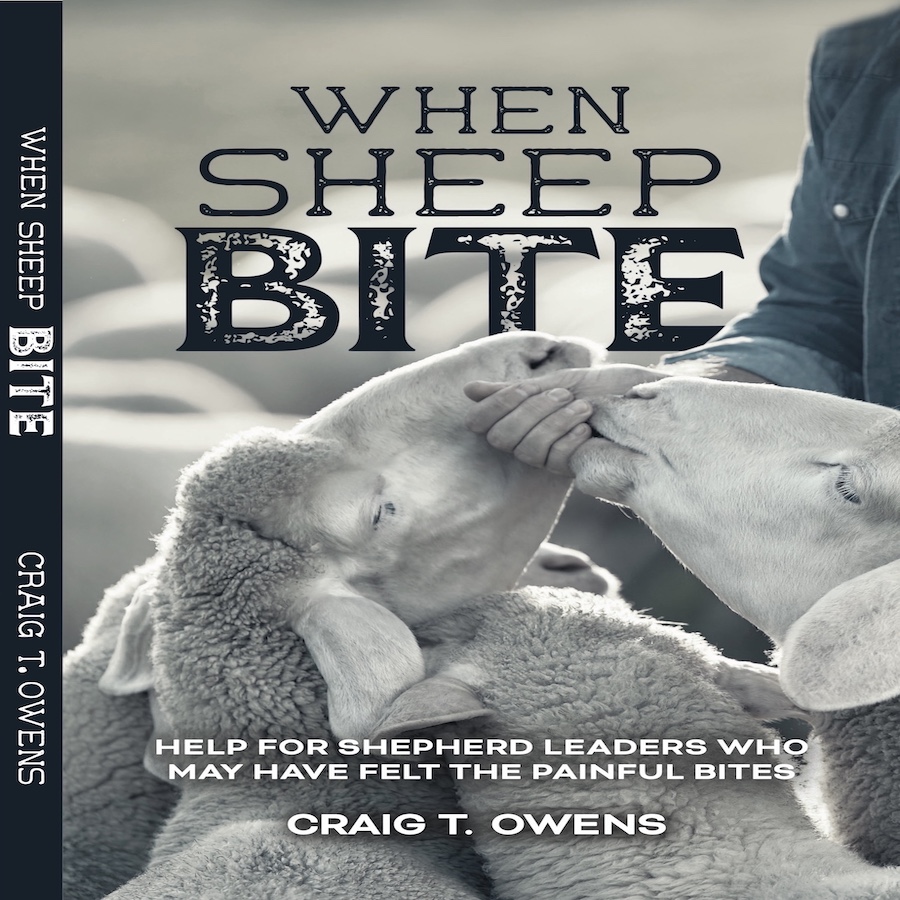
On the Leading From Alignment podcast, I was discussing my book When Sheep Bite which is about leadership pain. John Opalewski asked me to share some things leaders should consider when they get bit.
On a different podcast, I discussed in more detail the idea in Luke 2:52 about Jesus growing in favor with men. Check out The Pinnacle of a Leader’s Health.
You can get more information on When Sheep Bitehere. And also check out my book of prayer for pastors called Amen Indeed.
Jesus showed us how to remain faithful as a shepherd even in the face of painful attacks. If you are a pastor—or if you love your pastor—please check out my books Shepherd Leadership and When Sheep Bite.
Every year I see the same unsubstantiated claims that the Christian celebration of Christmas is a hodgepodge of pagan and cultic myths cobble together and hijacked by Christians. Here are three myths refuted by archeological evidence.
Dr. Allen Tennison points out how Luke emphasizes the work of the Holy Spirit all throughout his Gospel, and then continues that theme as he moves into the Book of Acts.
“One of the first gospel blessings is that of complete justification. A sinner, though guilty in himself, no sooner believes in Jesus than all his sins are pardoned. The righteousness of Christ becomes his righteousness, and he is accepted in the Beloved.” —Charles Spurgeon
“For the apostle Paul, as, indeed, for all the apostles and early Christians, the Church is the Body of Christ, the continuing incarnation of the reigning and conquering King of Glory. The Church, according to the apostles, is the centerpiece of Christ’s historical agenda (Matthew 16:18). Whatever Christ intends to do on earth prior to His imminent return, the focal point of that work will be in and through His Church. … We do not have the mind of Christ if we are not thinking the same way about His Body, the Church. We need the Church, and if we do not think this is so, then we do not have the mind of Christ. We need the Church. But we need it according to the purpose with the guidance and blessing of the Lord Jesus Christ.” —T.M. Moore
What an amazing story of faithfulness! The faithfulness of God is seen in the loving actions of an unnamed Sunday School teacher and in a lifelong missionary.
Cold-case detective J. Warner Wallace contrasts blind belief and unreasonable belief with what he calls forensic faith. His conclusion: “A forensic faith gives you confidence in uncertainty, strength in adversity, and the ability to engage intellectually with both believers and skeptics. It transforms faith from mere hope into informed trust, and that makes all the difference in how you live out your beliefs in a world that’s constantly questioning them.”
“Depression is one of satan’s most dynamic weapons to divert you from God’s purpose for your life. If he can scatter a little dejection here and there in your thoughts—and even in your prayers—he can convince you to remove your breastplate of righteousness because it is too cumbersome and will go against your material and temporal interest. Do not give in that easily!” —William Gurnall, The Christian In Complete Armor
Listen to the podcast of this post by clicking on the player below, and you can also subscribe on Apple, Spotify, or Audible.
I like to take some time at the end of each calendar year to both look back and look forward. Throughout biblical history, whenever God was ready to take His people into a new chapter, He always took time for them to review the ground they had already covered. So as we get ready to go into 2026, here is a look back at the things God taught us in 2025 through these sermon series I shared with the wonderful folks at Calvary Assembly of God.
Our Prayer Book. God has given us an amazing Book! The Bible addresses the human condition—all our desires, frustrations, hopes, and the only path on which we can find eternal and unfading joy. The Bible not only tells us how to live, but it also tells us how to pray. And it’s as we pray that the principles in the Scripture come alive with fresh applications for our daily life. We don’t have to fumble around, attempting to find the right words to pray and then wondering if those prayers were heard on high. We can learn to pray in agreement with God’s perfect will. God has spoken to us through His Word, and He invites us to use His words to form our prayers back to Him. I love beginning each new year with a reminder of the power of prayer.
When Sheep Bite Sheep. No one likes to be mistreated—especially when the one that hurts us is one we would have thought of as an ally or even a friend. These slights become even more painful when they take place inside the Christian community. When sheep bite sheep, our natural response is to lash out to try to even the scales of justice. But the Bible consistently and clearly calls Christians to pursue a supernatural response. This is a highly practical series of messages on how you can respond in a Christ-honoring way when you are bitten by another sheep in God’s pasture.
Grief Into Joy. At the end of your rope … down for the count … nothing but gray skies all around … unable to see any light at the end of the long, dark tunnel. Ever been there? The reality is, we all have been there. But the good news is that we don’t have to stay there! God is always at work to turn our apparent no-win, dark, hopeless situations into something bright and glorious! He is working in ways that no human mind could have dreamed up, and working on our behalf in a way no human power could ever hope to rival. God specializes in turning grief into joy! We are approaching the time of year where we remember the death of Jesus. Without a doubt that was the darkest, most grief-stricken day in all of history. Yet that time of mourning was completely forgotten in the overwhelming joy that exploded from an empty tomb on Resurrection Sunday!
We Are: Pentecostal. Pentecost for over 1500 years was a celebration in Jerusalem that brought in Jews from all over the world. But on the Day of Pentecost which came just ten days after Jesus ascended back into heaven, the meaning of Pentecost was forever changed! Followers of Jesus—now empowered by an infilling of the Holy Spirit—began to take the good news of Jesus all over the world. These Spirit-filled Christians preached the Gospel and won converts to Christ even among hostile crowds, performed miracles and wonders, stood up to pagan priests and persecuting governmental leaders, and established a whole new way of living as Christ-followers. We, too, can be Pentecostal followers of Jesus Christ today. We can experience an anointing and an empowering in our lives that turns ordinary Christianity into extraordinary Christianity!
All Hail King Jesus. The Bible closes with a vivid picture of Jesus as the undisputed King of kings, and we look forward to that time when all creation bows before Him. Even more so, we cannot wait to be with our King for ever and ever! The psalmists of Israel also foresaw the coming of this King, especially in the example they had in their King David. Many of the poetic words they penned esteemed Jesus as the King for Whom they longed. David himself not only saw the future coming of the Eternal King, but he also looked back in time to see Jesus reigning as King before time began. It is these royal psalms that we will be studying as we celebrate the first arrival on Earth of our King and as we anticipate the second coming of our Royal Majesty. The more clear our vision is of this King, the more we will worship Him, follow Him, and invite others to know Him as their own Lord and Master.
B.A.S.I.C. Christianity. When someone invites Jesus into their heart, they are immediately justified in God’s sight and have the assurance of Heaven as their eternal home. But then the question comes, “Now what?” Our justification is immediate but our sanctification is an ongoing, lifelong process. Sanctification is what brings fruitfulness to a Christian’s life and what allows that fruitful life to be a testimony to others. The Bible gives us the B.A.S.I.C.s of this Christian life, and that’s what we will be exploring over the next few weeks.
Earnestly Contend. Jude, the half-brother of Jesus, wrote a letter to the church. He said he was hoping to write about salvation, but looking at the conditions in the culture around him, he felt urged by the Holy Spirit to challenge Christians to “contend for the faith that was once for all entrusted to the saints.” What does this word “contend” mean for us today? Are Christians supposed to be combative about sharing their faith? Are they supposed to argue with anyone and everyone who disagrees with them on any point? Jude gives us Holy Spirit-inspired wisdom to understand how to deal with those who have departed from the purity of biblical truth.
What To Do In A Crisis. Look back through the pages of history and you will see a common theme. Whether it’s world history or your own personal history, you have so much for which you can give thanks. In tough times, we tend to become forgetful because we are so focused on the intensity of the moment. But if we will simply look back in time, we will see just how faithful God has been to us. We bring our focus back to Him in our trying times when we remember and rehearse “the wonderful things He has done” (Psalm 107). The season of Thanksgiving is a good time for us to be reminded of the powerful resource we have when we are giving thanks for our blessings. Thankful people are confident people because they choose hope in God’s faithful provision over grumbling about their current circumstances.
Jesus Is…. Over 700 years before He was born in Bethlehem, God spoke through the prophet Isaiah to describe the Messiah that was coming. Peter said that until the advent of Jesus, the prophets continued to scour the evidence of who this Messiah was going to be. When Jesus finally came to earth as a Man, young and old alike were thrilled to proclaim that the One they had been longing for had made His long-expected appearing! As Jesus lived on earth, died on Calvary, and was resurrected back to life, He continued to fulfill all that had been prophesied about Him. Isaiah said of Jesus: “He will be called Wonderful Counselor, Mighty God, Everlasting Father, Prince of Peace.” This Advent season we will take some time to unpack what each of these majestic titles mean. We will explore how Jesus demonstrates that He is truly worthy of each of these titles, and we will see how that knowledge should thrill our hearts as we celebrate His first Advent and eagerly long for His Second Advent.
If you live in northern Kent County and don’t have a home church, I would be thrilled for you to visit me at Calvary Assembly of God this year.
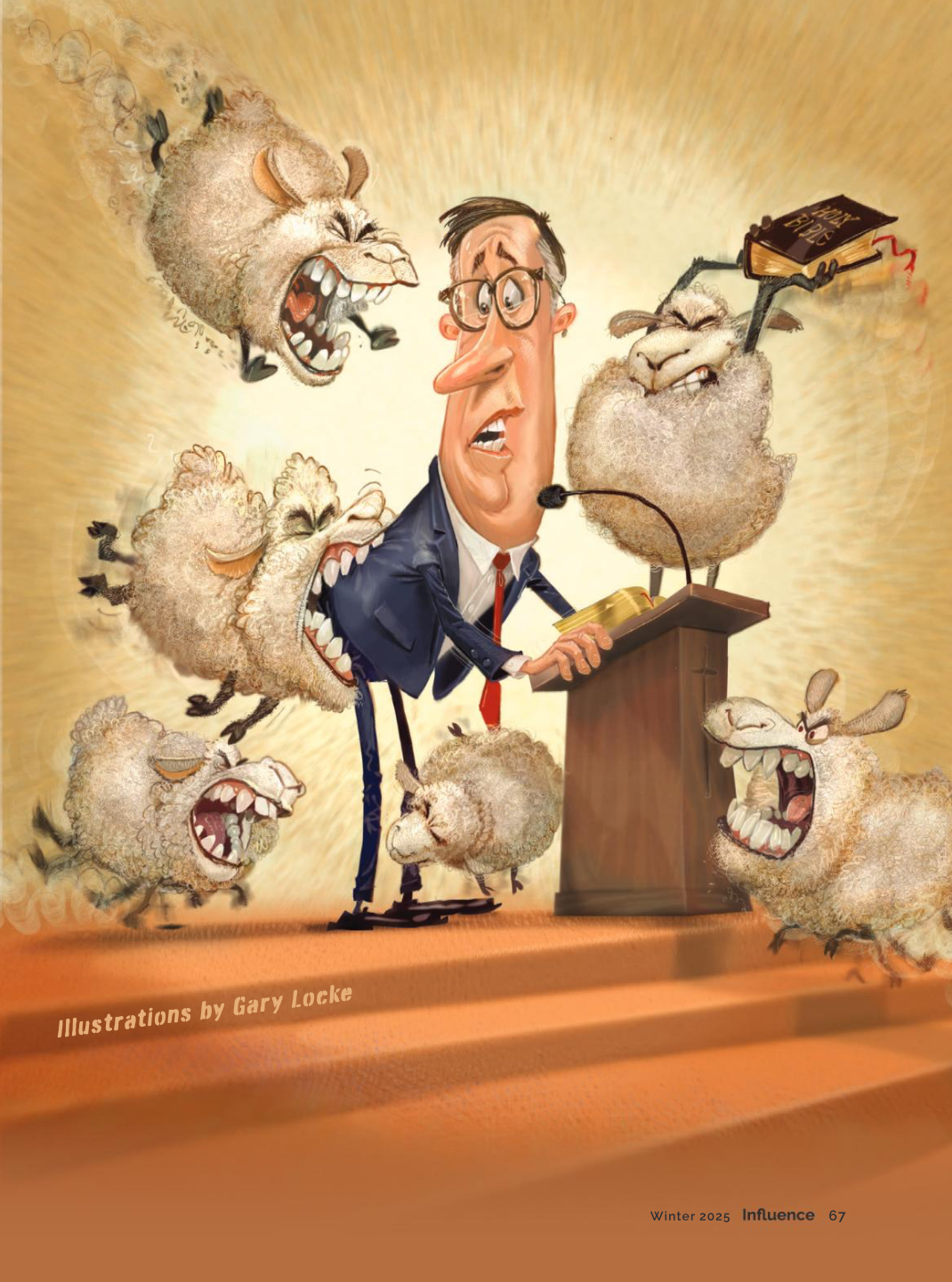
When people start throwing mud at you, your natural response is to throw the mud back at them or to run away so the mud can’t reach you. Instead of the natural fight-or-flight response, Jesus shows us a supernatural response. I talk about all sorts of attacks—gossip, slander, betrayal, and more—in my book When Sheep Bite as well as the supernatural, biblical response to these attacks.
“The minute you start talking about what you’re going to do if you lose, you have lost.” —George Schultz
“A decent picture of good leadership: Air-traffic controllers have authority, but they use their authority to enable others to fly.” This is a thoughtful post, but as frequent visitors to my blog might expect, I prefer the term shepherd leader over servant leader.
This post recounts some of the stories people told of how Charles Spurgeon’s sermons led them from the bad news to the Good News. Spurgeon himself noted, “If you really long to save men’s souls, you must tell them a great deal of disagreeable truth. The preaching of the wrath of God has come to be sneered at nowadays, and even good people are half-ashamed of it; a maudlin sentimentality about love and goodness has hushed, in great measure, plain gospel expostulations and warnings. But, if we expect souls to be saved, we must declare unflinchingly with all affectionate fidelity, the terrors of the Lord.”
“Men have not got tired of Christianity; they have never found enough Christianity to get tired of.” —G.K Chesterton
“Advancing the Kingdom economy is not exactly a cakewalk. It’s hard work, like running a marathon, going to war against spiritual adversaries, cultivating a field, or embarking on a long and arduous journey. We may expect to encounter many obstacles and challenges along the way as we seek first the Kingdom of God and His righteousness. … We must neither run from these challenges nor give in to them. Instead, advancing the Kingdom economy requires that we face evil head-on, and determine to overcome it by good works of righteousness, peace, and joy in the Holy Spirit (Romans 14:17-19).” Check out the rest of T.M. Moore’s post Overcoming Evil.
Listen to the podcast of this post by clicking on the player below, and you can also subscribe on Apple, Spotify, or Audible.
One of the most important boundaries that shepherd leaders need to establish—especially when contending with biting sheep—is the protection of their family. Check out this clip from The Craig and Greg Show.
You can watch the full episode in which Greg and I talk about some of the principles in When Sheep Biteby clicking here.
Please pick up a copy of When Sheep Bite for yourself by clicking here.
Listen to the podcast of this post by clicking on the player below, and you can also subscribe on Apple, Spotify, or Audible.
Anyone who has been verbally or emotionally attacked needs time to recover. Your self-care is absolutely essential to your personal health and the health of the people with whom you live and work. Your pain will eventually become their pain if you remain in a bruised and weakened place.
Chapter 12 in my book When Sheep Bite is entitled ‘Self-care is Not Selfish.’ In that chapter I wrote—
When you are recovering from biting sheep, you will need to be very intentional about self-care. I said earlier that self-care is not selfish. What is selfish is self-centeredness and self-reliance. When you think, “I cannot possibly take a break right now; too many people need me—besides, how will the work get done if I step away,” you are attempting to be self-reliant. This is a natural response, but it doesn’t give us the supernatural, refreshing oxygen that comes from sabbathing with Jesus.
This isn’t to diminish the importance of the true Sabbath Day, and I am not saying that sabbathing can be anything you want it to be. For Jesus, it was time alone with His Father—both set times and spontaneous times. But sometimes you will need a nap (like Elijah) or a meal with a trusted friend (as the disciples had with Jesus in Mark 6:30-32). These sabbathing breaks have a singular agenda: To get you to the place physically and emotionally where you can concentrate on your prayer time. After all, it’s hard to receive refreshing from God when you cannot keep your eyes open or your thoughts from straying.
You can check out the article I wrote for Influence magazine here, and then pick up a copy of When Sheep Bite to help your recovery time. Check out what the public ministry of Jesus teaches us about the healthy practice of sabbathing.
I also recommend these related posts and videos about self-care:
Listen to the podcast of this post by clicking on the player below, and you can also subscribe on Apple, Spotify, or Audible.
When you’ve been hurt, you probably want someone to tell you that it was all the other person’s fault. That’s what you may want, but a true friend will tell you what you need to hear.
My book When Sheep Bite is all about recovering after difficulties—whether they were created by your mistakes or someone else’s mistakes. In the Introduction to my book I wrote:
I want to give you what I wanted when this happened to me: empathy, insight, a helpful perspective, and a manual of help that God has provided in the Bible. I don’t want to try to one-up your story of pain, because I’m confident that no one could truly know how deeply you’ve been hurt. But I do want to give you some assurance that I know what I’m talking about. …
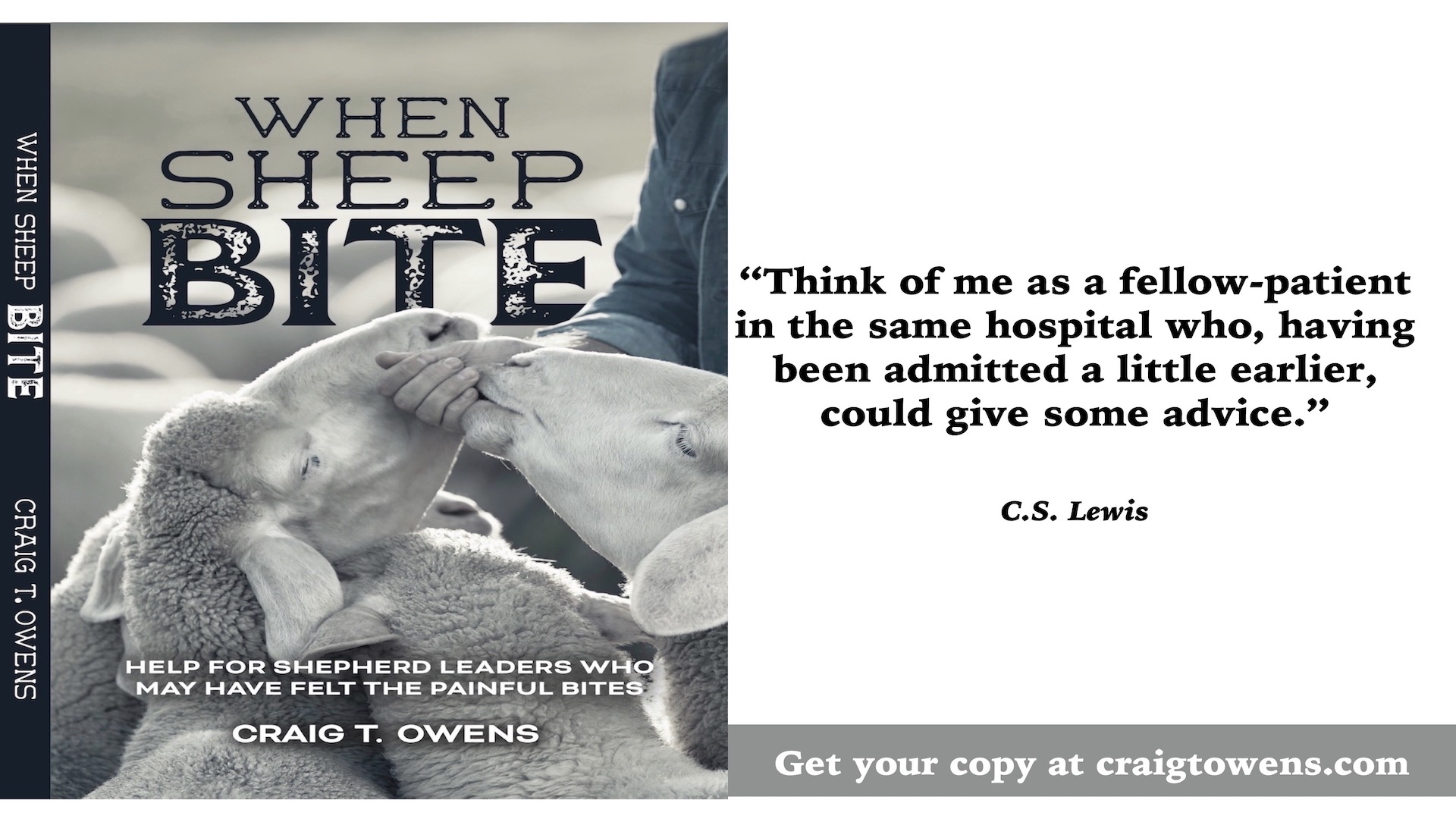
Your pain and your circumstances are unique. Your pain is real, and it is incomparable to anyone else’s pain. But the biblical principles that God revealed to me—those things that helped me heal and the thoughts I want to share with you—are applicable for any shepherd. These tried-and-true principles can help you not just survive this pain but thrive in spite of this pain. I would say to you something that C.S. Lewis wrote, “Think of me as a fellow-patient in the same hospital who, having been admitted a little earlier, could give some advice.”
Listen to the podcast of this post by clicking on the player below, and you can also subscribe on Apple, Spotify, or Audible.
My book When Sheep Bite is a manual of help for church leaders who have been hurt by the very sheep they are attempting to help. This book was birthed from a very painful chapter in my own ministry.
But as dark as that time was, there was a ray of light that helped me to smile during the dark times and for years and years afterwards. Here is an excerpt from the chapter ‘Cry Before Your Confront’ in When Sheep Bite—
We used to have a funny saying in our family. Our puppy would be straining to get free and one of us would cry out, “Release the hound!”
After reading the previous chapter about imprecatory prayers, and hopefully putting that into practice, I hope you felt some relief from your anger. But when you read my reminder that David’s “Get ‘em, God!” cry was for God’s ears only, perhaps you were a little disappointed. Maybe you were hoping for someone to give you a green light to “release the hound” on those biting, kicking, and wayward sheep.
Wouldn’t it be so wonderful to unleash something—anything!—on those difficult sheep? As shepherds, we have so many ways we can dress up our unleashed hounds in biblical-sounding language. Maybe a righteous rebuke like the psalmist recorded: “You rebuke the arrogant, who are accursed, those who stray from Your commands” (Psalm 119:21). Or perhaps a well-timed prophetic thunderbolt like when Samuel was praying and “the Lord thundered with loud thunder against the Philistines and threw them into such a panic” (1 Samuel 7:10). Or even a strategic lightning strike from God’s throne as when the soldiers from King Ahaziah came to forcibly take Elijah to the king (2 Kings 1:11-12).
One of my favorite prayers is a prayer of David’s that is given added emphasis since it is recorded twice in the Scripture (2 Samuel 22 and Psalm 18)—
In my distress I called to the Lord; I cried to my God for help. From His temple He heard my voice; my cry came before Him, into His ears. The earth trembled and quaked, and the foundations of the mountains shook; they trembled because He was angry. Smoke rose from His nostrils; consuming fire came from His mouth, burning coals blazed out of it. He parted the heavens and came down; dark clouds were under His feet. … Out of the brightness of His presence clouds advanced, with hailstones and bolts of lightning. The Lord thundered from heaven; the voice of the Most High resounded. He shot His arrows and scattered the enemy, with great bolts of lightning He routed them. (Psalm 18:6-9, 12-14)
Wow, how good it must have felt for David to unleash these words! And yet we still see that they were words only for God’s ears, spoken when David was alone with the Almighty God. Isn’t there something we can say or do to our obstinate sheep? Yes, there is, but there is something we need to be reminded of first.
After a particularly grueling day of being bitten, kicked, and attacked by the angry sheep in my pasture, I came home and announced, “Tomorrow is ‘Be Kind to Craig Owens Day!” While driving home and licking my wounds, I had determined that I needed a day off—a day to unplug from all of the madness and make sure I was taking care of myself.
Let me add a very important truth here. In fact, it’s so important that I’m going to print it in bold letters: Self-care is not selfish! Far too many shepherds think that taking time off to care for themselves, especially in the midst of all of the chaos, is a selfish thing to do.
Selfish is different. Selfishness is self-centered. Selfishness is saying, “I’m going to take care of myself and I don’t care what happens to others while I’m doing what I want to do.” Self-care is a strategic withdrawal to take care of myself so that I can return to take care of others. It is like the instructions on an airplane to put your own oxygen mask on first before you try to help a small child with their mask. If I pass out, I’m no good to anyone else. Just as Jesus “often withdrew to lonely places and prayed” (Luke 5:16), we must find times to care for ourselves so that we are strengthened to help others when we return to the fray. This concept of self-care is so vital that I have dedicated all of Chapter 12 to explaining this idea to you in more depth.
My family still celebrates the Be Kind to Craig Owens Day “holiday” but we mainly remember it because of something else that happened in our family.
On this inaugural event, I planned a day of reading, praying, walking, and recuperating. I silenced my phone and withdrew for that entire Friday. After a nice evening with my family, I decided to extend my self-care time into Saturday. My daughter and I went out to breakfast, and because we both enjoy animals so much, we decided to stop into a new pet store and play with the puppies for a while.
Almost instantly, both of us were captivated by a very special dog. There was something about her that drew us to her. In short order, we were on the phone with my wife and my sons asking them to join us at the pet store. We ended up walking out of the store that morning with a new addition to our family.
My wife later remarked that this puppy was the best irresponsible decision we ever made. Part of the reason this was true is that this puppy became my constant companion. I took her to my office with me so that I would have a source of unconditional love to offset all of the brutal attacks I was absorbing.
When John Bradford saw a cartful of men going off to Tyburn to be hanged for their crimes, he said to a friend, “There goes John Bradford but for the grace of God.” When I stopped to think what was different between my behavior and the behavior of these biting sheep, I realized it was only the grace of God that had kept me from descending into the same ugly behavior. That’s when I decided to name our new puppy Grace. I wanted to say that name over and over and over again. I desperately needed to be reminded of God’s grace for me. I also needed to be reminded that God wanted my biting sheep to know His grace too.
When we cried out, “Release the hound,” it was because Grace was straining at her leash to overwhelm someone with her love. She wanted nothing more than to show them how much she welcomed them into her presence.
I’ll be honest with you: When some of my biting sheep came storming into my office to berate me for something and Grace wanted to run to them with love and acceptance, I wanted to scold her and keep her back. This, I think, was the attitude of the older brother when his wayward brother returned home and was lovingly welcomed back into the fold by their father (Luke 15:11-32). But when I paused to think of God’s amazing grace that “saved a wretch like me,” I was reminded that God’s grace also wants to restore other wayward, obstinate, unreasonable sheep.
Our annual reminder of this event is really remembering our dog Grace’s “Gotcha Day.” It’s our annual reminder that grace is best seen in times and places that it is least expected.
If you are a church leader, please pick up a copy of When Sheep Bite to help you on your healing journey. And if I can be of assistance to you, please get in touch with me.



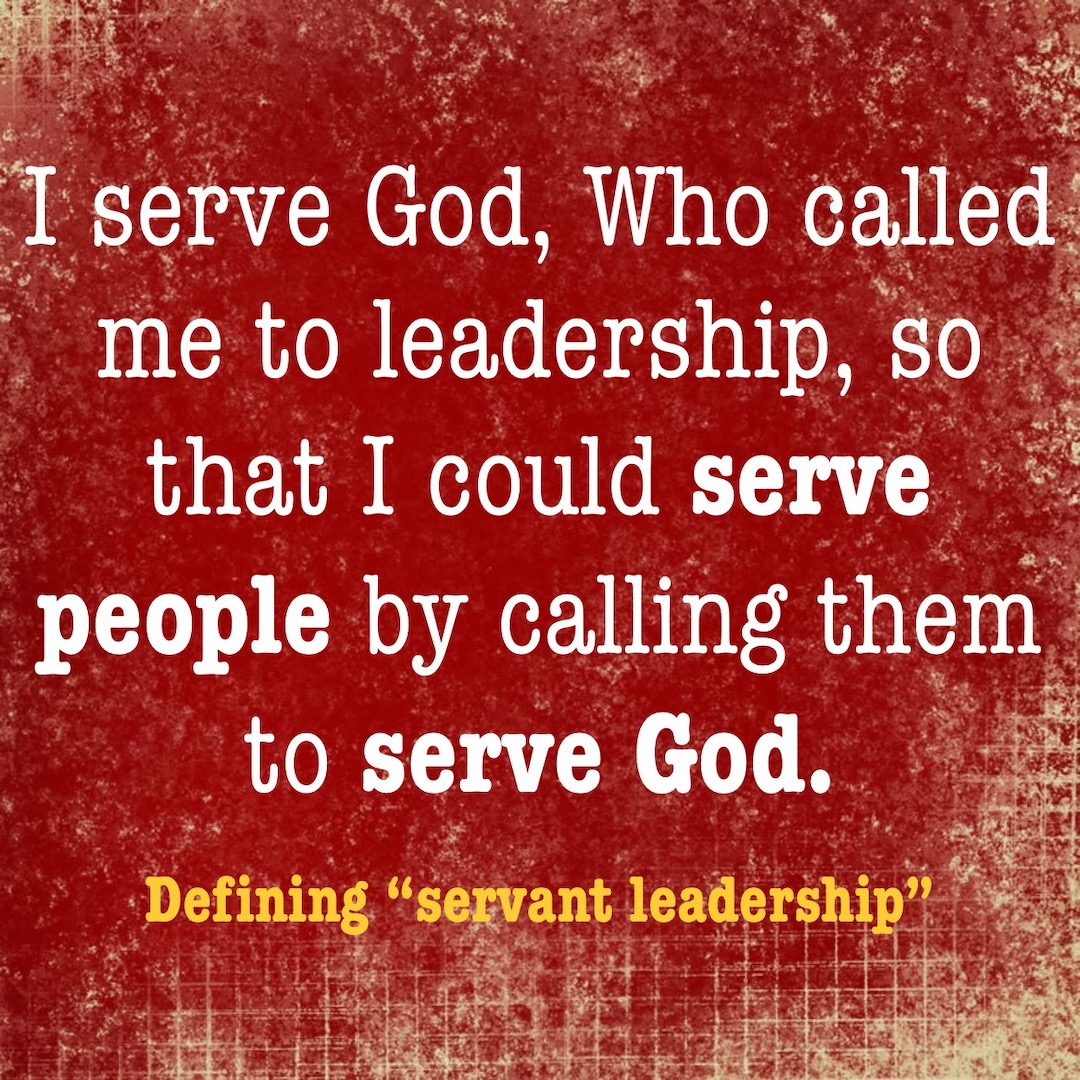 A couple of other blog posts that may help you on this topic of servant leadership are:




 Craig T. Owens