Well-Worn Paths

Listen to the podcast of this post by clicking on the player below, and you can also subscribe on AppleSpotify, or Audible.  

I don’t think there’s any arguing that Jesus must have been the healthiest Person to ever live. Dr. Luke records His growth in just one succinct verse: “And Jesus grew in wisdom and stature, and in favor with God and man” (Luke 2:52). Every word of Scripture is inspired, right down to the order the words are penned. So when Luke says first that “Jesus grew in wisdom,” that is our indication that a healthy mind is the foundation for every other aspect of health. 

I recently received an email from a Christian brother asking for prayer and counseling in overcoming lust and pornography. I naturally agreed to pray with him, but I also said, “Before I offer you any strategies to try, let me ask you a quick question: What have you already tried to get victory over this?” 

He replied, “I’ve tried praying, watching videos on it, and basically saying no to the devil. But the temptation comes when I am weak and I think, ‘I can just try again tomorrow!’ And then I fall into it. I am just tempted at times throughout the day, and sometimes I fight it with prayer, but other times I just fall right into it basically without even trying.” 

What my friend is dealing with here is a natural, unconscious response. Our brains like well-worn paths because it’s very easy and comfortable for our minds to automatically respond as they have responded before. As in the case of my friend, it may be heading down a path of lust that leads to pornography. For others, it may be unhealthy choices made in response to certain triggers, or it may be the anger that flares up into biting words when a certain someone pushes your buttons. 

We head down that well-worn path unconsciously and automatically. Our immediate response might bring some temporary relief, but usually, we’re not very happy with where we’ve ended up once again. 

If we are going to make a new path—or a new, healthier response—we first need to become aware of the well-worn path we automatically go to. So my counsel to my friend who emailed me for help was to start keeping a journal. I wrote back:

Your willpower alone isn’t going to cut it (as you’ve probably realized). Here’s the first step I would suggest: keep a journal of every time you are tempted to lust or porn. Write down what you were feeling, was it day or evening, what was happening just before that, did you have time in prayer and Bible reading that day or not, how did you fight the temptation, were you successful or not? I think as you keep track of these things you will begin to see some triggers and some patterns. Maybe you were physically tired, or lonely, or hungry. Maybe it was a certain person you talked with or a show you watched. Maybe it was after checking your social medias or after a super-hard day at work. When you start to see patterns of what is causing you to go to porn for relief, you can recognize them earlier and head them off before they grip your mind so strongly. 

Psychologists call it metacognition when we think about what we’re thinking about—when we think about why we are taking a certain well-worn path again. 

We don’t think about our thinking very frequently. We keep thinking along those well-worn paths out of habit, not because we want to go down those paths. This is where the Holy Spirit is invaluable: He helps us see those well-worn paths, identify which paths are unhealthy or unproductive, and then help us begin to carve out a new path. 

It’s not just thinking about right things, but thinking rightly about all things—even the painful things or the triggering things. 

In Ephesians 4:22-25, Paul counsels us to take off the “old self” and “put on the new self, created to be like God in true righteousness and holiness. Therefore” (and this is an important conclusion) “each of you must put off falsehood and speak truthfully to his neighbor.” 

Do you remember that Jesus taught us to love our neighbor as ourselves (Mark 12:28-31)? Paul says we are to speak truthfully to our neighbor, so doesn’t that mean that we have to first speak truthfully to ourselves? Yes, we do! If we are going to make new paths for our mind, we are going to have to talk to ourselves differently. 

My cousin Dick Brogden wrote, “A primary theater of spiritual warfare is in our heads and thoughts. The primary weapon of the enemy is deceit. He starts with attractive little lies and half-truths, and works his way up to blatant, ridiculous, perverted nonsense. Winning the battle for truth in the mind is critical to winning the war. If we lose enough of the little skirmishes, we can believe and do any wicked thing. If we daily combat lies with light and truth, we will stand firm.” 

The “little lies and half-truths” will keep us trapped on our old, well-worn paths. But identifying those lies, and speaking the truth to them, will help us travel down new paths that lead to health and freedom. 

Let the Holy Spirit be your Counselor. Let the Holy Spirit help you think about what you’re thinking about when you’re triggered to unconsciously head down the unhealthy well-worn path. Let the Holy Spirit help you see a new path. And then let the Holy Spirit empower you to stick with it—to keep doing the hard work of blazing a new path. 

I am going to build on this series of messages about a Christian’s mental health, but let’s start with this simple prayer: 

Holy Spirit, help me make new paths. 

As you pray this, listen to how the Holy Spirit will guide you away from the unhealthy, unconscious, well-worn paths, and will then lead you into the new, healthy path that brings you freedom. 

If you would like to download the graphic of this prayer for your phone, simply leave me a comment with the model of the phone, and I’ll get the right-sized graphic right out to you. And you can also follow along with all of the messages in this series by clicking here. 

►► Would you please prayerfully consider supporting this ministry? My Patreon supporters get behind-the-scenes access to exclusive materials. ◀︎◀︎

Thursdays With Oswald—Difficult Times Reveal Our Habits

Oswald ChambersThis is a weekly series with things I’m reading and pondering from Oswald Chambers. You can read the original seed thought here, or type “Thursdays With Oswald” in the search box to read more entries.

Difficult Times Reveal Our Habits 

     Practice means continually doing that which no one sees or knows but ourselves. Habit is the result of practice, by continually doing a thing it becomes second nature. The difference between men is not a difference of personal power, but that some men are disciplined and others are not. The difference is not the degree of mental power but the degree of mental discipline. If we have taught ourselves how to think, we will have mental power plus the discipline of having it under control. Beware of impulse. Impulsiveness is the characteristic of a child, but it ought not to be the characteristic of a man, it means he has not disciplined himself. Undeterred impulse is undisciplined power.

     Every habit is purely mechanical, and whenever we form a habit it makes a material difference in the brain. The material of the brain alters very slowly, but it does alter, and by repeatedly doing a thing a groove is formed in the material of the brain so that it becomes easier to do it again, until at last we become unconscious of doing it. When we are regenerated we can reform by the power and presence of God every habit that is not in accordance with His life. … We have to learn to form habits according to the dictates of the Spirit of God. The power and the practice must go together. … If we keep practicing, what we practice becomes our second nature, and in a crisis we will find that not only does God’s grace stand by us, but our own nature also. The practicing is ours not God’s and the crisis reveals whether or not we have been practicing. [See Matthew 5:31-37.]

From Studies In The Sermon On The Mount

All of us have blind spots. These are typically habits that we have left in place, unchallenged and unchanged. That “groove” in our brain is operating on auto-pilot, but those blind-spot habits aren’t serving us well. 

The role of the Holy Spirit in the life of a Christian is to help us notice these habits in which we are unconsciously incompetent. But once the Spirit of God points these out, then we must practice, and practice, and practice until the new healthy habit has overwritten the old groove of the unhealthy habit. 

Then we will find, as Chambers points out, that in a time of crisis “not only does God’s grace stand by us, but our own nature also.” 

Times of difficulty will reveal habits—both the unhealthy and the healthy. The question then becomes: what are you going to do about the unhealthy habits? 

Thursdays With Oswald—The Enormous Need To Be A Christian

Oswald ChambersThis is a weekly series with things I’m reading and pondering from Oswald Chambers. You can read the original seed thought here, or type “Thursdays With Oswald” in the search box to read more entries.

The Enormous Need To Be A Christian 

     All we can deal with in psychology is consciousness, but God does not limit our salvation by our consciousness. The need to be a Christian is not simply that Jesus Christ’s salvation may work on our conscious life, but that the unconscious realm of our personality may be protected from supernatural powers of which we know nothing. …  

     We are much more than we are conscious of, and if Jesus Christ only came to alter our conscious life, then the Redemption is “much ado about nothing.” But when we come to examine the New Testament we find that Redemption does infinitely more than alter our conscious life; it safeguards the unconscious realm which we cannot touch. … 

     Part of our personal life is conscious, but the greater part is unconscious, and every now and again the unconscious part emerges into the conscious and upsets us because we do not know where it comes from or where it leads to, and we get afraid of ourselves. … 

     There is only one Being Who understands us, and that is our Creator. … 

     Have we ever awakened to the fact that there are forces of evil around us greater than we can control? Jesus Christ by His Redemption not only saves us completely, but keeps us oblivious of the awful dangers there are outside. … 

     Unless we hand over the keeping of our personality to God to garrison, there are a hundred and one influences which can come into us which we never can control but which will soon control us. … 

     It is impossible to guard our spirit, the only One who can guard its entrances is God. If we hand ourselves over to His keeping we shall be kept not only from what we understand as dangers, but from dangers we have never even imagined. … 

      These aspects revealed the need to be a Christian as an enormous need. Thank God for the amazing security of His salvation! It keeps us not only in conscious life but from dangerous of which we know nothing, unseen and hidden dangers, subtle and desperate. 

From The Soul Of A Christian

Thank God for the amazing security of His salvation! Do you know this security? If not, don’t wait another day to invite Jesus Christ into your life.

Thursdays With Oswald—Life-Altering Regeneration

Oswald ChambersThis is a weekly series with things I’m reading and pondering from Oswald Chambers. You can read the original seed thought here, or type “Thursdays With Oswald” in the search box to read more entries.

Life-Altering Regeneration 

     Personality merges, and you only get your real identity when you are merged with another person. A man has his individuality transfigured when he falls in love. When love or the Spirit of God strikes a man or woman, they are transformed, they no longer insist on their separate individuality. Christianity is personal, therefore it is un-individual. … Our Lord never spoke in terms of individuality…but in terms of personality, “that they all may be one.” … 

     We are much more than we are conscious of being. Our Lord said the Holy Spirit would bring back into our conscious mind the things He had said. We never forget anything although often we cannot recall it; we hear it and it goes into the unconscious mind. Things go on in our unconscious minds that we know nothing about, and at any second they may burst up into our conscious life and perturb us. The Spirit of God enters into a man below the threshold of his consciousness. When He will emerge into a man’s conscious mind no one can say; when He does, there is an earthquake, and the man has to readjust his life in every particular. The Spirit of God entering into the spirit of a man brings a totally new relationship to things. … 

     If all Jesus can do is to tell me that I must be holy, be what I never can be, present me with an ideal I cannot come anywhere near, His teaching plants despair; He is nothing more than a tantalizer and I wish He had never come. But if He is a Regenerator, One who first of all can put into me His own heredity, then I see what He is driving at in the Sermon on the Mount—that the disposition He puts in is like His own. … 

     The Spirit of Christ comes into me by regeneration, then I have to begin to form the mind of Christ, begin to look at things from a different standpoint.

From The Shadow Of An Agony

Our Heavenly Father will never force His love on us. Jesus Christ will never make us receive Him. The Holy Spirit will never change us against our will.

But our Heavenly Father will direct our lives to bring us to our wits’ end. Jesus Christ will constantly woo us with His love. And the Holy Spirit will continually bring to our conscious mind all that Jesus says to us.

The choice is mine—Will I continue to live my life my way, or will I yield to the life-altering regeneration that the the Father, Son and Spirit lovingly offer to me?

Thursdays With Oswald—The Right Ingredients For Spiritual Growth

Oswald ChambersThis is a weekly series with things I’m reading and pondering from Oswald Chambers. You can read the original seed thought here, or type “Thursdays With Oswald” in the search box to read more entries.

The Right Ingredients For Spiritual Growth 

     God engineers the circumstances that are best fitted for the development of the life of His Son in us. … 

     We hear it asked, “What is the good of all this study and reading of the Bible? We get no ‘change’ out of it.” Most of us want something to show for what we do. We are not interested in God’s life in us, but only in our life in God. We are not after the development of the unconscious life of the Son of God in us, but after the “small change” which enables us to say, “I did this and that.” The life of the Son of God grows feeble in a life of that order.

     Every mind has two stories, the conscious and the unconscious. Most of what we hear passes out of our conscious mind into our unconscious mind and we think we have forgotten it, but we have not, we never forget anything; we cannot always recall it when we want to, but that is a different matter. We forget nothing; it is there, although not in the conscious mind, and when certain circumstances arise, suddenly the thing we thought we had forgotten is there to our amazement right enough. 

     This is exactly what Jesus said the Holy Ghost would do, “He shall…bring all things to your remembrance whatsoever I have said unto you” [John 14:26]. The Holy Spirit is forming the unconscious mind all the time, and as we “mop up” His teaching—simply take it in, not try to estimate it as we would a mathematical study—we shall find God is putting in the right soil for His life to grow in.

From The Psychology Of Redemption

God knows the soil, and the circumstances that will best make His life grow in us. Will I let Him have His way?

The best “fertilizer” for this growth is the Holy Spirit bringing out the Word of God in the circumstances in which God places us. Notice Jesus said the Spirit would remind us the Word. Which means it is my responsibility to put the Word into my mind as regularly as I can. Am I daily in His Word?

10 Quotes On Emotional Health From “Brain Savvy-Leaders”

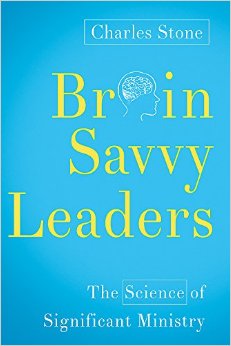
Brain-Savvy LeadersOur emotions start in our brain. Charles Stone wrote a very helpful book called Brain-Savvy Leaders, in which he covers a lot of ground inside our heads. One aspect is our emotional health. I encourage you to read my review of this book by clicking here. Below are some quotes Charles shared on our emotional health.

“Gratefulness is actually good for brain and body health.” 

“When the emotionality of leaders takes over, they compromise their ability to lead well in these ways:

  • impulse can overwhelm intention
  • imagination gets pushed aside by instinct
  • defensiveness stifles healthy positions
  • automatic behavior shuts down reflective thought
  • emotionality gets in the way of intentionality.”

“Fear, conscious and unconscious, is prompted by the amygdala. The brain naturally focuses on problems and the negative. It overestimates threats and underestimates opportunities. In fact, two-thirds of the brain cells in our amygdala are primed for negativity and fear. Negative networks in our brain outweigh positive ones by five to one. And negative emotions are more easily consolidated (made more permanent) into our long-term memory than positive emotions.”

“Fear can even be subconscious, especially if we’re surrounded by bad news, critical people, or if our self-talk is constantly negative.”

“Neuroscientists have found that stuffing, denying, or a ignoring our emotions reinforces them, affects short-term memory, increases blood pressure, and robs our brain’s prefrontal cortex of the mental energy it needs.”

“Although it may seem counterintuitive, tagging your emotions, through labeling and naming them by putting feelings into words, actually recruits our impulse break and dampens activity in our panic alarm.”

“Anger is the wind that blows out the lamp of the mind.” —Chinese Proverb

“Since our brains process and remember bad events more thoroughly than good ones…it’s vital that we develop the discipline of being aware of our thoughts. … Thinking about our thinking is called ‘metacognition.’”

“Emotions play a significant role in decision-making and influence how well your team will embrace change. Just presenting facts without engaging positive and hopeful emotions will seldom move your team forward. The brain can only handle so much change at once. Trying to create too much change too quickly can engage the brain’s fear center and cause an away response, thus hindering change.”

“In one research study in Israel, Dr. Tal Shafir looked at the impact of movement on the brain of twenty-two young male and female participants. They looked at video clips of actors performing various emotions that corresponded to sad, fearful, happy, or neutral. Happy movements included raising their arms in the air, skipping, and jumping. Sad movements included closing their chests and slumping forward. The participants then either mimicked the movements or imagined themselves doing them. The emotions they reported mirrored the corresponding movements. So, if you need a mood boost, keep a good posture or throw your arms up and out into the air.”

Previously I shared some other quotes from this book on how we learn, and on how to keep our brain healthy. Please check these out too.