Battling Depression

Have you ever been depressed? I have. I know all too well how depression robbed me of sleep, sapped joy from my day, kept me from smiling and on the verge of tears all the time, made sunny days seem cloudy, caused me to sigh all the time and lose interest in the things that used to bring me pleasure, and brought such a sense of loneliness and isolation.

Did you know that Jesus felt the crushing load of depression too? As He was praying in the Garden of Gethsemane just before His arrest, listen to these words—

  • He began to be sorrowful and troubled
  • He became anguished and distressed
  • He began to show grief and distress of mind and was deeply depressed
  • He said to them, “My soul is overwhelmed with sorrow to the point of death”
  • He prayed more fervently, and He was in such agony of spirit that His sweat fell to the ground like great drops of blood
  • “Abba, Father,” He cried out, “everything is possible for You. Please take this cup of suffering away from Me. Yet I want Your will to be done, not Mine.” (see Matthew 26:37-38; Mark 14:36; Luke 22:44)

The writer of Hebrews wrote this about Jesus—

While Jesus was here on earth, He offered prayers and pleadings, with a loud cry and tears, to the One who could rescue Him from death. And God heard His prayers because of His deep reverence for God. Even though Jesus was God’s Son, He learned obedience from the things He suffered. In this way, God qualified Him as a perfect High Priest, and He became the source of eternal salvation for all those who obey Him. (Hebrews 5:7-9)

We learn something in suffering that we can’t learn any other way. Jesus learned how to experience all of the grief, anxiety, and depression that you and I will ever feel. And that is what qualifies Him to be a perfect High Priest for us.

Our part is to pray. Time and time and time again, not only did Jesus pray, but He encouraged His disciples to pray as well. As you continue to pray, Jesus is your High Priest praying for you. Only He truly knows how to translate the cry of your heart into a language Abba Father can understand.

In all their troubles, He was troubled, too. He didn’t send someone else to help them. He did it Himself, in person. (Isaiah 63:9)

If you’ve missed any of the messages in this series called Where’s God, please check them all out by clicking here.

My Healer

In yesterday’s “Where’s God?” series, I looked at the very difficult question: Where’s God in my sickness?

The word disease has an interesting origin. In the Old French the word literally means without ease. So we could call any disease our place of dis-ease. Whether it’s in the physical, the emotional, or the spiritual part of us, we have all experienced times of dis-ease.

God did not create disease. He did not create sickness. He did not create sin. We did. When we push our physical bodies too far, when we exploit our natural resources, when we rebel against God’s design, we are opening ourselves up to dis-ease. When we experience the painful results of this, God would be perfectly justified in standing aloof from our situation.

But this is the absolute miracle of the Incarnation—

Jesus choose to step into our pain!

He choose to personally experience our dis-ease!

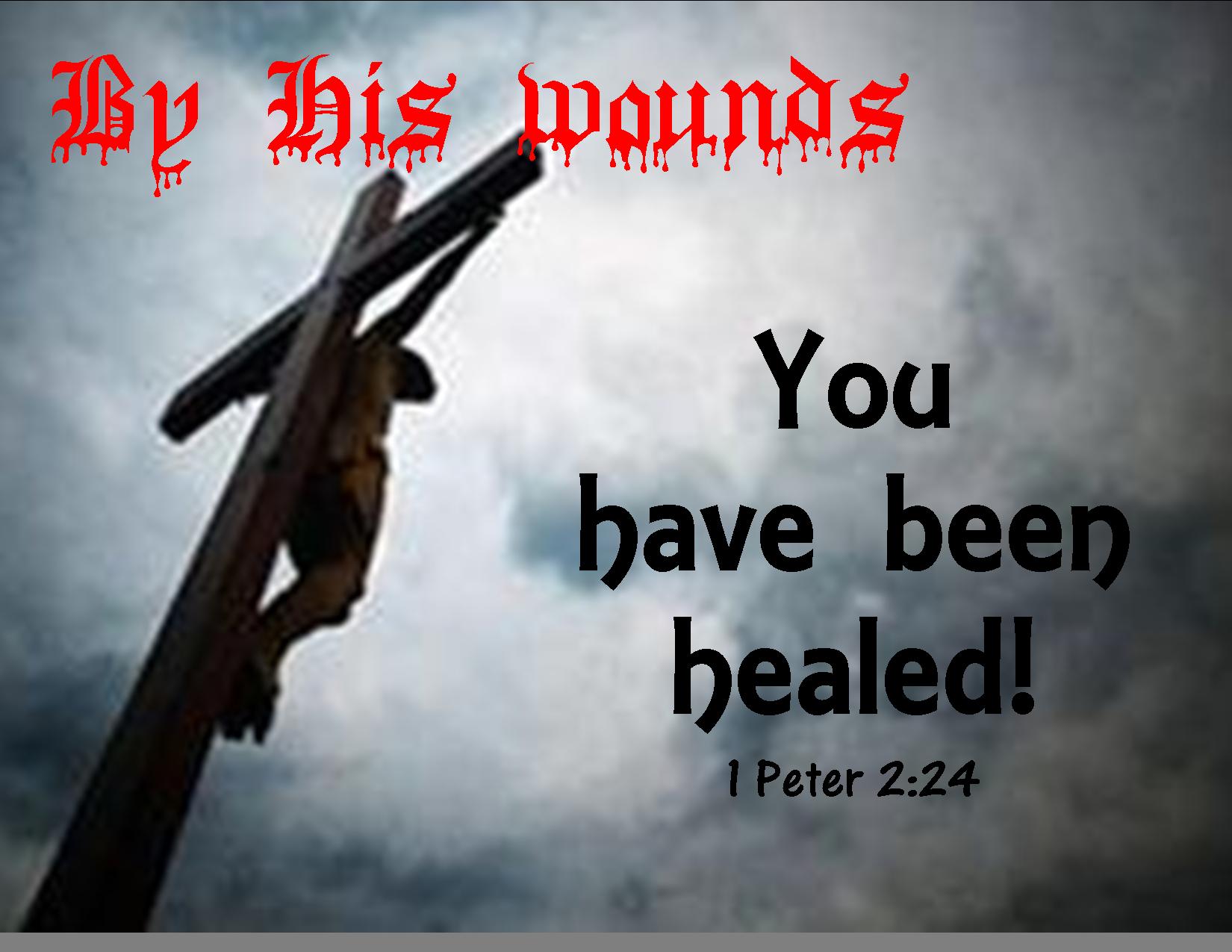
But the fact is, it was our pains He carried—our disfigurements, all the things wrong with us. We thought He brought it on Himself, that God was punishing Him for His own failures. But it was our sins that did that to Him, that ripped and tore and crushed Him—our sins! He took the punishment, and that made us whole. (Isaiah 53:4-5, The Message)

Only One who is fully Man and fully God could know our dis-ease and heal our dis-ease. Jesus is our Healer!

If you’ve missed any of the messages in this series, please check them all out by clicking here.

Where’s God?

It is one of the most painful, gut-wrenching cries in all of history. Hanging on the Cross, suspended between Heaven and earth, Jesus Christ cries out, “My God! My God! Why have You forsaken Me?!”

Ever been there?

Ever been in such a dark, painful place that you wonder if God has abandoned you?

You are not alone.

We’ve all been there. And best of all, Jesus Himself has been there. The Bible tells us that because Jesus has been there—where your pain is so intense, and the darkness is pitch-black—that He is the best One to help you.

Next Sunday we are kicking off a brand new series called Where’s God? In the darkest moments of our lives, where is God? what is He doing? how can anything good come from this? Please come join us.

If you’ve missed any of the messages in this series, check them our here:

Mammon

It’s a funny-sounding word, but it has deadly consequences!

Jesus said we cannot serve both God and mammon (Luke 16:13 KJV). That word mammon had no direct translation in the English language, so the translators of the King James Version of the Bible simply did a transliteration: they took the Greek word and carried the same word into English. The translators of the New International Version did something different with this word: they made it Money, with a capital M.

The idea behind this word is placing our trust or reliance in anything except God. For us, the means of our security and basic living needs seems to be money, so Money (with a capital M) seems like an appropriate way to translate mammon.

Jesus recommended giving an offering—above and beyond our tithe—as a way to defeat the Mammon Monster. Giving our tithe is simply obedience to God’s commands. But giving our offering shows our trust in God’s provision.

Giving an offering to God is counterintuitive.

After all, less money is less than more money! If I receive money, I tend to hang on to it. I tell myself, “This might come in handy if the economy nosedives, or if something unexpected comes up.” When I start thinking this way, I start to make money Mammon, because I see money as my provider, instead of God.

What an appropriate way to wrap up our Live Dead series yesterday, as we made faith promises to God. We said, “God, I believe You will provide the amount of money I should give as an offering. And when You do provide, I promise to give it.” Placing my trust in God not only helps me to live dead to the pull of Mammon, but also Jesus promised—

Give, and it will be given to you. A good measure, pressed down, shaken together and running over, will be poured into your lap. For with the measure you use, it will be measured to you. (Luke 6:38)

I don’t give to get. I give because I trust God to provide.

P.S. By the way, all of the offerings that come in as a result of these faith promises will be going directly to missions. Calvary Assembly of God will not be keeping one cent of these faith promise offerings.

If you’ve missed any messages in our series called Live Dead, you can find them all by clicking here.

I-Have-To-Have-It Attitude

In our Live Dead series, we have been talking about different areas we need to allow to die, so that we might truly live for Christ as His disciples.

One of the things that often gets in the way of our pursuit of Christ is our cravings. This word—which the dictionary defines as a longing or an eager desire—has an interesting origin. The root word in both Latin and Old English means to lay claim to or to demand by right.

In other words, a craving is when something that was originally a want has now become a need in my mind. So I lay claim to it, saying that it’s something that is owed to me.

The Apostle Paul talks about cravings that we all had before we came to know Christ as Savior when he wrote, “All of us also lived among them at one time, gratifying the cravings of our sinful nature and following its desires and thoughts” (Ephesians 2:3).

This same Greek word shows up in Christ’s parable of the sower when He talks about the seed that falls among the weeds. These people, He explains, allow the worries of this life, the deceitfulness of wealth and the desires for other things come in and choke the Word (Mark 4:19).

Gratifying my cravings = Choking out the life of Christ in me

The problem is that this craving or desire for things other than Christ is often an unconscious habit. We have allowed them to become cravings—laying our claim to them as needs—without even realizing it.

The antidote: fasting. When we give up something, the Holy Spirit can show us if that thing has created an I-Have-To-Have-It attitude in our hearts. This spiritual discipline is hard because our bodies will rebel against having to give up “a right.” But when we press through with this discipline of fasting, God describes the results:

Then your light will break forth like the dawn, and your healing will quickly appear; then your righteousness will go before you, and the glory of the LORD will be your rear guard. Then you will call, and the LORD will answer; you will cry for help, and He will say: Here am I. (Isaiah 58:8-9)

That’s how I want to live! So I must live dead to my cravings. I can only do this when I allow a time of fasting to open my heart to hear the Holy Spirit point out all my I-Have-To-Have-It attitudes.

To check out all of the messages in our Live Dead series, please click here.

Live Dead

Put this in the category of “contradiction” or maybe “oxymoron.” However you want to classify it, the phrase just doesn’t make sense to the natural mind. Jesus tells us to die so that we might live

Then Jesus said to His disciples, “If anyone would come after Me, he must deny himself and take up his cross and follow Me.” (Matthew 16:24)

We are to deny our agenda, to follow His.

We are to not seek our advancement, but His.

We are not to pursue our passions, but His.

We have to die to self to live for Him.

We have to live dead.

I’m going to be diving into this topic beginning this Sunday. Many have already purchased a Live Dead journal, in order to take a 30-day journey of building our understanding of what it means to live dead. If you are near Cedar Springs, please join me this Sunday. If you live elsewhere, I encourage you to check out the live dead materials (click here to go to their website), and begin your own journey of dying to yourself so that you might live for Christ.

Check out of the messages in this series:

Start It With Me

Pastors, I wrote earlier about the idea that you have to preach your message to yourself before you preach it you’re your congregation. But I want to back up a step to the motivation for that.

These words from William Law are challenging—

“The first business of a clergyman awakened by God into a sensibility and love of the truths of the Gospel, and of making them equally felt and loved by others, is to thankfully, joyfully, and calmly adhere to and give way to the increase of this new-risen light, and by true introversion of his heart to God, as the sole Author of it, humbly beg of Him that all that he feels a desire of doing to those under his care may be first truly and fully done in himself.”

God, if You want to do something in my congregation, start it with me. Right here, right now, in the privacy of my study, begin with me. When I come before my congregation this weekend, may my life be the example of the work You want to do in us all.

A Sharper Sermon

It’s a lot of work preparing a sermon (and even that is a major understatement!). So if we pastors are going to put all of this effort in, isn’t it right to believe for a great return on that investment?

I’ve got good news and bad news for you—and they’re both the same. Pastor, after all of your hard work preparing your message, there is only one thing you can do: pray.

Sounds simple, right? But if it’s so simple, why are so many church attendees unmoved by the sermons they hear each Sunday (check out this Barna report)?

Here is some good counsel of how we should pray—

“Of what efficacy would be the exterior word of pastors, or even the Scriptures themselves, if we had not within the word of the Holy Spirit giving to the others all their vitality? The outward word, even of the Gospel, without the fecundating, vivifying, interior word would be but an empty sound. ‘It is the letter alone that kills (2 Corinthians 3:6), and the Spirit alone can give us life.’” —Francois Fenelon

“Does anyone of us desire to help the Church of Christ? Then let him pray for a great outpouring of the Spirit. Only the Holy Spirit can give edge to sermons, and point to advice, and power to rebukes, and can cast down the high walls of sinful hearts. It is not better preaching, and finer writing that is needed in this day—but more of the presence of the Holy Spirit.” —J.C. Ryle

If I can add my two cents’ worth to these eminent theologians:

  • Pray before you write your sermon
  • Pray while you’re writing your sermon
  • Pray before you deliver your sermon
  • Pray after you deliver your sermon

And then watch what the Holy Spirit does with your sermon!

Flexibility

I am working through a fascinating devotional book called Live Dead. It’s not just a book, but a challenge to live differently. I strongly encourage you to purchase this book, and then take the Live Dead challenge. With the permission of the book’s editor, I am reproducing Day 22’s challenge.

Flexibility: God’s Music, Written In Three Flats by Bob McCulley

Some of the most dangerous times in our life and ministry are when we lock our dreams and hopes in concrete, when we become so focused on what we are planning to do that we cannot see what God is trying to do. One day, while serving among the Maasai people of East Africa, I was running late for an appointment to meet with the village elders in a place called Mbirikani, which was about an hour away from our home. The purpose of the meeting was to appeal for a site where we could build a church in that village. My planned departure was delayed and my wife, Murriell, tried to soothe my anxiety with the words, “God has everything under control.”

I drove my four-by-four vehicle quickly up the road and was making good time until I got a flat tire, which I hurriedly changed. A few minutes later, I had a second flat and again made a tire change that would make a pit crew proud. Deep in the bush and well off the road, I had a third flat tire, and my third and final spare had to be removed from the luggage rack. In the process of getting it off the roof, it rolled away from me and down the hill into a large clump of thorn brush. By the time I retrieved it, my clothes were torn and my face and arms were bleeding from multiple scratches.

As I was preparing to mount the third spare tire, a Morani, a Maasai warrior, came walking out of the forest and greeted me. I did not wish to have a conversation because I was dirty from changing the flats and was now very late for what I thought was a critical appointment. His greeting was congenial and correct, while mine was harsh and abrupt. But I had good reason: I was late, dirty, bleeding, and angry. His next words stopped me. He knew my name. He had heard me preach a few weeks before, and that morning on awakening had decided to go to town to find me and to ask me to help him receive Christ. He had set off before sunrise to walk about 15 miles to town to find me and only halfway there, had found me on the roadside. I stopped changing the tire, cleaned my hands, and got my Bible out. Soon we were sitting under a thorn tree, reading and praying together as he became a newborn follower of Jesus.

When we were done, he thanked me and disappeared back into the forest, and I sat in wonder of the way God schedules our lives. By then I knew I had been right on time for the only appointment God had scheduled for me that day. I had no spare tires left, so I finished mounting the third spare and turned the truck around and headed home. Days later, I learned that the meeting had been postponed until the following day and our appeal had been granted. The community had given us 10 acres of ground on which to develop the ministry.

Our plans and dreams are often far removed from what God has in mind for us, and a lack of flexibility may cause us to miss Him and to be broken in the missing.

Live Dead Challenge—Look for a way you can be flexible today. Anticipate an interruption and welcome it as an opportunity, an event God has scheduled for you — even if it makes you late or it means that something you planned does not happen. In the days to come, look for ways you can be flexible. In service opportunities down the road, commit to flexing — dying to your plan and schedule that you might live to the surprises God injects in your daily life.

You can order the Live Dead book and other resources by clicking here.

And, for those of you who live in or near Cedar Springs, join us for a series of messages and a free copy of Live Dead in February.

The Danger Of Prayerlessness

I grew up with this powerful reminder: The Church moves forward on its knees. The Church is, of course, made up of individual Christians. So in order for the Church to do anything productively for the Kingdom of God, there must be Christians devoted to private and corporate prayer.

Oswald Chambers gave this warning:

“The prayer of the feeblest saint on earth who lives in the Spirit and keeps right with God is a terror to satan. …No wonder satan tries to keep our minds fussy in active work till we cannot think in prayer.”

This Sunday I am beginning a new series of messages called The Danger Of Prayerlessness. I like to start each new year with a reminder of the power and priority of prayer, because truly the Church does move forward on its knees as Christians move forward on their knees!

“Prayerlessness is expatriation, or worse, from God’s kingdom.” —E.M. Bounds

Expatriation can be defined as simply moving away from one’s homeland. But, even worse, it can also be defined as one who has renounced their citizenship. It is my fervent prayer that this happens to no one who calls themselves a Christian.

I hope you can join me this Sunday for this important reminder about prayer. If you have missed any of the messages in this series, check them out here: