Links & Quotes

When you are waiting for God to fulfill His promise, keep watching with a smile. Let your childlike trust become your testimony as you entrust yourself to your heavenly Father.

I have a lot of new video content on my YouTube channel every week. Please check it out and subscribe so you don’t miss anything.

“The case for the reliability of the New Testament Gospel eyewitness accounts is dependent on the trustworthiness of its authors. In cold-case criminal trials, eyewitness accounts are typically evaluated through the lens four critical questions.” J. Warner Wallace then gives a succinct overview of each of these four questions and the evidence supporting them.

“One can sometimes do good by being the right person in the wrong place.” —G.K. Chesterton 

“A great leader never sets himself above his followers except in carrying responsibility.” —Jules Ormont 

“There is a great difference between worry and concern. A worried person sees a problem, and a concerned person solves a problem.” —Harold Stephens

Influencers Give Away Their Power

Listen to the podcast of this post by clicking on the player below, and you can also subscribe on AppleSpotify, or Audible.

If God has given you influence as a leader, it is never to further your agenda but to help others grow. Leadership is about servanthood. If we try to make leadership about others serving us, we will quickly get ourselves in trouble. 

Check out this full conversation Greg and I had on an episode of The Craig and Greg Show called “The responsibility of power.” 

I unpack this idea of servant-leadership in my book Shepherd Leadership: The metrics that really matter.

A related blog post I reference in this clip is Live like a star.

►► Would you please prayerfully consider supporting this ministry? My Patreon supporters get behind-the-scenes access to exclusive materials. ◀︎◀︎

The Craig And Greg Show: The Responsibility Of Power

Listen to the audio-only version of this podcast by clicking on the player below, or scroll down to watch the video.

It goes without saying, but leadership positions confer a level of power to the people who occupy them. This power is necessary for us as leaders to do our job effectively, but if we’re not very careful it can begin to corrupt us and poison our leadership. Tune in as Greg and I tackle this tricky issue.

  • [0:22] Leaders need both enough power to get things done, but not too much that they crush people. 
  • [1:44] Power can corrupt us if we are unaccountable in the use of our power.
  • [3:12] We should always be thinking in terms of how our use of power can empower others.
  • [5:16] A leader’s power should always be linked to responsibility.
  • [6:27] We earn our power—we don’t grab it form others—to better serve.
  • [9:32] Greg says, “Leadership should be dangerous!”
  • [12:40] Sometimes we must use our power to protect those around us.
  • [16:00] Greg steps into “you know what”!
  • [16:27] Are power and serving compatible?
  • [18:25] What do powerful leaders not want to do?
  • [20:26] When it comes right down to it, the use of leadership really comes down to influence.
  • [22:02] Our coaching services can help you use your power more effectively.

Check out this episode and subscribe on YouTube so you can watch all of the upcoming episodes. You can also listen to our podcast on Spotify and Apple.

Links & Quotes

Premier athletes know the value of flexibility for keeping them in the game. I think we would be wise to practice flexibility in our relationships too—this is definitely a game-changing move! Check out my weekly Monday Motivation videos on my YouTube channel

“The bravest are surely those who have the clearest vision of what is before them, glory and danger like, and yet notwithstanding, go out to meet it.” —Thucydides

This week we remember Columbus Day. You probably remember the rhyme: In 1492, Columbus sailed the ocean blue. Many people have thought Columbus set out to prove the world was round, but the History Channel has a mini-biography that debunks this claim.

One of my YouVersion friends (Nikki) commented a great reminder: “God can do way more with my surrender than with my striving.”

Thomas Zimmerman was an influential leader in the early days of the Assembly of God fellowship’s history. “Over a 50-year period, Thomas F. Zimmerman (1912-1991) served the Assemblies of God as pastor, district official, department leader, assistant general superintendent, and general superintendent. His leadership greatly increased the influence of the Pentecostal movement in the evangelical world, as well as in the broader American religious landscape.”

I post quality content nearly every day. If you don’t have time to read all that I share, please let me read it for you. The Craig T. Owens Audio Blog is just like this blog, except you get to hear me read my blog posts. Check it out my podcast on Spotify, Apple, and even Audible.

“The word ‘hell’ is used in the New Testament fourteen times, twelve times by Jesus Himself. It is not a myth created by dismal and angry preachers. It is a solemn warning from the Son of God who died to deliver sinners from its curse. We ignore it at great risk.” —John Piper

Christian apologist and cold-case detective J. Warner Wallace wrote, “the battleground on the abortion issue is beginning to shift, and this shift is going to cause us to rethink our approach to the debate.” Pro-life advocates need to check out Wallace’s post Justifying Homicide: The Future Battleground In The Abortion Debate.

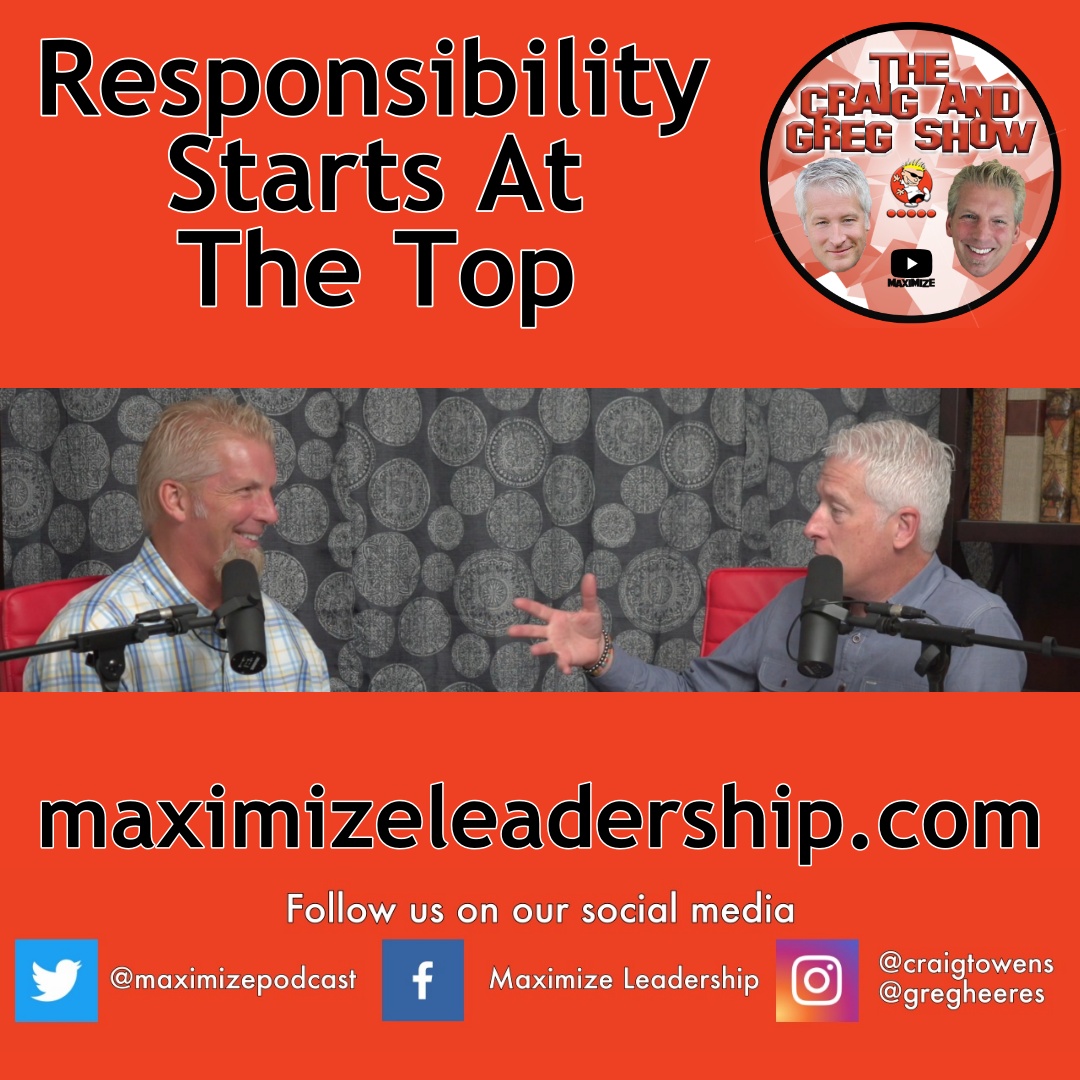
Responsibility isn’t supposed to be fatal! Exceptional leaders accept and promote appropriate responsibility, while weak leaders play the blame game. But accepting responsibility doesn’t mean “falling on your sword”! You can check out the rest of this conversation I had with my podcast partner Greg Heeres on The Craig And Greg Show leadership podcast.

The Craig And Greg Show: Responsibility Starts At The Top

Listen to the audio-only version of this podcast by clicking on the player below, or scroll down to watch the video.

On this episode of “The Craig And Greg Show” we talk about: 

  • [0:55] What’s one of the biggest attributes that sets leaders apart from their peers? 
  • [1:56] Check out why Stephen Covey’s definition of responsibility is so important in our discussion
  • [3:02] Why do people like to play “the blame game”?
  • [4:18] Accountability must be a partner with healthy responsibility
  • [4:52] Greg learned the blame game early on with his younger sister
  • [5:57] I worked in an unhealthy organization where the senior leader never accepted personal responsibility
  • [8:04] How do leaders “own it” in a healthy way?
  • [9:22] Exemplary leaders demonstrate how to accept consequences in a healthy way
  • [10:34] Responsibility and coachability strengthen a team and unleash greater potential
  • [11:27] Blame is “so dang easy” and makes the blamer a laughingstock
  • [13:27] What things contribute to blaming?
  • [14:14] How Greg handled the compliments and complaints from his clients
  • [15:11] Blaming is a spreading cancer in your organization
  • [15:44] Being a control freak isn’t the same thing as taking responsibility
  • [17:01] There is a balance for leaders so they don’t “fall on their swords”
  • [18:49] Team sports give us a good analogy of what shared responsibility looks like
  • [21:07] What’s on the other side of responsibility and blame?
  • [21:47] Leaders can enhance the benefits of responsibility through self-reflection
  • [23:51] Greg has a memorable and disarming way of helping people accept responsibility
  • [24:27] Our coaching huddles can help you learn to enhance the benefits of responsibility in your personal leadership

Check out this episode and subscribe on YouTube so you can watch all of the upcoming episodes. You can also listen to our podcast on Spotify and Apple.

Responsibility And Accountability

Listen to the podcast of this post by clicking on the player below, and you can also subscribe on AppleSpotify, or Audible. 

God had a rather simple message for Ezekiel, “The word of the Lord came to me: ‘Son of man, speak to your people’” (Ezekiel 33:1–2). 

I find that pronoun “your“ intriguing because you would think that God would say, “My people.” They are indeed God’s people, but God had set Ezekiel apart as His watchman (vv. 7–20), so Ezekiel had to take personal responsibility for the people. They were to be treated and spoken to as though they were indeed his people. 

This idea of responsibility gets a little tricky for some leaders because, with the responsibility to their people, they usually feel they are accountable to their people as well. 

But in the next few verses, God makes it clear that Ezekiel must be accountable to God alone.

Responsible to his people. Accountable to his God. 

When we start feeling we are accountable to people, we can get distracted, discouraged, or derailed by their unpleasant responses. 

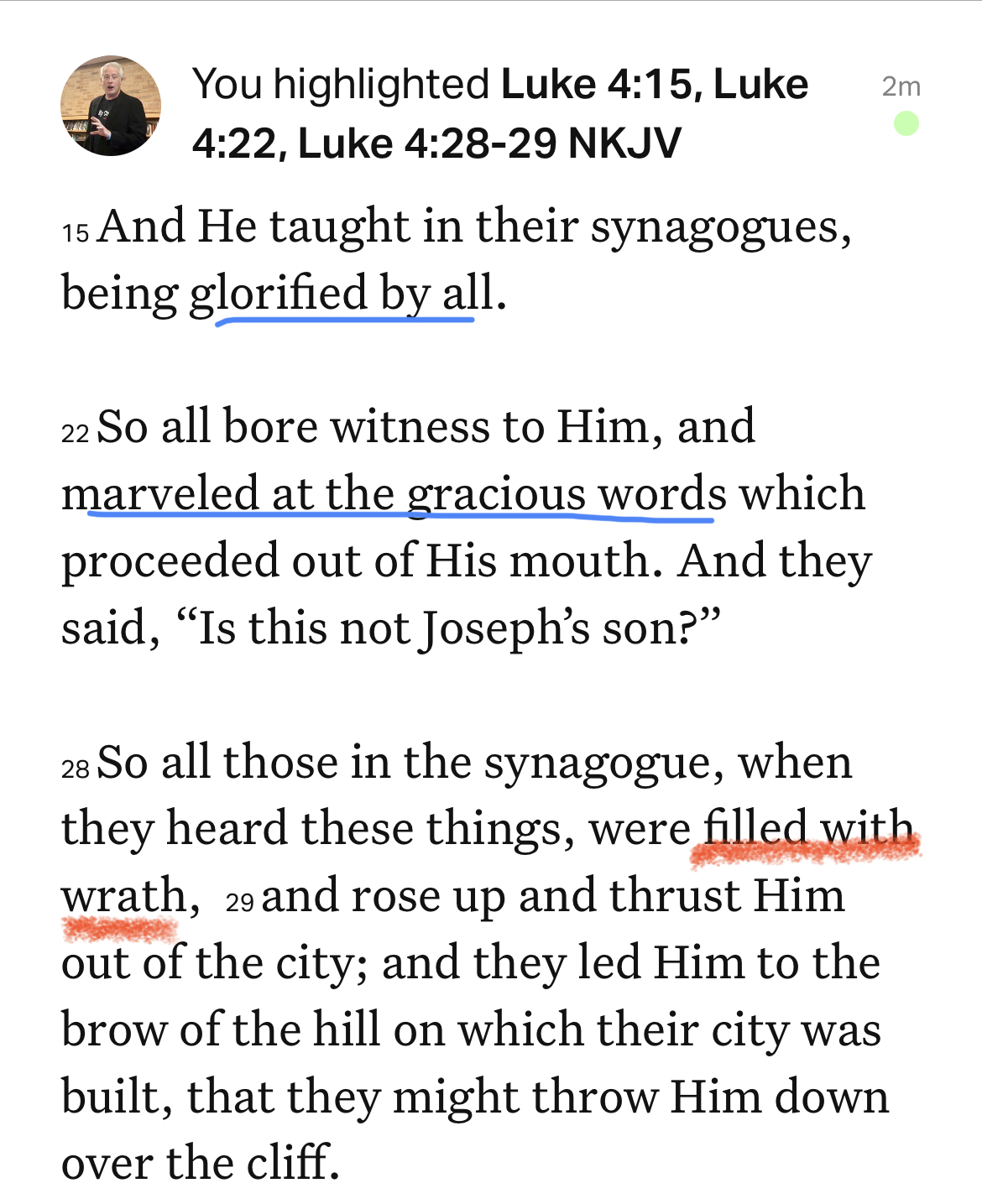
Notice that when Jesus spoke pleasing words to people, everyone spoke well of Him. But when He pointed out to them the words of God they were ignoring, they were ready to kill Him. 

People are fickle—they sing praises when they hear those words they like, and they are ready to attack the messenger when the words are upsetting. 

A mark of a godly leader is one who has a clear understanding of his responsibility and his accountability.

When you are God’s leader, He will entrust people to your care and He will entrust His message for those people to you. You are now responsible to deliver His message to your people. You are then accountable to God alone for delivering His message. Be responsible to people, accountable to God, and be careful not to mix the two. 

This is part 66 in my series on godly leadership. You can check out all of my posts in this series by clicking here.

►► Would you please prayerfully consider supporting this ministry? My Patreon supporters get behind-the-scenes access to exclusive materials. ◀︎◀︎

Trading Rights For Responsibilities

Listen to the podcast of this post by clicking on the player below, and you can also subscribe on AppleSpotify, or Audible. 

“When you become a leader, you lose the right to think about yourself.” —Gerald Brooks 

Sadly, I encounter far too many “leaders” (at least they are leaders in title only) who think being a leader means they have more rights. It might be the right to a better parking place, or to be first in line, or to ignore some of the rules that others have to follow. 

That certainly wasn’t the attitude of the apostle Paul in 1 Corinthians 9, a chapter which the NIV gives the heading ‘Paul Gives Up His Rights’:

Since we have planted spiritual seed among you, aren’t we entitled to a harvest of physical food and drink? If you support others who preach to you, shouldn’t we have an even greater right to be supported? But we have never used this right. We would rather put up with anything than be an obstacle to the Good News about Christ. (1 Corinthians 9:11-12 NLT) 

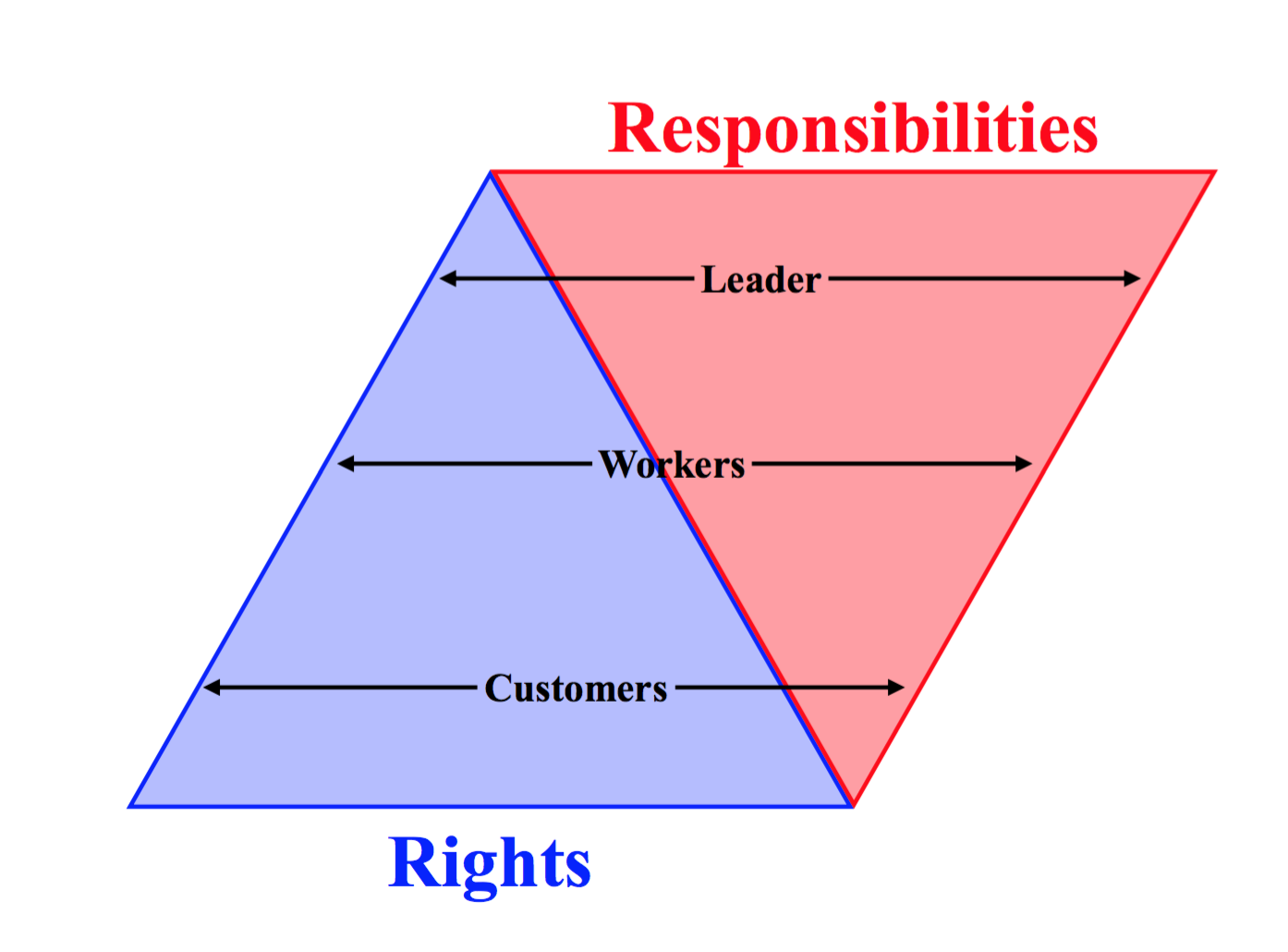
Paul said the natural thing was for those in leadership to feel entitled to certain rights, but the spiritual thing is to turn those rights into responsibilities toward the people around us. 

Spiritual leadership is not about gaining more rights, it’s about fulfilling God-given responsibilities. In fact, the higher you progress in a leadership role, the fewer rights you have. Godly servant leaders gladly trade rights for responsibilities. 

A mark of a godly leader is one who has stopped demanding his “rights.”

To trade our rights for responsibilities is a sacrifice. But I don’t mean a sacrifice that comes with a “Woe is me!” feeling. God will only ask us to sacrifice what is holding us back. God wants to use His leaders to minister to His people. He will not give us a larger position if we are only going to use that for our own benefit.

Consider the rights Jesus had because He was fully God. Yet He made the ultimate rights-for-responsibilities sacrifice by going to the Cross in our place. “The Son of Man did not come to be served, but to serve, and to give His life as a ransom for many” (Mark 10:45). 

Leaders, I encourage you to ask the Holy Spirit to show you where you may be clinging to your rights, and how you can exchange those rights for responsibilities to the people God has placed under your care.

This is part 65 in my series on godly leadership. You can check out all of my posts in this series by clicking here. 

►► Would you please prayerfully consider supporting this ministry? My Patreon supporters get behind-the-scenes access to exclusive materials. ◀︎◀︎

6 Quotes From “Voice Of A Prophet”

Listen to the podcast of this post by clicking on the player below, and you can also subscribe on Apple or Spotify.

A.W. Tozer pulls no punches in the way he confronts modern-day preachers (those he calls “sons of the prophets”). He challenges pastors to return to the Scriptures, hit their knees in prayer, and do some serious soul searching on where they may be falling short of the standard set by the biblical prophets. You can read my full book review of Voice Of A Prophet by clicking here. 

“It is not the messenger, it is the message that needs to be proclaimed. If you study the Old and New Testaments you will discover that no prophet can ever be a celebrity. The most significant thing about the prophet is the message he conveys, and that message had better by rooted in the heart of God.” 

“The responsibility of the prophet is not to come up with his own message, but to faithfully deliver the message—the warning—that is coming from God.” 

“The song of the prophet is, ‘Thus saith the Lord.’ Any other song will never do for God’s man to be God’s voice to his generation.” 

“God takes so much delight in us that He will go to any length to bring us back to that delight.” 

“Jesus said that our problem is a spiritual danger, not a physical danger, and our visible enemies are rarely our real enemies. The man who comes at you with a gun is not your real enemy, though his intention may be to kill you. Your real enemy is that enemy within you that makes you vulnerable to him. Esau was Jacob’s enemy because of what Jacob had done to him, but Esau was not Jacob’s real enemy. Jacob was Jacob’s enemy. The crookedness in Jacob’s heart was against Jacob, and when God straightened that out, Esau was not his enemy anymore.” 

“Well do I know, Thou God of the prophets and the apostles, that as long as I honor Thee Thou will honor me. Help me therefore to take this solemn vow to honor Thee in all my future life and labors, whether by gain or by loss, by life or by death, and then to keep that vow unbroken while I live. … Save me from the error of judging a church by its size, its popularity or the amount of its yearly offering. Help me to remember that I am a prophet—not a promoter, not a religious manager, but a prophet. Let me never become a slave to crowds.” 

Would you please prayerfully consider supporting this ministry?

An Awesome Privilege And Responsibility

…Joshua the high priest… (Zechariah 3:1). 

The way that God talks about Joshua the high priest is quite informative for anyone in a position of godly leadership. 

From this passage [Zechariah 3:1-10] we learn that God’s leaders are…

  • … standing in God’s presence 
  • … opposed by satan
  • … protected by God
  • … anointed, empowered, and inflamed by God
  • … cleansed by God
  • … admonished by God to live up to the highest standards of righteousness
  • … given rewards for their righteousness
  • … used by God to accomplish His plan

Being a leader is an awesome privilege and responsibility! This is not a position anyone should seek for themselves (James 3:1; Jeremiah 45:5). 

A mark of a godly leader is one who feels the weight of God’s calling. 

This is part 31 in my series on godly leadership. You can check out all of my posts in this series by clicking here.

11 Quotes From “The Nehemiah Code”

All of us have opportunities where we need to rebuild something that has fallen apart. O.S. Hawkins uses the example of Nehemiah in the Bible to teach us highly applicable rebuilding principles. You can check out my full book review by clicking here. 

“One never rebuilds until he personally identifies with the need and weeps over the ruins. … Sadly, there are many who are simply not grieved or burdened about the walls in their lives that are broken and in need of rebuilding. It has been far too long since some of us have ‘sat down,’ much less ‘wept, and mourned for many days.’” 

“Those who play the blame game never get the task of rebuilding completed.” 

“True rebuilders identify with the fears and failures of those around them. They take personal responsibility for the situation—even if the problems didn’t begin with them.” 

“Opportunities most often come our way when we are knocking on the door and not simply waiting for an opportunity to knock.” 

“Nehemiah was able to convince the people to adopt his vision because he followed three vital rules in goal setting: they were conceivable, believable, and achievable.” 

“Note the repetition of the plural personal pronouns in his challenge: ‘we … us … we’ (Nehemiah 2:17). Nehemiah was smart enough to incorporate a lot of plural pronouns. He was subtly motivating his people to work with him and not for him.” 

“Nehemiah left us a stellar example to follow by laying out five important principles that are essential to the delegation process: set clear objectives with specific tasks, pick the right person for the right job, be an example yourself, hold others accountable, and be generous in giving genuine pats on the back.” 

“When it comes to personal relationships, we all need someone to whom we are accountable. Someone who will remind us of God’s standards and give a gentle nudge—or shove—when we stray from those standards. Without such a friend, the result is often self-reliance, self-righteousness, self-sufficiency, and self-centeredness, rather than God-centeredness.” 

“The fatigue factor is often at the root of our own failures. We simply give out and become too tired to go on, so we are then tempted to give in and to give up. When fatigue sets in during the rebuilding process, it brings along with it a loss of perspective, and little things often become much bigger than they really are. …Fatigue pulled their focus from their goal and placed it upon the rubbish, which led to frustration.” 

“People have a way of rallying around a cause if they are convinced that God is in the midst of it. Which voice do the troops hear from your mouth? Is it the voice of Sanballat and ‘We won’t’? Is it the voice of Judah and ‘We can’t’? Or is it the voice of Nehemiah and ‘God will!’?” 

“At last, the goal was in sight. The finish line. ‘Mission Accomplished’ just ahead. But be warned: this is the most dangerous point in any rebuilding process. This is when the enemy comes along with one final attempt to divert us from our goal. …It is not so much how long our personal race may be, nor even how difficult the obstacles we face along the way, but it is how we finish that matters most.”