9 Quotes From “Take Your Life Back”

take-your-life-backStephen Arterburn and David Stoop have given us a great resource if we are struggling to free ourselves from the wounds that are trapping us in a reactive life. I truly believe Take Your Life Back will start many people on a journey of healing. Check out my full book review by clicking here, and then check out a few quotes from this helpful book.

“When we’re constantly looking at what’s happening with other people and measuring our satisfaction based on how fairly we feel we’ve been treated, we are forever at the mercy of what is going on over there. We’ve wired ourselves to react to whatever scale of comparison we’ve established.”

“The real self, quite simply, is the self that God sees. He sees it all, with all its flaws. He does not approve of or endorse everything He sees, but He loves the person He sees. He does not see an idealized self, free of sin. He sees the real self—sinful, doubtful, and flawed—and yet He accepts the reality of it and loves us in spite of it all.”

“Our reactions to pain and our adaptations to it are unique to ourselves; we are not all the same. But we have several things in common: In one way or another, we have turned our back on reality, and we have allowed all, or portions, of our lives to be controlled by another person, a destructive pattern, or unrealistic expectations. We live on the edge of almost. We are almost breaking free, or we are almost free. We are almost fed up or almost ready to take our lives back.” 

“Denial keeps us from addressing the things we can change, causing us to think that our inability to change everything means we can’t change anything. … Because we either don’t or won’t see how far we are from living the life that God intends for us, we stay in our denial and wait for the magic cure that never materializes. But when we admit that we’re in denial, and when we are willing to break through it, we can begin to move into recovery.”

“When we talk about the elephant in the room, we have a way of describing it as a small rodent. Our internal application for minimizing language automatically converts words like pain into irritation; devastating into difficult; abusive into insensitive; and horrific into unpleasant. Our self-talk is unrealistic, so whenever we communicate with someone else, we present our overwhelming problems as manageable situations that we have completely under control. Because we don’t acknowledge the full scope and intensity of our struggles, we don’t act in realistic ways to free ourselves and take our lives back. We minimize in order to give ourselves permission to do little or nothing to change.”

“Toxic shame undermines our will and our power to stand up for ourselves. … Toxic shame carves out a new normal for those who partake of its poisonous fruit. Rather than seeing themselves as human beings who have made a few mistakes—maybe even some really big mistakes—people who are saturated with toxic shame see their failures as an objective expression of who they are. Before long, they don’t even try to avoid future mistakes. They don’t learn from their errors because they don’t think they can, or need to, learn anything. Repeated mistakes are simply a self-fulfilling prophecy that their shame as written for them. …

“Toxic shame…blinds us to wisdom and insight. It prevents us from cleaning up after ourselves. We start to live in the debris of past mistakes, and that leads us to more debris-producing decisions. We fill our lives with problem after problem because we don’t think we can do any better.”

“There is such a thing as good shame. A better term for it might be godly sorrow. …

“Godly sorrow is a warning sign that we are on the wrong path and need to make some adjustments. Any mistakes we make are not seen as the inevitable result of who we are but as stark reminders that—because of who we are, created in the image of God—we can do better. We are genuinely sorry that we fell short, hurt ourselves or other people, or simply created a lot of hassle that has kept us from living in the good things that God has for us. However, our defective behavior is rightly seen as separate from our identity. Making a mistake doesn’t mean that we are a mistake; it’s simply evidence that we are like every other human being—completely capable of many things, including mistakes. …

“Godly sorrow is a prompt from God, and from a well-developed conscience, that we need something more to achieve all that we want to accomplish. We respond to healthy shame with the desire to get better or do better….”

“Tough love says that I will choose to not give you what you want if it prevents you from attaining what you need.”

“Taking your life back is not just about deciding to defend yourself. It is about finding and removing roadblocks, sinkholes, and dead ends that have disconnected you from other people and stopped your journey from going forward together.”

Jesus Is The All-Mighty One

light-and-truth-revelation“Yes, says the apostle [John], Jesus is mighty. Whatever appearances may say; whatever we might be tempted to infer from the power of the world and the weakness of the church; from the prevalence of evil and the scantiness of good; from the depression of His friends, and the elevation of His enemies—He is mighty—mighty in Himself, and in all things pertaining to Him.

“His Word is mighty; His gospel is mighty; His purposes are mighty; the arm with which He wields the world’s scepter, and holds satan’s bridle, is mighty. He is mighty over the world, and in the world; mighty over the church and in the church, and in behalf of the church; so mighty, that no weapon forged against her, or against one saint, shall prosper; so mighty, that she is entirely safe—secure in the midst of danger, and wiles, and power.

“All His strength is ours; it belongs to the Church; it belongs also to each member of His body. We are strong in the Lord.” —Horatius Bonar, in Light & Truth: Revelation

Undefeated!

the-christian-in-complete-armour“Historians tell us that Trajan tore his own clothes to bind up his soldiers’ wounds. The Bible tells us Christ poured out His very blood as balm to heal His saints’ wounds; His flesh was torn to bind them up. For bravery none compares with our Lord. He never turned His head from danger, not even when hell’s hatred and heaven’s justice appeared against Him. … satan could not overcome Him—our Savior never lost a battle, not even when He lost His life. He won the victory, carrying His spoils to heaven in the triumphant chariot of His ascension.” —William Gurnall, in The Christian In Complete Armour

The Legacy Of Amos Alonzo Stagg

This is an excerpt from Mark Batterson’s powerful book Chase The Lion

chase-the-lion“When I hear the word legacy, I think of Amos Alonzo Stagg. You can’t walk very far on the University of Chicago campus without bumping into his legacy. As the coach of the original Monsters of the Midway, Coach Stagg led the university to two national titles in 1905 and 1913.

“His football legacy includes the huddle, the Statue of Liberty play, the onside kick, the T-formation, the end-around, and the forward pass. In other words, he practically invented the game of football as we know it. But that isn’t his most enduring or most endearing legacy.

“When Coach Stagg accepted the invitation to coach, he gave the university president a speech of sorts: ‘After much thought and prayer, I decided that my life can best be used for my Master’s service in the position you have offered.’ Amos Alonzo Stagg coached until the age of ninety-eight. But he did more than coaches players; he discipled them. He was a priest-coach. After one of his most successful seasons, a well-intentioned reporter congratulated Stagg on a job well done. Coach Stagg courteously cut him short. ‘I won’t know how good a job I did for twenty years,’ Coach Stagg said. ‘That’s when I’ll see how my boys turned out.’”

Kids In Jesus’ Day

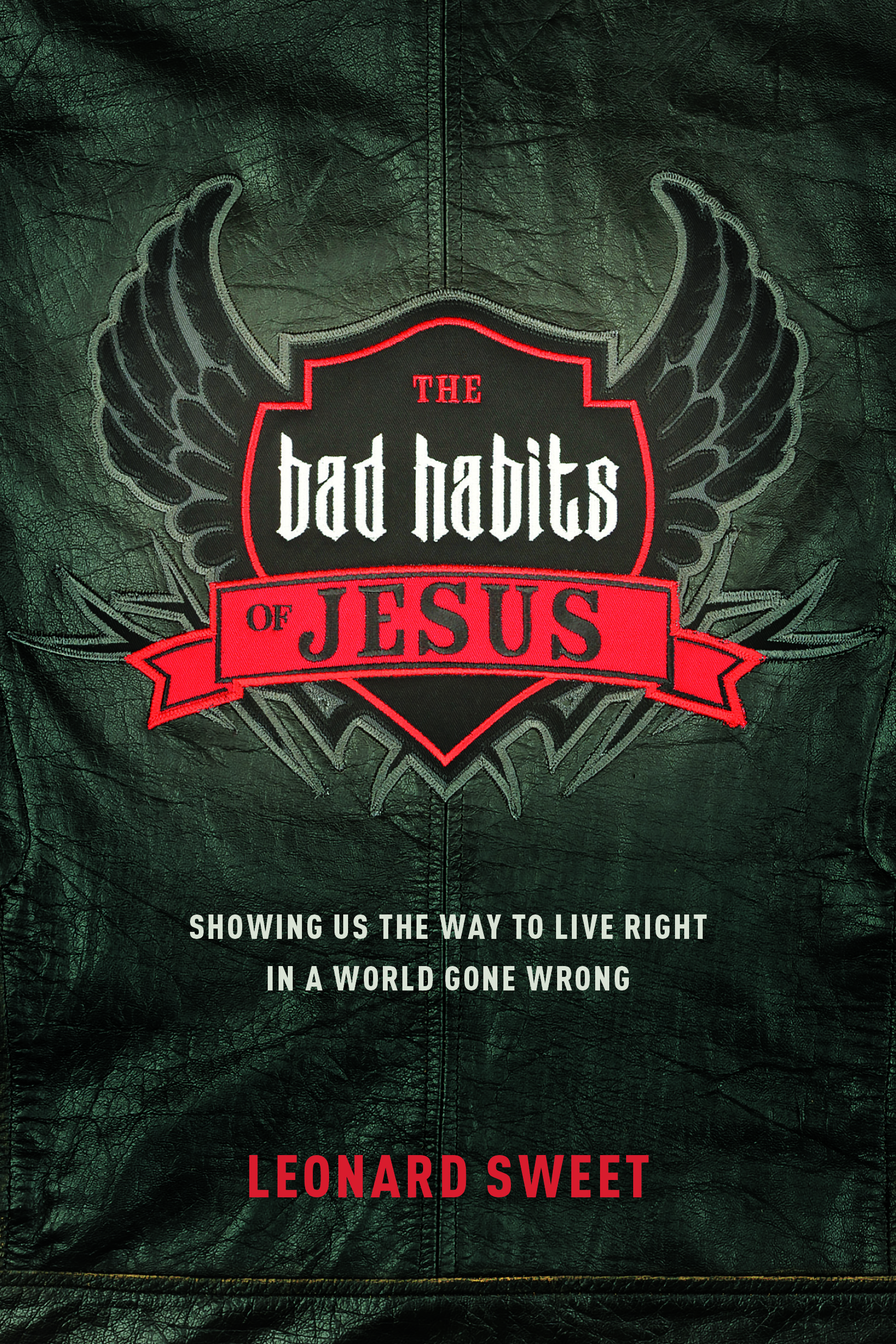
the-bad-habits-of-jesus“Kids in Jesus’ day were to be seen and not heard. Small children (under age 5) were associated with death. All children were associated with dirt, noise, and annoying habits. It went without saying that they shouldn’t bother the rabbi.

“Even Jesus’ disciples thought He wouldn’t want to be interrupted by rambunctious children. Sound familiar? Many of our churches today banish children to distant parts of the building during worship, then bemoan their absence from church when the same kids reach adulthood. Instead of Jesus’ ‘Let the children come unto Me,’ the church says, ‘Let us babysit your kids while we dazzle you adults in worship.’

“Jesus’ idea of children and childhood was radically different from what was normal in His day. Jesus taught a faith that you might call adultproof. Today we childproof our medicine and our faith, making them as hard for children to get into as possible. In contrast, Jesus made faith child friendly and adult averse, meaning Jesus did everything He could to protect children’s faith from adults and to help even the most adultish among us become more childlike so as to get into the Kingdom without messing it up.” —Leonard Sweet, in The Bad Habits Of Jesus

11 Quotes From “Your Next 24 Hours”

your-next-24-hoursHal Donaldson makes the case that a revolution of kindness can be started by what you do in the next 24 hours. It’s a great book! Check out my review of Your Next 24 Hours by clicking here, and then enjoy some of these quotes that I found enlightening.

“Think of your heart as a bank vault that’s packed with the currency of love and kindness. When that currency is hoarded—it is wasted. But when it is invested in the lives of others, it pays great dividends. With each disbursement, you give others strength, hope, and value.”

“You have a unique capacity to bring hope and beauty to the world. Don’t waste your precious energy using the wrong ruler. Granted, not everyone will acknowledge your unique gifts. But don’t allow how others see you to dictate how you see yourself. The words they use to describe you don’t define you. You can’t control how they respond to you, but you can influence what they have to respond to.”

“If all you possess are two hands, collect trash along the way. If all you own is a smile, use it to befriend someone who is lonely. If all you have is an umbrella, share it with someone who is quivering in the rain. If all you have is a kind word, encourage those who think the world is against them. To the lonely, rain-soaked, and downtrodden, your resourcefulness is their miracle.” 

“If enough families are built on a foundation of kindness, communities will see crime rates fall, domestic disputes decline, suicides drop, teen pregnancies wane, and cases of child abuse fade.”

“Whenever you see injustice, it’s safer to ignore it and do nothing. When you raise your voice in defense of others, you put yourself at risk. Retreating will protect you temporarily, but that approach only perpetuates more injustice and suffering. Don’t allow the threat of retaliation to make you a spectator.”

“From a heart of kindness, will you stand and say, ‘There are no second class citizens—nor should anyone be made to feel like one. Every life is precious to God and must be treasured, because “injustice anywhere is a threat to justice everywhere”?’ Remember, your voice is a vote for justice; your silence may be interpreted as a vote for injustice.”

“To offer the right prescription of hope and encouragement, you need to be emotionally and spiritually prepared.” 

“No life experience should be wasted, because crises teach patience, empathy, and perseverance.”

“Make it your goal to do more for your friends and family members than they do for you. When they are facing hardship, make an effort to be by their side. They may not know how to ask for help, so don’t be afraid to be proactive.” 

“Occasional kindness has limited power. But relentless kindness has the power to restore, inspire, rescue, and unite.”

“Your acts of kindness are an outward expression of the love and happiness that are in your heart.” 

I’ll be sharing more quotes from this wonderful book soon. To be notified right away when these quotes are posted, enter your email address to subscribe. Also be sure to follow me on Twitter and Tumblr, where I share quotes from Hal Donaldson and other thought-provoking people every day.

The Resurrection Of Jesus Makes All The Difference

more-than-a-carpenter“When Jesus was crucified, His followers were discouraged and depressed. They no longer had confidence that Jesus had been sent by God, because they believed anyone crucified was accursed by God. They also had been taught that God would not let His Messiah suffer death. So they disbursed. The Jesus movement was all but stopped in its tracks. Then, after a short period of time, we see them abandoning their occupations, regathering, and committing themselves to spread a very specific message—that Jesus Christ was the Messiah of God who died on the Cross, returned to life, and was seen alive by them. And they were willing to spend the rest of their lives proclaiming this, without any payoff from a human point of view. It’s not as though there were a mansion awaiting them on the Mediterranean. They faced a life of hardship. They often went without food, slept exposed to the elements, were ridiculed, beaten, imprisoned. And finally, most of them were executed in torturous ways. For what? For good intentions? No, because they were convinced beyond a shadow of a doubt that they had seen Jesus Christ alive from the dead. What you can’t explain is how this particular group of men came up with this particular belief without having had an experience of the resurrected Christ. There’s no other adequate explanation.” —J. P. Moreland, quoted in More Than A Carpenter

Unforgiveness

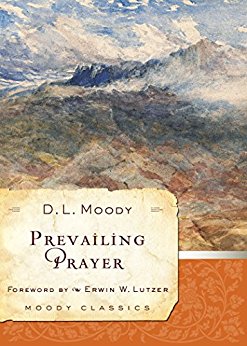
moody-forgivenessFrom D.L. Moody’s book Prevailing Prayer

“I believe this is keeping more people from having power with God than any other thing—they are not willing to cultivate the spirit of forgiveness. If we allow the root of bitterness to spring up in our hearts against some one, our prayer will not be answered.” …

“It may be that you are saying: ‘I do not know that I have anything against anyone.’ Has anyone anything against you? Is there someone who thinks you have done them wrong? Perhaps you have not; but it may be they think you have. I will tell you what I would do before I go to sleep tonight; I would go and see them, and have the question settled. You will find that you will be greatly blessed in the very act.” …

“It is human to err, but it is Christ-like to forgive and be forgiven.” …

“As Matthew Henry says: ‘We do not forgive our offending brother aright nor acceptably, if we do not forgive him from the heart, for it is that God looks at. No malice must be harbored there, nor ill will to any; no projects of revenge must be hatched there, nor desires of it, as there are in many who outwardly appear peaceful and reconciled. We must from the heart desire and seek the welfare of those who have offended us.’”

Check out more quotes from Prevailing Prayer by clicking here.

Check out my review of Prevailing Prayer by clicking here.

13 Quotes From “Prevailing Prayer”

prevailing-prayerD.L. Moody challenges all Christians to stick with prayer a little longer. Far too many of us give up too soon, and miss out on the miracle God wants to do. Check out my review of Prevailing Prayer by clicking here.

“The two first and essential means of grace are the Word of God and Prayer. … If we read the Word and do not pray, we may become puffed up with knowledge, without the love that buildeth up. If we pray without reading the Word, we shall be ignorant of the mind and will of God, and become mystical and fanatical, and liable to be blown about by every wind of doctrine.”

“The reason we so often fail in moving our fellowmen is that we try to win them without first getting power with God. Jesus was in communion with His Father, and so He could be assured that His prayers were heard.”

“It is not by eloquent sermons that perishing souls are going to be reached; we need the power of God in order that the blessing may come down.”

“Our Master’s prayers were short when offered in public; when He was alone with God that was a different thing, and He could spend the whole night in communion with His Father. My experience is that those who pray most in their closets generally make short prayers in public.”

“In Proverbs 28:9 we read, ‘He that turneth away his ear from hearing the law, even his prayer shall be abomination.’ Think of that! It may shock some of us to think that our prayers are an abomination to God, yet if any are living in known sin, this is what God’s Word says about them.” 

“There is a great deal more said in the Bible about praise than prayer; yet how few praise-meetings there are! David, in his Psalms, always mixes praise with prayer. Solomon prevailed much with God in prayer at the dedication of the temple; but it was the voice of praise which brought down the glory that filled the house. … However great our difficulties, or deep even our sorrows, there is room for thankfulness.”

“Even if nothing else called for thankfulness, it would always be an ample cause for it that Jesus Christ loved us, and gave Himself for us.”

“When the church, the pulpit, and the pew get united, and God’s people are all of one mind, Christianity is like a red-hot ball rolling over the earth, and all the hosts of death and hell cannot stand before it.”

“We are not told that Jesus ever taught His disciples how to preach, but He taught them how to pray. He wanted them to have power with God; then He knew they would have power with man.” 

“It is not the most beautiful or the most eloquent language that brings down the answer; it is the cry that goes up from a burdened heart.”

“Some people think God does not like to be troubled with our constant coming and asking. The only way to trouble God is not to come at all. He encourages us to come to Him repeatedly, and press our claims.”

“The Lord delights in hearing His children make their requests known unto Him—telling their troubles all out to Him; and then we should wait for His time.”

“Let our prayer be that God may advance His work, not for our glory—not for our sake—but for the sake of His beloved Son whom He hath sent.”

Prevailing Prayer (book review)

prevailing-prayerWhile I was growing up I heard an oft-repeated phrase around our church: “I prayed it through.” I think this would resonate with the heart of Dwight Moody, as he clearly articulates this concept in his book Prevailing Prayer.

Quite simply, Moody defines prevailing prayer as prayer that “involves the whole of our being. It affects our minds because we are occupied with God; it affects our wills because we desire to be yielded to God; and it affects our emotions because we are consumed with a love for God.” But many people—even seasoned Christians—wold probably confess that praying like this is challenging. Moody would agree with this, which is why he has given us such a practical book.

Moody not only lays out for us what will increase the likelihood that we will prevail in prayer, but he also diagnoses some of the roadblocks to this kind of consuming prayer. Each chapter links with the other chapters to build a convincing case that every Christian can learn how to prevail in prayer.

Moody uses stories from the Bible, stories from his own life and ministry, quotes from other Christian thinkers, as well as common-sensical ideas to create a desire to pray in this powerful, sustained way.

Whether you are a brand new Christian or a “seasoned saint,” Prevailing Prayer will energize your prayer life!