Read More And Read Better

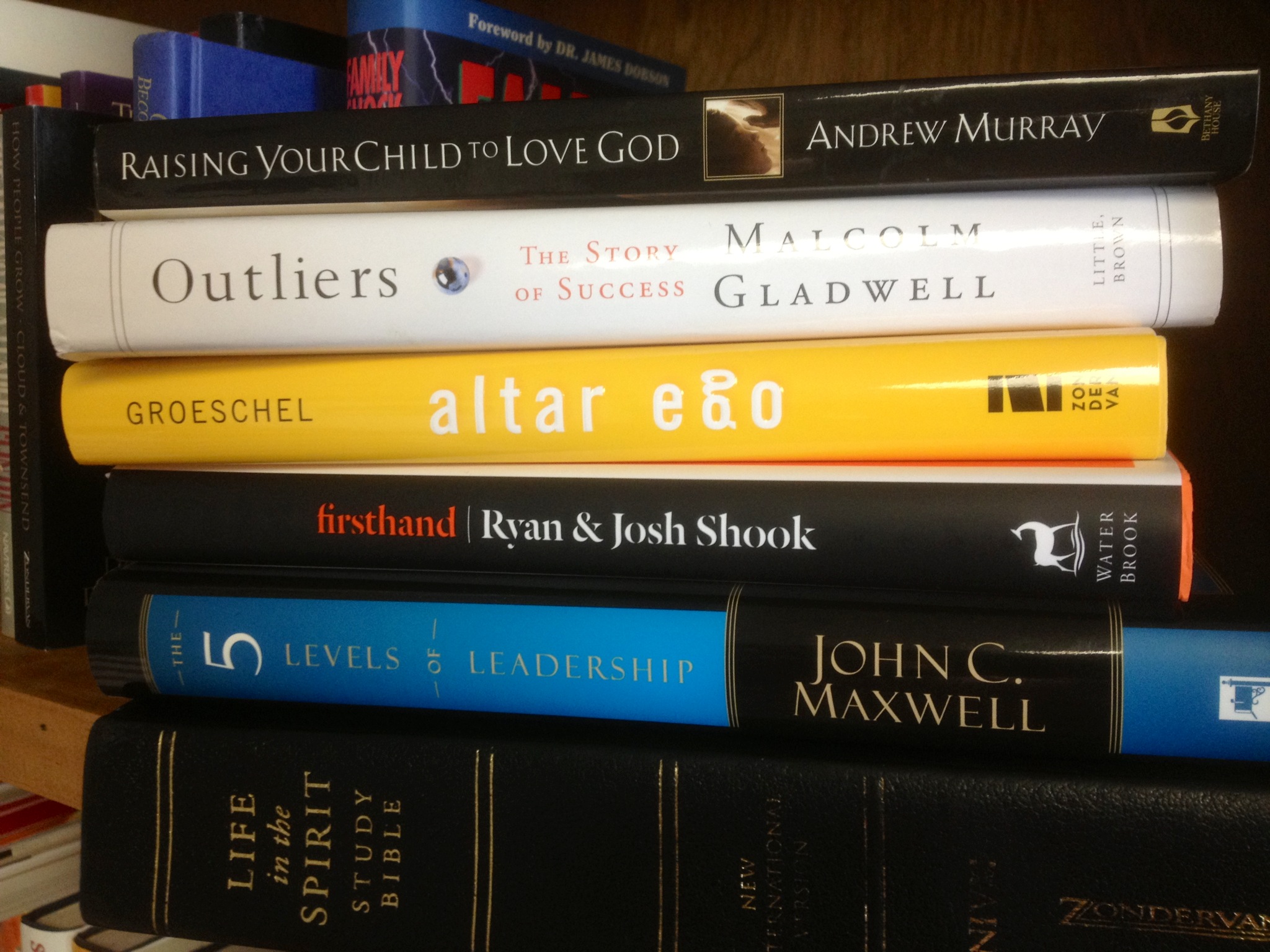
It’s no secret that I like to read. I read a little for pleasure, but mostly I read because it makes me a better Christian, a better husband, a better dad, a better preacher. It expands my horizons. It gives me new ideas. It teaches me life lessons. It gives me insights to share with others.

My first priority is to read my Bible every day, and then all of my other reading is filtered through that prism of Scripture. I don’t read only “Christian” books, but I do only read good books.

It’s true: Leaders are readers. If you want to lead more and lead better, read more and read better.

“When a very young minister, I asked the famous holiness preacher, Joseph H. Smith, whether he would recommend that I read widely in the secular field. He replied, ‘Young man, a bee can find nectar in the weed as well as in the flower.’ I took his advice (or, to be frank, I sought confirmation of my own instincts rather than advice) and I am not sorry that I did. John Wesley told the young ministers of the Wesleyan Societies to read or get out of the ministry, and he himself read science and history with a book propped against his saddle pommel as he rode from one engagement to another.” —A.W. Tozer

“Keep yourself full with reading. Reading gives you a vocabulary. Don’t read to remember; read to realize.” —Oswald Chambers

“It is a dreadful deception that learning and mental growing are strictly associated with school. Good reading should be the vocation of a lifetime.” —John Piper

“Paul says to Timothy, so he says to everyone, ‘Give yourself to reading.’ He who will not use the thoughts of other men’s brains proves that he has no brains of his own. You need to read. Renounce as much as you will all light literature but study as much as possible sound theological works, especially the Puritans and expositions of the Bible. The best way for you to spend your leisure is to be either reading or praying.” —C.H. Spurgeon

“The reading of all good books is like conversation with the finest men of past centuries.” —Rene Descartes 

“After all that professors may do for us, the real University is a collection of good books.” —Thomas Carlyle

“Ignoring good books enfeebles vision and strengthens our most fatal tendency; the belief that the here and now is all there is.” —Allan Bloom

10 Quotes From “You Don’t Need A Title To Be A Leader”

You Don't Need A Title To Be A LeaderMark Sanborn has given us a wonderful book to help people be more well-rounded in their leadership, whether they have a title or not. You can read my full book review by clicking here. These are some of the quotes from this book that caught my eye.

“Leaders, untitled or otherwise, realize the extraordinary impact they can have on others and the world around them. They consciously choose to exercise their abilities, skills, and knowledge to help make a difference.”

“The reality is that we all work ‘backstage’ in our lives at times. Real leaders bring the same commitment to excellence to whatever they do, whether on the stage or behind it.”

“I began to see what happened to me as an opportunity rather than an obligation. And it made all the difference. Now when the phone rings, I respond to each call as an opportunity to serve, earn, learn, influence, network, encourage, or teach. The difference isn’t in the caller or the purpose for the call; the difference is in my response. … Genuine, authentic leadership infuses meaning into your life, because you know that your efforts count and that you are serving the needs of others as well as your own.”

“I think of the ‘self-mastery index’ as the ratio between promises made and promises kept—both to oneself and to others. If your mouth keeps making promises that you can’t keep, there is a great deal of room for improvement. Integrity, after all, is measured by the distance between your lips and your life. If you want to be a leader in your own life and in the lives of others, you’ve got to follow through on your own promises, whether you have a title or not.”

“You don’t necessarily have to be smarter or better educated to succeed. Your power lies in your ability to focus on doing what is important. If you focus on the right things, and work at them often, you will achieve exceptional results.”

“People do things for their own reasons, not for yours. To be an effective leader, you need to know how to motivate others.”

“One of the greatest compliments you can be paid as a leader is to have someone say that you helped them be better than they thought they could be.”

“People remember stories. Stories are the coat pegs of the mind. They are where people hang their ideas. Once they have a memorable story to help them remember, they can recall whatever important moral or point you have to make. … Telling an entertaining story is important, but being the story is better.”

“When something doesn’t happen, there is always an explanation. But never accept an explanation as an excuse. … Instead, use explanations to figure out what happened, then look for the lesson that will prevent that something from happening again.”

“Everyone makes a difference. The choice we all have is whether we want to make positive difference or a negative one.”

11 Quotes From “Jesus Is _____”

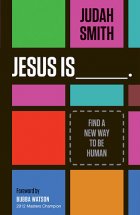
Jesus Is _____Judah Smith has a fresh, clear way for us to view Jesus and His love for us. You can read my full review of Jesus Is _____ by clicking here. Below are 11 quotes from this book that got me thinking—

“The Pharisees were zealous for the law, but they didn’t understand the love of God. They imposed judgment without mercy, punishment without love, criticism without understanding. In the name of hating sin, the Pharisees ended up hating sinners. Perhaps worst of all, they concluded that their aloofness from sinners was what made them holy. The measuring stick of their goodness was the badness of the people they rejected. …Before we get too furious at the Pharisees, though, realize that inside each of us is a Pharisee trying to get out. It’s happened to me. No sooner do I conquer a bad habit than I become the biggest critic of anyone who still does what I just stopped doing. I find that righteous indignation comes a lot easier than humility and compassion. Mentally chastising the bad deeds of other people is more comfortable than dealing with my own.”

“Rather than rejecting people out of a false sense of superiority, rather than judging and condemning those whose lives don’t measure up to my standard of holiness, I need to remember that I am still desperately in need of Jesus’ grace.”

“Besides writing off bad people, we too quickly write off ourselves. We swing from the self-righteous side of the pendulum (That filthy sinner deserves to go to hell!) to the self-condemning side (I’m a filthy sinner who deserves to go to hell!). Both extremes come from focusing on rules rather than on a relationship with Jesus.”

“I think if Jesus had one shot at fixing us, He’d tell us how much He loves us. …Jesus loves us right now, just as we are. He isn’t standing aloof, yelling at us to climb out of our pits and clean ourselves up so we can be worthy of Him. He is wading waist-deep into the muck of life, weeping with the broken, rescuing the lost, and healing the sick.”

“When we realize that grace is a Person, not a principle, abusing grace is no longer an option. It’s easy to abuse a principle, to manipulate a system, or to excuse away a doctrine. But it’s much harder to abuse a person or violate a relationship.”

“Rules are not bad, but they can’t save anyone. The best a rule or a law can do is set a boundary and threaten punishment for crossing that boundary. People still decide to obey the rule or not. …Rules are meant to lead us to relationship, not to replace relationship. …Focusing too much on rules and too little on grace tells children that what they do is more important than who they are. …These principles aren’t just for parenting. This is how our relationship with God works. For God, it’s more about relationship than about rules. Far more.”

“When we make up rules because we are afraid people will sin, we end up doing an end run around faith. It’s not fear that saves us—it’s faith. Fear of failure has a sneaky way of becoming a self-fulfilling prophesy. …Make rules and follow rules as needed, but don’t focus on rules. Focus on faith. Focus on grace. Focus on Jesus. …Here’s the bottom line: everything that rules can do, grace can do better, and more besides.”

“Rules address behavior, but they don’t deal with the heart. They don’t adjust attitudes. They don’t heal the inconsistencies and fractures deep in our souls that could destroy us in the end. Grace, on the other hand, is internal. It works on a heart level. Where rules attempt to force us to do the opposite of what we want, grace actually changes what we want. It creates internal consistency and integrity. Doing what is right becomes much easier. …When we focus on Jesus instead of a code of conduct, when grace changes our desires so we are internally motivated and not just externally restrained, we become a lot more fun to be around.”

“Grace wasn’t free for Jesus. It cost Him everything. That is precisely why we should receive it freely. The most insulting thing we could do is reject this costly gift and say, ‘No thanks, God, I got this.’ Please don’t tell me Jesus was beaten and mutilated and tortured so we could try to save ourselves through our paltry good deeds. Don’t cheapen Jesus’ sacrifice by trying to pay Him back.”

“The point isn’t to quit thinking about sin. It’s to quit thinking about self and to think about Jesus. It’s to become God-conscious, not me-conscious. Do you know what law does? Law makes us self-conscious. When we are self-conscious, we become sin-conscious. We take our eyes off Jesus, and we focus on our failures, our weaknesses, our shortcomings. And we end up sinning even more because that’s all we can think about. But grace makes us God-conscious. When we live by grace, we are continually amazed by the love, goodness, and holiness of God. When we think about Him, that motivates us to act like Him. Are you struggling with sin? You don’t need more willpower. You need more of Jesus. Loving Jesus, not avoiding sin, is the focal point of our lives.”

“Holiness results in happiness, and happiness is an expression of holiness. The two go together. I am happier because I am holy, and it’s easier to be holier because I am happy. Because of the good news, because of Jesus, I can be both holy and happy—what a concept!”

11 Quotes From “Visioneering”

VisioneeringIf you’ve got a big dream to pursue, Visioneering by Andy Stanley could be a big help. You can read my full book review by clicking here. Below are 11 quotes from this book which especially caught my eye.

“As Christians, we do not have a right to take our talents, abilities, experiences, opportunities, and education and run off in any direction we please. We lost that right at Calvary. …At the same time, we have no right to live visionless lives either. If God—think about it—if God has a vision for what you are to do with your allotment of years, you had better get in on it. What a tragedy to miss it. Missing out on God’s plan for our lives must be the greatest tragedy this side of eternity.” 

“What could be and should be can’t be until God is ready for it to be.”

“Three important things are taking place while we wait: (1)The vision matures in us; (2) We mature in preparation for the vision; (3) God is at work behind the scenes preparing the way.”

“Prayer is critical to vision development. Here’s why: We see what we are looking for; we often miss what we don’t expect to see. …Prayer keeps us looking. Prayer keeps the burden fresh. It keeps our eyes and hearts in an expectant mode. Prayer doesn’t force God’s hand. But it keeps us on the lookout for His intervention. Prayer sensitizes us to subtle changes in the landscape of our circumstances.”

“God is using your circumstances to prepare you to accomplish His vision for your life. Your present circumstances are part of the vision. You are not wasting your time. You are not spinning your wheels. You are not wandering in the wilderness. If you are ‘seeking first’ His kingdom where you are, then where you are is where He has positioned you. And He has positioned you there with a purpose in mind.” 

“An agonizingly important principle: what always precedes how. You will know what God has put in your heart to do before you know how He intends to bring it about. …How is never a problem for God. It is usually a big problem for us. But how is God’s specialty.”

“I think it is safe to assume that most Christians are not attempting anything that requires God’s intervention. They are not looking for God to do anything special. They are not aware that they need Him to do anything special. They are trusting that He will step in once they breathe their last breath. But other than that, they live as if they have everything under control. If you want to know how you score on this issue, listen to your prayers and prayer requests. What do you pray for? What are the things you find yourself praying for night after night? Those are your passions. Those are the things that matter most to you. Pretty scary, huh? A little embarrassing? Somewhat self-centered? What was your response the last time someone asked you for a prayer request? Did you have to think for a moment? Was your response kind of … well … less than inspiring? Or did your eyes light up as you thought about that thing, that person, that ministry you were trusting God for? Other than Heaven, and possibly your health, what are you consciously depending on God to do?” 

“This world is filled with people who stopped one question short of finding an avenue that would allow them to pursue their vision. Don’t let the discouragement of a few slammed doors cause you to walk away from the vision God has birthed in your heart. Investigate. Look around. Think outside the lines. Few destinations have only one point of access. The same is true of your vision. If your initial approach is blocked, look for alternatives. Don’t give up too quickly. You may be one question away from discovering the key that will unlock the door that stands between you and God’s vision for your life. God will use this period of investigation to confirm, sharpen, and, sometimes, redirect your vision.”

“When a man or woman is willing to give up something valuable for a God-ordained vision, God looks upon it as worship.” 

“Our natural response to criticism is to defend ourselves. This is especially true when our vision is under attack. We are tempted to begin a dialogue with our critics or with those who are parroting their criticism. Consequently, we waste energy and thought trying to answer questions for people who are often not really interested in answers. Without realizing it, our focus begins to shift. Instead of being vision centered, we slowly become critic centered.”

“You have a destiny to fulfill. God has placed before you opportunities and responsibilities that are brimming with divine significance. He has given you gifts, talents, and relationships that are waiting to be exploited on behalf of His kingdom.”

Responding To The Voice

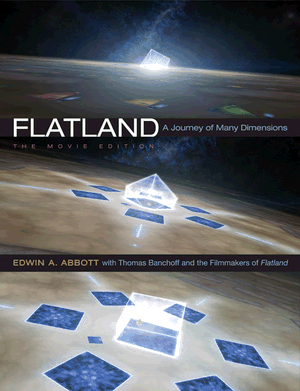
FlatlandIn 1880, Edwin A. Abbott wrote Flatland, a book that would later become a favorite of Albert Einstein. Abbott was a college-trained mathematician and a theologian; in fact he was actually better known for his theological writings than for Flatland. Later on Einstein would say that “things should be made as simple as possible, not simpler.” In other words, don’t dumb-down the concept, but state it on a level where more people can grasp it. That’s why, I believe, Einstein loved Flatland.

Flatland is told through the eyes of Square, a two-dimensional shape that lives in Flatland. Square has length and width, but no height. So the inhabitants of Flatland can move back-and-forth, and side-to-side, but not up-and-down. To get an idea of this, put your eye right on the level of a tabletop, and look at an item on the table. Imagine you can only see what is touching the tabletop (but nothing that rises any higher or lower than that), and you will get an idea of Square’s two-dimensional world.

One day Sphere visits Flatland. Sphere is three-dimensional, so he can move up-and-down. This means that Square can only see the part of Sphere that happens to be in his line of sight at that immediate moment. So he sees just a “slice” or “layer” of Sphere as Sphere moves through Flatland. Sometimes Sphere is nothing more than a disembodied voice when he is hovering above Flatland.

This gives us a little bit of an idea of how we perceive God. He exists in dimensions that we cannot fully comprehend, so we only see “slices” of Him as He passes though our line of sight. Sometimes He is just a disembodied Voice—or as the Bible calls Him, the Word of God.

But the Word of God compressed Himself into our dimension (John 1:14). All of the fullness—all of the other-dimension-ness—of His omnipotence, omnipresence, omniscience came to our “level” in the Person of Jesus Christ (Philippians 2:6-7). The Word was the complete and total fullness of God (John 1:1-3; Colossians 2:9). But unlike Square who couldn’t fully know Sphere, God is fully knowable in The Word—in Jesus Christ!

The question is: What are you going to do with The Word? The Word of God (the Bible) allows us to fully know The Word of God (Jesus). But we need to be willing to let the Holy Spirit strip away our puny, smaller-dimensioned, finite thinking of God.

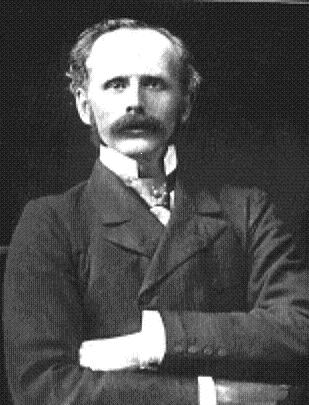
Alvin TofflerAlvin Toffler wrote, “The illiterate of the future are not those who cannot read or write, but those who cannot learn, unlearn, and relearn.”

I would modify this to say, “Those illiterate of The Word (Jesus) are not those who cannot read The Word (the Bible), but those who won’t let the Holy Spirit help them learn, unlearn, and relearn who God is.” 

There is so much more to learn about The Word (Jesus), so let the Holy Spirit guide you in your reading of The Word (the Bible). I pray as Paul did that you will begin to experience more of the multi-dimensional-ness of God as revealed in The Word—

I pray that out of God’s glorious riches He may strengthen you with power through His Spirit in your inner being, so that Christ may dwell in your hearts through faith. And I pray that you, being rooted and established in love, may have power, together with all the Lord’s holy people, to grasp how wide and long and high and deep is the love of Christ, and to know this love that surpasses knowledge—that you may be filled to the measure of all the fullness of God. (Ephesians 3:16-19)

If you have missed any of the messages in this series called Who Is Jesus?, you can find them all here.

11 Quotes From “The Secrets Of Intercessory Prayer”

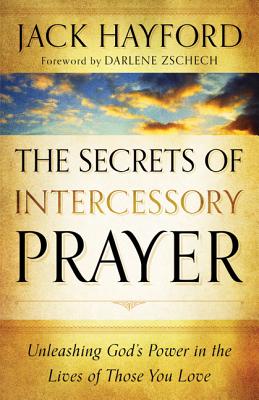
The Secrets of Intercessory PrayerJack Hayford’s latest book is reenergizing the way I pray for my family members. If you want to know why prayer for your family is so powerful, if you’re feeling a bit discouraged in the seemingly unanswered prayers for your family, or if you just want to “take it up a notch” as you pray, The Secrets Of Intercessory Prayer is for you (you can read my full book review by clicking here). These are a few quotes that especially caught my eye from this book.

“Prayer in all regards takes a new frame of reference when we understand the war between God’s Kingdom and satan’s dark hordes. This battle, insofar as it involves earth, is one in which God has called us to engage, enlisting us as ‘knee-soldiers’ whose prayer-call for the ‘incoming’ of God’s Kingdom will welcome a barrage of God’s power to break through the darkness and bring deliverance to people we know.”

“Let this truth grip you with hope: If the promise of God concerning His coming Messiah, His own Son, was interrupted by the failure of humanity (in this case, the later generations of David’s offspring) and God bridged and reconnected that ‘cut-off,’ then He wants us to understand this as a power-principle for prayer. Just as God navigated that failure and brought the tender plant out of the stump that had been cut off, so He is inviting you to pray and believe that He will do the same in your relationships.”

“Let the Holy Spirit shine a searchlight in your own heart and cleanse anything that restricts the power and liberty of your intercessory role in the family. I know that I am neutralized for effective prayer to the degree that negativity characterizes my attitude toward anyone for whom I pray.”

“We refuse to sustain that spirit of death and separation through any kind of ‘labeling.’ … Without such integrity of heart before God we may unwittingly be preventing our families and friends from receiving the flow of God’s life and love.”

“Praying for those we love is not a substitute for their need to hear God’s Word of truth—the Gospel. But many of those we find resisting already know it, and for them the ‘pushiness’ of a relative deepens resistance. On the other hand—as you abide in continual prayer—the truth that they may most need at the present is a sense of your acceptance of them, even as they understand that acceptance is not approval of sinful behavior. While it is painful to see a loved one persist in sin, especially if it is self-destructive, God’s Spirit has spoken or is speaking to them about their need to turn to Him. Our prayer for them is pivotal in this regard. But it is also our job to leave God’s part for Him to achieve, as only He can.

“The greatest tool of evangelism when it comes to loved ones is to be genuinely loving and friendly to them without the taint of manipulation. … Winning people to Christ is not conquering them or verifying yourself. It is about showing so much of Jesus that they cannot resist Him.”

“The deeper we move into the last days, the greater the need for our young people to have the shelter and the shield, the presence and the power, the wisdom and the discernment of the Holy Spirit! …The literal word for perilous used in the Greek text of 2 Timothy 3:1 describes the last days as ‘evil, ferocious, lion-like and demon-filled.’”

“Here is a key point for us to embrace as we persevere in prayer for our loved ones: Jesus wants to minister through us.”

“We are capable of compromising our discipleship under Jesus’ Lordship, not by the values we hold but by the spirit in which we respond to those whose values offend Him. …If I am unwilling to pray with a heart of passion for sinners who indulge in the perverse, the shameful and the corrupt and who do it with glee, will my passion be driven by my anger or by my sense of God’s broken heart for such warping of one of His own creation, for such satanic bondage in a being He longs to know the beauty of His original purpose?”

“Instead of yielding to fatalism, hear the call: ‘Keep praying, even when tough stuff happens,’ and do this by invading the difficult with thanksgiving, because the truth larger than the problem is that God’s power can transform any mess when He is invited into it.”

“That is what the will of God is for us: to lift up praise to Him with gratitude for His nature, which does not plan the evil, the injurious or the painful, but who—in these things—is the only One able to address them in love, resolve them in wisdom, provide for them in grace and transform then by His power. Give thanks in song for that!

They All Agree

It’s extremely rare that a 19th-century pastor, Jesus Christ, and a noted atheist would all agree on something. But as we wrapped up our series on love today, I had to share these quotes (the added emphasis in the quotes is mine)—

“Never offer men a thimbleful of gospel. Do not offer them merely joy, or merely peace, or merely rest, or merely safety; tell them how Christ came to give men a more abundant life than they have, a life abundant in love, and therefore abundant in salvation for themselves, and large in enterprise for the alleviation and redemption of the world. … Only this fuller love can compete with the love of the world.” —Henry Drummond

“If you love only those who love you, why should you get credit for that? Even sinners love those who love them! And if you do good only to those who do good to you, why should you get credit? Even sinners do that much! … By this all men will know that you are My disciples, if you truly love one another.—Jesus (Luke 6:32-33; John 13:35)

“Nothing can penetrate the loneliness of the human heart except the highest intensity of the sort of love the religious teachers have preached.” —Bertrand Russell

Thursdays With Oswald—Two Ways To Handle A Crisis

Listen to the podcast of this post by clicking on the player below, and you can also subscribe on AppleSpotify, or Audible. 

This is a weekly series with things I’m reading and pondering from Oswald Chambers. You can read the original seed thought here, or type “Thursdays With Oswald” in the search box to read more entries.

Two Ways To Handle A Crisis

     A man must decide whether he will be identified with the death of the Lord Jesus Christ, which will mean the turning out not only of the “old man,” but of the old responsible intelligence, the old bondage, the old legalism, the things which used to guide the life before, and the forming of a totally new mind. 

     It works out this way: in your practical life you come to a crisis where there are two distinct ways before you, one the way of ordinary, strong, moral, common sense and the other the way of waiting on God until the mind is formed which can understand His will. 

     Any amount of backing will be given you for the first line, the backing of worldly people and of semi-Christian people, but you will feel the warning, the drawing back of the Spirit of God, and if you wait on God, study His Word, and watch Him at work in your circumstances, you will be brought to a decision along God’s line, and your worldly “backers” and your semi-Christian “backers” will fall away from you with disgust and say, “It is absurd, you are getting fanatical.” 

From Biblical Psychology 

When you have to deal with a crisis, there are two options:

  1. Use your common sense and the good ideas of others
  2. Do it God’s way

God’s ways usually defy the world’s common sense.

“As the heavens are higher than the earth, so are My ways higher than your ways and My thoughts than your thoughts,” says God. (Isaiah 55:9)

For the foolishness of God is wiser than man’s wisdom, and…the wisdom of this world is foolishness in God’s sight. (1 Corinthians 1:25; 3:19)

If you want to try to do it the “common sense” way, go ahead. God will let you try it, and a lot of people will encourage you to keep at it. But I think you will quickly find that the “God sense” way is so much better! Although very quickly your former “backers” and “cheerleaders” will look at you as a fanatic.

“There are two kinds of people: those who say to God ‘Thy will be done’ and those to whom God says, ‘All right then, have it your way.’” —C.S. Lewis

You must decide how you will respond in a crisis.

►► Would you please prayerfully consider supporting this ministry? My Patreon supporters get behind-the-scenes access to exclusive materials. ◀︎◀︎

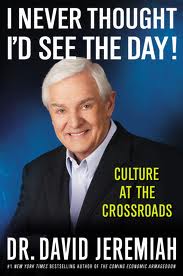
8 Quotes From “I Never Thought I’d See The Day”

I Never Thought I'd See The DayYou can read my book review of Dr. David Jeremiah’s I Never Thought I’d See The Day by clicking here. These are eight quotes that especially caught my attention in this book. Unless the quotes are otherwise attributed, they are from Dr. Jeremiah.

“I’ve shaken my fist in anger at stalled cars, storm clouds, and incompetent meteorologists. I’ve even, on one terrible day, that included a dead alternator, a blaring tornado-warning siren, and a horribly wrong weather forecast, cursed all three at once. I’ve fumed at furniture, cursed at crossing guards, and held a grudge against Gun Barrel City, Texas. I’ve been mad at just about anything you can imagine.

“Except unicorns. I’ve never been angry at unicorns.

“It’s unlikely you’ve ever been angry at unicorns either. We can become incensed by objects and creations both animate and inanimate. We can even, in a limited sense, be bothered by the fanciful characters in books and dreams. But creatures like unicorns that don’t exist—that we truly believe not to exist—tend not to raise our ire. We certainly don’t blame the one-horned creatures for our problems.

“The one social group that takes exception to this rule is atheists. They claim to believe that God does not exist and yet, according to empirical studies, tend to be the people most angry at Him.” —Joe Carter

“While the atheist arrogantly persists in the delusion that his reason is fully capable of figuring out all that there is, the religious believer lives in the humble acknowledgment of the limits of human knowledge, knowing that there is a reality greater than, and beyond, that which our senses and minds can ever apprehend.” —Dinesh D’Souza

“God brought two perfect, sinless people together in the Garden of Eden, a man and a woman who knew the perfect love of God. They did not get married to find love but to walk together in the unity and purpose God created them to fulfill: the primary task of birthing and raising the next generation. And in the process, love happened.”

“It is significant that while Adam was single, satan did not approach him or tempt him to disobey God. He waited until after Adam’s marriage to launch his attack. You would think it easier to attack one person instead of two, but by waiting he was able to attack not just an individual, but also God’s foundational building block for harmony and stability—marriage. By attacking marriage, he was able to create division and disharmony between humans themselves as well as between humans and God.”

“The oneness found in marriage is the same kind of oneness found in the Trinity.”

“We can be lulled into complacency by adopting uncritically the principle of submission to government on the assumption that the Christian history of our nation makes it safe to let our leaders do our thinking for us. But we cannot do this in our post-Christian nation where God’s Word is being marginalized. Nothing could be more dangerous for Christians and churches than to wander thoughtlessly down this path of increasing biblical indifference—a path that could well lead to a place where the Bible is not merely marginalized, but banned outrightly.”

“If the Church is being ignored because we preach the message of ‘Jesus Christ and Him crucified’ (1 Corinthians 2:2), or because the Gospel has become ‘a stumbling stone and rock of offense’ (Romans 9:33) to the world, that’s one thing. But if we are deemed irrelevant because we’re an anemic version of the world’s entertainment options or because we aren’t playing the world’s game nearly as well as the world does, then that’s another thing. That’s a tragedy.”

“William Tyndale wisely sought to avoid the confusion between ‘Church” and ‘church’ by translating ekklesia as ‘congregation’ instead of ‘church.’ …We must maintain a clean understanding of the difference between Church and church—and the priority of the former over the latter. Church buildings can necessitate huge investments of resources for construction and maintenance, and they are only temporary. Keeping the focus on people is the biblical priority and will result in the Church’s remaining relevant.”

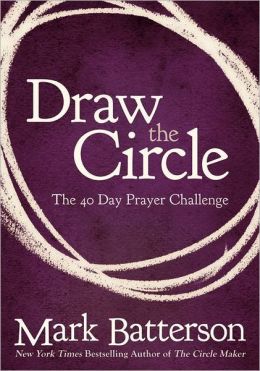
15 Quotes From “Draw The Circle”

Draw The CircleI loved the challenging message about prayer in Draw The Circle by Mark Batterson. You can read my full book review by clicking here. Here are 15 quotes that especially stood out to me.

“You don’t need to seek opportunity. All you have to do is seek God. And if you seek God, opportunity will seek you.”

“Sometimes the purpose of prayer is to get us out of circumstances, but more often than not, the purpose of prayer is to get us through them. I’m certainly not suggesting we shouldn’t pray deliverance prayers, but there are times we need to pray prevailing prayers. …We’re often so anxious to get out of difficult, painful, or challenging situations that we fail to grow through them. We’re so fixated on getting out of them that we don’t get anything out of them. We fail to learn the lessons God is trying to teach us or cultivate the character God is trying to grow in us. We’re so focused on God changing our circumstances that we never allow God to change us! So instead of ten or twenty years of experience, we have one year of experience repeated ten or twenty times. Sometimes we need to pray ‘get me out’ prayers. But sometimes we need to pray ‘get me through’ prayers. And we need the discernment to know when to pray what.”

“After hitting our knees, we need to take a small step of faith. And those small steps of faith often turn into giant leaps. Like Noah, who kept building an ark day after day, we keep hammering away at the dream God has given us. Like the Israelites, who kept circling Jericho for seven days, we keep circling God’s promises. Like Elijah, who kept sending his servant back to look for a rain cloud, we actively and expectantly wait for God’s answer. …We can pray until our knees are numb, but if our praying isn’t accompanied by acting, then we won’t get anywhere. We need to put feet to our faith. After kneeling down, we need to stand up and step out in faith.”

“Maybe our normal is so subnormal that normal seems abnormal. Maybe we need a new normal. Bold prayers and big dreams are normal. Anything less is subnormal.”

“Prayer gives us a God’s-eye view. It heightens our awareness and gives us a sixth sense that enables us to perceive spiritual realities that are beyond our five senses.” 

“Praying is planting. Each prayer is like a seed that gets planted in the ground. It disappears for a season, but it eventually bears fruit that blesses future generations. …Even when we die, our prayers don’t. Each prayer takes on a life, an eternal life, of its own.”

“It’s our childlike faith, not our theological vocabulary, that moves the heart of our Heavenly Father.” 

“Praying hard is not the path of least resistance; it’s usually the path of most resistance because we engage in spiritual warfare. …It’s the prayers you pray when you feel like you want to quit praying that can bring the greatest breakthroughs.”

“Our problem typically isn’t overclaiming the promises of God; it’s underclaiming them.” 

“You’ve got to praise God if the answer is yes and trust Him if the answer if no. If the answer is not yet, you’ve got to keep circling. It’s always too soon to give up! What other option do you have? To pray or not to pray. Those are the only options.”

“Drawing prayer circle isn’t some magic trick to get what you want from God. God is not a genie in a bottle, and your wish is not His command. His command better be your wish. If it’s not, you won’t be drawing prayer circles; you’ll end up walking in circles. …Until His sovereign will becomes your sanctified wish, your prayer life will be unplugged from its power supply.” 

“Sin doesn’t just harden the heart; it also hardens our hearing. In fact, it makes us turn a deaf ear to God because we don’t want to hear the convicting voice of the Holy Spirit. But if you aren’t willing to listen to the convicting voice of the Spirit, you won’t hear His comforting voice, forgiving voice, or merciful voice either. Sin creates relational distance, and distance makes it harder to hear the still, small voice of the Holy Spirit. But if you get close to God, you won’t miss a thing he says. And if you incline your ear to God, God will incline His ear to you.”

“There comes a moment when praying becomes a form of spiritual procrastination. It’s time to stop praying and start acting. …One of the great mistakes we make is asking God to do for us what God wants us to do for Him. …Prayer that doesn’t lead to action isn’t true prayer; it’s self-talk. When we talk to God, God will talk back to us. He will provoke us, rouse us, stir us, goad us, and prompt us. When we say ‘amen,’ inaction is no longer an option.” 

“When God answers a prayer, no matter how big or how small, we need to share it. It’s a stewardship issue. If we don’t turn the answer to prayer into praise, it may very well turn into pride.”

“Our prayers have the potential to write and rewrite history.”