Thursdays With Spurgeon—The Wonder Of Christ

This is a weekly series with things I’m reading and pondering from Charles Spurgeon. You can read the original seed thought here, or type “Thursdays With Spurgeon” in the search box to read more entries.

The Wonder Of Christ

     Works of art require some education in the beholder before they can be thoroughly appreciated. … Because of failures in our character and faults in our life, we are not capable of understanding all the separate beauties and the united perfection of the character of Christ, or of God, His Father. … 

     You cannot fail to notice that men, through the alienation of their natures, are continually misrepresenting God because they cannot appreciate His perfection.… Men will misunderstand Him because they are imperfect themselves and are not capable of admiring the character of God. …

     Did you ever notice, when you read the history of Jesus Christ, that you could never say He was noble for any one virtue at all? … 

     It is because of the complete perfection of Jesus Christ that we are not accustomed to say of Him that He was eminent for His zeal, or for His love, or for His courage. We say of Him that He was a perfect character, but we are not able very easily to perceive where the shadows and the lights blended, where are the meekness of Christ blended into His courage and where His loveliness blended into His boldness in denouncing sin.

     We are not able to detect the points where they meet. And I believe the more thoroughly we are sanctified, the more it will be a subject of wonder to us how it could be that virtues that seem so diverse were in so majestic a manner united into one character. It is just the same of God.

From Mercy, Omnipotence, And Justice

As we grow in our understanding of processes and techniques, our appreciation of a work of art or a symphony grows as well. We may go from “Oh, I like that” to “That is amazing” to “This is an exquisite masterpiece! 

Christians should experience the same wonder and awe of the character of God seen in Jesus and revealed to us by the Holy Spirit. 

I believe the reason the angels around God’s throne are constantly calling out, “Holy, Holy, Holy!” is because at every moment they are perceiving a new facet of His sheer awesomeness. They are calling out to one another, “Did you see that?! Holy!” And another responds back, “Yes, and look at that! Holy!” 

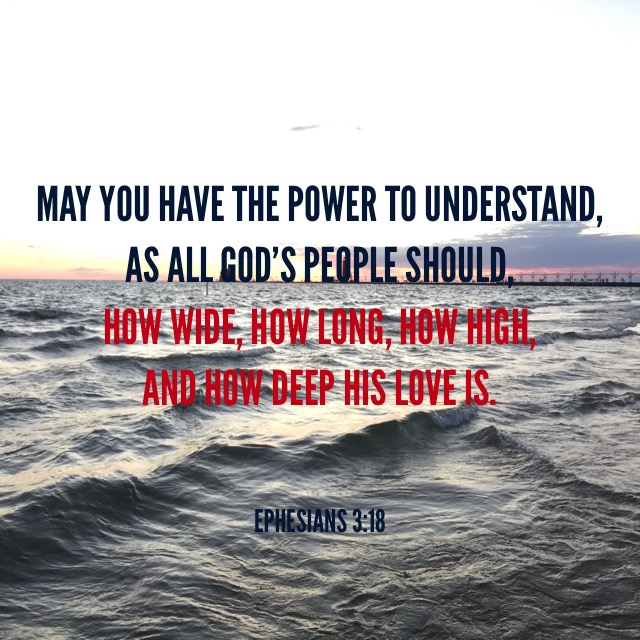
We are invited to join in that chorus. The apostle Paul prayed that our eyes would be opened and our vision expanded to see new depths, and heights, and widths, and lengths of the awesomeness of our God (see Ephesians 3:16-19).
Poetry Saturday—Before Jehovah’s Awesome Throne

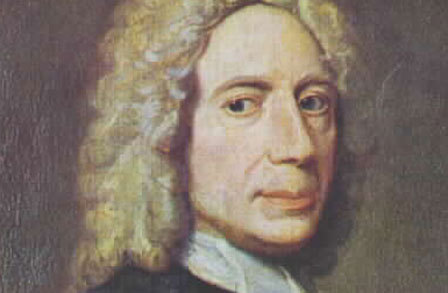
Before Jehovah’s awesome throne,
O nations, bow with sacred joy;
Know that the Lord is God alone,
He can create, and He can destroy.

His sovereign power without our aid
Made us of clay and formed us men;
And when like wandering sheep we strayed,
He brought us to His fold again.

We are His people, we His care,
Our souls and all our mortal frame.
What lasting honors shall we rear,
Almighty Maker, to Your name?

We’ll crowd your gates with thankful songs,
High as the heavens our voices raise;
And earth with all its thousand tongues
Shall fill Your courts with sounding praise.

Wide as the world is Your command,
Vast as eternity Your love;
Firm as a rock Your truth shall stand
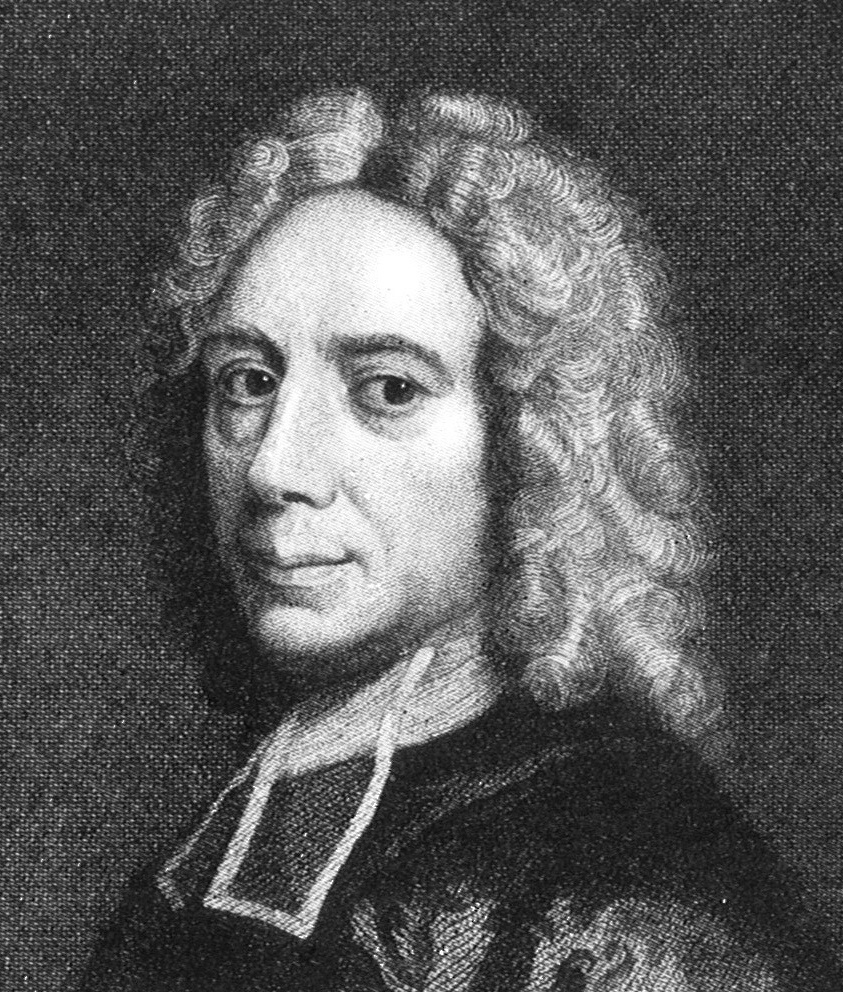
When rolling years shall cease to move. —Isaac Watts

Poetry Saturday—I’ll Praise My Maker While I’ve Breath

I’ll praise my Maker while I’ve breath;
and when my voice is lost in death,
praise shall employ my nobler powers.
My days of praise shall ne’er be past
while life and thought and being last,
or immortality endures.

How happy they whose hopes rely
on Israel’s God, who made the sky
and earth and seas with all their train;
whose truth forever stands secure,
who saves the oppressed and feeds the poor,
and none shall find God’s promise vain.

The Lord pours eyesight on the blind;
the Lord supports the fainting mind
and sends the laboring conscience peace.
God helps the stranger in distress,
the widowed and the parentless,
and grants the prisoner sweet release. —Isaac Watts

City Of God

With “LONG LIVE THE KING!” still reverberating in our ears from Psalm 47, the sons of Korah ask us to zoom out a little farther to see how things begin to change now that the King has assumed His rightful place on the throne.

So Psalm 48 opens with the same praise with which Psalm 47 closed—Great is the Lord and most worthy of praise! The Hebrew word for great means massiveness! God is great beyond comprehension. He is larger than any problem. He is unique. He is uncontainable, unlimited, utterly beyond description. His glory is so bright that no sun is needed (see Revelation 21:23).

His glorious light reveals God’s beauty all around us. As C.S. Lewis noted, “I believe in God as I believe the sun has risen. Not because I can see it, but because by way of it I can see everything else.” Indeed, the psalmist reminds us that the city of our God has become “beautiful in its loftiness”(v. 2).

Look at how majestic our King is, and how majestic He makes His city, with phrases like the city of our Godthe city of the Great King, and the city of the Lord Almighty. 

God makes His city secure forever. 

Selah—pause and consider that. 

About 1200 years after this psalm was written, Augustine would write his book called The City of God in which he contrasted the City of God with the City of Man. He noted how the Romans had gods they trusted in, but the Romans had to “rescue” their gods from the invading barbarians. Rome ultimately fell to those invading barbarians, but, Augustine said, the City of God can never fall because it isn’t a tangible place. The City of God resides inside God’s people. 

So notice that after the Selah the word “city” doesn’t appear anymore. Instead, we read about:

    • God’s temple (v. 9; the Hebrew word is heykal) means the palace of God the King
    • the villages of Judah (v. 11) is translated daughters in the KJV, but it actually means “the beloved apple of My eye” 
    • her towers (v. 12) are something that has grown up because it’s been nourished, not something built up by brick and mortar
    • her citadels (v. 13) are the highest and strongest places, which recalls God’s massiveness that we read in verse 1 

Here’s the question for all of us to ask—Is my heart a City of God or a City of Man? 

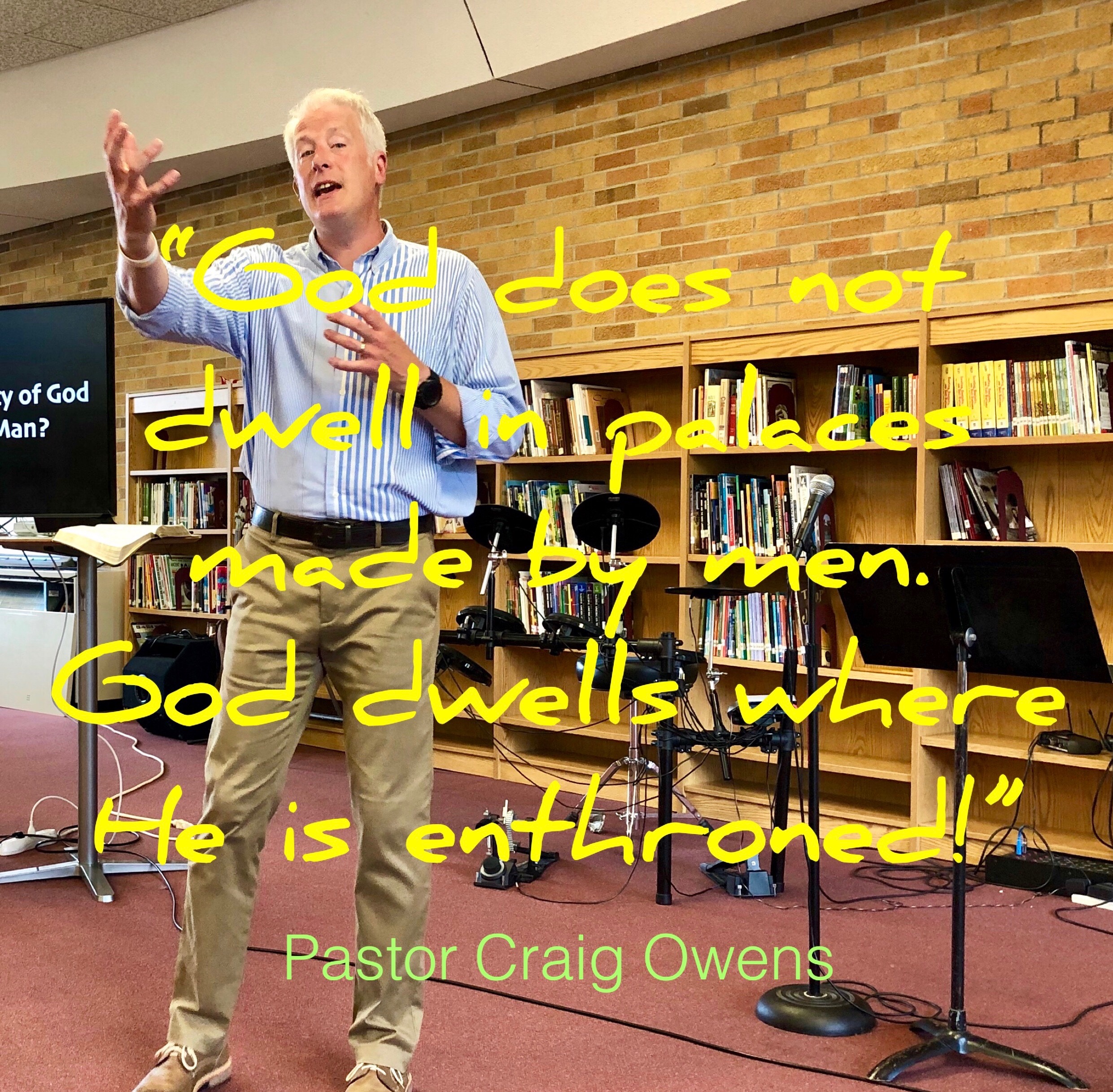
God does not dwell in palaces made by men.

God dwells where He is enthroned! 

When people look at the “city” of my life, can they tell God is on the throne? The telling characteristics of a City of God are a city where…

  • … thoughts continually turn to my King and His unfailing love (v. 9)
  • … praise, rejoicing, and gladness are constantly rising to God (vv. 10, 11)
  • … the King is able to freely walk around His kingdom—anywhere He likes (v. 12)
  • … others can walk around and see what a God-enthroned life looks like (vv. 12, 13)

I’ll ask it again—Can people clearly see that God is the unrivaled King of your heart? 

Join me next Sunday as we continue our look at the Selahs in the Psalms. 

Poetry Saturday—An Acrostic

I am a vile polluted lump of earth;
So I’ve continued ever since my birth;
Although Jehovah grace does daily give me,
As sure as this monster satan will deceive me.
Come therefore, Lord, from satan’s claws relieve me.
Wash me in Thy blood, O Christ,
And grace divine impart;
Then search and try the corners of my heart,
That I in all things may be fit to do
Service to Thee, and sing Thy praises too. —Isaac Watts (written at age 7)

Awesome God, Awesome Praise

Last I week I told you how Hebrew poetry often puts the climax in the middle. In Psalm 47 that middle climax is in verse 5—God has ascended. This is one of seven “psalms of enthronement” in the Psalter. Since all of the Scripture points to Jesus, let’s look at the definition of this word ascend and see how it fits with Jesus: 

When a king is coronated—when he is heading toward his throne—we can expect the people to be happy. So the psalmist tells us that in God’s case the people are clapping and shouting (v. 1), telling God how awesome He is (v. 2), thanking Him for subduing their enemies (v. 3), and expressing their gratitude that He has established them as His people (v. 4). 

Then comes the Selah / Pause—what is happening during this pause? The King is being crowned. He has ascended to His rightful throne. So this is selah/pause is really a deep breath that’s about to explode in a crescendo of praise! 

Now there are shouts of joy (v. 5a). In our earthly understanding, it would be something like: “LONG LIVE THE KING!!” There is also a sounding of trumpets (v. 5b) which literally means a thundering of trumpets. And then there’s the singing—lots and lots of singing. In fact, the word sing appears five times in the next two verses. 

From The Infographic Bible (click the image for more)

There are so many ways to say LONG LIVE THE KING—singing, dancing, raising our hands, falling down on our knees. shouting.  

Our God is praise-worthy. He is clap-worthy! He is sing-worthy! He is dance-worthy! He is shout-worthy! He is bowing-worthy! 

Our awesome God deserves awesome praise! 

Why does it seem that we are prone to worship so quietly? Perhaps we need to take it up a notch or two (or three or four). Perhaps we haven’t gazed into His awesome beauty enough to realize just how incredible He is! 

Do you think shouting praises to the King of kings is too undignified? Did you know that when the King of kings returns, He is going to shout and there is also going to be a thundering trumpet? For the Lord Himself shall descend from heaven with a shout, with the voice of an archangel, and with the trumpet of God (1 Thessalonians 4:16)! 

Here are 4 important lessons from this Psalm of Enthronement—

  1. God is the King of all kings, enthroned on the Throne above all thrones. He is worthy of your “undignified” praise and acclamation. 
  2. God should always get your best praise. In verse 7 the phrase sing praises with understanding really means to sing with insight and skill. 
  3. God deserves a holy vocabulary. We see the word awesome in verse 2. Every time this word is used in the Scripture, it’s speaking of God. So why would we use a word like this for something like a hamburger!?!
  4. All nations and kings and peoples and tribes will bow before God at the end. They will bow in either acclamation for their King, or in abject terror of the All-Righteous Judge. Let’s remain missional so more people in the end are crowning Him as their All-Merciful King. 

I hope you can join me this next Sunday as we continue our series looking at the Selahs in the Psalms. 

Poetry Saturday—O My Soul What Means This Sadness

O my soul! what means this sadness?
Wherefore art thou thus cast down?
Let thy griefs be turned to gladness,
Bid thy restless fears be gone;
Look to Jesus, look to Jesus,
And rejoice in His dear name.

What though satan’s strong temptations
Vex and grieve thee day by day,
And thy sinful inclinations
Often fill thee with dismay;
Thou shalt conquer,
Through the Lamb’s redeeming blood.

Though ten thousand ills beset thee
From without and from within,
Jesus saith He’ll ne’er forget thee,
But will save from hell and sin.
He is faithful
To perform His gracious Word.

Though distresses now attend thee,
And thou tread’st the thorny road,
His right hand shall still defend thee;
Soon He’ll bring thee home to God.
Therefore praise Him,
Praise the great Redeemer’s name.

Oh that I could now adore Him
Like the heavenly host above,
Who forever bow before Him,
And unceasing sing His love.
Happy songsters!
When shall I your chorus join? —W.B. Bradbury

Poetry Saturday—Awake My Soul

Awake, my soul, and with the sun 
Thy daily stage of duty run; 
Shake off dull sloth, and joyful rise, 
To pay thy morning sacrifice. 
Thy precious time misspent, redeem, 
Each present day thy last esteem, 
Improve thy talent with due care; 
For the great day thyself prepare. 
By influence of the Light divine 
Let thy own light to others shine. 
Reflect all Heaven’s propitious ways 
In ardent love, and cheerful praise. 
In conversation be sincere; 
Keep conscience as the noontide clear; 
Think how all seeing God thy ways 
And all thy secret thoughts surveys. —Thomas Ken

Come And See What Our God Has Done

Check out the opening verses of Psalm 66—

Shout joyful praises to God, all the earth!
Sing about the glory of His name!
Tell the world how glorious He is.
Say to God, “How awesome are Your deeds!
    Your enemies cringe before Your mighty power.
    Everything on earth will worship You;
    they will sing Your praises,
    shouting Your name in glorious songs.” Interlude 
Come and see what our God has done,
    what awesome miracles He performs for people! (66:1-5 NLT)

I’d like to explore with you this phrase—come and see what our God has done. 

In so many of the Psalms we get at least a little context. We might be told the type of song it is or the kinds of musical instruments to be sung. We might know who wrote the psalm or at least why he wrote it. We might even hear what was happening in the psalmist’s world at the time he wrote the song or maybe at what event he wanted the song to be sung. All of these things would give us context clues into when/where to use the song—when I’m afraid? when I’m under attack? when I’m happy? when I’m depressed? 

For this psalm all the context we know is—For the choir director: A song. A psalm. 

But let me ask you: does it really matter? If you’re up or down, flush with cash or barely hanging on, winning the fight or feeling like you’re being beaten down—in any circumstance, can you still say come and see what our God has done? 

I think the answer is yes. I think this is the reason why no context is given us, because this psalm is appropriate regardless of the circumstances.

Just as the apostle Paul wrote, “I know how to live on almost nothing or with everything. I have learned the secret of living in every situation, whether it is with a full stomach or empty, with plenty or little. For I can do everything through Christ, who gives me strength” (Philippians 4:12-13).

As Christians, we’ve been called to step alongside people in their messy, broken lives. Yes, we are to weep with those who weep, but we’re not to keep them there but to take them to the One who can heal their messy, broken lives. 

The reasons to say, “Come and see what our God has done” are all around us. 

Earth’s crammed with heaven, 
And every common bush afire with God; 
But only he who sees, takes off his shoes, 
The rest sit round it and pluck blackberries, 
And daub their natural faces unaware. —Elizabeth Barrett Browning

Don’t just pluck blackberries; realize that those berries are the produce of a loving Creator. Don’t miss the opportunities to give God glory. Good times are wonderful opportunities to start. But those are just the starting points. Find the reasons even in hard times—I have learned the secret of being content in any and every situation, whether well fed or hungry, whether living in plenty or in want.

Anywhere … everywhere … no matter the context … HE IS STILL GOD. He is still worthy to be praised. There is still ample reason for us to say, “Come and see what our God has done!” 

Poetry Saturday—Above All

Grant me, sweet Jesus, to rest in You above every creature; 
above all health and beauty, 
above all glory and honor, 
above all power and dignity,
above all knowledge and skillfulness, 
above all riches and arts, 
above all joy and exultation, 
above all fame and praise, 
above all sweetness and consolation, 
above all hope and promise, 
above all gifts that You can give, 
above all joy the mind is able to receive; 
above everything that You, O my God, are not. —Thomas à Kempis