Listen to the podcast of this post by clicking on the player below, and you can also subscribe on Apple, Spotify, or Audible.

(A little background for this poem. I live in Cedar Springs, MI, which has been called the Red Flannel Town for years because of the one-piece red flannel long undearwear which was manufactured here. Cedar Springs is also home to one of the most amazing ministerial groups I have ever had the privilege of working with.)
There was a group of clergy from a Red Flannel town and one of their goals was to lift up people who were down.
And so together in word and deed bringing people closer to Jesus they did lead.
They worked together even cross-denominationally and through their partnership, they were as happy as can be!
They were a wonderful and fantastic Christ-centered group discussing ministry matters monthly over pizza or sometimes soup.
Through laughter, hard work and sometimes even a shed tear they supported each other and proclaimed the Gospel for all to hear.
The town may have been noted for its Red Flannel zeal, but it was the work of the clergy that was its greatest appeal. —Rev. Jim Alblas
Sorrow was beautiful, but her beauty was the beauty of the moonlight shining through the leafy branches of the trees in the wood, and making little pools of silver here and there on the soft green moss below. When Sorrow sang, her notes were like the low sweet call of the nightingale, and in her eyes was the unexpectant gaze of one who has ceased to look for coming gladness. She could weep in tender sympathy with those who weep, but to rejoice with those who rejoice was unknown to her.
Joy was beautiful, too, but his was the radiant beauty of the summer morning. His eyes still held the glad laughter of childhood, and his hair had the glint of the sunshine’s kiss. When Joy sang his voice soared upward as the lark’s, and his step was the step of a conqueror who has never known defeat. He could rejoice with all who rejoice, but to weep with those who weep was unknown to him.
“But we can never be united,” said Sorrow wistfully.
“No, never.” And Joy’s eyes shadowed as he spoke. “My path lies through the sunlit meadows, the sweetest roses bloom for my gathering, and the blackbirds and thrushes await my coming to pour forth their most joyous lays.”
“My path,” said Sorrow, turning slowly away, “leads through the darkening woods, with moon-flowers only shall my hands be filled. Yet the sweetest of all earth-songs—the love song of the night—shall be mine; farewell, Joy, farewell.”
Even as she spoke they became conscious of a form standing beside them; dimly seen, but of a Kingly Presence, and a great and holy awe stole over them as they sank on their knees before Him.
“I see Him as the King of Joy,” whispered Sorrow, “for on His Head are many crowns, and the nail prints in His hands and feet are the scars of a great victory. Before Him all my sorrow is melting away into deathless love and gladness, and I give myself to Him forever.”
“Nay, Sorrow,” said Joy softly, “but I see Him as the King of Sorrow, and the crown on His head is a crown of thorns, and the nail prints in His hands and feet are the scars of a great agony. I, too, give myself to Him forever, for sorrow with Him must be sweeter than any joy that I have known.”
“Then we are one in Him,” they cried in gladness, “for none but He could unite Joy and Sorrow.”
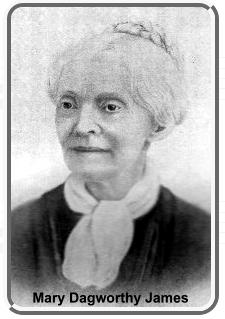
Hand in hand they passed out into the world to follow Him through storm and sunshine, in the bleakness of winter cold and the warmth of summer gladness, “as sorrowful yet always rejoicing.” —Lettie Cowman
“If a claim to spiritual revelation leads us to depend less on the once-for-allness of the historical Word that comes to us by Jesus Christ through the apostles (Hebrews 2:3), then that claim is dubious.” —John Piper
“God, change me today because I have spent time being exposed to Your thoughts in Scripture. As risky as it is, I want Your Word to cut away everything in me that doesn’t look like Jesus.” —Kenneth Blanchard (see Hebrews 4:12)
A scrip on my back, and a staff in my hand, I march on in haste through an enemy’s land; The road may be rough, but it cannot be long; And I’ll smooth it with hope, and I’ll cheer it with song. —Henry Francis Lyte