Links & Quotes

link quote

Some good reading from today…

“One doesn’t realize in early life that the price of freedom is loneliness. To be happy one must be tied.” —C.S. Lewis

“The Savior looks at sin through the glass of compassion; we often look upon it through the lens of Pharisaic pride.” —Charles Spurgeon

The longer the answer is delayed and the more effectually you pray, the more important He becomes and the less important the answer becomes.” Read more from David Wilkerson in his post Power In Prayer.

I always enjoy Tim Elmore’s insights into the youth mindset. Check out his post 4 Meta-Beliefs of Generation iY.

I think it is quite comical that so-called serious scientist says that a certain level of CO2 gas is “symbolic,” and how they extrapolate data with no regard to past data nor any mitigating future events. All in all, “climate change” proponents are more philosopher than they are scientist.

Mobile, Messy & Meaningful

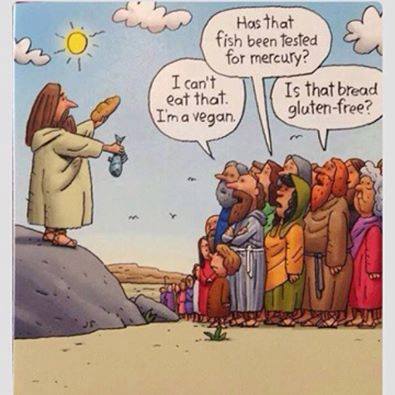
21st-century Americans in Christ's timeI think we have made the Church and Christianity something different than what the New Testament shows us. We’ve created far too many “things” which simply aren’t in the Bible. That’s not to say these things are wrong, but they may become stumbling blocks to us if we make secondary things the primary thing.

So what is the primary thing about church?

It might surprise you to know that the word church is only used twice by Jesus (Matthew 16:18, 18:17). He used a Greek word ekklesia, which meant a gathering of people called out from their homes into some public place. This word originally had more of a “town hall” meaning to it, but Jesus used this as a starting point to show us true church.

In Christ’s time the church for Him was…

Mobile—wherever He was, church was. Look at the extensive traveling He did. He held as many “church services” in people’s dining rooms as He did in the synagogues.

Messy—often as Jesus was speaking…

  • People constantly coming and going
  • Pharisees yapping and interrupting
  • Kids playing
  • Women sitting at His feet, anointing Him, crying over Him
  • Food and drink were usually involved
  • Foot washing was taking place
  • When He was outdoors: wind, waves, farmers, passers-by…
  • When He was indoors: food being served and eaten, roofs being ripped off…
  • People constantly interrupted His sermons: “Blessed is Your mother…”; “Tell my brother to give me my inheritance…”; “My daughter is dying!…”

Meaningful

  • “I must go through Samaria.”
  • “It’s not the healthy who need a doctor, but the sick.”
  • “Zaccheus, today I’m eating dinner at your house.”
  • “The Spirit of the Lord is upon Me to preach good news to the poor, freedom to the captive, sight to the blind, favor to the oppressed.”

Jesus asked His disciples Who they thought He was (see Matthew 16:13-18). The correct answer was Peter’s declaration, “You are the Christ, the Son of the living God!” Jesus said, “You’re right, and on that declaration I will build My church.”

Our job is to make Jesus known as the Christ, the Son of the living God (v. 16).

Christ’s job is to build His Church (v. 18).

He didn’t tell us to build a building and invite people to come on Sundays.

He didn’t tell us to start a Sunday School or a feeding program or a youth group.

There’s nothing wrong with these things, but they are not the main thing. 

The main thing is Jesus being seen as the Son of the living God. Where we are gathered together in that confession and purpose—even just two or three of us—that’s where His church is (see Matthew 18:20).

We must be mobile, taking a meaningful message into people’s messy lives. That is true church.

7 Quotes From “Did Jesus Rise From The Dead?”

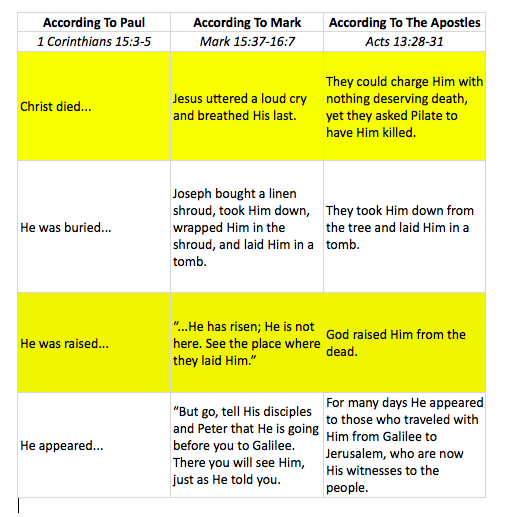
Did Jesus Rise From The DeadDid Jesus Rise From The Dead? is an excellent apologetic for both the biblical skeptic and the biblical student. You can read my full book review by clicking here. Below are seven noteworthy quotes and one infographic from this fascinating book.

“One of the most noteworthy facts about the early Christian belief in Jesus’ resurrection was that it flourished in the very city where Jesus had been publicly crucified. So long as the inhabitants of Jerusalem thought that Jesus’ corpse lay in the tomb, few would have been prepared to believe such silliness as the claim that God had raised Jesus from the dead.”

“We have the extraordinary number of at least five independent sources for Jesus’ burial, some of which are extremely early. The Gospels describe Joseph as a rich man, a member of the Jewish Sanhedrin. As a member of the Jewish Sanhedrin that condemned Jesus, Joseph of Arimathea is unlikely to be a Christian invention. The Sanhedrin was a sort of Jewish high court made up of seventy of the leading men of Judaism, which presided in Jerusalem. There was an understandable hostility among early Christians toward the Jewish Sanhe-drists, for Christians blamed the Sanhedrists for engineering a judicial murder of Jesus at the hands of the Romans. … Therefore, Jesus’ burial by Joseph is very probably historical, since it would be almost inexplicable why Christians would invent a story about a Jewish Sanhedrist who gives Jesus a proper burial.”

“Matthew is clearly working with an independent source, for he includes the story of the guard at the tomb, which is not derived from Mark and is unique to his Gospel; moreover, his comment that the rumor that the disciples had stolen Jesus’ body, ‘And this story has been spread among the Jews to this day,’ (Matthew 28:15) shows that the guard is not Matthew’s own creation, but was part of prior tradition. Luke also has an independent source, for he tells the story, not found in Mark, of two disciples’ inspecting the tomb to verify the women’s report that the tomb was vacant. This story cannot be regarded as Luke’s own creation, since the incident is independently reported in John’s Gospel. And, again, given John’s independence of the other three Gospels, we have yet another independent report of the empty tomb.”

Did Jesus Rise From The Dead infographic

(click image for a larger view)

“To appreciate how restrained Mark’s narrative is, we need only read the account in the second-century apocryphal Gospel of Peter. It describes Jesus’ triumphant exit from the tomb as a gigantic figure whose head reaches above the clouds, supported by giant angels, followed by a talking cross, heralded by a voice from heaven, and all witnessed by a Roman guard, the Jewish leaders, and a multitude of spectators! This is how real legends look: They’re richly decorated with theological and apologetical motifs. By contrast, Mark’s account is stark in its simplicity.”

“Think about that: ‘His disciples came by night and stole Him away’ [Matthew 28:13]. The Jewish authorities did not deny the fact that Jesus’ tomb was empty; instead they entangled themselves in a hopeless series of absurdities, trying to explain it away. In other words, the Jewish claim that the disciples stole the body presupposes that the body was, in fact, missing. Therefore, we have evidence from the very adversaries of the early Christian movement for the fact of the empty tomb.”

“All the followers of those first century messianic movements were fanatically committed to the cause…. But in no case right across the century before Jesus and the century after Him do we hear of any Jewish group saying that their executed leader had been raised from the dead, and he really was the Messiah after all.” —N.T. Wright

“A supernatural explanation of the empty tomb, the resurrection appearances, and the origin of the Christian faith is not contrived given the context of Jesus’ own unparalleled life, ministry, and personal claims.”

Links & Quotes

link quote

These are links to articles and quotes I found interesting today.

Truth! What Gossip Actually Does

“How little people know who think that holiness is dull. When one meets the real thing, it is irresistible.” —C.S. Lewis

“The difference in winning and losing is most often not quitting.” —Walt Disney

A son shows his sick mother some love: A Message Of Love In The Snow

Max Lucado on what angers Jesus: Hucksters And Faith Peddlers

Researchers question the long-term effectiveness of ADHD medicines: The Smart-Pill Oversell

An interview with Alvin Plantinga: Is Atheism Irrational?

[VIDEO] A great TobyMac song with a great message: Speak Life

Thursdays With Oswald—The Purpose Of Prayer

This is a weekly series with things I’m reading and pondering from Oswald Chambers. You can read the original seed thought here, or type “Thursdays With Oswald” in the search box to read more entries.

Oswald Chambers

The Purpose Of Prayer

     The purpose of prayer is the maintenance of fitness in an ideal relationship with God amid conditions which ought not to be merely ideal but really actual….

     So in the better and new way of breathing spiritually in prayer, we shall be conscious of forming the habit, but it will soon pass into normal spiritual health, and it must never be worshipped as a conscious process. 

From Christian Disciplines

Chambers is saying that prayer ought to be as natural to us as breathing. In order to get to this place, we must develop the habit of prayer, which mean disciplining ourselves to return to prayer when we might normally revert to another natural response.

But in forming the habit of prayer, we must not become like the Pharisees who worshipped their spiritual activities. They thought they were spiritual because of what they did, so they kept track of all they were doing, and they pointed to how many times each day and each week they had prayed. In essence, they worshipped prayer more than they worshipped the God they were supposed to be addressing in prayer.

The habit of prayer does take discipline (as the title of this Oswald Chambers book suggests), but it leads us to a life fully engaged in God’s presence. It’s a habit that is well worth the disciplined effort!

The Ragamuffin Gospel (book review)

Ragamuffin GospelThe Ragamuffin Gospel by Brennan Manning was originally published 15 years ago, but its message to us is just as needed—maybe even more needed—today! The subtitle nails the essence of this book: Good news for the bedraggled, beat-up and burnt-out. Indeed it is.

Without realizing it, Manning’s ragamuffin message has impacted much of my thinking for the past decade. Ever since I started working in a church, I have been more acutely aware of how many people feel like their beat-up, burnt-out status somehow disqualifies them for God’s grace. The message they’ve heard is, “Get your act together, and then get yourself to God for help.” As a result our societies are filled with the de-churched, and our churches are only left with those who think they have their acts together.

Manning’s message is such a refreshing wake-up call! He speaks to those bedraggled de-churched people to assure them Jesus wants them just as they are. He came to meet with the messed-up and burnt-out, to show them Abba God’s love. Manning also confronts the pharisaical view of far too many Christians who truly think God only helps those who help themselves, and who want people to make themselves worthy of God’s grace.

This book was like a breath of fresh air. It clarified my frustrations with churchy people, and it renewed my passion for all the bedraggled, beat-up, and burnt-out to know the amazing, unconditional, unmerited, awe-inspiring grace of a All-Loving God!

I am a Random House book reviewer.

11 Quotes From “Jesus Is _____”

Jesus Is _____Judah Smith has a fresh, clear way for us to view Jesus and His love for us. You can read my full review of Jesus Is _____ by clicking here. Below are 11 quotes from this book that got me thinking—

“The Pharisees were zealous for the law, but they didn’t understand the love of God. They imposed judgment without mercy, punishment without love, criticism without understanding. In the name of hating sin, the Pharisees ended up hating sinners. Perhaps worst of all, they concluded that their aloofness from sinners was what made them holy. The measuring stick of their goodness was the badness of the people they rejected. …Before we get too furious at the Pharisees, though, realize that inside each of us is a Pharisee trying to get out. It’s happened to me. No sooner do I conquer a bad habit than I become the biggest critic of anyone who still does what I just stopped doing. I find that righteous indignation comes a lot easier than humility and compassion. Mentally chastising the bad deeds of other people is more comfortable than dealing with my own.”

“Rather than rejecting people out of a false sense of superiority, rather than judging and condemning those whose lives don’t measure up to my standard of holiness, I need to remember that I am still desperately in need of Jesus’ grace.”

“Besides writing off bad people, we too quickly write off ourselves. We swing from the self-righteous side of the pendulum (That filthy sinner deserves to go to hell!) to the self-condemning side (I’m a filthy sinner who deserves to go to hell!). Both extremes come from focusing on rules rather than on a relationship with Jesus.”

“I think if Jesus had one shot at fixing us, He’d tell us how much He loves us. …Jesus loves us right now, just as we are. He isn’t standing aloof, yelling at us to climb out of our pits and clean ourselves up so we can be worthy of Him. He is wading waist-deep into the muck of life, weeping with the broken, rescuing the lost, and healing the sick.”

“When we realize that grace is a Person, not a principle, abusing grace is no longer an option. It’s easy to abuse a principle, to manipulate a system, or to excuse away a doctrine. But it’s much harder to abuse a person or violate a relationship.”

“Rules are not bad, but they can’t save anyone. The best a rule or a law can do is set a boundary and threaten punishment for crossing that boundary. People still decide to obey the rule or not. …Rules are meant to lead us to relationship, not to replace relationship. …Focusing too much on rules and too little on grace tells children that what they do is more important than who they are. …These principles aren’t just for parenting. This is how our relationship with God works. For God, it’s more about relationship than about rules. Far more.”

“When we make up rules because we are afraid people will sin, we end up doing an end run around faith. It’s not fear that saves us—it’s faith. Fear of failure has a sneaky way of becoming a self-fulfilling prophesy. …Make rules and follow rules as needed, but don’t focus on rules. Focus on faith. Focus on grace. Focus on Jesus. …Here’s the bottom line: everything that rules can do, grace can do better, and more besides.”

“Rules address behavior, but they don’t deal with the heart. They don’t adjust attitudes. They don’t heal the inconsistencies and fractures deep in our souls that could destroy us in the end. Grace, on the other hand, is internal. It works on a heart level. Where rules attempt to force us to do the opposite of what we want, grace actually changes what we want. It creates internal consistency and integrity. Doing what is right becomes much easier. …When we focus on Jesus instead of a code of conduct, when grace changes our desires so we are internally motivated and not just externally restrained, we become a lot more fun to be around.”

“Grace wasn’t free for Jesus. It cost Him everything. That is precisely why we should receive it freely. The most insulting thing we could do is reject this costly gift and say, ‘No thanks, God, I got this.’ Please don’t tell me Jesus was beaten and mutilated and tortured so we could try to save ourselves through our paltry good deeds. Don’t cheapen Jesus’ sacrifice by trying to pay Him back.”

“The point isn’t to quit thinking about sin. It’s to quit thinking about self and to think about Jesus. It’s to become God-conscious, not me-conscious. Do you know what law does? Law makes us self-conscious. When we are self-conscious, we become sin-conscious. We take our eyes off Jesus, and we focus on our failures, our weaknesses, our shortcomings. And we end up sinning even more because that’s all we can think about. But grace makes us God-conscious. When we live by grace, we are continually amazed by the love, goodness, and holiness of God. When we think about Him, that motivates us to act like Him. Are you struggling with sin? You don’t need more willpower. You need more of Jesus. Loving Jesus, not avoiding sin, is the focal point of our lives.”

“Holiness results in happiness, and happiness is an expression of holiness. The two go together. I am happier because I am holy, and it’s easier to be holier because I am happy. Because of the good news, because of Jesus, I can be both holy and happy—what a concept!”

Thursdays With Oswald—My Standard Of Conduct

This is a weekly series with things I’m reading and pondering from Oswald Chambers. You can read the original seed thought here, or type “Thursdays With Oswald” in the search box to read more entries.

My Standard Of Conduct

     Except your righteousness shall exceed the righteousness of the scribes and Pharisees, you shall not enter into the kingdom of Heaven. (Matthew 5:20)

     The practical outcome of these words is astonishing; it means that my standard of moral conduct must exceed the standards of the most moral, upright man I know who lives apart from the grace of God. … Instead of our Lord lowering the standards of our moral conduct, He pushes it to a tremendous extreme. We have not only to do right things, but our motives have to be right, the springs of our thinking have to be right; we have to be so unblameable that God Himself can see nothing to censure in us. 

From Biblical Psychology

There are some very moral people in the world, but their morality is of their own design, and not the morality that comes from a relationship in God’s grace (i.e. just like the first-century Pharisees). I cannot try to match their moral lifestyle, because my morality will not be God-centered.

My thoughts have to be perfectly moral. My thoughts about how I’m going to behave must be God-pleasing. This prayer of David needs to be my prayer as well if my thoughts and conduct are to be unblameable in God’s sight—

How can I know all the sins lurking in my heart? Cleanse me from these hidden faults. Keep Your servant from deliberate sins! Don’t let them control me. Then I will be free of guilt and innocent of great sin. May the words of my mouth and the meditation of my heart be pleasing to You, O Lord, my rock and my redeemer. (Psalm 19:12-14)

Thursdays With Oswald—Spiritual Overloading

This is a weekly series with things I’m reading and pondering from Oswald Chambers. You can read the original seed thought here, or type “Thursdays With Oswald” in the search box to read more entries.

Spiritual Overloading

       One continually finds an encroachment of beliefs and of attachment to things which is so much spiritual overloading. Every now and again the Spirit of God calls us to take a spiritual stock-taking in order to see what beliefs we can do without. The things our Lord asks us to believe are remarkably few, and John 14:1 seems to sum them up—“Ye believe in God, believe also in Me.” We have to keep ourselves alertly detached from everything that would encroach on that belief; we all have intellectual and affectionate affinities that keep us detached from Jesus Christ instead of attached to Him. We have to maintain an alert spiritual fighting trim.

From Facing Reality

Probably because I’m still studying and preparing for our Overloaded series, but I’ve been especially tuned into to the idea of all sorts of overload… even (especially) spiritual overloading. I never want to fall victim to the same trap the Pharisees were in:

Then Jesus said to the crowds and to His disciples, “The teachers of religious law and the Pharisees are the official interpreters of the law of Moses. So practice and obey whatever they tell you, but don’t follow their example. For they don’t practice what they teach. They crush people with unbearable religious demands and never lift a finger to ease the burden.” (Matthew 23:1-4)

I don’t want to overload myself; nor do I want to overload those I teach. So I’m taking a hard look in the mirror—and listening closely to the Holy Spirit—about those spiritual overloading things that may be crushing me.

What Are Rules For?

Listen to the podcast of this post by clicking on the player below, and you can also subscribe on AppleSpotify, or Audible. 

David is on the run from Saul. He leaves town so quickly that he didn’t have time to kiss his wife goodbye. He didn’t even have enough time to grab a weapon, a change of clothes, companions, or food. So he stops by Ahimelech’s house to see if this priest has any food.

Remember this old nursery rhyme?

Old Mother Hubbard
Went to the cupboard,
To give the poor dog a bone:
When she came there,
The cupboard was bare,
And so the poor dog had none.

That’s just about what happened here. Ahimelech said, “The only bread I have is the holy showbread.” This consecrated bread was 12 loaves laid out each Sabbath in God’s presence. When this bread was replaced each week, it became food for the priests. Ahimelech recognized he had a moral obligation to save David’s life which superseded the ceremonial rules.

Jesus used this incident as an example when the Pharisees accused Him of breaking the law concerning the Sabbath day. Jesus and His followers had been walking through a wheat field, plucking some pieces of grain on which they could munch. The rule-keeping Pharisees said this amounted to work, and a violation of Sabbath rules.

I think sometimes we get so caught up in keeping the rules (or following tradition, or preserving decorum) that we forget the meaning behind the rule. Or, more accurately, we forget God’s design behind the rule.

Every rule God gives is to keep us in a place where we can experience His presence. Rules are not life, but they are boundaries that keep us on the path to life.

Ahimelech kept David alive with showbread. Jesus and His disciples sustained themselves with wheat kernels. Jesus healed the sick on the Sabbath to bring life and wholeness.

Following rules just to follow rules misses the point. What is the point? Following God’s rules to find God’s heart is THE point.

So let me ask you: Do you get the point?

You may also want to check out series on God’s rules called The Love In The Law, or the post called Rules Are Overbearing—Love Never Is.

►► Would you please prayerfully consider supporting this ministry? My Patreon supporters get behind-the-scenes access to exclusive materials. ◀︎◀︎