Links & Quotes

link quote

These are links to articles and quotes I found interesting today.

Planned Parenthood announces their plans for the 2014 election, and Michigan is on the list.

Rush Limbaugh’s take: Religious Liberty Defeated In Arizona …

…and the Gospel Coalition’s look at the same topic: When Tolerance Turns To Coerced Celebration

Here are some good ideas for supporting missionaries: Heart For The World

[VIDEO] Constitutional law professor slams Obama’s use of executive orders.

“You are not leading or teaching a child. You are leading a future adult. Everything you do and say will either serve to prepare them or prevent them from being ready. The more you maintain that focus, the better choices you’ll make as a mentor” (Tim Elmore). Read more: Two View Points To Avoid and check out Elmore’s book Generation iY.

“The full, literal meaning of the word ‘repent’ in the New Testament is ‘to feel remorse and self-reproach for one’s sins against God; to be contrite, sorry; to want to change direction.’ The difference in meanings here rests on the word ‘want.’ True repentance includes a desire to change!” —David Wilkerson

How the media misrepresents what scientists say about climate change

Chinese police break up child-trakkicking ring and save hundreds of babies 

[VIDEO] Cecile Richards (the president of Planned Parenthood) isn’t sure when life begins

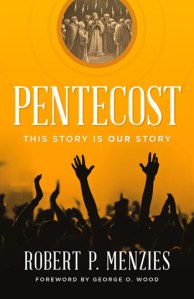
14 Quotes From “Pentecost”

Pentecost

I thoroughly enjoyed reading Pentecost by Robert P. Menzies, and learned quite a bit. You can read my full book review by clicking here. Here are a few quotes that stood out to me.

“It’s because Pentecostals fuse the biblical and contemporary horizons that we link baptism in the Holy Spirit with speaking in tongues, since that’s what Acts 2 does. It’s why we associate Spirit-baptism with empowerment for mission rather than with spiritual regeneration. And it’s why we expect God to perform ‘signs and wonders’ and to manifest spiritual gifts in worship services. All these things happened in the first Pentecostal community, and their story is our story.” 

“At its heart, the Pentecostal movement is not Spirit-centered but Christ-centered. The work of the Spirit, as Pentecostals understand it, centers on exalting and bearing witness to the Lordship of Christ.”

“Pentecostals are ‘people of the Book.’ Although Pentecostals certainly encourage spiritual experience, they do so with a constant eye to Scripture.”

“So, the stories of Acts are our stories, and we read them with expectation and eagerness: stories of the Holy Spirit’s power, enabling ordinary disciples to do extraordinary things for God. … The hermeneutic of the typical Pentecostal believer is straightforward and simple: the stories in Acts are my stories—stories that were written to serve as models for shaping my life and experience.”

“In Luke’s view, every member of the church is called (Luke 24:45–49; Acts 1:4–8/Isaiah 49:6) and empowered (Acts 2:17–21; cf. 4:31) to be a prophet. Far from being unique and unrepeatable, Luke emphasizes that the prophetic enabling experienced by the disciples at Pentecost is available to all of God’s people. … Through his two-volume work, Luke declares that the church, by virtue of its reception of the Pentecostal gift, is nothing less than a community of prophets. It matters not whether we are young or old, male or female, rich or poor, black or white; the Spirit of Pentecost comes to enable every member of the church, each one of us, to fulfill our prophetic call to be a light to the nations.” 

“Not long ago a Chinese house church leader commented, ‘When Western Christians read the book of Acts, they see in it inspiring stories; when Chinese believers read the book of Acts, we see in it our lives.’”

“Luke’s theology of the Spirit is different from that of Paul. Unlike Paul, who frequently speaks of the soteriological dimension of the Spirit’s work, Luke consistently portrays the Spirit as a charismatic or, more precisely, a prophetic gift, the source of power for service.” 

“Luke crafts his narrative so that the parallels between Jesus’ experience of the Spirit (Luke 3–4) and that of the disciples on the day of Pentecost (Acts 1–2) cannot be missed. Both accounts: 1. Are placed at the outset of Luke’s Gospel on the one hand, and the book of Acts on the other; 2. Associate the reception of the Spirit with prayer; 3. Record visible and audible manifestations; 4. Offer explanations of the event in the form of a sermon that alludes to the fulfillment of Old Testament prophecy.”

“Luke’s understanding of baptism in the Holy Spirit, I have argued, is different from that of Paul. It is missiological rather than soteriological in nature. … The tendency in Protestant churches has been to read Luke in the light of Paul. Paul addresses pastoral concerns in the church; Luke writes a missionary manifesto.” 

“Bold witness for Jesus is recognized as our primary calling and the central purpose of our experience of the Spirit’s power. Missions is woven into the fabric of our DNA.”

“I do not wish to minimize in any way the significance of the great doctrinal truths of Paul’s writings. I merely point out that since Paul was, for the most part, addressing specific needs in various churches, his writings tend to feature the inner life of the Christian community. His writings, with some significant exceptions, do not focus on the mission of the church to the world. … It is probably fair to say that while Paul features the ‘interior’ work of the Spirit (e.g., the fruit of the Spirit, Gal. 5:22–23); Luke features His ‘expressive’ work (Acts 1:8). Thus, by appropriating in a unique way the significant contributions of Luke-Acts, Pentecostals have developed a piety with a uniquely outward or missiological thrust.”

“The clarity of the Pentecostal message flows from the simple, straightforward manner in which we read the Bible. As I have noted, Pentecostals love the stories of the Bible. We identify with the stories that fill the pages of the Gospels and Acts, and the lessons gleaned from these stories are easily grasped and applied in our lives. For Pentecostals, the New Testament presents models that are to be emulated and guidelines that are to be followed. It should be noted that our approach to doing theology is not dependent on mastering a particular set of writings, say, the works of Luther; or coming to terms with a highly complex theological system. Pentecostals also do not worry much about cultural distance or theological diversity within the canon. We do not lose sleep over how we should understand the miracle stories of the Bible or how we might resolve apparent contradictions in the Bible. Our commitment to the Bible as the Word of God enables us to face these questions with a sense of confidence.”

“We must remember that whatever we do, God is measuring the work we do for Him in a qualitative, not quantitative way. … Only the work which is done by the power of the Holy Spirit can be acceptable in the Kingdom of God.” —David Yonggi Cho

“Some will still remain skeptical. They will ask: Is not this approach to church life, with its emphasis on ecstatic experience, emotional response, and spiritual power, filled with inherent dangers? Might it not encourage us to feature emotionally manipulative methods and to focus on superficial matters? Yes, undoubtedly, there are dangers. However, there is more danger in an approach that fails to make room for the full range of human experience, including the emotions, in our encounter with God.”

Lots Of Winners!

Our Impact youth group had a contest to see which school could raise the most money for Speed The Light (STL). STL helps missionaries purchase the equipment that will help them speed the light of the gospel around the world. Our Cedar Springs students, Kent City students, and missionaries are all winners!

Plastic Donuts (video review)

Plastic DonutsHere is a video review Waterbrook Multnomah Press asked me to do on Plastic Donuts. This review is especially for other pastors, but I think you’ll see how much I liked this book. If you would like to read my full book review, you may do so by clicking here, you may also read some of my favorite quotes from the book by clicking here.

Calvary Assembly of God, get ready … you’re going to hear more about Plastic Donuts soon. And I’ve got a special gift for you too! Stay tuned.

She Did What She Could

She Did What She CouldIt is one of the most beautiful scenes in the Bible: Mary, a woman set free by the power of Jesus, anoints Him with her fragrant perfume. The Bible says that the people sitting around Jesus were “indignant at the waste” of perfectly good perfume. Some may have even thought, “What’s the point?”

But Jesus responds, “Leave her alone, she has done a beautiful thing to Me. She did what she could” (Mark 14:1-9).

Apparently Mary was not a woman of great wealth, but she did what she could. And Jesus said it was beautiful.

I cannot feed all the hungry people in the world, but I can feed one hungry student in Cedar Springs.

I cannot share the gospel with every unreached people group on the planet, but I can give a few dollars a month to a missionary who is reaching a tribe in northern India.

I cannot undo all of the injustice done to women, but I can support the W.A.R. Chest Boutique who is is helping rescue women from slavery.

I cannot counsel every woman contemplating an abortion, but I can volunteer at Alpha Family Centers whose counselors are lovingly counseling women to choose life.

I should never allow the largeness of the situation or the smallness of my resources to paralyze me from acting. I can be like Mary who did what she could.

10 Quotes From “Plastic Donuts”

Plastic DonutsPlastic Donuts is a fresh look at the biblical concepts of tithing and giving offerings. You can read my full book review by clicking here. These are some of the quotes that caught my eye—

“What I didn’t realize was that my lifestyle had frozen my giving at the 10 percent level. When it came to my finances, my lifestyle had all the influence. The issue is not about my needing to sacrifice my lifestyle. The issue is about my giving a gift that is connected to my heart.”

“In His Sermon on the Mount, Jesus provided instructions on giving, praying, and fasting. For each, He focused on the heart standard but did not provide an amount standard (see Matthew 6:1-18).”

“David praised God seven times a day. Daniel prayed to God three times a day. Moses fasted from food and water twice, for forty days straight. Daniel fasted twenty-one days from rich foods and wine. Where did these faith heroes get their standards? They determined them. It’s human nature to seek something that is concrete, an inviolable guideline, clear marching orders. … But let’s be honest. Are we looking for a rule to follow so we can check it off the list? Or does a strict rule help to soothe a sense of guilt and confusion? It’s always easier to follow rules than to follow a living God. The absence of rules can cause tension in determining the amount of our gifts. Shouldn’t there at least be a minimum? If not, suddenly it’s wide open. Multiple options appear.”

“God is not looking for the same gift from all His children. He wants a personal gift.”

“You may not think you have the ability to give. But if you pay attention, you’ll be surprised at just what abilities you really do have.”

“Tapping your true giving ability will require countercultural lifestyle choices—such as debt-free living or a reduction in your spending.”

“If you want to grow your faith, grow your gratitude. To grow your gratitude, take time to count your blessings.”

“No matter what your ability or inability, God can be pleased with your gift.”

“Could it be that a giving lifestyle apart from love and obedience to God is simply philanthropy?”

“In the end, it is the condition of the giver’s heart that makes the gift pleasing to God.”

Plastic Donuts (book review)

Plastic DonutsEvery once in awhile a book comes along that addresses a topic in such an innovative way, that I get an insight I had never considered before. Plastic Donuts by Jeff Anderson is just such a book.

Tithes. Offerings. Missions support. Building funds. It seems pastors cringe when they think about addressing these subjects, and congregants squirm when they hear their pastor addressing these subjects! “After all,” many think, “every church-attending Christian knows they should give, right? We know it and the pastor knows it, so why do we need to talk about it?”

But Plastic Donuts will give you a take on church giving that you probably haven’t considered before. It all comes from an insight Jeff Anderson got when his young daughter served him some plastic donuts.

The book is short, but powerfully-packed. I would say that its size would make you think it could be read quite quickly, but the content is so thought-provoking and eye-opening, you may find yourself taking time to rethink what you thought you knew on this subject.

Here’s my final word: Get this book. Get it for yourself and get it for your pastor. Everyone will be grateful that you did.

I am a Waterbrook Multnomah book reviewer.

UPDATE: 

  • To read some of my favorite quotes from this book, click here.
  • To watch a video review I did of this book for Waterbrook Multnomah, click here.

Unreached

UnreachedThis really weighs heavily on me…

Our guest this morning began to lay down 3×5 cards with the names of students on them. These students haven’t heard about Jesus yet. Let this weigh on your heart—

There are 150 million unreached students in his area of the world.

If all their names were laid end-to-end on 3×5 cards, the line would stretch 11,500 miles.

If you were flying over these cards in a 747, it would take you 20 hours to cover them all.

Stacked together these cards/names would weigh 190 tons.

If you prayed just 1 second for each name, you would be praying for 4.5 years.

We all need to be praying, giving, or going. Or maybe all three.

  • Praying for our missionaries and the unreached people they are trying to reach
  • Giving financially to missions
  • Going on the mission field yourself

Prayer Focus: Outreaches

As this week marks the beginning of a “new year,” (as students are heading back to school and we’re all settling in to our fall routines), we are taking time to focus our prayers.

Today’s pray focus is for our fall outreaches.

“Sometimes I’m asked to list the most important steps in preparing for an evangelistic mission, and my reply is always the same: prayer . . . prayer . . . prayer.” —Billy Graham

How true this is! If we try to take on any kind of project in our own ingenuity or our own strength, we are setting ourselves up for disappointment. The greatest example of prayer … prayer … prayer is Jesus. Throughout His public ministry, you will see prayer preceding all of the major ministry activities.

Not only that, but we see Jesus praying for us just prior to His crucifixion (see John 17) that we would spread the news about Him in God’s strength. And then just before His ascension, Jesus told His followers,

Do not leave Jerusalem, but wait for the gift My Father promised, which you have heard Me speak about. For John baptized with water, but in a few days you will be baptized with the Holy Spirit. …But you will receive power when the Holy Spirit comes on you; and you will be My witnesses in Jerusalem, and in all Judea and Samaria, and to the ends of the earth. (Acts 1:4, 5, 8)

We have several local ministries in which we are involved throughout the year, and we have some special ministry opportunities we will be undertaking this fall. In addition, there are many, many missionaries which have counting on our prayer support.

Please pray for our involvement with:

Please pray for the missionaries that we know and love so much:

  • Kirk & Jayne Flanagan
  • David & Kristen Speer
  • Craig & Sharon Metzner
  • Ray & Deborah Miller
  • Bob & Rhonda Thomas
  • Dianne Eklund
  • Bob & Bette Sue MacIsaac
  • Joshua & Amber Payne
  • Matt & Carrie Love
  • Scott & Rachel Shank
  • Jon Fredrickson

Could You Be A Missionary?

When I say missionary, what images come to your mind?

  • …a remote wilderness?
  • …a third-world country?
  • …asking churches and friends to support you financially?
  • …packing up to leave your home for years at a time?
  • …learning a new language?

Yes, many of our missionaries do all of these things. But if this is your only concept of missions, you’ve missed something important.

When Jesus told His followers that they would go out as witnesses (missionaries) for Him, He began with—

…you will be My witnesses in Jerusalem… (Acts 1:8)

The first place He sent them was to Jerusalem.

  • This was a missions opportunity right in their neighborhood.
  • They already knew the culture.
  • They already knew the language.
  • They didn’t have to pack up and leave their family behind.

Missions is not always far away. Sometimes it’s in your own neighborhood!

In Cedar Springs, I love the partnerships that the Cedar Springs Ministerial Association has helped foster, and the opportunities for local missions work that have been presented. One of our ongoing projects is providing weekend food for students who may be struggling to have enough over the weekend. It is a program called Hand2Hand. We are always looking for volunteers (missionaries!) who can work, collect food, or donate funds to help.