6 Quotes From “The Cell’s Design” (and a cool infographic too)

The Cell's DesignThe Cell’s Design by Fazale Rana, a distinguished biochemist, is an amazing apologetic for an intelligent designer of our universe: A Creator. You can read my full book review by clicking here. Below are a few quotes I wanted to pass along, and a graphic I created based on Rana’s findings.

“This elegance, evident in virtually all aspects of the cell’s chemistry, carries profound philosophical and theological significance that prompts questions about the origin, purpose, and meaning of life. Though I once embraced the evolutionary paradigm, its inadequate explanations for the origin of life coupled with the sophistication and complexity of the cell’s chemical systems convinced me as a biochemistry graduate student that a Creator must exist.”

“Richard Dawkins, an outspoken atheist, acknowledges that ‘biology is the study of complicated things that give the appearance of having been designed for a purpose.’”

“An event, system, or object is intentionally produced by a designer, then it will (1) be contingent, (2) be complex, and (3) display an independently specified pattern. … Three questions are used to determine if an event, system, or object stems from the activity of an intelligent agent. Can it be explained as a consequence of the laws of nature (necessity)? If yes, then it is not designed. If no, then can it be explained as a consequence of chance (contingent)? If yes, then it is not designed. If no, then does it display a specified pattern (specification)? If no, then it is not designed. If yes, then it must be the product of an intelligent designer.”
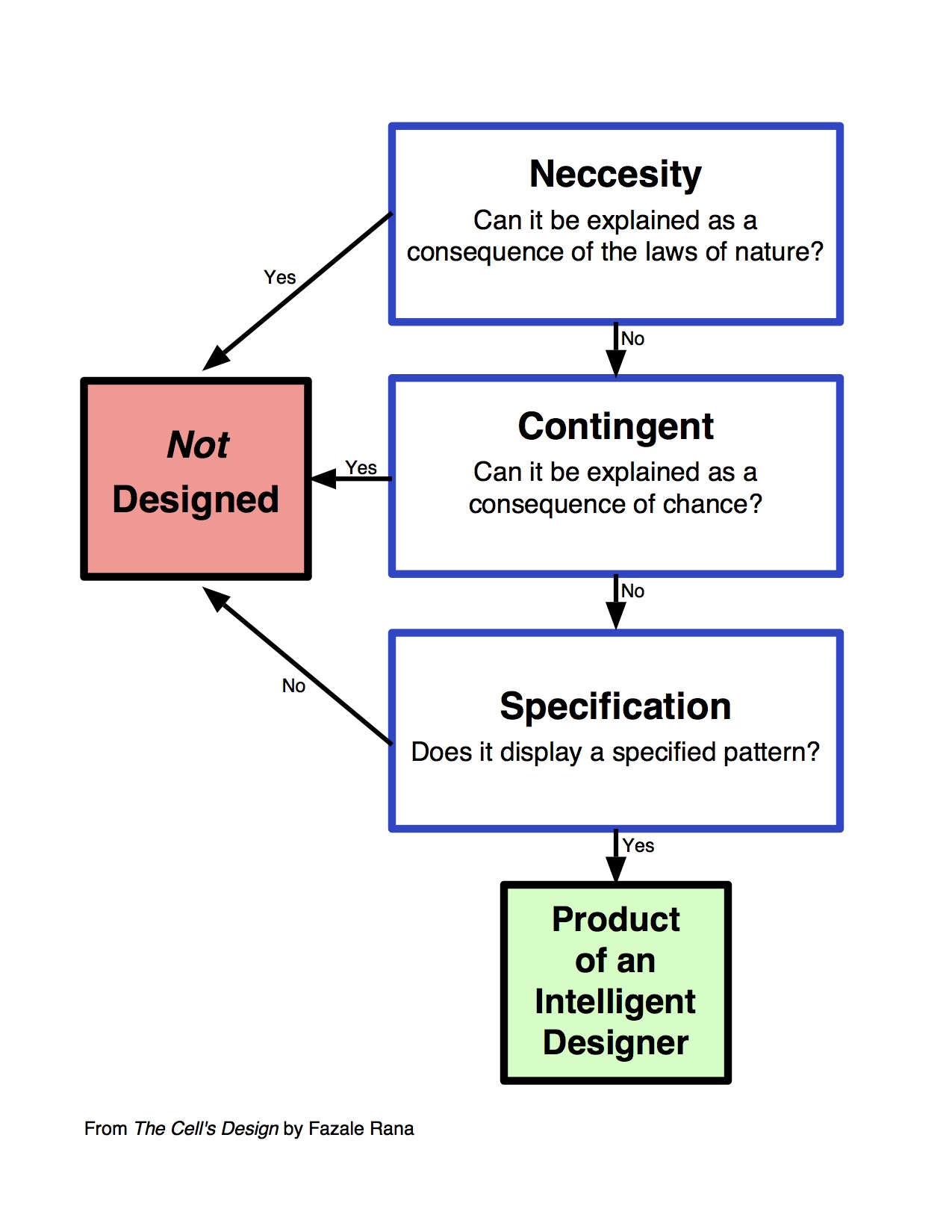
Intelligent design flowchart

(Click image for a larger view, or click here to download a PDF version → Intelligent design flowchart)

“These advances indicate that life’s bare essentials extend far beyond the number of proteins that must simultaneously occur for life to exist. Life’s minimum complexity also requires organization of these gene products within the cell.”

“It is superastro-nomically improbable for the essential gene set to emerge simultaneously through natural means alone. If left up to an evolutionary process, not enough resources or time exist throughout the universe’s history to generate life in its simplest form.”

“Instead of resembling a preschooler’s messy fingerpainting, the interior of the simplest cell is best described as a carefully planned and marvelously executed work of art—one that masterfully carries out life’s most basic processes in living color. Disrupting this arrangement is often lethal.”
The Cell’s Design (book review)

The Cell's DesignAfter my years in the medical science field, I’m still fascinated by the findings and operations of the many disciplines of science. I used to engage in frequent debates with my fellow students who believed our world was a result of chance and mutation spread over billions of years. But I always found it so astronomically improbable that such beautiful intricacies could result from chance. In The Cell’s Design biochemist Fazale Rana delves even deeper into the cell’s inner workings to make a powerful case for intelligent design.

Time and time again Rana shows us where there is such high-level, picture-perfect designs and operations at the smallest levels of the cell. Wherever scientists used to think, “This is as much design as we can expect, anything lower than this will be random,” they are now discovering unexpected and perfect designs.

This book is definitely not “layman” reading, but is geared for those with a working knowledge of scientific vocabulary and principles. But if you want to dive into it, you will find the results of the research to be absolutely astounding. And I think you will also find the case for a Intelligent Creator to be harder to refute. 

This quote is not in The Cell’s Design, but I think it accurately captures the essence of Rana’s findings—

“There is something in the nature of things which the mind of man, which reason, which human power cannot effect, and certainly that which produces this must be better than man. What can this be but God? … The celestial order and the beauty of the universe compel me to admit that there is some excellent and eternal Being, who deserves the respect and homage of men.” —Cicero

Gratitude Cancels Anxiety

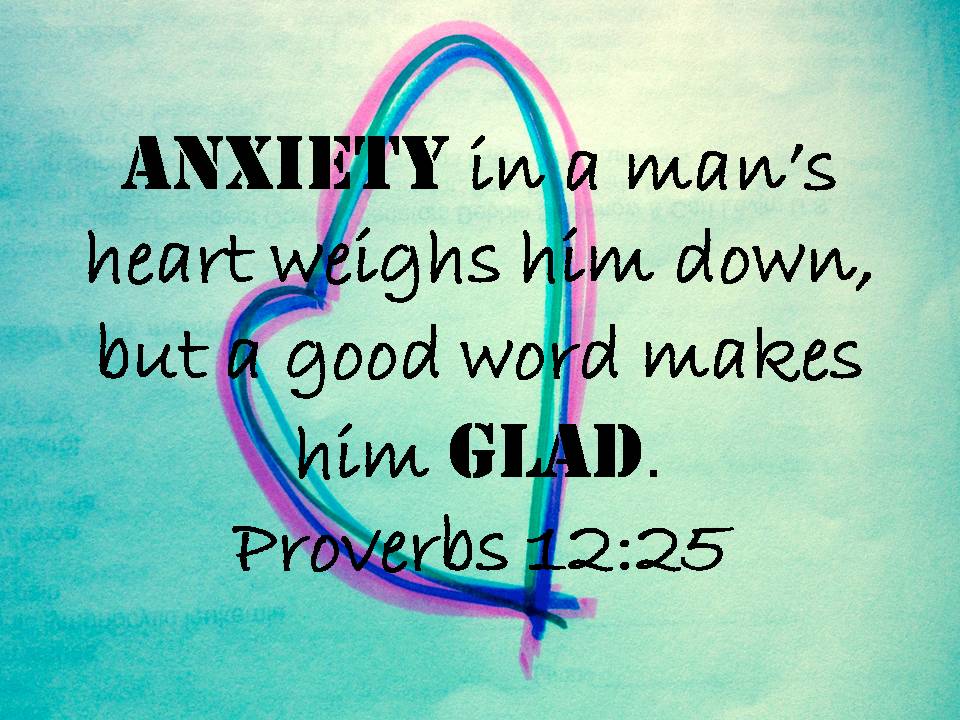
Gratitude cancels anxietyThe wise King Solomon said, “Anxiety in a man’s heart weighs him down…” (Proverbs 12:25). And now medical science proves it.

There’s the physical weight of anxiety:

  • Digestion of food is hindered
  • Sleep is disrupted
  • Short-term memory is hampered
  • Immune system is depressed
  • Heart disease risks are elevated
  • Not to mention the emotional and relational weights of anxiety

But do you know what brings an almost immediate bounce-back from these conditions? Feeling and expressing gratitude.

The feelings of gratitude…

  • Release endorphins (the feel-good hormone)
  • Make good memories easier to recall
  • Strengthen relationships
  • Improve overall physical health

The verse I quoted earlier from Proverbs was only the first half of the verse. The full verse says, “Anxiety in a man’s heart weighs him down, but a good word makes him glad.” Science tells us that it doesn’t matter if those good words are words others say to us, or words we say to ourselves, or words we say to others. Our bodies cannot tell the difference, so any grateful/thankful/positive words cancel out the heaviness of anxiety!

Try it! Keep a gratitude journal … write a letter to someone you haven’t properly thanked for their investment in your life … make it a point to compliment others … speak more positively to yourself. Those grateful words are not only the antidote to the anxiety weighing you down now but also the inoculation against future anxiety. 

We’ll be looking at more benefits of gratitude next week, as we continue our series A Grateful Heart Is A Strong Heart. Please join me!

Miracle Breaths

In the midst of his despair, Job uttered this amazing truth about God:

He performs wonders that cannot be fathomed, miracles that cannot be counted. When He passes me, I cannot see Him; when He goes by, I cannot perceive Him.

The wonders of God are all around me, His miracles occurring moment by moment; breath by breath.

Reflect for a moment on the miracle of your next breath…

  • Your brain coordinates nerves and muscles to aid in breathing in oxygen.
  • Both atriums and ventricles in your heart squeeze in perfect rhythm to circulate blood.
  • The valves between atriums and ventricles open and shut at the precise moment to allow blood to move forward, but not backward.
  • Red blood cells supercharged with hemoglobin bind to freshly inhaled oxygen molecules.
  • More red blood cells carrying carbon dioxide move toward the lungs, and release their passengers at the perfect time and place to be exhaled from your body.
  • Your brain coordinates nerves and muscles to aid in breathing out carbon dioxide.

If I’m exercising, this whole process accelerates. If I’m sleeping, this whole process slows.

This goes on breath by breath by breath throughout your entire life, all without your conscious effort.

It’s a wonder that cannot be fathomed, a miracle that cannot be counted!

This seemingly “little” miracle keeps me alive, yet when was the last time I stopped to praise God for it? I am a man of pitiful praise. I need to be more aware of God’s miracles and wonders around me. I need to become a man of perpetual praise.

Books I Read In 2010

Benefits In Delaying Sex Until Marriage

It’s nice to see some scientific research on this. In a very encouraging article from WebMD, researchers point out some great benefits of saving sex for marriage.

I encourage you to read the full article. And then, parents, have this conversation with your teenagers… again! You cannot repeat this often enough, because the message is so counter-cultural. In case you don’t have time to read the full article, here are the most important findings:

“Researchers say their findings are clear, that ‘the longer a couple waited to become sexually involved, the better that sexual quality, relationship communication, relationship satisfaction and perceived relationship stability was in marriage.’”

Couples who waited until marriage to have sex:

  • rated sexual quality 15% higher than people who had premarital sex
  • rated relationship stability as 22% higher
  • rated satisfaction with their relationships 20% higher

As a pastor I’ve counseled so many people who have damaged relationships because of pre-marital sex. I’ve had many tell me, “I wish we would have waited until marriage to have sex.” But I’ve never had someone say, “I’m so glad we had sex before we got married!”

Save yourself from the pain, by saving yourself for your spouse.

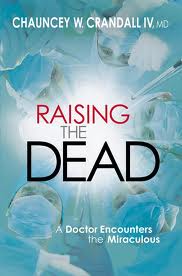
Raising The Dead (book review)

I know, I know, the title of this book sort of sounds like a horror movie, doesn’t it? But Dr. Chauncey Crandall IV’s book Raising The Dead is anything but horrific. In fact, it’s actually more like a love story.

The book opens with Dr. Crandall’s firsthand experience of praying for a patient who has been pronounced dead, and seeing with his own eyes that patient returned to life. This sets the stage for the life journey on which Dr. Crandall and his family are about to embark.

Raising The Dead traces the Crandall family’s journey of spiritual discovery as they battle cancer in the life of one of their twin sons. Throughout this story you will ride the highs as miracles appear for this family, and you will feel the heartbreak as opportunities slip away. Through it all, the Crandall family learns how to draw closer to each other, and – most importantly – closer to God. I know I joked earlier about the book’s title evoking thoughts of a movie, but in actuality, this story would make an incredibly moving film.

If you are praying for a miracle in your life, if you work with people in desperate places, or if you would simply enjoy a moving account of a family seeking so fervently after God, you will enjoy Raising The Dead.

I am a Faith Words book reviewer.

The Doctor & The Pastor—Part II

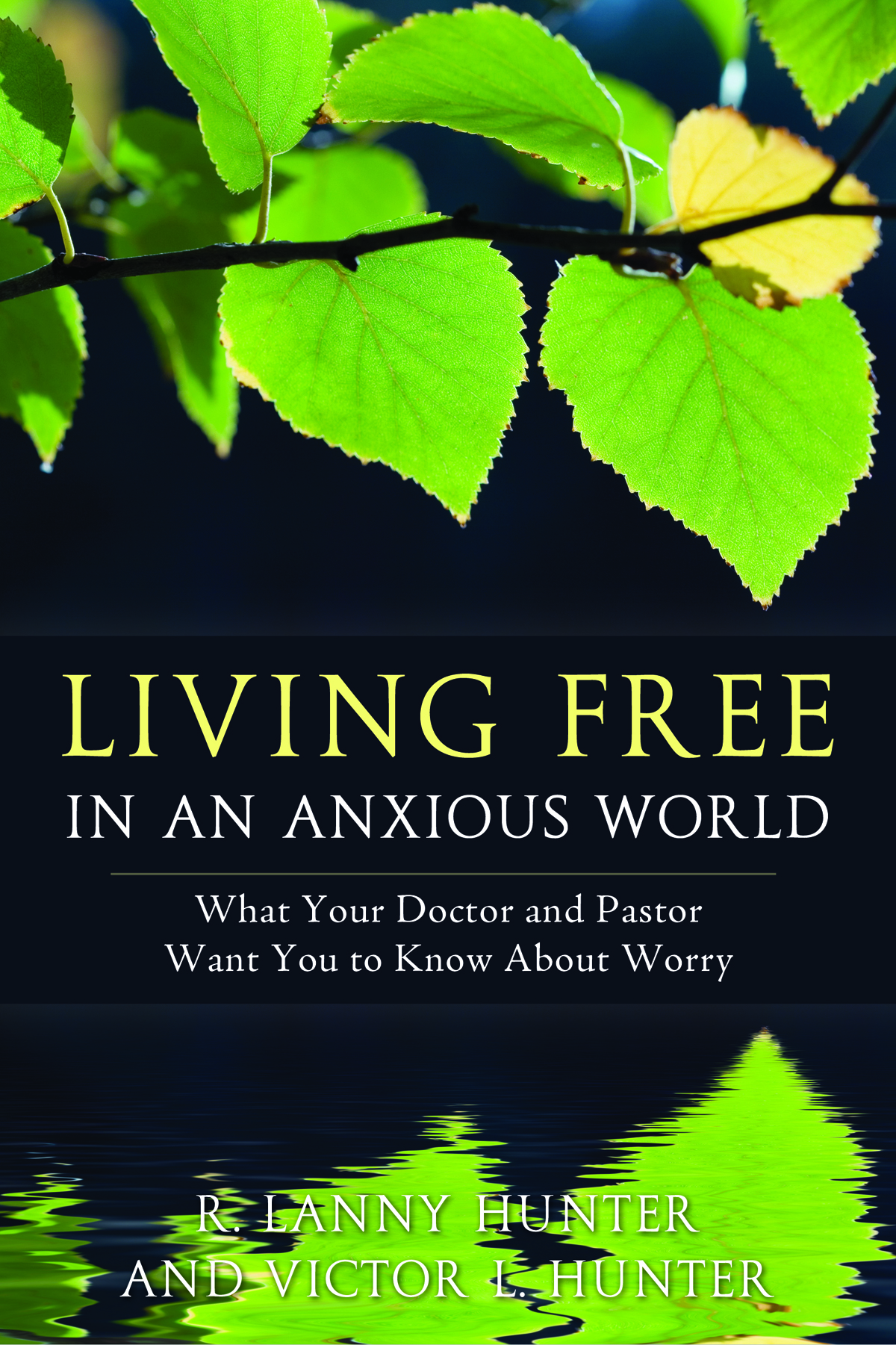
Friends, I recently reviewed the manuscript for a new book Living Free In An Anxious World. This is an essential book for pastors, Christian counselors, psychologists, and medical doctors which deals with a problem that is only expanding: worry, stress, anxiety. Stay tuned to this blog for a chance to win a free copy in just a couple of weeks.

In the meantime, I am absolutely thrilled that the co-authors of Living Free In An Anxious World have agreed to write to my blog readers! Today is the second installment from Dr. Lanny Hunter. (If you missed Part I from Victor Hunter, you can check it out here.)

Guest Author: Dr. R. Lanny Hunter

In my profession as a dermatologist, it’s fair to say that most of my patients come to see me because they are worried. Patients may have developed a rash that worries them. What is it? Is it contagious? Is it serious? Will it scar? What will people think? Can I get rid of it?

Patients may have developed a skin growth, a lump, a sore that won’t heal, a place that is changing color, causing pain, or bleeding. Again, they are worried. Is it cancer? Is it life-threatening? Can it be cured? If I do make a diagnosis of cancer, their anxiety escalates. Will I die? How long do I have to live? How will it be treated? What should I tell my spouse? My family?

Beyond questions of diagnosis, treatment, and questions of severity of illness, many worry about medical costs. How much will it cost? Will my insurance pay for it? They may confide that their insurance has a very high deductible, or that they have no insurance at all, or that they live only on Social Security and Medicare. Will treatment bankrupt them?

In the course of consultation, medical care, and surgery, patients reveal more than their medical worries. They confide their life disappointments—marriage problems, work conflicts, children in trouble, personal and vocational failures, criminal escapades.

Patients with worry and anxiety are my life’s work. To that end, I use all of the interpersonal skills, psychological insights, religious convictions, and medical skills that I have acquired through training and experience. I must listen compassionately and constructively, and be armed with the latest medical techniques in treating disease. I must be cognizant of my limitations in skill and time. I may need to refer a patient to a psychologist, psychiatrist, pastor, priest, social worker, or another physician. I must always remember that I’m not treating the skin. I’m treating the whole person.

With that holistic approach in mind, my brother (a pastor) and I (a physician) have authored a book, Living Free in an Anxious World, which combines the insights of our two vocations to help people manage worry and anxiety in order to free them for more productive living. 

The Doctor & The Pastor—Part I

Friends, I recently reviewed the manuscript for a new book Living Free In An Anxious World. This is an essential book for pastors, Christian counselors, psychologists, and medical doctors which deals with a problem that is only expanding: worry, stress, anxiety. Stay tuned to this blog for a chance to win a free copy of this book later this month.

In the meantime, I am absolutely thrilled that the co-authors of Living Free In An Anxious World have agreed to write to my blog readers! Today is the first installment from Rev. Victor Hunter.

Guest Author: Rev. Victor L. Hunter

Whether it was the Carter family’s version in the 1930s, Woody Guthrie’s in the 40s, the Kingston Trio’s in the 50’s, Ramblin’ Jack Elliott’s in the 60s, or Devo’s in the 70s and 80s, “Worried Man Blues” has been a ubiquitous presence in the bluegrass/folk song genre of cultural music throughout the “century of anxiety.” Its words and tune have provided a common background theme playing in our minds for decades:  “It takes a worried man to sing a worried song.” Most of us, men and women, have hummed along, literally and/or figuratively, with its sentiments.

During these decades, my brother and I have listened to the song’s lyrics and contemplated the reality of worry and anxiety both personally and professionally. He’s a physician. I’m a pastor. I can say without hyperbole that there hasn’t been a week go by in nearly a half-century of preaching, pastoral care and counseling, and teaching that worry and anxiety haven’t been at the forefront of conversations with people, young and old, men and women, who have said to me, “I need to talk with you about something.”

This is so because anxiety is part of what it means to be human beings. It’s part of our biological makeup and spiritual reality. It is essential to our survival, as well as being a core theological question. It can also be devastatingly paralyzing, keeping people from living free, living life fully alive.

During the past four decades, the doctor and the pastor, the brothers, have been in conversation about our disciplines of science and theology and our professions in medicine and religion. We have become increasingly sensitive to the many issues that meet at the intersection of biology and theology. It’s about being human before God. We share in Living Free in an Anxious World this conversation and our passion for a holistic understanding of our humanity in light of faith and science . . . as well as our hope for the healing and redemption of our lives. We affirm that while anxiety and worry are unavoidable, they can be our teachers rather than our masters. Our goal is to provide realistic, practical, and helpful guidance in understanding worry and facing our fears that we might travel the road of freedom and grace.

Check out the guest post from Dr. R. Lanny Hunter by clicking here. 

Living Free In An Anxious World (book review)

When I say that more people today are worried, or stressed-out, or suffering from anxiety attacks, I’m not saying anything that you don’t already know. But in Living Free In An Anxious World authors R. Lanny Hunter and Victor L. Hunter give us a whole new way of looking at worry and anxiety.

Many times I’m frustrated by some author’s one-size-fits-all approach to dealing with worry and anxiety. The fact is, we are complicated and we are individuals. But more than that, many authors tend to focus on just one part of the human, when in fact we are a three-part being. There is a physical component, an emotional/mental component, and a spiritual component.

The Hunter brothers are well trained to address the effects of worry in all its forms, as one brother is a medical doctor and the other is a pastor who received specialized training in both religion and psychiatry. They both bring their specialties to this book in a way that I found both informative and comforting.

One of the first concepts they address is that the key is to not eliminate worry from our lives. That, they say, is impossible. The goal is to not worry in a self-destructive way. Right from the first chapter, I found myself buying into their insights which were so real and applicable.

The Hunter brothers explore the biblical, scientific, and even philosophic origins of worry, and provide very real solutions for even a layman like me. This book wasn’t “over my head” nor did it over-simply the very real and challenging task of dealing with worry the right way.

Since 6.5 million Americans suffer from general anxiety disorder every year, chances are good that you are going to have to confront worry in your life or in the life of a loved one. So I highly recommend this book to you.

I am an Abilene Christian University Press book reviewer.