Links & Quotes

link quote

“Some temptations come to the industrious, but all temptations attack the idle. … Idle Christians are not so much tempted of the devil as they are tempting the devil to tempt them. Idleness sets the door of the heart ajar, and asks satan to come in; but if we are occupied from morning till night, if satan shall get in, he must break through the door. Under sovereign grace, and next to faith, there is no better shield against temptation than being ‘Not slothful in business; fervent in spirit, serving the Lord.’” —Charles Spurgeon

“satan finds some mischief still for idle hands to do.” —Isaac Watts

“Our God and Father may, for wise ends, which shall ultimately subserve His own glory and our profit, lead us into positions where satan, the world and the flesh may tempt us; and the prayer [Matthew 6:13] to be understood in that sense of a humble self-distrust which shrinks from the conflict. There is courage here, for the suppliant calmly looks the temptation in the face, and dreads only the evil which it may work in him, but there is also a holy fear, a sacred self-suspicion, a dread of contact with sin in any degree. The sentiment is not inconsistent with ‘all joy’ when the divers temptations do come; it is akin to the Savior’s ‘If it be possible, let this cup pass from Me,’ which did not for a moment prevent His drinking the cup even to its dregs.” —Charles Spurgeon

“Meekness loves to learn. And it counts the blows of a friend as precious. And when it must say a critical word to a person caught in sin or error, it speaks from the deep conviction of its own fallibility and its own susceptibility to sin and its utter dependence on the grace of God. The quietness and openness and vulnerability of meekness is a very beautiful and a very painful thing. It goes against all that we are by our sinful nature. It requires supernatural help.” —John Piper

Dads, this is an important article for you to read if you have a daughter.

Did you know that 41,000 people commit suicide each year? Here is a helpful piece on how you can help bring hope to the hopeless.

Seth Godin says, “If your employees can’t answer how something they do helps the customer or the company, you’ve insulated your people from their jobs.” Check out his post Why Do You Do It This Way?
Night Time Reflection

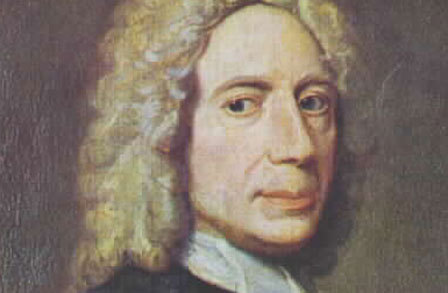
Isaac WattsBefore drifting off to sleep tonight―or any night for that matter―listening to these wise words might be very beneficial.

Let not soft slumber close your eyes,
Before you’ve collected thrice
The train of action through the day!
Where have my feet chose out their way?
What have I learnt, where’er I’ve been,
From all I’ve heard, from all I’ve seen?
What have I more that’s worth the knowing?
What have I done that’s worth the doing?
What have I sought that I should shun?
What duty have I left undone,
Or into what new follies run?
These self-inquiries are the road
That leads to virtue and to God. ―Isaac Watts

Links & Quotes

link quote

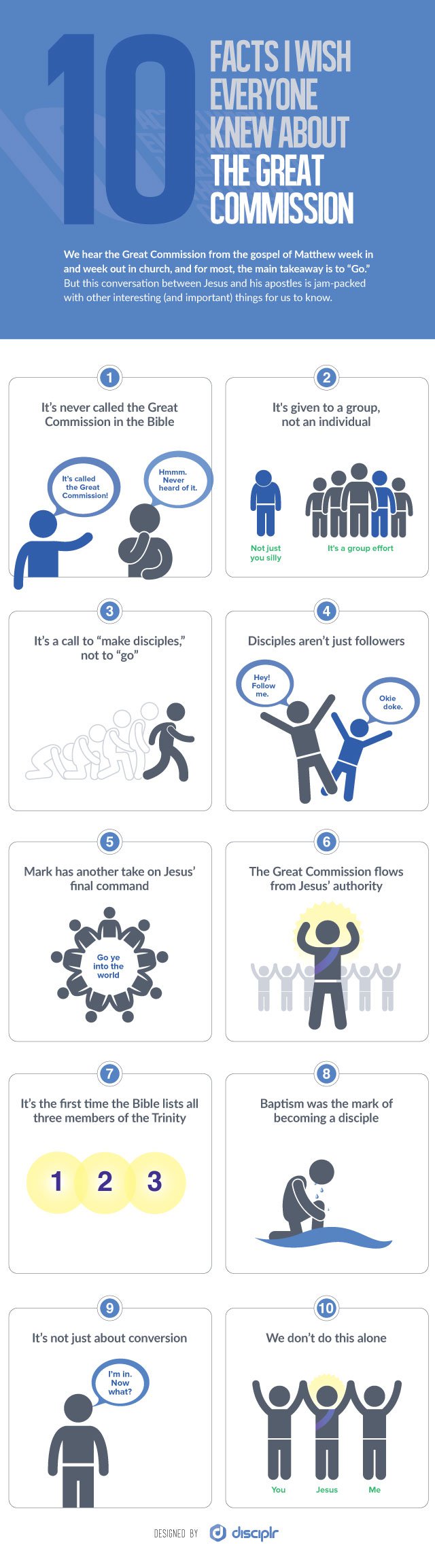
10 facts on the great commissionJeffrey Kranz from The Overview Bible Project has a nice post called 10 Things I Wish Everyone Knew About The Great Commission.

“The purpose of the salt in the steak is to do its work so quietly that it changes the nature of what it invades without calling attention to itself. … Salt must get into something in order to have effect, where it indelibly stamps its own character upon what it invades.” —George O. Wood

Good counsel for my fellow pastors: “One great and general rule is, ask advice of Heaven by prayer about every part of your preparatory studies; seek the direction and assistance of the Spirit of God, for inclining your thoughts to proper subjects, for guiding you to proper Scriptures, and framing your whole sermon both as to the matter and manner, that it may attain the divine and sacred ends proposed.” —Isaac Watts

Culture’s Big Lie About Marriage addresses head-on the way culture wants to bend and redefine marriage.

February 27 is the day to shine a light on slavery and sex trafficking around the world. Check out the END IT movement and mark your red “X.”

“I hope the doctrine that Christians ought to be gloomy will soon be driven out of the universe. There are no people in the world who have such a right to be happy, nor have such cause to be joyful as the saints of the living God.” —Charles Spurgeon

Poetry Saturday—Eternal Power

Isaac WattsEternal power, Whose high abode
Becomes the grandeur of a God,
Infinite lengths beyond the bounds
Where stars resolve their little rounds!

The lowest step around Thy seat,
Rises too high for Gabriel’s feet;
In vain the favored angel tries
To reach Thine height with wond’ring eyes.

There while the first archangel sings,
He hides his face behind his wings,
And ranks of shining thrones around
Fall worshiping, and spread the ground.

Lord, what shall earth and ashes do?
We would adore our Maker, too;
From sin and dust to Thee we cry,
The Great, the Holy, and the High.

Earth from afar has heard Thy fame,
And worms have learned to lisp Thy name;
But, O! the glories of Thy mind
Leave all our soaring thoughts behind.

God is in Heaven, and men below;
Be short our tunes, our words be few;
A solemn reverence checks our songs,
And praise sits silent on our tongues. —Isaac Watts

Poetry Saturday—When I Survey The Wondrous Cross

Isaac WattsWhen I survey the wondrous Cross
On which the Prince of glory died,
My richest gain I count but loss,
And pour contempt on all my pride.

Forbid it, Lord, that I should boast,
Save in the death of Christ my God!
All the vain things that charm me most,
I sacrifice them to His blood.

See from His head, His hands, His feet,
Sorrow and love flow mingled down!
Did e’er such love and sorrow meet,
Or thorns compose so rich a Crown?

Were the whole realm of nature mine,
That were a present far too small;
Love so amazing, so divine,
Demands my soul, my life, my all. —Isaac Watts


Such Wondrous Love

CrossAs I am preparing both a Good Friday message and an Easter message, I am immersed in the details of Christ’s passion for us. There are so many thoughts swirling through my head about the amazing, unequaled, undeserved, overflowing love that Jesus has for us.

See from His head, His hands, His feet / Sorrow and love flow mingled down! / Did e’er such love and sorrow meet, / Or thorns compose so rich a crown? (Isaac Watts, When I Survey The Wondrous Cross)

You see, at just the right time, when we were still powerless, Christ died for the ungodly. Very rarely will anyone die for a righteous person, though for a good person someone might possibly dare to die. But God demonstrates His own love for us in this: While we were still sinners, Christ died for us. (Romans 5:6-8)

That Christ should join so freely in the scheme / Although it meant His death on Calvary / Did ever human tongue find nobler theme / Than love divine that ransomed me?

Such love, such wondrous love / Such love, such wondrous love / That God should love a sinner such as I / How wonderful is love like this!

That for a willful outcast such as I / The Father planned, the Savior bled and died / Redemption for a worthless slave to buy / Who long had law and grace defied (C.Bishop, Such Love)

Because of the joy awaiting Him, Jesus endured the Cross, disregarding its shame. Now He is seated in the place of honor beside God’s throne. (Hebrews 12:2)

I hope this week you will reflect on God’s amazing grace, Christ’s great love, and the Holy Spirit’s persistent drawing of your heart. Jesus died for us so that we could be brought into a loving relationship with our Heavenly Father!

If you are in the Cedar Springs area, please join me in celebrating with our churches our combined Good Friday service, or our Easter morning breakfast drama called Conspiracy!

The Cross: Cruel & Wondrous

   There was no more terrible death than death by crucifixion. Even the Romans themselves regarded it with a shudder of horror. Cicero declared that it was “the most cruel and horrifying death.” Tacitus said that it was a “despicable death.” It was originally a Persian method of execution. It may have been used because, to the Persians, the earth was sacred, and they wished to avoid defiling it with the body of an evil-doer. So they nailed him to a cross and left him to die there, looking to the vultures and the carrion crows to complete the work. The Carthaginians took over crucifixion from the Persians; and the Romans learned it from the Carthaginians.

Crucifixion was never used as a method of execution in the homeland, but only in the provinces, and there only in the case of slaves. It was unthinkable that a Roman citizen should die such a death. Cicero says: “It is a crime for a Roman citizen to be bound; it is a worse crime for him to be beaten; it is well nigh parricide for him to be killed; what am I to say if he be killed on a cross? A nefarious action such as that is incapable of description by any word, for there is none fit to describe it.” It was that death, the most dreaded in the ancient world, the death of slaves and criminals, that Jesus died.

The routine of crucifixion was always the same. When the case had been heard and the criminal condemned, the judge uttered the fateful sentence: Ibis ad crucem, “You will go to the cross.” The verdict was carried out there and then. The condemned man was placed in the centre of a quaternion, a company of four Roman soldiers. His own cross was placed upon his shoulders. Scourging always preceded crucifixion and it is to be remembered how terrible scourging was. Often the criminal had to be lashed and goaded along the road, to keep him on his feet, as he staggered to the place of crucifixion. Before him walked an officer with a placard on which was written the crime for which he was to die and he was led through as many streets as possible on the way to execution. There was a double reason for that. There was the grim reason that as many as possible should see and take warning from his fate. But there was a merciful reason. The placard was carried before the condemned man and the long route was chosen, so that if anyone could still bear witness in his favor, he might come forward and do so. In such a case, the procession was halted and the case retried. —William Barclay, Commentary on John

When I survey the wondrous Cross

On which the Prince of Glory died

My richest gain I count but loss

And pour contempt on all my pride.

—Isaac Watts