Pay Attention To The Bites

Listen to the podcast of this post by clicking on the player below, and you can also subscribe on AppleSpotify, or Audible. 

When people lash out at us—when they bite us—they could be giving us invaluable insight into what is truly in our heart. Before we respond too quickly, we need to take some time for introspection. 

Check out this part of my conversation with John Opalewski and Jim Wiegand on the Leading From Alignment podcast. 

Check out the full LFA podcast here. 

Chapter 2 of When Sheep Bite is entitled ‘Is God Trying to Get My Attention?’ I tell a story about two similar bites I received from two totally different people who didn’t even know each other. I wrote—
    As I drove back across the state, I kept the radio off and my ears open. I could feel the Holy Spirit asking me, “Why do you think two different people have called you the same nasty word?” The only honest answer I could give was, “Because it’s true.” 

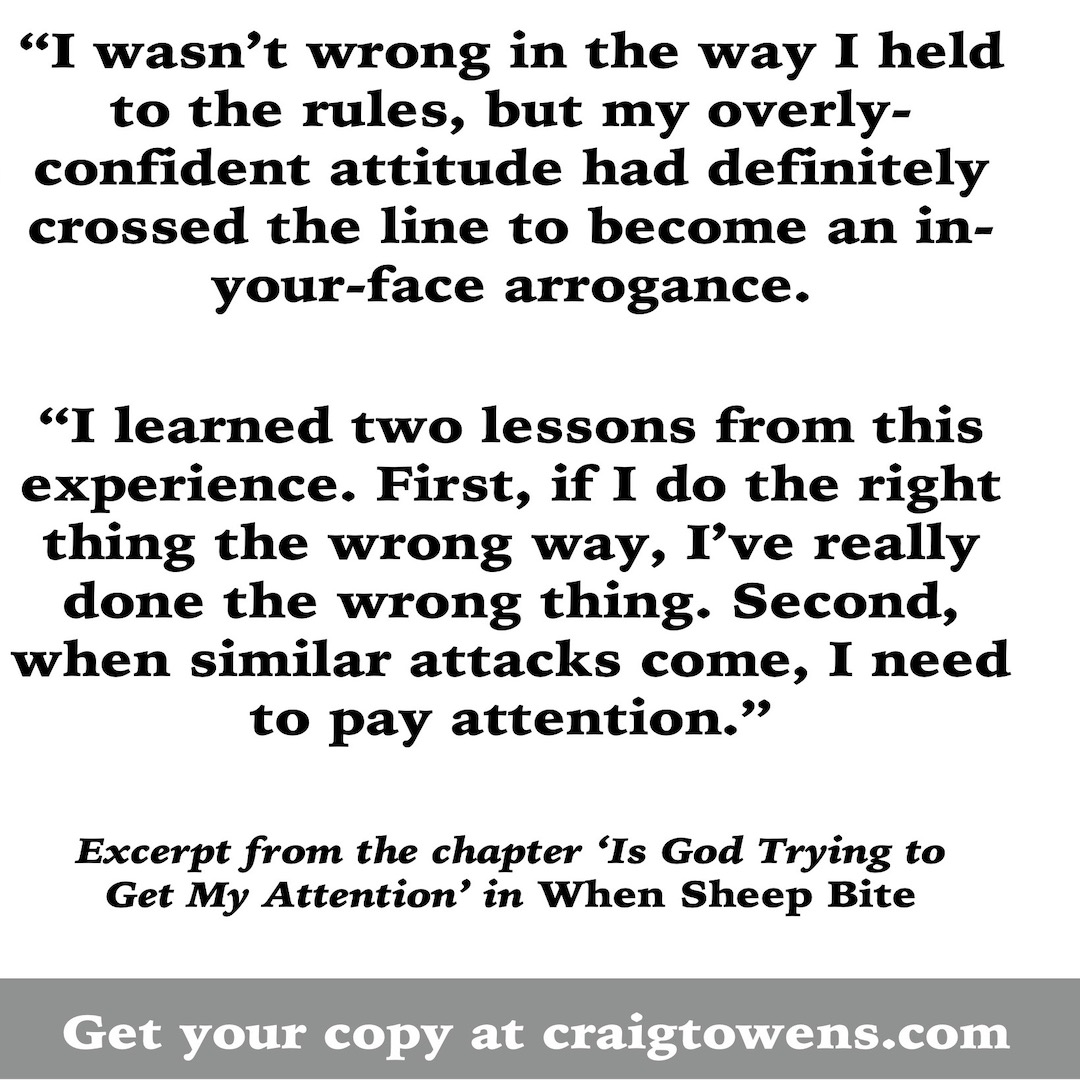
     I wasn’t wrong in the way I held to the rules, but my overly-confident attitude had definitely crossed the line to become an in-your-face arrogance. I learned two lessons from this experience. First, if I do the right thing the wrong way, I’ve really done the wrong thing. Second, when similar attacks come, I need to pay attention. 

     Now, when a painful attack suddenly confronts me, I go to the mirror. Instead of asking, “What’s wrong with them that they would bite me like this?” I go to prayer to ask, “Did I do something that provoked this?” Sometimes I have literally gone into my bathroom, closed the door, and gotten nose-to-nose with myself to ask this question, and then listened for the Holy Spirit to speak to my heart. 

     My cousin Dick Brogden wrote, “Critics and skeptics are gifts to us, for in their aspersions they often bring to light a brokenness or a liability early on in its development in us. If we are secure enough to ferret out the truth through the condemnation of others, we remain healthy in the long term as our malady is exposed and dealt with before it becomes too serious.” 

     Remember that we are naturally self-protective, so this time of introspection will need to be supernaturally empowered by the Holy Spirit if we are going to see the true prompter of the attack.

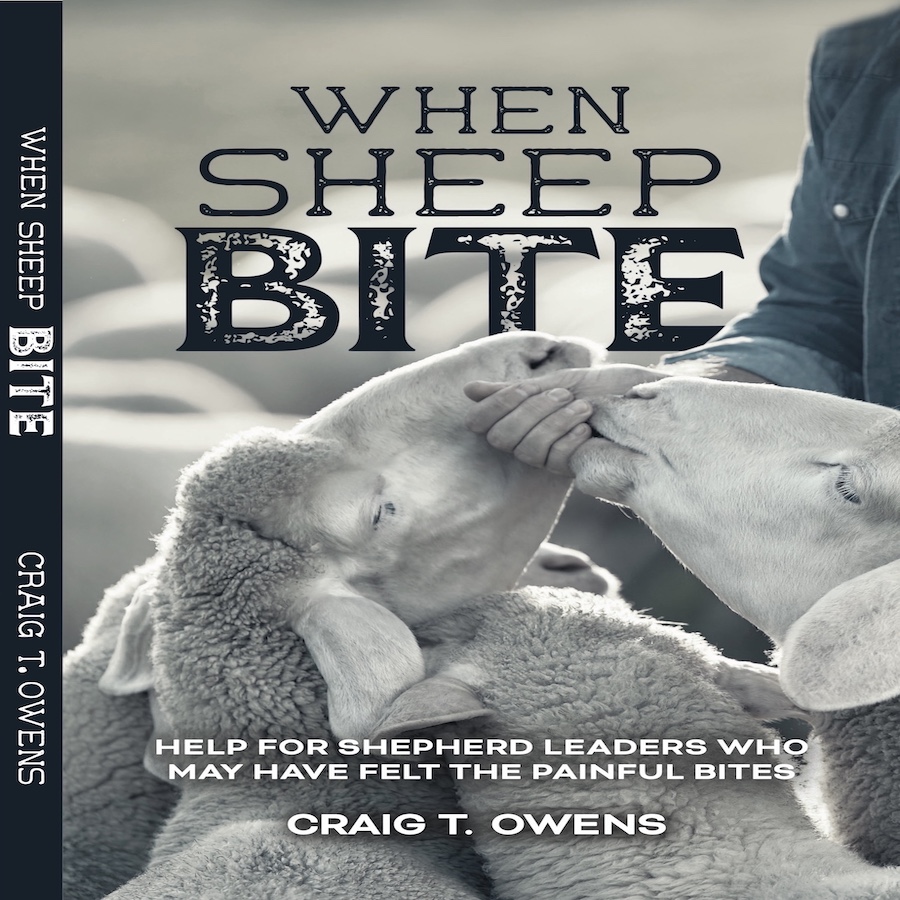
Please check out my book When Sheep Bite to both heal from past bites and prepare yourself for the bites which are inevitably coming in the future. 

►► Would you please prayerfully consider supporting this ministry? My Patreon supporters get behind-the-scenes access to exclusive materials. ◀︎◀︎

Time For A Self-Check

Listen to the podcast of this post by clicking on the player below, and you can also subscribe on AppleSpotify, or Audible. 

Have you ever heard this little saying: “To live above with saints we love, oh, that will be glory. But to live below with saints we know, well, that’s a different story”? I’ve found that it’s sometimes true! 

We love Psalm 133:1-3 when the saints are all together. What a great “selling point” to invite someone to be a part of the Christian community! But Psalm 41:7-9 is kind of embarrassing as David talks about former friends who have hurt him deeply. 

(Check out all of the Scriptures in this post by clicking here.)

But being bitten by a fellow sheep is a reality we all have experienced, and, sadly, we will probably have to deal with again in the future. There is a natural way we tend to react when we’ve been bitten, but there is also a supernatural response that the Bible consistently calls us to. This is the God-glorifying way we all need to strive for. 

In Acts 23, Paul is standing before the Sanhedrin. He opens his remarks by simply saying he has a clear conscience before God, and the high priest immediately orders that Paul be smacked on the mouth! That seems like a bit of an over-reaction on the part of the high priest, but maybe it was a bit of show of force to let Paul know who was really in charge. Paul responded with an immediate—and natural—reaction when he says, “God will slap you!” 

Paul is an old man by this time. He’s been through shipwrecks, beatings, imprisonments, gone without food, traveled more miles than he can count, and preached more sermons than he can remember. His body was giving out on him, and his eyesight was especially weak. Clearly, Paul didn’t realize to whom we was addressing his remarks. But when he became aware, he immediately owned up to his mistake. Paul offered no excuses or justifications, just a quick, simple, sincere apology. 

When you have been bitten (slapped) by another sheep, you should ask: 

  • Could I have provoked them by something I said or did? 
  • Could I have hurt them by something I didn’t say or do? 

David prayed a great prayer in Psalm 139:23. But this prayer is only effective if we are willing to accept that we may have been the agitator that led to the bite. In the last words that Job speaks in the Book of Job, he is very introspective. Check out all of the “If I have” statements throughout Job 31. 

In Psalm 26:2, David invites the Holy Spirit to check him three times! 

  • test me = scrutinize me 
  • try me = assay me 
  • examine me = refine me in the fire 

When we are bitten, we should be open to the possiblity that God is using this bite to get my attention—to make me aware of a fault in my life or something that’s been in a blind spot. 

So we should consider the following: 

  1. Has this kind of bite happened more than once? From different sheep? 
  2. Has a spiritually wise person attempted to address this with me before? 
  3. Do I ever admit that I’m at fault, or is it always the other person’s fault? 
  4. Do I find myself making a list of why they should apologize to me? 
  5. When was the last time I apologized to someone else? 

If the Holy Spirit reveals something in us, He will also empower us to make the change and make amends. The natural response is to place all the blame on others. The supernatural response to pray Psalm 26:2 before responding. 

If we react only the natural way, it is a lose-lose for us and for the whole pasture. But if we learn to respond in a supernatural way, it becomes a win-win for everyone. Listen to the wise words of King Solomon—

He who heeds instruction and correction is not only himself in the way of life but also is a way of life for others. And he who neglects or refuses reproof not only himself goes astray but also causes to err and is a path toward ruin for others. (Proverbs 10:17 AMPC) 

Let’s all strive for the supernatural response that is a win-win for the whole Kingdom of God! 

Please follow along with all of the messages in this series by clicking here. 

P.S. If you are a pastor, you may want to check out my book When Sheep Bite.

►► Would you please prayerfully consider supporting this ministry? My Patreon supporters get behind-the-scenes access to exclusive materials. ◀︎◀︎
When Sheep Bite Sheep

No one likes to be mistreated—especially when the one that hurts us is one we would have thought of as an ally or even a friend. 

These slights become even more painful when they take place inside the Christian community. When sheep bite sheep, our natural response is to lash out to try to even the scales of justice. But the Bible consistently and clearly calls Christians to pursue a supernatural response. 

Join me for a highly practical series of messages on how you can respond in a Christ-honoring way when you are bitten by another sheep in God’s pasture.

(By the way, if you are a church leader dealing with biting sheep, my book When Sheep Bite is a great resource for you.)

In this series we have addressed:

What Can I Change In Me?

Listen to the podcast of this post by clicking on the player below, and you can also subscribe on AppleSpotify, or Audible. 

When a shepherd leader is bitten by a sheep under their care, it’s quite natural to say, “What’s wrong with them?” Let me highlight that word: natural. 

In my book When Sheep Bite, I contrast the natural response with the supernatural response. It takes a lot of work because “natural” comes just so, well, naturally. But to respond supernaturally is going to take some re-training. 

We need to be able to reflect after we’ve interacted with a biting sheep. If we reacted in an inappropriate way, we need to ask forgiveness and attempt to make things right. Then we need to engage in some Holy Spirit-led introspection to switch the natural question of, “What’s wrong with them” to the supernaturally-led question, “What can I change in myself?” 

In a recent interview with Karl Vaters on his Church Lobby Podcast, we talked a bit about this topic. 

One chapter in my book is titled ‘Is God Trying to Get My Attention?’ Here’s an excerpt—

     Pain always takes priority. It always gets our attention and demands to be attended to immediately. We don’t schedule painful things on our daily “To Do” list, but that painful item will become the one and only thing which clamors to be addressed. 

     The same thing is true when the sheep bite and kick their shepherd. It hurts, it demands an immediate response, and it seems to become the only item on our agenda. But I would like to advocate that we don’t respond immediately. Why? Because our primal, gut-level response is almost always very shortsighted, and frequently, upon reflection, we later end up second-guessing what we said or did. 

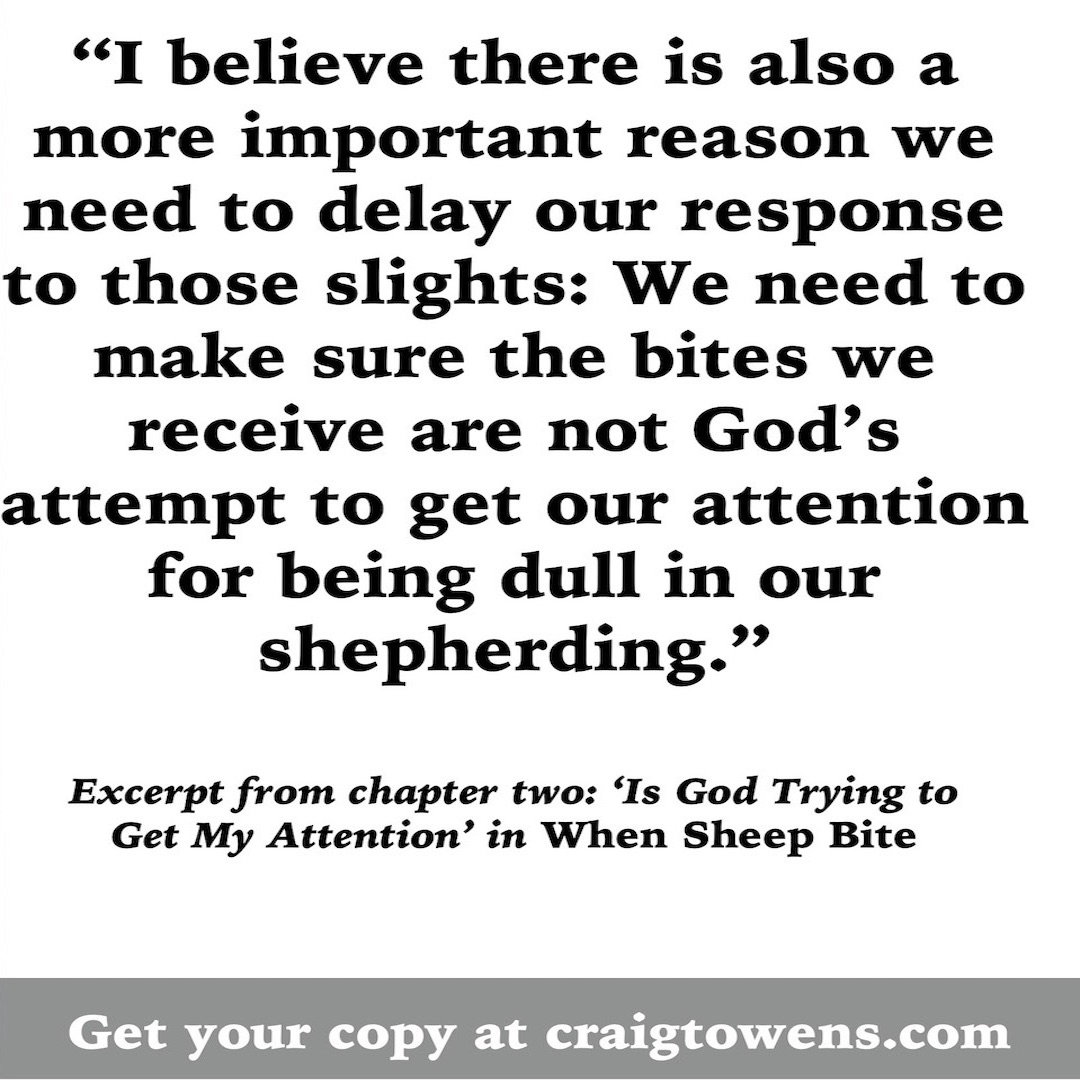
     I believe there is also a more important reason we need to delay our response to those slights: We need to make sure the bites we receive are not God’s attempt to get our attention for being dull in our shepherding. God told Jeremiah, “For the shepherds have become dull-hearted, and have not sought the Lord” (Jeremiah 10:21 NKJV). As a result, God had to send something painful to those religious leaders to make them aware of the dullness that had set in. 

I conclude this chapter with a prayer for shepherds who have been bitten—

     Father, Your sheep continued to wallow in the unhealthy habit of biting the hand that fed them and cared for them. In Your perfect love, You knew just how to discipline them, always with a heart of drawing these wayward sheep back to You. I ask You to please cultivate this loving heart in me. 

     Jesus, even as You were nailed to the Cross by the very sheep You came to save, You didn’t lash out in anger but lovingly prayed, “Father, forgive them for they don’t know what they are doing.” You know how much it hurts when my loving shepherding of these flock under my care is repaid with bites and kicks and abandonment. Jesus, help me to learn to respond in loving forgiveness as You did. 

     Holy Spirit, as David prayed, so I pray, “Search me.” As I do, please show me where my words, actions, or attitudes have rubbed the sheep under my care the wrong way and prompted them to lash out. Help me to repent, forgive, and ask forgiveness. Even if the attack was unprovoked by anything I have done, my heart’s desire is for none to be lost so please help me learn how to bring about restoration. 

     I pray this in the name of my Good Shepherd, Jesus. Amen.

To find out more about When Sheep Bite, or to pick up a copy for yourself, please click here.

►► Would you please prayerfully consider supporting this ministry? My Patreon supporters get behind-the-scenes access to exclusive materials. ◀︎◀︎
7 Quotes On Healing From “The Seven Laws Of Love”

The Seven Laws Of Love

In The Seven Laws Of Love, Dave Willis gives us some highly practical, biblically-based counsel for investing in all of our relationships. Normally when I share quotes from books, I share all of them at once, but for this book I felt like it would be good to share these quotes a bit more slowly, to give you time to read them and apply them.

The seven laws Dave identifies are:

  1. Love requires commitment (read the quotes here)
  2. Love selflessly sacrifices (read the quotes here)
  3. Love speaks truth (read the quotes here)
  4. Love conquers fear (read the quotes here)
  5. Love offers grace (read the quotes here)
  6. Love brings healing
  7. Love lives forever

From law #6, here are some quotes on healing—

“Love requires vulnerability, and when we feel like we’ve been in an exposed position and then experienced rejection, our defense mechanisms can actually work against us and sabotage our current relationships. We tend to militantly safeguard certain parts of ourselves in order to prevent the same kind of humiliation or rejection we have felt in the past.”

“The more you love someone, the more ability that person will have to hurt you; but until you give a person the ability to hurt you (vulnerability), you’ll never be able to truly experience love. This reality keeps some people from wholeheartedly committing to a relationship, because they’re trying to protect their hearts from being wounded again. But if were not careful, our wounds from the past can create new wounds in the present. It is a catch-22 that can keep us in perpetual dysfunction in our relationships until we become intentional about healing from the past and moving forward in a healthy way.”

“Sometimes we can subconsciously do things to make ourselves seem ugly or intimidating to drive people away, because were afraid if we let others close to us, we’ll only be hurt again. This kind of behavior might give us the illusion of power and safety that comes from isolation, but it will also hold us captive in a prison of solitude where we never experience true love. Whatever you may have done or whatever may have been done to wound you in the past, healing is possible. God wants you to live a life of love. He wants you to experience rich, meaningful relationships. He wants to bring you to a place of healing so you can experience life and love in all of its fullness.”

“Healing from a broken heart isn’t the result of mere time and effort. It comes when we put our trust in the Healer of our hearts.”

“Don’t let your love be an unspoken assumption. Make sure your loved ones know exactly how much you love them because your words and actions make it clear.”

“An encounter with Jesus always has the power to bring healing. When love is present, healing is present. It won’t always look miraculous, but it will always make a difference.”

“Sometimes God uses prayer to change the situation, and sometimes He uses prayer to change our own perspective about the situation, but either way, He’s always doing something positive through prayer.”

Check out my review of The Seven Laws Of Love by clicking here.

Watch for the last set quotes from the other laws of love explained in this book later this week.

Stuff

We’re almost done unpacking. Just 10 days after moving into our new home in Cedar Springs, we’ve just about got the unpacking done. Notice I said, “almost done.”

We’re trying to find a place for everything that we brought with us. But the closets are a bit smaller, there aren’t quite as many cupboards in the kitchen, and there’s one less bedroom and one less bathroom than our previous home. That means we still have quite a few boxes that have been moved to the garage. These are the we’ll-hang-on-to-this-for-awhile-to-see-if-we-need-it things.

After 19 years of marriage and three kids, we’ve accumulated quite a bit of stuff. And do you know what I’ve found? I don’t need or use much of the stuff I so carefully packed up and moved with me.

So I have been thinking,

  • How much stuff do I have packed away in my heart and mind that I don’t really need?
  • How many unkind words do I continue to keep packed away in case I need to pull them out?
  • How many painful memories do I keep packaged up just in case I need to feel sorry for myself?
  • How many mistakes from my past do I keep pulling out and packing up again?”

Throw off your old sinful nature and your former way of life, which is corrupted by lust and deception (Ephesians 4:22).

Let us throw off everything that hinders and the sin that so easily entangles, and let us run with perseverance the race marked out for us (Hebrews 12:1).

I’m not saying that I have this all together, that I have it made. But I am well on my way, reaching out for Christ, who has so wondrously reached out for me. Friends, don’t get me wrong: By no means do I count myself an expert in all of this, but I’ve got my eye on the goal, where God is beckoning us onward—to Jesus. I’m off and running, and I’m not turning back (Philippians 3:12-14).

It feels really good to get rid of the old stuff. I’m enjoying not having so much cluttering up my life, so I think I’m going to make it a regular practice to clean out the unused stuff.

Do you have any stuff you need to clear out today? I promise you: It will feel so wonderful when you do!