Listen to the podcast of this post by clicking on the player below, and you can also subscribe on Apple, Spotify, or Audible.
Godly leaders are always striving to use their leadership power to serve others. What exactly does this look like? On a recent Craig And Greg Show episode, Greg and I discussed this important leadership tension.
Check out the full Craig And Greg Show episode here.
“Always be sure of your ground and be sure that you are honoring God. If there is anything about the situation that will make you special, it will bring you sorrow. Your whole ministry has to be along the lines of His grace and blessing.” —Smith Wigglesworth
“Leaders have the responsibility to keep evil out. Government is incapable of making men and women moral and, in fact, it is not given that assignment, for it does not have that power. God grants government the right to make laws to hold back the power of evil, for only the church through the gospel can help men and women be good. Conversely, leadership and government can do much harm if they, through injudicious application or partial enforcement of law, let evil in. Government cannot make people good, but it can certainly make them bad. We need leadership and government to build barriers against what is wrong, but neither leaders nor external human powers can usher us to what is right. Only Jesus, full of grace and truth, can do that.” —Dick Brogden, in Proverbs: Amplified and Applied
The celebration of Christmas is obviously not seen in the Bible, but it has always seemed to be closely connected to the church’s calendar. Scott Hubbard has an eye-opening history of Christmas in his post The Curious History of Christmas.
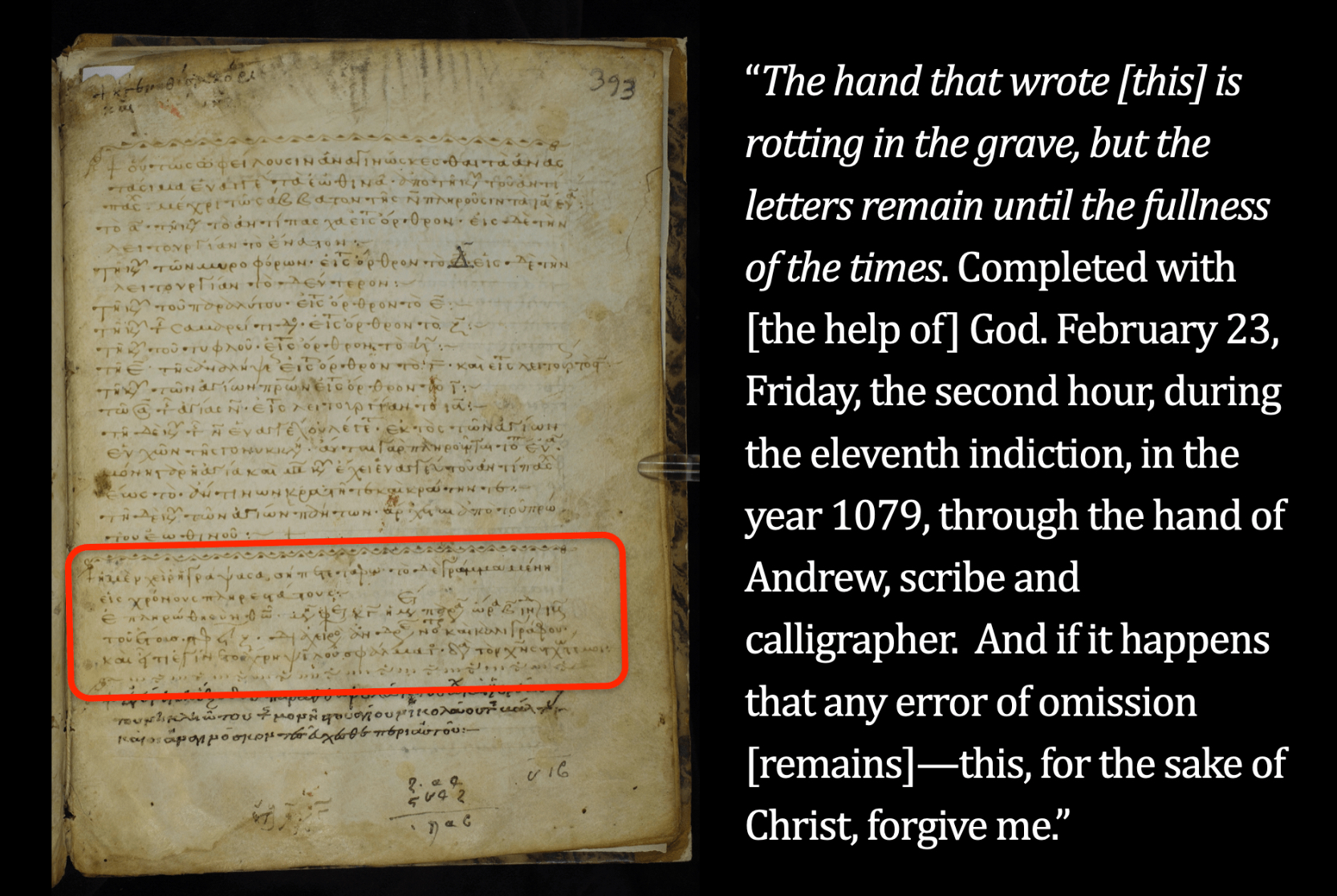
The ways the biblical text has been preserved and transmitted down to us today is nothing short of miraculous! Daniel Wallace is at the forefront of continuing to preserve the Word of God for future generations. Here is an example of the dedication of the biblical scribes: “The hand that wrote [this] is rotting in the grave, but the letters remain until the fullness of the times. Completed with [the help of] God. February 23, Friday, the second hour, during the eleventh indiction, in the year 1079, through the hand of Andrew, scribe and calligrapher. And if it happens that any error of omission [remains|—this, for the sake of Christ, forgive me.”
T.M. Moore is sharing a thought-worthy series of posts on the biblical view of our economic activities, including a look at how governments and businesses should operate under God’s laws. Moore says, “Since God has written the works of the Law on the heart of all His image-bearers (Romans 2:14, 15), we should expect that awareness (if only subconsciously) to find expression. Put another way, whether they know it or not, people long for an economy guided by Biblical principles and guidelines.”
Are you looking for a Christmas gift for your pastor? Check out my book Shepherd Leadership. I have lots of new content every week, which you can check out on my YouTube channel.
“We rise no higher when we pull others down, yet when we stoop to serve, we conquer.” —Dick Brogden, in Proverbs: Amplified and Applied
“Truth is incontrovertible. Panic may resent it. Ignorance may deride it. Malice may distort it. But there it is.” —Winston Churchill
“Nothing is really work unless you would rather be doing something else.” —J.M. Barrie
“God has made His Word so precious that if I could not get another copy of it, I would not part with my Bible for all the world. There is life in the Word. There is power in it. I find Christ in it, and He is the One I need for spirit, soul, and body. It tells me of the power of His name and the power of His blood for cleansing.” —Smith Wigglesworth
“Christians can most directly affect the shape of our economy by practicing love for God and neighbor in all our transactions. Beyond that, we should make the most of every opportunity and means for influencing the shape of public policy so that honesty, fairness, justice, and love guide all the policies that bind us together as we the people.” —T.M. Moore
Christian apologist Sean McDowell goes head-to-head with ChatGPT—
Listen to the audio-only version of this podcast by clicking on the player below, or scroll down to watch the video.
Criticism is baked into leadership. Any change you make, whether good or bad, will be met with some level of criticism either internally or externally. Other times, you’ll be in the position of having to express criticism of a decision someone on your team made.
Navigating criticism in a productive way can be tricky, but luckily Greg and I are here to help! In this episode, we discuss how the right kind of criticism can be empowering for your organization.
[0:27] Leaders will always be criticized, even for the good things they have done.
[1:30] Leaders need both humility and confidence to process criticism in a healthy way.
[4:18] Is criticism different than an assessment? It seems like the word “critic” has been hijacked in a negative way.
[6:00] Defensiveness doesn’t help leaders, but we do need to protect ourselves.
[8:27] How do we give constructive criticism without putting others on the defensive?
[10:22] Why is it hard for people to receive criticism?
[12:55] How should we give feedback to others so that it will be received well?
[16:15] Is there a correlation between criticism and coachability?
[19:57] Let’s remember that many of our teammates have had negative interactions with a critical
leader, so we have to change the climate.
[21:28] What happens if a teammate won’t receive any feedback at all?
[23:20] Greg shares an insightful quote from Winston Churchill.
[25:26] As always, leaders have to go first!
Check out this episode and subscribe on YouTube so you can watch all of the upcoming episodes. You can also listen to our podcast on Spotify and Apple.
Listen to the audio-only version of this podcast by clicking on the player below, or scroll down to watch the video.
Periodically, Greg and I like to revisit the topic of leadership builders and killers. In this episode, you get two leadership killers, as we tackle the two-headed monster of ignorance and arrogance.
[0:25] The two-headed monster that kills leadership potential.
[2:06] We are accepting bribes for our silence 😂
[2:23] Why are leaders held back by their ignorance?
[4:34] What happens when the followers sense that the leader above them is ignorant?
[6:22] What about when the leader admits a need for help?
[7:47] The toxicity of arrogance.
[9:32] Coachability is fed by humility. This is the leader’s litmus test.
[12:01] Our transparent leadership lessons are immensely helpful to our teammates.
[15:24] Greg shares a quote about this two-headed monster.
[17:35] We each share our personal examples of overcoming this monster.
[19:50] Sadly, many people who need the most help won’t seek it for themselves.
[21:07] If leaders are going to kill this two-headed monster, they have to stop talking and start listening.
[22:00] Know-it-alls are hard to cheer for, so successful leaders will have to eat some crow.
Check out this episode and subscribe on YouTube so you can watch all of the upcoming episodes. You can also listen to our podcast on Spotify and Apple.
God’s grace is so amazing. It keeps coming in like waves on a shore. God’s grace is unearned by our efforts, undeserved despite our sins, and unending for all of eternity! Check out this full message here. I have lots of new content every week, which you can check out on my YouTube channel.
“The humble servant of God is grateful for God’s past blessings, unashamed of his daily dependence on God, and confidant of God’s loving reply to every new request.” —Craig T. Owens
“There’s no shame in failing. The only shame is not giving things your best shot.” —Robin Williams
I’ve often said that praying, “God, here are my plans; please bless them” is an arrogant prayer. Instead, humility prays, “God, what would You have me do.” Proverbs 19:21 makes this point clearly. In his commentary on The Book of Proverbs, Dick Brogden noted on this verse, “God always gets His way over man’s ideas. In our hubris we think we know better than God, so we either make plans and then ask for His endorsement or we stand in judgment of what He is doing as if He should have asked us to endorse His plans. Folly judges only by results in Machiavellian crudity, but things going right doesn’t necessarily mean they were right, and things going wrong doesn’t necessarily mean we were wrong. Let us remember we are prophets, priests, and proclaimers, not pragmatists.”
“You don’t have to be a fantastic hero to do certain things—to compete. You can be just an ordinary chap, sufficiently motivated to reach challenging goals.” —Sir Edmund Hillary
Speaking of an exemplary work ethic, David Mathis writes, “However firsthand your experience as a soldier, athlete, or farmer, Scripture stands ready to fill in, supplement, recast, or override our personal experiences (or lack thereof) and teach us a Christian work ethic—for our own joy, the good of others, and the glory of Christ.” The biblical text Mathis uses to help us learn this Christian work ethic is 2 Timothy 2:1-7.
Marvin Olasky has a sobering and insightful post entitled “United States of Abortion.” He wrote, “For nearly four centuries, the frequency of abortion in America has depended on how citizens and residents answered five questions.” The five questions—and his five answers—are a mini history lesson on which all Christians should reflect.
“If you are ever inclined to pray for a missionary, do it at once, wherever you are. Perhaps he may be in great peril at that moment.” —Amy Carmichael
From the vastly large solar system to the microscopic level, the beauty and genius of our Creator is seen. A new report published in the journal Nature delves into the complexity of our tiny cilia. Only an all-wise Creator could fashion something so precise!
If you are looking for an easily accessible online library (especially for researching older books), check out the Internet Archive.
Though a professing atheist, Richard Feynman poetically mused that “you might say the ‘hand of God’ wrote that number, and ‘we don’t know how He pushed His pencil.’” What number is that? Physicists call it alpha (α): “That number is 0.00729735256—approximately 1/137. This is the fine-structure constant. It appears everywhere in the equations of quantum physics.” Another remarkable signpost to a magnificent Creator!
Listen to the audio-only version of this podcast by clicking on the player below, or scroll down to watch the video.
Fear is something every leader struggles with, but great leaders learn to reframe that fear into an opportunity to grow. Join Greg and me as we discuss overcoming fear, reframing fear, and helping your team to do the same.
[0:23] Good leaders learn how to frame their fear in a different way.
[1:09] Greg and I talk about our biggest fears.
[2:21] I share about having to overcome fears about making a decision.
[3:38] Most of fear is rooted in past experiences, but reframing as a learning experience can help you grow.
[6:17] Attempting to use fear as a motivation tool will backfire and restrict your team’s potential.
[7:23] Reducing the fears of your team begins with leading from a place of transparent humility.
[11:55] Pride is a big stumbling block for leaders, don’t be afraid to include others in the decision making process.
[13:50] The top fears that paralyze leaders.
[19:55] Good leaders game-plan for future conflict, so when it comes their team is ready.
[20:34] Give your team opportunities to battle their fears and grow from them.
[22:51] Greg shares a quote from Henry Ford.
[24:11] I share a Little League story.
[25:03] Greg and I would love to come alongside and help coach you!
Check out this episode and subscribe on YouTube so you can watch all of the upcoming episodes. You can also listen to our podcast on Spotify and Apple.
Listen to the podcast of this post by clicking on the player below, and you can also subscribe on Apple, Spotify, or Audible.
Leaders are wired to be either naturally confident or naturally humble. God designed each leader that way on purpose, but we still need to put intentional effort into bringing humility to our confidence or confidence to our humility.
Listen to the podcast of this post by clicking on the player below, and you can also subscribe on Apple, Spotify, or Audible.
Bruce Barton said, “When you’re through changing, you’re through!” I think the same thing could be said about a leader’s learning—when you think you’ve learned it all, your leadership is beginning to crumble.
I never want to get to the place where I think I have “arrived” as a leader, but I want to be humble enough to admit that there are so many things I have yet to learn. Jesus reminded us, “Every student of the Scriptures who becomes a disciple in the kingdom of heaven is like someone who brings out new and old treasures from the storeroom” (Matthew 13:52 CEV).
“New and old treasures” tells me that there’s some good stuff we need to protect, and also some good stuff we haven’t yet learned.
A mark of a godly leader is his commitment to being a lifelong learner.
Here are three new things the Holy Spirit has recently taught me:
Acts 6:3 says, “Choose seven men from among you who are known to be full of the Spirit and wisdom. We will turn this responsibility over to them.”
My lesson: The résumé for those that are to be placed in ministry leadership positions should include servant-heartedness, Christlike character, wise experience for the task, and reliance on the Holy Spirit.
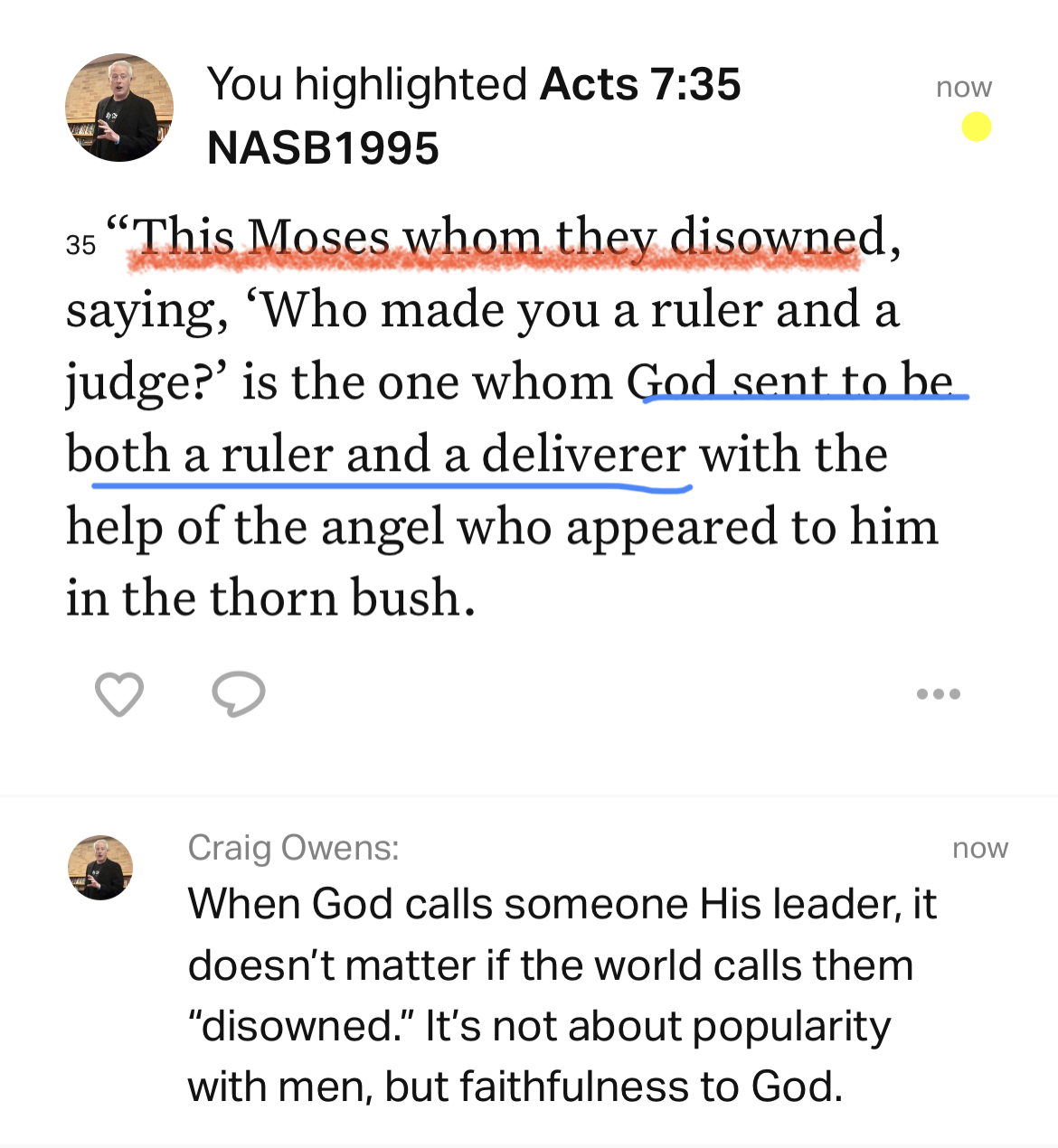
“This Moses whom they disowned…is the one God sent to be both a ruler and a deliverer” (Acts 7:35).
My lesson: When God calls someone His leader, it doesn’t matter if the world calls them disowned. It’s not about popularity with men, but faithfulness to God.
Listen to the podcast of this post by clicking on the player below, and you can also subscribe on Apple, Spotify, or Audible.
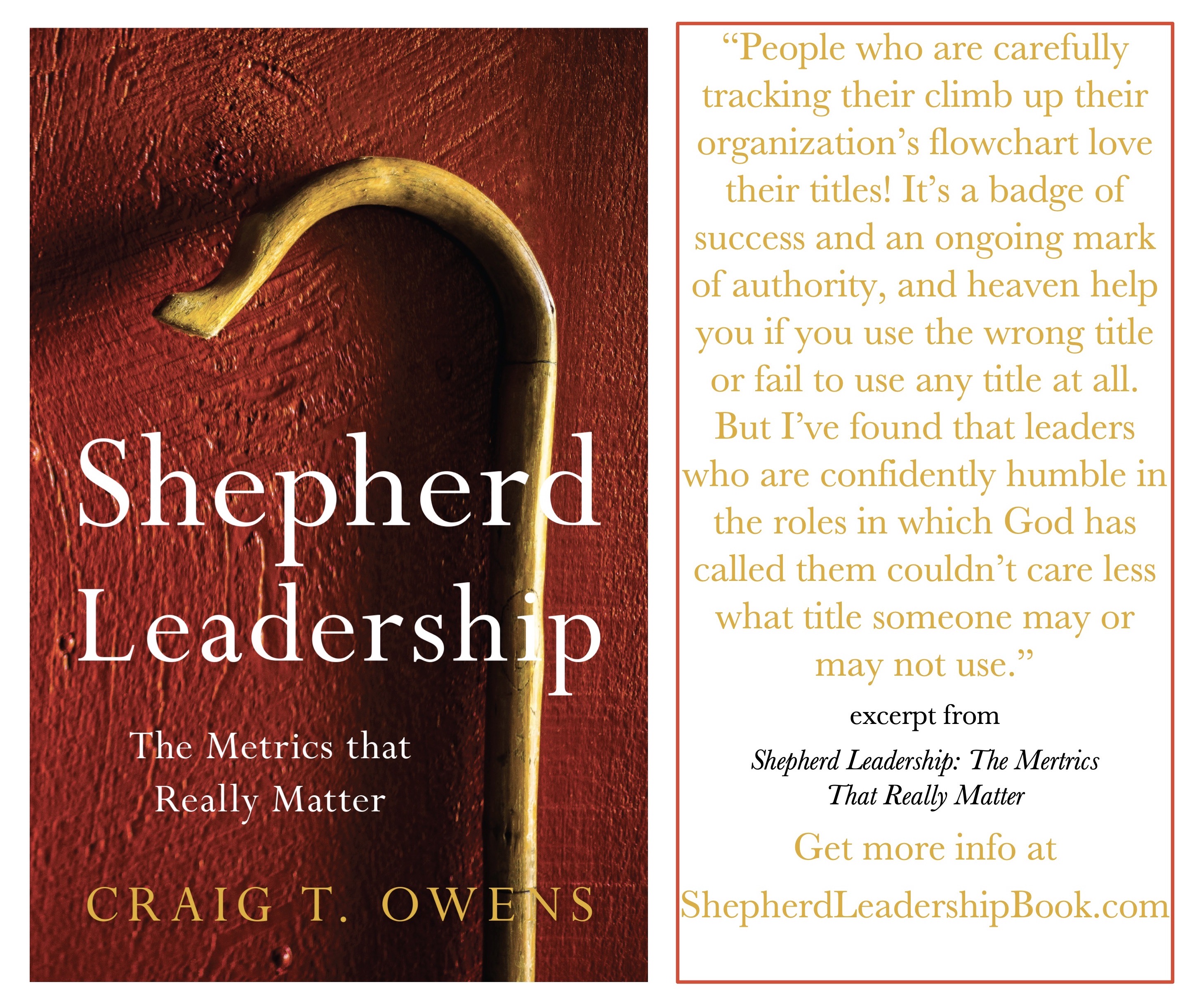
In my book Shepherd Leadership, I have a chapter entitled ‘The Wrong Ladder.’ Let me share two short paragraphs with you to set the stage—
Maybe, like many people, you’ve been working on a plan to climb your own ladder of success. You’ve been careful to get the best education, meet the right people, and put in the right amount of time on each level, all while keeping your eyes and ears open for the next “rung” of the ladder.
Perhaps this is successful in the corporate world, but I wonder how this idea has crept into the ministry world. Make no mistake: this mindset is prominent in our churches and nonprofit organizations. We may dress it up in churchy language, but the attitude is still there.
On the pages of Luke’s Gospel, we read a very unimpressive but praiseworthy resume of a vital ministry leader: John the Baptizer.
His first ministry job begins when “the word of the Lord came to John son of Zechariah in the wilderness” (Luke 3:2).
A word from God had already been spoken about John’s life that was pretty impressive (Luke 1:13-17, 76-77). From birth, John knew that he was to be the forerunner of the long-awaited Messiah. John could have walked around with quite an ego, but instead, we read, “And [John] grew and became strong in spirit; and he lived in the wilderness until he appeared publicly to Israel” (1:80).
No special education, no ladder-climbing positions, no getting to know all the right people who could open doors for him. He was simply alone with God in the wilderness for nearly 30 years!
Then just as quickly as he burst on the scene, God took John off the scene (Luke 3:20; Matthew 14:3-11). John knew this would happen—that he was merely a herald, and that his ministry would decrease as Christ’s increased. John shows us that it’s not about how many people are in your church, how big of a budget you’ve raised, or how long you’ve been in a particular position. It’s about faithful obedience.
It’s about being comfortable with anonymity, if that’s what God chooses. It’s about allowing God to place and remove him when and how He chooses.
Assuming that John began his ministry shortly before he baptized Jesus, it lasted about a year and a half. Thirty years in seclusion, one and a half years of public preaching, a year and four months in prison—and then the final curtain.
This is the resume of the man who ushered in the Savior of the world, and of whom Jesus said there had not been born anyone greater (Matthew 11:11).
In ‘The Wrong Ladder’ chapter, I concluded with this—
God frequently picks people we would consider the least qualified. He sometimes has one in an unglamorous position for years, and sometimes He catapults somebody immediately to the top. Sometimes God will keep His hand-selected individual in a prominent leadership position until death, and sometimes He will remove that person to a place of obscurity after only a short time.
God’s ladder of success is nothing like ours!
May all of us in leadership positions make this our prayer: Father, this is for Your glory, not my advancement. I’m not here to build my following, my resume, my fame. I only want to live and lead and minister for Your glory and for Your fame. Holy Spirit, help me keep this example of John at the forefront of my mind anytime I think about building my own resume. In the name of Jesus I ask. Amen.








 Craig T. Owens