Listen to the podcast of this post by clicking on the player below, and you can also subscribe on Apple, Spotify, or Audible.
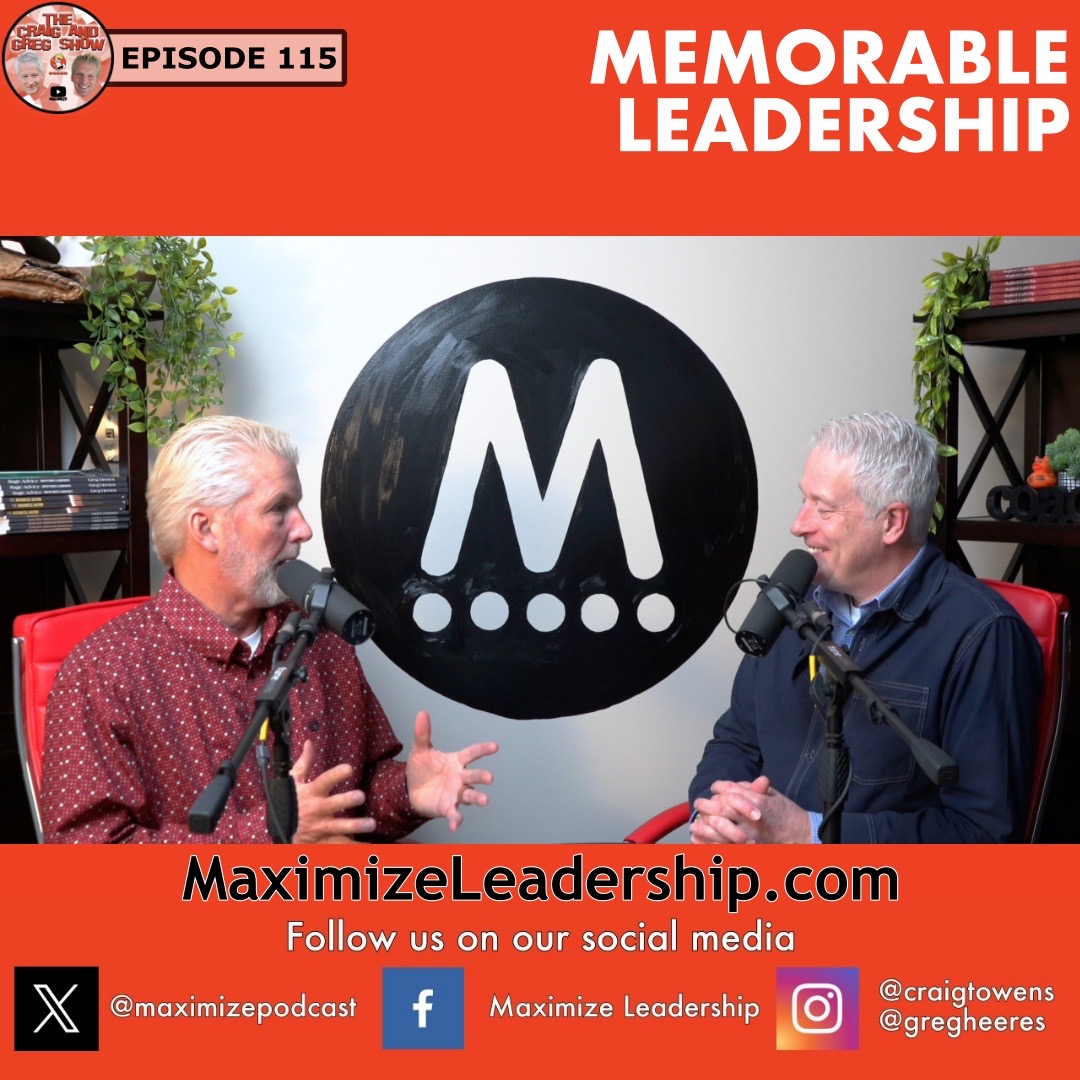
What do you want people to remember about your leadership? It’s an easy question to overlook, but striving to be remembered well can help you to be a better leader every day. In today’s episode Greg and I discuss the attributes of a memorable leader and reminisce about past leaders in our lives.
[0:00] Introduction
[0:42] Here’s a really important leadership question to contemplate about your legacy.
[1:53] Memorable leaders give us freedom to use our gifting.
[3:48] We debate going negative.
[4:07] Memorable leaders believe in us.
[7:10] Memorable leaders are calm in turbulent times.
[8:16] Memorable leaders love us enough to tell us the truth.
[10:20] Memorable leaders show us a preferable end goal.
[11:22] Memorable leaders are complimentary.
[12:46] Memorable leaders let us take the victory lap for the wins, but they take the blame for the losses.
[13:29] Memorable leaders give us grace for second chances.
[15:16] What’s one word we would like on our epitaph?
[17:59] Memorable leaders have an abundance mindset.
[18:41] How do you start becoming a memorable leader today?
[22:14] People are watching how you, as a leader, treat others.
[22:53] The value of a coach is so impactful for leaders who want to become more memorable.
If I want to present my best ideas, I need to be open to the helpful, sharpening critique that people close to me have to offer. My first idea sounds great, until others come along to make it better.
“In so far as I am Man I am the chief of creatures. In so far as I am a man I am the chief of sinners.” —G.K. Chesterton
Cold case detective J. Warner Wallace applies the same scrutiny to examining the evidence of the New Testament as he does with a suspect. “There are four critical questions that must drive our examination of any eyewitness, ancient or modern: Were they actually present to see what they claim? Can their account be corroborated in some fashion, even indirectly? Have the key elements of their story shifted over time? And finally, do they possess ulterior motives or bias that would tempt them to lie or embellish? This is not a uniquely religious or anti-religious method; it is simply good investigative practice.”
“Few men, if any, step into responsible positions without preparation. Sometimes in our shortsightedness we seem to get the idea in regard to Bible characters that they come on the scene ready-made, fully prepared; here they are, God’s gift to the world! They take up the work, and that’s all there is to it. But if you will read more carefully, you will find that usually—I think we could even say always—there is a period of preparation behind them. God lays His plans well in advance.” —William Sanford LaSor
Listen to the podcast of this post by clicking on the player below, and you can also subscribe on Apple, Spotify, or Audible.
On an episode of The Craig and Greg Show, Greg and I discussed some toxic behaviors that can creep into your workplace and cause major discord. Two attitudes to watch out for are confidence without humility, and humility without confidence.
Check out this full Craig and Greg Show episode here.
As I was studying the Book of Jude, I came across this phrase, “Though you already know all this, I want to remind you.” This prompted these three quick thoughts that I want to share with my fellow pastors.
Using the words from Isaiah 40:10-11, Sarah Young has Jesus speaking these words to us: “Adverse circumstances become growth opportunities when you affirm your trust in Me no matter what.”
Ken Blanchard has long used a challenge for leaders to catch their teammates doing something right. That phrase has now become the title of a biography about Ken. He says, “Great leaders who want to encourage and motivate their people set up a positive cycle:
A great leader catches someone doing something right and praises them.
The leader’s praise helps the person feel good about themselves.
People who feel good about themselves produce good results.
A great leader notices when people produce good results.
See #1.”
This is a very encouraging read for men! Scott Hubbard writes, “You may not have ability for preaching and teaching, as Timothy did. But the Holy Spirit does not leave any Christian giftless. … You may have a small vision for your life; God does not.”
An amazing series from T.M. Moore on the law in a Kingdom economy. T.M. writes, “Christians don’t keep the Law to be saved; we keep it because we are saved, because it is the path that Jesus walked (1 John 2:1-6); and we recognize its value for helping us realize more of the life of holy, righteous, and good works for which we have been redeemed (Romans 7:12; Ephesians 2:8-10).”
Geologists have discovered what Creationists already proposed about plate tectonics related to the Flood described in the Bible. “Flood geologists have predicted that plate motion slowed at the end of the Flood year, and now conventional scientists are finding it to be true.”
The Assemblies of God has always responded to popular religious trends with solid biblical exegesis. The “latter day rain” movement in the 1940s is a good example.
“Mature leaders swallow their egos and recognize God as their power source. They walk confidently in His authority, but never assume credit for it. Faith enables them to stretch, while humility enables them to stoop.” —John Maxwell
Listen to the podcast of this post by clicking on the player below, and you can also subscribe on Apple, Spotify, or Audible.
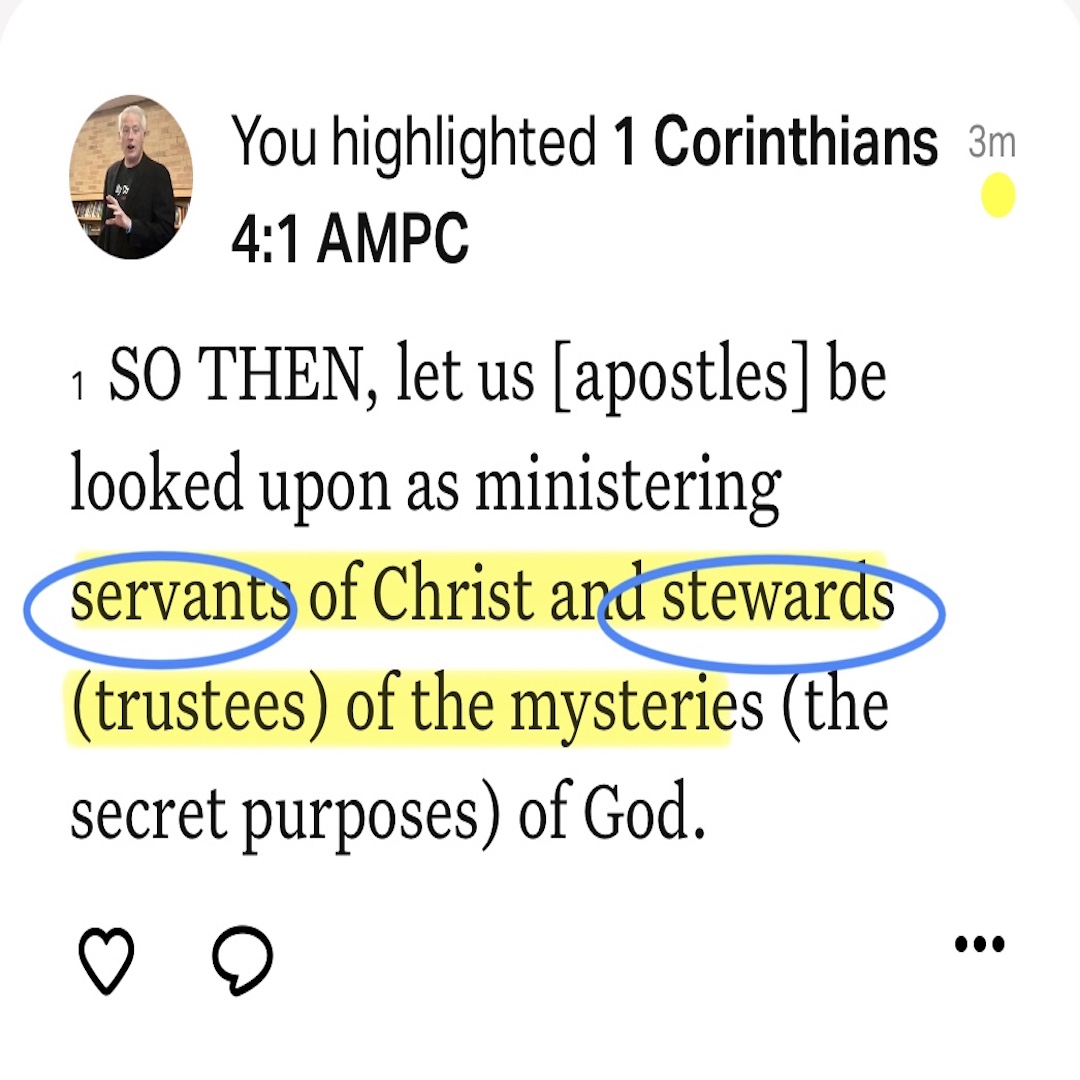
Godly leaders should be secure enough to think of themselves as servants and stewards—nothing more, nothing less. And people in the church should look on their leaders as servants and stewards—nothing more, nothing less.
So then, let us apostles be looked upon as ministering servants of Christ and stewards (trustees) of the mysteries (the secret purposes) of God. (1 Corinthians 4:1 AMPC)
Q: How do I know if I am a servant?
A: People treat me like one.
Q: How do I know I have a servant’s attitude?
A: I don’t mind being treated like a servant.
Paul lived this out—Now, brothers and sisters, I have applied these things to myself and Apollos for your benefit, so that you may learn from us the meaning of the saying, “Do not go beyond what is written.” Then you will not be puffed up in being a follower of one of us over against the other(1 Corinthians 4:6).
I closed the chapter ‘Secure to Serve’ in my book Shepherd Leadership like this—
God wants to use you as a leader. He has called you to great things. Just remember that He does the calling and the equipping so that you can serve and shepherd others. It may be a prominent, noticeable position, or it may be an obscure position unseen by very many. It may be a position God keeps you in until the day He calls you home, or it may be a temporary position. A humbly confident leader doesn’t fight to climb a ladder nor strive to keep a position on a higher rung of the ladder. The shepherd leader is confident to serve where God places him, and humble enough to be moved, or even removed, as God sees best. But most of all, a secure shepherd leader knows that God’s desire for His leader in any position is a heart to serve others.
Listen to the podcast of this post by clicking on the player below, and you can also subscribe on Apple, Spotify, or Audible.
Ahab, king of Israel, and Jehoshaphat, king of Judah, are strategizing a battle plan against Syria when they call for God’s prophet to share with them God’s counsel in this matter.
Then Micaiah said, “I did see all Israel scattered upon the mountains as sheep that have no shepherd, and the Lord said, ‘These have no master. Let each return to his house in peace.’ … Now, you see, the Lord put a lying spirit in the mouths of your prophets; and the Lord has spoken evil concerning you. … If you return at all in peace, the Lord has not spoken by me” (2 Chronicles 18:16, 22, 27).
You would think this would cause these kings to scrap their battle plans and keep their armies at home. But the next verse says they utterly rejected the prophet’s warning. “So Ahab king of Israel and Jehoshaphat king of Judah went up to Ramoth-gilead” (v. 28).
What in the world is Jehoshaphat doing?!
He asked for a prophet from God and then when he hears from God that this combined army will be defeated, Jehoshaphat still goes with Ahab?!
But let’s back up: Why was Jehoshaphat even here hanging out with Ahab? And before even hearing from Micaiah, why does he commit his army and cavalry to this joint-venture (v. 3)?
I think the clue is in v. 1: Jehoshaphat “was allied by marriage to Ahab.” Jehoshaphat’s son Jehoram is married to Ahab’s daughter Athaliah (2 Kings 8:18).
Jehoshaphat thought this was a strategic move. Like a chess master moving his pieces on the board, he calculated that this alliance would give him an advantage. But instead this move resulted in years of heartache and destruction.
First, Jehoshaphat feels trapped into allying with Ahab in this ill-fated battle against the Syrians. Ahab is killed in this battle, and Jehoshaphat barely escapes with his life, although his army is embarrassed in defeat.
As he is returning to Jerusalem, another prophet meets him and pronounces this heartbreaking message, “Should you help the ungodly and love those who hate the Lord? Because of this, wrath has gone out against you from the Lord” (2 Chronicles 19:2).
Later on, Jehoshaphat again partners with Ahab’s son, “After this, Jehoshaphat king of Judah joined with Ahaziah king of Israel, who did very wickedly” (20:35).
After Jehoshaphat died, his son Jehoram ascends the throne.
His reign as king is only eight years long, and is noted for him walking “in the ways of the kings of Israel” by doing evil in God’s sight (2 Kings 8:15). Jehoram was killed in battle.
Ahaziah his son then sits on the throne in Jerusalem for only a year, manipulated by his mother Athaliah. “He walked in the ways of the house of Ahab and did evil in the sight of the Lord, as did the house of Ahab, for his father was son-in-law of Ahab” (2 Kings 8:27). This alliance led to another disastrous joint military campaign with Israel. Ahaziah was killed by Jehu shortly after this.
Look what happens next: “When Athaliah the mother of King Ahaziah of Judah saw that her son was dead, she arose and destroyed all the royal descendants (2 Kings 11:1). This began a six-year reign of terror in which Athaliah assumed the throne.
Where did all of this mayhem begin? When Jehoshaphat calculated his own destiny.
We have such a limited view; whereas, God is timeless, all-knowing, all-powerful. It is the highest form or arrogance to think we can out-maneuver God’s plan, or that we can even begin to know what’s best for our lives.
The One who has all of our days written in His book is also the One who tells us that we can call to Him to learn things we don’t know and access the wisdom we don’t have (Psalm 139:16; Jeremiah 33:3; James 1:5).
Think of the misery that could have been avoided if Jehoshaphat would have heeded the counsel of his forefather Solomon: “Lean on, trust in, and be confident in the Lord with all your heart and mind and do not rely on your own insight or understanding. In all your ways know, recognize, and acknowledge Him, and He will direct and make straight and plain your paths” (Proverbs 3:5-6 AMPC).
What a miserable strategist I am when I make plans that I think are clever! Instead, I’m trying my best to follow Solomon’s counsel, and I pray you are too.
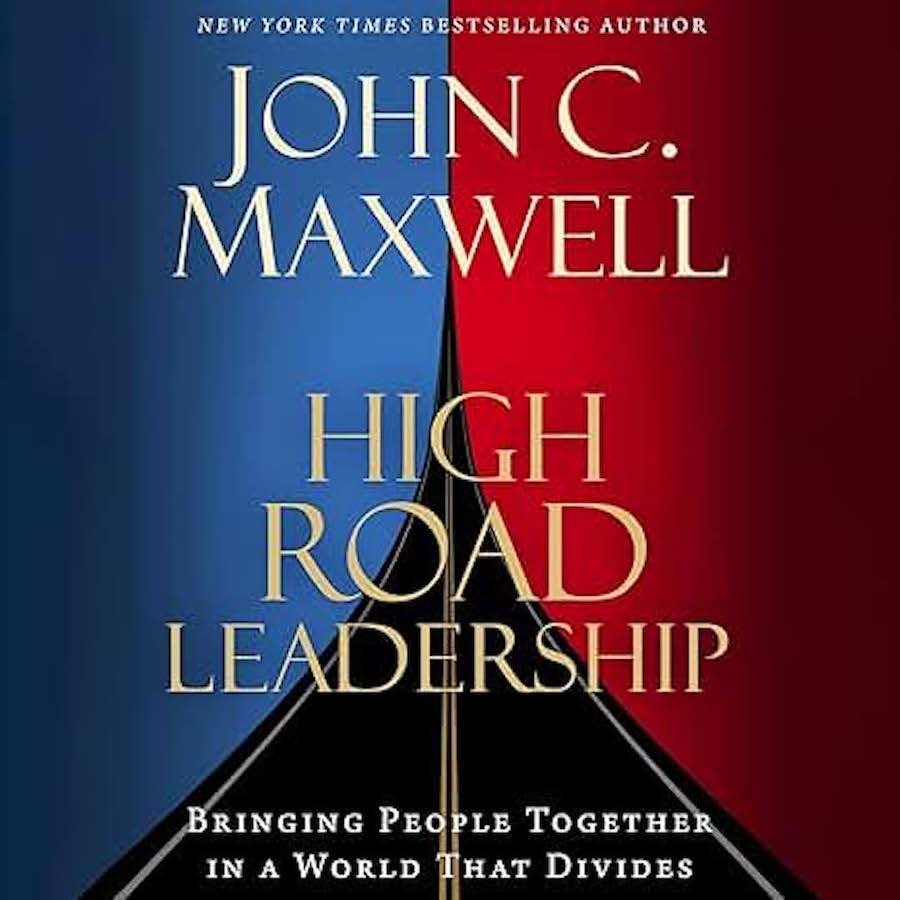
The subtitle of this John Maxwell book is “Bringing People Together in a World That Divides.” That is so needed today! Check out my review of High Road Leadership, and may these quotes inspire you to pick up a copy of this book to learn how you can be a part of healing a divided world.
“Leadership can be a blessing or a curse. It can help people rise to a better life, or it can cause people to fall into despair.”
“One of the reasons we don’t come together and work with one another is that we no longer see people on the other side as merely disagreeing. We see them as disagreeable human beings. We assume their motives are wrong. And the moment we think a person’s motives are wrong, we lose trust. … Good leaders need to rise above this attitude and help the people they lead do the same. How? We need to possess a strong collaboration bias. We need to bring people together to increase our understanding of each other and broaden our perspective.”
“We can’t divide people and expect to accomplish positive results. Conversation and collaboration will always come up with better answers than isolation and exclusion.”
“In my opinion, as a culture we lost our way when we went from simply disagreeing with others to devaluing them because we disagree. That’s when we crossed the line into low-road leadership. It’s one of the reasons so many people are so angry all the time. And when others take the low road with them, they become even angrier. It’s always easier to make a negative point than to make a positive difference.”
“High-road leaders who value people have a strong, healthy sense of self-worth, yet at the same time they are humble, meaning they don’t think too much of themselves or about themselves too much.”
“Accepting our humanness and possessing humble confidence does nothing to diminish our leadership ability. In a study of medical students, those who possessed doubts about their ability were just as effective in diagnosing illnesses as their more confident counterparts. Furthermore, the more humble students rated higher in bedside manner, empathy, respect, and professionalism.”
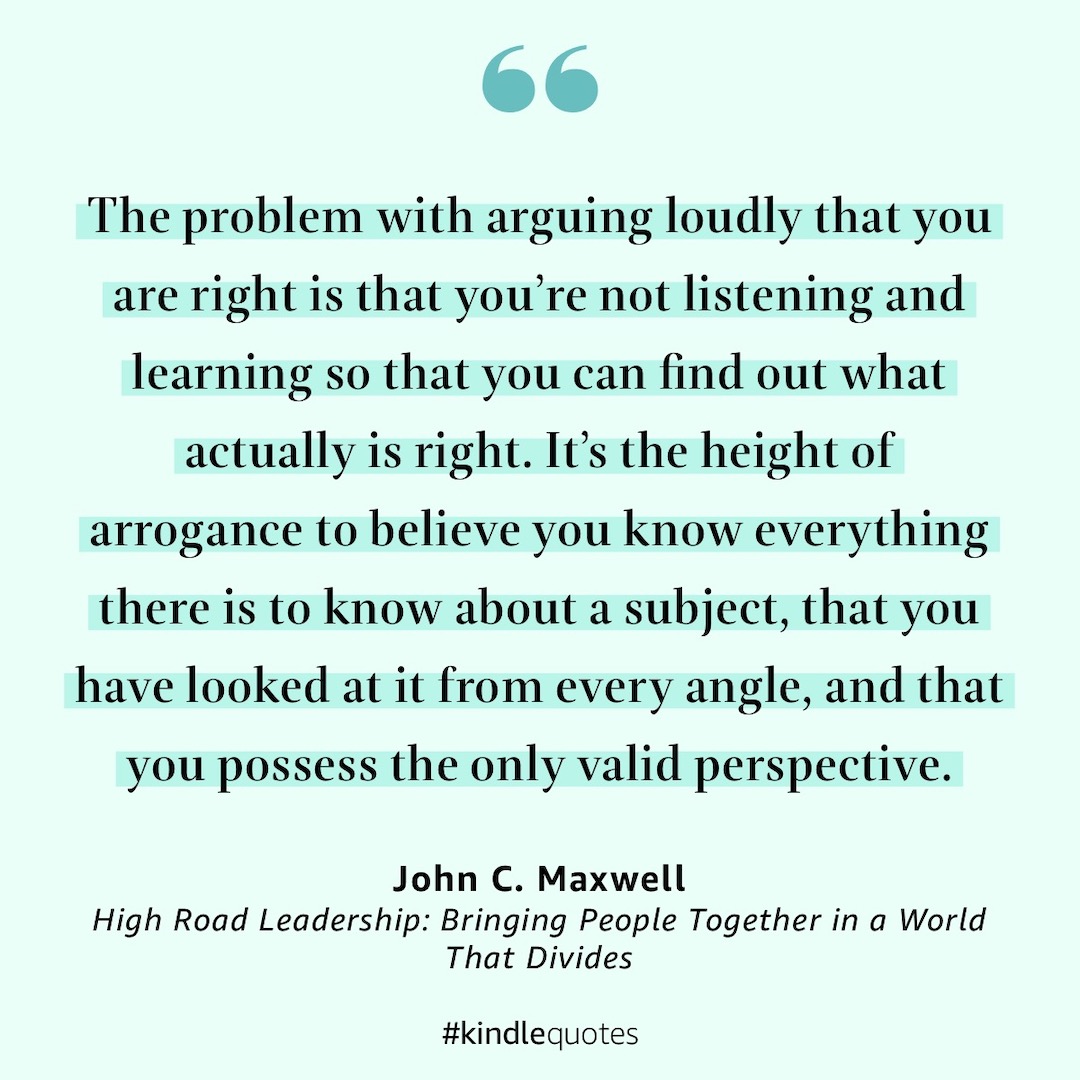
“The problem with arguing loudly that you are right is that you’re not listening and learning so that you can find out what actually is right. It’s the height of arrogance to believe you know everything there is to know about a subject, that you have looked at it from every angle, and that you possess the only valid perspective.”
My Patreon supporters have access to 25+ quotes from this book. They also get exclusive content and early access to public content. Join them today.
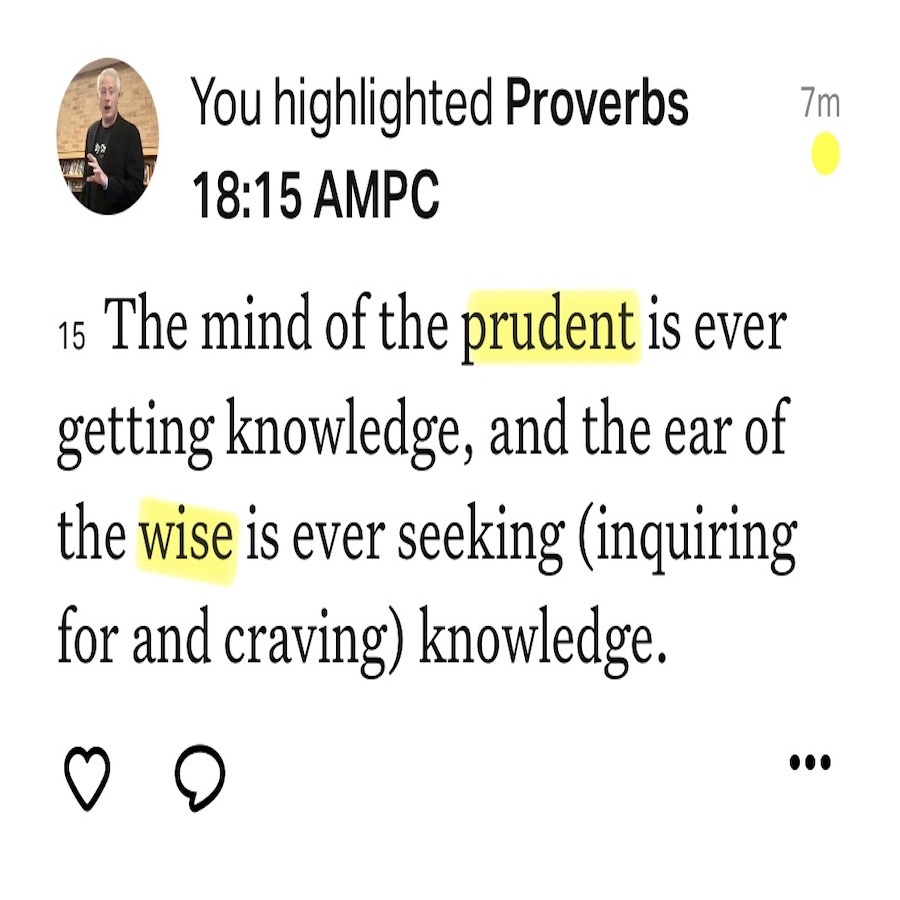
The mind of the prudent is ever getting knowledge, and the ear of the wise is ever seeking (inquiring for and craving) knowledge. (Proverbs 18:15 AMPC)
It is a humble person who says, “I don’t know it all; there is so much more to learn.” Thusthe humble person becomes a lifelong learner. This pursuit increases the learner’s knowledge base, which requires diligence to make sure a know-it-all arrogance doesn’t creep in and block future learning.
Humility starts the process and humility can keep the process going for a lifetime. But be on guard: the more you learn, the easier it is to become proud of your learning. This arrogance will derail future learning and growth.
To maintain your gains and to continue to learn more, you have to fight to remain humble. Check out the blog post and flowchart Humility is a Daily Choice.
Some human employers may ask us to do business for them without giving us a good example or enough resources. But when Jesus told us to be about the Father’s business, He gave us an example and the full empowerment of the Holy Spirit! Check out this full sermon.
“Compromise is a costly word; non-compromise, even more so.” —Bono
Shane Morris said, “But as much as AI’s potential can cause harm, blaming it alone misses the point and likely makes these problems worse. Humans are the fallen ones, and that fallenness manifests in all kinds of destructive ways. Machines, strictly speaking, don’t have morals or intentions. They can only reflect ours.” Check out his podcast AI is not the problem, we are.
“I do not believe that a nation dies save by suicide. To the very last every problem is a problem of will; and if we will we can be whole. But it involves facing our failures as well as counting our successes.” —G.K. Chesterton
I love reading and I have a long list of what I would like to read next. Scott Hubbard addresses this question: “Perhaps the question ‘What should I read or listen to?’ would come into sharper focus if we had a better sense of why we read at all. ‘Why read?’ has more than one right answer. We read to learn, to rest, to deepen friendship with fellow readers, to enjoy the craft of skilled wordsmiths. But alongside these good reasons, consider three others that put our reading into the service of greater loves.”
“I only hope that we never lose sight of one thing—that it was all started by a mouse.” —Walt Disney
“The scientific man does not aim at an immediate result. … His duty is to lay the foundation for those who are to come, and point the way.” —Nikola Tesla
This week marked the 100th anniversary of a court case that was known as “the trial of the century,” perhaps you have heard it called the Scopes Monkey Trial. It was, and has been, more sensation than substance. Check out this post that puts this trial in its proper perspective.
(1) God allows the humble to know Him more intimately. For though the Lord is high, yet has He respect to the lowly—bringing them into fellowship with Him—but the proud and haughty He knows and recognizes only at a distance (Psalm 138:6).
(2) God gives the humble help to overcome evil. But He gives us more and more grace—power of the Holy Spirit, to meet this evil tendency and all others fully. That is why He says, “God sets Himself against the proud and haughty, but gives grace continually to the lowly (those who are humble enough to receive it)” (James 4:6).
(3) God gives His favor to the humble. …Clothe (apron) yourselves, all of you, with humility—as the garb of a servant, so that its covering cannot possibly be stripped from you…. For God sets Himself against the proud—the insolent, the overbearing, the disdainful, the presumptuous, the boastful—and He opposes, frustrates, and defeats them, but gives grace (favor, blessing) to the humble (1 Peter 5:5).
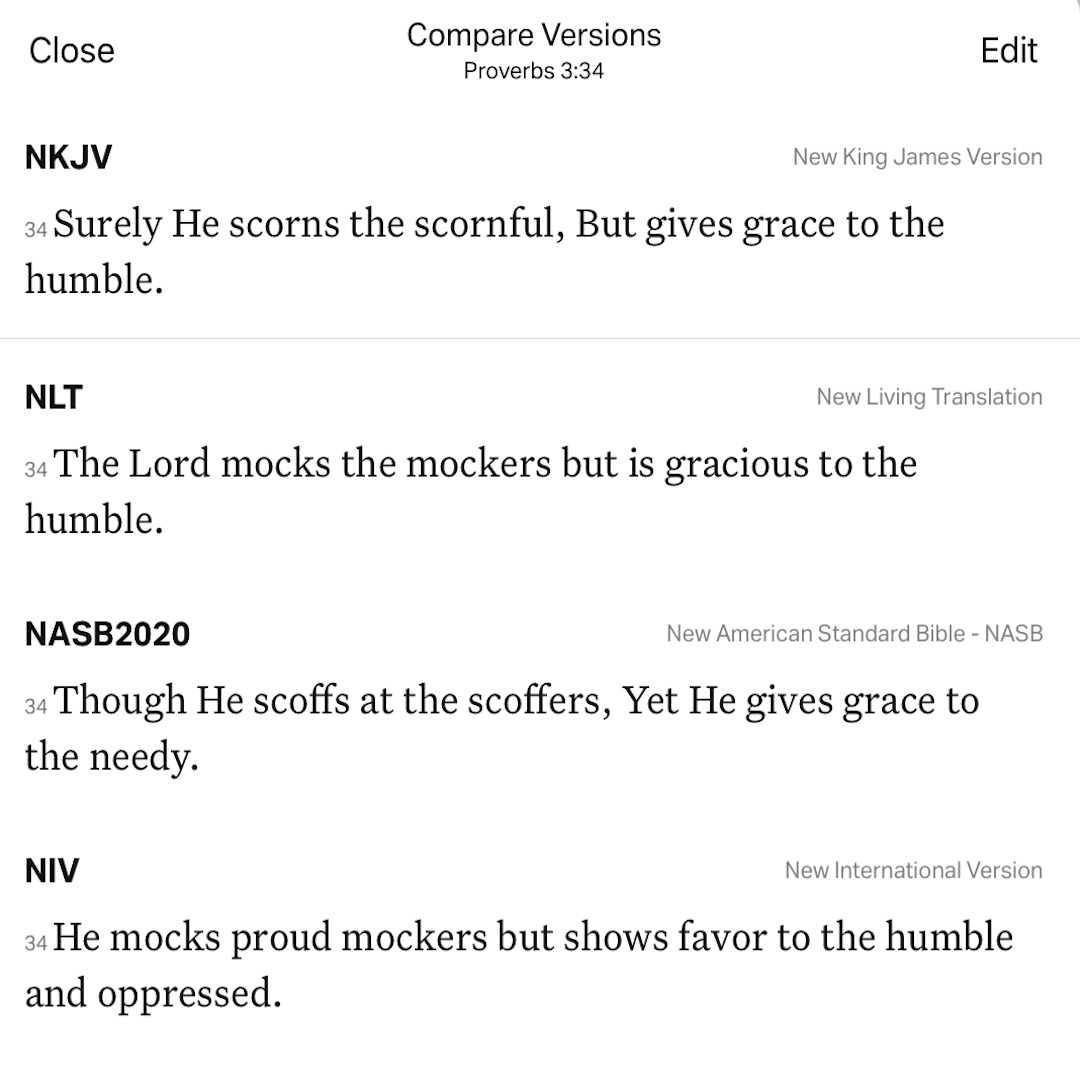
The bottom line—God mocks proud mockers but shows favor to the humble and oppressed (Proverbs 3:34).



 What do you want people to remember about your leadership? It’s an easy question to overlook, but striving to be remembered well can help you to be a better leader every day. In today’s episode Greg and I discuss the attributes of a memorable leader and reminisce about past leaders in our lives.





 Craig T. Owens