Listen to the podcast of this post by clicking on the player below, and you can also subscribe on Apple, Spotify, or Audible.
Every monarch or president on the planet has certain protocols for anyone who interacts with them. There are requirements on how to walk into the room, titles that have to be used, the way you have to act, things you can or can’t say, and the list goes on and on.
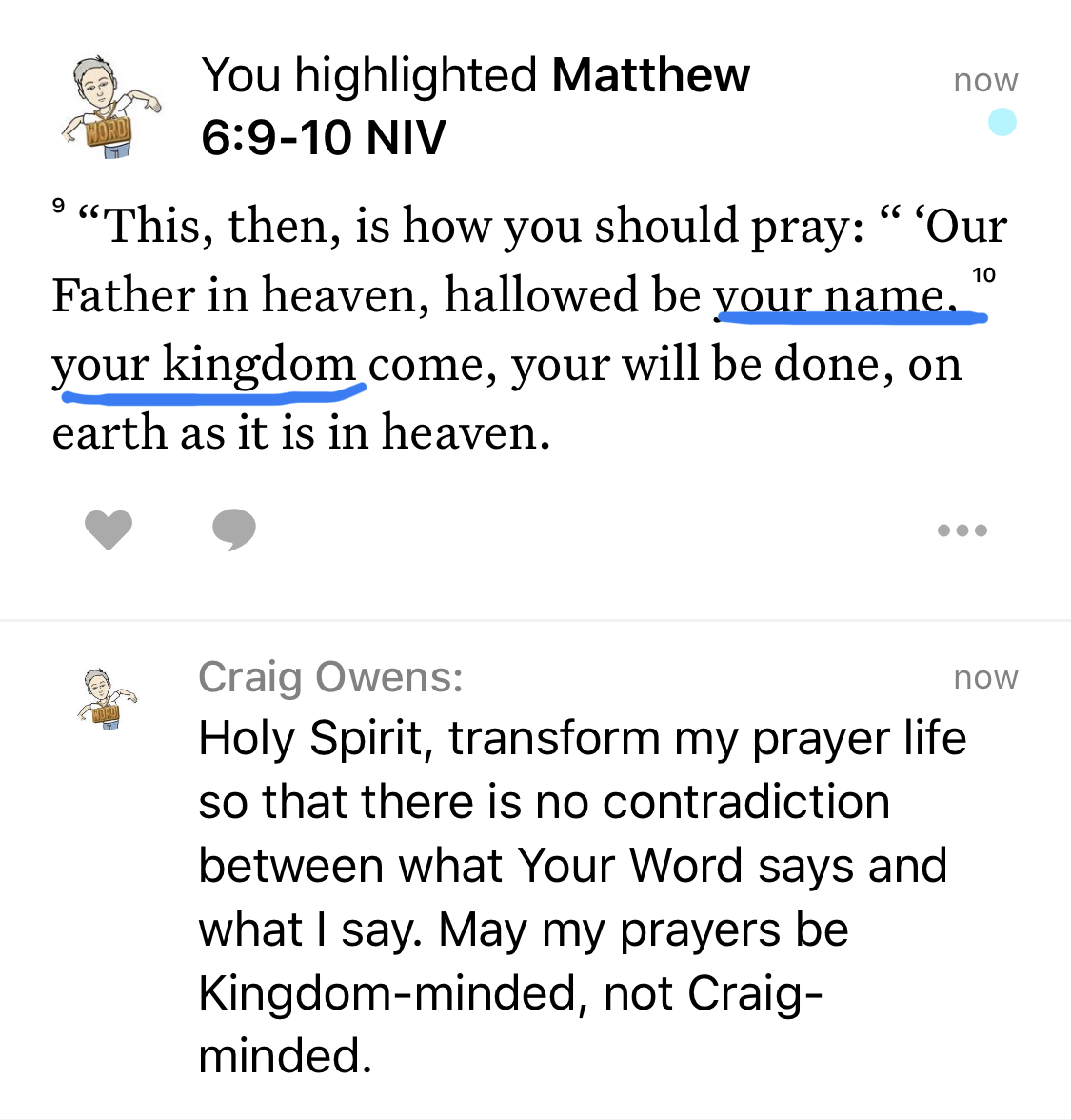
So it’s natural to think that this is how we also have to approach the Sovereign King of the Universe. But this King so desires intimate conversation with His people that Jesus gave us this simple protocol: “Our Father” (Matthew 6:9-13).
Jesus told us that He wanted us to dispense with the world’s expected protocols. He said that when we approach God, those protocols are gone. In the preceding verses, He told us that we pray…
…NOT for show or else we are called hypocrites—putting on an act or performance to earn applause or approval.
…NOT with “alien” vocabulary or else we are pagans—adopting manners that aren’t our own as a means to be accepted.
The prayers of Jesus seldom sound like our modern idea of “prayer.” Instead, they sound more like an everyday conversation when He’s talking to His Father, and the sound like commands when He’s casting out demons or healing diseases (see examples in Matthew 8:3, 13, 26, 32; John 11:40-44).
Jesus also reminded us that we pray because…
He told us to
He wants us to seek God’s Kingdom
He wants us to receive God’s Kingdom
He wants us to live in the power of God’s Kingdom every single moment
Let me repeat: our protocol for prayer is nothing like the world’s protocols for interacting with rulers. Our protocol is simply coming to our Heavenly Father in simple, childlike love and anticipation.
Kingdom praying should be as natural as talking to the most loving Father you can imagine!
Check out the others messages in our series Kingdom Prayingby clicking here.
Listen to the podcast of this post by clicking on the player below, and you can also subscribe on Apple, Spotify, or Audible.
I do my best to take care of my physical body. I exercise every day, l try to watch what I am eating, and I attempt to get the correct amount of sleep. I attend to all of these things because I want to keep my body as healthy as I can.
But in all of these efforts, I would never presume that I could determine how long I’m going to live. I thought of this the other day when I read an interesting statement from Jesus.
In my Bible, this section of Luke’s Gospel has been given the heading “Do Not Worry.” Jesus tells us that we shouldn’t fret about our lives, our food, or our clothing because our Heavenly Father will take care of those things. Then Jesus says, “Since you cannot do this very little thing, why do you worry about the rest?” (v. 26).
What is this “very little thing” Jesus says I cannot do? In the previous verse, He says, “Who of you by worrying can add a single hour to his life?”
I don’t know about you, but that seems like a very big thing to me! How could I add any time to my life!? I have no idea when my time is up. If I think that controlling the number of days I have left to live is a big thing, then the daily concerns of providing food, clothing, and shelter, seem small by comparison.
But Jesus says determining the length of my days is a very little thing. If that’s how He sees it, how infinitesimal it must be for Him to provide the basics of life for His trusting children!
This is why Jesus says to us over and over again, “Do not worry.”
T.M. Moore is in a series of posts about the Kingdom of God being revealed on earth. He wrote, “Jesus’ vision of the proximity of the Kingdom, therefore, was a threefold vision: The Kingdom is yet to come in all its fullness (there and then); nevertheless, at the same time, the Kingdom is unfolding in our midst (here and now); and thus every follower of Jesus Christ must make it their primary concern to seek and attain to more and more of the Kingdom of God every day of their lives. Then and there, here and now, more and more: This is how we must think about the Kingdom of God and our involvement in it.”
For many years, the theory of evolution has been unraveling. As more and more discoveries are being made, Darwin’s theory is becoming less tenable. John Stonestreet and Shane Morris wrote a recent blog post on this. Their article opens with this: “In 1973, evolutionary biologist Theodosius Dobzhansky wrote that “nothing in biology makes sense except in light of evolution.” Almost 50 years later, an increasing number of scientists are asking whether evolution makes any sense in light of what we now know from biology.”
The most effective leaders consistently see the world through their teammates’ eyes. Check out this full conversation on The Craig And Greg Show.
“Imagine yourself as a living house. God comes in to rebuild that house. At first, perhaps, you can understand what He is doing. He is getting the drains right and stopping the leaks in the roof and so on: you knew that those jobs needed doing and so you are not surprised. But presently He starts knocking the house about in a way that hurts abominably and does not seem to make sense. What on earth is He up to? The explanation is that He is building quite a different house from the one you thought of—throwing out a new wing here, putting on an extra floor there, running up towers, making courtyards. You thought you were going to be made into a decent little cottage: but He is building a palace. He intends to come and live in it Himself.“ —C.S. Lewis
“No prophet or priest, king or great leader has ever told us to dare to address God as our Father, except Jesus! He is the only One who has taught us to call God, our Maker and Creator, Father. In the Old Testament, that relationship is mentioned only a few times (for example, Exodus 4:22-23; 2 Samuel 7:14). But in the gospels, it is mentioned 165 times. Jesus wanted to instill in us how important God’s fatherhood is. It is not a mere creed. It is a relationship that is central to our new life in Christ and essential in our worship to Him.” —Sobhi Malek
Listen to the podcast of this post by clicking on the player below, and you can also subscribe on Apple, Spotify, or Audible.
Love should be blind. That is, we should be so enamored with the one we love that we are blind to all others. There are some sweet lyrics to a 1932 song called “I only have eyes for you”—
My love must be a kind of blind love
I can’t see anyone but you
and, dear, I wonder if you’ll find
love an optical illusion too
Are the stars out tonight?
I don’t know if it’s cloudy or bright
‘cause I only have eyes for you, dear
The moon may be high
But I can’t see a thing in the sky
‘cause I only have eyes for you
I don’t know if we’re in a garden
or on a crowded avenue
you are here and so am I
maybe millions of people go by
but they all disappear from view
‘cause I only have eyes for you
Instead of having dedicated eyes, what would you think of someone who was constantly “checking out” those other than their sweetheart? That’s what the song of ascent in Psalm 123 calls on us to contemplate.
Notice the use of the word “eyes” four times in just the opening two verses. The psalmist is asking us, “Do you only have eyes for God, or are you glancing elsewhere?”
The call throughout the Bible, from beginning to end, has always been for a steadfast, loving eye for our loving God. From Moses to Jesus, the call is to love God above all else—to only have eyes for Him (Deuteronomy 6:5; Mark 12:30). I think this is why Jesus taught us to pray for a daily look to our Father’s hand for each moment’s provision (Matthew 6:11).
This is not a begrudging “have to look” but an “I cannot help but continually look.” David said it this way, “Blessed be the Lord, Who daily loads us with benefits” (Psalm 68:19)!
When we continually keep our eyes on our loving Heavenly Father, we see more and more of His graceful favor toward us. It’s the proud and arrogant (in verses 3-4) that think they have to take care of themselves, or that they have to keep their eyes open to other possibilities.
God loves to shower His favor on those who only have eyes for Him: “Out of His fullness we have all received grace in place of grace already given” (John 1:16). This reminds me of the waves on the shore, where one wave of grace continually follows the previous wave of grace, which is quickly followed by yet another wave of grace. In fact, this idea is beautifully captured in the Amplified Bible’s rendering of this verse—
For out of His fullness (abundance) we have all received—all had a share and we were all supplied with—one grace after another and spiritual blessing upon spiritual blessing and even favor upon favor and gift heaped upon gift.
God’s grace isunearned by our efforts, undeserved despite our sins, and unending for all of eternity!
This song of ascent assures us that the humble servant who only has eyes for God is:
grateful for past blessings
unashamed of his total dependence on God’s provision
So the questions we need to ask ourselves are simply, “Where are my eyes? Do I only have eyes for my God, or do I keep my options open? Do I humbly and confidently bring my petitions to God, or do I take matters into my own hands?”
Since this is a song of ascent, let’s make sure that our song to God is always, “I only have eyes for You!”
Listen to the podcast of this post by clicking on the player below, and you can also subscribe on Apple, Spotify, or Audible.
I’ll bet you have “go-to” people in your life. The ones you immediately call when you need computer help, relationship insights, household or car repairs, Bible questions, or even cooking instructions.
We love having these go-to people in our lives, but I’m also going to guess that none of us has someone who possesses all of these go-to skills. After all, all of us are only human, with limitations and deficiencies.
We’ve learned that in prayer we can come to God as a Father—calling Him our Abba Father.We can also come to God as a Brother—knowing that Jesus has walked every path we will ever walk, and He intercedes to the Father on our behalf.
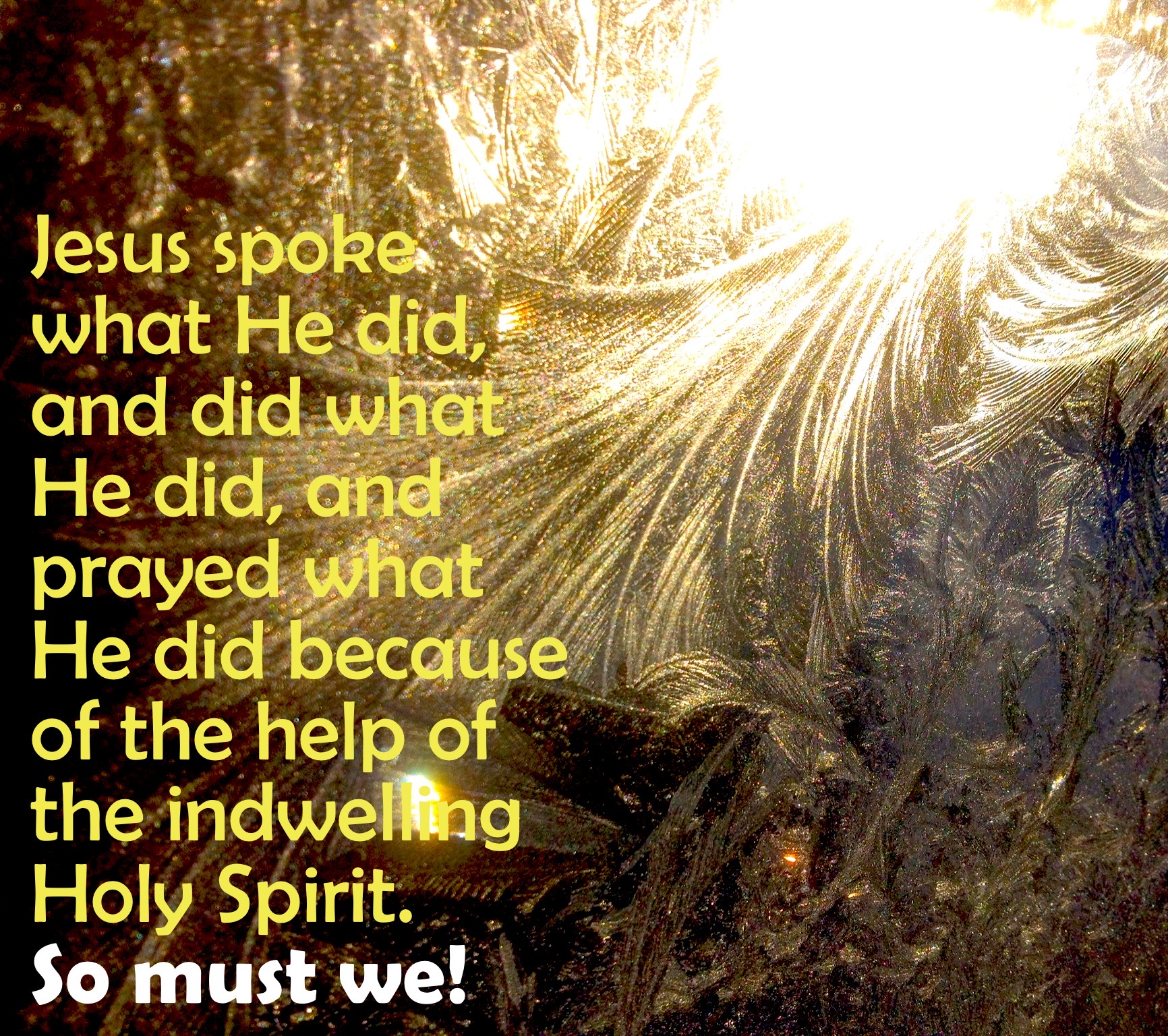
In fact, we saw last week that Jesus was never at a loss of what to say, what path to take, or what prayer to pray. He spoke what He did, and did what He did, and prayed what He did because of the help of the indwelling Holy Spirit.
This is the same Holy Spirit that is in us as Christians. It’s because of this that we can come to God as a Counselor. The Holy Spirit is THE Go-To Resource for everything!
Andrew Murray wrote, “Prayer is simply the breathing of the Spirit in us; power in prayer comes from the power of the Spirit in us as we wait on Him. Failure in prayer is the result of a spirit that is not yielded to the Spirit of God.”
What does it mean to yield to the Holy Spirit? It means that we don’t look for other go-to people for certain situations, but we trust the Spirit to be the Go-To Resource for everything. This is what Jesus did.
As Jesus relied on the Counselor, so must we. As the Counselor helped Jesus, so He will help us.
Second, Jesus was never at a loss of what path to take, and neither do we have to experience any confusion about what to do and when to do it (Matthew 4:1; Luke 2:27; Acts 16:6-10).
In addition, there is not one issue we will ever face that God hasn’t already addressed for us in Scripture (Ephesians 3:4-5). We see Jesus being totally reliant on Scripture (Luke 4:4, 8, 12). In an identical way, the Holy Spirit will help illuminate and apply the Scripture to our lives (John 14:26; 1 Corinthians 2:13).
Let me repeat this vital truth: The Holy Spirit is THE Go-To Resource for everything!
We are vulnerable to temptation without the help of our Go-To Counselor.
We are limited in our understanding of Scripture without the help of our Go-To Counselor.
We have a shallow prayer life without the help of our Go-To Counselor.
We will be frequently confused about words to use or paths to take without the help of our Go-To Counselor.
Let us learn to rely on our Counselor, as we keep our eyes on our Brother, and as we go together to our Father in childlike prayer. This is what leads to true intimate conversation!
If you’ve missed any of the other messages in our prayer series Intimate Conversation, please click here.
Listen to the podcast of this post by clicking on the player below, and you can also subscribe on Apple, Spotify, or Audible.
Jesus told us numerous times that we can come to God as our Father.
Have you ever played a word association game? For instance, if I said “winter” you might say “shoveling” (or kids might say “sledding”). If I said “summer” you might say “vacation.” But I think the word “father” may bring up a lot of very different feelings or images. Some may have fond memories of the word “father” while others may think:
playful but not a good provider
disciplinarian
hard to please
absent
unavailable
Even if our human fathers were good, they were still flawed. Jesus said this about us, “If you parents, that even know how to give good things to your kids are evil, how much more amazing is the goodness and love of God” (Matthew 7:11). But Jesus had something entirely different in mind for us when He told us we could come to God as our Father. And, sadly, it’s a level of intimacy that many have never known.
All of us could only experience limited intimacy with our earthly fathers, but with our Heavenly Father we can have unlimited and unimaginable intimacy!
When Jesus was teaching us to pray in Matthew 6:6-9, there are two thoughts that stand out to me about coming to God as our Father. First, Jesus tells us that we don’t have to use any special language. When He said some people babble in prayer, Jesus was saying they were using a language that was unnatural to them—they weren’t being themselves.
Our Heavenly Father wants us to come to Him as children: full of innocence, and wonder, and expectation, and imagination!
Second, I notice that three times Jesus calls God “your Father,” but when He begins His model prayer He says, “Our Father.” Think of that: Jesus is saying we can approach God the same way He approached His Father!
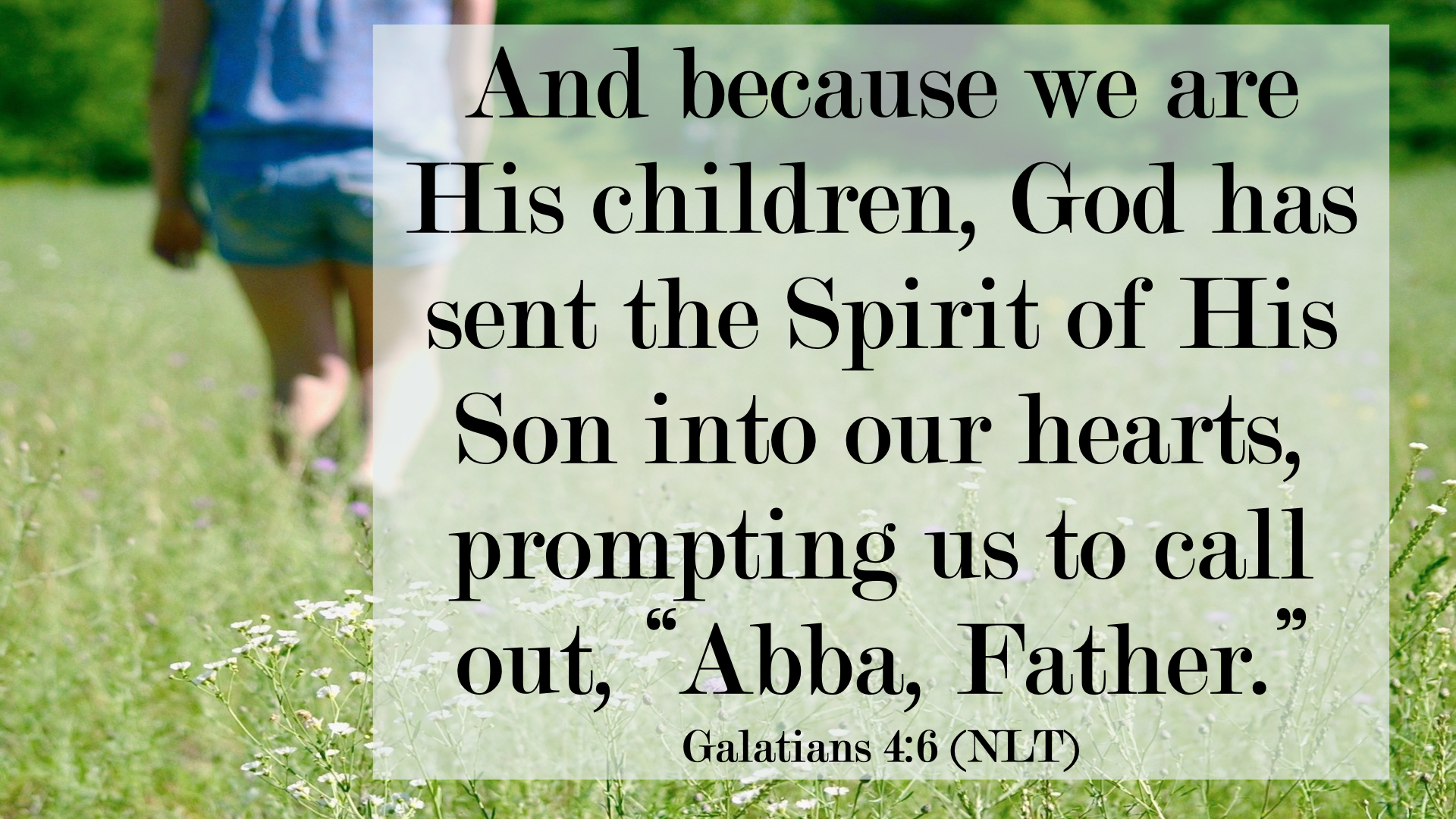
In His intense prayer time just before His crucifixion, Jesus used the phrase “Abba Father” to express His intimacy. This phrase is used two other times in the New Testament. Both of these times it’s telling us that we can approach our Heavenly Father the same way Jesus did (see Mark 14:36; Galatians 4:6; Romans 8:15).
The Romans understood the weight that was associated with the practice of adoption. They knew that a father chose that child to be a part of his family, giving that child full acceptance into the family. Marvin Vincent noted,
“We have but a faint conception of the force with which such an illustration would speak to one familiar with the Roman practice; how it would serve to impress upon him the assurance that the adopted son of God becomes, in a peculiar and intimate sense, one with the heavenly Father.”
In writing to the Romans, Paul reminds them that for those who are in Christ Jesus, there is no condemnation—nothing holding them back from God’s presence. He also said that God has fully adopted us into His family, and that the Holy Spirit was now in us, encouraging us to call God “Abba Father” just as Jesus did (Romans 8:1, 14-16).
Check out these two final thoughts from Jesus: He encourages us to approach God as innocent children, and He praises Our Father for then intimately confiding in His children—
“Truly I tell you, unless you change and become like little children, you will never enter the kingdom of heaven. … I praise You, Father, Lord of heaven and earth, because You have hidden these things from the wise and learned, and revealed them to little children.” (Matthew 18:3, 11:25)
No matter what your relationship was with your earthly father, Jesus encourages us to approach our Heavenly Father in innocence, wonder, expectation, imagination, and intimacy. This is what God desires in His relationship with you!
This is a weekly series with things I’m reading and pondering from Charles Spurgeon. You can read the original seed thought here, or type “Thursdays With Spurgeon” in the search box to read more entries.
Listen to the podcast of this post by clicking on the player below, and you can also subscribe on Apple, Spotify, or Audible.
Heart’s Desire
Do not fret because of evildoers, nor be envious of the workers of iniquity.For they shall soon be cut down like the grass, and wither as the green herb. Trust in the Lord, and do good; dwell in the land, and feed on His faithfulness.Delight yourself also in the Lord, and He shall give you the desires of your heart. (Psalm 37:1-4)
There is no room for fretting if we remember that God is ours; there is every incentive for sacred enjoyment of the most elevated and ecstatic kind. Every name, attribute, word, or deed of Jehovah should be delightful to us, and in meditating on it our souls should be as glad as the epicurean who feeds delicately with a profound relish for his dainties.
A pleasant duty is here rewarded with another pleasure. People who delight in God desire or ask for nothing but will please God; hence it is safe to give them carte blanche.
When we only have eyes for our God, when our heart craves for only what our Savior can provide, when we have ears that tune out all but what the Holy Spirit whispers to us, then we are living in a place where our hearts are continually delighted with what God provides.
We have to trust the One who gave us His unshakable promises—Be delighted with the Lord. Then He will give you all your heart’s desires (v. 4 TLB). Be delighted with Him and He will—not “may” or “hopefully He will” but He will—give you ALL your heart’s desires! That’s because your desires align with His.
There is an ultimate reward in Heaven but there are incredibly satisfying rewards along the journey to Heaven as well. Take time every day to meditate on the boundless love that God has toward you, and let your heart be transformed so that you only crave the very best that your Heavenly Father has for you!
Listen to the podcast of this post by clicking on the player below, and you can also subscribe on Apple, Spotify, or Audible.
Jesus told us twice, “Your Father knows what you need before you ask Him” (Matthew 6:8, 32). He knows the good we need.
When we were children, our parents tried to give us good-for-you food, but sometimes it wasn’t necessarily good. It might have given us nutrients, but perhaps it wasn’t as tasty as we would have liked. Let’s be honest: most junk food tastes really, really good—probably better than the good-for-you food. As a result, sometimes we eat just to eat. We eat because we have to. We choke down the vegetables just so we can get to the dessert.
As parents, we want our kids to have good-for-you food. God wants that too, but He wants more than that for us: He wants it to be savory as well. Jesus talked about how evil parents knew enough to give good things to their children, but then He reminded us how much more does God want to give us (Luke 11:11-13)!
It usually takes much longer to prepare food than it does to eat it. This is especially true for more savory gourmet meals. When we gulp down our food, we don’t really appreciate or savor the tastes, the subtle hints the chef has mixed in, and certainly not the time involved to prepare such a lovely feast.
When we gulp down our food without savoring it…
…we don’t honor the one who prepared the food
…we don’t savor the goodness so we don’t appreciate the goodness
…we move on to dessert (or junk food) before our body is ready for it
In Psalm 106 we read a history lesson of Israel’s ups-and-downs—the trouble they were in and the deliverance God prepared for them. The psalmist directly connects their lack of savoring God’s good things to their rebellion and their carnal, godless cravings. Instead of slowing down to be grateful for what God had given them, they just wanted to move on to the next dessert. That attitude may have been what was behind the spoiled girl named Veruca Salt in the movie “Willy Wonka and the Chocolate Factory” who sang the song “I Want It NOW!”
David gives us the antidote for this tasteless gulping of God’s good and good-for-us food: “Taste and see that the Lord is good…” (Psalm 34:8a). This deliberate tasting allows us to see how excellent the things of God are, better than anything else the world has to offer!
David concludes his counsel with these words, “Blessed is the man who takes refuge in Him. Fear the Lord, you His saints, for those who fear Him lack nothing” (Psalm 34:8b).
In the New Testament, the apostle Peter gives us a similar word: “Like newborn babies, you must crave pure spiritual milk so that you will grow into a full experience of salvation. Cry out for this nourishment, now that you have had a taste of the Lord’s kindness” (1 Peter 2:2-3 NLT).
It’s this savoring that will help us appreciate the sweet and the bitter. It’s this appreciation that brings glory to God and keeps us craving more of the ultimate good that only He has for us.
If we will slow down to savor God’s Word, if we will delight to spend time in prayer, if we won’t rush through the good-for-you trials, we will taste and see that there is nothing that can satisfy like our Savior!
This is a weekly series with things I’m reading and pondering from Charles Spurgeon. You can read the original seed thought here, or type “Thursdays With Spurgeon” in the search box to read more entries.
Listen to the podcast of this post by clicking on the player below, and you can also subscribe on Apple, Spotify, or Audible.
Guided For God’s Sake
In You, Lord, I have taken refuge; let me never be put to shame; deliver me in Your righteousness.Turn Your ear to me, come quickly to my rescue; be my rock of refuge, a strong fortress to save me. Since You are my rock and my fortress, for the sake of Your name lead and guide me. Keep me free from the trap that is set for me, for You are my refuge. Into Your hands I commit my spirit; deliver me, Lord, my faithful God. (Psalm 31:1-5)
To lead and to guide are two different things very like each other, but patient thought will detect different shades of meaning, especially as the last may mean ‘provide for me.’ The double word indicates an urgent need—we require double direction, for we are fools and the way is rough.
Lead me as a soldier, guide me as a traveler! Lead me as a babe, guide me as an adult; lead me when You are with me, but guide me even if You are absent; lead me by Your hand, guide me by Your Word. The argument used is one fetched from the armory of free grace: not for my sake, but ‘for the sake of Your name’ guide me.
When we let God lead us and guide us, we are never “put to shame.” It’s my own attempts at guiding myself that end up in shame and failure. This is why Jesus taught us to pray for God’s name to be glorified as His will is done. Part of that leading and guiding provides our daily bread and an escape from falling in the face of temptation.
Interestingly, Jesus prayed the same thing for Himself in the Garden of Gethsemane: “Not My will, but Yours be done.” And then Jesus could confidently use the same words from this Psalm as He hung on the Cross: “Father, into Your hands I commit My spirit.” We can pray with the same assurance when we are allowing the Holy Spirit to both lead and guide us every single day.
Listen to the podcast of this post by clicking on the player below, and you can also subscribe on Apple, Spotify, or Audible.
Last week here in wintry Michigan we had a couple of snow days (for those of you in non-snow states, that means the roads were too dangerous even for us Michiganders, so the schools were closed). Students and teachers too “work” very hard for snow days. By that I mean they try a bunch of tactics that are supposed to increase the likelihood of school being called off—like flushing ice cubes down the toilet, wearing their PJs inside-out, or even sleeping with a spoon under their pillow.
But I’ve also noticed it’s not just praying for snow days where people employ some tactics they think will help things go their way. Like saying, “Pretty please with sugar on top” when trying to get special favor, or athletes not saying anything at all to a teammate who’s on the brink of something historic, or business people saying, “Wish me luck” before going into the big meeting. And even Christians who end their prayer with, “In Jesus’ name, Amen” to help make their prayer answerable.
In case you haven’t noticed, just saying that phrase is not some magical, abracadabra formula for success (for some very notable examples of this check out Matthew 7:21-23 and Acts 19:13-16).
But still, Jesus does specifically say, “And I will do whatever you ask in My name, so that the Father may be glorified in the Son. You may ask Me for anything in My name, and I will do it” (John 14:13-14).
This is where context is king. In John 13-16, Jesus is giving His final instructions to His disciples before His arrest and crucifixion. They are clearly anxious about His departure because chapter 14 opens with the words, “Do not let your hearts be troubled.”
In this passage of John 14, Jesus is giving the disciples the basis for their confident hope in Him. He tells them that He is THE way to the Father (they don’t have to look for another path), and He is THE revelation of the Father (He will make the Father’s will crystal clear to them).
Jesus tells them that He has been doing His Father’s work, which is verified by the evidence of the miracles—or we could say the answers to His prayers (v. 10-11). Jesus wants His followers to pray this same way, live this same way, and see even greater things done in His name (v. 12).
So we can infer from this that praying in the name of Jesus essentially means two things:
We pray in harmony with the character of Jesus. That means that we pray prayers that Jesus Himself would pray. If you cannot imagine Jesus asking for what you’re asking for, then it’s not in alignment with His character.
We pray in faith in the supreme authority of Jesus to do what we ask. Jesus is Supreme over everything else. To pray in His name means we look for answers from no other source.
I think the key to understanding this is found in the small preposition Jesus uses 12 times in this passage: IN.
Jesus is IN the Father, the Father is IN Jesus, and the Holy Spirit is IN us. This means that we are also IN the Father with Jesus!
Which means we don’t have to try to be like Jesus or to merely imitate Him, but we let the Holy Spirit sanctify us into the character of Jesus.
When I talk to my Dad I don’t have to remind myself that I am his son—I just am his son. I don’t have to carefully calculate how I’m going to make requests of him. I know his heart, and I know my inseparable relationship with him, so I just talk to him.
Have you ever noticed in the Gospels that when Jesus does a miracle, He doesn’t pray the way that we typically pray? When the man with leprosy came to Jesus, He merely said, “Be clean.” I think we might have bowed our heads, closed our eyes, placed our hands on him and said something like, “Dear heavenly Father, if it’s Your will bring Your healing touch to our dear brother. In Jesus’ name we pray, Amen.” But Jesus knew the Father’s heart was to heal this suffering man, so Jesus simply spoke the words. His statement was a prayer that resonated with the heart of His Father, and that prayer was immediately answered.
The Holy Spirit is sanctifying you to pray this same way:
He wants to mold your heart to be passionate for the things of the Father—John 5:17
He wants to transform your mind to think the Father’s thoughts—John 16:13-14
He wants to soften your will to be yielded to the will of the Father—Matthew 26:36-44
He wants to settle your emotions to be at peace in the Father—John 14:1
He wants to even change your vocabulary to the very words Jesus would use—John 12:49
When your heart, mind, will, and emotions are being sanctified, the supremacy of Jesus will naturally be at the forefront of everything you feel, think, do, and say. Then you will be naturally praying in the name and character of Jesus for God’s glory to be seen.
Praying in the name of the Supreme Jesus means that we pray IN God’s will FOR God’s glory.
To see all of the messages in our series called Awesome: Learning to pray in the awesome name of Jesus, please click here.



 Every monarch or president on the planet has certain protocols for anyone who interacts with them. There are requirements on how to walk into the room, titles that have to be used, the way you have to act, things you can or can’t say, and the list goes on and on.