[1:27] what leaders do that will undermine their leadership
[2:48] why it’s more fun to be around grateful people
[4:12] Craig shared about the impact grateful teammates have had on him
[4:52] why is it so easy to complain?
[6:28] leaders need to speak positive things into this around them
[7:42] leaders need to shut down complaining teammates quickly
[8:39] Greg challenges leaders to confront their own negative attitude
[10:00] leaders need to create a place of safety to help others to develop to their full potential
[12:08] Greg reminds leaders that busyness can restrict gratitude
[13:29] criticism is both a mindset and a “heartset”
[13:59] how many of our criticism come from our assumptions about others?
[15:06] poor leaders have a misunderstanding of what gratitude does
[15:55] some ways leaders can express gratitude to their teammates
[17:57] another look at the problem of assumptions
[19:08] a grateful person attracts others to them
[21:00] Craig gives leaders a challenge to help bolster their attitude of gratitude
Check out this episode and subscribe on YouTube so you can watch all of the upcoming episodes. You can also listen to our podcast on Spotify and Apple.
[0:36] One thing I have learned about veterans that I have appreciated.
[1:35] Giving a shout-out to our favorite veterans.
[2:35] We wonder how many current leaders would agree to step into tough roles if they weren’t getting paid to do so.
[3:35] What intrigues us about volunteers.
[5:15] What else motivates people beside getting a paycheck?
[6:35] Leaders help their people get involved in a bigger cause—they help them see beyond the organization’s “bottom line” as a way to energize their team.
[8:29] Some leadership examples from our military personnel.
[9:18] What any leader should be able to learn from veterans: respect, understanding of the chain of command, innovation while follow the mission plan.
[11:13] How having veterans on your team can benefit your organization.
[13:41] What we can learn from our veterans about defending our values.
[14:00] Greg shares a great quote on defining true heroes.
[15:20] Find a way to invest in your people and unleash their potential.
Check out this episode and subscribe on YouTube so you can watch all of the upcoming episodes. You can also listen to our podcast on Spotify and Apple.
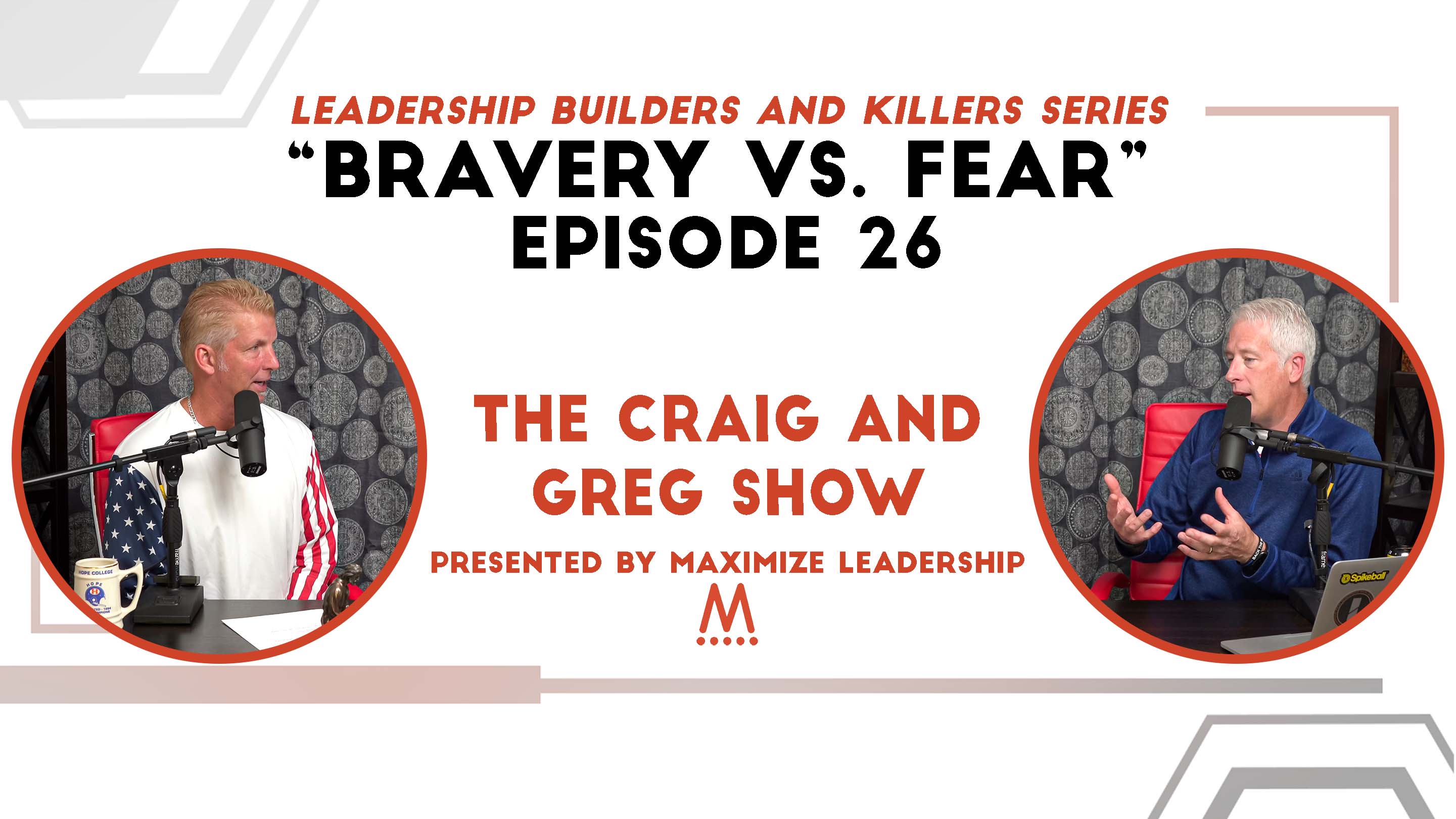
[0:58] Our empowerment comes from facing our fears.
[1:35] How does fear paralyze a leader?
[2:14] One fear leaders need to address in themselves and others: The fear of dropping the ball.
[3:00] Leaders need to be aware that confidence can ebb and flow.
[3:50] How we lead through fear.
[4:27] Transparency in a leader empowers the team to greatness. On the other hand, blaming is a defense mechanism that disempowers the team.
[5:49] Greg shares how we lead by example and with transparency.
[7:25] I address the fear that blocks leaders from giving authority to others.
[8:15] Greg suggests we switch our mindset from fear to learning opportunities.
[9:21] I share a Little League lesson that served me well into adulthood.
[10:50] How Greg and I help coach people through their fears.
[11:34] What other fears to leaders face?
[12:50] Creating a culture of safety helps our teammates confront their fears.
[14:03] How can leaders encourage people who are trapped by their fears?
[15:41] Leaders have to go first. I said, “Sometimes bravery is just going one step farther than you went before.”
[16:50] Greg shares a brave moment in his adoption process.
[18:18] We need to assess the gifts that others on our team possess.
[19:20] Greg unpacks a great quote about bravery.
[20:03] I share about the moment when I think bravery begins.
Check out this episode and subscribe on YouTube so you can watch all of the upcoming episodes. You can also listen to our podcast on Spotify and Apple.
[2:18] Only servant leaders truly know how to breathe hope into the people around them.
[3:17] Greg describes how leaders can become hope dealers.
[3:53] I paraphrase a proverb to help leaders see the immense value in dispensing hope.
[5:59] Greg explains how leaders instill hope into themselves.
[7:48] Hope-filled people are still realistic about the present difficulties they are facing.
[8:59] Hope isn’t just about one-time vision casting—we talked about how leaders keep the message of hope consistent.
[12:29] Leaders have to be around people in order to invest hope into them.
[14:00] Greg notices how hope connects faith and love.
[15:32] Greg gives leaders a challenge to grow as hope-fillers.
[17:42] Leaders give their teammates hope for a better future.
Check out this episode and subscribe on YouTube so you can watch all of the upcoming episodes. You can also listen to our podcast on Spotify and Apple.
most people don’t think this leadership killer impacts them [0:30]
we share our personal experiences of leaders placing “me” in front of “we” [2:06]
here’s what this killer does to our teammates [2:58]
sharing is better than taking—this is a key part of an abundance mindset [3:53]
discontentment and low self-esteem lead to feelings of greed [5:14]
what squashes greed? what is our leadership builder? [5:20]
discontentment is the path of least resistance, so we have to choose to be contented leaders [6:43]
Greg shares a contentment lesson he learned while on a missions trip [9:11]
how the senior leader should address discontentment or greed in other team members [10:56]
leaders are the thermostat for their team [13:20]
where does work fit into the overall scheme of life? [14:14]
Greg gives us a leadership challenge to help us win the battle against greed [15:40]
Check out this episode and subscribe on YouTube so you can watch all of the upcoming episodes. You can also listen to our podcast on Spotify and Apple.
I have five chapters in my book to help ministry leaders get mentally, physically, spiritually, and relationally healthy. In this short clip, from “The Craig And Greg Show” leadership podcast, Greg Heeres and I talk about how important it is for leaders to self-care. To see the full episode, please click here.
Check out this episode and subscribe on YouTube so you can watch all of the upcoming episodes. You can also listen to our podcast on Spotify and Apple.
Greg confesses a leadership mistake he had to correct in himself [9:20]
character is vital in emerging leaders [10:59]
compassion is valuable in emerging leaders [11:44]
consistency helps emerging leaders develop into solid leaders, and it helps the team leader to excel … great insight from Patrick Lencioni about being present [12:15]
teams must embrace diversity and find commonality [13:08]
I elaborate on Greg’s point about a leader’s presence and consistency [14:10]
the team leader has to take the initiative in identifying and raising up new leaders [15:47]
leaders need to continue to replenish themselves [17:22]
Check out this episode and subscribe on YouTube so you can watch all of the upcoming episodes. You can also listen to our podcast on Spotify and Apple.
David was the gold standard for every king of Israel who followed him. Numerous times throughout the history of Israel, we will see a note that a certain king either followed God like David, or turned from God unlike David. Yet there exists a wart on David’s portrait: an adultrous affair with the wife of a man in his inner circle, and then subsequent lies and a murder to cover up the affair. “The thing David had done displeased the Lord” (see 2 Samuel 11).
But I’d like to turn your attention to when this affair occurred: “In the spring, at the time when kings go off to war … David remained in Jerusalem” (2 Samuel 11:1). He was without his usual comrades. The men who knew David best, who could probably sense if something was amiss, weren’t around to warn him. When David tried to find out the identity of the bathing beauty on the roof next door to his palace, an unnamed attendant tried to remind him, “Isn’t that Bathsheba, the wife of Uriah?” but David dismissed him.
Elijah was arguably the most forceful and fearless prophet in Israel’s history. Not only did he stand up to the evil kings of Israel, but he spoke out against the kings of surrounding nations, too. In answer to Elijah’s prayer, God brought a drought on the land, and again in answer to Elijah’s prayer, God sent rain. Elijah challenged the 450 prophets of the god Baal and the 400 prophets of the goddess Asherah to a duel to the death, which ended up in a decisive victory for Yahweh. Yet, shortly after this massive victory, Elijah was depressed to the point that he wanted to die.
What led to Elijah’s depression? Something very similar to David’s slide into adultery: He was alone. Elijah ran away from Queen Jezebel’s death threat, left his servant behind, and proceeded all by himself into the desert. It was when he was without a comrade that he prayed to God, “I’ve had enough. Take my life” (see 2 Kings 17–19).
And what about Peter? He boldly claimed his loyalty to Jesus, even to the point of wielding a sword at the guards who came to arrest his Master. But when Peter was alone, after the other disciples fled, he denied three times that he knew Jesus (Matthew 26:33, 51, 69–75).
God designed us to be in relationship with others. His statement to Adam in some of the earliest words of the Bible—“It is not good for you to be alone”—are words for us still today.
In a recent episode of “The Craig And Greg Show,” Greg and I discussed one of our favorite verses in the Bible: Wounds from a friend can be trusted, but an enemy multiplies kisses (Proverbs 27:6).
If you want to go far, don’t try to go alone. If you want an accountability partner that can keep warts away from your leadership legacy, don’t go alone. If you want to extend your leadership influence, don’t go alone. If you want to honor God’s investment in you, don’t go alone. Get those friends around you who love you enough to speak the truth!
Greg wonders why leaders get trapped using metrics of success that don’t really matter [4:10]
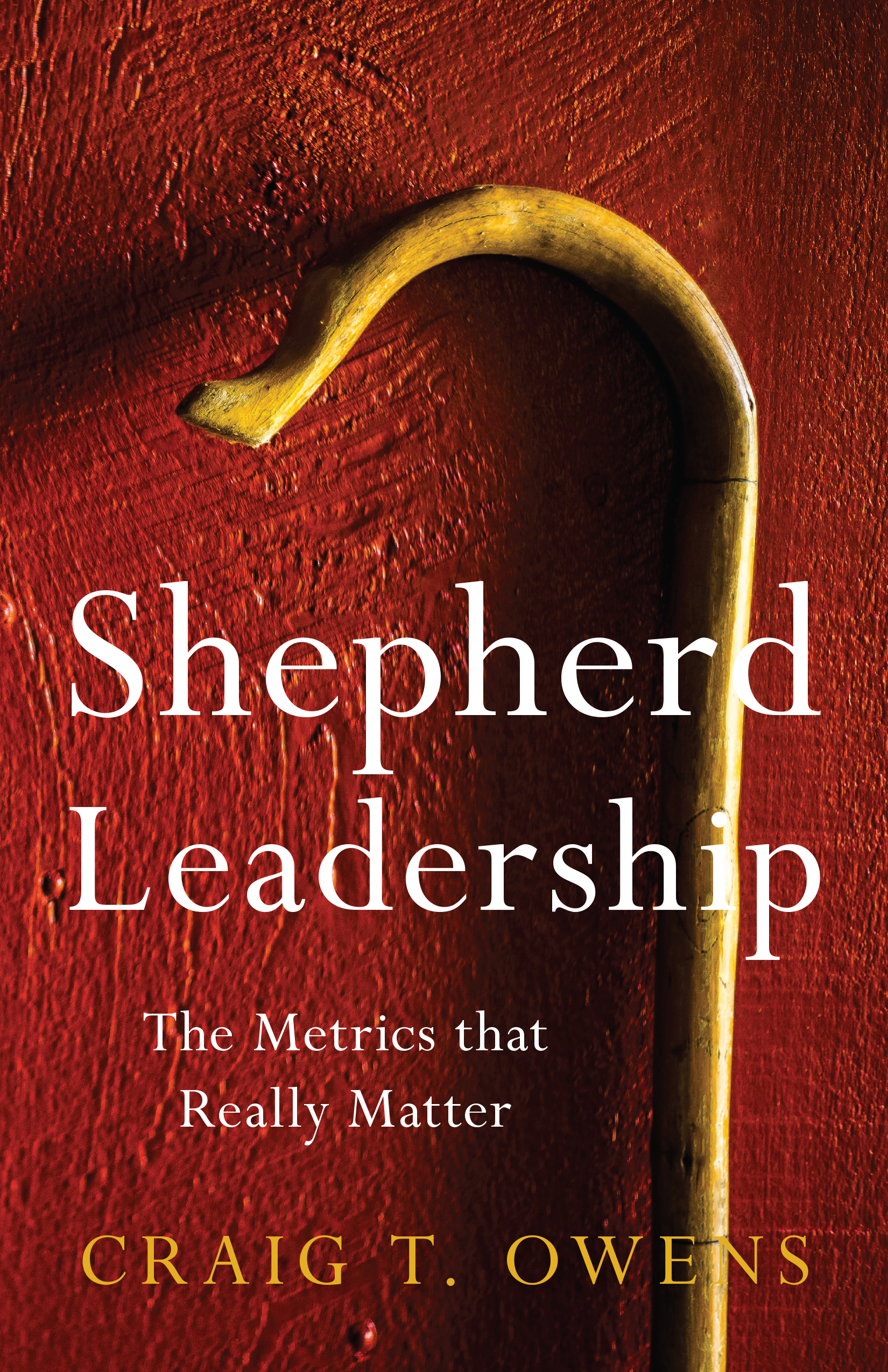
I talk about why the subtle shift from “servant leadership” to “shepherd leadership” is important [4:50]
Greg and I discuss the tension between a leader’s confidence and a leader’s humility [6:25]
I explain how my wife helped me see my leadership in a better light [8:00]
my favorite definition of humility comes from C.S. Lewis [9:45]
Greg asks how leaders can develop the right kinds of relationships that will help them continue to grow [10:35]
I share the dangers when leaders try to fly solo [11:40]
Greg talks about the vital need for leaders to refresh themselves [14:00]
who will benefit from reading Shepherd Leadership? [14:50]
I share a humorous story of a way I advised a church to grow their numbers overnight [16:54]
Check out this episode and subscribe on YouTube so you can watch all of the upcoming episodes. You can also listen to our podcast on Spotify and Apple.



 On this episode of “The Craig And Greg Show” we talk about:







 Craig T. Owens