Sabbathing

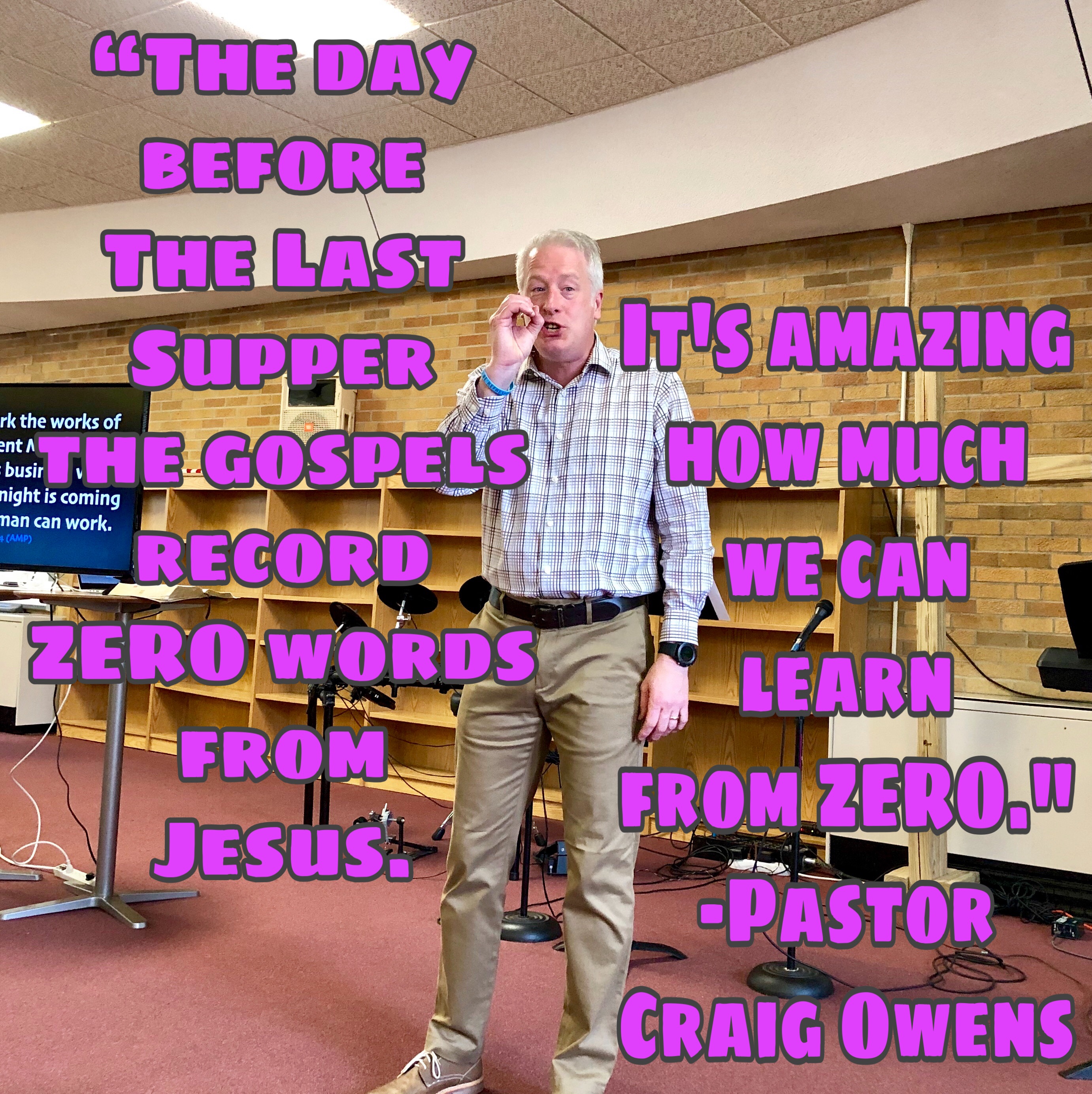
On the Wednesday of Christ’s Passion Week, all of the Gospel writers are in perfect agreement. Between all four of them, they write not one word about what happened on that day. That silence actually speaks volumes to us!  

Jesus is almost surely in Bethany (since that has become is nightly retreat this week), and He is taking a Sabbath rest. “Wait,” you might be saying, “sabbathing on Wednesday?! I thought that was supposed to be Saturday or Sunday?” 

The Sabbath is not a day; it’s an attitude of the heart. 

Jesus followed the example His Father set right at the beginning. 

The Israelites are to observe the Sabbath, celebrating it for the generations to come as a lasting covenant. It will be a sign between Me and the Israelites forever, for in six days the Lord made the heavens and the earth, and on the seventh day He rested and was refreshed. (Exodus 31:16-17)

Notice that God rested and was refreshed. The word rested means to stop working and celebrate. It’s a time to reflect on the work completed and celebrate what has been done. Then the Bible says God was refreshed, which literally means “God refreshed Himself.” He took a deep, satisfying, rejuvenating breath! 

Resting and being refreshed—or sabbathing—is not a luxury; it’s a necessity! 

Jesus understood this principle of sabbathing. Remember that He had only a limited time to accomplish all that the Father had for Him: “We must work the works of Him Who sent Me and be busy with His business while it is daylight; night is coming on, when no man can work” (John 9:4 AMP). If anyone was a Man on a mission, it was Jesus, and yet rest was vital to Him…

  • …from the very beginning of His life, Jesus practiced healthy habits
  • …He started each day in prayer 
  • …He rested and refreshed after expending Himself in ministry, and encouraged His disciples to do so as well (see Luke 2:52; Mark 1:35; 6:30-32, 45-46) 

Now—just before the intense, horrific, inhumane experience He is about to go through—Jesus is sabbathing. He is resting and refreshing His body, soul, and spirit. 

So what keeps us from sabbathing? 

  1. Guilt—“I feel guilty taking time off.” Remember that if Jesus did it, we should too. 
  2. Misplaced priority—“If I don’t do it, it won’t get done.” But remember Who is in charge. The psalmist reminds us, “The Lord is king!” (Psalm 99:1). 
  3. Fear—“If I ‘tune out’ what might I be missing?” Remember: Your Father is watching over you every single moment (see Psalm 121).  

If you want to experience more productivity in your life, don’t try to go 24/7—take a sabbath break. Stop working and celebrate what God has done, then take a deep breath of worship in God’s presence. Jesus demonstrated that sabbathing was vital for ministry success. 

Jesus Prepares Us For The Path

In His final week of ministry leading up to the Cross, Jesus got the most out of every minute He had. 

After a busy Monday where He cleared the temple, Jesus went back to Bethany, where He spent the night, only to return to the same temple courts Tuesday morning to teach His disciples. 

Tuesday is a preparation day. This is His last day in public before His trial and crucifixion and He has many final words to impart to His followers. Much of His teaching comes in response to the increasing onslaught from the religious leadership, who are desperately trying to find a way to silence Him once and for all.

It’s important to note that Jesus doesn’t prepare the path for us, but He prepares us for the path. 

Jesus prepares us for… 

1. OPPOSITION

Not only did Jesus face opposition, but He told His followers that we would too (see Matthew 5:11; 10:17-22). Indeed as Jesus sat in the temple courts teaching on this Tuesday, group after group of religious leaders attacked Him (Matthew 21:23; 22:15, 23, 34-35). There are many lessons we can learn, but here are a few important takeaways: 

    • Answer entrapping questions with a question of your own. 
    • You don’t have to answer everything people ask you.  
    • Either-or questions probably need a both-and answer. 
    • The better we know the Scriptures, the better we can know those both-and answers.
    • Consider the source of the questioner. 
    • We shouldn’t have an unhealthy obsession with nonessential things. 
    • Love fulfills the law. 
    • When we teach in love, some people will finally get it.

2. DAILY LIVING

Between all of the entrapping questions, Jesus taught some valuable lessons. 

    • The power of faith-filled prayer
    • Obedience to God is valuable whenever it happens and in whomever it occurs 
    • We are only stewards of God’s resources 
    • The ugliness of hypocrisy

3. END TIMES EVENTS

Jesus doesn’t want us to be surprised, so He tells us upfront what is coming. Some of what He teaches here would have partial fulfillment in about 30 years when the Romans besieged Jerusalem, but the ultimate fulfillment is still to come—Matthew 24-25; Mark 13; Luke 21. 

Christ’s passionate journey was out of love for us. Which means everything He taught us was for our benefit. To honor Him, we need to know the Scriptures and God’s power (Matthew 22:29). 

So we study the Word of God to get to know the God of the Word. Keeping our eyes on Jesus will keep us prepared for the path ahead of us, no matter how rough it is. 

What Christians Often Miss About Zeal

On what we now refer to as Palm Sunday, Jesus arrived in Jerusalem with the crowd shouting, “Hosanna” because they thought Jesus was going to set things right. In this, they were disappointed. Jesus knew that His time for reigning in Jerusalem hadn’t come yet, and Christ’s passionate journey meant He would not cut any corners!

Before Jesus left Jerusalem that Sunday evening, Mark noted that “He looked around at everything.” He didn’t respond right away to what He saw. This is very important to note because we shouldn’t think that His response on Monday was something spontaneous. No, it was planned out in specific detail.  

On Monday morning, Jesus prepared to make the 2-mile trip from Bethany to Jerusalem. The Gospels note quite frequently the amount of time Jesus spent in prayer, including beginning His day in conversation with His Father (see Mark 1:35). On this morning, He must have talked with His Father about everything He had seen in Jerusalem the day before. 

 En route to Jerusalem, Jesus encounters a fig tree that gives every appearance of life and vitality. It looks like it’s ready to serve people, but upon closer inspection, Jesus discovers that there is no fruit on it. He curses the tree for its deceptive outward appearance. This is definite foreshadowing for what’s about to happen! 

Jesus enters the temple and begins to drive out merchants, and moneychangers, and dove sellers. He roars at them, “God says this is to be a place of prayer for all nations, but you have turned it into a den of robbers!” (see Matthew 21:12-17; Mark 11:15-19; and Luke 19:45-48). 

The phrases house of prayer and den of robbers are direct quotations from Isaiah and Jeremiah, respectively (Isaiah 56:3-7; Jeremiah 7:1-11), but what do they mean? 

The temple had specific courts available—

  1. The Court of the Gentiles was open to all people, foreigners included.
  2. The Women’s Court was open to all Jews and, their “uncontaminated” wives.
  3. The Court of Israel was limited to male Jews who were clean and purified.
  4. The fourth court was the Holy Place limited to priests robed in their priestly vestments. 

This buying and selling was undoubtedly happening in the Court of the Gentiles. As the Passover was approaching, people from all over the world were here—some purchasing animals to use as sacrifices, and some exchanging their foreign money for Israelite money for the temple tax. 

There was a lot of hustle and bustle, but very little worship. This is what angered Jesus. The activity in the temple was like the fig tree He cursed—it looked like it was fruitful, but that was merely outward deception. 

Were the merchants exploiting people? Perhaps. But they were certainly occupying the only space where non-Jews could worship. They were certainly becoming a distraction to any true worship activities. They were clearly becoming the main attraction. 

There are two important lessons in this outburst that Jesus gives to all His disciples:

  1. As our Christlikeness increases, our intolerance of religious showmanship should increase. 
  2. As our Christlikeness increases, our intolerance of unrighteousness should increase—both a greater hate for sin and a greater love for sinners! 

“Let the zeal of the house of the Lord ever eat you up. For example: do you see a brother running [toward sin]? Stop him, warn him, be grieved for him, if the zeal of God’s house has now eaten you up. Do you see others running and wanting to drink themselves drunk? Stop whom you can, hold whom you can, frighten whom you can; win in gentleness whom you can: do not in any way sit still and do nothing.” —Augustine 

Christ’s passionate journey was out of love for us. Which means He hates anything that keeps us from His Father. 

If you know God’s love, be zealous about those things that keep others from coming in to know God’s love for themselves. Not angry at people, but angry at practices and “religious shows” that hinder people from knowing God’s love like you know God’s love. 

Sunday In Jerusalem

The Sunday before Christ’s crucifixion is typically called “The Triumphal Entry.” But was it really? One thing’s for sure—Jesus didn’t come to Jerusalem the way the people expected! 

To fully get the picture of what’s happening we need to turn back the calendar several hundred years. Ever since Jerusalem fell to invading armies, the Jews hung on to the promise that God would restore their king and their kingdom. They were awaiting a descendant from the line of King David who would drive out their overlords and restore Jerusalem to its rightful place. 

They clung to a promise in Psalm 118 that included these words—“Lord, save us! Lord, grant us success! Blessed is He who comes in the name of the Lord. From the house of the Lord we bless you. The Lord is God, and He has made His light shine on us. With boughs in hand, join in the festal procession up to the horns of the altar” (vv. 25-27). 

But Jesus was prophesied to come as the Prince of Peace, gentle and unassuming, the Servant of all people (Isaiah 9:6; 42:1-3). Jesus simply didn’t do things the way the crowds expected! He was born in a manger in Bethlehem (not as a king in Jerusalem), and hailing from Nazareth caused people to mock, “Nazareth? Can anything good come from Nazareth?!” 

So on that Sunday as Jesus approached Jerusalem, it wasn’t as a conquering King but as a humble servant. As He came near, He wept a sobbing lament over Jerusalem (Matthew 23:37). 

The crowd took palm branches (as Psalm 118 suggested) and shouted, “Hosanna!” That word means “Save us,” but what they really meant was, “Save us NOW!” Jesus came riding a mule—a lowly work animal, not a war horse—to remove any fear people may have, and to show them His servant’s heart. 

Even His disciples didn’t get this. But the Pharisees sure did: They wanted Jesus to rebuke the crowd for their insolence and blasphemy! Many of the worshippers were eyewitnesses to the resurrection of Lazarus, so Jesus said to the Pharisees, “They have to give praise to God for this!” 

Jesus made His way to the temple but there were no sacrifices, no anointing, no coronation. Mark tells us Jesus simply “looked around at everything and then left.” 

Have you ever noticed that Jesus never rushes? He’s never early. He’s never late. He’s never confused. He’s never trying to catch up. 

This is because Jesus was in complete sync with His Father. Jesus said that everything He did was directed by His Father, and every word He spoke was given to Him by His Father. 

We, too, should be able to move in that same unrushed pace. Because of what Jesus did for us on Calvary, we may have the same “oneness” with our Father as Jesus did (John 14:20). 

Worry creeps into our lives when—like those cheering crowds in Jerusalem—we try to make our agenda happen on our timetable with our own resources. But when we look to Jesus, we see such a perfect peace as He relied on His Father. 

Christ’s passionate journey was out of love for us, so that we could know peace with God as we journey through life with Jesus. 

Join me this Sunday as we take a closer look at the Monday of Christ’s Passion Week. 

I Must Protect This House

…a house divided against itself will fall (Luke 11:17). 

A divided house is an unstable house. It is a house doomed to fall.

A divided house may occur actively or passively.

Some evil person may actively try to bring the house to division and ruin. The enemy of our souls is like a roaring lion—seeking to devour, steal, kill, destroy. He will use whatever means he can find to bring a Christian house to ruin. 

Some really nice people may actually cause or allow division to happen through their passivity. They may be inattentive, unarmed, or apathetic. In this case, the devil’s returned to the house will be more aggressive (see Luke 11:24-26).

Blessed are those who hear the word of God and keep it (v. 28).

Being ready to protect my house requires:

  • Actively arming myself with the armor of God
  • Daily hearing and practicing the Word of God—this is how the sword of the Spirit is sharpened
  • Allowing the Holy Spirit to change me and use me to unify the house
  • Being alert to the subtle temptations that would cause disunity in the house

These are the only steps to a strong house that will withstand the onslaught—both boisterous and subtle—of the enemy to divide and conquer my house.

A mark of a godly leader is one who equips himself to protect his house.

This is part 34 in my series on godly leadership. You can check out all of my posts in this series by clicking here.

Like Jesus Or Like “They”

It’s amazingly sad to realize the devaluation the crowd puts on people who are different from them 😔

In Luke 18, the crowd devalued the blind man because he was poor and blind.

In Luke 19, the crowd devalued Zaccheus because he was rich and a tax collector for the Romans.

Both men—in the crowd’s jaded eyes—weren’t worth much to anyone.

But Jesus sees people so differently!

He was moved by compassion to heal the son of Timaeus of his blindness. He was moved by compassion to redirect the hostility of the crowd away from Zacchaeus and put it on Himself.

Jesus invited Himself to lunch at Zacchaeus’ house, and “when they saw it, they all began to grumble.” 

What will my response to be to the sick, the beggars, the rich, and the schemers when they want to come to Jesus? Will I (like Jesus) be moved by compassion to bring them close to Him? Or will l (like “they”) grumble about their unworthiness?

Will I be like Jesus or like “They”?

One Saturday In Bethany

Six days before His crucifixion and burial, Jesus was prepared for His burial by the most unlikely of people. This story takes place in Bethany, where Jesus spends a lot of time during His earthly ministry. 

As was customary, the most influential men in the village would try to entice visiting guests to join them for dinner. Simon—a Pharisee and a former leper—was the one who extended the invitation to Jesus. Simon is a former leper because one who still had active leprosy wouldn’t have been allowed in his own home, let alone allowed to host guests. I think (as you will see in a moment) that Simon had been healed of his leprosy by Jesus.

Although it was customary for someone like Simon to host visiting guests, in this case, the religious leaders were scheming to arrest Jesus. In other words, there was an ulterior motive for Simon to have Jesus in his home.

Which is probably why Simon neglected his host’s duties: No welcoming kiss, no foot-washing, no anointing. All normal hospitality is ignored. Jesus appears to ignore the snub and simply recline at the table. But another guest takes Simon’s incredible rudeness personally. 

Mary was standing or sitting along the wall in Simon’s house, as many common villagers would in that day. Luke tells us that Mary had lived a sinful life. But while sitting at Jesus’ feet earlier she heard the good news that Jesus could forgive sins, she placed her faith in Him, and her lifestyle changed 180-degrees 

Mary is overcome by emotion at the inhospitable—rude!—way Jesus is being treated and tears began to well up in her eyes. Since Jesus is reclining at the table, His feet would have been pointed in her direction, and she began to use her tears to wash His feet. Then—horror of horrors—she uncovers and lets down her hair in public(!) and begins to dry His feet. 

Simon the Pharisee judges Mary by her past. Simon twice says, “Does Jesus even know what kind of woman she is? Does He know she is a sinner?” Mary is in big trouble: she is publicly pointing out the rudeness of the host, she is touching a man that is not her husband, and she has uncovered and let down her hair in public. 

Jesus responds not to Mary, but to Simon: “Simon, I have something to tell you,” He says and then shares a short but powerful parable of a creditor who had two debtors. One owed him the equivalent of a year-and-a-half’s wages, and the other owed about two months’ wages. Since neither could pay, the creditor forgave both of them. 

Jesus asked Simon, “Which of the two forgiven debtors do you think would be most grateful?” Simon correctly responds, “The one who was forgiven more.” 

Jesus points out that Mary’s acts didn’t bring her forgiveness, but that her acts were a loving response to the forgiveness she had already received. Jesus said things like, “You have been forgiven,” and “Your sins are forgiven,” and “Your faith has saved you.” 

Jesus took the anger that was focused on Mary and redirected it to Himself, as Isaiah prophesied the Messiah would do (see 53:4-5).

At the same time He is also challenging Simon, “Don’t you have something to be grateful for? Weren’t you once a physical leper? Mary was a spiritual leper, but she has been forgiven and is now overwhelmingly grateful. What about you?” 

Mary was forgiven. She gave all she had in worship. Her anointing oil was lavishly poured out. It was worth a year’s wages, but she spent it all on Jesus. She anointed Him for His burial. The aroma of the oil remained on Jesus throughout His Passion Week and through His crucifixion. The aroma remained on Mary’s hands and hair. The aroma remained in Simon’s house. The memory was fixed in the memories of everyone in that room. 

What about Simon? Did he ever acknowledge his gratitude? Or was he more concerned with receiving praise from men? 

Have you received the forgiveness Jesus offers you? Can people tell you’ve been forgiven by your willingness to stand up for Him? Can people tell you’ve been forgiven by your willingness to give up everything for Him? 

I hope you can join me this Sunday as we continue our slow, deliberate walk alongside Jesus on His passionate journey to the Cross and the resurrection. 

Be The 1-In-10

“…ten men who were lepers…” (Luke 17:12). 

Lepers were outcasts in society. Unable to participate in normal daily activities, unable to go to the temple to worship God, even unable to be with their family. These ten lepers encountered Jesus and did two positive things. But 9-of-10 lepers also did two sad things. 

(+) They knew to call on Jesus for help—“Jesus, Master, have pity on us!” 

(+) They took Jesus at His word. Their healing happened as they obeyed Christ’s words—“‘Go, show yourselves to the priests.’ And as they went, they were cleansed.” 

(-) Only one cleansed leper came back to praise God for his healing. 

(-) Only one was pronounced “well” by Jesus. All ten lepers were “cleansed,” which simply meant they were ceremonially clean and could once again participate in daily life and temple worship. But only one was made completely “well.” The Greek word is sozo, which means saved from eternal destruction. The same word is used to describe what Jesus came to do for us: “You shall call His name Jesus, for He shall save [sozo] His people from their sins” (Matthew 1:21). 

“What a rare thing is thankfulness.… ‘Were there not ten cleansed? But where are the nine?’ The lesson before us is humbling, heart-searching, and deeply instructive. The best of us are far too like the nine lepers. We are more ready to pray than to praise, and more disposed to ask God for what we have not, than to thank Him for what we have. … If we would be anxious for nothing, we must make our requests known to God not only with prayer and supplication, but with thanksgiving (Philippians 4:6).” —J.C. Ryle (emphasis mine) 

Probably all of us experience daily blessings from our good God, yet many of us never acknowledge Him as the Source of those blessings. We just accept the blessing and then keep on walking. 

Let’s be the 1-in-10! 

Let’s be quick to recognize God’s blessings. Let’s always remember that He does more than give us strength for today, but He saves [sozo] us entirely from eternal destruction. Let’s be the ones who always return—day after day after day—to give glory to God! 

God’s Call On A Leader’s Life

For this is he who was spoken of by the prophet Isaiah… (Matthew 3:3).

There is no doubt about: John the Baptist was called by God.

God uses people to fulfill His purpose. Some, like John, are mentioned by prophets, but all of us have our lives written in God’s Book before we are born (Psalm 139:13-16; Jeremiah 1:5; Ephesians 2:10; Luke 1:13-17).

Just as John was obedient to his calling, I need to be obedient to God’s calling as well.

John spoke God’s word clearly. He lived it out. He didn’t water down nor compromises his message. He didn’t let “ministry success” lead to pride. His whole life pointed everyone to Jesus.

This I must do too!

A mark of a godly leader is one who is humbly confident that God has a call on his life.

This is part 33 in my series on godly leadership. You can check out all of my posts in this series by clicking here.

13 Quotes On The Gospel Of Luke

J.C. Ryle has given us a wonderful commentary on the Gospels in his Expository Thoughts On The Gospels. Check out my full book review here, and then enjoy a few quotes from Ryle’s insights on the Gospel of Luke.

“Lay firm hold on Bible promises. It is of the deepest importance to our peace to do so. Promises are, in fact, the manna that we should daily eat and the water that we should daily drink as we travel through the wilderness of this world.” 

“Christ’s loving kindness to His people never changes and never fails. It is a deep well of which no one ever found the bottom.” 

“There is not enough of a missionary spirit among Christians. It should not satisfy us to be safe ourselves. We ought also to try to do good to others. All cannot go to the heathen, but every believer should strive to be a missionary to his fellow man.” 

“No man shall ever be a loser in the long run by deeds of self-denying charity and patient love. At times he may seem to get nothing by his conduct. He may appear to reap nothing but ridicule, contempt, and injury. His kindness may sometimes tempt men to impose on him. His patience and forbearance may be abused. But at the last he will always be found a gainer.” 

“Have we the word of Christ’s promises? Then let us rest on it and fear nothing. Let us not doubt that every word that Christ has spoken shall be made good. The word of Christ is a sure foundation. He that leans upon it shall never be confounded.” 

“How much we ought to hate sin! Instead of loving it, cleaving to it, dallying with it, excusing it, playing with it, we ought to hate it with a deadly hatred. Sin is the great murderer, and thief, and pestilence, and nuisance of this world. Let us make no peace with it. Let us wage a ceaseless warfare against it.” 

“We must give up the vain idea of trying to please everybody. The thing is impossible and the attempt is mere waste of time. We must be content to walk in Christ’s steps and let the world say what it likes. Do what we will we shall never satisfy it or silence its ill-natured remarks. It first found fault with John the Baptist and then with his blessed Master. And it will go on caviling and finding fault with that Master’s disciples so long as one of them is left up on earth.” 

“Occasional retirement, self-inquiry, meditation, and secret communion with God are absolutely essential to spiritual health. The man who neglects them is in great danger of a fall. To be always preaching, teaching, speaking, writing, and working public works is, unquestionably, a sign of zeal. But it is not always a sign of zeal according to knowledge. It often leads to untoward consequences. We must make time occasionally for sitting down and calmly looking within, and examining how matters stand between our own selves and Christ. The omission of the practice is the true account of many a backsliding which shocks the church and gives occasion to the world to blaspheme.” 

“Let us beware of allowing traditions, old preconceived notions, unsound interpretations, or baseless theories in religion to find a root in our hearts. There is but one test of truth: ‘What says the Scripture?’” 

“The kindness of a Christian towards others should not be in word and in tongue only, but in deed and in truth. His love should be a practical love, a love which entails on him self-sacrifice and self-denial, both in money, and time and trouble. His charity should be seen not merely in his talking but his acting—not merely in his profession but in his practice. He should think it no misspent time to work as hard in doing good to those who need help as others work in trying to get money. … Such brotherly love the world may not understand. The returns of gratitude which such love meets with may be few and small. But to show such brotherly love is to walk in the steps of Christ. … What are we doing to help those who are troubled in mind, body, or estate? There are many such in this world. There are always some near our own door. What are we doing for them? Anything, or nothing at all? May God help us to answer these questions! The world would be a happier world if there was more practical Christianity.” 

“Never let us forget that to be content with sitting in the congregation and hearing sermons, while we bear no fruit in our lives, is conduct which is most offensive to God.” 

“Let us endeavor to live daily in the sight of a holy God. So living, it will matter little how much we are ‘watched’ by an ill-natured and malicious world. Let us exercise ourselves to have a conscience void of offense toward God and man, and to do nothing which can give occasion to the Lord’s enemies to blaspheme.” 

“An idea appears to prevail in some men’s minds that true religion may be separated from common honesty, and that soundness about matters of doctrine may cover over swindling and cheating in matters of practice! Against this wretched idea our Lord’s words were a plain protest. Against this idea let us watch and be on our guard.” 

You can read Ryle’s quote on The Gospel of Matthew here, and on the Gospel of Mark here.