Praying For Your Pastor

For the past few years, October has been designated as Pastor Appreciation Month. Honestly, I feel appreciated by the great folks at Calvary Assembly of God every single week! I can only pray that other pastors feel the same love I feel.

Here’s a simple way you can show your pastor appreciation both in October, and all year long: Pray for him or her. Multiple times the Apostle Paul wrote pray for us (Colossians 4:3; 1 Thessalonians 5:25; 2 Thessalonians 3:1). Prayer is SO NEEDED for your pastor!

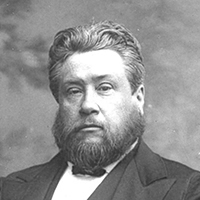
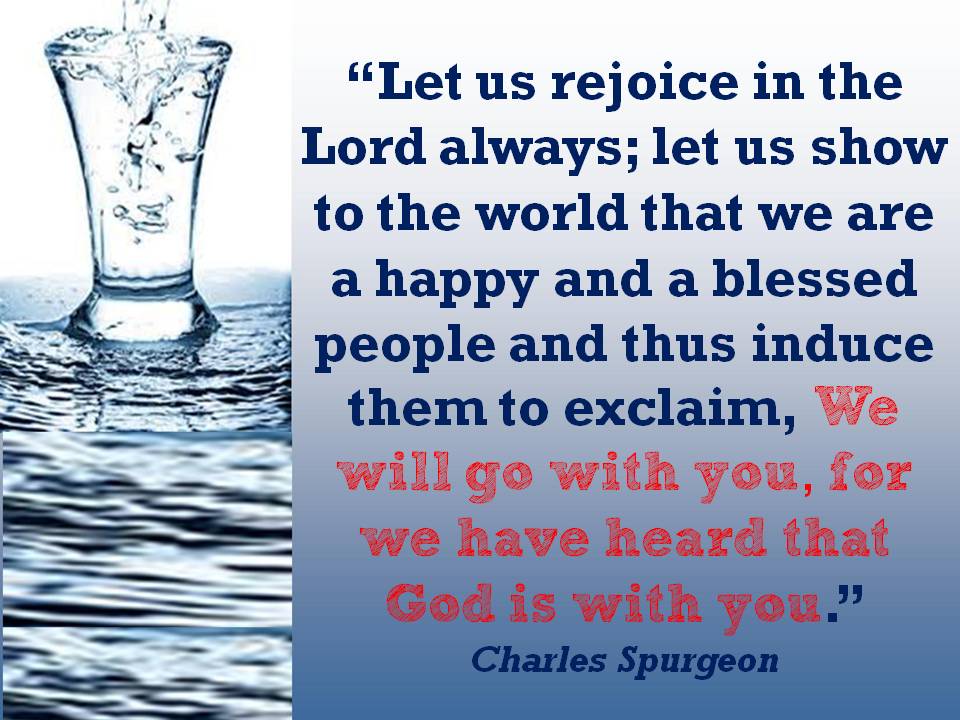
Here’s what the eminent pastor Charles Spurgeon wrote:

The members of the body of Christ should have a care for one another, but especially should the minister receive the prayers of his flock. I have sometimes heard his duties called arduous, but that word is not expressive enough. The works in which he is occupied lie quite out of the region of human power. The minister is sent to be God’s messenger for the quickening of the dead. What can he do in it? He can do nothing whatever unless the Spirit of God be with him through the prayer of his brethren.

He is sent to bring spiritual food to the multitude, that is to say, he is to take the loaves and fishes, and with them, few as they are, he is to feed the thousands. An impossible commission! He cannot perform it. Apart from divine help, the enterprise of a Christian minister is only worthy of ridicule. Apart from the power of the Eternal Spirit, the things which the preacher has to do are as much beyond him as though he had to weld the sun and moon into one, light up new stars, or turn the Sahara into a garden of flowers. We have a work to do concerning which we often cry, “Who is sufficient for these things?” and if we be put to this work but have not your prayers, and in consequence have not the supply of the Spirit, we are of all men the most miserable.

Show how much you appreciate your pastor by upholding him/her in prayer every day.

Thursdays With Oswald—Unblameable In The Sight Of God

This is a weekly series with things I’m reading and pondering from Oswald Chambers. You can read the original seed thought here, or type “Thursdays With Oswald” in the search box to read more entries.

Unblameable In The Sight Of God

     If the ‘Oughts’ of the Old Testament were difficult to obey, Our Lord’s teaching is unfathomably more difficult. … Jesus Christ does not simply say, ‘Thou shalt not do certain things’; He demands that we have such a condition of the heart that we never even think of doing them, every thought and imagination of heart and mind is to be unblameable in the sight of God.

     …The purity God demands is impossible unless we can be re-made from within, and that is what Jesus Christ undertakes to do through the Atonement. … It is not a question of applying Jesus Christ’s principles to our actual life first of all, but of applying them to our relationship to Himself, then as we keep our souls open in relation to Him our conscience will decide how we are to act of that relationship.

From Biblical Ethics

I want every part of my life to be unblameable in the sight of God. I have to keep the eyes of my heart fixed on Jesus.

Since, then, you have been raised with Christ, set your hearts on things above, where Christ is seated at the right hand of God. Set your minds on things above, not on earthly things. For you died, and your life is now hidden with Christ in God. When Christ, Who is your life, appears, then you also will appear with Him in glory. (Colossians 3:1-4)

Everywhere And Everywhen

Wise words from G. Morgan Campbell:

“The Christian is to seek the upper things, setting his mind upon them, and everywhere and everywhen he is to be hoping for, and endeavoring after, the ultimate. That is the simple meaning of prayer: reaching forward, wishing forward, desiring forward, seeking the upper, the higher, the nobler.”

The Bible is clear, too, about us praying everywhere and everywhen for the very best:

  • We ought always to pray and not to turn coward, faint, lose heart, and give up (Luke 18:1)
  • God has seen how I never stop praying for you (Romans 1:9)
  • For I always pray to the God of our Lord Jesus Christ, the Father of glory, that He may grant you a spirit of wisdom and revelation (Ephesians 1:17)
  • In all my prayers for all of you, I always pray with joy (Philippians 1:4)
  • Our prayers for you are always spilling over into thanksgivings. We can’t quit thanking God our Father and Jesus our Messiah for you! (Colossians 1:3)
  • Epaphras always prays earnestly for you, asking God to make you strong and perfect, fully confident that you are following the whole will of God (Colossians 4:12)
  • We always thank God for all of you and pray for you constantly (1 Thessalonians 1:2)
  • We ought always to thank God for you, and rightly so, because your faith is growing more and more (2 Thessalonians 1:3)
  • I give thanks to my God for you always when I mention you in my prayers (Philemon 1:4)
  • Pray for us. We have no doubts about what we’re doing or why, but it’s hard going and we need your prayers (Hebrews 13:18)

Someone needs your prayers today.

Will you keep on praying for a friend that he or she will be able to

…reach forward

…wish forward

…desire forward

…seek the upper, the higher, the nobler!

The Gratitude Cycle

There are only two ways to take people: You can take people for granted or you can take people with gratitude.

If you take people for granted, you will probably end up losing that relationship, or at the very least that relationship won’t be very fulfilling.

But when you take people with gratitude, you can bring out the best in them, in you, and in your relationship.

Paul wrote to the Colossian church that every time he thought of them, he was grateful for them and he prayed for them. This is The Gratitude Cycle: being thankful for someone prompts prayers for them, and those prayers make us even more grateful for them, which fires up the Gratitude Cycle all over again.

In case you need help knowing what to pray for the people for whom you are thankful, check out Paul’s prayer in Colossians 1:9-12. He prayed…

…for knowledge, wisdom & understanding of God’s will for their lives, and the power to live out that new knowledge of Him.

…for endurance—a virtue that never loses patience with, belief in, or hope for others.

…for patience—the ability to turn tough things into glorious things.

…with gratitude for them—especially with gratitude for who they were: God’s holy people.

Any time is a good time for us to be full of thanks, so make sure you are full of thanks for the people God has placed in your life. And when you feel thankful for them, be sure you are prayerful for them too.

Elevate

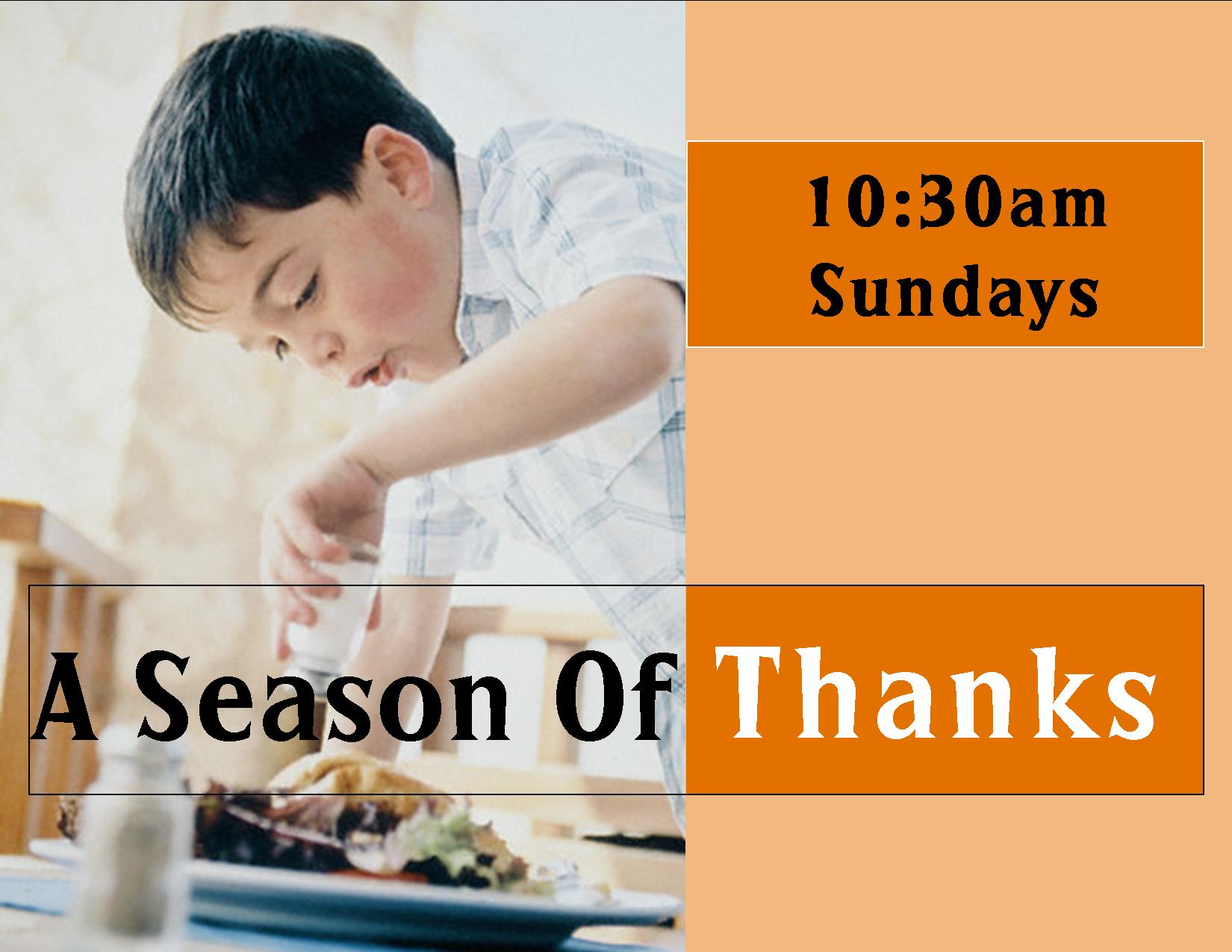
On Sunday we kicked off a new series A Season Of Thanks looking at this verse:

Since you have been raised to new life with Christ, set your sights on the realities of heaven, where Christ sits in the place of honor at God’s right hand. Think about the things of heaven, not the things of earth.

Here’s the deal: If you elevate your thinking to positive things, your life will be more positive. The best place to start is thank-fullness = being full of thanks. Make it a habit in your life to find more things for which you can give thanks.

I searched the Twitterverse for some thoughts about elevated thinking…

Feel free to add your own in the comments below. Oh yeah, and come join us next Sunday for A Season Of Thanks part 2.

What’s So Good About Good Friday?

Good Friday? Good for whom?

For you and me? Yes.

Good for Jesus, no. It was Bad Friday for Him, wasn’t it?

Or was it?

The writer of Hebrews says, “For the joy set before Him, Jesus endured the Cross, scorning its shame.”

What joy?

It was for the joy of what was nailed to the Cross.

So what exactly was nailed to the Cross?

Isaiah records an usual statement from God –

Comfort, comfort My people, says your God. Speak tenderly to Jerusalem, and proclaim to her that her hard service has been completed, that her sin has been paid for, that she has received from the Lord’s hand double for all her sins.

That seems unfair! We receive double (!) for our sins! Here’s a brief video where I explain what this means culturally –

Only when invoices were paid-in-full did they get doubled-up.

The Bible tells us that we’ve all sinned, and that the invoice or penalty for our sin is death. We have the IOUs of sin nailed to the door of our heart where God says “You owe Me your life!” But we cannot pay this debt by ourselves.

But Jesus can. And Jesus did! Check this out –

He personally carried our sins in His body on the Cross…. (1 Peter 2:24, NLT)

Having cancelled and blotted out and wiped away the handwriting of the note with its legal decrees and demands which was in force and stood against us. This He set aside and cleared completely out of our way by nailing it to His Cross. (Colossians 2:14, AMP)

That’s what is good about Good Friday. Jesus knew that taking our sins on His body, and then allowing His body to be nailed to the Cross, would double-up and nail-down our sin once and for all!

When Jesus said, “It is finished!” He was really saying, “It is was paid-in-full!”

Simply Profound

This morning I went to “Donuts With Dad” with my youngest son. It’s a time for Dads to bring their kids to school, grab a donut, and then walk around the school with their child. It was so cool seeing how excited my son was for me to be there with him!

We sat in his classroom to eat our donut, then he gave me the grand tour: the library, the computer lab, the lunchroom, the art room, and the gym. So simple, yet so important to him.

Earlier in the morning on my way to drop off my older children at their school, we were reading this passage in Colossians:

It’s that simple. That is the substance of our Message. We preach Christ, warning people not to add to the Message. We teach in a spirit of profound common sense so that we can bring each person to maturity. To be mature is to be basic. Christ! No more, no less. That’s what I’m working so hard at day after day, year after year, doing my best with the energy God so generously gives me.

So I’ve been thinking: if the simple things are the joy-filled things, why do we insist on making things so complicated in our Christian faith? We tell God’s children, “To be in a relationship with God you must do thus-and-so, and you must do it this many times each week, and you must do it this way.”

Must, must, must.

Complex rule after convoluted rule after antiquated rule. Why not simply say, “Love God will all that you’ve got. Just love Him in the unique way He made you to love Him”?

There’s great joy in simplicity. There is a profoundness in simplicity.

Here’s to a simpler walk with Christ!