The Dictatorship Of The Routine

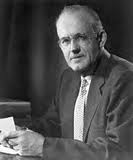
Wow, I am really challenged by this word from A.W. Tozer! I pray that my personal life, and my life as a pastor, never falls under the dictatorship of the routine.

Tozer“The treacherous enemy facing the church of Jesus Christ today is the dictatorship of the routine, when the routine becomes ‘lord’ in the life of the church. Programs are organized and the prevailing conditions are accepted as normal. Anyone can predict next Sunday’s service and what will happen. This seems to be the most deadly threat in the church today. When we come to the place where everything can be predicted and nobody expects anything unusual from God, we are in a rut. The routine dictates, and we can tell not only what will happen next Sunday, but what will occur next month and, if things do not improve, what will take place next year. Then we have reached the place where what has been determines what is, and what is determines what will be. That would be perfectly all right and proper for a cemetery. Nobody expects a cemetery to do anything but conform…. Everyone and everything in a cemetery has accepted the routine. Nobody expects anything out of those buried in the cemetery. But the church is not a cemetery and we should expect much from it, because what has been should not be lord to tell us what is, and what is should not be ruler to tell us what will be. God’s people are supposed to grow.” —A.W. Tozer (emphasis added)

What do you think about this?

Thursdays With Oswald—Why Wait For A Tragedy To Get Your Attention?

This is a weekly series with things I’m reading and pondering from Oswald Chambers. You can read the original seed thought here, or type “Thursdays With Oswald” in the search box to read more entries.

Oswald Chambers

Why Wait For A Tragedy To Get Your Attention?

     God is not a supernatural interferer; God is the everlasting portion of His people. When a man “born from above” begins his new life he meets God at every turn, hears Him in every sound, sleeps at His feet, and wakes to find Him there. He is a new creature in a new creation, and tribulation but develops his power of knowing God….

From Christian Disciplines

Tribulation has an amazing power to get people’s attention. After every calamity (whether it’s the attack on Pearl Harbor or the World Trade Centers, a shooting in a school, or a young family killed by a drunk driver) our churches are filled. People are searching for something to help them make sense of that tragedy. Yet after a couple of weeks, life returns to “normal” and the churches empty out.

What we discovered in that moment of tragedy is what we should be discovering every day: God is there.

Do you hear God in all the sounds? Do you see Him at every turn? Do you sleep peacefully in Him each night? Do you go through your day without anxiety because You know He is by your side?

You can because He is there. Don’t wait for a tribulation to remind you of that fact. Open your eyes and ears and heart to His presence surrounding you even now.

22 Quotes From “The Ragamuffin Gospel”

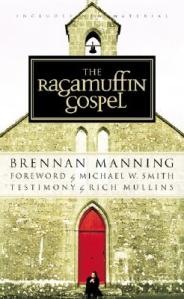
Ragamuffin GospelThe Ragamuffin Gospel by Brennan Manning really resonated with me. You can read my full book review by clicking here, but below are some of the quotes I especially appreciated.

“The institutional church has become a wounder of the healer rather than a healer of the wounded.” 

“Personal responsibility has replaced personal response. We talk about acquiring virtue as if it were a skill that can be attained, like good handwriting or a well-grooved golf swing. In the penitential seasons we focus on overcoming our weaknesses, getting rid of our hang-ups, and reaching Christian maturity. We sweat through various spiritual exercises as if they were designed to produce a Christian Charles Atlas. Though lip service is paid to the gospel of grace, many Christians live as if only personal disciplines and self-denial will mold the perfect me. The emphasis is on what I do rather on what God is doing. In this curious process God is a benign old spectator in the bleachers who cheers when I show up for morning quiet time.”

“God has a single relentless stance toward us: He loves us. He is the only God man has ever heard of who loves sinners. False gods—the gods of human manufacturing—despise sinners, but the Father of Jesus loves all, no matter what they do.” 

“Jesus comes not for the super-spiritual but for the wobbly and the weak-kneed who know they don’t have it all together, and who are not too proud to accept the handout of amazing grace.”

“The Word we study has to be the Word we pray.”

“We must never allow the authority of books, institutions, or leaders to replace the authority of knowing Jesus Christ personally and directly. When the religious views of others interpose between us and the primary experience of Jesus as the Christ, we become unconvicted and unpersuasive travel agents handing out brochures to places we have never visited.”

“Whatever past achievements might bring us honor, whatever past disgraces might make us blush, all have been crucified with Christ and exist no more except in the deep recess of eternity.” 

“It is unimaginable to picture a wooden-faced, stoic, joyless, and judgmental Jesus as He reclined with ragamuffins.”

“We miss Jesus’ point entirely when we use His words as weapons against others. They are to be taken personally by each of us.” 

“The saved sinner is prostrate in adoration, lost in wonder and praise. He knows repentance is not what we do in order to earn forgiveness; it is what we do because we have been forgiven. It serves as an expression of gratitude rather than an effort to earn forgiveness. Thus the sequence of forgiveness and then repentance, rather than repentance and then forgiveness, is crucial for understanding the gospel of grace.”

“Maybe this is the heart of our hang-up, the root of our dilemma. We fluctuate between castigating ourselves and congratulating ourselves because we are deluded into thinking we save ourselves. We develop a false sense of security from our good works and scrupulous observance of the law. Our halo gets too tight and a carefully disguised attitude of moral superiority results. Or we are appalled by our inconsistency, devastated that we haven’t lived up to our lofty expectations of ourselves. The roller coaster ride of elation and depression continues. Why? Because we never lay hold of our nothingness before God, and consequently, we never enter into the deepest reality of our relationship with Him. But when we accept ownership of our powerlessness and helplessness, when we acknowledge that we are paupers at the door of God’s mercy, then God can make something beautiful out of us.” 

“Honesty is such a precious commodity that it is seldom found in the world or the church. Honesty requires the truthfulness to admit the attachment and addictions that control our attention, dominate our consciousness, and function as false gods. I can be addicted to vodka or to being nice, to marijuana or being loved, to cocaine or being right, to gambling or relationships, to golf or gossiping. Perhaps my addiction is food, performance, money, popularity, power, revenge, reading, television, tobacco, weight, or winning. When we give anything more priority than we give to God, we commit idolatry. Thus we all commit idolatry countless times every day.”

“To be alive is to be broken. And to be broken is to stand in need of grace. Honesty keeps us in touch with our neediness and the truth that we are saved sinners. There is a beautiful transparency to honest disciples who never wear a false face and do not pretend to be anything but who they are. … Getting honest with ourselves does not make us unacceptable to God. It does not distance us from God, but draws us to Him—as nothing else can—and opens us anew to the flow of grace.” 

“When we wallow in guilt, remorse, and shame over real or imagined sins of the past, we are disdaining God’s gift of grace. Preoccupation with self is always a major component of unhealthy guilt and recrimination. … Yes, we feel guilt over sins, but healthy guilt is one which acknowledges the wrong done and feels remorse, but then is free to embrace the forgiveness that has been offered.”

“The evil one is the great illusionist. He varnishes the truth and encourages dishonesty. ‘If we say, “We have no sin,” we are deceiving ourselves, and the truth has no place in us’ (1 John 1:8). satan prompts us to give importance to what has no importance. He clothes trivia with glitter and seduces us away from what is real. He causes us to live in a world of delusion, unreality, and shadows.” 

“At Sunday worship, as in every dimension of our existence, many of us pretend to believe we are sinners. Consequently, all we can do is pretend to believe we have been forgiven. As a result, our whole spiritual life is pseudo-repentance and pseudo-bliss.”

“The way we are with each other is the truest test of our faith. How I treat a brother or sister from day to day, how I react to the sin-scarred wino on the street, how I respond to interruptions from people I dislike, how I deal with normal people in their normal confusion on a normal day may be a better indication of my reverence for life than the antiabortion sticker on the bumper of my car.” 

“A little child cannot do a bad coloring; nor can a child of God do bad in prayer.”

“The call asks, Do you really accept the message that God is head over heels in love with you? I believe that this question is at the core of our ability to mature and grow spiritually. If in our hearts we really don’t believe that God loves us as we are, if we are still tainted by the lie that we can do something to make God love us more, we are rejecting the message of the Cross.” 

“There are some real problems with projecting the perfect image. First of all, it’s simply not true—we are not always happy, optimistic, in command. Second, projecting the flawless image keeps us from reaching people who feel we just wouldn’t understand them. And third, even if we could live a life with no conflict, suffering, or mistakes, it would be a shallow existence. The Christian with depth is the person who has failed and who has learned to live with it.”

“We project into the Lord our own measured standard of acceptance. Our whole understanding of Him is based in a quid pro quo of bartered love. He will love us if we are good, moral, and diligent. But we have turned the tables; we try to live so that He will love us, rather than living because He has already loved us.” 

“No greater sinners exist than those so-called Christians who disfigure the face of God, mutilate the gospel of grace, and intimidate others through fear. They corrupt the essential nature of Christianity.”

The Ragamuffin Gospel (book review)

Ragamuffin GospelThe Ragamuffin Gospel by Brennan Manning was originally published 15 years ago, but its message to us is just as needed—maybe even more needed—today! The subtitle nails the essence of this book: Good news for the bedraggled, beat-up and burnt-out. Indeed it is.

Without realizing it, Manning’s ragamuffin message has impacted much of my thinking for the past decade. Ever since I started working in a church, I have been more acutely aware of how many people feel like their beat-up, burnt-out status somehow disqualifies them for God’s grace. The message they’ve heard is, “Get your act together, and then get yourself to God for help.” As a result our societies are filled with the de-churched, and our churches are only left with those who think they have their acts together.

Manning’s message is such a refreshing wake-up call! He speaks to those bedraggled de-churched people to assure them Jesus wants them just as they are. He came to meet with the messed-up and burnt-out, to show them Abba God’s love. Manning also confronts the pharisaical view of far too many Christians who truly think God only helps those who help themselves, and who want people to make themselves worthy of God’s grace.

This book was like a breath of fresh air. It clarified my frustrations with churchy people, and it renewed my passion for all the bedraggled, beat-up, and burnt-out to know the amazing, unconditional, unmerited, awe-inspiring grace of a All-Loving God!

I am a Random House book reviewer.

Plastic Donuts (book review)

Plastic DonutsEvery once in awhile a book comes along that addresses a topic in such an innovative way, that I get an insight I had never considered before. Plastic Donuts by Jeff Anderson is just such a book.

Tithes. Offerings. Missions support. Building funds. It seems pastors cringe when they think about addressing these subjects, and congregants squirm when they hear their pastor addressing these subjects! “After all,” many think, “every church-attending Christian knows they should give, right? We know it and the pastor knows it, so why do we need to talk about it?”

But Plastic Donuts will give you a take on church giving that you probably haven’t considered before. It all comes from an insight Jeff Anderson got when his young daughter served him some plastic donuts.

The book is short, but powerfully-packed. I would say that its size would make you think it could be read quite quickly, but the content is so thought-provoking and eye-opening, you may find yourself taking time to rethink what you thought you knew on this subject.

Here’s my final word: Get this book. Get it for yourself and get it for your pastor. Everyone will be grateful that you did.

I am a Waterbrook Multnomah book reviewer.

UPDATE: 

  • To read some of my favorite quotes from this book, click here.
  • To watch a video review I did of this book for Waterbrook Multnomah, click here.

Service Sunday

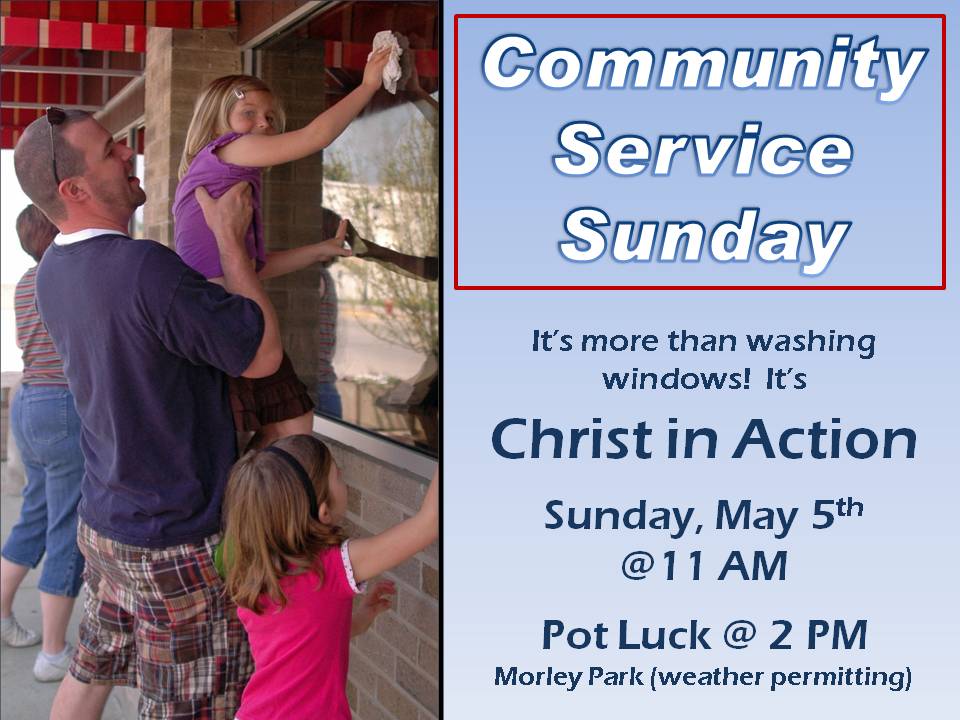
Community Service Sunday 2013I love this! Several Cedar Springs churches will be wrapping up their Sunday services earlier than usual to head out into the community to continue worshipping God. We worship Him by loving others as He loves us!

Our church members will be spreading out throughout the city to perform all sorts of acts of service: From providing full-service gasoline services to area motorists, to washing the windows of businesses along Main Street, to singing for the residents at Metron nursing home, to sprucing up Elmwood Cemetery, to many other activities, there is something for everyone.

I hope you and your church can join us this Sunday, May 4.

16 Quotes From “Firsthand”

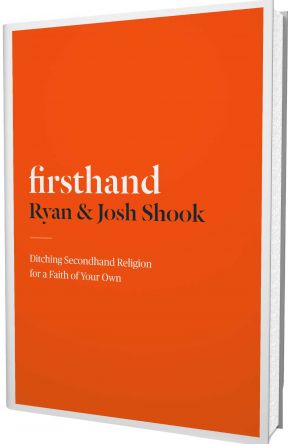
FirsthandI strongly encourage Christian parents to put a copy of Firsthand into the hands of their children, high school age and older. This book will help them think through making their faith in Jesus something personal to them. You can read my book review by clicking here. Below are some quotes that stood out to me. All of these quotes are by the authors, unless otherwise noted.

“You must be emptied of that of which you are full, so that you may be filled with that of which you are empty.” —Augustine

“One of the most liberating and powerful statements of all time comes from the lips of Jesus: ‘You will know the truth, and the truth will set you free’ (John 8:32). And we’re writing this chapter to tell you something that will set you free. The only way we’ve been able to experience freedom is by making the choice to get completely gut-level honest with God and others.

“God can use you and me through our brokenness, but first we have to get real and vulnerable with Him and with others. I think this powerful ‘get real’ dynamic works for a few reasons. First of all, being real with God and those around us invites us to drop the pride and pretense and to walk in humility. Second, honesty invites us to live every day in gratitude for the incredible grace that Lord has shown us. And third, since now we know we can’t make it on our own—and that’s okay—we’re ready to invite God’s power to do for us what we can’t do for ourselves. Paul said in 2 Corinthians 12:9, ‘I will boast all the more gladly about my weaknesses, so that Christ’s power may rest on me.’ This turns the concept of weakness and vulnerability on its head. We are saying that God makes up for our weaknesses. We are admitting that He is ready to work through them. Our weaknesses can actually become our greatest assets because they draw us closer to the Lord. And once we see how God can use them, we have all the more reason to be open about our struggles.”

“When all you see is a life in pieces, remember: the Remodeler wants to change you from the inside out. And He’s at work building your character to match His great calling and purpose for your life.”

“We have to decide, moment by moment, if we want to act changed or be changed.”

“It is more important to live one word of Scripture than it is to memorize volumes.” —Tim Hansel

“When our faith looks like a long list of things we should do, it’s usually a sign we’re not really focused on knowing God today for ourselves. Firsthand faith is all about a relationship with the God who is always faithful.”

“God is no less with you in your doubts that He is with you in your certainties.”

“Firsthand faith means we’re not afraid to bring our burning questions directly to God. But it also means that we’re not afraid to simply relax in His love. Even when all our questions haven’t yet been answered.”

“The needs of this world are endless. So whenever we feel a divine disturbance, it’s essential that we respond with firsthand action. If we don’t, it will quickly turn into secondhand bitterness.”

“James tells us that faith without works is dead (James 2:26). The most certain way to go back to living a secondhand faith is to refuse to act upon the Holy Spirit’s movement in your heart…. When you do not respond to a divine disturbance of the Holy Spirit, you get bitter and you criticize. That helps no one. … When you don’t respond to a divine disturbance in your life, you become the greatest obstacle between an unbelieving world and a loving God—a judgmental Christian.”

“Your eternal footprint—the impact you make on this earth—will be determined by whether you respond to the calling of the Spirit of the Lord in your heart to love a broken world, to step into the gifts and passions the Lord has blessed you with yo meet the needs that others overlook.”

“When we set out to discover our own firsthand faith, we were disillusioned with church. We had seen how imperfect the church could be, and we were certain that church was the problem. Coming full circle with our firsthand faith, we now realize that church was not the problem. The problem was out view and definition of the church itself. It took us a long time to understand that church wasn’t a building or a pastor or a sermon series. It’s easy to point out everything wrong with the church when you stand outside it and approach it with a consumer mentality. We thought the church had given us a secondhand faith, when in reality we had chosen to avoid a firsthand relationship with the community of Christ follower we claimed to care about.”

“The church is messy and imperfect because it is made up of broken and imperfect people. Are you sitting on the sidelines because the people in your church are imperfect or ‘just not like you’? … God designed you to be in community with your local church. He designed you to have firsthand relationships not only with Him but also with the people in your church. You can come up with plenty of excuses not to get involved and reasons that your church has it wrong, but when was the lat time you looked inside yourself and really searched your own heart for issues?”

“You can try to live out a firsthand faith on your own for as long as you want, but until you live out that faith in a community, you will never realize your full potential in Christ.”

“As a Christian, you are part of a movement that will outlast you, and you are part of the Firsthand Generation. As communities of believers rise up, we will gain momentum and create a movement that is stronger than anything we could ever accomplish on our own. Perhaps God is calling you to gather people and become a leader in the Firsthand Generation. Take up the challenge.”

Embracing Conflict

Listen to the podcast of this post by clicking on the player below, and you can also subscribe on AppleSpotify, or Audible.

A quick survey: Please raise your hand if any of these pertain to you:

  • Have you ever had a disagreement with someone?
  • Have you had a disagreement with someone you love?
  • Have you had a disagreement with someone you love, who also called themself a Christian?

If you raised your hand, you joined 100% of my congregation who answered “yes” to all three.

When we are in close proximity to anyone, there will be conflict. In fact, close proximity usually leads to more conflict because closeness increases friction. For a Christian the issue is not if we will have conflict with others in the Church, but how will we navigate and resolve these conflicts.

The apostle Paul wrote a thank you letter to the church at Philippi, in which he speaks in some of the most glowingly loving terms of any of his letters. Clearly, this was a group of people close to his heart. So when he heard about a conflict between two ladies in this congregation, he took time to address it publicly in his letter—

I plead with Euodia and I plead with Syntyche to be of the same mind in the Lord. (Philippians 4:2)

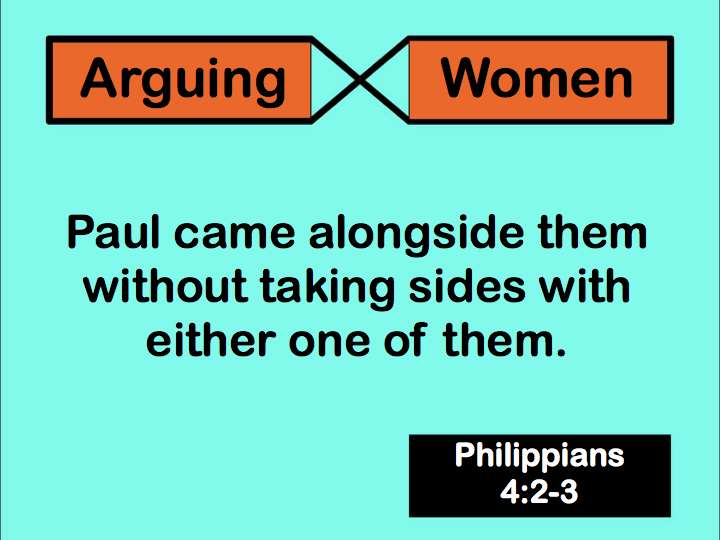
We don’t know why these ladies were arguing but notice that Paul doesn’t take sides. He simply says, “I please with Euodia AND I plead with Syntyche.” The word for plead means someone who comes alongside to help. In using this terminology, Paul gives us an important principle:

We can come alongside those in conflict without taking sides with either one of those in conflict.

In the next verse, Paul implores the rest of the church to join him in this alongsided-ness

And I exhort you too, my genuine yokefellow, help these two women to keep on cooperating…. (v. 3 in the Amplified Bible)

In other words, Paul wants the rest of the church to embrace these at-odds sisters, also without taking sides. He addresses the members of the church as yokefellow. It’s not a word we use too often today (although it is still in the dictionary), but it paints a crystal clear picture of our role. Here’s what we CAN’T do as yokefellow:

  • Look away
  • Mind our own business
  • Hope the situation will work itself out
  • Try to navigate around the problem

Instead, we embrace the conflict by embracing those in the conflict. We help them to cooperate and to work in harmony in the Lord (v. 2 in the Amplified Bible). It’s our responsibility to help maintain the bonds of peace so that the Body of Christ can grow in a way that is healthy and God-honoring.

Do you know someone in conflict right now? Are you in the conflict yourself? Ask God to show you how you can come alongside—not take sides—with those in this conflict so that you can help bring about peace.

If you have missed any messages in this series called Life Together, you can find them all by clicking here.

►► Would you please prayerfully consider supporting this ministry? My Patreon supporters get behind-the-scenes access to exclusive materials, like a map and an app I just shared to help with your personal Bible study time. ◀︎◀︎

The Domineering Pastor

I wrote to the church, but Diotrephes who loves to be first, will have nothing to do with us. (3 John 9)

The King James Versions says that Diotrephes loveth to have the preeminence. He loved his title, his position of authority, and having everything in the church flow through him.

He wanted not only to approve who spoke in the church, but even with whom church people could socialize outside of church. He wielded his positional authority like a sword and cut off people from the fellowship of the church if they didn’t join lockstep with him.

He used fear and intimidation to demand people follow him, and wouldn’t receive a loving letter from the Apostle John. To counteract any who would question him, Diotrephes engaged in gossip and character assassination of any he perceived to be a threat to his position as pastor.

For shame! 

This type of attitude has no place in the Body of Christ, especially among the pastorate! Jesus came to serve, and taught us to do likewise. Jesus didn’t snuff out the smoldering wick or stomp on the bruised reed, but ministered lovingly to all. Peter told shepherds to never use their position to lord it over others.

My fellow pastor, having the title of pastor doesn’t mean I’m the smartest person in the room, or that I have all the answers. I am one member of the Body of Christ. Each member of the Body needs all the other members of the Body. I should humbly serve, never demanding allegiance to me or blind obedience to my wishes. I should never try to hide behind my title, but be the most transparent, the most willing to admit my mistakes, and the first to forgive and to ask forgiveness.

Lord, guard my heart against the spirit of Diotrephes!!

UPDATE: This is one of the seed thoughts that went into my book Shepherd Leadership.

Life Together

Life TogetherOne of the things that stands out so clearly about the first century church is this—they really liked being around each other! Even though the early Christians faced persecution, rejection by the Jewish religious leadership, and even martyrdom, they truly enjoyed a special bond with one another.

In fact, that’s the key phrase: one another. The New Testament says they were devoted to one another, they helped one another, they prayed with one another, they confessed their sins to one another, they opened up their homes to one another, and on and on. This doesn’t mean they were without problems and personality clashes at times, but they found that one another was so much more enjoyable and productive than being on their own.

This Sunday at Calvary Assembly of God as I begin a brand new series called Enjoying Life Together With One Another. If you missed any of the messages, you can check them out here: