O Holy Night & O Holy Day

O Holy NightIn 1847 an unnamed parish priest sent an unusual request to Placide Cappeau, the commissioner of wines in a small French town: “You are well known for your poems. Would you consider writing a poem for our Christmas mass?” Cappeau was both intrigued and honored, and he soon penned an essay called Cantique de Noel.

Cappeau felt that his poem was more worthy of a song, than just merely a poem, so he turned to his friend Adolphe Adams. Adams was a classically trained musician, but he was also a Jew. Adams said to Cappeau, “You’re asking me to write a melody for a poem that celebrates a Man I do not view as the Son of God, and a poem that celebrates a day I do not celebrate?” But because his friend Cappeau had requested it, he gave it his best effort. Three weeks later, Cantique de Noel was first heard at the Christmas Eve midnight mass.

Cantique de Noel quickly became popular throughout France. But when it was discovered that the lyricist Cappeau had left the church to become a socialist and that the musical composer Adams was a Jew, the Catholic Church banned the song from being sung in any of its churches. Still, the song grew in popularity.

During the build-up to the American Civil War, an abolitionist named John Dwight was especially moved by a line in Cantique de Noel: “Chains shall He break, for the slave is our brother, and in His name all oppression shall cease.” Dwight published his version of Cantique de Noel in his abolitionist magazine with the new title O Holy Night. The song quickly caught on in America.

The opening words of O Holy Night speak to our hearts today, as much as they did to those present at the First Advent—long lay the world in sin and error pining, till He appeared and the soul felt its worth. To pine for something means to long painfully for something just out of our reach. It’s what the psalmist in ancient Israel captured too when he wrote, My soul yearns, even faints, for the courts of the Lord; my heart and my flesh cry out for the living God (Psalm 84:2). There is a longing in all of us to know the Lord!

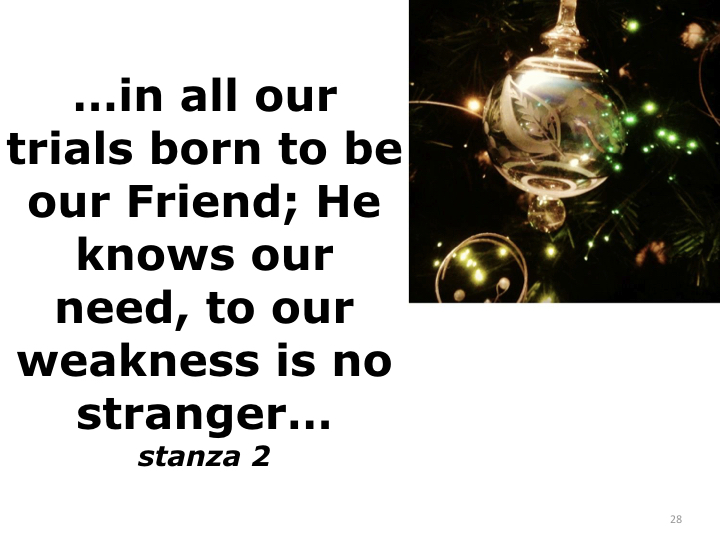
That’s why Christ’s First Advent is such a blessed, joyous event! In the second stanza we sing—In all our trials born to be our Friend; He knows our need, to our weakness is no stranger. Indeed the writer of Hebrews tells us why Jesus was born as a human (Hebrews 2:14-18), and why we can approach Him confidently (4:15-16).

Christ’s Incarnation allows us to put our faith in Him. When we do, we experience the Atonement. I like to remember this word by saying it at-onement. In other words, the Heavenly Father now sees me at-onement with His Son—when He looks at me, He sees Jesus. That’s why God forgets our forgiven sins (Hebrews 8:12)!

Then the third stanza of O Holy Night begins to tell us how we live out the at-onement every day by loving one another, enjoying His peace, living free and helping others get free too, singing joyfully to God day after night after day after night!

The First Advent was a holy night because Christ’s Atonement it makes us holy. So now all our nights are O holy nights, and all our days are O holy days, and all our work is O holy work, and all our relationships are O holy relationships!

Christ’s First Advent changes EVERYTHING for those who put their faith in Him. Is that you? Are you living in Christ’s at-onement? If not, you can be today by simply asking Him to come into your life.

You can check out some of the other Christmas carols we have looked at here. And check out the video of this message too—

If you have missed any of the messages in our series The Carols Of Christmas, you can find the full list by clicking here.

Links & Quotes

link quote

“Getting ready to feast on all God’s Word is not first an intellectual challenge; it is first a moral challenge. If you want to eat the solid food of the Word, you must exercise your spiritual senses so as to develop a mind that discerns between good and evil. The startling truth is that, if you stumble over understanding Melchizedek in Genesis and Hebrews, it may be because you watch questionable TV programs. If you stumble over the doctrine of election, it may be because you still use some shady business practices. If you stumble over the God-centered work of Christ in the Cross, it may be because you love money and spend too much and give too little. The pathway to maturity and to solid biblical food is not first becoming an intelligent person, but becoming an obedient person. What you do with alcohol and sex and money and leisure and food and computers has more to do with your capacity for solid food than where you go to school or what books you read.” —John Piper

“When God is our strength, it is strength indeed; when our strength is of our own, it is only weakness.” —Augustine

In the United States of America, our presidents have had much to say about Thanksgiving. In this article, learn what those proclamations tell us.

[VIDEO] A good reminder from Dennis Prager to be thankful for what we DO have, not complaining about what we DON’T have—

11 Quotes From “Abolishing Abortion”

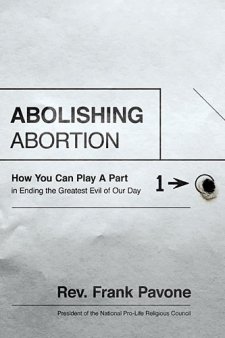
Abolishing AbortionIf you are as concerned about the devastation abortion is causing in our country as I am, you will find Father Frank Pavone’s book, Abolishing Abortion, as helpful as I did. You can read my full book review by clicking here. Below are the first set of quotes I wanted to share with you from this book. Unless otherwise noted, the quotes are from Father Pavone.

“First among the ‘unalienable rights’ the signers pledged to protect was ‘life.’ Legalized abortion clearly violates the principles they risked all for. It is not simply a ‘bad policy’ or an ‘unjust law,’ but rather, it marks the dissolution of this nation’s most fundamental contract with its citizens.”

“I am aware that many object to the severity of my language; but is there not caused for severity? I will be as harsh as truth, and as uncompromising as justice. On this subject, I do not wish to think, or to speak, or write, with moderation. No! No! Tell a man whose house is on fire to give a moderate alarm; tell him to moderately rescue his wife from the hands of the ravisher; tell the mother to gradually extricate her babe from the fire into which it has fallen—but urge me not to use moderation in a cause like the present. I am in earnest—I will not equivocate—I will not excuse—I will not retreat a single inch—and I will be heard. The apathy of the people is enough to make every statue leap from its pedestal, and to hasten the resurrection of the dead.” —William Lloyd Garrison, speaking of slavery

“We do not look for a utopia. We look for Christ to come again. But while looking for Him to come again, we do not wait passively. We wait actively. … As we wait actively, we must also remind ourselves to act judiciously. Passion does not preclude good judgment and a measure of reserve.”

“Democracy cannot be value-neutral. It cannot fail to ascertain that there are certain things that are good, certain things that are right. … A fundamental right is a human right without which we cannot express our humanity. … To deprive a person of life is to deprive that person of liberty. It stands to reason, literally, that the very right to life has to be respected and protected. Life is an even more fundamental right then freedom. The Declaration of Independence confirmed the same—‘life, liberty, and the pursuit of happiness,’ in that order. The state reinforces what the Church teaches. To hold the state accountable for protecting those fundamental rights has nothing to do with imposing religious beliefs and everything to do with reason.”

“We always start with the dignity of the human person, realizing that human rights and dignity don’t come from government and can’t be taken away by government. If elected officials were the ones who decided whether people have their human rights, those wouldn’t be human rights anymore. Human rights belong to humans because they are human, not because Congress decided to grant those rights. Therefore, we can rightly exclude no one from our service, our care, our protection.” 

“When a government says that some people don’t have to be protected, that is the stuff of which genocides are made. So when you hear a citizen or a candidate or a public servant or a congressman or a senator or a president or anybody say, ‘I think Roe was a good idea,’ he is not just telling you what he thinks about a medical procedure. He is telling you what he thinks about the authority of government: what kind of government he believes we have, and what kind of government he believes we ought to have.”

“The root of modern totalitarianism is to be found in the denial of the transcendent dignity of the human person who, as the visible image of the invisible God, is therefore by his very nature the subject of rights which no one may violate—no individual, group, class, nation or State. Not even the majority of a social body may violate these rights, by going against the minority, by isolating, oppressing, or exploiting it, or by attempting to annihilate it.” —Pope John Paul II, The Splendor Of Truth (1993) 

“Human rights are not granted by political systems. They are ‘pre-political.’ They exist before government and, in fact, must be honored, served, and secured by government, not because the leaders of government say so, but because all failure to do so undermines the very purpose of government.”

“Many people are very, very concerned with children in India, with the children in Africa where quite a number die, maybe of malnutrition, of hunger, and so on, but millions are dying deliberately by the will of the mother. And this is what is the greatest destroyer of peace today. Because if a mother can kill her own child—what is left for me to kill you and you kill me—there is nothing between.” —Mother Theresa, in her Nobel Peace Prize acceptance speech of December 11, 1979

“Many friends asked me, ‘What is our first spiritual duty regarding the abortion issue?’ They think I’m going to answer, ‘Prayer.’ But actually, the answer is repentance. The first step in abolishing abortion is to examine our own hearts and to repent of the role we each have played in allowing this holocaust to happen.”

“I swore never to be silent whenever and wherever human beings endure suffering and humiliation. We must always take sides. Neutrality helps the oppressor, never the victim. Silence encourages the tormentor, never the tormented.” —Elie Weisel

More quotes from this outstanding book coming soon….

14 Quotes From “The Printer And The Preacher”

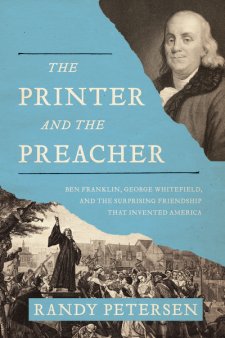
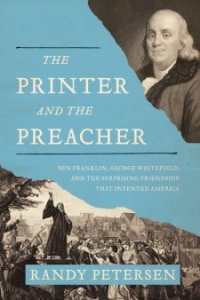
The Printer And The PreacherI loved this book! It’s a great historical story of how Benjamin Franklin and George Whitefield’s lives intertwined at such a pivotal time in history. America exists the way it does politically and religiously today because of the influence of these two titans. You can read my full book review here. Below are a few quotes from this remarkable book.

“The Faith you mention has doubtless its use in the world…. But I wish it were more productive of good works than I have generally seen it: I mean real good works, works of kindness, charity, mercy, and public spirit; not a holiday-keeping, sermon-reading or hearing, performing church ceremonies, or making long prayers. … Your great Master thought much less of these outward appearances and professions than many of His modern disciples. He preferred the doers of the Word to the mere hearers…and those who gave food to the hungry, drink to the thirsty, raiment to the naked, entertainment to the stranger, and relief to the sick.” —Benjamin Franklin, in a letter to pastors

There are many who “perhaps fear less the being in Hell, than out of the fashion.” —Benjamin Franklin

“The alteration in the face of religion here is altogether surprising. Never did the people show so great a willingness to attend sermons, nor the preachers greater zeal and diligence in performing the duties of their function. Religion is become the subject of most conversations. No books are in request but those of piety and devotion; and instead of idle songs and ballads, the people are everywhere entertaining themselves with Psalms, hymns and spiritual songs. All of which, under God, is owing to the successful labors of the Reverend Mr. Whitefield.” —Benjamin Franklin, in a newspaper article

The Body of
B. Franklin
Printer;
Like the Cover of an old Book,
Its Contents torn out,
And stript of its Lettering and Gilding,
Lies here, Food for Worms.
But the Work shall not be wholly lost:
For it will, as he believ’d, appear once more,
In a new& more perfect Edition,
Corrected and Amended
By the Author. —Benjamin Franklin, the Epitaph he wrote for himself at age 22

“I have seen your Epitaph. Believe on Jesus, and get a feeling possession of God in your heart, and you cannot possibly be disappointed of your expected second edition finally corrected, and infinitely amended.” —George Whitefield 

“You blame me for weeping, but how can I help it when you will not weep for yourselves, though your immortal souls are on the verge of destruction?” —George Whitefield

Those who hear the gospel “have more need of heat than light. Would to God we had as much warmth in our hearts, as light in our understandings!” —George Whitefield

“If we are truly converted, we shall not only be turned and converted from sinful self, but we shall be converted from righteous self. That is the devil of devils: For righteous self can run and hide itself in its own doings, which is the reason self-righteous people are so angry with gospel preachers.” —George Whitefield

“Let your practice correspond to your profession.”—George Whitefield

“Oh pray, dear Mr. H., that God would always keep me humble, and fully convinced that I am nothing without Him, and that all the good which is done upon earth, God doth it Himself.” —George Whitefield, in a letter to Gabriel Harris, when his popularity was growing

“Will it not in the end destroy brotherly love, and insensibly take from us that cordial union and sweetness of soul, which I pray God may always subsist between us? … How glad would the enemies of the Lord be to see us divided? How many would rejoice, should I join and make a party against you? And in one word, how would the cause of our common Master every way suffer by our raging disputes about particular points of doctrines? … I write not this, honored Sir, from heat of spirit, but out of love. At present, I think you are entirely inconsistent with yourself, and therefore do not blame me, if I do not approve of all that you say.” —George Whitefield, in correspondence with John Wesley over doctrinal differences

“I find that you grow more and more famous in the learned world. As you have made a pretty considerable progress in the mysteries of electricity, I would now humbly recommend to your diligent unprejudiced pursuit and study the mystery of the new-birth. It is a most important, interesting study, and when mastered, will richly answer and repay you for all your pains. One at Whose bar we are shortly to appear, hath solemnly declared, that without it, ‘we cannot enter the kingdom of heaven.’ You will excuse this freedom. I must have aliquid Christi [something of Christ] in all my letters.” —George Whitefield, in a letter to Benjamin Franklin

“satan is angry. I am now mimicked and burlesqued upon the public stage. All hail such contempt! God forbid that I should glory, save in the Cross of Jesus Christ.” —George Whitefield, in a letter after a play was produced in London making fun of him

“Whitefield and Franklin were not just the two most famous people in America in their time—they were also the most significant. The effects of their lives and their work are still being felt today … If America was born as a Christian nation, it’s because many of its people were genuinely, powerfully Christians. It had less to do with the language in any founding documents and more to do with the fact that George Whitefield had been tromping from town to town, inviting people to hear the call of God. It had even less to do with church membership. God was grabbing lives. People’s hearts were flying open. No one was imposing Christianity on society. The power came from within.” —Randy Peterson

The Printer And The Preacher (book review)

The Printer And The PreacherRandy Peterson has written an amazing story of the unlikely friendship between two men who loom large in history: Benjamin Franklin and George Whitefield. The book is called The Printer And The Preacher: The Surprising Friendship That Invented America.

These men were arguably the first celebrities in the American colonies. They each achieved their level of fame in totally different professions, and yet their paths continue to cross time and time again, until a 30-year-long friendship ensued. Each of them was instrumental in sharpening the other in their craft, promoting their pursuits, and defending each other’s reputations. And perhaps most notably, together they became pivotal in the build-up to America’s independence both politically and religiously.

In concluding this very enjoyable book, Peterson writes—

“Like George [Whitefield], we are, as a nation, very religious. Like Ben [Franklin], we like to make up our own beliefs. About half of Americans call themselves evangelical, children of the Great Awakening. Many even use George’s favorite term: born again. But others do not share this faith. Many, like Ben, are scientific in their outlook. They take an ‘enlightened’ approach to life, focusing on the natural world, not the supernatural.

“We are George and Ben.

“Thanks to Ben and others, we have religious liberty carved into our Constitution. We have freedom to be religious or not to be. We can be Methodists, Calvinist, Catholic, deist, Pietist, or all of the above. No authority can coerce us to believe anything or force us to say we do. Spiritual life is a personal matter, a transaction between us and God. George and Ben both taught us this.

“We are still figuring out how religious freedom works. As a nation, we seem to vacillate between Ben and George, skeptic and zealot, the right to doubt and the right to believe. The question in our deeply divided country is how to preserve the freedom to live without a vibrant Christian faith as well as the freedom to choose something else. The relationship between these two forefathers points to an answer.”

This book will appeal to so many people: history buffs, pastors, scientists, leaders, politicos, and biography readers. I highly recommend it!

I am a Thomas Nelson reviewer.

10 Quotes To Help Celebrate Independence Day

Listen to the podcast of this post by clicking on the player below, and you can also subscribe on AppleSpotify, or Audible.

I love the United States of America! As we celebrate our country’s birthday, here are 10 quotes from my files about America.

“Throughout our history Americans have put their faith in God and no one can doubt that we have been blessed for it. The earliest settlers of this land came in search of religious freedom. Landing on a desolate shoreline, they established a spiritual foundation that has served us ever since.” —Ronald Reagan

“America was not built on fear. America was built on courage, on imagination and an unbeatable determination to do the job at hand.” ―Harry Truman

“A patriot must always be ready to defend his country against his government.” —Edward Abbey

“If ever a time should come, when vain and aspiring men shall possess the highest seats in Government, our country will stand in need of its experienced patriots to prevent its ruin.” —Samuel Adams

“If American democracy is to remain the greatest hope of humanity, it must continue abundantly in the faith of the Bible.” —Calvin Coolidge 

“The strength of a country is the strength of its religious convictions.” —Calvin Coolidge

“It is the duty of all Nations to acknowledge the providence of Almighty God, to obey His will, to be grateful for His benefits, and humbly to implore His protection and favors. … The Hand of Providence has been so conspicuous in all this, that he must be worse than an infidel that lacks faith, and more than wicked, that has not gratitude enough to acknowledge his obligations.” —George Washington 

“We have been the recipients of the choicest bounties of Heaven. We have been preserved, these many years, in peace and prosperity. We have grown in numbers, wealth and power, as no other nation has ever grown. But we have forgotten God. We have forgotten the gracious hand which preserved us in peace, and multiplied and enriched and strengthened us; and we have vainly imagined, in the deceitfulness of our hearts, that all these blessings were produced by some superior wisdom and virtue of our own. Intoxicated with unbroken success, we have become too self-sufficient to feel the necessity of redeeming and preserving grace, too proud to pray to the God that made us!” —Abraham Lincoln

“We’ve staked the whole future of American civilization, not upon the power of government. Far from it. We have staked the future upon the capacity of each and every one of us to govern ourselves, to sustain ourselves according to the Ten Commandments of God.” —James Madison

“There is not a single instance in history in which civil liberty was lost, and religious liberty preserved entire.” —John Witherspoon

Links & Quotes—Special Supreme Court Issue

link quote

Our culture has become one of soundbites, and the ability to listen to an argument and counter-argument is becoming a rare quality indeed. I have seen the headlines today and I have heard the 10-second soundbites, but reading the Court’s decision in full has been most educational. Read it for yourself here. The biggest concern I have in this decision was stated by Justice Antonin Scalia in his dissent—

“Today’s decree says that my Ruler, and the Ruler of 320 million Americans coast-to-coast, is a majority of the nine lawyers on the Supreme Court. The opinion in these cases is the furthest extension in fact—and the furthest extension one can even imagine—of the Court’s claimed power to create ‘liberties’ that the Constitution and its Amendments neglect to mention. This practice of constitutional revision by an unelected committee of nine, always accompanied (as it is today) by extravagant praise of liberty, robs the People of the most important liberty they asserted in the Declaration of Independence and won in the Revolution of 1776: the freedom to govern themselves.”

And Chief Justice John Roberts in his dissenting opinion stated another truth—

“If you are among the many Americans—of whatever sexual orientation—who favor expanding same-sex marriage, by all means celebrate today’s decision. Celebrate the achievement of a desired goal. Celebrate the opportunity for a new expression of commitment to a partner. Celebrate the availability of new benefits. But do not celebrate the Constitution. It had nothing to do with it.”

Something can be legal, and still be immoral (does anyone remember slavery?). The Supreme Court of the United States can define (or re-define) legislative matters, but ultimate moral authority doesn’t belong to those nine justices; it belongs with God and His revealed will in the Bible. Despite what the Supreme Court says, God still has the final word on how marriage is defined.

Ryan T. Anderson gives us some counsel on how to respond to the Court’s decision.

John Piper’s commentary is brilliant—So-Called Same Sex Marriage: Lamenting The New Calamity.

Here is a good way for Christians to respond: “We must always remember that those who traffic in lies are image-bearers of God and objects of His love. But they are ‘defiled’—that’s Paul’s word—both in their thinking and in their values. The Lie has made such an impression on some people that it has taken over their thinking, desires, values, and choices. Such people do not need our condemnation; instead, they need patience, gentleness, and probably a series of extended conversations if they’re ever going to break out of the web of lies in which they have become ensnared. … Thus we need to make sure that our hearts are saturated with love for those we intend to confront, in order to issue a sharp rebuke and, hopefully, gain them for the faith of Christ.” —T.M. Moore

4 Quotes From “41”

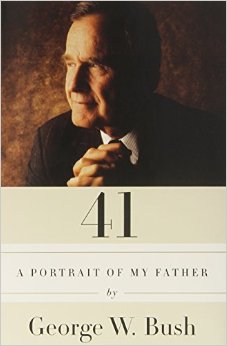
41I truly enjoyed the unique way George W. Bush (US president #43) told the story of his Dad’s life (George H.W. Bush was president #41). It was so refreshing to see the relationship this father and son have with each other. You can read my full book review by clicking here. Below are some of the quotes that caught my eye.

“Listen to your conscience. Don’t be afraid not to join the mob—if you feel inside it’s wrong. Don’t confuse being ‘soft’ with seeing the other guy’s point of view. … Avoid self-righteously turning on a friend, but have your friendship mean enough that you would be willing to share with your friend your judgment. Don’t assign away your judgment to achieve power.” —George H.W. Bush, in a letter to his sons during the Watergate scandal 

“America is never wholly herself unless she is engaged in high moral principle.” —George H.W. Bush, in his inauguration speech

“President Bush was a man who entered the political arena and left with his integrity intact. President Bush was a leader who stared tyranny in the face and never blinked. George Bush was a great president of the United States of America, because he is first and foremost a great man—a man who through it all knew exactly what is most important in life: faith and family. Through four years of world crises and enormous demands on his time, a phone call from me or one of my brothers and sister never went unanswered. The world knows George Bush as a master of personal diplomacy. We know George Bush as the worlds best dad.” —George W. Bush, at the opening of the George H.W. Bush Presidential Library

“At some point both of you may want to say, ‘Well, I don’t agree with my Dad on that point’ or ‘Frankly I think Dad was wrong on that.’ Do it. Chart your own course, not just on the issues but on defining yourselves. No one will ever question your love of family—your devotion to your parents.” —George H. W. Bush, in a 1998 letter to Jeb and George, who were both running for governor in their states

41 (book review)

41It’s only happened twice in American history: A father and son both serving as President. The first was John Adams and John Quincy Adams, then George H.W. Bush and George W. Bush. But only once has the son written a memoir about his father, and that is 41: A Portrait Of My Father.

In the book’s preface, President George W. Bush writes, “Over the years, I suspect there will be many books analyzing George Herbert Walker Bush, the man and his presidency. Some of those works may be objective. This one is not. This book is a love story—a personal portrait of the extraordinary man who I am blessed to call my dad.” What a perfect description of this book, for indeed it is a love story, and a very moving one.

President Bush (the 43rd President) does an amazing job showing the “stuff” that went into making President Bush (the 41st President) the man that he is. It also helps us to then understand the decisions that 41 made throughout his extensive political career. I also appreciated reading how 43 used his personal, eye-witness experience with his Dad as material for his presidential decision-making.

This was a unique way to write a biography, and I found it very engaging and heartwarming. A truly great read!

That Grand Old Flag

American flagToday is Flag Day in the United States of America. I proudly fly the stars and stripes outside my home, and I get misty-eyed every time I sing the national anthem or say the pledge of allegiance. These words from Rev. Henry Ward Beecher penned many long years ago still ring true today for me—

“If one asks the meaning of our flag, I say it means just what Concord and Lexington meant, what Bunker Hill meant. It means the whole glorious Revolutionary War. It means all that the Declaration of Independence meant. It means all that the Constitution of our people, organizing for justice, for liberty, and for happiness, meant. Under this banner rode Washington and his armies…. It waved on the highlands at West Point…. This banner streamed in light over the soldiers’ heads at Valley Forge…. It crossed the waters rolling with ice at Trenton…. Our flag carries American ideas, American history, and American feelings. Beginning with the colonies, and coming down to our time, in its sacred heraldry, in its glorious insignia, it has gathered and stored chiefly this supreme idea: Divine right of liberty in man. Every color means liberty. Every thread means liberty. Every form of star and beam or stripe of light means liberty. Not lawlessness, not license, but organized, institutional liberty—liberty through law, and laws for liberty. This American flag was the safeguard of liberty. Not an atom of crown was allowed to go into its insignia. Not a symbol of authority in the ruler was permitted to go into it. It was an ordinance of liberty by the people, for the people. That it meant, that it means, and, by the blessing of God, that it shall mean to the end of time.” —Henry Ward Beecher