Don’t ever think you know it all.
Because you can’t!
There’s no way you can know it all.
So keep on learning.
Keep on digging into God’s Word.
Keep on letting the Holy Spirit teach you.
God is the only Know-It-All.
And He wants to teach you too.
Don’t ever think you know it all.
Because you can’t!
There’s no way you can know it all.
So keep on learning.
Keep on digging into God’s Word.
Keep on letting the Holy Spirit teach you.
God is the only Know-It-All.
And He wants to teach you too.
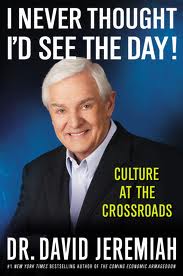
You can read my book review of Dr. David Jeremiah’s I Never Thought I’d See The Day by clicking here. These are eight quotes that especially caught my attention in this book. Unless the quotes are otherwise attributed, they are from Dr. Jeremiah.
“I’ve shaken my fist in anger at stalled cars, storm clouds, and incompetent meteorologists. I’ve even, on one terrible day, that included a dead alternator, a blaring tornado-warning siren, and a horribly wrong weather forecast, cursed all three at once. I’ve fumed at furniture, cursed at crossing guards, and held a grudge against Gun Barrel City, Texas. I’ve been mad at just about anything you can imagine.
“Except unicorns. I’ve never been angry at unicorns.
“It’s unlikely you’ve ever been angry at unicorns either. We can become incensed by objects and creations both animate and inanimate. We can even, in a limited sense, be bothered by the fanciful characters in books and dreams. But creatures like unicorns that don’t exist—that we truly believe not to exist—tend not to raise our ire. We certainly don’t blame the one-horned creatures for our problems.
“The one social group that takes exception to this rule is atheists. They claim to believe that God does not exist and yet, according to empirical studies, tend to be the people most angry at Him.” —Joe Carter
“While the atheist arrogantly persists in the delusion that his reason is fully capable of figuring out all that there is, the religious believer lives in the humble acknowledgment of the limits of human knowledge, knowing that there is a reality greater than, and beyond, that which our senses and minds can ever apprehend.” —Dinesh D’Souza
“God brought two perfect, sinless people together in the Garden of Eden, a man and a woman who knew the perfect love of God. They did not get married to find love but to walk together in the unity and purpose God created them to fulfill: the primary task of birthing and raising the next generation. And in the process, love happened.”
“It is significant that while Adam was single, satan did not approach him or tempt him to disobey God. He waited until after Adam’s marriage to launch his attack. You would think it easier to attack one person instead of two, but by waiting he was able to attack not just an individual, but also God’s foundational building block for harmony and stability—marriage. By attacking marriage, he was able to create division and disharmony between humans themselves as well as between humans and God.”
“The oneness found in marriage is the same kind of oneness found in the Trinity.”
“We can be lulled into complacency by adopting uncritically the principle of submission to government on the assumption that the Christian history of our nation makes it safe to let our leaders do our thinking for us. But we cannot do this in our post-Christian nation where God’s Word is being marginalized. Nothing could be more dangerous for Christians and churches than to wander thoughtlessly down this path of increasing biblical indifference—a path that could well lead to a place where the Bible is not merely marginalized, but banned outrightly.”
“If the Church is being ignored because we preach the message of ‘Jesus Christ and Him crucified’ (1 Corinthians 2:2), or because the Gospel has become ‘a stumbling stone and rock of offense’ (Romans 9:33) to the world, that’s one thing. But if we are deemed irrelevant because we’re an anemic version of the world’s entertainment options or because we aren’t playing the world’s game nearly as well as the world does, then that’s another thing. That’s a tragedy.”
“William Tyndale wisely sought to avoid the confusion between ‘Church” and ‘church’ by translating ekklesia as ‘congregation’ instead of ‘church.’ …We must maintain a clean understanding of the difference between Church and church—and the priority of the former over the latter. Church buildings can necessitate huge investments of resources for construction and maintenance, and they are only temporary. Keeping the focus on people is the biblical priority and will result in the Church’s remaining relevant.”
The subtitle of Dr. David Jeremiah’s book is the most telling—I Never Thought I’d See The Day: Culture At The Crossroads. It is true that our American culture is at a crossroads, and decisions will have to be made now that could very well effect the direction of the church, and of this nation.
As a side note, I have a bit of an issue with the title of the book. To think we’d never see the day where our culture was sliding away from God’s standard is a bit of hyperbole. Any student of history knows that cultures have always gone through such things many, many times. What is true with American culture now has been true with other cultures, in other eras, on other continents. However, this by no means that Dr. Jeremiah has misdiagnosed where America is now.
Before a cure can be realized, a patient must first know he is sick. Then he must go to a doctor and be willing to follow the prescribed course of treatment. In many ways, Americans know something’s “not quite right” with our society, but have been unable to pinpoint the root cause. Dr. Jeremiah correctly diagnoses an American culture that has become increasingly humanistic, antagonistic toward Jesus, pluralistic, and obstinate toward the teachings of the Bible. In each chapter, Dr. Jeremiah diagnoses one symptom of our disease, and lays out a God-honoring cure.
Here’s the million dollar question: Will we follow the course of treatment?
In the last chapter, Dr. Jeremiah says,
I am pessimistic about man’s ability, independent from his Creator-God, to solve the problems he creates—especially problems of enormous scale such as those our nation and the world face today. I am, however, an optimist about God. And it is toward Him that we must turn our attention….
I Never Though I’d See The Day is a sobering read. Each chapter shows us just how far from God we’ve slid (that’s the pessimistic part), but then Dr. Jeremiah lays out a plan to bring us back to a God-fearing society (that’s the optimistic part). It’s a very interesting read which I especially think church leaders and God-fearing civic leaders must read.
I am a Faith Words book reviewer.
Check out some quotes from this book here.
We are taking a practical look at the incredible definition of love in 1 Corinthians 13. We’re doing this in the context of learning how to love the “unloveable”—or maybe I should say, loving those who are the most resistant to real love. If we can show them love, how much more will the love of Jesus be seen!
All of these verbs are present tense verbs. That means they aren’t exhausted in the past, and they aren’t waiting for future conditions to improve—they are in operation NOW.
Far too many people know Christians more by what we’re against than by what we’re for. So where the biblical text say “love does not” or “love isn’t,” I’ve changed it into the positive “love is.”
You can read about the first five attributes love love by clicking here.
The next five attributes are:
Here’s where the real test comes in: How will you apply these attributes of love to someone in your life? More specifically: to someone you think is “unloveable”?
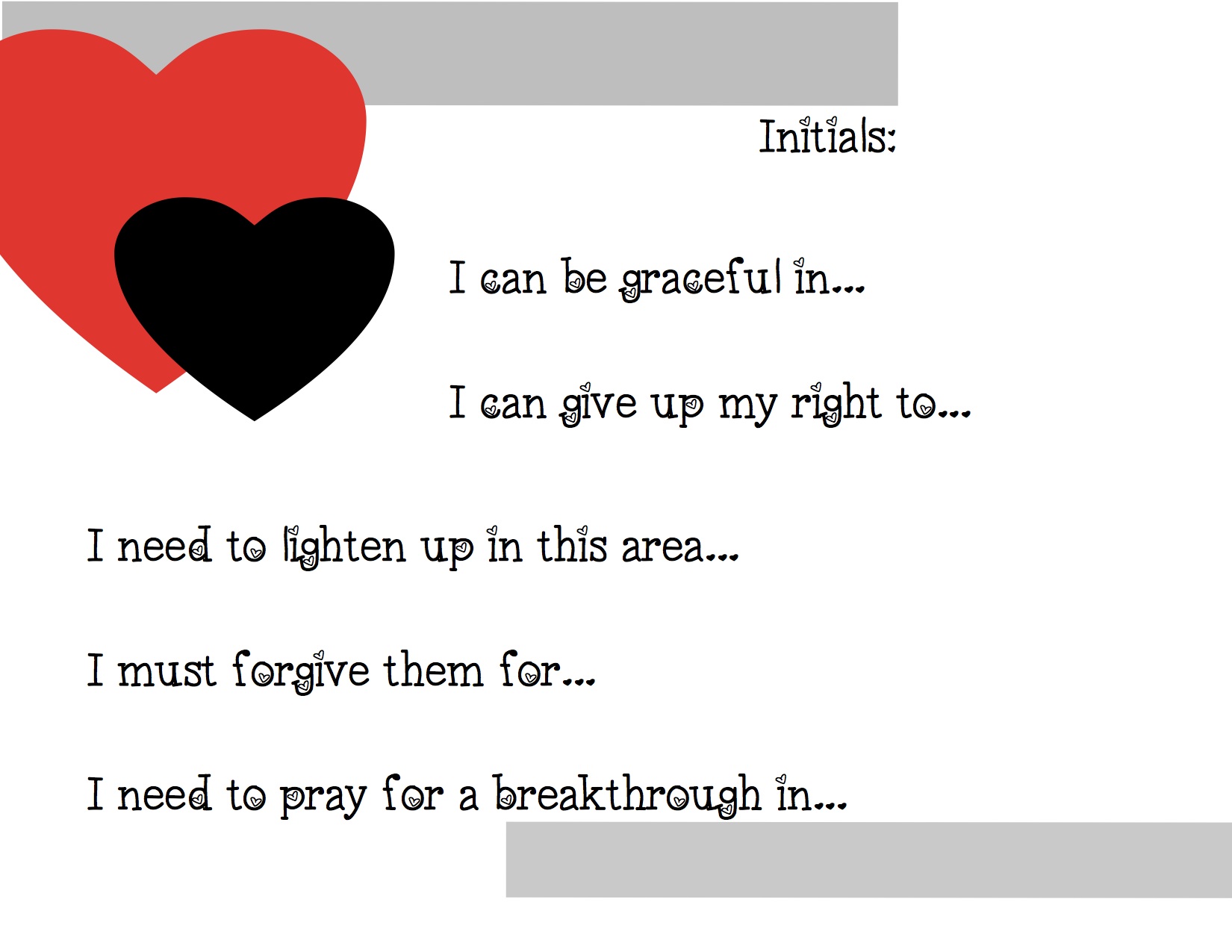
I know you have someone in your life that you think is unloveable. With that person’s face clearly in mind, how will you fill in the blanks:
If you would like a downloadable PDF of this worksheet, click here –> Love is… worksheet 2
If you missed any of the messages in our Loving the Unlovable series, you can check them all our here.
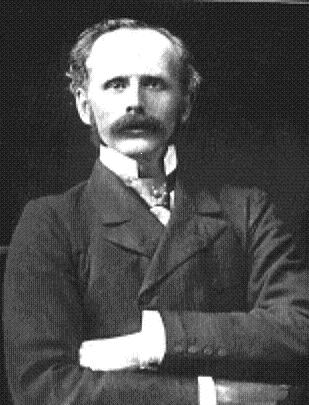
This morning I shared this quote from Henry Drummond. He absolutely nails it when he says our temper can unchristianize the societies in which we live and work.
“The peculiarity of ill temper is that it is the vice of the virtuous. … No form of vice, not worldliness, not greed of gold, not drunkenness itself, does more to unchristianize society than evil temper. For embittering life, for breaking up communities, for destroying the most sacred relationships, for devastating homes, for withering up men and women, for taking the bloom of childhood, in short, for sheer gratuitous misery-producing power this influence stands alone.” —Henry Drummond
May God help us eliminate our unchristianized tempers!
I’m a planner. I like to plan out my personal schedule. I also like to plan out my preaching schedule. Near the end of each calendar year, I spend an extended time in prayer asking God to show me what He would like me to share with my congregation in the upcoming new year.
By no means should this override being Spirit-directed in the moment. I need to remain sensitive to the “course corrections” that the Holy Spirit wants me to make, but I also think planning ahead is using His wisdom as well.
As I approach each week’s message preparation time, there is a temptation to just stick with the plan, no matter what. After all, I know what I’ve prayerfully planned, so I can just get down to the business of crafting a sermon, right?
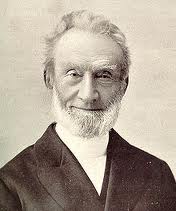
This wise counsel from George Mueller—a pastor that was preeminent in prayer—helps me to check my impulses…
“Rather than presuming to know what is best for the hearers, I ask the Lord to graciously teach me the subject I should speak about.”
My prayer goes something like this: “Lord, You know I will be speaking this Sunday; You know each person who is going to attend our service this week; You know exactly what they have been going through and what they are about to go through; You know exactly what they need to hear this week, so speak those words to me now.”
How arrogant for me to say, “Lord, here’s my sermon. Please bless it.”
Instead I need to pray, “Lord, what message will you bless? Please speak those words to me.”
Pastor, please don’t presume to know what is best for your congregation, but ask the One who truly knows to give you His timely word.
Love is not an emotion. Real love is a commitment. Real love discovers beauty in another that they couldn’t even see themselves.
Guys, this song from Plumb is written from a woman’s perspective; it’s what she wants you to see in her. Valentine’s Day is a great day to start discovering, appreciating and celebrating the beauty in her… but don’t let it stop there. Let it become more beautiful every day!
Listen to the podcast of this post by clicking on the player below, and you can also subscribe on Apple, Spotify, or Audible.
This is a weekly series with things I’m reading and pondering from Oswald Chambers. You can read the original seed thought here, or type “Thursdays With Oswald” in the search box to read more entries.
The day we live in is a day of wild imaginations everywhere, unchecked imaginations in music, in literature, and, worst of all, in the interpretation of Scripture. People are going off on wild speculations, they get hold of one line and run clean off at a tangent and try to explain everything on that line, then they go off on another line: none of it is in accordance with the Spirit of God.
From Biblical Psychology
We must be so cautious about not reading into Scripture what we want it to say. In other words, we cannot say, “This is what I believe to be true, now let me find a verse or two that will support that belief.” Instead, we must let the living Word of God speak. As the prophet Samuel approached God, so must we with the humble attitude, “Speak, Lord, for Your servant is listening” (1 Samuel 3:10).
Jesus said the Holy Spirit will guide us into all truth. The truth into which He will lead us is objectively true. That means it’s not true because we think it’s true, but it’s true because it’s God’s Word.
Make sure you don’t interpret Scripture through your feelings, or through the commentary of another human; rather let Scripture be its own commentary on other Scripture, and let the Spirit guide you. I love this insight from the habits of the Berean Christians—
Now the Bereans were of more noble character than the Thessalonians, for they received the message with great eagerness and examined the Scriptures every day to see if what Paul said was true. (Acts 17:11)
Watch your imagination. Don’t get caught up in others’ ideas of what God said. Read the Scriptures—or better yet, let the Scriptures read you—with the help of the Holy Spirit.
►► Would you please prayerfully consider supporting this ministry? My Patreon supporters get behind-the-scenes access to exclusive materials. ◀︎◀︎
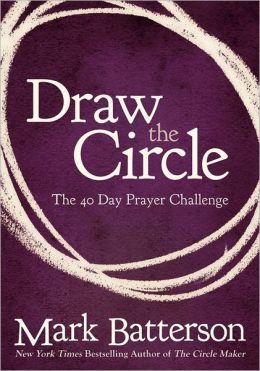
I loved the challenging message about prayer in Draw The Circle by Mark Batterson. You can read my full book review by clicking here. Here are 15 quotes that especially stood out to me.
“You don’t need to seek opportunity. All you have to do is seek God. And if you seek God, opportunity will seek you.”
“Sometimes the purpose of prayer is to get us out of circumstances, but more often than not, the purpose of prayer is to get us through them. I’m certainly not suggesting we shouldn’t pray deliverance prayers, but there are times we need to pray prevailing prayers. …We’re often so anxious to get out of difficult, painful, or challenging situations that we fail to grow through them. We’re so fixated on getting out of them that we don’t get anything out of them. We fail to learn the lessons God is trying to teach us or cultivate the character God is trying to grow in us. We’re so focused on God changing our circumstances that we never allow God to change us! So instead of ten or twenty years of experience, we have one year of experience repeated ten or twenty times. Sometimes we need to pray ‘get me out’ prayers. But sometimes we need to pray ‘get me through’ prayers. And we need the discernment to know when to pray what.”
“After hitting our knees, we need to take a small step of faith. And those small steps of faith often turn into giant leaps. Like Noah, who kept building an ark day after day, we keep hammering away at the dream God has given us. Like the Israelites, who kept circling Jericho for seven days, we keep circling God’s promises. Like Elijah, who kept sending his servant back to look for a rain cloud, we actively and expectantly wait for God’s answer. …We can pray until our knees are numb, but if our praying isn’t accompanied by acting, then we won’t get anywhere. We need to put feet to our faith. After kneeling down, we need to stand up and step out in faith.”
“Maybe our normal is so subnormal that normal seems abnormal. Maybe we need a new normal. Bold prayers and big dreams are normal. Anything less is subnormal.”
“Prayer gives us a God’s-eye view. It heightens our awareness and gives us a sixth sense that enables us to perceive spiritual realities that are beyond our five senses.”
“Praying is planting. Each prayer is like a seed that gets planted in the ground. It disappears for a season, but it eventually bears fruit that blesses future generations. …Even when we die, our prayers don’t. Each prayer takes on a life, an eternal life, of its own.”
“It’s our childlike faith, not our theological vocabulary, that moves the heart of our Heavenly Father.”
“Praying hard is not the path of least resistance; it’s usually the path of most resistance because we engage in spiritual warfare. …It’s the prayers you pray when you feel like you want to quit praying that can bring the greatest breakthroughs.”
“Our problem typically isn’t overclaiming the promises of God; it’s underclaiming them.”
“You’ve got to praise God if the answer is yes and trust Him if the answer if no. If the answer is not yet, you’ve got to keep circling. It’s always too soon to give up! What other option do you have? To pray or not to pray. Those are the only options.”
“Drawing prayer circle isn’t some magic trick to get what you want from God. God is not a genie in a bottle, and your wish is not His command. His command better be your wish. If it’s not, you won’t be drawing prayer circles; you’ll end up walking in circles. …Until His sovereign will becomes your sanctified wish, your prayer life will be unplugged from its power supply.”
“Sin doesn’t just harden the heart; it also hardens our hearing. In fact, it makes us turn a deaf ear to God because we don’t want to hear the convicting voice of the Holy Spirit. But if you aren’t willing to listen to the convicting voice of the Spirit, you won’t hear His comforting voice, forgiving voice, or merciful voice either. Sin creates relational distance, and distance makes it harder to hear the still, small voice of the Holy Spirit. But if you get close to God, you won’t miss a thing he says. And if you incline your ear to God, God will incline His ear to you.”
“There comes a moment when praying becomes a form of spiritual procrastination. It’s time to stop praying and start acting. …One of the great mistakes we make is asking God to do for us what God wants us to do for Him. …Prayer that doesn’t lead to action isn’t true prayer; it’s self-talk. When we talk to God, God will talk back to us. He will provoke us, rouse us, stir us, goad us, and prompt us. When we say ‘amen,’ inaction is no longer an option.”
“When God answers a prayer, no matter how big or how small, we need to share it. It’s a stewardship issue. If we don’t turn the answer to prayer into praise, it may very well turn into pride.”