Thursdays With Oswald—Dealing With Persecution

Oswald ChambersThis is a weekly series with things I’m reading and pondering from Oswald Chambers. You can read the original seed thought here, or type “Thursdays With Oswald” in the search box to read more entries.

Dealing With Persecution

     If a disciple is going to follow Jesus Christ, he must lay his account not only with purity and with practice, but also with persecution [Matthew 5:38-42]. … 

     When we are on Jesus Christ’s errands, no time is to be taken in standing up for ourselves. Personal insult will be an occasion in the saint for revealing the incredible sweetness of the Lord Jesus. … Naturally, if a man does not hit back it is because he is a coward; supernaturally, it is the manifestation of the Son of God in him: both have the same appearance outwardly. … 

     Our strength has to be the strength of the Son of God, and “He was crucified through weakness.” Do the impossible, and immediately you do, you know that God alone has made it possible. … 

     The miracle of regeneration is necessary before we can live the Sermon on the Mount. The Son of God alone can live it, and if God can form in us the life of the Son of God as He introduced Him into human history, then we can see how we can live it too. …  

     The Sermon on the Mount is not, “Do your duty”; but, “Do what is not your duty.” … You will go the second mile, not for their sakes, but for Jesus Christ’s sake. … The first thing God requires of a man is to be born from above, then when he goes the second mile for men it is the Son of God in him Who does it. …  

     We always say we do not know what Jesus Christ means when we know perfectly well He means something which is a blunt impossibility unless He can remake us and make it possible. … We can always find a hundred and one reasons for not obeying our Lord’s commands, because we will trust our reasoning rather than His reason, and our reason does not take God into calculation. 

From Studies In The Sermon On The Mount 

If the teachings of Jesus in the Sermon on the Mount sound humanly impossible, that’s because they are! 

I cannot turn the other cheek, give to everyone who asks me, or go the second mile; but Jesus in me CAN. I have to allow the Holy Spirit to transform me, to mold the character of Jesus into me. When this happens, it is no longer I who are trying to do these things, but the Spirit of Christ in me that is actually doing these things.
God Bless Christmas

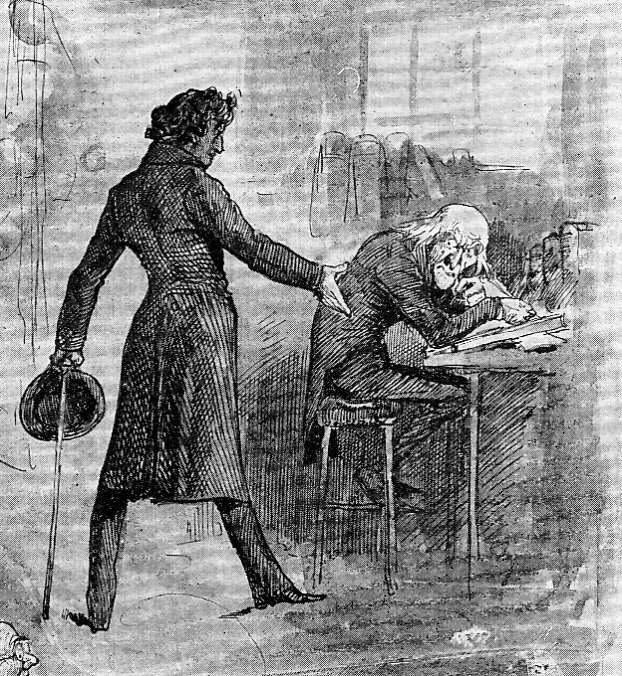
I just finished my annual re-reading of Charles Dickens’ The Christmas Carol. What a masterful author he was! This year I was especially struck by the argument between Ebenezer Scrooge and his nephew Fred—

“A merry Christmas, uncle! God save you!” cried a cheerful voice. It was the voice of Scrooge’s nephew, who came upon him so quickly that this was the first intimation he had of his approach.

“Bah!” said Scrooge, “Humbug!”

He had so heated himself with rapid walking in the fog and frost, this nephew of Scrooge’s, that he was all in a glow; his face was ruddy and handsome; his eyes sparkled, and his breath smoked again.

“Christmas a humbug, uncle!” said Scrooge’s nephew. “You don’t mean that, I am sure?”

“I do,” said Scrooge. “Merry Christmas! What right have you to be merry? What reason have you to be merry? You’re poor enough.”

“Come, then,” returned the nephew gaily. “What right have you to be dismal? What reason have you to be morose? You’re rich enough.”

Scrooge having no better answer ready on the spur of the moment, said, “Bah!” again; and followed it up with “Humbug.”

“Don’t be cross, uncle!” said the nephew.

“What else can I be,” returned the uncle, “when I live in such a world of fools as this? Merry Christmas! Out upon merry Christmas! What’s Christmas time to you but a time for paying bills without money; a time for finding yourself a year older, but not an hour richer; a time for balancing your books and having every item in ’em through a round dozen of months presented dead against you? If I could work my will,” said Scrooge indignantly, “every idiot who goes about with ‘Merry Christmas’ on his lips, should be boiled with his own pudding, and buried with a stake of holly through his heart. He should!”

“Uncle!” pleaded the nephew.

“Nephew!” returned the uncle sternly, “keep Christmas in your own way, and let me keep it in mine.”
“Keep it!” repeated Scrooge’s nephew. “But you don’t keep it.”

“Let me leave it alone, then,” said Scrooge. “Much good may it do you! Much good it has ever done you!”

There are many things from which I might have derived good, by which I have not profited, I dare say,” returned the nephew. “Christmas among the rest. But I am sure I have always thought of Christmas time, when it has come round—apart from the veneration due to its sacred name and origin, if anything belonging to it can be apart from that—as a good time; a kind, forgiving, charitable, pleasant time; the only time I know of, in the long calendar of the year, when men and women seem by one consent to open their shut-up hearts freely, and to think of people below them as if they really were fellow-passengers to the grave, and not another race of creatures bound on other journeys. And therefore, uncle, though it has never put a scrap of gold or silver in my pocket, I believe that it has done me good, and will do me good; and I say, God bless it!”

There is something “special” about the Advent season. You can palpably sense it in the way people talk and act differently. Could it be that the celebration of Christmas—despite all the tinsel and consumerism that has sought to overwhelm it—sounds a familiar chord in people’s heart because the Story is true? God bless it!

Here are a few Christmas Carol observations I shared last year.

More Trust With Each Birthday

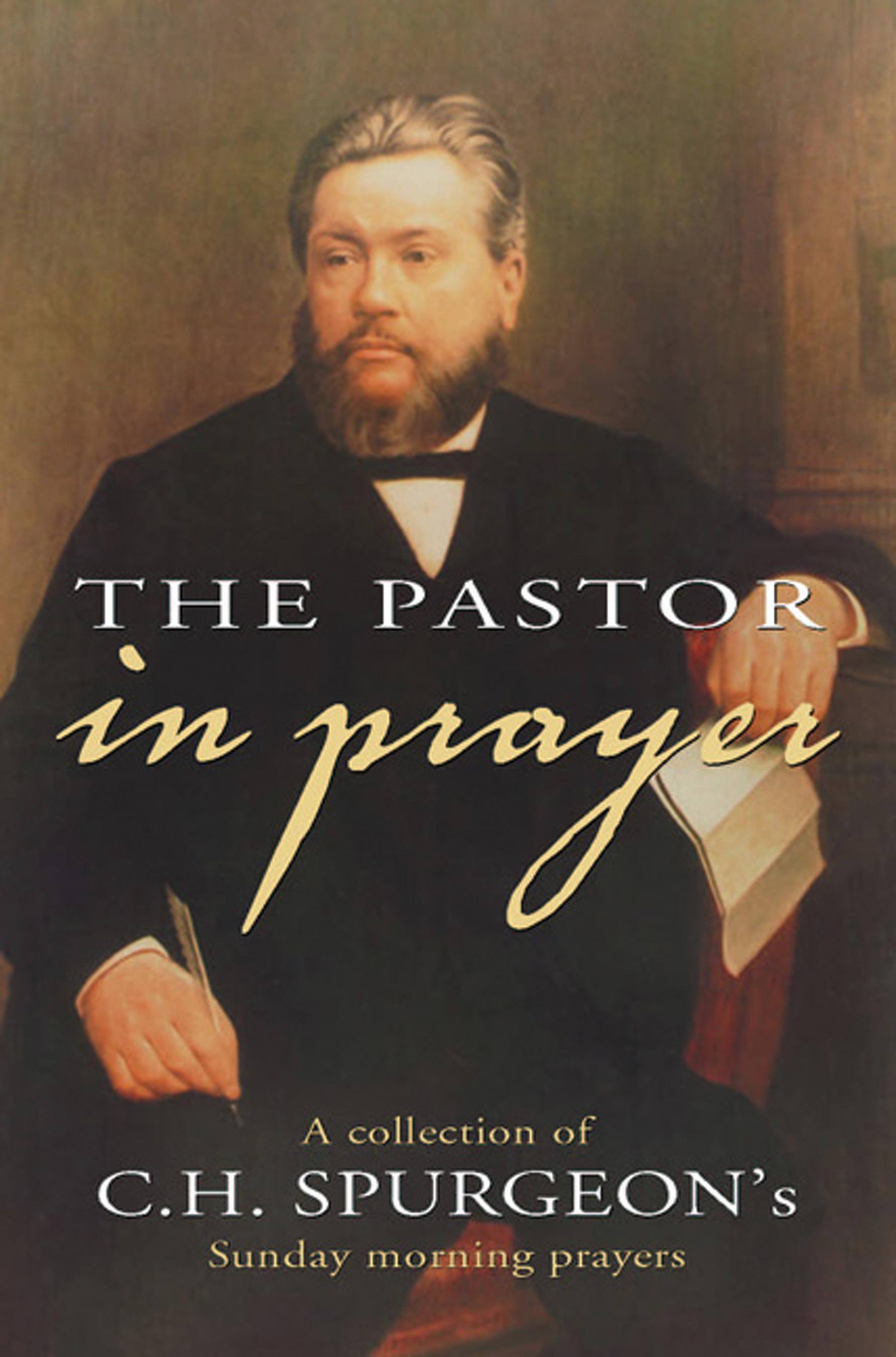
“Peradventure it is written in the tablets of Thine eternal purpose that we shall soon end this mortal life and die. Well, be it so, we shall the sooner see Thy face, the sooner drink eternal draughts of bliss. But if Thou hast appointed for us grey hairs and a long and weary time of the taking down of the tabernacle, only grant us grace that by infirmity our faith may never fail us, but when the windows are darkened may we still look out to see the hope that is to be revealed; and when the grasshopper becometh a burden still let our strength be as our days, even to the last day. … O God, we can trust Thee, and we do. Our faith has gathered strength by the lapse of years. Each following birthday, we trust, confirms us in the fact that to rely upon God is our happiness and our strength.” —Charles Spurgeon, from The Pastor In Prayer

I shared other quotes from this book here.

Blessings And Woes

… blessed are you … woe to you … (Luke 6:20-27). 

Blessings and woes: the positives and negatives of the Christian life. Jesus listed these back-to-back to remind us that we need to keep both of them in mind, sort of like two rails that keep us on track. 

It’s interesting to note how many of these blessings and woes are opposites of each other. It comes down to this—

there are blessings for seeking the Kingdom of God, AND there are woes for seeking our own immediate pleasure.

Notice the contrasts Jesus lists:

  • You are blessed when you seek heavenly rewards; you experience woe when your focus is earthly treasure (vv. 20, 24). 
  • You are blessed when you are driven by a hunger for God; you experience woe when your god becomes your selfish appetites (vv. 21, 25). 
  • You are blessed when you acknowledge your sin, weep over it, and repent from it; you experience woe when sin is laughed at (vv. 21, 25). 
  • You are blessed when you are hated by the world for loving God; you experience woe when you are loved by the world for loving sinful pleasures (vv. 22, 26). 

I think C.S. Lewis captured these thoughts well when he wrote in Mere Christianity, “Give yourself up and you will find your real self. Lose your life and you will save it. … Look for Christ and you will find Him, and with Him everything else thrown in.” 

Blessings for seeking Jesus and His kingdom; woes for seeking only your own kingdom. 

So how do we live blessed? Here’s what Jesus taught us (vv. 27-49)—

Love your enemies
Always do good, even (especially!) to your haters
Bless those who curse you 
Don’t fight for your rights
Be an impartial, liberal giver
Treat others the way you want to be treated 
Love and give to others without expecting a return
Be merciful
Don’t be judgmental
Give, give, and give some more
Look in the mirror at yourself first before looking out the window at others
Serve others
Check what sort of fruit your life is bearing
Build everything in your life on God’s Word

Avoid the woes AND enjoy the blessings of God! 

The Everlasting Hope In Our Everlasting Lord

It was for our benefit that God came to Earth in His First Advent, not in thunder, and lightning, and all the brilliance of His heavenly glory, but as a Baby. Otherwise, He would have been unapproachable by sinful man. 

But make no mistake about it—although born as a human baby, Jesus was still “Christ by highest heaven adored; Christ the everlasting Lord”! 

The thought of God being everlasting permeates the Scriptures:

  • He is everlasting Lord
  • He fulfills an everlasting covenant
  • so He is worthy of everlasting praise
  • His everlasting arms support us
  • and give us His everlasting love and everlasting kindness
  • His everlasting salvation gives us everlasting life, or rejecting it leads to our everlasting punishment
  • and in His presence is everlasting joy  

Charles Wesley captures this fully-God-fully-Man essence in his song Hark! The Herald Angels Sing by calling Jesus the everlasting Lord and then listing His humanness at His First Advent with phrases like offspring of a virgin’s womb, veiled in flesh, incarnate Deity, pleased as Man with men to appear, and Immanuel. 

Jesus came to earth as Man not because He was forced to, but because it fulfilled the everlasting covenant that God had planned. The writer of Hebrews explains beautifully how He became like us in all of our humanness so that He could be a merciful help to us (see Hebrews 2:10-18). 

When Matthew tells the birth story of Jesus, he includes a line pregnant with meaning: “All this took place to fulfill…” (Matthew 1:22). 

What “all this”? Just take a look at Christ’s genealogy in the opening verses of Matthew 1. You see Abraham who tried to “help” God fulfill the covenant by fathering a child with another woman; Jacob who swindled his birthright from Esau; Judah who fathered Perez through his widowed daughter-in-law, whom he thought was a prostitute; Rahab was a prostitute; Ruth was a non-Jewish foreigner; David committed adultery with Bathsheba and then had her husband killed, and from their relationship came Solomon; Solomon’s son split the kingdom in two; from Abijah to Jeconiah the kings became progressively more and more evil; from Jeconiah forward the kings were without a kingdom; and then Joseph was a prince without a throne or even the glimmer of a hope of a throne. 

Yet ALL THIS took place to fulfill God’s plan. All of history is His story! Every deed and misdeed was used by God to fulfill His everlasting plan of redemption. Jesus had a very human family tree so that none of us could be outside His merciful reach.

What’s your genealogy like? More good than bad? What about your own history? More mess ups than positives? Nothing in your genealogy—past or present—can ever stop our everlasting Lord from fulfilling His everlasting covenant with YOU (Romans 8:28)! 

Christ’s genealogy is proof that your genealogy is no hindrance to His everlasting plan! 

It may appear He is late in time, but behold Him come at just the right time. Accept Him as your everlasting Lord, lean on His everlasting arms, and bask in His everlasting joy. 

Jesus—our Immanuel here—came so you could have all of God’s everlastingness! 

To take a look at the other stanzas of this Christmas carol, please click here.

Poetry Saturday—Don’t Quit

Edgar A. Guest

When things go wrong, as they sometimes will,
When the road you’re trudging seems all uphill,
When the funds are low but the debts are high,
And you want to smile but you have to sigh,
When care is pressing you down a bit…
Rest if you must, but don’t you quit!

Life is queer with its twists and turns,
As every one of us sometimes learns,
And many failures turn about
When we might have won had we stuck it out.
Don’t give up though the pace seems slow…
You may succeed with another blow.

Often the struggler has given up
When he might have captured the victor’s cup;
And he learned too late when the night came down,
How close he was to the golden crown.

Success is failure turned inside out…
And you can never tell how close you are
It may be near when it seems so far.
So stick to the fight when you’re hardest hit
It’s when things seem worst that you must not quit. —Edgar A. Guest


Thursdays With Oswald—Difficult Times Reveal Our Habits

Oswald ChambersThis is a weekly series with things I’m reading and pondering from Oswald Chambers. You can read the original seed thought here, or type “Thursdays With Oswald” in the search box to read more entries.

Difficult Times Reveal Our Habits 

     Practice means continually doing that which no one sees or knows but ourselves. Habit is the result of practice, by continually doing a thing it becomes second nature. The difference between men is not a difference of personal power, but that some men are disciplined and others are not. The difference is not the degree of mental power but the degree of mental discipline. If we have taught ourselves how to think, we will have mental power plus the discipline of having it under control. Beware of impulse. Impulsiveness is the characteristic of a child, but it ought not to be the characteristic of a man, it means he has not disciplined himself. Undeterred impulse is undisciplined power.

     Every habit is purely mechanical, and whenever we form a habit it makes a material difference in the brain. The material of the brain alters very slowly, but it does alter, and by repeatedly doing a thing a groove is formed in the material of the brain so that it becomes easier to do it again, until at last we become unconscious of doing it. When we are regenerated we can reform by the power and presence of God every habit that is not in accordance with His life. … We have to learn to form habits according to the dictates of the Spirit of God. The power and the practice must go together. … If we keep practicing, what we practice becomes our second nature, and in a crisis we will find that not only does God’s grace stand by us, but our own nature also. The practicing is ours not God’s and the crisis reveals whether or not we have been practicing. [See Matthew 5:31-37.]

From Studies In The Sermon On The Mount

All of us have blind spots. These are typically habits that we have left in place, unchallenged and unchanged. That “groove” in our brain is operating on auto-pilot, but those blind-spot habits aren’t serving us well. 

The role of the Holy Spirit in the life of a Christian is to help us notice these habits in which we are unconsciously incompetent. But once the Spirit of God points these out, then we must practice, and practice, and practice until the new healthy habit has overwritten the old groove of the unhealthy habit. 

Then we will find, as Chambers points out, that in a time of crisis “not only does God’s grace stand by us, but our own nature also.” 

Times of difficulty will reveal habits—both the unhealthy and the healthy. The question then becomes: what are you going to do about the unhealthy habits? 

First Reaction

“…Be patient in trouble, and keep on praying” (Romans 12:12).

When trouble comes, is our first response “I’ve got to do something” or “I’ve got to pray”?

Let’s make prayer our first reaction, not our last resort.

Amen!

A Leader’s Intercession

As for me, far be it from me that I should sin against the Lord by failing to pray for you (1 Samuel 12:23).

Leaders teach, and encourage, and train, and correct, and sometimes even warn. But despite all of this effort sometimes people still do wrong—and even sinful—things. And sometimes there are consequences for these poor choices that even a leader cannot deflect away from them. 

  • Position-conscious leaders say, “It’s not my fault, and I hope this doesn’t reflect poorly on me!” 
  • Selfish leaders say, “I’m glad I’m not in trouble!” 
  • Vindictive leaders say, “It serves you right!” 

Godly leaders say, “How can I serve you?” 

The Israelites grumbled against God, and God was angry. It would have been understandable if Moses would have said, “You complained so you’re going to have to bear the consequences.” But instead, Moses interceded before God on their behalf (Numbers 11:1-2). 

The people rejected God as their King and chose instead a man named Saul to lead them. Samuel could have said, “You’re in big trouble now!” But instead, he said, “Far be it from me that I should sin against the Lord by failing to pray for you” (1 Samuel 12:23). 

What about you? Have you ever grumbled against God or chosen a path that wasn’t best for you? Jesus could say, “Well, you should have known better!” But instead, we read that He intercedes before God’s throne on our behalf (Job 9:33-34; Hebrews 4:15-16; 7:25). 

The mark of a godly leader is one who intercedes for his people.

If you are a Christ-follower and you are a leader of people, then follow Christ’s example. Yes, continue to teach, encourage, train, correct, and warn. But if people mess up, don’t write them off; instead, intercede before God on their behalf! 

This is part 32 in my series on godly leadership. You can check out all of my posts in this series by clicking here.

Putting CHRIST In Christmas

Does it seem like many people substitute “Happy holidays” for “Merry Christmas”? Or that more and more people prefer spelling it “X-mas” instead of Christmas? 

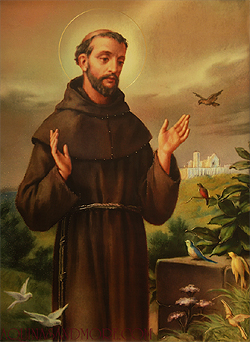
This isn’t something new in our culture. Francis of Assisi dealt with this same situation in the 12th century. 

“Many people spell Christmas without Christ, the glory of a Holy Day being supplanted by the glitz of a holiday—a problem that reaches back to the days of St. Francis of Assisi. 

“Francis was born in 1182 in central Italy, son of a rich merchant. After a scanty education, he joined the army and was captured in war. He came to Christ shortly after his release, and soon he began traveling around the countryside, preaching the gospel. At a February 1209 Mass, Francis was gripped by words being read from Matthew 10: As you go, preach this message: ‘The kingdom of heaven is near.’ Heal the sick, raise the dead, cleanse those who have leprosy, drive out demons. Freely you have received, freely give. Do not take along any gold or silver or copper in your belts; take no bag for the journey, or extra tunic, or sandals or a staff … (NIV). 

“Francis felt that Christ Himself was speaking directly to him. He decided to obey those words as literally as possible, preaching the kingdom and possessing nothing. It is as though a 1,200-year bridge were crossed, putting Francis in the shoes of the original wayfaring apostles themselves. 

“He spent his remaining days making Christ real to everyone he met—a passion leading to history’s first living nativity scene. On December 24, 1223, Francis found a cave near Greccio, Italy, and brought in animals traditionally associated with the birth of Christ. (Francis loved animals and sometimes even preached to them.) He built the crib, arranged the hay, and finished the scene. Crowds gathered full of curiosity and wonder; and there on Christmas Eve Francis preached the wonder of God made man, born a naked infant and laid in the manger. ‘Behold your God,’ he said, ‘a poor and helpless Child, the ox and donkey beside Him. Your God is of your flesh.’ 

“Glitz gave way to glory that evening as the people of Greccio learned afresh how to spell the word Christmas.” —From On This Day 

This Advent season, let us remember that there is no Christmas without Christ!