Do It Again, Pastor!

Monday morning is one of my favorite times. I reflect back on the great things God did in our service the day before, and I look ahead with anticipation to what He is going to do in this next Sunday. If I look at this here-comes-Sunday-again cycle through merely human eyes, it can appear quite overwhelming. But God has called me to do this, and He energizes me by His Holy Spirit.

I love these words from Pastor James MacDonald—

“Only a pastor who preaches biblically for the glory of Jesus and the feeding of souls, week after week, can understand that pressure. It’s like finals week in college—but it happens every week. Explaining a Bible passage is child’s play compared to digging out a word from the Word about the WORD for your people.

“Can you give your best to it again, Pastor? Can you breathe on a passage of Scripture that is now unfamiliar, until it bursts into flame by the faithful ministry of the Holy Spirit in response to your hard work? Can you stoke that fire until it is bursting within you to be proclaimed as the ‘Bread of Life’?

“Yes, you can—and when you have, you will be exhausted but deeply satisfied in what God will do in and through you as a result. And you will count the days until you GET to do it again.”

Pastor, you can do it again! Doing God’s will, preaching His Word, should be your greatest joy and your greatest source of strength. This is why I don’t like to take Monday as my day off: I get so much more nourishment and refreshment from my time in God’s presence on Monday morning than I would get anywhere else.

Meanwhile [Jesus’] disciples urged Him, “Rabbi, eat something.” But He said to them, “I have food to eat that you know nothing about.” Then His disciples said to each other, “Could someone have brought Him food?”

“My food,” said Jesus, “is to do the will of Him who sent Me and to finish His work.”

(John 4:31-34)

You Need “Grey Heads”

Tim DilenaI know that all of us can benefit from an older, wiser person speaking into our lives, but I am especially concerned about pastors. Too many times pastors are seen by others as the “go-to guy” for anyone who needs help, and we pastors begin to believe that we don’t need to go to anyone else for help.

This is a dangerous attitude of pride!

Check out this short 4-minute teaching from my friend Rev. Tim Dilena about the value of “grey heads” in our lives—

My fellow pastor, humble yourself and accept the help of a wise mentor. It will not only enhance your ministry, it could literally save your ministry from crumbling.

The Heavy Responsibility of Shepherding

My dear pastor, our task is not an easy one. It is one of heavy responsibility: Caring for God’s sheep.

They are God’s sheep. They are not your sheep or my sheep. But you and I have been given the stewardship care of God’s precious lambs.

I hope these words God spoken through the prophet Ezekiel don’t describe you. But may all of us pastors take them as a sober reminder of the weightiness of our role as the under-shepherds of God’s flocks…

Then this message came to me from the Lord: “Son of man, prophesy against the shepherds, the leaders of Israel. Give them this message from the Sovereign Lord: What sorrow awaits you shepherds who feed yourselves instead of your flocks. Shouldn’t shepherds feed their sheep? You drink the milk, wear the wool, and butcher the best animals, but you let your flocks starve. You have not taken care of the weak. You have not tended the sick or bound up the injured. You have not gone looking for those who have wandered away and are lost. Instead, you have ruled them with harshness and cruelty. So My sheep have been scattered without a shepherd, and they are easy prey for any wild animal. They have wandered through all the mountains and all the hills, across the face of the earth, yet no one has gone to search for them.

“Therefore, you shepherds, hear the word of the Lord: As surely as I live, says the Sovereign Lord, you abandoned My flock and left them to be attacked by every wild animal. And though you were My shepherds, you didn’t search for My sheep when they were lost. You took care of yourselves and left the sheep to starve. Therefore, you shepherds, hear the word of the Lord. This is what the Sovereign Lord says: I now consider these shepherds My enemies, and I will hold them responsible for what has happened to My flock. I will take away their right to feed the flock, and I will stop them from feeding themselves. I will rescue My flock from their mouths; the sheep will no longer be their prey.” (Ezekiel 34:1-10)

UPDATE: This post was one of the seed thoughts that went into fashioning my book Shepherd Leadership: The Metrics That Really Matter.

Showers Of Blessings

My Word will not return emptyAs the rain and the snow come down from heaven, and do not return to it without watering the earth and making it bud and flourish, so that it yields seed for the sower and bread for the eater, so is My word that goes out from My mouth: It will not return to Me empty, but will accomplish what I desire and achieve the purpose for which I sent it. (Isaiah 55:10-11)

Pastor, please carefully read these words from Oswald Chambers, written nearly a century ago, but still so relevant for us today—

“God’s Word is a seed. The ‘seed-thought’ idea is one that preachers and evangelists need to remember. We imagine we have to plough the field, sow the seed, reap the grain, bind it into sheaves, put it through the threshing machine, make the bread—all in one discourse. … 

The truth is we don’t believe God can do His work without us. We are so anxious about the word, so anxious about the people who have accepted the word; we need not be, if we have preached what is a word of God it is not our business to apply it, the Holy Spirit will apply it. Our duty is to sow the word, see that it is the word of God we preach, and not ‘huckster’ it with other things, and God says it will prosper in the thing whereto He sends it. …

“He says, ‘My word…will not return to Me empty.’ Every temptation to exalt the human, human experience, human interests and blessings, will fall short; the only thing that prospers in God’s hands is His own word.”

From God’s Workmanship, emphasis added

I need to be reminded of that again. Perhaps, my fellow pastor, you needed it to. This Sunday just preach the word God has given you, and then let the Holy Spirit take it from there. God WILL bring the harvest in His time.

UPDATE: In the final chapter of my book Shepherd Leadership (a chapter entitled “Applause”) I wrote this:

      Did you catch that? Twice Paul reminds us that it is God who makes things grow [1 Corinthians 3:4-8]. God, not man. So is the only successful ministry the one that harvests? How did they harvest without someone watering the seed? What exactly were they watering if no one had planted any seeds? And even with everyone doing the work, it is still God who makes things grow. 

      According to Paul, what does God reward? It’s not numeric growth, but shepherds “will be rewarded for their own hard work … the work the Lord gave us.”

More Effective Communication

Watch Out For Pride

Listen to the podcast of this post by clicking on the player below, and you can also subscribe on AppleSpotify, or Audible.

This post is especially for my fellow pastors, but it would be thoughtful reading for anyone in a leadership position.

Let me state it simply: Pastor, you need to watch out for pride.

Listen to the words of A.W. Tozer—

“A clergyman is a man, and often he has a proud little kingdom of his own, a kingdom of position and often of pride and sometimes with power.”

Pride is so insidious that it can creep into the hearts of leaders at anytime.

  • When things are going well. We think to ourselves, “Look what I’ve done” or we even spiritualize it a bit to say, “Look what God’s done through me.”
  • When things are going poorly. Pride causes us to look out the window at others, instead of looking in the mirror at ourselves.
  • When we’ve successfully handled a situation. We think, “Wow, I’ve really got it!”
  • When we’ve dropped the ball and we make excuses instead of asking for forgiveness.
  • And on and on it goes….

One of the things that has helped me immensely is the thoughts Kenneth Blanchard and Phil Hodges shared in their book Lead Like Jesus. They point out that every leader has an ego. The issue is what kind of ego is it?

It can be negative: E.G.O. = Edging God Out 

It can be positive: E.G.O. = Exalting God Only

So what do we do to make sure we have the God-honoring E.G.O.?

  • Look in the mirror. James says the Bible is the perfect mirror. So how does your life line up with the Scripture? Don’t sugarcoat it … Don’t make excuses … Say the words “Look at me” or “Wow, I’ve got it” out loud. Do you find those in God’s Word? If not, root it out!
  • Get some tough guys around you. You need some loving people around you that aren’t the ones writing your press releases. You need people around you that can boldly say, “Ahem! You appear to be getting off track.”
  • Monitor your gut-level responses. If you feel defensive, or if you feel the need to justify or make excuses, watch out because that’s pride’s signature.
  • Stay on your knees. Not only in prayer, but in service too. It’s awfully hard to get full of yourself when you’re washing feet, or scrubbing toilets. If you ever think any job is beneath you, watch out because you may have been infected by pride.

“Depth under depth of self-love and self-admiration. Pride! It was through Pride that the devil became the devil; it is the complete anti-God state of mind. Pride is essentially competitive in a way the other vices are not. Pride is a spiritual cancer. —C.S. Lewis

I have two companion chapters in my book Shepherd Leadership: The Metrics That Really Matter that dive deeper into this topic: “A confident leader’s attitude adjustment” and “A humble leader’s attitude adjustment.” I hope you will pick up a copy.

►► Would you please prayerfully consider supporting this ministry? My Patreon supporters get behind-the-scenes access to exclusive materials. ◀︎◀︎

Preach Christ

My Dear Pastor,

“Preach Christ… He is the whole gospel. His person, offices, and work must be our one great, all-comprehending theme.” —Charles Spurgeon

“Brethren, The Fault Is Ours…”

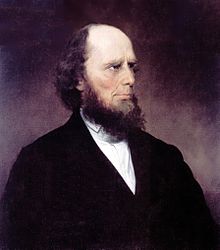
Pastor, these are incredible words spoken by the great Charles Finney nearly 140 years ago! I encourage you to take the time to hear these words with an open heart.

I believe it is a fact generally admitted that there is much less conscience manifested, by men and women, in nearly all the walks of life, than there was forty years ago. There is justly much complaint of this, and there seems to be but little prospect of reformation. The rings and frauds and villainies in high and low places, among all ranks of men, are most alarming, and one is almost compelled to ask: “Can nobody be safely trusted?” Now, what is the cause of this degeneracy? Doubtless there are many causes that contribute more or less directly to it; but I am persuaded that the fault is more in the ministry and public press than in any and all things else. It has been fashionable now for many years to ridicule and decry Puritanism. Ministers have ceased, in a great measure, to probe the consciences of men with the spiritual law of God. So far as my knowledge extends, there has been a great letting down and ignoring the searching claims of God’s law, as revealed in his Word. This law is the only standard of true morality. “By the law is the knowledge of sin.” The law is the quickener of the human conscience. Just in proportion as the spirituality of the law of God is kept out of view will there be manifest a decay of conscience. …The proper guardians of the public conscience have, I fear, very much neglected to expound and insist upon obedience to the moral law.

… The true Gospel is not preached where obedience to the moral law as the only rule of life is not insisted upon. Wherever there is a failure to do this in the instructions of any pulpit it will inevitably be seen that the hearers of such a mutilated Gospel will have very little conscience. …The universal literature of the present day shows conclusively that the moral sense of the people needs toning up, and some of our most fascinating preachers have become the favorites of infidels, skeptics of every grade, Universalists, and the most abandoned characters.

… My beloved brethren in the ministry, is there not a great want in the public inculcations of the pulpit upon this subject? We are set for the defense of the blessed Gospel and for the vindication of God’s holy law. I pray you let us probe the consciences of our hearers, let us thunder forth the law and Gospel of God until our voices reach the capital of this nation, through our representatives in Congress. It is now very common for the secular papers even to publish extracts of sermons. Let us give the reporters of the press such work to do as will make their ears and the ears of their readers tingle. Let our railroad rings, our stock gamblers, our officials of every grade hear from its pulpit, if they come within the sound, such wholesome Puritanical preaching as will arouse them to better thoughts and a better life. Away with this milk-and-water preaching of a love of Christ that has no holiness or moral discrimination in it. Away with preaching a love of God that is not angry with sinners every day. Away with preaching a Christ not crucified for sin.

… Brethren, our preaching will bear its legitimate fruits. If immorality prevails in the land, the fault is ours in a great degree. If there is a decay of conscience, the pulpit is responsible for it. If the public press lacks moral discrimination, the pulpit is responsible for it. If the church is degenerate and worldly, the pulpit is responsible for it. If the world loses its interest in religion, the pulpit is responsible for it. If satan rules in our halls of legislation, the pulpit is responsible for it. If our politics become so corrupt that the very foundations of our government are ready to fall away, the pulpit is responsible for it. Let us not ignore this fact, my dear brethren; but let us lay it to heart, and be thoroughly awake to our responsibility in respect to the morals of this nation. —Charles Finney (December 4, 1873)

The Present Of Presence

Listen to the podcast of this post by clicking on the player below, and you can also subscribe on AppleSpotify, or Audible.

The words Paul writes to Timothy (his young protege) are the wise counsel of a seasoned veteran to a young pastor. These are words of wisdom that pastors should be especially attentive to, but they also apply to anyone who is in a position of leadership (like a parent, teacher, coach, or employer).

After challenging Timothy to set an example by his lifestyle, Paul adds these words—

Be diligent in these matters; give yourself wholly to them, so that everyone may see your progress. Watch your life and doctrine closely. Persevere in them, because if you do, you will save both yourself and your hearers. (1 Timothy 4:15-16)

“So that everyone may see your progress.” Quite simply: you have to be present—you have to be around people so they can see what’s going on in your life. Your presence in their lives is your present to their lives!

I need to monitor what I’m doing and why I’m doing it; what I’m teaching and how I’m teaching; what I believe and why I believe it.

I need to have goals and benchmarks. I need to make my goals—and my successes and failures in hitting my goals—known to others.

I need to be in it for the long haul. It’s awfully difficult to be an example in the present if my eyes and thoughts are always on “the next thing” down the road.

Look at the blessings—the presents—of living this way: You will save both yourself and your hearers.

Not only is my presence a present to others, but having others present in my life is a present to me! The present of presence works both ways! 

Are you living so that everyone may see your progress? If not, start giving the present of your presence today!

►► Would you please prayerfully consider supporting this ministry? My Patreon supporters get behind-the-scenes access to exclusive materials. ◀︎◀︎

The Height Of Arrogance

Warning: this post may step on your toes.

Oswald Chambers wrote, “We have to find out God’s methods, not try to get God to approve our methods.”

Pastor, are you telling God what your church is going to do, and then asking God to bless your efforts?

Sadly, many churches innocently slide into this mode. But watch out: this is the height of arrogance!

Don’t fall into the trap of thinking you know how to reach your community, or organize your church, or even accurately select your next sermon. You can’t do it!

But God can!

He knows your community and your church better than you do. So try a better approach by starting with humility.

Don’t tell God what you’re going to do and then ask Him to bless your plans. Instead, ask God what He is already blessing, and then go do that.