Annual Souper Bowl Celebration

Souper Bowl CelebrationI love to eat good food, and I love to hear good stories about God’s blessing. On February 3 I get to do both!

It’s our annual Souper Bowl Celebration. After our regular morning worship service we all sample the delicious homemade soup and chili recipes from the amazing cooks in our church. It’s a little friendly competition, where everyone who eats gets to vote. My son Harrison is the reigning champ two years in a row, so I’ve heard a lot of cooks are gunning to unseat him. The competition should be delicious!

I don’t like meetings, so in place of Calvary Assembly of God having an annual business meeting, we have our annual celebration. It’s a great time recalling what God did for us in 2012, and then looking ahead to 2013. I always get so pumped up for this day!

If you’re around Cedar Springs on February 3, join us for some great food, some friendly competition, and some even better stories of God’s great blessings!

Furious Longing

Furious longingThere is a passage of Scripture in the Book of James which has caused many people to propose many different explanations. I’m not a theologian, but here’s my take on this—

Or do your think the Scripture says without reason that the spirit He caused to live in us envies intensely? (James 4:5)

Envy in the Greek is a neutral word; it becomes a virtue or a vice depending on its context. I could long for a deeper relationship with my wife (virtue), or I could long for a drug that gives me a temporary escape (vice).

The Greek word for envy can mean pursue with love (virtue), or lust after forbidden desires (vice).

“The spirit [God] caused to live in us” came from a loving Creator, and was intended for us to long for Him. When God created man in His image, He said, “Let Us create man like Us” (Genesis 1:26). In the Triune God there is a furiously intense longing among Father, Son, and Spirit. Each part of the Godhead longs for the entire Godhead to be glorified—this makes the Godhead indivisibly and gloriously One. This is the same spirit God placed in man.

Of man God said, “It is not good for man to be alone” (Genesis 2:18). The God-implanted spirit of man longs to give love and to receive love. Our God-implanted spirit longs to connect.

But for what do we long? We were made to long for intimacy with God. If we substitute or exchange this with a longing for temporary worldly things, we are rightly called by James “adulterous people” and “an enemy of God” (James 4:4).

“But God gives more grace” (James 4:6) that we will turn from our temporary longings to long after Him. James almost seems to be saying that those in the church have their hearts hanging in the balance. Of the other eight times this Greek word for envy is used in the Bible, they are in the positive (or virtuous) connotation.

James is imploring us—longing for us—to not be the exception. Longing for us to humbly admit our need for God and to receive even more divine grace. Longing for us to tip our hearts toward God and renew the passionate, furious longing for which we were created.

O God, I want my passion to burn furiously for You alone. Jesus, may I follow Your example to only do what pleases the Father. Holy Spirit, may I hear Your voice if my heart ever begins to turn toward anything but my Beloved.

(I explored this idea further in a whole series of messages called Craving.)

Unstoppable (book review)

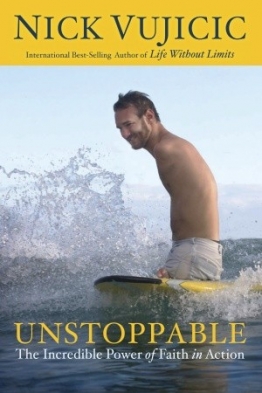
UnstoppableNick Vujicic didn’t just write a book called Unstoppable, he embodies unstoppable!

If you are not familiar with Nick’s amazingly encouraging story, check out his first book called Life Without Limbs. In Unstoppable, Nick presents an uplifting follow-up for those facing some of the darkest situations of life: sickness, bullying, suicidal thoughts, purposelessness, lost love, and dead-ends.

Nick weaves together his own life story with those he has interacted with, and ties them all together with a solid strand of scriptural truth. This is not some pie-in-the-sky, three-steps-to-happiness, sappy self-help book. It rings with genuineness because Nick lives out the message of hope. Make no mistake about it, he is realistic about how dark these situations can seem, but instead of offering any get-better-quick schemes, Nick shares the hope that can only come from trusting in a loving Creator.

In the first chapter Nick writes—

“I wish I could tell people that if they love God, everything will be okay. The truth is that people still stuffer. They endure sickness, financial problems, broken relationships, and the loss of loved ones. Tragedies occur in every life, and I believe we are meant to learn from them. My hope is that when people who are in pain see that I have a joyful life, they will think, If Nick—without arms and legs—is thankful, then I will be thankful for today, and I will do my best.”

From start to finish, this book oozes with unstoppable hope and encouragement!

I am a Waterbrook book reviewer.

(I shared some quotes from this book here.)

And, And, And

AndIt’s a great question that the apostle James asks: What good is it if a man claims to have faith but has no deeds? (James 2:14)

It simply doesn’t work!

In fact, it’s a waste of time if all I do is…

  • …speak a blessing over someone’s life
  • …claim a promise in Scripture
  • …pray
  • …walk with God for years
  • …provide outstanding hospitality

“Faith by itself, if it is not accompanied by action, is dead, James says a couple of verses later (v. 17).

No matter the language—and, y, en, et, und, ve, kai—we need to add the “and” of action to our faith-filled belief.

I need faith AND action

  • …speak the blessing AND be the blessing
  • …claim a promise AND act on it
  • pray AND do
  • …walk with God AND bring others along with me
  • …entertain AND get out in the streets

“I will show you my faith by what I do!” (v. 18).

Faith and, and, AND works.

Heavenly Father, help me to get this right. I don’t want to preach it well or believe it strongly, unless I’m going to live it consistently, too.

17 Quotes From “Jesus”

Jesus A TheographyJesus: A Theography is one of those rare books that I gave a “must read” designation (you can read my full review by clicking here). It’s impossible to share with you all of the incredible thoughts that are in this book, but here are 17 of my favorite quotes from Jesus.

Unless otherwise designated, all the quotes are from Leonard Sweet and Frank Viola.

“In Jesus the promise is confirmed, the covenant is renewed, the prophesies are fulfilled, the law is vindicated, salvation is brought near, sacred history has reached its climax, the perfect sacrifice has been offered and accepted, the high priest over the household of God has taken His seat at God’s right hand, the Prophet like Moses has been raised up, the Son of David reigns, the kingdom of God has been inaugurated, the Son of Man has received dominion from the Ancient of Days, the Servant of the Lord has been smitten to death for His people’s transgressions and borne the sins of many, has accomplished the divine purpose, has seen the light after the travail of His soul, and is now exalted and made very high.” —F.F. Bruce

“Jesus is the Logos. He is the Word, or the self-utterance, of God. So when God speaks, it is Christ who is being spoken about. When God breathes, it is Christ who is being imparted. The Spirit of God’s breath (the words ‘Spirit’ and ‘breath’ are the same in both Hebrew and Greek). The Second Testament tells us clearly that the Holy Spirit’s job is to reveal, magnify, and glorify Christ, Thus, because the Bible is inspired, it all speaks of Jesus. Again, Jesus Christ is the subject of all Scripture.” [The authors refer to the two sections of the Bible as the First and Second Testaments, in place of the usual designations of Old and New Testaments]

“Every word of the God-breathed character of Scripture is meaningless if Holy Scripture is not understood as the witness concerning Christ.” —G.C. Berkouwer 

“Your salvation was established, completed, and sealed before creation itself. Your Lord wrapped it up, won it, and came out victorious before anything ever went wrong.”

“What did He finish? He finished the old creation and the Fall. He finished sin. He finished a fallen world system. He finished the enmity of the Law. He finished satan. He finished the flesh. He put you to death and finished you completely. The person you were in Adam was terminated, swallowed up in death. And then He finished His greatest enemy, the child of sin itself, death. If that isn’t enough, He did something else beyond the rest: He raised you up in resurrection and glorified you.

“In Genesis 2:15, God commanded Adam to cultivate and keep the garden. The Hebrew word for cultivate is abad, and the Hebrew word for keep is shamar. These same Hebrew words are used to describe how the priests cared for the tabernacle of Moses. (The tabernacle was a precursor to the temple of Solomon.) The priests were to cultivate (abad) and keep (shamar) the tabernacle. In addition, we are told that God walked in the garden (Hebrew, hawlak) during the cool of the day. God also walked (hawlak) in the midst of the temple. The meaning is clear. The garden was a temple for God. Like the temple, the garden was the joining together of God’s space and man’s space—the intersection of the heavenly realm and the earthly realm. For this reason, Isaiah called it ‘the garden of the Lord,’ and Ezekiel called it ‘the garden of God.’ …Jesus Christ is the reality of the temple. (In the Greek, John 1:14 says Jesus ‘tabernacled among us.’) He is also the reality of the garden. He is the real Tree of Life and a flowing river. In Christ, God’s space and man’s space are joined together.”

“There are 184 verses in the birth narratives of the Second Testament. These 184 verses presuppose or repeat the words of 170 verses from eighteen verses of the First Testament.” 

“Jesus is the three shepherds: the good shepherd, the great shepherd, and the Chief Shepherd. Jesus presented Himself as both sheep and shepherd, the good shepherd who lays down His life for the sheep. …Jesus died on the cross at the ninth hour (about three o’clock in the afternoon) when the Passover lamb would be sacrificed in the temple. Christ, the Paschal Lamb, was slain to atone for the sins of humanity and to open the gate of the true temple that promises God’s salvation for all people.”

“In the Second Testament, as the sacrificial sign of the new covenant, Jesus Himself becomes the sin offering of humanity. In fact, Jesus’ very words on the cross, ‘It is finished!’ (‘Kalah’), are the words used by a priest at the conclusion of the sacrificial offering in the temple. In the ancient days, when the Jewish priest had killed the last lamb of the Passover, he uttered the Hebrew word Kalah, ‘It is finished.’” 

“At His birth, Jesus received the myrrh. At His death, He rejected it. Jesus’ earthly ministry centered on alleviating human suffering. He was the personification of myrrh. In His crucifixion, however, He was bearing the full brunt of human pain, suffering, and agony on the cross. He bore our shame and sorrows. So He rejected the myrrh and the wine that came with it. Jesus took the full dose of suffering for sin on the cross so we wouldn’t have to. And He rejected the myrrh so we would be able to receive it.”

“When in a garden relationship with God, humanity had no need of the Torah, for we had the Tree of Life. The Torah was the Tree of Life reborn, and Jesus was the Torah reborn.”

“We need the whole Jesus. The complete Jesus. Everything He said. Every detail of what He did.” —Eugene Peterson

“The temptation of Jesus was a playback of two episodes in the First Testament. First, it’s a replay of the first temptation in the garden of Eden. John tells us that the three enemies of the Christian are ‘the lust of the flesh, the lust of the eyes, and the pride of life.’ Each of these temptations was in play in the temptation of Adam and Eve in the garden:

    • The fruit was ‘good for food’ = the lust of the flesh. 
    • The fruit was ‘pleasant to the eyes’ = the lust of the eyes. 
    • The fruit was ‘desirable to make one wise’ = the pride of life. 

“…The temptations that satan leveled at Jesus in the wilderness struck the same three chords. Here is the ordered presented in Luke 4 (paraphrased):

    • ‘Turn these stones to bread’ = the lust of the flesh. 
    • ‘I will give you the kingdom of the world and their glory’ = the lust of the eyes. 
    • ‘Cast yourself down from here and angels will protect you’ = the pride of life.” 

“The Second Covenant knows the First Covenant: the Second Testament quotes from the First Testament more than 320 times, and that does not include times when biblical writers, searching for the scriptural reference, were reduced to admitting that ‘somewhere’ it reads thus and so.”

“Theology is nothing more than the Holy Spirit making His way through our brains, as the Scriptures make their way through our hearts.” 

“In biblical prophesy, the coming of Jesus is viewed as one event separated by parentheses that stretch from the ascension to His royal appearing at the end of the age. We are now living in the parentheses, wherein we look back to His first coming and anticipate His second coming. Put another way, the kingdom has come and will come. Jesus’ first coming inaugurated the kingdom of God; His second coming will consummate it. So the coming of the Messiah is one event separated by two moments: Bethlehem and the end of the age.”

“As followers of Jesus, we have a task before us. That task is to work for the kingdom. To continue the ministry of Jesus in the power of the Holy Spirit… to bear witness to the sovereign lordship of Christ… to embody the message that Jesus is both Lord and Savior, not just of our personal lives but of the entire world. And to find creative ways to manifest that kingdom where we live and travel.” 

Hot Pursuit

Listen to the podcast of this post by clicking on the player below, and you can also subscribe on AppleSpotify, or Audible.

While I was reading From Azusa To Africa To The Nations, I came across a fascinating statement from William Seymour, the pastor who led his congregation into that early 20th-century revival that shook the world. Pastor Seymour was so hungry for God’s presence in his life that he set aside five hours each day to seek God’s deeper touch. He prayed liked this for over 3 years. At this point He read about the outpouring of the Holy Spirit in the Book of Acts, and something stirred in him to pray for this same outpouring on himself and on his congregation. He then increased his prayer time to seven hours a day, and continued to pray in this fashion for another two years before the answer came and the revival broke out.

I did the math. That means he prayed 11,500 hours!

How many of us get tired after praying just one hour?

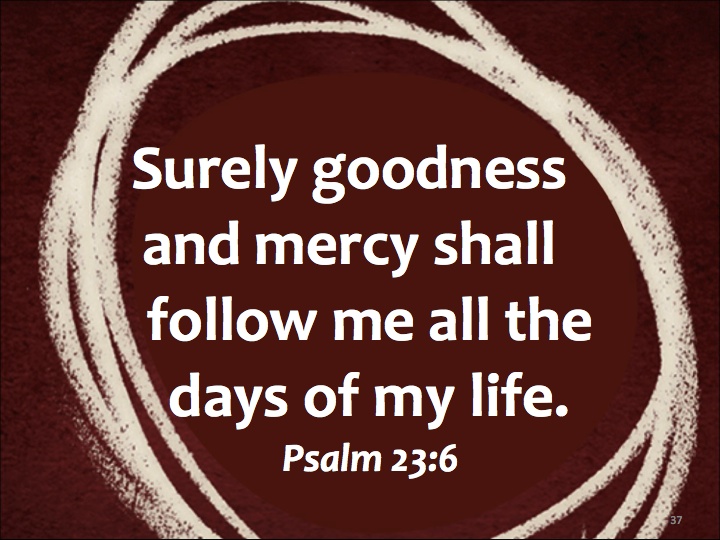
Would it be easier for you to tenaciously pursue God in prayer if you knew He was also tenaciously pursuing you? Mark Batterson points out in The Circle Maker that the verb in Psalm 23:6 is poorly translated in English as shall follow me. He reminds us that it’s really a hunting term, used for a hunter in hot pursuit of his quarry. God’s love and mercy are in hot pursuit of you!

The Lord longs to be gracious to you; He rises to show you compassion. For the Lord is a God of justice. Blessed are all those who wait for Him! (Isaiah 30:18)

Want to see a great story about this in the life of Jesus? Matthew tells us about a get-away that Jesus and His disciples took. While they were relaxing, a woman barged in, imploring Jesus to heal her daughter. She would not be denied. She tenaciously implored Jesus to minister to her daughter. At last Jesus cried out, “Woman, you have great faith! Your request is granted.”

(Check out this video where I talk more in-depth about this persistent mother.)

It may sound like this woman was pursuing Jesus. But Jesus put Himself in a place for her to find Him. He pursued her first.

  • As a Canaanite (a non-Jew), it was unsafe for her to travel to southern Israel.
  • As a woman, it was unacceptable for her to go talk to a man.
  • As a mother with a sick child at home, it was unwise for her to leave home.

So Jesus traveled to a region He has never been to before, and would never go back to again. He pursued this mother-in-need so that she could find Him in prayer!

God is in hot pursuit of you, too. He hears every prayer, so keep on tenaciously praying. Don’t settle, don’t give up, don’t stop! Pray as long as it takes for God to say to you, “You have great faith! Your request is granted.”

To check out the others messages in this series on prayer called Praying Circles, please click here.

►► Would you please prayerfully consider supporting this ministry? My Patreon supporters get behind-the-scenes access to exclusive materials. ◀︎◀︎

Don’t Settle

C.S. Lewis at his deskI shared this quote with Calvary Assembly of God this morning to remind us that we shouldn’t settle. God wants us to pray BIG and to pray LONG. He wants us to claim His promises. He wants to be glorified by answering our prayers.

“If we consider the unblushing promises of reward and the staggering nature of the rewards promised in the Gospels, it would seem that our Lord finds our desires, not too strong, but too weak. We are half-hearted creatures…like an ignorant child who wants to go on making mud pies in a slum because he cannot imagine what is meant by the offer of a holiday at the sea. We are far too easily pleased.” —C.S. Lewis

Performance-Oriented Church?

D.A. CarsonOh, my fellow pastor, may this never (ever!) be said of our churches…

We have become so performance-oriented that it is hard to see how compromised we are. Consider one small example. In many of our churches, prayers in morning services now function, in large measure, as the time to change the set in the sanctuary. The people of the congregation bow their heads and close their eyes, and when they look up a minute later, why, the singers are in place, or the drama group is ready to perform. It is all so smooth. It is also profane. Nominally we are in prayer together addressing the King of Heaven, the sovereign Lord. In reality, some of us are doing that while others are rushing on tiptoes around the stage and others, with their eyes closed, are busy wondering what new and happy configuration will confront them when it is time to take a peek. Has the smoothness of the performance become more important to us than the fear of the Lord? Has polish, one of the modern equivalents of ancient rhetoric, displaced substance? Have professional competence and smooth showmanship become more valuable than sober reckoning over what it means to focus on Christ crucified?” —D.A. Carson (emphasis added)

Thursdays With Oswald—Don’t Let Others Stumble Because Of Me

This is a weekly series with things I’m reading and pondering from Oswald Chambers. You can read the original seed thought here, or type “Thursdays With Oswald” in the search box to read more entries.

Don’t Let Others Stumble Because Of Me

     There is a difference between “offense” and “stumbling.” And they were offended in Him. But Jesus said unto them, “A prophet is not without honor, save in his own country…” (Matthew 13:57). But Jesus knowing in Himself that His disciples murmured at this, said unto them, “Does this cause you to stumble?” (John 6:61; see also Matthew 5:29; 11:6; 13:41; 16:23; 17:27; 18:6-7). Offense means going contrary to someone’s private opinion, and it is sometimes our moral duty to give offense.

     …Stumbling is different from offense. For example, someone who does not know God as well as you do, loves you and continually does what you do because he loves you, and as you watch him you begin to discern that he is degenerating spiritually, and to your amazement you find he is doing what you are doing. No offense is being given, but he is stumbling, distinctly stumbling.

From Biblical Psychology

In 1 Corinthians 8 and 9 Paul talks about not causing someone else to stumble because of what we do. It’s a fine line sometimes between offense and stumbling, but it’s a distinct line that the Holy Spirit can help us discern.

Jesus often offended people because their mindset was so rigid, and He didn’t act in a way that fit their rigid religious stereotypes. But Jesus was very cautious about making sure He never caused someone to stumble. As Matthew points out, Jesus fulfilled the prophesy of Isaiah: He will not quarrel or cry out…. A bruised reed He will not break, and a smoldering wick He will not snuff out… (Matthew 12:19-20; Isaiah 42:1-4).

My prayer: Lord Jesus, please don’t let others stumble because of me! Let me have the discernment of the Holy Spirit to know when to offend, but to never cross the line to cause others to stumble. May I have Your same gentle spirit to not quarrel, and to treat the “bruised reeds” with utmost care.

The Butterfly Circus