Zig Ziglar On Money & Success

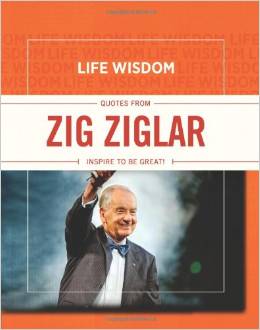
Inspire To Be GreatZig Ziglar was a highly successful salesman, which opened the door for him to have a successful second career as a motivational speaker. His insight into money and success is well worth paying attention to—

“I define success as having acquired some of the things that money will buy and all of the things that money won’t buy—while maintaining balance in your life.” 

“Money bought me the house, but it won’t buy me a home. It’ll buy me a companion, but it won’t buy me a friend. It’ll buy me a good time, but it won’t buy me peace of mind. It’ll buy me a bed, but it won’t buy me a good night’s sleep.”

“Don’t count the things you do. Do the things which count.”

“In America, we have become greedy. We are bombarded with so many ads that say, ‘You gotta have this car! You gotta wear these clothes! You gotta take this vacation trip! You gotta have that second home at the beach,’ and all of these absurd things. Over the years, I have noticed this—that if standard of living is your number-one objective, your quality of life almost never improves. But if quality of life is your number-one objective, standard of living invariably goes up. That kinda contradicts what a lot of people believe.”

“Until you are happy with who you are, you will never be happy because of what you have.”

These quotes are from the book Inspire To Be Great. You can read my review of that book by clicking here. I shared some of my other favorite quotes from this book earlier, and you can read them by clicking here.

Inspire To Be Great (book review)

Inspire To Be GreatIn my dictionary if you look up the word “inspiring,” you’ll find a picture of Zig Ziglar. Zig had such a unique and memorable way of blending quotes, personal examples, motivation, and helpful next-steps, that few have ever inspired to action like him. In Inspire To Be Great you will find a collection of Zig’s inspiring, insightful quotes.

This book is a part of the “Life Wisdom” series, which is a very appropriate title for the folks featured in these books because they are people who have lived their lives successfully. They don’t just talk-the-walk, they walk-the-talk.

Zig, like others in this series, never hid the fact that his personal relationship with Jesus Christ made him a better man, a better husband, a better father, a better salesman. Tapping into the principles found in Scripture, Zig had a God-given gift to make those principles applicable to every walk of life.

Truly this book is an inspiring read for anyone!

Taste And See (book review)

Taste & SeeTaste And See is made up of 140 short, powerful thoughts from the pen of John Piper. As the title advises, these are thoughts that you will want to chew on slowly, enjoying the flavorful way Pastor Piper brings Scripture to bear on our daily lives.

Each day’s reading is short (perhaps three pages long at the most), so you would almost think you could speed-read right through it. But the limited number of words for each reading is in no way an indication of the weight of those words. Some devotionals convicted me; some brought me to tears; some made me angry; but all of them made me think differently.

If you are already familiar with John Piper’s books, Taste And See will be a welcome addition to your library. If you haven’t read anything from him yet, this book will be an excellent introduction to this wise and gentle pastor/author.

Taste And See is part of a verse of Scripture which says, “Taste and see that the Lord is good; blessed is the the one who takes refuge in Him” (Psalm 34:8). Indeed, the best part of Pastor Piper’s writings is that you will taste and see more clearly how good and worthy of praise God is!

Links & Quotes

link quote

Some good reading & watching from today…

“Christ calls us to take risks for kingdom purposes. Almost every message of American consumerism says the opposite: Maximize comfort and security—now, not in heaven. Christ does not join that chorus. To every timid saint, wavering on the edge of some dangerous gospel venture, He says, ‘Fear not, you can only be killed’ (Luke 12:4).” —John Piper

“Impotent dreaming will not do. The religious urge that is not followed by a corresponding act of the will in the direction of that urge is a waste of emotion.” —A.W. Tozer

“We dare not eat our seed. It’s our turn to give ourselves in mission. It’s our turn to take the baton and continue the tradition that began 100 years ago and with God’s help participate in the greatest evangelism the world has ever seen.” —Bill Leach

“Here’s what I know: If you don’t do it, it can’t come back to haunt you. That doesn’t just go for taking nude pictures of yourself. It also goes for speaking angry words, buying something you can’t afford, flirting with a married coworker, gossiping about a friend, drinking alcohol, using drugs, or letting a relationship go too far.” —Mark Atteberry

[VIDEO] The hilarious Ken Davis says, “Husbands: Do Not Answer This Question!”

Pastor Dave Barringer tells us to stop trying to be the perfect spouse!

I love this: Special Kneads Bakery creates jobs just for special needs adults.

Great reminders: 14 quotes from Mother Teresa on changing the world.

Believe it or not, there was a time when the US government promoted sexual purity & abstinence.

Good news: the Obama administration is dropping their appeals against some businesses after the Supreme Court ruling on Hobby Lobby’s case.

14 Quotes From “Beyond IQ”

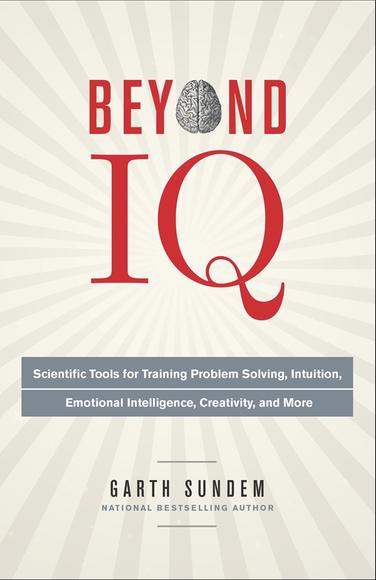
Beyond IQI found Beyond IQ by Garth Sundem to be engaging because of both the research he presents, and the engaging exercises he incorporates to make the research applicable to us. You can read my full book review by clicking here. Here are some of the quotes I especially appreciated.

“First, here’s why insight can be difficult: it requires a paradoxical mix of experience with openness. Usually, experience leads to set-in-stone ways of doing things. Typically, openness is only present when you’re forced by inexperience to remain available in your search for solutions. Experience mixed with openness is a rare cocktail. … Rather than opening your mind to insight, [John] Kounios and [Mark] Jung-Beeman show that if you want insight, the best thing you can do is to close it. A closed mind shows up on an fMRI as activation of the anterior cingulate cortex, your brain’s home of inhibiting distraction. It’s as if your ACC is a pair of noise-canceling headphones, and with these headphones in place you’re more able to hear your brain’s quiet, insightful whispers.” 

“Science has known that during sleep the brain’s hippocampus—the structure responsible for encoding new memories—replays the day’s experiences from short-term storage and filters them into the neocortex, where experiences are integrated into… ‘pre-existing knowledge representations.’ Insight is the novel connection of knowledge, and sleep knocks knowledge into new configurations.”

“[Robert] Sternberg and his frequent collaborator, Richard Wagner, showed that situational judgment tests…designed to measure practical intelligence are a much better predictor then IQ of job performance in business managers, bank managers, and graduate students. IQ doesn’t lead to success. Practical intelligence does.” 

“The language of problem-solving is: initial state, constraints, operations, and goal state. … [Richard] Mayer says that the most striking feature of people who successfully solve real-world problems is the time they spend studying the initial state and the constraints—the extra time they spend clarifying the problem.”

“University of California-San Bernardino researcher James Kaufman knows the recipe for creativity. It’s equal parts intrinsic motivation, experience, and something he calls low personal inhibition. Intrinsic motivation is pretty self-explanatory, but beware of the danger of ‘replacing intrinsic motivation and a natural curiosity with external rewards,’ says Kaufman. If a parent wants a child to become a creative pianist, the parent should encourage interest in the piano but not incentivize this interest with ice cream. Creativity blooms in fields you’re drawn to, not in fields into which you’re pushed. … Kaufman’s research has shown that creative people are hard workers with background knowledge and expertise in their creative domains. ‘It’s the “learn the rules so you can break them” approach,’ he says.” 

“Dean Keith Simonton of UC Davis found that the nineteenth-century scientists who wrote the most-cited papers also wrote the least-cited papers. … The more scientific papers or sonatas or sonnets a person writes, the greater chance that one or more will be especially creative.”

“In any kind of cognitive activity you have two kinds of things going on. You have intelligence, but there’s also learning and skill and knowledge based on practice. The more the second develops, the less important the first becomes. … Even more importantly, we’ve shown that with enough practice and hard work, you can actually change the neurophysiology of the brain. For example, practice can encourage the brain to grow greater myelin coating on neurons. Thus our behaviors become literally hard-wired. Developing expertise literally makes certain thought patterns more efficient than others.” —Paul Feltovich 

“Florida State researcher K. Anders Ericcson shows that it’s not only experience that creates expertise but a step-by-step method of sculpting experience that he calls deliberate practice. To Ericsson, famous for his theory that 10,000 hours of practice creates expertise in any field, the four-step path to expertise includes performing your skill, monitoring your performance, evaluating your success, and figuring out how to do it better next time. Completing only the first step—performing the skill itself—leads to automated, low-level, rote performance in which you perform the skill the same way every time. Monitoring, evaluating, and adjusting your skill allows you to modify it after every pass, helping skill evolved toward expertise.”

“The more you use your brain, the longer you’ll be able to use it. … People with ‘cognitively protected’ brains were those who challenge themselves through a lifestyle that included reading, writing, attending lectures, and doing word puzzles—in other words, they followed a self-imposed regimen of cognitive involvement. … Cognitive involvement is only one tine of a three-pronged approach to brain health in later life. The second tine is a healthy body. … In fact, your cardiovascular health in middle age is even more important for your later brain health than the same risk factors in old age itself. … The third tine: social interaction. … Nothing forces the brain to work like interacting with other brains.” 

“Moral reasoning and wisdom are linked. Specifically (and this is kind of cool albeit technical), for those who possess strong moral reasoning, wisdom increases with age. If you have lower moral reasoning, you gain no wisdom as you get older. So if you want wisdom later, train your moral reasoning now.”

“Wisdom requires thought and action without yourself in mind, and sociologist Monika Ardelt of the University of Florida shows that selflessness is also the best predictor of successful aging. In fact, the wisdom born of selflessness beats out physical health, income, socioeconomic status, physical environment, and even social relationships in predicting life satisfaction in old age.”

“Pressure…sits like a lead weight in your working memory, claiming space that could otherwise hold useful information. And because working memory is a mainline to general intelligence, space claimed by pressure makes you measurably dumber. … Pressure flips a mental switch from implicit to explicit thought, making you apply a layer of analysis to things that should be automatic. … Chronic pressure can make you chronically prioritize the quick rewards of drugs and alcohol while discounting their long-term risk. … So beware. Stress plugs your working memory, analysis paralysis forces you to try to use it anyway, and your dopamine circuits cry for a quick, risky solution.”

“Students with high emotional intelligence (EI) have lower rates of drug use and teachers with high EI get more support from their principals. Employees with high EI have higher job performance, especially when their IQ is low (implying that emotional intelligence can help compensate for low general intelligence—and also that these skills are distinct). EI is even implicated in resilience—the more EI you have, the higher your chances of bouncing back after trauma or negative life events.” 

“If IQ is the strength of the bulb in your lighthouse, willpower is the lens that focuses it into a beam.”

13 Quotes From “The Solomon Seduction”

Solomon SeductionThe Solomon Seduction is a biography on King Solomon, a Bible study, a book for men to overcome temptation, a leadership book, and a great discussion starter for a men’s group. In other words, there are lots of reasons for guys to read this book! You can read my full book review by clicking here, and below are some of the quotes I highlighted from this book.

“Moderation can be a great thing. But the idea that anything is okay as long as it’s done in moderation has given rise to some of the wackiest notions known to man. … One of the big problems with using moderation as a justification for whatever you want to do is that it’s almost impossible to take just a bite when you’re really hungry.” 

“Are you just a guy who goes to church, or are you serious about growing spiritually and acquiring discernment? satan’s chances of seducing you will rise or fall on your answers to these questions.”

“Solomon is the perfect example of the fact that you can have your cranium crammed full of discernment and still end up embarrassing yourself. Keep in mind, he not only knew the book of Proverbs, he wrote the vast majority of it! And then ended up doing many of the very things he himself said were foolish!” 

“All of satan’s various attempts at seducing believers must include an attempt to undermine Scripture.”

“What we have here is a case not of ignorance or confusion or misinterpretation, but of satan subtly and artfully manipulating Solomon’s thinking to the point where he felt the commands of God seemed out of touch with his real-world experience.”

“satan doesn’t try to get you to forsake your good priorities. He just encourages you to mix in a few lesser priorities that will compete with those good priorities.”

“Mark it down. When the word I starts replacing the word we in your speech, something ugly is happening in your heart. Your ego is swelling.” 

“Big-ego people almost never back up and take another look at their actions. Why should they? They’re convinced that everything they do is right. It never occurs to them that they might be on the wrong track. They’re so infatuated with themselves that they can see nothing but that beautiful image in the mirror.”

‘What’s the big deal?’ If ever a question spoke to the attitude of our generation towards sin, that one does. We shrug off sin as though it’s just a little harmless fun. You know, boys will be boys. Everybody sows some wild oats, right? Or, if we don’t play the what’s-the-big-deal card, we claim that the sin we are indulging in is actually necessary.” 

“Instead of repenting, instead of exterminating, illuminating, or correcting their bad behavior, [sin managers] try to manage it. They believe that if they can keep the behavior from getting out of hand, keep people from being hurt or offended, keep the status quo from being upset, keep the ugliness under wraps and out of sight, they can hang on to their sin and everything will be fine. … This is typical of sin managers. Instead of seeing sin as the problem, they see the awkwardness the sin creates as the problem and believe, therefore, that if they can find an answer for the awkwardness, they will have solved the problem.”

“In the category of cold, hard truths, this is a doozy: God doesn’t share the throne of your heart with anybody or anything. You either give it to Him wholly and completely, or He vacates it. You can tell yourself that God comes first and that the sin you’re harboring is just a little something you need to work on, but if you choose a lifestyle of sin management over repentance, you’ve pledged your allegiance to your sin, not to God.”

“Repentance is not what saves us; grace is. But repentance is a response to grace that makes what we are after having received grace different from what we were before. … Repentance concerns itself with how things are while sin management only worries about how things look. Think of a messy closet. Repentance cleans out the closet. Sin management straightens up the closet. Repentance throws away the junk. Sin management rearranges the junk. Repentance gives you a better closet. Sin management only gives you a better-looking closet.”

“When we see Solomon at the height of his idolatrous lifestyle, marrying and buying and indulging like an out-of-control sailor on a weekend pass, what does he say over and over again? ‘I said to myself…’ (Ecclesiastes 1:16, 2:1, 2:15, 3:17, 7:23). Solomon was talking to himself about a lot of things he should have been discussing with God. Who can argue that the reason why he was seduced and eventually reduced to an object of scorn and pity was because he excluded God from so many areas of his life?” 


Helpers

HelpersI was at the University of Michigan with a friend who is on the list waiting for a liver transplant. We spent a half-day listening to doctors, nurses, dietitians and others tell us what to expect through this process.

One social worker really emphasized the care of the patient’s body prior to the transplant as a way to help with recovery from the surgery. He said, Pre-habilitation helps rehabilitation.” 

I like that!

It’s sort of a variation on Benjamin Franklin’s maxims, “An ounce of prevention is worth a pound of cure,” and “A stitch in time saves nine.” Even wise King Solomon wrote, “A prudent person sees trouble coming and ducks; a simpleton walks in blindly and is clobbered” (Proverbs 22:3, The Message).

To help things go better later, we need to start working sooner. Later things go better with helpers that begin sooner. 

Here are a few helpers I thought of:

Pre-habilitation helps rehabilitation. 

Preparing helps repairing. 

Exercise helps recovery. 

Proaction helps better reaction. 

Accepting responsibility helps apologizing. 

Praying helps working. 

Daily study helps studying the night before a test. 

What other helpers would you add to the list? (Add them in the comments below….)

The Solomon Seduction (book review)

Solomon SeductionI love Bible character studies that read like a biography, and in The Solomon Seduction by Mark Atteberry, that’s exactly what I got. Not only that, but this book is an excellent discussion book for men and a pretty good leadership lesson as well.

Pastor Atteberry uses the life and writings of King Solomon to show us that even someone called the wisest man can be reduced to a fool. Solomon was given a gift of wisdom unequaled in any other man, but his gift was misused and mismanaged by Solomon, and led to his downfall.

This is a timely book for men today. Atteberry wrote early on in the book—

“Simply put, Solomon was better equipped to see through satan’s deceptions than any man who has ever lived, other than Jesus. But in the end, he became just as blind to them as everyone else. This, of course, is quite a tribute to satan’s cleverness. If he were an author, his blockbuster best seller would be How I Made A Fool Out Of The Wisest Man Who Ever Lived (And Why The Program Still Works). And it does still work.”

It’s true: satan’s seductions still work today, and Atteberry gives us ten seductions that worked on wise King Solomon, and will work on men today if we don’t pay attention to them.

I hope men not only read The Solomon Seduction, but that they use it as a springboard for discussion with other men too. This is a needed book for our time.

I am a Thomas Nelson book reviewer.

Weekend Quotes

“quotes”

Some challenging quotes from this weekend:

“A wise man will make haste to forgive, because he knows the true value of time, and will not suffer it to pass away in unnecessary pain.”  —Samuel Johnson

“The noblest revenge is to forgive.” —Thomas Fuller

“Being deeply loved by someone gives you strength, while loving someone deeply gives you courage.” —Lao-tzu

“Love keeps no records of wrongs. … It always protects, always trusts, always hopes, always perseveres.” —Apostle Paul (1 Corinthians 13:6-7)

And for my pastor friends: “There will always be new ways to do good works and speak good words which are not presently in our experience or repertoire. So in all our studies, let us study to acquire new insights and visions of how we can serve others through good works. And in all our teaching and preaching, let us not grow negligent in exhorting the people of God to do likewise.” —T.M. Moore

Links & Quotes

link quote

Some good reading from today…

“Let no one grieve at his poverty, for the universal Kingdom has been revealed. Let no one mourn that he has fallen again; for forgiveness has risen from the grave. Let no one fear death, for the death of our Savior has set us free.” —John Chrysostom

[VIDEO] This is sad and a bit scary. Americans don’t know what Memorial Day means.

Tim Elmore answers the question, “What’s the bid deal about Memorial Day?”

“Our great need is to be people whose delights are the very delights of God.” —John Piper

Unbelievable! The U.S. State Department promoted a Muslim cleric who condoned killing U.S. soldiers!

Those who boast of their knowledge betray their ignorance. Knowledge is not a possession to be proud of….” Read more of the quote from Charles Spurgeon in It Matters What You Do With Your Knowledge.

[VIDEO] Cool look at the overview of Genesis 1-11 from The Bible Project.