This is the time of year for gift giving. Everyone is out looking for the perfect gift to give to a loved one, co-worker, or friend.
Can you imagine going through all of the work of finding the right gift, paying your hard-earned money for it, wrapping it up, delivering it to the recipient, and then watching them set it aside unopened?!
Or how about the one who opens the gift, but doesn’t show any gratitude at all?!
Or the one who says a sincere “Thank you!” but then puts the gift on the shelf and never touches it again?!
Christmas is the time we think about the greatest gift of all—God’s gift of His only Son. But this isn’t the only gift God gives. In fact, He is a lavish Gift Giver. So the key questions are:
Are you opening His gifts to you?
Are you showing Him how grateful you are for His gifts?
Are you using His gifts?
I’m starting a brand new series this Sunday, and going all the way until Christmas morning, looking at God’s Gifts. We’ll see what the Bible says about these gifts, including how to show our gratitude, and how to use them in a way that honors the Gift Giver.
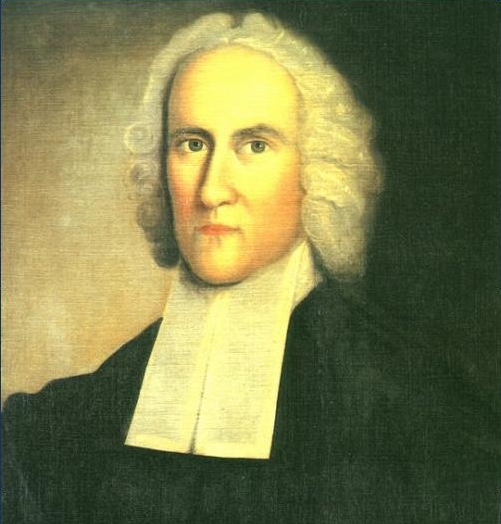
Jonathan Edwards was a brilliant man. His words here are spoken directly to preachers. I endeavor to handle my God-given responsibilities like this:
“Pure Christian humility has no such thing as roughness, or contempt, or fierceness, or bitterness in its nature; it makes a person like a little child, harmless and innocent, that none need to be afraid of, or like a lamb, destitute of all bitterness, wrath, anger, and clamor; agreeable to Ephesians 4:31. With such a spirit as this ought especially zealous ministers of the gospel to be clothed, and those that God is pleased to employ as instruments in His hands of promoting His work. They ought indeed to be thorough in preaching the word of God, without mincing the matter at all; in handling the sword of the Spirit, as the ministers of the Lord of hosts, they ought not to be mild and gentle; they are not to be gentle and moderate in searching and awakening the conscience, but should be sons of thunder. The Word of God, which is in itself sharper than any two-edged sword, ought not to be sheathed by its ministers, but so used that its sharp edges may have their full effect, even to the dividing asunder soul and spirit, joints and marrow. Yet they should do it without judging particular persons, leaving it to conscience and the Spirit of God to make the particular application. But all their conversation should savor of nothing but lowliness and good-will, love and pity to all mankind; so that such a spirit should be like a sweet odor diffused around them wherever they go. They should be like lions to guilty consciences, but like lambs to men’s persons. This would have no tendency to prevent the awakening of men’s consciences, but on the contrary would have a very great tendency to awaken them. It would make way for the sharp sword to enter; it would remove the obstacles, and make a naked breast for the arrow. —Yea, the amiable Christ-like conversation of such ministers in itself, would terrify the consciences of men, as well as their terrible preaching; both would co-operate to subdue the hard, and bring down the proud heart.”
As we approaching Thanksgiving Day later this month, it is important for us to pause to consider a couple of important issues: (1) to whom/what am I thankful, and (2) why am I thankful.
In his letter to the church at Colossae, the Apostle Paul had a lot to say about thank-fullness. It is very instructive for us to see how being full of thanks builds our faith, gives us peace, and keeps us alert against joy-stealers.
I hope you can join me at Calvary Assembly of God over the next three Sundays as we explore all the benefits of living lives Overflowing With Thanks.
Charles II had a slight problem with unforgiveness
A couple of weeks ago I asked our church a simple question. So let me ask you the same thing: Anyone ever not been burned by someone, taken advantage of, or hurt by somebody else? Anyone? I didn’t think so. We’ve all been hurt, but the real issue is what we do with those hurts.
In January 1647, Oliver Cromwell captured King Charles I during the British Revolution. But a few months later, Charles escaped and managed to raise another army. In August 1648 Cromwell’s army defeated Charles’ army and once again Charles was taken prisoner. Cromwell had Charles tried for his crimes, and after the guilty verdict was issued, Charles I was executed. A total of 59 people signed his death warrant.
Eleven years later Cromwell’s son Richard had taken his place as Lord Protector of England, and there was great discontent with his leadership. As a result, the Loyalists were able to sweep Charles II into power. Charles II wanted the 59 death warrant signors put on trial, but 15 of them had already died. Charles II ordered their bodies exhumed, placed on trial, convicted, and then hung.
I’m no psychologist, but I think it’s safe to say that Charles II might have had a problem with unforgiveness!
It’s highly unlikely that you have dug up any dead bodies and put them on trial lately.
Or maybe you have…
When someone has hurt us, we tend to keep the pain alive. Sometimes even after that person is long-gone from our life, we still exhume the corpse of their injury, put them on trial, convict them, and punish them all over again. But this process is actually punishing YOU. As long as you keep the hurt alive, you are trapped in the past.
The key to freedom is easy and yet hard: forgiveness.
I love questions! Jesus seemed to love them too. Take a quick scan through the four Gospels of Matthew, Mark, Luke and John and you will see ?s all throughout the biblical text.
Over the next two Sundays, I am turning over the decision of what topics to cover on Sunday mornings to my Calvary Assembly of God family. In The Q Series, they get to submit the questions. I hope you can join us.
If not, feel free to submit your question(s) on Twitter, via email, or in the comment section below. I will be sure to answer it here, and—who knows—I may even use it in The Q Series too!
Have you ever been disappointed because you had a dream that died? How do we justify this with the biblical definition of faith which says, “faith is being sure of what we hope for”?
It’s just this:
If God takes away a dream, it’s because the dream was too small.
God wants us to be more focused on the Dream Giver than we are on the dream.
So sometimes God asks us to let a dream die.
Think of a watermelon seed. It’s not very big, sort of dull in color, and it’s only a single seed. To plant the seed, means you have to take your hands off it: the seed is now out of your sight and out of your control. But it is there—dead in the ground—that a miracle happens!
A single watermelon seed grows 200,000 times its own weight! A colorless seed produces the vibrant greens and pinks of a mature watermelon. And that single seed produces 100+ seeds.
Has God given you a dream? Has He asked you to give up that dream? Then plant that seed! When you do, the results will be more than you can imagine.
“Faith is to believe what we do not see; and the reward of faith is to see what we believe.” —Augustine
These are some of my notes from part 3 of my See The Invisible series at Calvary Assembly of God. I would love to have you join me when we continue this series on September 4.
“Faith is the great cop-out, the great excuse to evade the need to think and evaluate evidence. Faith is belief in spite of, even perhaps because of, the lack of evidence. … Faith is not allowed to justify itself by argument.”
I wholeheartedly—and even respectfully—disagree.
The Bible does define faith as “Being sure of what we hope for and certain of what we do not see.” Just a few verses later there is an even stronger statement about faith: “Without faith it is impossible to please God.”
I have evaluated the evidence. I have thought long and hard about the options. I can justify all of the arguments. And my faith stands strong!
God wants all who call on Him to grow in God-pleasing faith. So I’m really excited to dive into our brand new series called SEE THE INVISIBLE this Sunday.
Yesterday at Calvary Assembly of God, we continued our series called In It Not Of It, in which we are considering how to biblically engage our culture. In alarmingly high numbers, more and more people have thoughts that are positively unChristian toward those who call themselves Christian.
How do we undo this cultural bias? I think we have to be people of overwhelming grace.
Being grace-filled people is the only way I can see for us to unDo the unChristian mindset. To see how Jesus did this, see His interaction with a particular woman in John 8:2-11.
The Apostle Paul also gave us a good example of grace-filled living. In his letter to the Romans, Paul says he is indebted to all mankind, which makes him eager to preach the Gospel (Romans 1:14-15). I love Oswald Chambers’ commentary on these verses:
“Paul was overwhelmed with the sense of his indebtedness to Jesus Christ, and he spent his life to express it. The greatest inspiration in Paul’s life was his view of Jesus Christ as his spiritual creditor. Do I feel that same sense of indebtedness to Christ regardingEVERYunsaved soul? As a saint, my life’s spiritual honor and duty is to fulfill my debt to Christ in relation to these lost souls. Every tiny bit of my life that has value I owe to the redemption of Jesus Christ. Am I doing anything to enable Him to bring His redemption into evident reality in the lives of others? I will only be able to do this as the Spirit of God works into me this sense of indebtedness. …
“Quit praying about yourself and spend your life for the sake of others as the bondservant of Jesus. This is the true meaning of being broken bread and poured-out wineIN REAL LIFE.”
I am committed to living a life of overwhelming grace poured out for EVERY unsaved soul. And I am SO BLESSED to be able to pastor a church that feels and acts the same way! We’re not going to be passive reactionaries to the unChristian cultural bias … we’re going to liveIN REAL LIFE as proactive, grace-filled people, so that we can unDo unChristian!
The main point I made yesterday is that we need to be aware of the messages the media is sending out, but not pre-occupied by those media messages.
Then we need to decide what part(s) of media we can receive, what part(s) we must reject, and what part(s) we can attempt to redeem.
The final point I would add for Christians who want to biblically engage their culture, is a point I made yesterday—
Instead of criticizing media … critique it. That means skillfully and artfully addressing it.
Instead of condoning media … challenge it by asking “Is this the best message” questions.
When deciding to receive, reject or redeem—or critique and challenge—use this filter from Philippians 4:8.
Does this pass the filter of being true … noble … right … pure … lovely … admirable … excellent … praiseworthy? If so, I can defintiely receive it. However, if it doesn’t meet ALL of these criteria, then I must decide if I can redeem it. If can’t redeem it, then it must be rejected.



 “You have been wishing for another position where you could do something for Jesus: do not wish anything of the kind, but serve Him where you are.”







 Craig T. Owens