Encouragement For Pastors

I thoroughly enjoy the daily devotional I receive in my Inbox each morning from T.M. Moore at The Colson Center For Christian Worldview.

Each morning T.M. Moore shares a verse of Scripture, a quote from a trusted author, and his application of that quote to the pastoral setting. For instance, after quoting a passage from John R.W. Stott, Moore’s thought this morning was:

“Good preachers are good learners, and not just of the Scriptures. They need to understand the times and the ways the times impact the people they are called to serve. Preachers who know their sheep well, as our Good Shepherd exemplified for us, will hear their concerns, understand their thoughts, discern their hopes and fears, and be able to preach in a way that speaks directly to their souls with transforming grace and power. Let us strive to be sons of Issachar when it comes to the ministry of God’s Word.”

UPDATE: Pastor, T.M. Moore has established his own ministry with vastly more resources for us than he had at the Colson Center. Please check out the Fellowship of Ailbe.

What’s Your Point?

As I am preparing my message for each Sunday, I have one point that I want everyone to have clear in their hearts and minds when they leave. It’s sort of my “finish line.” I say, “If they get only one thing from this message, what should it be?” This is the part where I spend quite a bit of time.

Then I read this from the Apostle Paul:

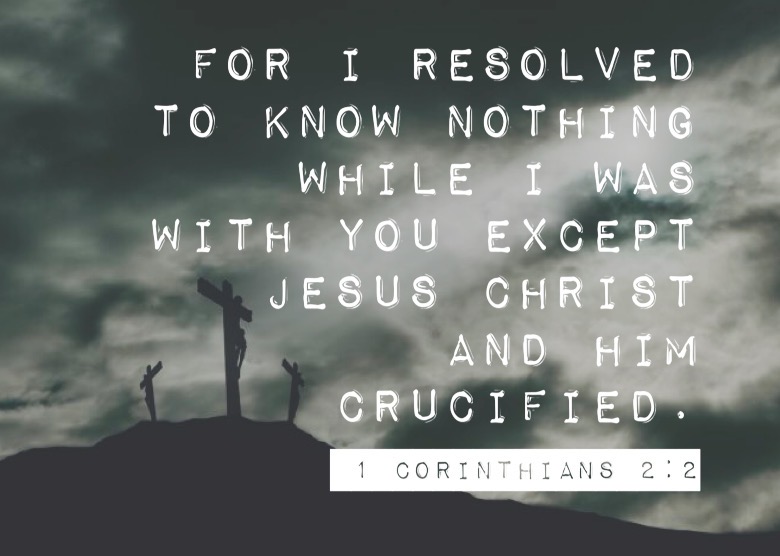
When I came to you, brothers, I did not come with eloquence or superior wisdom as I proclaimed to you the testimony about God. For I resolved to know nothing while I was with you except Jesus Christ and Him crucified. (1 Corinthians 2:1-2)

So what’s my point?

Something clever and witty?

Something that shows how eloquent I am?

Perhaps another rule to follow?

Or another application to make?

Oswald Chambers says, “To say that we are called to preach holiness or sanctification is to miss the main point. We are called to proclaim Jesus Christ….” (emphasis mine)

My point should be only this:

To help people see Jesus more clearly.

Anything less than this is to miss the point.

Anything more than this is attempting to make myself sound eloquent.

Pet (Pastoral) Peeve

One of my biggest pet peeves is hearing pastors say, “Ministry would be great if it weren’t for the people.”

Pastor: People ARE your ministry!

After Christ’s resurrection, He wanted to help restore Peter. Jesus asked Peter a simple question, “Do you love Me?” When Peter acknowledged that he did, Jesus gave Peter a way to show it: “Feed My sheep.” I believe this exchange is what Peter had in mind when he penned the words,

Be shepherds of God’s flock that is under your care, serving as overseers—not because you must, but because you are willing, as God wants you to be; not greedy for money, but eager to serve; not lording it over those entrusted to you, but being examples to the flock. (1 Peter 5:2-3)

Is it hard to be a shepherd? Yes.

Are some sheep difficult to shepherd? Yes.

Is it worth it to shepherd them? Yes, yes, YES!!

I love Oswald Chambers’ insight on this:

“Jesus has some extraordinarily peculiar sheep: some that are unkempt and dirty, some that are awkward or pushy, and some that have gone astray! But it is impossible to exhaust God’s love, and it is impossible to exhaust my love if it flows from the Spirit of God within me. The love of God pays no attention to my prejudices caused by my natural individuality. If I love my Lord, I have no business being guided by natural emotions—I have to feed His sheep.”

Jesus, increase my capacity to love Your sheep. All of Your sheep—the ones that bite; the ones that are nice; the ones that are untidy; the ones that are clean; the ones that are thankful; the ones that are ungrateful; the ones that “get it”; the ones that don’t. All of YOUR sheep. Thank You, Lord, for the supreme honor and heavy responsibility of serving as Your under-shepherd.

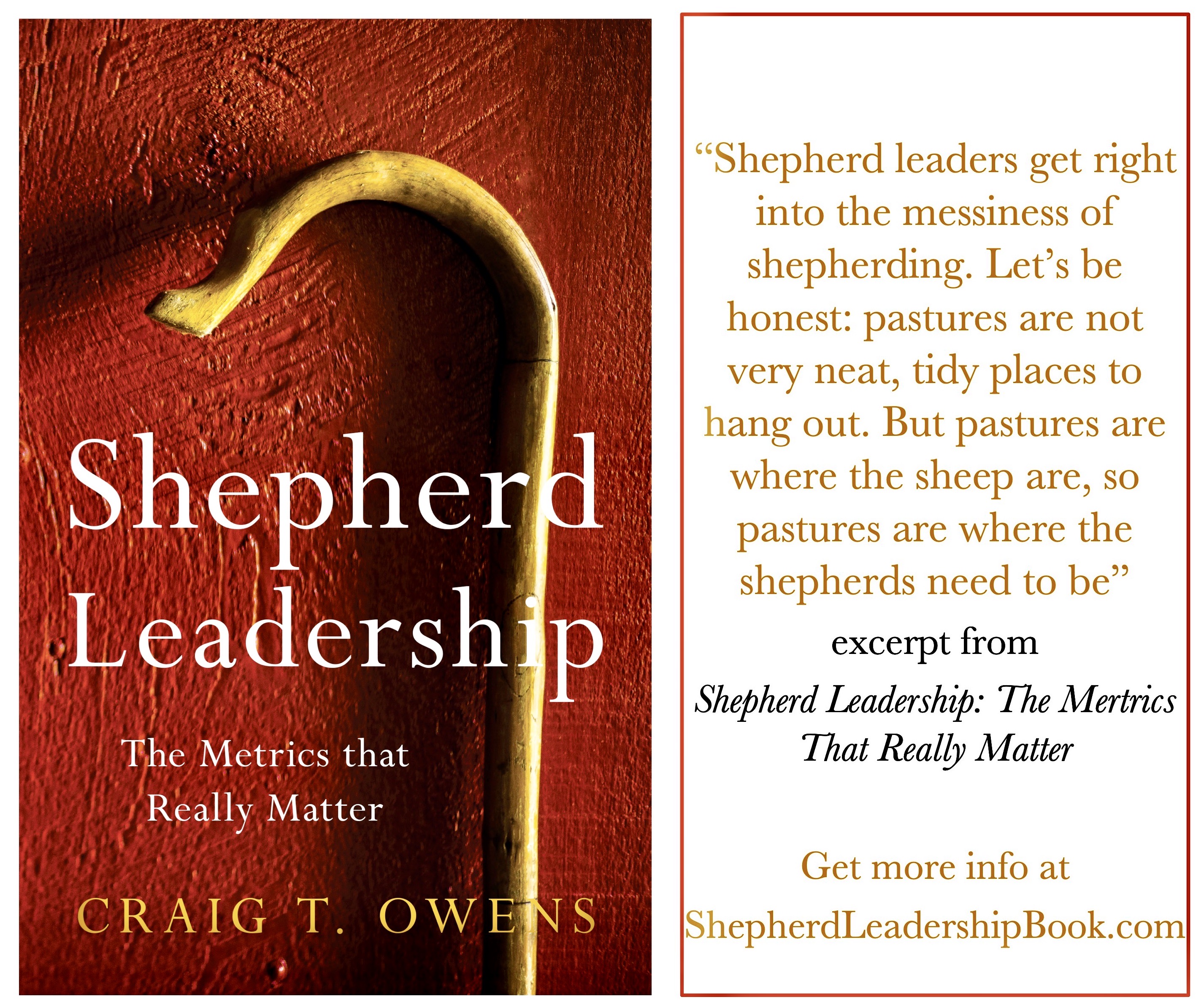
UPDATE: This idea of pastors as shepherds is what drove me to write my book Shepherd Leadership: The Metrics That Really Matter. I hope you will pick up a copy today!

Who Are You?

This is another post especially for pastors (but I think others will find this helpful too).

John the Baptizer had no credentials, and yet people flocked to hear him speak.

He had no formal training, and yet people hung on his every word.

He had no authority from a sanctioning body, and yet he spoke with such power.

This perplexed the religious leadership. After all, they had credentials, training, and authority. So they came to John asking, “Who are you? What do you have to say about yourself?” (John 1:21-22).

If God has called you to the pastorate, He will equip you.

There’s nothing wrong with credentials, training, or sanctioning, per se. But when you think your call to preach has authority because of your title, your training, or your denominational appointment, you have missed the point! John had none of these, and yet Jesus said, “There’s never been a greater prophetic voice!”

So, pastor, who are you?

Are you the one who is credentialed, or trained, or sanctioned?

Or are you the one who has been called and equipped by God?

There’s a huge difference!

Who are you? I hope you can answer, “I am only a servant of the Most High, equipped by the Holy Spirit to make Jesus known in my city.”

UPDATE: I use John the Baptist as a prominent example in my book Shepherd Leadership: The Metrics That Really Matter.

Preparing The Preacher

A friend of mine was preparing to preach his first sermon at a new church, and he was (as anyone might understand) nervous. He had all sorts of concerns: Is this the right word for this congregation? Will my thoughts make sense to them? Have I prepared enough for this message?

It was that last question that jogged my memory of a quote I had read from Oswald Chambers in his book Approved Unto God. The title of that book comes from a passage a Scripture in which preachers are told to correctly handle the Word of God as a worker that is approved unto God (2 Timothy 2:15).

Check out this pearl of wisdom:

“Keep yourself full to the brim in reading; but remember that the first great Resource is the Holy Spirit Who lays at your disposal the Word of God. The thing to prepare is not the sermon, but the preacher.” —Oswald Chambers (my emphasis)

God doesn’t need His Word prepared—it’s already perfect. But He does need to prepare me to deliver the message. He needs to remove my opinions, my preconceived ideas, my hang-ups with that particular passage, my hesitation to share it.

The Holy Spirit of God needs to prepare me. And I need to let Him do it.

It’s a heavy, awesome responsibility to be “the one” sharing God’s Word to a group of precious people. I dare not even attempt it unless I have let the Spirit prepare me first.

Life In What You Have

Pastors, these two quotes from Charles Spurgeon have really been working on me. This is not intended to be a pastor-bashing message. Instead, it’s more of a wake-up call.

“We too often flog the church when the whip should be laid on our own shoulders. We should always remember that we are a part of the church, and that our own lack of revival is in some measure the cause of the lack of revival in the church at large. I will lay the charge before us; we ministers need a revival of piety in our lives.”

“You don’t need a new preacher, another kind of worship, another type of preaching, new ways of doing things or even new people. You need life in what you have.”

If I’m going to pray, “Start a revival, Lord,” the prayer needs to begin with, “Start it with me!”

Let Yourself Go!

Pastors, this is good counsel for all of us…

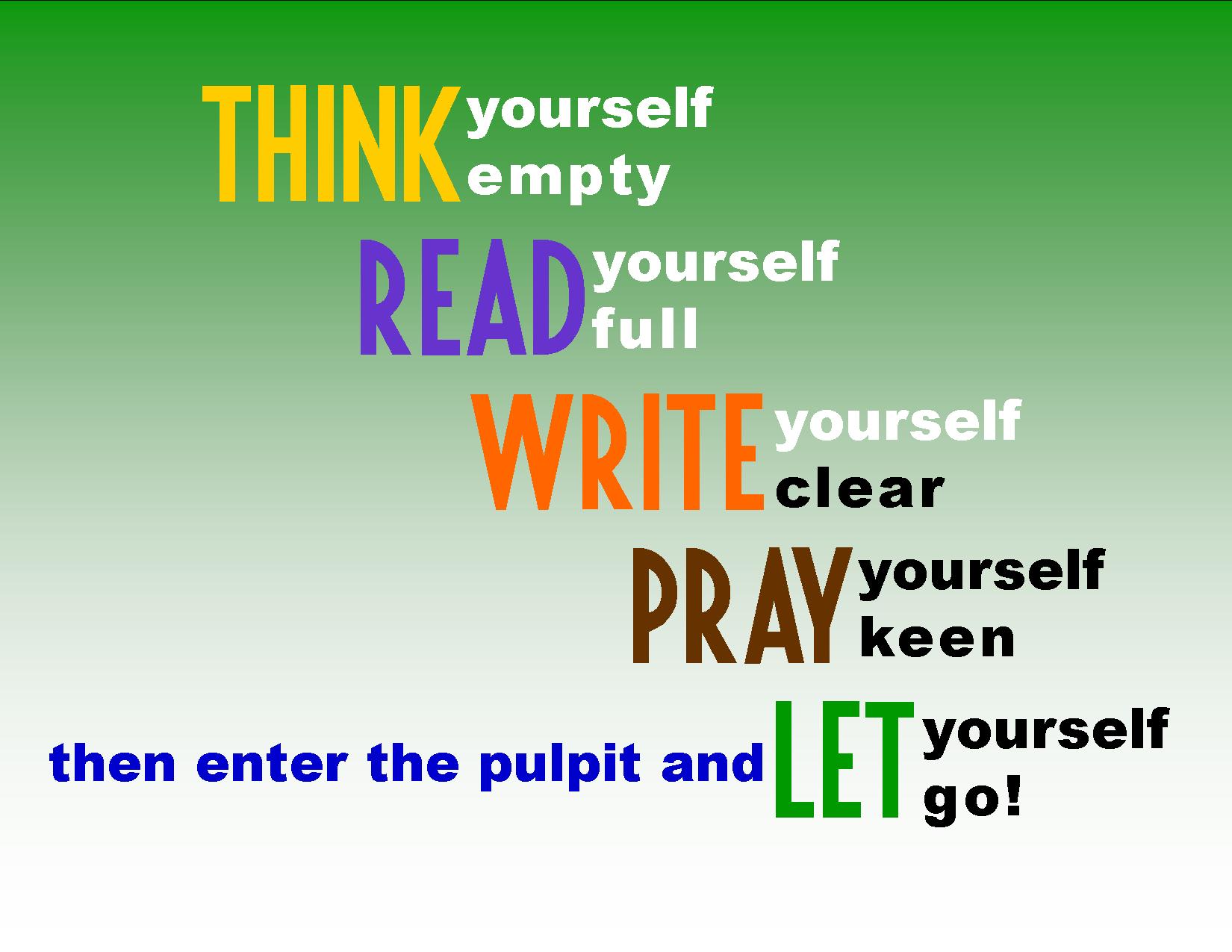
“Think yourself empty, read yourself full, write yourself clear, pray yourself keen—then enter the pulpit and let yourself go!” W.H. Griffith Thomas

Thursdays With Oswald—Exhausted For God

This is a weekly series with things I’m reading and pondering from Oswald Chambers. You can read the original seed thought here, or type “Thursdays With Oswald” in the search box to read more entries.

Exhausted For God

     Jesus said to Peter, ‘Feed My sheep,’ but He gave him nothing to feed them with. The process of being made broken bread and poured out wine means that you have to be the nourishment for other souls until they learn to feed on God. They must drain you to the dregs. Be careful that you get your supply, or before long you will be utterly exhausted. Before other souls learn to draw on the life of the Lord Jesus direct, they have to draw on it through you; you have to be literally ‘sucked,’ until they learn to take their nourishment from God. We owe it to God to be our best for His lambs and His sheep as well as for Himself.

     Has the way in which you have been serving God betrayed you into exhaustion? If so, then rally your affections. Where did you start the service from? From your own sympathy or from the basis of the Redemption of Jesus Christ? Continually go back to the foundation of your affections and recollect where the source of power is. You have no right to say, ‘O Lord, I am so exhausted.’ He saved and sanctified you in order to exhaust you. Be exhausted for God, but remember that your supply comes from Him. ‘All my fresh springs shall be in Thee.’

From My Utmost For His Highest

He saved and sanctified you in order to exhaust you. I want to be continually filled up and poured out for God. But in order to be of any good to others, I have to keep going back to the Source of life. If I’m not filled up with God’s presence, I will be exhausted, but not in the right way.

I have shared quite a bit about the correct way for godly leaders to be replenished through self-care. Check out these posts.

Answer (Wo)Man

“Hey, pastor, I have a question for you….” As a pastor, do you feel like you need to have all the answers, all the time, to everyone’s questions? I’m not saying that as pastors we shouldn’t always be studying and learning and growing, but I think it’s a dangerous trap for us to feel like we need to have every answer.

Here’s what John Calvin wrote in The Institutes of the Christian Religion

“And since the Holy Spirit always instructs us in what is useful, but altogether omits, or only touches cursorily on matters which tend little to edification, of all such matters, it certainly is our duty to remain in willing ignorance.

“…Let us here remember that on the whole subject of religion one rule of modesty and soberness is to be observed, and it is this, in obscure matters not to speak or think, or even long to know, more than the Word of God has delivered. A second rule is, that in reading the Scriptures we should constantly direct our inquiries and meditations to those things which tend to edification, not indulge in curiosity, or in studying things of no use.

“…The duty of a Theologian, however, is not to tickle the ear, but confirm the conscience, by teaching what is true, certain, and useful.”

Study for edification, not curiosity. Teach what is true and helpful, not what is tickling ears. And don’t feel like you need to have all the answers.

Start It With Me

Pastors, I wrote earlier about the idea that you have to preach your message to yourself before you preach it you’re your congregation. But I want to back up a step to the motivation for that.

These words from William Law are challenging—

“The first business of a clergyman awakened by God into a sensibility and love of the truths of the Gospel, and of making them equally felt and loved by others, is to thankfully, joyfully, and calmly adhere to and give way to the increase of this new-risen light, and by true introversion of his heart to God, as the sole Author of it, humbly beg of Him that all that he feels a desire of doing to those under his care may be first truly and fully done in himself.”

God, if You want to do something in my congregation, start it with me. Right here, right now, in the privacy of my study, begin with me. When I come before my congregation this weekend, may my life be the example of the work You want to do in us all.