The Contemplative Pastor

Search mePastors can get caught in a rut, just like anyone in any number of other professions. That’s why it’s so vital for us to pause often to make sure we haven’t slipped into something without being aware of its impact.

It is absolutely vital for pastors to have regular quiet time with God. Read the Word, pray, contemplate, read other pastors (especially the “old guys”), pray, and contemplate some more. Let the Holy Spirit point out to you any blind spots.

I’ve been contemplating two quotes from the “old guys” over the last few days.

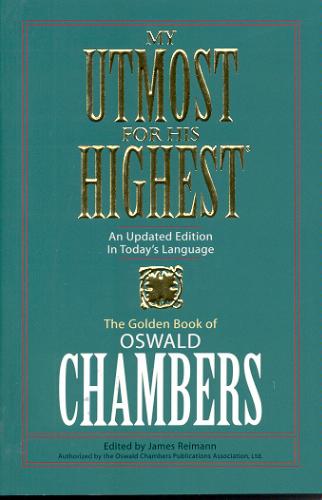
[1] “We prefer to build up converts to our own point of view.” —Oswald Chambers

I want to make sure I’m always allowing the Holy Spirit to be as unique with others as He is with me. I need to be cautious that I’m not making my practices the universal practices for everyone. I need to give these converts a solid biblical foundation, and then let the Spirit build them up as He knows best.

[2] “Recollect, as ministers, that your whole life, your whole pastoral life especially, will be affected by the vigor of your piety. If your zeal grows dull, you will not pray well in the pulpit; you will pray worse in the family, and worst in the study alone. When your soul becomes lean, your hearers, without knowing how or why, will find that your prayers in public have little savor for them; they will feel your barrenness, perhaps, before you feel it yourself.” —Charles Spurgeon

I need to be a praying pastor. My sermons must be birthed in prayer before I deliver them, and sealed in prayer after I deliver them; my appointments must be covered in prayer; my schedule must be directed by prayer; my relationships must be nurtured through prayer. I must be in prayer continually if I am to be effective at anything.

My fellow pastor, I hope you are taking the time to contemplate: to be quiet as you ponder how the Holy Spirit is speaking to you. It is absolutely vital for the health of the part of the Body of Christ to which we minister.

Thursdays With Oswald—God’s Honor Is At Stake

Listen to the podcast of this post by clicking on the player below, and you can also subscribe on AppleSpotify, or Audible. 

This is a weekly series with things I’m reading and pondering from Oswald Chambers. You can read the original seed thought here, or type “Thursdays With Oswald” in the search box to read more entries.

God’s Honor Is At Stake

      As long as a Christian complies with the standards of this world, the world recognizes him; but when he works from the real standard, which is God, the world cannot understand him, and consequently it either ignores or ridicules him….

      God’s honor is at stake in my eyes, in my hands and feet; His honor is at stake wherever I take my body. My body is the temple of the Holy Ghost, therefore I have to see that it is the obedient slave of the disposition Jesus Christ has put in to stand for Him.

From Biblical Psychology

God’s honor is at stake in how I live, so I must constantly allow the Holy Spirit to help me answer the questions, “How am I living?” and “How am I representing God?”

Here’s a passage of Scripture I try to keep in mind to help me answer those questions:

   But in your hearts set apart Christ as Lord. Always be prepared to give an answer to everyone who asks you to give the reason for the hope that you have. But do this with gentleness and respect, keeping a clear conscience, so that those who speak maliciously against your good behavior in Christ may be ashamed of their slander. It is better, if it is God’s will, to suffer for doing good than for doing evil. (1 Peter 3:15-17)

In light of that passage from Peter and the wise words from Oswald Chambers, these are some good questions to ask ourselves:

Remember, “God’s honor is at stake in my eyes, in my hands and feet; His honor is at stake wherever I take my body.”

May God always be honored in the way that we all live!

►► Would you please prayerfully consider supporting this ministry? My Patreon supporters get behind-the-scenes access to exclusive materials. ◀︎◀︎

Thursdays With Oswald—The Etceteras

This is a weekly series with things I’m reading and pondering from Oswald Chambers. You can read the original seed thought here, or type “Thursdays With Oswald” in the search box to read more entries.

The Etceteras 

     Do you regard yourself as a highly respectable, dignified Christian? Are you religiously self-important, placing yourself where you fancy you ought to be placed, in stately surroundings? If so, you are not following Jesus Christ’s example. 

     If you cannot do ordinary things and live as nobody anywhere, you are not a saint. Jesus left Heaven and lived nowhere of any importance all His earthly life. There is a religiosity that is inspired by the devil, that gathers its skirts around it and says, “No, I cannot be in ordinary places, or in ordinary avocations; I am a servant of God.” Then you will be found nowhere but in the very commonest of common places.

     You say you are called to be a missionary, a minister, a Christian worker: you are called to be a disciple of Jesus Christ, other things are etceteras

From God’s Workmanship 

I can think of only one reasonable response to this: I need to go look in the mirror and ask the Holy Spirit to show me where I’ve been more focused on the etceteras than I have on being a disciple of Jesus Christ.

Heart Check

Seven rules for self-discovery:

1. What we want most;

2. What we think about most;

3. How we use our money;

4. What we do with our leisure time;

5. The company we enjoy;

6. Who and what we admire; and

7. What we laugh at. —A.W. Tozer

Search me thoroughly, O God, and know my heart! Try me and know my thoughts! And see if there is any wicked or hurtful way in me, and lead me in the way everlasting. (Psalm 139:23-24, Amplified Bible)

Thursdays With Oswald—Two Dangerous Extremes

This is a weekly series with things I’m reading and pondering from Oswald Chambers. You can read the original seed thought here, or type “Thursdays With Oswald” in the search box to read more entries.

Two Dangerous Extremes 

     Possibly the best illustration we can use is that of a lamp. A lamp unlighted will illustrate individuality; a lighted lamp will illustrate personality. The lighted lamp takes up no more room, but the light permeates far and wide; so the influence of personality goes beyond that of individuality. “You are the light of the world” said our Lord. Individually we do not take up much room, but our influence is far beyond our calculation. … 

     Individuality, then, is a smaller term than personality. Personality means that peculiar, incalculable being that is meant when you speak of “you” as distinct from everybody else. People say, “Oh, I cannot understand myself”; of course you can’t! “Nobody can understand me”; of course they don’t! There is only one Being Who understand us, and that is our Creator. … 

     There are possibilities below the threshold of our lives which no one but God knows…. God makes a man know that He is searching him. … 

     Introspection without God leads to insanity. … The people with no tendency to introspect are those described in the New Testament as “dead in trespasses and sins,” they are quite happy, quite contented, quite moral, all they want is easily within their grasp, everything is all right with them; but they are dead to the world to which Jesus Christ belongs, and it takes His voice and His Spirt to awaken them. …

     The path of peace is for us to hand ourselves over to God and ask Him to search us, not what we think we are, or what other people think we are, or what we persuade ourselves we are or would like to be, but, “Search me out, O God, explore me as I really am in Thy sight.” 

From Biblical Psychology

There are two dangerous extremes: Never looking within ourselves, and looking within ourselves without God’s help.

If you want your personality to shine far and wide, you must pray regularly as David did: “O Lord, You have searched me and You know me. Now search me again, and reveal to me anything that is offensive or displeasing to You, and then help me to change those things” (see Psalm 139:23-24).

Thursdays With Oswald—Examination

This is a weekly series with things I’m reading and pondering from Oswald Chambers. You can read the original seed thought here, or type “Thursdays With Oswald” in the search box to read more entries.

Examination 

     Sin destroys the power of the soul to know its sin, punishment brings awakening, self-examination brings chastisement and saves the soul from sleeping sickness, and brings it into a healthy satisfaction. 

From Biblical Psychology

There’s so much to unpack in this single sentence…

  • We are very good at self-medicating away any pain (even spiritual pain), so that we never address the source of the pain (Ephesians 4:18).
  • I can be “sin sick” and not even know it because I’m not allowing the Holy Spirit to examine me (1 Corinthians 10:12).
  • The pain of punishment and chastisement is for my eternal benefit (Hebrews 12:5-11).

What do I need to do? Invite the examination of the Spirit:

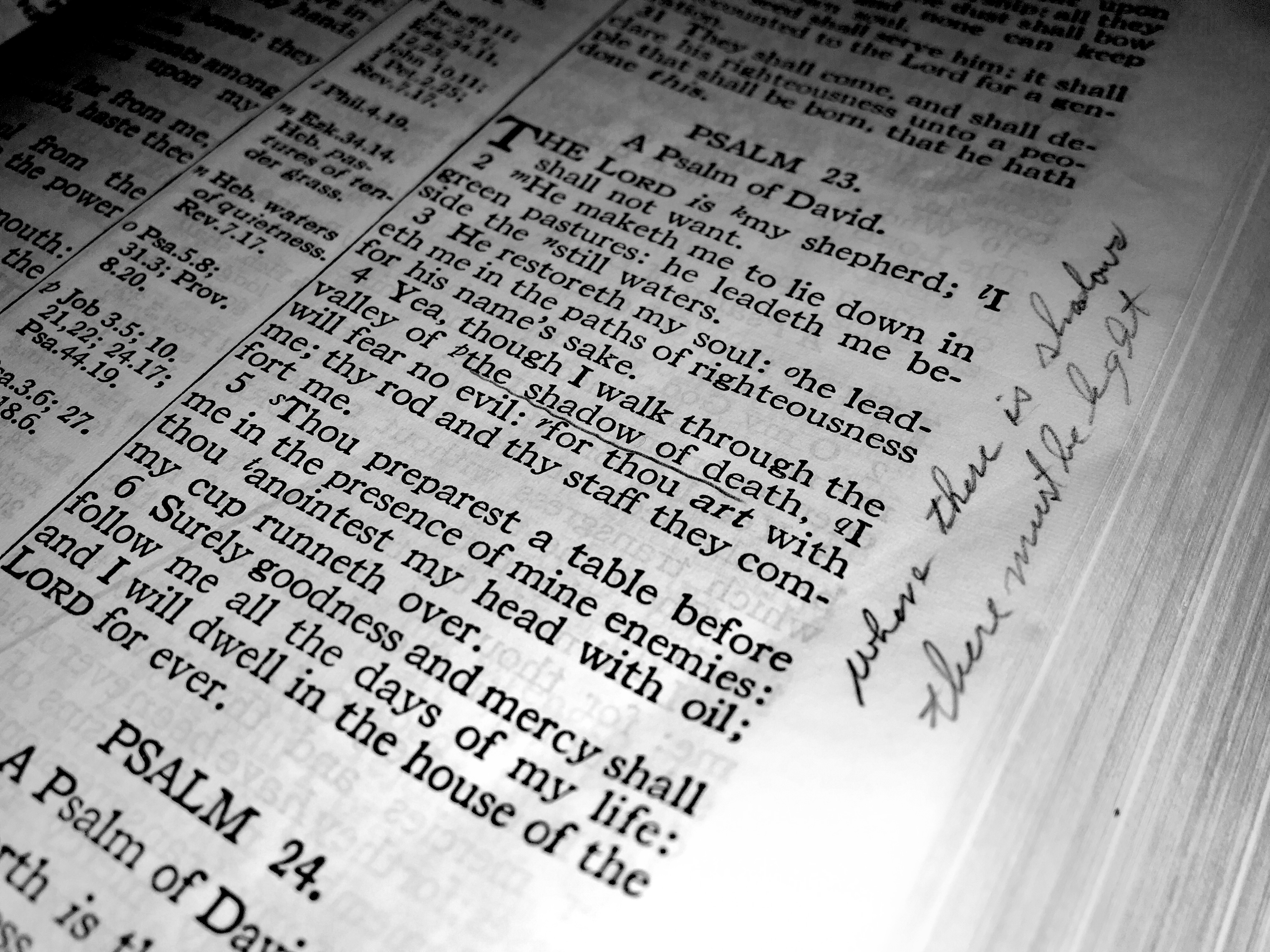
Search me, O God, and know my heart; test me and know my anxious thoughts. Point out anything in me that offends You, and lead me along the path of everlasting life. (Psalm 139:23-24)

So let a person examine himself first, and then he may eat of the bread and drink from the cup; for a person who eats and drinks without recognizing the body eats and drinks judgment upon himself. This is why many among you are weak and sick, and some have died! If we would examine ourselves, we would not come under judgment. But when we are judged by the Lord, we are being disciplined, so that we will not be condemned along with the world. (1 Corinthians 11:28-32)

Self Checkup

These are great look-myself-in-the-mirror questions from Oswald Chambers (from My Utmost For His Highest):

  • How much kindness have I shown to God in the past week?
  • Has my life been a good reflection on His reputation?
  • Am I as filled to overflowing with love for Jesus Christ as I was in the beginning?
  • Am I so in love with Jesus that I take no thought for where He might lead me?
  • Or am I watching to see how much respect I get as I measure how much service I should give Him?

Great questions to ask myself. And then really listen to the answers.

Preach It To Yourself

Before I am a pastor sharing with my congregation, I am a saved sinner standing before God.

Before I open the penetrating brilliance of God’s Word to my church, I must stand in the spotlight of His Word.

In other words, I should never stand before my church with my finger pointed at them. Instead, the finger of God should be squarely pointed at me. Only then can I share with my congregation what God is doing in my life.

I’ve always tried to pastor this way, but recently I read this passage in John Bunyan’s autobiography which made this truth even more real to me—

“Sometimes I have been about to preach upon some smart and searching portion of the Word, I have found the tempter suggest, What! will you preach this! This condemns yourself; of this your own soul is guilty; so don’t preach any of it; or if you do, mince your words, as to make way for your own escape; lest instead of awakening others, you lay that guilt upon your own soul, that you will never get from under. … It is far better that you judge yourself, even by preaching plainly unto others, than that you, to save yourself, imprison the truth in righteousness.”

So, pastor, preach the Word to yourself first. Then go share with your congregation about what God is dealing with you.

Thursdays With Oswald—Spiritual Overloading

This is a weekly series with things I’m reading and pondering from Oswald Chambers. You can read the original seed thought here, or type “Thursdays With Oswald” in the search box to read more entries.

Spiritual Overloading

       One continually finds an encroachment of beliefs and of attachment to things which is so much spiritual overloading. Every now and again the Spirit of God calls us to take a spiritual stock-taking in order to see what beliefs we can do without. The things our Lord asks us to believe are remarkably few, and John 14:1 seems to sum them up—“Ye believe in God, believe also in Me.” We have to keep ourselves alertly detached from everything that would encroach on that belief; we all have intellectual and affectionate affinities that keep us detached from Jesus Christ instead of attached to Him. We have to maintain an alert spiritual fighting trim.

From Facing Reality

Probably because I’m still studying and preparing for our Overloaded series, but I’ve been especially tuned into to the idea of all sorts of overload… even (especially) spiritual overloading. I never want to fall victim to the same trap the Pharisees were in:

Then Jesus said to the crowds and to His disciples, “The teachers of religious law and the Pharisees are the official interpreters of the law of Moses. So practice and obey whatever they tell you, but don’t follow their example. For they don’t practice what they teach. They crush people with unbearable religious demands and never lift a finger to ease the burden.” (Matthew 23:1-4)

I don’t want to overload myself; nor do I want to overload those I teach. So I’m taking a hard look in the mirror—and listening closely to the Holy Spirit—about those spiritual overloading things that may be crushing me.

Do You Read The Bible Or Does The Bible Read You?

I’ve been studying the lives of the kings of Judah. The last God-fearing king before the fall of Jerusalem was a man named Josiah. He became king as an 8-year-old and really began looking for God as a teenager. Apparently, during all of this time, the book of the Law (the first five books of our current Bible) was hidden away and forgotten. As Josiah started seeking God, he gave orders that the temple in Jerusalem be repaired. During the clean-up work, the workers rediscovered the book of the Law and brought it to the palace. They began to read the Law to Josiah

When the king heard the words of the Law, he tore his robes.

Tearing of the robes is a sign of deep mourning. The words of Scripture cut Josiah like a dagger to the heart because he knew he and his people weren’t living according to God’s standards. He started telling everyone the Scriptural standards that they needed to honor, and had the words of the Law read aloud for everyone to hear. Then in the presence of everyone, Josiah reaffirmed his commitment to be a man who lived by the words of God’s Word.

This got me thinking:

  • Do I have an emotional response when I read the Bible? Or is it just a mental exercise? Or worse yet, just a meaningless daily habit?
  • Am I truly sorry when I read in the Bible where I’ve fallen short of what God desires? Or do I make excuses?
  • Do I ask the Holy Spirit to help me live out what I’ve read in the Word? Or do I convince myself that those parts don’t pertain to me?
  • Do I share with others what’s been revealed to me? Or do I keep it to myself?
  • Am I willing to be accountable to others about the changes I need to make? Or am I trying to be a lone ranger saint?

Do I just read the Bible? Or do I allow the Bible to read me?