Thursdays With Spurgeon—How Pruning Helps Prayer

This is a weekly series with things I’m reading and pondering from Charles Spurgeon. You can read the original seed thought here, or type “Thursdays With Spurgeon” in the search box to read more entries.

Listen to the podcast of this post by clicking on the player below, and you can also subscribe on Apple, Spotify, or Audible. 

How Pruning Helps Prayer 

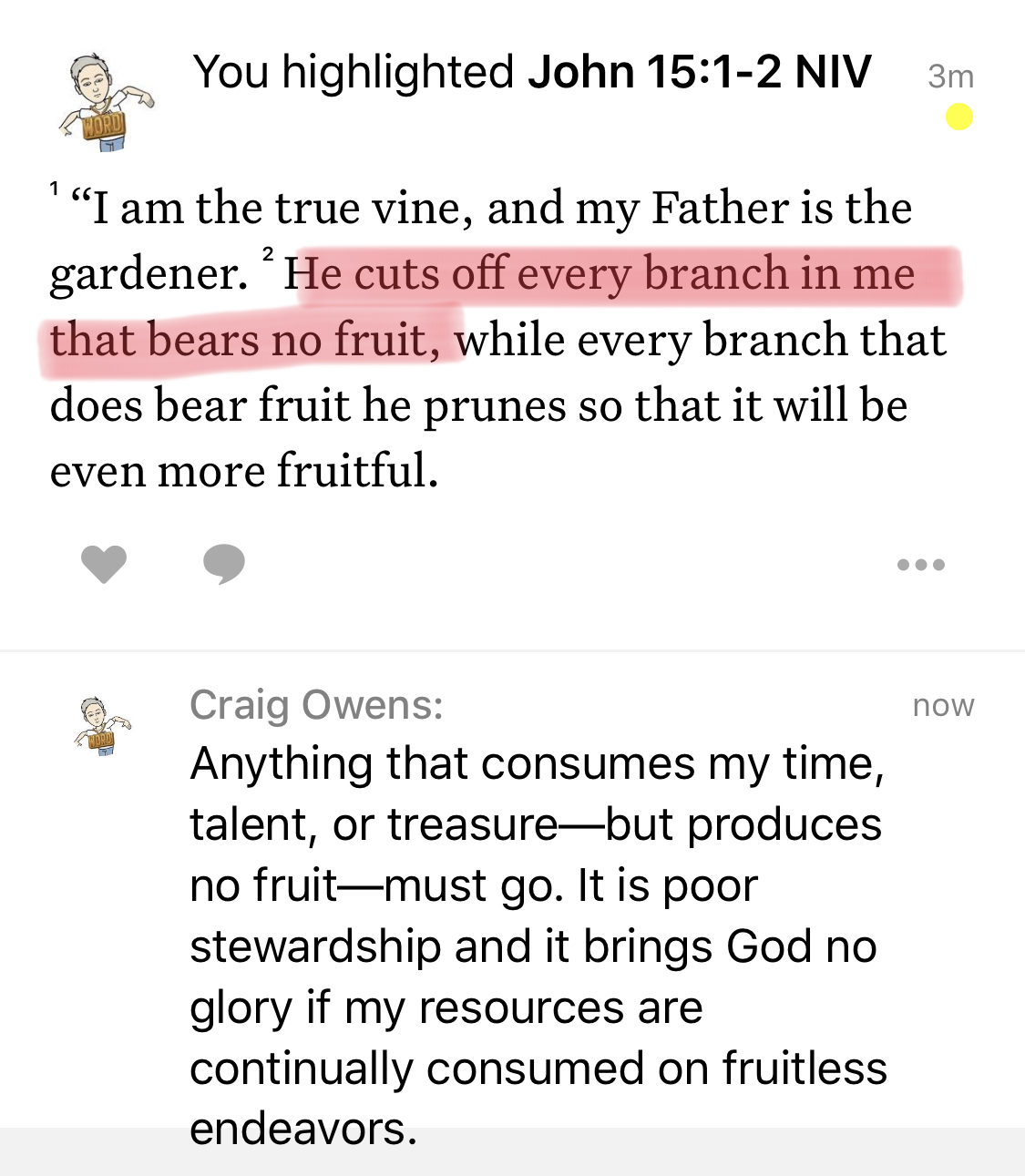
If you remain in Me and My words remain in you, ask whatever you wish, and it will be done for you. (John 15:7)

     How is this privilege of mighty prayerfulness to be obtained? The answer is, ‘If you abide in Me and My words abide in you.’ … Beloved, the first line tells us that we are to abide in Christ Jesus our Lord. … 

     As if to help us understand this, our gracious Lord has given us a delightful parable. Let us look through this discourse of the vine and its branches. Jesus says, ‘Every branch in Me…that bears fruit He prunes’ (John 15:2). Take care that you abide in Christ when you are being purged. ‘Oh,’ says one, ‘I thought I was a Christian. But alas! I have more troubles than ever. Men ridicule me, the devil tempts me, and my business affairs go wrong.’ Brother, if you are to have power in prayer, you must take care that you abide in Christ when the sharp knife is cutting everything away. …  

     Take care, also, that when the purging operation has been carried out you still cleave to your Lord. … When you see the work of the Spirit increasing in you, do not let the devil tempt. He will try to get you to boast that now you are somebody; you need not come to Jesus as a poor sinner and rest in His precious blood alone for salvation. Abide still in Jesus. … Your work for Christ must be Christ’s work in you or else it will be good for nothing.

 From The Secret Of Power In Prayer

Our Heavenly Father wants us to be fruitful because that brings Him glory and lifts Jesus up for others to see. 

We have to commit to abiding in Jesus despite the pruning process. It’s helpful to remember that the reason the Husbandman prunes us is because He has seen fruitfulness in us, but He wants us to be even more fruitful. When we stay in the process during the uncomfortable—and sometimes painful—pruning, more fruit will begin to appear in our lives. 

It’s at this point that we have to guard against pride. The devil loves for me to get proud of “my accomplishments.” But I have to remind myself that apart from the Vine I am worse than fruitless; I’m just a dead branch only fit for the fire. I’ve learned that there is a danger in success, so I must constantly choose humility over pride, and abiding over self-sustaining. 

As we abide, our prayers take on an ever-increasing vitality so that conversation with our Lord becomes as natural as breathing. I hope none of us will ever settle for anything less than this intimate, ongoing communion with our Master!

►► Would you please prayerfully consider supporting this ministry? My Patreon supporters get behind-the-scenes access to exclusive materials. ◀︎◀︎
Links & Quotes

T.M. Moore wrote, “It’s not likely John the Baptist would be welcomed in many pulpits today. Even though Edwards used him as a model of ‘The True Excellency of a Gospel Minister,’ few and far between are the shepherds today who would even think of adopting his example.

“Edwards wrote, ‘He also shone bright in his conversation, and his eminent mortification and renunciation of the enjoyments of the world; his great diligence and laboriousness in his work, his impartiality in it, declaring the mind and will of God to all sorts without distinction; his great humility, rejoicing in the increase of the honour of Christ, though his honour was diminished, as the brightness of the star diminishes as the light of the sun increases; and in his faithfulness and courage, though it cost him his own life.’

“These days many pastors secure their ‘honor’ in subtle but significant ways. They go by ‘Reverend’ or ‘Doctor.’ Have reserved parking places and their name on the church sign. Adopt fashionable garb and speech. Try hard to be friends with all the right people. Such shepherds want to advance their honor; John worked to have his honor diminished, that the honor of Christ might increase.”

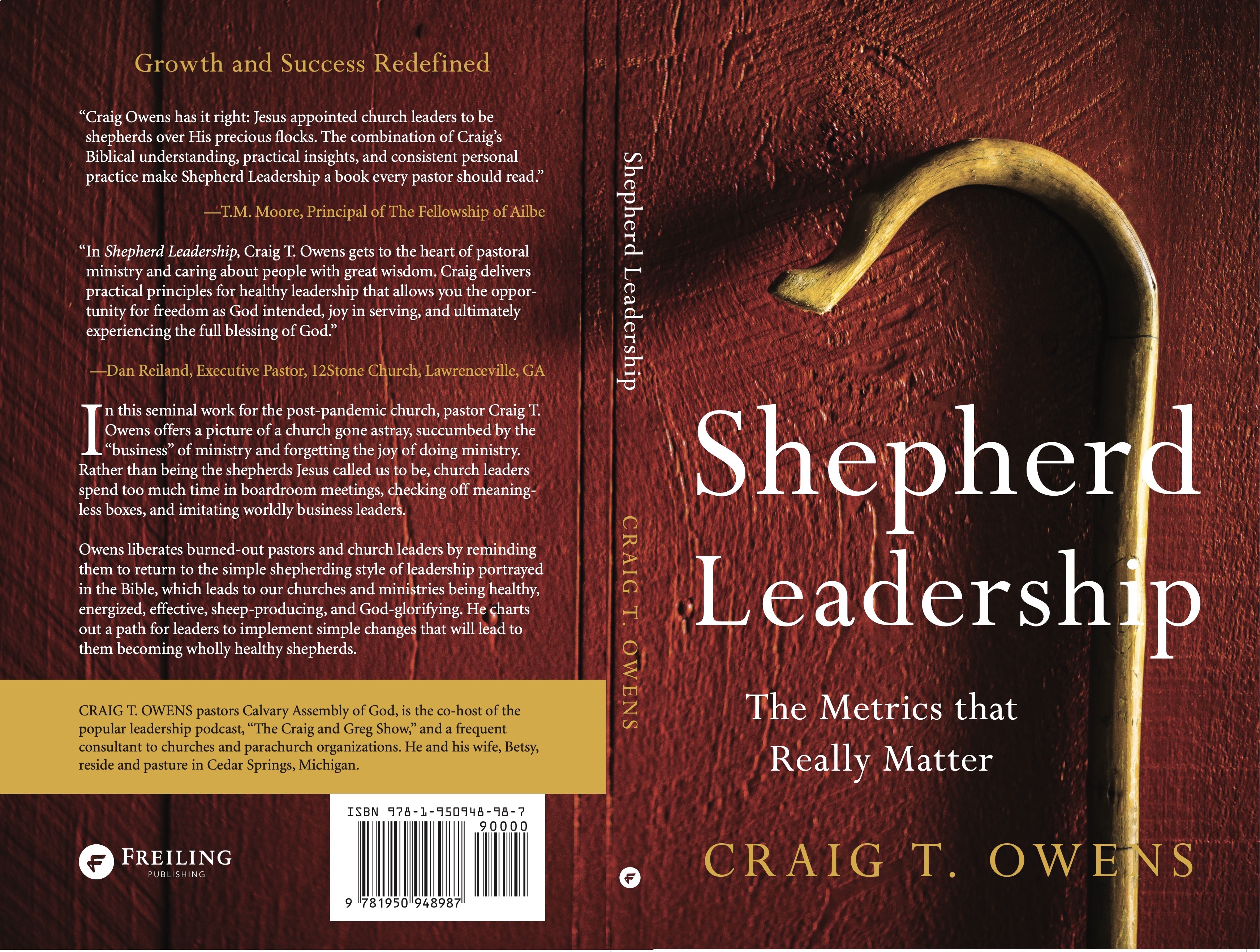
I share T.M.’s passion for shepherd in the Church, which is why he graciously wrote an endorsement for my book Shepherd Leadership: The Metrics That Really Matter.

Vaughn Shoemaker (1902-1991) was an American editorial cartoonist. He won the 1938 and 1947 Pulitzer Prizes for Editorial Cartooning for his work with the Chicago Daily News. He was the creator of the character, John Q. Public, and a faithful Assemblies of God layman. I am a fourth-generational Pentecostal in the Assembly of God fellowship, so I love studying more about the men and women who have made this such a robust missions-minded fellowship! Read more of this amazing man here.

Dan Reiland has an important list for leaders: 11 Leadership Mistakes To Avoid At All Costs.

“This is a radical call for us to look hard at our present lives to see if they are shaped by the hope of the resurrection. Do we make decisions on the basis of gain in this world or gain in the next? Do we take risks for love’s sake that can only be explained as wise if there is a resurrection?” —John Piper

“Jesus will do the things we ask for if they make God’s greatness known. So how do we ask this way? We must ask from right relationships (Mark 11:24-25, 1 Peter 3:7), with right motives (James 4:3, Proverbs 16:2), through right living (James 5:16, Proverbs 15:29), in good faith (James 1:6-7), according to His will (1 John 5:14-15). In short, if you think Jesus would put His name on it, and it will make His Father famous, then ask and believe! But remember, we’re here for Him—He’s not here for us.” —Craig Groeschel, in Twisted 

For parents and anyone else who works with students, this is a segment from the Axis ministry’s Culture Translator newsletter:

In his book Man’s Search for Meaning, Viktor Frankl writes that “success, like happiness, cannot be pursued; it must ensue, and it only does so as the unintended side-effect of one’s personal dedication to a cause greater than oneself… Happiness must happen, and the same holds for success: you have to let it happen by not caring about it.”

An idea like that would likely seem counterintuitive to many of the students in Professor Santos’ classes—students who have been raised from young ages to pay careful and constant attention to their academic viability. Students like these grow up with a hope and an expectation that achieving perfection (whether academic, relational, spiritual, or other) will finally yield the happiness, satisfaction, and recognition they’ve been looking for. But after achieving perfection, the next source of anxiety is maintainingperfection. As Christopher Fry once put it, “What, after all is a halo? It’s only one more thing to keep clean.”

Jesus concludes Matthew 5 by saying to his hearers, “Be perfect, therefore, as your heavenly Father is perfect.” It’s a verse most Christians may not want to touch, and one that anxious overachievers might point to as justification for their continual striving. But as C.S. Lewis points out in Mere Christianity, Jesus’ words presuppose our dependence on Him. He writes, “The command Be ye perfect is not idealistic gas. Nor is it a command to do the impossible. He is going to make us into creatures that can obey that command… The process will be long and in parts very painful, but that is what we are in for. Nothing less. He meant what He said.”

In other words, our betterment is in partnership with our Creator, and happiness is merely a by-product of our total surrender. Whoever has ears, let them hear.

Links & Quotes

“If you want to make people happy, don’t be a leader. Sell ice cream.” —Steve Jobs

“Pride is the first chapter in the book of failure. Humility is the first chapter in the book of success.” —Mark Batterson

“Great shepherds seek daily to increase in the Good Shepherd and to lead the people they serve to feed on Him and grow in His salvation.” (T.M. Moore). I share T.M.’s passion for shepherd in the Church, which is why he graciously wrote an endorsement for my book Shepherd Leadership: The Metrics That Really Matter. 

Sobhi Malek has an excellent prayer guide which gives weekly prayer points for Muslims. Each week you will get more insight into the mindset of our Muslim friends, a prayer, and a passage of Scripture. I encourage you to subscribe to this page so you won’t miss any updates.

Tension Can Be A Good Thing

Listen to the podcast of this post by clicking on the player below, and you can also subscribe on Apple, Spotify, or Audible. 

I had a great time on the Ailbe Podcast with Rusty Rabon.

Usually leaders want their lives and their organizations to be tension-free. But I’m advocating that healthy shepherd leaders actually embrace the tension. 

God has wired us all uniquely, but I’ve found that many leaders are slightly unbalanced in their wiring. That is, most of us are naturally more confident or naturally more humble. God made you that way on purpose, but confident leaders are allowing the Holy Spirit to temper their confidence with humility, and humble leaders are allowing the Holy Spirit to bolster their humility with confidence.

The seed thought for this concept that figures prominently in my book Shepherd Leadership was one that I’ve been wrestling with for over a decade. If you’re interested, you can check out this post.

I’ll be sharing more clips from this interview soon, so please stay tuned. Shepherd Leadership: The Metrics That Really Matter is now available in print or ebook, and in audiobook through either Audible or Apple. 

►► Would you please prayerfully consider supporting this ministry? ◀︎◀︎

Poetry Saturday—Thou Didst Leave Thy Royal Throne

Listen to the podcast of this post by clicking on the player below, and you can also subscribe on Apple, Spotify, or Audible. 

Thou didst leave Thy throne and Thy kingly crown,
When Thou camest to earth for me;
But in Bethlehem’s home was there found no room
For Thy holy nativity.
O come to my heart, Lord Jesus,
There is room in my heart for Thee.

Heaven’s arches rang when the angels sang,
Proclaiming Thy royal degree;
But of lowly birth didst Thou come to earth,
And in great humility.
O come to my heart, Lord Jesus,
There is room in my heart for Thee.

The foxes found rest, and the birds their nest
In the shade of the forest tree;
But Thy couch was the sod, O Thou Son of God,
In the deserts of Galilee.
O come to my heart, Lord Jesus,
There is room in my heart for Thee

Thou camest, O Lord, with the living word
That should set Thy people free;
But with mocking scorn, and with crown of thorn,
They bore Thee to Calvary.
O come to my heart, Lord Jesus,
There is room in my heart for Thee.

When the heavens shall ring, and the angels sing,
At Thy coming to victory,
Let Thy voice call me home, saying “Yet there is room,
There is room at My side for thee.”
My heart shall rejoice, Lord Jesus,
When Thou comest and callest for me. —E.S. Elliot

►► Would you please prayerfully consider supporting this ministry? ◀︎◀︎

What If My Organization’s “Numbers” Aren’t Growing?

Listen to the podcast of this post by clicking on the player below, and you can also subscribe on Apple, Spotify, or Audible. 

At a recent Q&A, I was asked how leaders in smaller markets or communities can avoid becoming discouraged if their measurable metrics aren’t continually rising. 

I answered this by pointing to a simple three-word phrase that God laid on my heart a number of years ago.

This is an idea that I unpack throughout my book Shepherd Leadership: The Metrics That Really Matter. Please pick up a copy for yourself or as a gift for your friends who are in leadership positions. My book is available in print or ebook, and in audiobook through either Audible or Apple.

►► Would you please prayerfully consider supporting this ministry? ◀︎◀︎

The Origins Of Plungerman

Listen to the podcast of this post by clicking on the player below, and you can also subscribe on Apple, Spotify, or Audible. 

In my book Shepherd Leadership: The Metrics That Really Matter I take two chapters to talk about how confident leaders need to add humility to their confidence, and how humble leaders need to add confidence to their humility. 

For me, I created and became a character named Plungerman to help me learn some humility. 

At a recent Q&A and book signing event I was asked about the origins of Plungerman. Take a listen to my explanation of how Plungerman came to be, and then stay tuned to hear the epic adventure of Plungerman himself! 

Shepherd Leadership: The Metrics That Really Matter is available in print or ebook, and in audiobook through either Audible or Apple.

►► Would you please prayerfully consider supporting this ministry? ◀︎◀︎

The Craig And Greg Show: How Leaders Overcome Their Fears

On this episode of “The Craig And Greg Show” we talk about: 

  • [0:58] Our empowerment comes from facing our fears. 
  • [1:35] How does fear paralyze a leader? 
  • [2:14] One fear leaders need to address in themselves and others: The fear of dropping the ball. 
  • [3:00] Leaders need to be aware that confidence can ebb and flow. 
  • [3:50] How we lead through fear. 
  • [4:27] Transparency in a leader empowers the team to greatness. On the other hand, blaming is a defense mechanism that disempowers the team. 
  • [5:49] Greg shares how we lead by example and with transparency. 
  • [7:25] I address the fear that blocks leaders from giving authority to others. 
  • [8:15] Greg suggests we switch our mindset from fear to learning opportunities. 
  • [9:21] I share a Little League lesson that served me well into adulthood. 
  • [10:50] How Greg and I help coach people through their fears. 
  • [11:34] What other fears to leaders face? 
  • [12:50] Creating a culture of safety helps our teammates confront their fears. 
  • [14:03] How can leaders encourage people who are trapped by their fears? 
  • [15:41] Leaders have to go first. I said, “Sometimes bravery is just going one step farther than you went before.” 
  • [16:50] Greg shares a brave moment in his adoption process. 
  • [18:18] We need to assess the gifts that others on our team possess. 
  • [19:20] Greg unpacks a great quote about bravery. 
  • [20:03] I share about the moment when I think bravery begins.

Check out this episode and subscribe on YouTube so you can watch all of the upcoming episodes. You can also listen to our podcast on Spotify and Apple.

Balanced Leadership

Many pastors limit their leadership effectiveness by clinging to either confidence or humility. The better option—and one that Jesus Himself demonstrated for us—is to be both confident and humble. 

I unpack this idea in my book Shepherd Leadership: The Metrics That Really Matter. It’s available in print, ebook, and audiobook. 

Get more info, or order a copy of my book for yourself, at ShepherdLeadershipBook.com. 

The Confident-Humble Tension

Listen to the podcast of this post by clicking on the player below, and you can also subscribe on Apple, Spotify, or Audible. 

I had a great time on the Thriving In Ministry podcast with Kyle Willis and Dace Clifton. 

When I was trying to explain to my friends why I was writing Shepherd Leadership: The Metrics That Really Matter, I found that many were quite intrigued by the idea of the confident humility—or the humble confidence—that Jesus so perfectly demonstrated for us. 

Almost every leader I’ve met tends to be naturally wired as either a confident leader or a humble leader. Our effectiveness as a shepherd leader comes in allowing the Holy Spirit to help us maintain a healthy tension between those two poles. Jesus did this perfectly, and we are to follow His example. 

I have two chapters in my book discussing this tension. Here’s how I introduce the topic in the chapter “A confident leader’s attitude adjustment: 

God has created each of us uniquely—implanted with the temperament, talents, and personality He wanted each of us to have. God made you on purpose, and He made you for a purpose. But that being said, shepherd leaders are almost never perfectly balanced. If you’ve ever taken a temperaments assessment or any other kind of personality test, you know that you had some attributes that were more prominent than others. God never gives us weaknesses, but our areas of strength can become a self-imposed weakness if we rely on our strength instead of on our Strength Giver. 

Leaders tend toward two poles: confidence or humility. God made us this way on purpose. But to be the best shepherd leader, we each must allow the Holy Spirit to help us learn to lead in a more balanced way. If we lean too much toward confidence, we can come across as arrogant and even tyrannical. But if we lean too much toward humility, we can appear to be weak, indecisive, and unsure of our leadership direction. None of us will be perfect in this at every single moment, but with the proper attitude adjustments, we can learn to more consistently stay at the balanced point of being humbly confident or confidently humble. 

I’ll be sharing more clips from this interview soon, so please stay tuned. Shepherd Leadership: The Metrics That Really Matter is now available in print or ebook, and in audiobook through either Audible or Apple. 

►► Would you please prayerfully consider supporting this ministry? ◀︎◀︎