Set Up For Success (Or Failure)

Listen to the podcast of this post by clicking on the player below, and you can also subscribe on AppleSpotify, or Audible. 

Like it or not, your example as a leader is making an impact on all the people around you—including the next generation of leaders who will take their positions after you have passed away. 

So I have a simple question for you: Are you setting them up for success or failure? 

There is no middle ground. 

Consider three generation of kings of Judah—Hezekiah, Manasseh, and Amon. 

Hezekiah had been sick and God miraculously healed him. When Merodach-baladan, king of Babylon, heard about this, he sent envoys to see King Hezekiah. Instead of bragging on God, Hezekiah bragged about all of his riches. 

After the envoys left, the prophet Isaiah told Hezekiah the consequences of his pride

“Behold, the days are coming when everything that is in your house, and what your fathers have stored up to this day, will be carried to Babylon; nothing will be left,” says the Lord. “And some of your sons who will come from you, whom you will father, will be taken away, and they will become eunuchs in the palace of the king of Babylon.” (Isaiah 39:6-7) 

Sadly, Hezekiah responded, “At least it won’t impact me.” 

A mark of a godly leader is one who desires to set up future leaders for success. 

His son Manasseh became one of the most evil, godless kings that Judah had ever known. And as a result, he experienced the punishment that Isaiah had prophesied. 

Thankfully, Manasseh eventually humbled himself, repented of his sin, and got to experience God’s restoration to a small degree—

When he was in distress, he appeased the Lord his God and humbled himself greatly before the God of his fathers. When he prayed to Him, He was moved by him and heard his pleading, and brought him back to Jerusalem to his kingdom. Then Manasseh knew that the Lord alone is God. (2 Chronicles 33:12-13) 
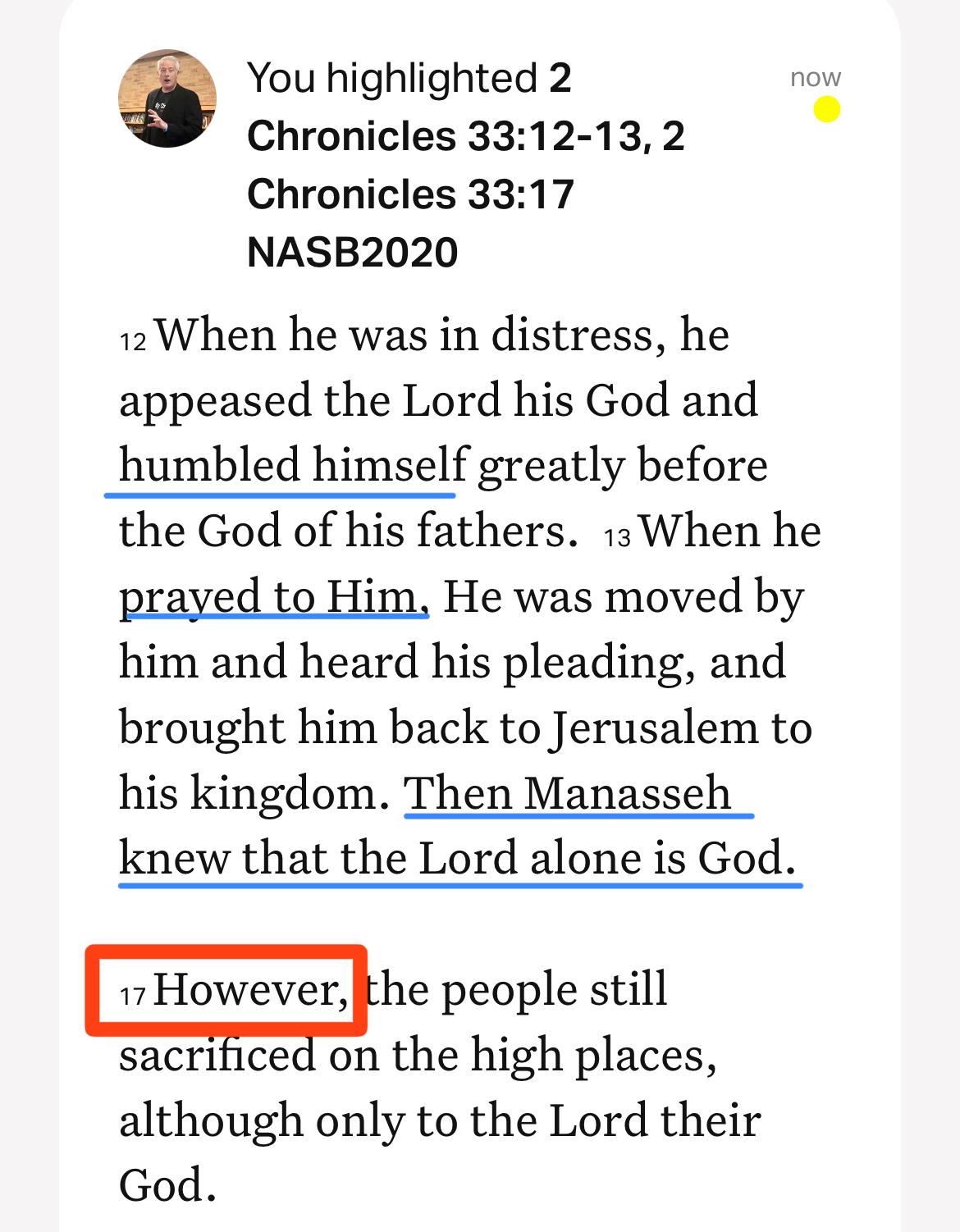
But there is a sad “however” for Manasseh’s son Amon: However, the people still sacrificed on the high places (2 Chronicles 33:17). This mixing of the worship of God with the worship of pagan idols always pulls people away from God. It certainly did that for Amon because “he did evil in the sight of the Lord, just as his father Manasseh had done. For he walked entirely in the way that his father had walked, and served the idols that his father had served, and worshiped them” (2 Kings 21:20-21). “Furthermore, he did not humble himself before the Lord as his father Manasseh had done, but Amon multiplied his guilt” (2 Chronicles 33:23). 

Godly leaders should be just as concerned about the people that come after them as they are about the people around them now. Godly leaders strive to set up future generations for success—so they can receive God’s continued and increased blessings.

This is part 78 in my series on godly leadership. You can check out all of my posts in this series by clicking here.

►► Would you please prayerfully consider supporting this ministry? My Patreon supporters get behind-the-scenes access to exclusive materials. ◀︎◀︎

Links & Quotes

Every Monday I share a 1-minute thought to get your week started. It’s my weekly Monday Motivation series of videos. Check out this week’s video that I posted the day after Christmas, and please subscribe on YouTube.

T.M. Moore wrote one of the endorsements for my book Shepherd Leadership. In an interview I then did on his Fellowship of Ailbe podcast, I shared my dismay over unbiblical ideas and practices that have crept into the church. Both T.M. and I share a passion to see our church leadership return to our secure biblical foundation. 

In a recent blog post, T.M wrote, “From the days of the apostles onward, a tendency has existed among church leaders to drift from the plain teaching of the Word of God into forms of Christian life and ministry that derive from sources other than Scripture. Or that stretch the meaning of Scripture to fit the shape of certain cultural forms.” Please check out T.M.’s post “Do not go beyond.”

In a fascinating post from Rabbi Benjamin Blech, I read these thoughts about the power of a name: “The Hebrew word for soul is neshamah. Central to that word, the middle two letters, shin and mem, make the word shem, Hebrew for ‘name.’ Your name is the key to your soul. … When the Torah says, ‘God created,’ it doesn’t suggest that He worked with what He fashioned by labor, but merely that He spoke—and the very words describing the object came into being. God said, ‘Let there be light and there was light.’ The Almighty merely gave it a name, and the very letters defined its atomic structure.” Check out the full post here.

And once again archeologists discover evidence that corroborates the biblical accounts. In this case, more evidence is found from King Hezekiah. As I have said numerous times, the historicity of the Bible is amply verified.

“Success” doesn’t always mean bigger numbers. King David got into trouble with God when he wanted to measure his success by how many fighting men he had under his command. Consistently throughout the Bible God’s measure of success is our trust in Him. This thought was a key part of the sub-title of my book Shepherd Leadership: The Metrics That Really Matter.

Cold-case detective J. Warner Wallace tackles an important topic: Does objective truth exist, and how can it be defined? This is a quite lengthy post but it is well worth your time.

“Pain nourishes courage. You can’t be brave if you’ve only had wonderful things happen to you.” —Mary Tyler Moore

The Tactics Of Fear

Listen to the podcast of this post by clicking on the player below, and you can also subscribe on AppleSpotify, or Audible. 

Then the king of Assyria sent his field commander with a large army… (Isaiah 36:2).

The enemies of God’s people always use the same tactics.

(1) Sending an intimidating force that seems overwhelming and invincible. 

King Sennacherib didn’t send a small detachment of soldiers, but he sent “a large army” to try to intimidate the people of Judah. 

(2) Asking doubt-inducing questions. 

The field commander asked questions like…

  • On what are you basing this confidence of yours? 
  • On whom are you depending? 
  • Do you think Jehovah can save you from this? 

(3) Fomenting distrust in God’s wisdom and ability. 

Once the seeds of doubt had been sown, the field commander attempted to water those seeds by making accusations like…

  • Do not let Hezekiah deceive you: God can’t help you with this one! 
  • The gods of other nations didn’t help them, so what makes you think your God will help you? 

(4) Offering a compromise. 

Then came the offer to give in…

  • Come now, make a bargain with my master and I’ll give you more riches than you can imagine! 
  • Make peace with me while you have the chance, and I promise you will have a trouble-free life! 

All of these tactics attempted to play on the fears of people who felt surrounded and overwhelmed. 

But I love to remember that the acrostic of the word F.E.A.R. is False Evidence Appearing Real. The field commander in King Hezekiah’s time, and satan today, use the tactics of fear to try to get us to compromise. 

King Hezekiah gave us a great example to follow. When he received the field commander’s letter with all of the threats listed, he “spread it out before the Lord” (Isaiah 37:14)! Isaiah reminded the people not to be afraid of the threats of the enemy, because those threats were actually blasphemy against God. And then God tells Hezekiah quite simply, “I will take care of this!” 

And God did indeed take care of it. 

Without the armies of Judah ever having to lift a sword or a spear or shield, God broke the power of the enemy and sent them away in shame! 

When the enemy seems to be surrounding you today, he will use these same tactics. He will try to overwhelm you, get you to doubt what God has said, try to induce you to distrust God, and then offer you a compromise. All the devil has on his side is false evidence that he attempts to make look real.

So do what King Hezekiah did: Spread out those threats before God. Go to His Word and read again what He has already promised you. Then stand firm in faith. God will take care of your adversary! 

Our God always gets the final word, the decisive word, and the best word.

Let me repeat it one more time: Don’t give into fear, but stand firm in your faith in God! 

►► Would you please prayerfully consider supporting this ministry? My Patreon supporters get behind-the-scenes access to exclusive materials. ◀︎◀︎

The Blessing In Affliction And The Affliction In Blessing

Listen to the podcast of this post by clicking on the player below, and you can also subscribe on AppleSpotify, or Audible. 

Surely it was for my benefit that I suffered such agony… (Isaiah 38:17).

These are words written by King Hezekiah after God had healed his life-threatening illness. Hezekiah also noted how he would now conduct himself: “I will walk humbly all my years because of this anguish of my soul” (v. 15). 

Hezekiah had been a godly king, leading Judah in removing idol worship from its borders. In his prayer from his sickbed, Hezekiah asked God to remember how he had faithfully lived in such a God-honoring way. God heard this prayer, He answered this prayer, and Hezekiah was totally healed. 

Sadly, after the threat of death was removed, Hezekiah became proud of his accomplishments, and enjoyed showing off his treasures (Isaiah 39:2, 4). When some ambassadors came for a visit because they had heard he was ill, he showed them every precious thing he possessed, but didn’t mention one word of the God who had miraculously and graciously healed him. 

There’s a valuable lesson in this for us to keep in mind today: Affliction can be a good thing IF it drives us to God’s presence. 

And there’s a corollary to this lesson: Blessing can be a bad thing IF it drives us from God’s presence. 

Hezekiah would have done well to remember the words of one of his predecessors. King Solomon prayed, “Give me neither poverty nor riches, but give me only my daily bread. Otherwise, I may have too much and disown You and say, ‘Who is the Lord?’ Or I may become poor and steal, and so dishonor the name of my God” (Proverbs 30:8-9). 

Whether things are going well or not—whether we are suffering affection or enjoying blessing—we must be diligent to remain constantly dependent on God! 

►► Would you please prayerfully consider supporting this ministry? ◀︎◀︎

It’s Not About Me

Listen to the podcast of this post by clicking on the player below, and you can also subscribe on AppleSpotify, or Audible. 

After all that Hezekiah had so faithfully done… (2 Chronicles 32:1). 

After three very long chapters outlining Hezekiah’s faithfulness to obey God and restore worship in the temple, how would you expect this sentence to be completed: 

“After all that Hezekiah had so faithfully done… 

  • …God gave Hezekiah abundant blessings”? 
  • …Hezekiah never had any problems”?
  • …all of Hezekiah’s enemies were afraid of him”? 

Actually, the full sentence says, “After all that Hezekiah had so faithfully done, Sennacherib king of Assyria came and invaded Judah.” 

What?! That doesn’t seem fair! 

Shouldn’t it be something like, “If I do these good things then God will do good things for me”? Or even, “If bad guys do bad things then God will do bad things to them”? 

But this wasn’t about Hezekiah. It wasn’t even about Sennacherib. It was about God’s glory. 

Jonah had delivered God’s message of judgment on Nineveh and the people had repented. But then they had begun to backslide from that. God was mercifully giving them another chance to repent. Sennacherib felt he was invincible and didn’t need to turn to Yahweh. So God had to demonstrate “with [Sennacherib] is only the arm of flesh” (vv. 8, 10-19). 

God’s judgment fell, Sennacherib was assassinated, Judah was delivered, and God was glorified (vv. 21-23). 

It is shortsighted of me to say, “But God, I did everything faithfully so this bad thing shouldn’t be happening to me.” 

It’s not about me! It never has been. It’s all about God’s glory. 

Yes, Hezekiah reaped the benefit of Sennacherib’s defeat, but it wasn’t because God was “paying Hezekiah back” for the good he had done. God was still being glorified when “many brought offerings to Jerusalem for the Lord and valuable gifts for Hezekiah king of Judah. From then on he was highly regarded by all the nations.”

Sennacherib was defeated and Hezekiah was saved for the same reason: God was glorified in doing so! 

Whenever you walk through a dark time, you too might be tempted to say, “God, this isn’t fair!” But remember, it’s not about you—it’s about God being glorified. Perhaps God gains greater glory and you gain greater rewards by Him delivering you through an enemy’s attack, not delivering you from the attack. Whatever God is doing, He is doing it for His glory. 

Sola Deo gloria!

►► Would you please prayerfully consider supporting this ministry? My Patreon supporters get behind-the-scenes access to exclusive materials. ◀︎◀︎

True Prosperity

…and so he prospered (2 Chronicles 31:20-21). 

When I look up “prosper” in the dictionary, the first entry says, “to be successful or fortunate, especially in financial respects.” This isn’t even close to the Old Testament Hebrew word for prosper! 

God makes prosper a dependence on Him. Mammon makes prosper a dependence on self. 

The Hebrew word tsalach means: 

  • to overcome obstacles (like crossing a river) 
  • to be empowered by the Spirit of God to overcome an enemy (like Samson did) 
  • to flourish like a plant growing to full harvest 
  • to have favor with man so that good can be done for others (Nehemiah 1:11) 
  • to finish well (2 Chronicles 7:11) 
  • to be poured out; to be a conduit of God’s blessings to others 

Prosperity God’s way is being blessed to be a blessing to others.

Prosperity is never for me, only from God through me. 

Prosperity from God helps me overcome obstacles for others, defeat enemies for others, bring in a good harvest for others, have earthly favor that will benefit others, finish well for the sake of others. 

I’ll say it again: True prosperity ISN’T for me, it’s only from God through me! 

Hezekiah showed how God’s prosperity came through him to benefit others: 

  • he did “what was good and right and faithful before the Lord” 
  • he lived “in obedience to the law and the commands” 
  • “he sought his God and worked wholeheartedly” 

In light of this definition, I have no problem praying, “God, make me prosperous. As I seek You and work wholeheartedly, flow through me to bless others!

Links & Quotes

link quote

“Build God-centered anticipation and expectancy and excitement into your home—especially for the children. If you are excited about Christ, they will be too. If you can only make Christmas exciting with material things, how will the children get a thirst for God? Bend the efforts of your imagination to make the wonder of the King’s arrival visible for the children.” —John Piper

“The only people whose soul can truly magnify the Lord are people like Elizabeth and Mary—people who acknowledge their lowly estate [Luke 1:43, 48] and are overwhelmed by the condescension of the magnificent God.” —John Piper

“I try to read every book—Christian and secular—touted as ground-breaking. None of them are. We are driven by a reality placed in us by the Creator God with legitimate ways, context, and relationship to express our sexuality. If we don’t find those legitimate outlets, we will spend our lives searching for fulfillment in self-destructive ways to fill that God-given need for community, intimacy, relationship, and meaning. We cannot live without intimacy, and here I don’t mean sex. Sex is simply one of the most powerful forms of intimacy. We are not asexual beings. Being Christ-followers, striving for integrity in all things, doesn’t neuter us.” —Becky McDonald, founder and president of Women At Risk (WAR) International

“We must discipline our minds in all things to submit to the Word of God. We have the mind of Christ (1 Corinthians 2:16), and we are commanded to let His mind hold sway in all our thinking (Philippians 2:5). What the Scripture teaches concerning the disciplined life may not always seem the reasonable thing to do—because we cannot square its teaching with our experience or logic—but it is always the Word of God. Our duty is to get behind it and order all our steps accordingly.” —T.M. Moore

“Life is better when we act like we might see someone again soon, isn’t it?” —Seth Godin

This is scary (but typical of how abortion providers operate): a 911 call reveals that a teenager is held against her will and is being forced to have an abortion!

BREAKING NEWS: The US Senate has voted to repeal Obamacare, and defund Planned Parenthood!

Guillaume Bignon, a former atheist, has become a Christian. Here is Sean McDowell’s interview with him.

Archeologists in Israel have found a seal purported to belong to King Hezekiah. You can read about other verified archeological finds every day in the Archeological Study Bible.

[VIDEO] John Maxwell on the value of imagination—

https://youtu.be/Af_xS1DmsEg

Dealing With Anonymous

Listen to the podcast of this post by clicking on the player below, and you can also subscribe on AppleSpotify, or Audible. 

I have never met Mr. Anonymous, but I sure would like to!

It appears to me that Mr. Anonymous is one of the wisest people in the world. He has an expert opinion about everything. And apparently he’s never wrong and never at fault for anything.

Have you ever received a letter or an email from Mr. or Mrs. Anonymous?

How do you respond when you get one of these letters? Does it make you angry? Defensive? Depressed? Do you feel like you need to defend yourself against this so-called expert?

Personally, I think Mr. Anonymous is a coward, so I choose not to respond to anything that he says. Although that’s easy to say because I don’t even know who he is! So even if I did have something to say I would have no one to say it to.

Anyway you look at it, it’s frustrating!!

Here’s how King Hezekiah in the Bible chose to respond to a letter. Although the letter was not anonymous, the principle is still very good for us today:

Hezekiah received the letter from the messengers and read it. Then he went up to the temple of the Lord and spread it out before the Lord, and Hezekiah prayed to the Lord: “Give ear, O Lord, and hear; open Your eyes, O Lord, and see; listen to the words [he] has sent to insult the living God.” (2 Kings 19:14-16)

God knows who Mr. Anonymous is! And He is the only one who can justify you in Mr. Anonymous’ eyes.

So the next time you receive a letter from Mr. Anonymous, read it and allow God to show you anything in there that may be true. Then lay the letter before the Lord, and let God take it from there!

UPDATE: I discuss the bites of critics and criticism in my book When Sheep Bite.

►► Would you please prayerfully consider supporting this ministry? My Patreon supporters get behind-the-scenes access to exclusive materials. ◀︎◀︎

The Power Of Now

The advertising slogan by Nike said, “Just do it.” I would modify this to say, “Just do it now.”

There is a power in now. So many times we have a God-idea, and then think/plan/pray ourselves out of acting on that idea. Don’t get me wrong, I think there is great value in planning and praying, but far too many ideas are left undone because they were over-thought and over-planned right out of existence.

When King Hezekiah came to the throne in Jerusalem, the country was a mess. The people were worshiping false gods and had completely abandoned the temple of God. The Bible says that Hezekiah went to work addressing the problem now:

In the first month of the first year of his reign, Hezekiah opened the doors of the temple of the Lord and repaired them.

After the temple had been restored to service, it didn’t matter that the “official” date for the Passover had come and gone. As soon as the temple was ready, Hezekiah said, “Let’s celebrate the Passover now.”

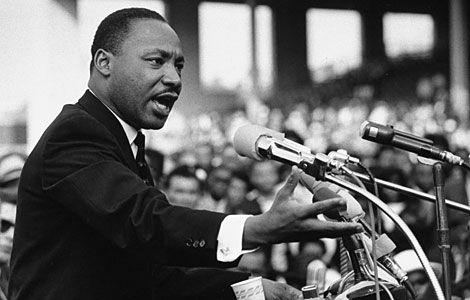
In honor of Martin Luther King Day, here’s what Dr. King had to say about the power and urgency of now:

We are now faced with the fact, my friends, that tomorrow is today. We are confronted with the fierce urgency of now. In this unfolding conundrum of life and history, there is such a thing as being too late. Procrastination is still the thief of time. Life often leaves us standing bare, naked, and dejected with a lost opportunity. The tide in the affairs of men does not remain at flood—it ebbs. We may cry out desperately for time to pause in her passage, but time is adamant to every plea and rushes on. Over the bleached bones and jumbled residues of numerous civilizations are written the pathetic words, “Too late.”

Got a God-idea? Get going! Just do it NOW!

Spread It Out

What do you do when you get bad news? Scientists know that when we hear bad news, our stress hormone cortisol immediately surges into our bloodstream. This hormone unleashes a bunch of other things in our bodies: blood pressure goes up, heart rate increases, pupils dilate, sugar stores are released. In other words, your body prepares for action.

What about your brain? What does it do? Immediately your brain starts searching for a way to cope with the stress of the bad news. And the typical response is to return to well-worn pathways. In other words, do what I’ve always done before.

So perhaps the question is better stated: What have you done before when you got bad news?

  • Did you sulk?
  • Did you cry or get angry?
  • Did you get paralyzed, not knowing what to do?
  • Did you call a friend?
  • Did you just shake your head and try to ignore it?
  • Did you spread it out before God?

Huh? Judah’s King Hezekiah got some very bad news from a very mean general named Sennacherib. What did he do? He did what he had done before…

Hezekiah received the letter from the messengers and read it. Then he went up to the temple of the LORD and spread it out before the LORD…. “Give ear, LORD, and hear; open Your eyes, LORD, and see; listen to the words Sennacherib has sent to ridicule the living God.”

Hezekiah had the same physiological and psychological responses that you and I would have when facing such a huge threat. But his first response was his well-worn response. He did what he had always done before with bad news: he spread it out before the Lord.

We can start making a new pathway for our brain to follow. Instead of fight-or-flight, or ignoring, or paralysis, or calling a friend—take it to God and spread it out there. He knows your situation better than anyone else and He wants to help you.

Start making new neural pathways in your brain today by taking everything to God—even the so-called “little” things—so that when the really bad news comes, your brain will tell you to do what you always do: spread it out before the Lord.